Play dates

http://www.timeoutbengaluru.net/kids/features/play-dates

Bijal Vachharajani lists some exciting tips and playful tricks to keep boredom at bay for children of all ages this summer
 cover colour 1

Keep your munchkins entertained this summer, but not by packing them off to the usual activity classes and run-of-the-mill workshops. Instead, entice them with our roundup of fun things to do. These are activities that your children can dabble in with their cousins or friends at home or even in your backyard. We tell you how to encourage kids to write better stories, stage home productions of plays, and even devise a quiz. They can also plan a midnight feast, live in a tree house, which you can build without hurting the tree and hone their sense of smell.

Illustrations by Ashwini Pandit.


Good feeds

http://www.timeoutbengaluru.net/bangalore-beat/features/good-feeds

Time Out rounds up old and new Indian literary fiction that are themed around cooking and eating

For all those who grew up yearning for scones and slabs of homemade fruit cake thanks to British author Enid Blyton, or wished that the Elven Lembas bread from The Lord of the Rings was real, we thought it’s about time you sampled flavours closer home. Indian literary fiction is steeped in food metaphors. Stories are built on the culinary efforts that go on in kitchens across the country and amateur and professional gourmets often are the star characters in narratives. Time Out picks some of its favourite food moments that are sure to leave you hungry for more.

The Case of the Love Commandos

Tarquin HallRandom House, R499.

India’s Most Private Detective Vish Puri is back in this latest instalment from Tarquin Hall and this time he is eating his way through Lucknow. For those unfamiliar with this private eye, Puri is one of the country’s most famous detectives. He works out of Delhi and in the past has cracked The Case of the Deadly Butter ChickenThe Case of the Missing Servant and The Case of the Man Who Died Laughing. The stories are rife with quirky and adorable characters, from Puri’s wife Rumpi to his Mummy-ji who is always interfering in cases when really she should “stick to what she is best at: making gulab jamuns and all”. Yet the books go beyond being classic mysteries, offering a slice of India while delving into social-political issues, corruption, Dalit rights, betting and more. When Puri’s mind is not occupied with the mysteries he has to solve, actually even when it is buzzing with these puzzles, he is thinking about food – from the kathi rolls that he has delivered to his Khan Market office to the offerings at the Gymkhana Club. InThe Case of the Deadly Butter Chicken, Puri finds himself torn between keeping a politician waiting or finishing a plate of sev puri with extra chutney and chilli. In Love Commandos, Puri wolfs down galauti kebabs, mutton biryani, sultani daal and kulfi topped with rose-scented falooda, all while following important clues. The book ends with a lovely collection of Lucknowi recipes. We promise that you can’t read the series without wanting to reach for a plate of  samosas or jalebis.

Eating Women, Telling Tales: Stories about Food

Bulbul SharmaZubaan, R295

Bhanurai Jog has passed away and it comes down to Badibua to prepare his favourite dishes for the death anniversary feast. A cluster of women gather in the kitchen, eight knives deftly chopping big round aubergines, slicing pumpkins, and sorting greens. As the kitchen bustles with activity, one woman points out, “This year the coriander and mint we grew is really good. You can smell the fragrance even before you begin to grind it.” The food memories invoke nostalgia, from which abound stories as the women begin to draw on their experiences and their past. The tales centre on food: a mother trying to win back the affections of her son who now lives abroad with ghee-drenched aloo parathas and jaggery sweets filled with coconut; another woman gearing up to welcome her husband’s family home with  different curries and chana paishe, a Bengali sweet made out of fresh paneer; a bride who finds herself chained to the kitchen after she displays her culinary skills. Melancholic, humorous, macabre and poignant, Bulbul Sharma manages to toss together dramatic stories within a story.

The Girl from Nongrim Hills

Ankush SaikiaPenguin, R299

Donbok, popularly known as “Bok”, a guitarist with a Shillong-based wedding band, gets entangled in a vicious plot when his brother loses `50 lakh on an arms purchase trip to Nagaland and finds himself in bad company. Bok not only has to save his brother’s life, he must avoid getting lured by a beautiful, mysterious woman whose intentions seem to be misleading from the outset.

Shillong and its unpredictable weather, its idyllic settings mixed with a tinge of nostalgia, the hustle-bustle of the Polo Bazaar and the clubs, all these elements intertwine to create a gripping atmosphere. As significant as the locations are to the novel, equally important are the little eateries, teashops and jadoh stalls, which often act as a foil to the narrative plot. Bok and his fugitive brother Kitdor meet over steaming plates of Khasi specialty rice and fatty pork cooked with chicken blood at a jadoh stall. After discussing Kitdor’s future, the brothers decide to eat. “They dug into rice cooked with chicken blood and fiery fermented fish chutney. His brother sitting beside him, the kettle boiling on the coals, the patter of rain on the tin roof… it was almost peaceful.”

Other instances of food playing a part in the book include Bok’s dinner table conversations with his parents while eating his mother’s rice, pork with black sesame paste, fried potatoes and boiled vegetables; ordering in egg chow and chilli chicken at The Paradise hotel just before he plans to barge into an adjoining room and steal a bag of money at gunpoint; and The Lhasa restaurant where, to calm himself after being shot at, Bok gobbles up pork momos with a watery chilli chutney and knocks back a stiff peg of Royal Stag whisky.

Gone with the Vindaloo

Vikram NairHachette, R350

This is a humorous tale about the goodness of food that travels back and forth in time as well as between continents. A successful restaurateur by profession, Nair has a palpable love of food combined with a no-holds-barred flair for storytelling. He ensures the committed attention of his readers throughout the book.The story opens in the bustling city of Varanasi during the pre-Independence era. We are introduced to three close friends, Kalaam, Mateen and Arth Purabiya, whose lives are about to change during British rule. As a result, Kalaam, the expert Muslim weaver who possesses the inherent skill of making “brocade”, the most enchanting fabric of Varanasi, is quickly cast off because of the divide and rule policy employed by the British. He is also blissfully unaware that his true calling lies not in threads but amidst pots and pans, spices and herbs. Fortune strikes early as he stumbles upon a group of English burra sahibs on a camping tour and ends up cooking chicken curry and rice for them. Thence begins his culinary expedition – from working as a cook at the Palmers’ residence to perfecting the nuanced vindaloo.

Every dish he cooks is loved and praised by all, but it’s the vindaloo that wins him admiration and fame. His signature style of cooking the dish uses a secret added mixture of tamarind pulp with chilli flakes, sugar and garlic to round off the tart flavours of the synthetic vinegar. Another story runs parallel, about the Mahadev household. An Imperial Civil Service (ICS) member by profession, Mahadev is a classic authoritarian family patriarch. He aspires to rub shoulders with the British and dreams of his son carrying forth his legacy. Pakwaan, who works in his kitchen, yearns to replicate his grandfather’s magical vindaloo, the recipe of which comes to him in a dream and is about to take him places. But cooking is a personal skill; it is instinctive and not merely about following instructions. From descriptions of flatulence to frank gestures of sexuality that border on the coarse, the author leaves no stone unturned to cook a flavoursome story – much like the vindaloo. Readers will leave with a satisfied burp. Arunima Mazumdar.

More than just Biryani

Andaleeb WajidAmaryllis, R399

After reading this book, we wondered for days how lauz would feel on our tongues. Lauz is a sugary sweet made of reduced milk turned into khoya along with powdered sugar, which is thickened and made into a dough and rolled out into different shapes. The enigmatic sweet is described in Andaleeb Wajid’s book as “sugary sunshine” that melts on your tongue and “little crumbly sugar-coated bits that dissolve slowly and make you light up from inside”. More than just Biryani is full of such evocative, beautiful descriptions of food that transpires through three generations. The story begins when Sonia Kapoor, a journalist with a food magazine, befriends a young girl called Zubi in Hong Kong after watching a food video done by her. The reticent Zubi gradually opens up to Kapoor and helps her put together a narrative spanning three generations, including Zubi’s mother Tahera and then grandmother Ruqaiyya.

While Ruqaiyya struggles with cooking in the Vellore of the ’50s as a young bride, and slowly realises that desserts such as lauz, badam ki jaali and firni are her forte, her daughter Tahera is known throughout the extended family for her culinary acumen, for her shammi kababs, biryani, khatta sherva, kali mirch ki phaal, kheema samosas and more. When Tahera’s husband dies in a freak accident, life takes a turn for the worse. She goes into a shell and loses interest in cooking. As her wounds heal, her cooking comes back to life. Zubi, who lives in Hong Kong with her husband and child, also finds her own identity and strong connection with her family by recreating her mother and grandmother’s cooking through a video format online. Recipes are woven into the narrative beautifully, rather than conventionally presented, and help move the plot ahead effectively.

The Obliterary Journal vol 2: Non-veg

Blaft, R795.

“Meet your meat” used to be a popular People for the Ethical Treatment of Animals slogan where the animal rights group would reveal to people the cruelty inherent in the meat industry. It could very well fit Blaft’s latest publication, the second volume of their graphic novel The Obliterary Journal.Edited by Rakesh Khanna and Rashmi Ruth Devadasan, the graphic novel brings together works by some of India’s most interesting artists, writers and activists, who look at the social, cultural, ethical and political dimensions of non-vegetarian food in India.

The book starts in a tongue-in-cheek manner with Durrrrk Mister Grinder Serial No 30277XM03’s comic, where a Legpiece has to make its way across a desert (lots of puns here), battling Space Idlies, to deliver, against all odds, this very book to an indie bookstore. Then Aneesh KR traces the history of emu farming, a venture that started with a lot of promise in India and went bust when there were few takers for the bird’s meat. A veggie UK Krishnamurthi talks about how “people eat for pleasure… everything is cultural”. There’s plenty of food for thought in this book, including Appupen’s eclectic renderings of the hunt for what we call “food” in modern times, “How to Make a Bitch Give Up Beef” by Dalit activist/writer Meena Kandaswamy with illustrator Samita Chatterjee, and Sathyanarain Muralidharan and Mihir Ranganathan’s refreshing and quixotic take on the food chain. We will leave you with just this taster to whet your appetite for The Obliterary Journal, but there’s plenty more to explore in the book.

Three Dog Night

Gouri DangeHarperCollins, R250.

Viva is on the wrong side of 60, but that doesn’t mean she is ready to retire. A widow who lives alone in Mumbai, Viva begins to de-clutter her life, like giving away her gorgeous black coffee/milk-coffee combo Kanjeevaram  silk sari to her much younger friend, Moni. Her son and his family live in Pune, and she dotes on her grandson, whom she bonds with over giant glasses of sitaphal milkshake and potato-mince patties. Her daughter is busy saving the world until some mysterious Nepal connection pops up to complicate matters.

Gouri Dange puts together a warm, fuzzy story about relationships, Mumbai and food, and of course animals, all with a healthy dose of wry humour.Three Dog Night is a beautiful read, made even more interesting by the recipes embedded in the narrative. For instance, when Viva gifts her Coffee Crystal sari to Moni, we also get her recipe of the alcohol-laced eponymous caffeine drink. Coffee, demerara sugar and brandy come together in what “wires you up for a range of post-dinner activities, from the routine to the sublime”. When Viva goes out for dinner at the “new off-Colaba Causeway place where the chef-owner combines strange and wondrous things”, she promptly offers a recipe for Fillet of Vietnamese Basa with Dalimbi Usal, the dish that she orders at the restaurant. Not unlike our mothers who eat at restaurants only to size up the ingredients and rattle off a makeshift recipe which tastes exactly like the restaurant speciality.

The Anger of Aubergines – Stories of Women and Food

Bulbul SharmaKali, R150.

In this wonderful collection of short stories, Sharma pays tribute to several of her grand-aunts, who were brave, fearless women and knew their way around the kitchen as well the tricky business of dealing with men. Each story is themed around food – food used as a means for passion, as a way to seek revenge and as a handy tool for power. While the title story deals with a couple who hate the sight of each other except when the husband turns up once a week to eat aubergines cooked by the wife, freshly plucked from the garden patch, “Food to Die For” is the story of an old lady who whips up the most elaborate feast for the brahmin priest who will perform the last rites of her dead husband. “A Taste for Humble Pie” sees an orphan girl who is otherwise neglected being fought over by relatives because of her pakora-making skills, “Feasting with a Vengeance” follows the story of newlyweds whose families want to outdo each other in the wedding feast stakes. Every short story is accompanied by a lovely recipe at the end according to the theme of the narrative.

Book of Rachel

Esther DavidPenguin IndiaViking, R699.

Rachel, who belongs to the Bene Israel community of Danda, Alibaug, lives alone in a house by the sea. Her husband has passed away and her children have moved to Israel. Looking after the village synagogue and creating traditional recipes from Bene Israel Jewish cuisine is her sole focus in life now. With the dwindling Bene Israel community in her neighbourhood, Rachel being one of its last surviving members, she opens and cleans the synagogue every day in the hope that it will once again be a scene of happy, communal gatherings. Rachel also spends her time painstakingly recreating ancient Bene Israel Jewish recipes of dishes such as kippur chi puri or poha cooked with coconut, fried fish, chik cha halwa, a sweet dish made of wheat extract and coconut milk, and mince cutlets. The making of every recipe in this novel also traces its origins and history in the Bene Israel context.

Fasting, Feasting

Anita DesaiRandom House, R299.

The novel opens with an important discussion – are fritters enough or must sweets go, too? A package is being sent by parents to their son in the US, and instructions are given to the cook that yes, sweets must be part of it. Anita Desai’s iconic novel is a bittersweet read, delving into the life of an Indian family and their patriarchal attitudes that inform the way their children grow up. Desai writes evocatively in her characteristic style, painting the book vividly with food and how it weaves the complexities of the family that forms her central characters.

Life & Food in Bengal

Chitrita BanerjiPenguin, R195.

Banerji’s seminal book on the eating habits of West Bengal and of Bangladesh, influenced by history and geography, spins a sweet little fictionalised account of a girl called Chobbi who takes us through the vast repertoire of Bengali cuisine and the cultural mores associated with it through her life and her joint family. The recipe section is divided according to seasons, such as basanta (spring), grishma (summer), barsha (monsoon), sharat (early autumn), and hemanta (late autumn), and sheet (winter). Apart from several classic Indian Bengali recipes, you will also find a smattering of those from Bangladesh, such as dimer halua or egg halwa, kamala koi, or fish cooked with orange pulp, and beef or lamb handi kebab.

The Mistress of Spices

Chitra Banerjee DivakaruniBlack Swan, R499.

Thanks to reruns on television, most people are familiar with Aishwarya Rai-Bachchan’s character Tilo, the stunning, mystical woman who runs a magical Indian spice shop in the US. The movie is based on Divakaruni’s book which coaxes open the healing powers and the flavour of spices. There’s plenty of poetry and sensuality in this book, but it’s also over-the-top mystical. Here’s an excerpt: “But the spices are my love. I know their origins, and what their colors signify, and their smells. I can call each by the true-name it was given at the first, when earth split like skin and offered it up to the sky. Their heat runs in my blood. From amchur to zafran, they bow to my command. At a whisper they yield up to me their hidden properties, their magic powers”.

A New World

Amit ChaudhuriPicador, R395.

Jayojit, a professor of economics, returns from the US to visit his elderly parents in Kolkata with his son Bonny for the first time since his divorce. The book follows the lives of these four characters with the slightly crumbling edifice of Calcutta as the backdrop. Though no real plot changes or turning points happen throughout the book, the protagonists’s descriptions of his mother’s simple cooking and her offerings of hot luchis served with slivers of pumpkin cooked with nigella seeds and green chillies to feed her grandson, or the description of the lifeless mach (fish) which has been brought from the market to be cooked into a watery gravy, are evocative.

Smell

Radhika JhaPenguin, R299.

After her father is killed in a riot in Nairobi, Leela is packed off to her aunt and uncle’s house in Paris. Leela has a rare quality. She possesses an extraordinary sense of smell. This heightened attribute overwhelms her perception of everything from sex to food. Radhika Jha writes, “When the wind blew hard, as it did very often that spring, the smell of fresh baguette would fight its way into the Madras épicerie to do battle with the prickly smell of pickles and masalas”.

The Vendor of Sweets

RK NarayanIndian Thought, R120.

Jagan is a vendor of sweets who lives in RK Narayan’s delightful Malgudi. A staunch Gandhian, Jagan’s fragile and unidimensional world becomes confounded when his son returns from the US and questions many of his hypocritical beliefs. While this isn’t exactly a book steeped in food, the sweets and the religious practices of shunning beef are some of the pivotal  elements of The Vendor of Sweets.

By Amrita Bose, Bijal Vachharajani on April 11 2014

To bee or not to bee

http://www.timeoutbengaluru.net/kids/features/interview-karthika-na%C3%AFr-jo%C3%ABlle-jolivet

Interview: Karthika Naïr & Joëlle Jolivet

Young Zubaan’s latest book is a stunning blend of prose and art
18yt_book_1_jpg_1759613e

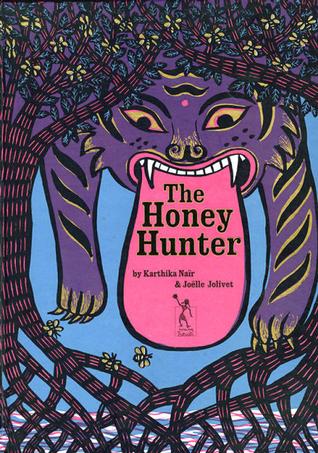
It’s a day like any other in the picture book, The Honey Hunter, as the story unfolds in a neighbourhood not far from where the reader is. There’s a discussion of some importance on at a dinner table, about honey. A child wants more honey, but the last of the summer honey is over and the bees don’t make any during winter. That leads to another story, one about a land of 18 tides, where three rivers meet, and gazillions of honeybees gather golden honey. Thus begins a beautiful story within a story written by poet Karthika Naïr and illustrated by French artist Joëlle Jolivet.

Naïr, a poet and a dance curator based out of Paris, weaves a lyrical tale that is riveting and thought-provoking. The story was earlier written as part of the script of DESH, a dance-drama produced and performed by UK choreographer Akram Khan. It subtly shows how climate change is impacting the mangrove forests and islands of the Bay of Bengal, wreaking havoc with nightmarish cyclones and unruly tides. Shonu lives on one such island with his family and finds himself constantly displaced in the wake of the changing weather. Food is hard to come by and Shonu craves honey. He sets off in search of honey, even ready to raid the beehives. However, Bonbibi, the guardian deity of the Sundarbans, has a pact with the demon king, aka the defender of the forest, aka He-Whose-Name-Must-Not-Be-Taken, that she cannot save anyone who harms the forest. What follows is a fascinating narrative of hunger, greed, the environment, kindness and indigenous beliefs.

The book is not only a delight to read but also to hold and savour for readers of any age. A big-sized book, roughly the size of a table mat, The Honey Hunter is probably one of the most gorgeous tomes to have been published this year. Jolivet, who has studied graphic art and advertising at the School of Applied Arts in Paris, usually works with lithography. Her illustrations are phantasmagorical – from the intricate renderings of the characters and the Sundarbans forest, to the pop of colours like gold and neon pink. Each page is a beautiful painting, delicate with detail, yet boldly rendered. Over email from France, Naïr and Jolivet told Time Out about their collaboration and the kind of research that went into this picture book.

Tell us how The Honey Hunter came about?
Karthika Naïr The Honey Hunter exists primarily because Anita Roy – senior commissioning editor of Zubaan Books – read the first pages of the story (then written as part of the script of DESH, Akram Khan’s dance production) at a dining table in south Delhi, and decided it had to be made into an illustrated children’s book. I was in India on a short trip after an intensive phase of workshops with Akram and about a dozen actors in London, where we had been testing out different rough drafts of tableaux forDESH, and we had decided that one of the tableaux to develop from the various openings I had written was “The Boy, the Bees and Bonbibi” (the working title of what has become The Honey Hunter). Well, Anita dropped in at my friend’s place, read the story I was working on, and asked me to complete it. By the time Anita came to watch the DESH premiere six months later, we were in the thick of the “Great Hunt for the Illustrator”. But that’s just the beginning: it took another two years for the story to become this book.The book uses indigenous art with some really pop colours.

Tell us about the illustration process.
KN This one is really Joëlle’s territory, though I must add that she did about six months of research to make sure she got all the details right – the topography, the costumes, the physiognomy, the iconography of Bonbibi and Dakkhin Rai. This was not easy because there are few formal photos: we see them mostly through street theatre and temple shrines, or local festivals – and that is one of the many reasons it has been so synergising to work with Joëlle! Her attention to detail – both in the text and the real “environment” – was so impressive, even as she adapted it into her visual language and the signature style I adored the very first time I had bumped into one of her wild animals.

Joëlle Jolivet When I work on a new project, in a new cultural background, I’m always curious about popular art, graphics, designs, anything that can feed my inspiration. My usual media is linocut, but for this book I quickly realised that it would not be the right tool. I needed something more spontaneous, more moving. So I decided to use ink and brushes, with black lines and a few strong colours. Blue-green for water and forest, yellow for bees and honey, and pink, because for me, India is shiny pink (Indian pink, of course). As the project evolved, I softly twisted these colours, to get something less obvious. Yellow turned to ochre and pink to neon pink. And Karthika showed me patuas and patachitra, which have something in common with comics. Their narrative streak helped me conceive some of the trickiest pages in the book. To get shiny and deep tones, the book was printed in solid colours. I worked on tracing paper, with black ink, one sheet per colour.

How difficult was it to adapt a script into a children’s book?
KN To be honest, I didn’t think of a young audience at all. Initially, I wrote it as part of the script of a dance piece and that defined the process considerably. Akram and I had discussed the sequence in detail, and how he wanted to stage it – without words, with animation and abhinaya – even before he knew what the story would be. My primary audience was Akram, and Yeast Culture [the animator], who needed to picture a full-fledged world from the text, a world they could transmute it into their respective languages (animation/movement). And even after the story went into “children’s book” mode, I didn’t have to change that approach.

My publishers – Sophie Giraud of Editions Hélium in France and Anita Roy of Zubaan Books – were both quite amazing. They never asked me to “make it more child-friendly” or to change the ending, which is not exactly in the happily-ever-after mode. We did have a lot of discussions about the two-person/dialogue format because it was unusual for children’s fiction in France: there was some initial hesitation about breaking away from an accepted pattern but Sophie was really committed to retaining the spirit of the story (also in publishing, so much text in an illustrated book – that was another instance of going against the norm), and all she asked me to do was add an introduction, so that a child, on reading it, would have a context, a sense of being moored. As you can see I have done that, but without specifying location or time, because I really wanted it to be a tale that could begin anywhere, in any urban household, in any part of the world.

The Honey Hunter narrates a story that delivers many messages without being didactic. How difficult is it to write something like this?
KN I think the intermeshing of myth and quotidian modernity, of proximity and the distant sources of things we take for granted (like honey) in our urban drive for immediate, unthinking consumption is just a reflection of our lives today, anywhere in the world but perhaps more so in an Asian context where millennia-old beliefs drive our lives as much as the new flashy trappings.

What kind of research went into the book?
JJ I met Karthika totally by chance. I received her text by email, in English, and forgot all about it for quite some time, until she called me. Ashamed, I finally read the text and was completely enchanted. I called her back and that’s how Karthika and I met and decided to do the book together. Our respective publishers joined forces and decided to bring it out together in France and in India. During the following months we met often, and I showed her my sketches. Karthika helped me a lot to understand that culture. I did a lot of research on the Internet, never having been to either Bangladesh or West Bengal. I also looked at a lot of regional iconography of Bonbibi and Dakkhin Rai. My imagination is also fuelled considerably by actual, existing details.

KN I did about five months of research before our R&D trip to Bangladesh in November 2010, and then the core creative team was in Bangladesh for about ten days. We travelled from Dhaka to Jessore, Gopalgunj and Khulna, to towns and rivers, and visited the docks and Drik, listening to Shahidul Alam’s [Bangladeshi photographer and human rights activist] accounts of the Dhaka Blockade, and met migrant workers from Bihar and child labourers who were building mammoth ships. We spoke with activists and otter-fishermen, textile conservators (Bangladesh had the largest repository of natural dyes in the world – an industry that was ruined by colonial British import policy, but committed people like Dr Ruby Ghuznavi have made it their life’s work to revive it, to sustain the practice), NGOs, singers and dancers and filmmakers. People were incredibly generous in sharing their experiences.

And then, of course, Joëlle did a huge chunk of research for the visuals. We would have joint sessions whenever we could, where she would show me everything she had found, and I’d add as much as I could to that, or suggest possible sources. She would show me the drafts of the pages, and they were such complete, exquisite worlds in themselves, I was often just dumbstruck at how brilliantly she had morphed the images in my head into something so much more phantasmagorical and vibrant.

The Honey Hunter, Young Zubaan, R395.


By Bijal Vachharajani on April 25 2014

The hills are alive

Time Out speaks to author Ruskin Bond about his new books
http://www.timeoutmumbai.net/books/features/interview-ruskin-bond

Ruskin Bond_new

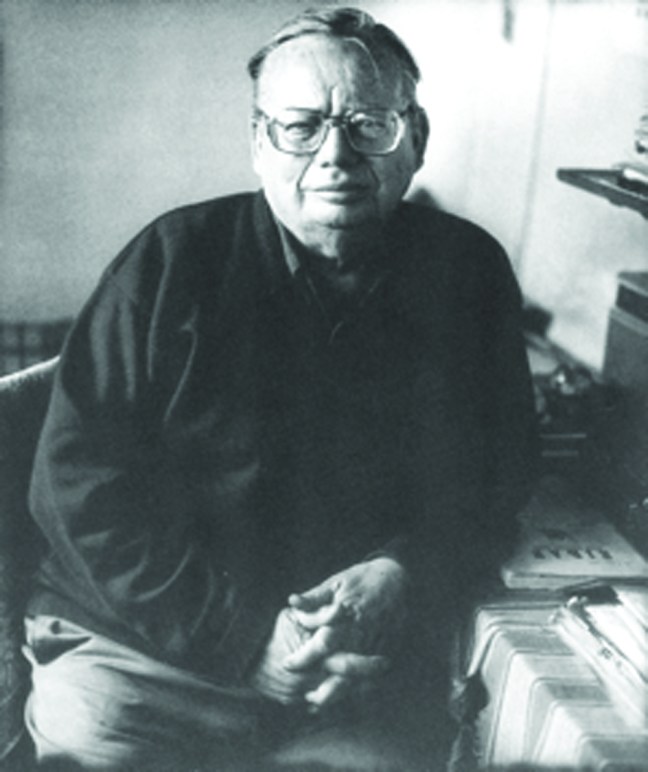
Stepping into the pages of a Ruskin Bond book means stepping out of the world around you. With every sentence you read, you’re cocooned a little more snugly in crisp mountain air. The noise of traffic fades, letting in the gentle rustle of leaves tickled by a breeze, the chirps of many birds. The city recedes, allowing your imagination to travel to remote lakes and hamlets nestled in the hills.

Beautiful as its setting may be, Bond’s fiction does not always inhabit an idyllic world. Here, there be ghosts (albeit harmless ones) lurking in desolate bungalows, whip-smart thieves with nimble fingers, and tales laced with mel­ancholia. If there’s one thing that you won’t find in Bond’s world, it’s horror. This is something Bond’s young readers have noticed. One observed to him that his stories aren’t scary enough. “I told him, I have never met a scary ghost. Usu­ally they are rather gentle,” Bond said, recalling the incident while speaking on the phone from his Landour home. He paused. “I have never met a ghost.”

This is the sweetness and good humour that has made Bond the most popular Indian author in the world of children’s fiction. The author agreed that over the years, his stories have become less seri­ous and more humorous. “Life seems to get funnier as I get older,” said Bond. “I see that in my 20s I took life too seriously. Now I am going to be 80. There is so much to look back upon, more stories to tell and so many people to write about.”

The lyricism of Bond’s writing lilts through his new books for children – Thick as Thieves: Tales of FriendshipA Little Book of Friend­ship and Ruskin Bond Children’s Omnibus, Volume 2In Thick as Thieves, Bond writes about forg­ing friendship in strange places. In one story, a lonely writer seeks the company of a little mouse. In another, old characters from stories such asThe Room on the Roof make an appearance.

All three books are semi-auto­biographical. They tell the story of a writer who instead of becoming yet another Beetle Bailey in the army, headed to a cottage on the outskirts of a hill station. The nar­ratives intersect with Bond’s own life, his childhood friends and his adopted family in Mussoorie, all turned into fiction that’s distinctive for the dry wit of his storytelling.

In the first chapter of Children’s Omnibus, “the writer on the hill” talks about the stolid mountains and how it was only after he came to live in the hills that he was able to start writing for children. “In a way that’s true but I won’t give all credit to the hills,” said Bond with a chuckle. “My first years of writing were directed to the general reader. Some would have been suitable for children, although they weren’t really written for children. In the mid ’70s, I had written a long novel­la, The Angry River and sent it to a publisher in England. The publisher suggested I trim it for a children’s book. My first children’s book is a story that was meant for everyone.”

More than 40 years later, Bond still writes for everyone, as is evi­dent inTales of Fosterganj. Foster­ganj and its inhabitants exist only in Bond’s imagination, although he admits that “some of the events recorded really happened”. The stories are set in the ’60s, when a young, reclusive writer moves temporarily to “a forgotten hamlet on the outskirts of Mussoorie” named Fosterganj.

“It’s sort of fun and frolic,” said the author. “I guess I like writing about small places, and in a way, eccentric out-of-the way places which are usually overlooked by the world at large. I thought I would go back in time a little, bring this hamlet to life for the reader and myself, and weave a few stories.”

Most of the stories are staple Bond fare – tales of ghostly encounters, a meeting with a leopard and tales peopled with a handful of curious but endearing characters. “Tucked away in a fold of the hills,” writes Bond inTales of Fosterganj, “its inhabitants had begun to resemble their surround­ings: one man resembled a willow bent by rain and wind; an elderly lady with her umbrella reminded me of a colourful mushroom, quite possibly poisonous; my good baker-cum-landlord looked like a bit of the hillside, scarred and uneven but stable”.

In his books, Bond manages to write about everyday occurrences in a way that makes them seem out of the ordinary. “This is all part of my interest in nature,” he explained. “If there’s a ladybird on my desk, I want to know where is it going next. Will it climb up a wall? It becomes an epic in itself. These little things have always interested me. The life of each living creature is an epic or story in itself. A snail crossing the road – is it going to get across or is the truck going to run over it?”

Bond’s love and reverence for nature shines through his writing. He talks about finding inspiration in a stream at the end of a hill, the neighbouring villages and the many rambles that he took in the mountains. “Perhaps, many who have read my stories might have been influenced by my feelings for the natural world. In my stories there is a certain respect for the world of animals, trees, birds and everything that’s part of the natural world.”

Listening to Bond talk about nature is as enchanting as read­ing his stories. “Leopards are good survivors, they conceal themselves well,” he said. “I have had them on my roof looking for monkeys who go to sleep. They eat dogs, picked my neighbours dogs (so he keeps a cat).” The keenness with which he observes the world around him is almost childlike in its intensity, which perhaps explains why Bond is such a favourite among young readers.

“It’s a different sort of challenge,” Bond said about writ­ing children’s books. “You have to catch a kid’s attention straight off. Recently a girl came up to me and said ‘I like your stories but can’t you give more action?’ I told her I will do my best next time.”

A Little Book of FriendshipRupa R295. Ruskin Bond Children’s Omnibus, Volume 2Rupa, R250. Tales of FosterganjAleph, R295.Thick as Thieves: Tales of FriendshipPuffin, R199.

By Bijal Vachharajani on February 14 2014 

Gond medallist

http://archive.is/J8DMq
http://www.timeoutmumbai.net/kids/features/gond-medallist

Time Out talks to Gond artist Bhajju Shyam about his journey from anonymity to acclaim

Gond art, Tribal Art, Gond tribal artist, Bhajju Shyam, the london jungle book
In 2002, Gond tribal artist Bhajju Shyam was commissioned to paint the walls of an Indian restaurant in London. Along with another artist, Shyam flew on an airplane for the first time in his life. “Everything was new for me,” said Shyam. “I was at the airport – there was so much hustle bustle, bags being checked in, forms to be filled, crowds milling everywhere. And I had never thought I would get to go aboard a plane.” Shyam sat by the window in the aircraft, taking in the busy runway. As his flight took off, he couldn’t help but think of the heavy plane as an elephant that had sprouted wings and started flying. Two years later, Shyam captured his experiences in The London Jungle Book, a lavishly illustrated book published by Tara Books and the Museum of London that includes the image of a flying elephant.
Over the last six years, Shyam has collaborated with Tara Books to create a range of award-winning books for children using Gond tribal art. His work has given a new spin to children’s book illustrations by incorporating traditional elements into modern storytelling. However, Shyam did not set out to be an artist. Born in 1971 in the Gond tribal village of Patangarh in Madhya Pradesh, Shyam remembers that his initial brush with art was his mother painting the walls of their home during festivals and marriages. At 16, his family’s poverty compelled Shyam to move to Bhopal in search of a job. “I worked as a night watchman at a forest division until I met my uncle who asked me to be his apprentice,” recalled Shyam. The uncle was Jangarh Singh Shyam, a renowned Gond artist. Shyam started out by filling in colours for his uncle’s paintings, till Jangarh Singh encouraged his protégé to strike out on his own.
Since 1998, Shyam’s work has been exhibited in the UK, France, Germany, Holland and Russia. However, illustrating children’s books happened by accident after he attended a Tara workshop in Chennai in 2003. “As part of the workshop, we organised a tour of Chennai,” said Gita Wolf, the editor of Tara Books. “We were fortunate to have the opportunity to watch Gond artists at work and note their ways of seeing and rendering.” Shyam was part of the workshop, and Tara commissioned him to work on The London Jungle Book.
On one page of The London Jungle Book, a rooster stands next to Big Ben. “I realised that people work with clockwork precision in London and look to the Big Ben for the time,” said Shyam. “In our village, the rooster is a kind of alarm clock, who crows at 4am and signals that it’s time to wake up. I couldn’t help but draw parallels.” In The Flight of the Mermaid, Shyam teamed up with authors Gita Wolf and Sirish Rao to retell Hans Andersen’s Little Mermaid. The story is familiar – about a mermaid who yearns to visit the land above – but Shyam’s rendering of the story gives it a traditional Gond look.  The artist has also contributed paintings to The Night Life of Trees, a hand-bound collection of traditional Gond images of trees and spirits.
The self-taught artist now lives in Bhopal with his family. His two children often dabble in painting during their vacation, but Shyam is clear that he will let them decide if they want to follow in his footsteps. “They are still young,” he said, adding, “But when a book of mine gets published, they do get excited and show it to their friends.”
After the success of his Tara books, Shyam repeatedly gets offers from other publishers. “I only do a story if I like it and if I find that it’s connected with my tradition in some way,” said Shyam. Once a year, he meets up with the Tara editors to conceptualise a book and then works out of home. “We work together like a family,” said Shyam. “The story is in English, I try to understand it in Hindi. Once I start working on the illustrations, I send it to them for feedback. Initially, I didn’t have an idea about colours, but their team would help me with that.”
Shyam is now concentrating on planning exhibitions and popularising Gond art. “Gond art has only started making a name over the last decade,” said Shyam. “The world knows contemporary artists. We are hoping that soon they will also recognise our work as a form of art.”
By Bijal Vachharajani on December 10 2010 


TRIPPING OVER TREE TOPS

http://natgeotraveller.in/magazine/get-going/Costa-Rica.html
Costa Rica’s canopy tours offer a lofty perspective on a bustling rainforest
By Bijal Vachharajani

I was stuck. Worse, I was dangling in mid-air, some 50 meters above terra firma, strapped to a horizontal traverse cable, looking quite like a langur. But unlike a monkey who can gracefully make her way from one tree to another, I was stranded in the middle of a zip line in Monteverde, a cloud forest in Costa Rica. Turns out I had braked too early. I craned my neck and spotted my friends gleefully pointing their cameras at me, recording this moment of indignity for digital eternity. Helplessly, I squinted down at the emerald tree tops I swung above. At long last, a grinning guide zoomed up and pedalled me back to the next stop.

Thankfully, the canopy tour got easier from there. Securely strapped in our harnesses, mind buzzing with the crisp instructions of our group leader, we felt like coal miners—kitted out in ropes, gloves, and a hard hat. Zip lining, once you get the hang of it, is a lovely way to see a pristine forest. You whoosh through the jungle, soaring above the trees and undulating hillocks, squealing like an excited puppy, and finally braking to a stop so that you don’t hit a stout tree trunk.

Canopy tours in Monteverde include long suspended bridges scattered through the cloud forest, which give you the chance to walk through leisurely and soak in the panoramic view. As we tottered through the bridges, keeling from one side to the other, we peered through our binoculars looking for the resplendent quetzal bird. The thick tree cover was the perfect hiding place for Monteverde’s brightly coloured denizen. We didn’t spot the quetzal, but instead met agile humming birds, dazzling butterflies, a placid sloth, a pair of chattering capuchin monkeys, and heard the eerie-sounding howler monkey.

After we finished the longest zip line, which our instructor called the “daddy of all tomatoes” (I don’t know why, or maybe I muddled up some Spanish here), it was time to tackle the 1-km-long Superman zip line. I was hooked on to a cable, face down. And with a push I went, flying like a bird, a plane, a superhero? I was worried that my spectacles would fall off (littering the pristine forest), so I didn’t strike the classic Superman pose. Now I know what it is to have a bird’s-eye-view of the land. It’s an intense experience: The greens look more vivid, the trees more stolid, and the wind seems louder.

The canopy tour finished with the Tarzan swing, where one jumps off a platform and swings on a piece of rope. Hard-core adventure sport enthusiasts may scoff at it, but for a wobbly-kneed first-timer this was as good as bungee jumping. I walked my longest walk ever, down a suspended bridge, heart thumping. I tried to say something to the instructor, but ended up croaking like a toucan. Safely hooked up, I jumped at the count of “tres”. It was a silent jump. My friends waiting below, did all the shouting for me. As I swung, I let out a yell that would have made Tarzan proud. And then the adventure was over, a tad too soon.