How climate change is making us more angry and lose compassion

http://www.dailyo.in/politics/climate-change-hits-empathy-global-warming-greenhouse-effect-bad-weather-unseasonal-rainfall-nature-greenpeace/story/1/2989.html

As the mercury rises, it’s not hard to see how weather can impact our mood and our feelings, hardening us into just those people we’d hate to be.

Brown, Like Dosas, Samosas and Sticky Chikki

http://goodbooks.in/node/7007
By : Bijal Vachharajani  / 2015

BrownCover-01.jpg
Brown, Like Dosas, Samosas and Sticky Chikki

Author:

Rebecca Manari

Illustrator:

Heetal Dattani Joshi
28 pages
English
Rs 199.00
ISBN: 978-93-81593-07-3
Funokplease Publishing,

2014

When my nephew was five, he started going to an international school in Dubai. He came home one day to look at each family member carefully, and very matter-of-factly graded us, according to our skin tone. From creamy white to coffee brown, we could have easily been an advertisement for the Asian Paints shade card. Being surrounded by children from different parts of the world, he was hyper-aware of skin colour, something that he had not thought of before.

Children today are surrounded by a host of media – from picture books to games and toys – with light-skinned characters. As The Guardian points out, “decades of research show that children notice ethnic differences surprisingly early and may start to ascribe values to them”. Growing up in a society where the idea of fair and lovely is thrust down your throat all the time is not easy. Our obsession with fair skin is entrenched deeply, reinforced by corporate brands and constantly upheld by certain sections of the media.

FunOKPlease’s latest picture book, Brown like Dosas, Samosas and Sticky Chikki, attempts to kick-start a discussion around this critical subject. The book tells the story of Samaira, who is faced with a conundrum when Anahi the purple lady offers to turn her “into a shade of white”. Samaira politely refuses, remembering how her mother always said that there are many colours – some like sweet, earthy potatoes, others like sand and cinnamon – and that the world be a dull place if everyone was the same colour. As Anahi comes up with more silly requests and absurd ideas, Samaira resolutely reminds her that she is comfortable in her own skin, thank you very much.

Illustrator Heetal Dattani Joshi gives the characters an Indian-Disneyfied look – Samaira has huge, melting brown eyes, while Anahi could give any Disney princess a run for her crown. The book comes with a pull-out picture frame with the message, “Whatever be your special shade; Unique and perfect you’ve been made!” Rebecca Manari’s storyline is charming, brimming with some fun local food metaphors, such as skin “the delicious colour of black forest cake” and “brown like dosas, samosas and sticky chikki”. However, her verse often feels forced, making the picture book a stilted read.

However, the ethos behind the book, about how everyone is unique and perfect the way they are, is certainly admirable. And, in many ways, it is an important message, given the issues that young adults and children face with body image as they grow up in a world obsessed with perfection. As is the fact that proceeds from the sale of the book will go to the Apne Aap Women’s Collective, an anti-trafficking organisation.

Book Review: Eat the Sky, Drink the Ocean

http://www.livemint.com/Leisure/bqvMF5btJ0gyQnecxh9l3M/Book-Review-Eat-The-Sky-Drink-The-Ocean.html
A collection of stories for young adults that creates utopian realms for women

Bijal Vachharajani
Eat The Sky, Drink The Ocean: Young Zubaan, 264 pages, Rs295

Book Review: Eat The Sky, Drink The Ocean

What happens when a motley crew of women writers and illustrators from Australia and India come together to write a book, without actually meeting? Over a year ago, 20 artists and writers connected virtually, over copious emails and Skype sessions, to talk about the challenges of being a woman and to speculate on the endless possibilities. The result is Eat The Sky, Drink The Ocean, an anthology of speculative fiction stories for young adults.

Published by Young Zubaan, the book has been edited by Payal Dhar and Anita Roy from India, and Kirsty Murray from Australia. In the introduction, the editors explain that the idea stemmed from the storm that gathered in response to the violent crimes against women in Australia and India in 2012. They decided on the title, Eat The Sky, Drink The Ocean, because it suggested impossibilities, dreams, ambitions and a connection to something larger than humanity alone. They add that all the stories embrace the idea of not just eating pie but of taking big, hungry mouthfuls of life and embracing the world.

The book offers utopian realms that reflect alternate realities for girls and women. The stories—which take the form of black and white graphic tales, twisted fables, and a play—take on issues such as patriarchy, gender equality, molestation, body image and misogyny.

Murray teamed up with Manjula Padmanabhan for The Blooming, a play about reproductive technology and gender conditioning. The Runners, a graphic tale by Isobelle Carmody and Prabha Mallya, and Dhar’s Memory Lace are set in feminist utopian worlds, reminiscent of Sultana’s Dream, the iconic feminist sci-fi story written by Rokeya Sakhawat Hussain in 1905. Amruta Patil’s Appetite is a gorgeously rendered graphic story about a girl with a voracious appetite—she wants to devour the world. Given that men and boys are offered the world on a plate, Patil writes, “Appetite is such a boy’s club… Female bellies are allowed their moon curves only when swollen with baby.”

As the emails flew thick and fast, the story ideas took shape. Samhita Arni and Alyssa Brugman had a conversation about feminism and cultural differences and found themselves drawn to the way “capitalism and consumerism had co-opted the feminist movement”. Both writers explore the rigid conditions and expectations set for women: Arni writes about a community where girls are banned from being magicians, at the same time exploring female infanticide; Brugman narrates the story of a woman who trades a kidney for perfect hair (like broad hips, hair is also a sign of a woman’s “good breed”).

Fables also get reinterpreted and twisted. In Little Red Suit, Australian-American writer Justine Larbalestier retells Red Riding Hood. Poppy leaves a drought-ridden Sydney to check on her grandma, and finds herself being stalked. Anarkali by Annie Zaidi and Mandy Ord is a fantastic graphic retelling of the story of the court dancer being entombed alive on the orders of Mughal emperor Akbar. However, instead of pining for her lover, Prince Salim, Anarkali takes matters into her own hands.

Eat The Sky merges contemporary issues with sci-fi. In Cooking Time, Roy tosses together reality cooking shows with time travel to present a future where real food has been replaced by the artificial Newtri, which is luckily available in 70 great flavours. It’s eerily reminiscent of genetically engineered food and products like Soylent, a drink that the makers say is “designed for use as a staple meal by all adults… (and) provides maximum nutrition with minimum effort”.

The tapestry of Eat The Sky is essentially feminist, but it weaves in issues of food security, environmental destruction, class barriers, social justice, consumerism and human rights to create lustrous narratives. In our patriarchy-dominated country, the anthology stands out for its plucky writing and bold imagery.

Read more at: http://www.livemint.com/Leisure/bqvMF5btJ0gyQnecxh9l3M/Book-Review-Eat-The-Sky-Drink-The-Ocean.html?utm_source=copy

PhotoStop: ‘Organic’ reach at Fair Trade Alliance Kerala’s Seed Fest 2015

http://www.thealternative.in/lifestyle/organic-reach-at-fair-trade-alliance-keralas-seed-fest-2015/

The 5th Fair Trade Alliance Kerala Seed Fest saw organic farmers from Kerala showcase their produce and share how beneficial organic farming can be.

In 2011, farmers of the Fair Trade Alliance Kerala came together to host the very first Seed Fest. Four years on, it has become a space for farmers from the region to promote biodiversity, food security and gender justice by sharing knowledge, exchanging seeds and displaying their produce. The Seed Fest is an initiative of the Fair Trade Alliance Kerala, an organisation co-founded by Tomy Mathews which brings together farmers and enable them to trade on Fairtrade terms of minimum support pricing and the benefit of a Fairtrade Premium.

Here’s a pictorial tour of the FTAK Seed Fest 2015:

1. A farmer from the Mananthavady taluk in the Wayanad district of Kerala grows 26 kinds of chillies, welcome news at a time when the FAO estimates that since the “beginning of this century, about 75 per cent of the genetic diversity of agricultural crops has been lost.”

Fair Trade Alliance Kerala's Seed Fest 1_Chillies1

2. We eat more homogenously today and according to the FAO, “just nine crops (wheat, rice, maize, barley, sorghum/millet, potato, sweet potato/yam, sugar cane and soybean) account for over 75 percent of the plant kingdom’s contribution to human dietary energy”. Yet, farmers at the Seed Fest had different species of brinjal – from purple to yellow in colour.

Fair Trade Alliance Kerala's Seed Fest 2_Brinjal1

3. There were crimson coloured chillies and plum-coloured beans on display.

Fair Trade Alliance Kerala's Seed Fest

4. We were fascinated by the variety of bhindi there.

Fair Trade Alliance Kerala's Seed Fest 4_bhindi5

5. Shobhana (extreme right) is the secretary of the Thavinjal Panchayath from Mananthavady as well. The woman farmer’s stall had a banner up which read, “Gender Justice”. When we asked her what it means to her, she said that her being at the Seed Fest said it all.

Fair Trade Alliance Kerala's Seed Fest 5_Shobha

6. Shobhana showed us some gorgeous greens beautifully wrapped in plantains. She smiled and told us, “Who needs plastic, right?”

Fair Trade Alliance Kerala's Seed Fest 6_pack2

7. Sunni (centre), another organic and Fairtrade farmer told us that since the time (ten years ago) he switched to organic farming, he finds that his personal health has improved.

Fair Trade Alliance Kerala's Seed Fest 7_sunni1

8. His produce was staggering with different kinds of gourds, yams, tapioca, chillies, and grams.

Fair Trade Alliance Kerala's Seed Fest 8_sunnis produce

9. We went home with a variety of seeds for our balcony gardens and with an appreciation of the farmers who grow our food.

Fair Trade Alliance Kerala's Seed Fest 9_diversity

Five spells every Indian could learn from Harry Potter

http://www.dailyo.in/art-and-culture/five-spells-every-indian-could-learn-from-harry-potter-jk-rowling-dumbledore-hermione-voldemort/story/1/1728.html

We’re all capable of change, and a bit of magic.

1. On the Right to Education: At the Hogwarts School of Witchcraft and Wizardry, magical ability is the only consideration when it comes to admission. And unlike some of our pre-primary schools where admission is based on tests, interviews and fees, Hogwarts has no such daunting admittance parameters. And while many Indian schools struggle with the Right to Education Act by questioning the need for inclusion, Hogwarts’ students come from all sorts of backgrounds. It doesn’t matter if you are “pure-blooded” like Draco Malfoy or Muggle-born like Colin Creevey or Hermione Granger, if you’re magical, then Hogwarts has a place for you. Like at Hogwarts, the RTE may not take away social divisions, but it helps weaken those polarities. Hogwarts, unlike its foreign counterparts such as Durmstrang Institute and Beauxbatons Academy of Magic, wins hands down because of its inclusiveness.

hermione_012915105503.jpg
Hermione Granger’s diverse background did not come in the way of her achievements.

2. On ignoring things that are magical: Arthur Weasley once said about muggles, “Bless them, they’ll go to any lengths to ignore magic, even if it’s staring them in the face…” Indian muggles may not have shrinking keys or biting kettles to contend with like the ones in the Potter books, but many of us are guilty of ignoring the magic of nature around us. After all, India’s lush forests, gurgling water bodies and teeming biodiversity are nothing short of magical. Yet, bless us, in this mad rush of what we now call economic security, we often forget that there can be no real, inclusive development without sustainability.

thestrals_012915104913.jpg
Thestrals are unique mystical creatures visible only to those who had had a close call with death.

3. On purity of birth: One can’t help but agree with Hagrid that Dumbledore is a great man, case in point, when he tells the minister of magic, “… you place too much importance, and you always have done, on the so-called purity of blood! You fail to recognise that it matters not what someone is born, but what they grow up to be!” Wise words for a country whose denizens glean everything about a person by simply asking their surname, their birth place and their caste.

hagrid_012915104922.jpg
Rubeus Hagrid was a half-giant and that didn’t stop Harry from befriending him.

4. On banning books: In Harry Potter and the Order of the Phoenix, the ministry of magic is desperately trying to squash the news that Voldemort is back. When Potter gives an interview to the tabloid “The Quibbler” on the subject, the horrid Dolores Umbridge bans students from reading the magazine. Hermione excitedly points out that, “If she could have done one thing to make absolutely sure that every single person in this school will read your interview, it was banning it”. And just like at Hogwarts where everyone ends up reading “The Quibbler”, we have seen hard copies and e-books of Wendy Doniger and Perumal Murugan’s books being bought, distributed and talked about.

umbridge_012915104932.jpg
Dolores Umbridge’s plan of banning “The Quibbler” backfired big time!

5. On being equal: As more and more of us ensconce ourselves into the ivory towers of gated communities and our own liminal air-conditioned bubbles, we turn up our noses at poverty, abuse our privileges, distance ourselves from the farmers who grow our food and end up doing more damage to our fellow countrymen and the environment. We then complain that the system is messed up, crime is on the rise, our food security is threatened and blah and blah and blah. Take a page from Dumbledore’s book – “Indifference and neglect often do much more damage than outright dislike….We wizards have mistreated and abused our fellows for too long, and we are now reaping our reward”, and then replace wizards with muggles.

dumble_012915104941.jpg
No wonder Albus Dumbledore was one of the wisest wizards of all time.

The Adikahani Series

http://goodbooks.in/node/6950

REVIEW

The Adikahani Series

By : Bijal Vachharajani  / 2015

The Fox and the Lump of Clay.jpg
With its Adikahani series, Pratham Books delves into the rich repertoire of oral stories that can be found in Odisha and attempts to navigate at least part of India’s diverse linguistic landscape by documenting them in the form of picture books for tribal children. In their concept note the publishers explain, “Unfortunately, many tribal languages do not have literature for children in book form or books for reading pleasure. As increasing numbers of tribal children go to school, it is now more necessary than ever to create a body of children’s literature in their languages.”

Children grow up speaking their mother tongue at home and then find themselves learning another language, such as English, in school. The transition isn’t often easy and sometimes in the quest for so-called modernity, mother tongues fade away from memory. Which is where theAdikahani series become an important educational tool – the picture books are bilingual in format. The ones that came to me were in English and Hindi, but other editions are available in Odia and Munda, Kui, Saura and Juanga (the languages used by four tribal communities in Odisha).

The ten books in the series have been written and illustrated by authors and illustrators who belong to four different tribes from Odisha. These books are the result of a series of workshops conducted by Pratham Books, IgnusERG (a group of professionals who work to develop education modules and curriculum for students of preschool and upper-primary levels) with the support of the Bernard van Leer Foundation (a funding body with an interest in mother-tongue education). The stories are primarily folktales, illustrated in the Saura wall mural style (the art form common to all four tribes). The illustrations are simple, and at times elaborate, like the graceful monkeys on top of trees, a grazing herd of chital or elephants dancing in a circle to the beat of a dhol.

Of the three books by the Munda Writers’ Group, What should Soma Grow? is a delightful little story about multi-cropping and how an old man ends up growing different kinds of crops – oats for himself, horse-gram for the squirrel, maize for the deer, peanuts for the parrot, sesame for the hog, and sweet potatoes for the jackal. It’s an insightful and timely story given the known benefits of multi-cropping for the soil and climate adaptation. In The Elephants who like to Dance, a boy finds that elephants love dancing to the beats of his dhol, and, in The Water Seed, a drought-ridden village becomes self-sufficient by digging its own water source inadvertently. The last story again has a strong message of environmental conservation as it talks about water being precious.

The Kui Writers’ Group has also written three books. The friendship between The Fox and the Lump of Clay is doomed from the start and ends tragically when the lump of clay dissolves in water while trying to help quench the fox’s thirst. The Rabbit’s Long Ears is reminiscent of Rudyard Kipling’s Just So Stories, where the young reader learns why rabbits have long ears and bob tails. The modern world creeps into Asila… Basila… Uthila… Jaucha, where villager Samu becomes friends with Sudhir who lives in a town. Both of them don’t speak the same language which leads to a misunderstanding but also a good turn of events. This is one of the lighter book in the series and is sure to appeal to young readers.

The two books by the Juanga Writers’ Group are The Clever Chicken and Doong Doong Dum Dum. The first one is about a chicken who uses its brains to avoid becoming the jackal’s next meal. The second is about a boy who hears a conflicting drumbeat, one tells him to “doong, doong”, which in the Juanga language means “go, go”, and the other urges him to “dum, dum”, which means “stay, stay”!

The Saura Writers’ Group has contributed two books to the series. The Catty Ratty Tale tells the story of a clowder of cats that invites a colony of rats for a feast hoping to make them the chief entrée. But the rats are clever and manage to escape in the nick of time. In The Jackal’s Loss, a hare helps his tortoise friends to escape from the clutches of the jackal.

Most of the tales have some sort of lessons embedded in them – friendship, greed, inclusiveness, cleverness. Since they are aimed at really young children, these are simple stories. Unlikely friendships are struck up in these tales, a hare and a tortoise, a jackal and a rabbit and a fox and a lump of clay. The concept of arch enemies is also introduced with the story of the cats and the rats. Music is another prominent theme that runs through the books. The dhol pops up in the stories, enticing a parade of elephants to dance to its beat in one story or confusing a child with its strange beat of “doong, doong-dum, dum” in another.

These stories are an attempt to archive some of the oral storytelling traditions of Odisha. It also means that children belonging to these particular tribes now have access to picture books that tell familiar stories in their own language and using images that are inherently part of their culture. And that in itself is a great start to introducing them to reading in their mother tongue and in a new language – and to the magical world of stories, of course.

Harry Potter, you’ve come a long way!

http://www.mid-day.com/articles/harry-potter-youve-come-a-long-way/15771185
By Bijal Vachharajani |Posted 3 hours

Thirteen years ago, on November 16, British author JK Rowling’s star creation, the bespectacled boy wizard Harry Potter made his big-screen debut in Harry Potter and the Philosopher’s Stone. We look at the book versus film debate on one of the world’s most successful literary series

Three years ago, a friend popped by to borrow, I can’t recall exactly what, but let’s assume it was sugar.

She opened the unlocked door and was aghast to see me sitting on my couch and bawling away. Since we were studying in far, far off Costa Rica, she was concerned that something had happened back home.

The said friend enveloped me in a comforting hug and asked haltingly what had happened. “Dobby died!” I wailed, clutching her hand. Puzzled friend responded, “Dobby who?” I pointed at the TV screen where Harry Potter and the Deathly Hallows — Part 1 was being broadcast and Dobby the free elf had bravely rescued Potter and his friends and succumbed to a
knife injury.

Friend, of course, thinks I am nuts, but that’s muggles (non-wizarding people) for you. For Potter heads, the Harry Potter films may be far from perfect renditions of our beloved books, but they are now a wonderful way to revisit our favourite stories. It was thirteen years ago that Harry Potter and the Philosopher’s Stone hit the silver screen and although the eight-film series got 12 Academy Award nominations, it didn’t end up winning any of the Oscars.

But do Potter heads care? No. Are all the films flawless? No. Could we have expected more faithful toeing the book line? Yes. But do we complain now? No.

That’s because for Potter fans, the films are a portkey that transport us back into the magical world that JK Rowling created, where we can leave behind our muggle one. There’s something comforting yet thrilling about the films — the certainty that Neville Longbottom (played by Matthew Lewis) will grow up to be the more good looking of that particular Hogwarts batch, that we will nod sagely when Dumbledore says “It does not do to dwell on dreams, and forget to live” in The Philosopher’s Stone.

Also, that we still feel that Harry Potter and the Half-Blood Prince could have ended with a better face-off between Snape and Potter (while shaking our head exasperatedly, because seriously what on earth was Ginny doing tying up Harry’s shoe laces in that movie).

We know what will happen next in the movies, we can rattle off the dialogues, and yet, we will watch them, again and again.

Bijal Vachharajani is a self-confessed Potter head who spends her salary from Fairtrade India on collectibles, of which she has a sizeable collection now.
– See more at: http://www.mid-day.com/articles/harry-potter-youve-come-a-long-way/15771185#sthash.x3H5tZGg.dpuf

Joy of reading children’s books and discovering treats

http://www.dailyo.in/art-and-culture/joy-of-reading-childrens-books-and-discovering-treats/story/1/661.html
2781707

Winter picnics at Lodhi Garden were an important part of growing up in Delhi. A basket of food would be packed in the boot of our pista green Fiat along with a thermos of piping hot chai for the grown-ups and a large bottle of nimbu paani for us. As casseroles of aloo and mooli parathas were laid out on the chatai, my sister and I would curl up with our favourite Enid Blyton books and secretly crave scones and ginger beers instead.

After all, picnics and tea were a lavish affair for Julian, Dick, Anne, George and Timothy the dog, the Famous Five. And really, if the Famous Five were to be believed, picnics were made better with eggs and sardine sandwiches, great slices of cherry cake, and ginger beer. And tea time meant enormous cakes, new bread with great slabs of butter, and hot scones with honey and homemade jam.

But what in the world was a scone? This was a question that plagued Enid Blyton readers in India for years. When you have lavish descriptions like this one in Five on Finniston Farm – “‘Hot scones,’ said George, lifting the lid off a dish. ‘I never thought I’d like hot scones on a summer’s day, but these look heavenly. Running with butter! Just how I like them!’” – how could you not crave one? A friend thought a scone was like a golden cupcake without frosting. Another was convinced they were the cream puffs we got in local bakeries. The reality, when tea shops started serving them here (somewhere between a cake and a bread), was different from our collective imagination. And really, where was the clotted cream? Hmph.

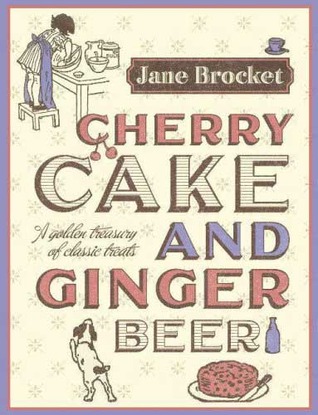
Having grown up on a steady diet of British books, my food memories were sumptuously stitched together by treats that were alien, yet familiar. Recently, a friend and I came across Jane Brocket’s Cherry Cake and Ginger Beer: A Golden Treasury of Classic Treats. The book, we were delighted to discover, offered recipes from children’s books along with an introduction of the story they originated from. The chapters have original illustrations as well as recipes for tuck-box treats, goodies whipped up by storybook Cooks and midnight feasts. There’s seed cake from Swallowdale by Arthur Ransome, pickled lime from Louisa May Alcott’s Little Women and Jean Webster’sDaddy Long-Legs (don’t get too excited, it’s lime brined and stored), and even calf’s-foot jelly from Eleanor H Porter’s Pollyanna.

Brocket tosses together breakfast recipes of creamy porridge and bacon with hash browns. Having grown up in a vegetarian household, I had no clue what bacon rashers were back then, and imagined them to be some cousin of the tomato, since they were all being fried together. It was only when I read EB White’s Charlotte’s Web, did I discover, to my utmost horror, the source of the mouth-watering bacon that all the adventurers loved. Brocket also has recipes for Elevenses, what she describes as “a quintessentially British ritual” loved by Winnie-the-Pooh and Hobbits. There’s Paddington Bear’s favourite marmalade buns, which go well with hot cocoa; and fresh and gooey macaroons from Blyton’s Five Find-Outer series which were adored by Fatty.

Tea-time was sacred in children’s books. How many of us brewed pretend tea for our dolls, teddies and even parents, complete with mini cups and saucers? And before toast became the new global food trend, Mr Tumnus, the faun from CS Lewis’ Chronicles of Narnia – The Lion, the Witch and the Wardrobe, had a toasty tea with “a nice brown egg, lightly boiled… sardines on toast, then buttered toast and then toast with honey”. Since tea-time is really about cakes, there’s Mrs Banks’ bribery and corruption cocoanut cakes from Mary Poppins Comes Back, Milly-Molly-Mandy Has Friends’ muffins which can be toasted on forks over a crackling fire, and treacly, sticky ginger cake, a speciality of Aunty Fanny in Famous Five (“It was dark brown and sticky to eat. The children finished it all up and said it was the nicest thing they had ever tasted”.) Treacle, as I only recently found out, was just liquid molasses.

Brocket suggests an alluring recipe for hunger in which all you need is an outdoor space like a beach, garden or even a secret island. The method is simple – add adults and children to that fresh air along with outdoor equipment “according to season” and allow “to blend for several hours”. Feed the kids and adults well and leave them “to read good books”.

What Indian CEOs Can Learn From This Tea Company About Having Women In The Boardroom

http://www.thebetterindia.com/16089/indian-ceos-can-learn-south-indian-worker-board-women-boardroom/

Paneerselvam, with her left leg poised gracefully behind the right, shoulders and arms bent gently, braced her body for the run. In her sunny yellow and cobalt blue sari, the 50-year-old looked more like a dancer, than an athlete. But that perception changed as she sprinted across the tea field, stopping to turn back and laugh. “I love running,” Paneerselvam says in Tamil.

Pannerselvam-the runner

She is not a marathon runner in training, but a tea plucker who has been working at The Bombay Burmah Trading Corporation Limited, a Fairtrade-certified tea estate for the last 25 years in south India. She is also a member of the Mudis Foundation Joint Body which democratically decides how to invest the Fairtrade Premium. Being a Fairtrade-certified tea estate ensures that a premium – an extra price over the market one – benefits the workers, who on average draw a daily wage of Rs 300.

The joint body is unique in another way – it has an equal representation of men and women workers who mutually decide how the premium should be invested. This is mandated by Fairtrade standards, which requires the committee to have an equal or proportionate representation of men and women.

BBTC Tea Factory, women

The committee has been striving to work towards gender equality long before India became one of the first developing nations to pass a law to make women representation on corporate boards mandatory. Corporate honchos can well take a few lessons from this joint body, given that reports reveal that India has one of the worst ratios of women directors to their male counterparts on company boards.

Using the Fairtrade Premium on the OOTHU tea, they grow, 2,100 families of tea pluckers chose to get Cello Casseroles to keep their lunches and dinners warm.

The committee’s meetings are meticulously recorded, and each member represents a division of the tea estate. Decisions are taken after the tea workers’ consultation and approval as well as in accord with the BBTC management. Lakshmi, who has worked for 18 years at the BBTC, said that the work force she represents meets at a tea shop in the evening. “We talk about the meetings, they give their responses – yes or no to a certain suggestion – and I bring it back to the board,” she explained. “It’s a two-way system.

Over the last 19 years, the premium has been used for short term to long term projects including education scholarships for college-going children of workers, a retirement fund, a computer centre for the community school, and smokeless chulhas and emergency lights for all households.

What’s evident is that this decision-making has taken big strides in making the women feel more confident and vocal about the divisions they represent, their rights and their future. While most of them, like Paneerselvam grew up in these same tea estates where their parents worked, they are much more ambitious about their children’s future. Most are arts and engineering graduates, while one of the workers, whose name curiously is Indira Gandhi – her daughter is a finance manager at an accounting firm.

BBTC tea estate, computer centre

BBTC tea estate, women empowerment

Of course long standing patriarchal conditioning cannot be easily abandoned and decisions such as buying insulated lunch boxes or smokeless chulhas seem to be mainly the purview of the women, while education scholarships and retirement funds discussions are agreed jointly by both men and women.

“It may seem like a small thing,” said Paneerselvam, holding up a pressure cooker funded by the premium. “But I can cook more than one item in this pressure cooker and that means I get time to do other things. Small things like this make a bigger impact.”

And of course, this means Paneerselvam has more time to pursue her passion – athletics. “My parents always encouraged me to take part in athletics,” she said. “Today my children also love running. But of course when we race, I usually win.”

Like this story? Or have something to share? Write to us: contact@thebetterindia.com, or connect with us on Facebook and Twitter (@thebetterindia)

About the Author: When Bijal Vachharajani is not reading Harry Potter, she can be found looking for tigers in the jungles of India. In her spare time, she works so she could fund the trips and those expensive Potter books. She did this by working as the Editor at Time Out Bengaluru. She is now a consultant with Fairtrade India.

– See more at: http://www.thebetterindia.com/16089/indian-ceos-can-learn-south-indian-worker-board-women-boardroom/#sthash.WxGj3wzT.dpuf

Lesbian love for the troubled teenage soul

http://www.dailyo.in/art-and-culture/lesbian-love-for-the-troubled-teenage-soul/story/1/630.html?page=profile&user=166&type=moderated&start=1

With Duckbill’s “Talking of Muskaan”, Indian young adult books step firmly out of the closet.

On the surface, Muskaan, the protagonist of Himanjali Sankar’s Talking of Muskaan, is a regular 15-year-old. The green-eyed teenager is a great swimmer and class topper. She has loads of friends and lives in a beautiful house with a garden and a tree house. Prateek, the resident stud, has a crush on her. But gradually, the reader discovers, Muskaan is different – she doesn’t want to be forced to do “what girls do” and is ragged mercilessly for this, even being dubbed “macho musko” by her own friends. When Muskaan kisses her best friend Aaliya on the lips, life, as the teenagers know it, isn’t quite the same again. Things go downhill and as is revealed at the beginning of the book, the troubled teenager, in an act of desperation, tries to commit suicide.

Published by Duckbill, Talking of Muskaan is a sensitive and brave portrayal of being a teenager in today’s confused times. It deals with sexual orientation, identity, urban angst and growing up surrounded by hyper-consumerism. But most importantly with this story, Indian YA (young adult) books have firmly stepped out of the closet, by taking on a subject that’s usually-taboo-for-the-young-ones.

Muskaan and her friends are growing up in a homogenous world, grappling with banal and ginormous issues that young readers will be familiar with – the dizzying feeling that comes with that first crush, the vacuum that’s left behind with your best friend’s silence, the horrid realisation that you don’t have enough money to buy an expensive birthday gift for a classmate, the nasty bullying in the school bus. Being a teenager is tough, and being lesbian, is even more so. Teens who are dismissed callously, bullied relentlessly and treated cruelly because they are attracted to people of the same-sex can have a tough time at school.

When Muskaan confesses to bestie Aaliya that she likes girls, she finds herself alienated. Subhojoy, who is from a different socio-economic background and is often marginalised for it, is the only one who understands. At one point, he look at Muskaan and thinks, “She talks about the world as if she is a bystander, not like she belongs to it. I also do that. Perhaps that is what makes us friends”.

talking_of_muskaan-c_111114040440.jpg
Talking of Muskaan, Duckbill Books, Rs 225

When you are 15, perception is everything and Muskaan is defined by her classmates’ opinion. Her sexual orientation eclipses everything else, almost as if she as an individual doesn’t matter. Even her story unfurls from the viewpoint of three classmates – her one time best friend Aaliya, her ally Subhojoy, and Prateek – who tell us Muskaan’s story. Prateek, for one, is full of vitriol – “Muskaan is not only homo, she’s also rude. Maybe homos are like that only”. His classmates mirror his thoughts, they speak of homosexuality in hushed tones, speculating in the school corridors, in whispers laced with ridicule and contempt. Aaliya wonders at the immaturity of her friends, while being unable to accept her own callousness towards Muskaan at the same time. She thinks, “They’d been skirting around the issue like dainty Victorian ladies, not using the word homosexual but delicately hinting at it. Which century are we living in?”

India has its share of adult LGBT writing and Talking of Muskaan now puts YA books on that literary map. Duckbill previously published Facebook Phantom, by 17-year-old Suzanne Sangi. The book was a paranormal romance, but it introduced a gay character who later on becomes straight. For Sangi, it was a way of exploring alternative sexuality and the confusion that comes with having crushes on a person of the same-sex. In contrast, Muskaan is very definitive about not being attracted to boys.

Since only a handful of Indian YA books have LGBT themes or characters, teenagers usually turn to international books to read about this topic. The internet is buzzing with listicles of the best LGBT books for younger readers. For instance, John Green and David Levithan’s Will Grayson, Will Graysontells the story of two American boys with the same name, one straight and gay. Both authors paint the gay and straight characters deftly – they are funny, dark, confused, and quirky. Essentially, they are normal adolescents, whatever orientation they maybe. Levithan’s Two Boys Kissing is poignantly different – a group of dead gay men who succumbed to AIDS narrate the story of two boys and their attempt to create a world record for the longest 32-hour kiss. It lays bare the complexities of parental approval, peer pressure and the relief that comes when friends and families extend unconditional support.