Gond medallist

http://archive.is/J8DMq
http://www.timeoutmumbai.net/kids/features/gond-medallist

Time Out talks to Gond artist Bhajju Shyam about his journey from anonymity to acclaim

Gond art, Tribal Art, Gond tribal artist, Bhajju Shyam, the london jungle book
In 2002, Gond tribal artist Bhajju Shyam was commissioned to paint the walls of an Indian restaurant in London. Along with another artist, Shyam flew on an airplane for the first time in his life. “Everything was new for me,” said Shyam. “I was at the airport – there was so much hustle bustle, bags being checked in, forms to be filled, crowds milling everywhere. And I had never thought I would get to go aboard a plane.” Shyam sat by the window in the aircraft, taking in the busy runway. As his flight took off, he couldn’t help but think of the heavy plane as an elephant that had sprouted wings and started flying. Two years later, Shyam captured his experiences in The London Jungle Book, a lavishly illustrated book published by Tara Books and the Museum of London that includes the image of a flying elephant.
Over the last six years, Shyam has collaborated with Tara Books to create a range of award-winning books for children using Gond tribal art. His work has given a new spin to children’s book illustrations by incorporating traditional elements into modern storytelling. However, Shyam did not set out to be an artist. Born in 1971 in the Gond tribal village of Patangarh in Madhya Pradesh, Shyam remembers that his initial brush with art was his mother painting the walls of their home during festivals and marriages. At 16, his family’s poverty compelled Shyam to move to Bhopal in search of a job. “I worked as a night watchman at a forest division until I met my uncle who asked me to be his apprentice,” recalled Shyam. The uncle was Jangarh Singh Shyam, a renowned Gond artist. Shyam started out by filling in colours for his uncle’s paintings, till Jangarh Singh encouraged his protégé to strike out on his own.
Since 1998, Shyam’s work has been exhibited in the UK, France, Germany, Holland and Russia. However, illustrating children’s books happened by accident after he attended a Tara workshop in Chennai in 2003. “As part of the workshop, we organised a tour of Chennai,” said Gita Wolf, the editor of Tara Books. “We were fortunate to have the opportunity to watch Gond artists at work and note their ways of seeing and rendering.” Shyam was part of the workshop, and Tara commissioned him to work on The London Jungle Book.
On one page of The London Jungle Book, a rooster stands next to Big Ben. “I realised that people work with clockwork precision in London and look to the Big Ben for the time,” said Shyam. “In our village, the rooster is a kind of alarm clock, who crows at 4am and signals that it’s time to wake up. I couldn’t help but draw parallels.” In The Flight of the Mermaid, Shyam teamed up with authors Gita Wolf and Sirish Rao to retell Hans Andersen’s Little Mermaid. The story is familiar – about a mermaid who yearns to visit the land above – but Shyam’s rendering of the story gives it a traditional Gond look.  The artist has also contributed paintings to The Night Life of Trees, a hand-bound collection of traditional Gond images of trees and spirits.
The self-taught artist now lives in Bhopal with his family. His two children often dabble in painting during their vacation, but Shyam is clear that he will let them decide if they want to follow in his footsteps. “They are still young,” he said, adding, “But when a book of mine gets published, they do get excited and show it to their friends.”
After the success of his Tara books, Shyam repeatedly gets offers from other publishers. “I only do a story if I like it and if I find that it’s connected with my tradition in some way,” said Shyam. Once a year, he meets up with the Tara editors to conceptualise a book and then works out of home. “We work together like a family,” said Shyam. “The story is in English, I try to understand it in Hindi. Once I start working on the illustrations, I send it to them for feedback. Initially, I didn’t have an idea about colours, but their team would help me with that.”
Shyam is now concentrating on planning exhibitions and popularising Gond art. “Gond art has only started making a name over the last decade,” said Shyam. “The world knows contemporary artists. We are hoping that soon they will also recognise our work as a form of art.”
By Bijal Vachharajani on December 10 2010 
 

TRIPPING OVER TREE TOPS

http://natgeotraveller.in/magazine/get-going/Costa-Rica.html
Costa Rica’s canopy tours offer a lofty perspective on a bustling rainforest
By Bijal Vachharajani

I was stuck. Worse, I was dangling in mid-air, some 50 meters above terra firma, strapped to a horizontal traverse cable, looking quite like a langur. But unlike a monkey who can gracefully make her way from one tree to another, I was stranded in the middle of a zip line in Monteverde, a cloud forest in Costa Rica. Turns out I had braked too early. I craned my neck and spotted my friends gleefully pointing their cameras at me, recording this moment of indignity for digital eternity. Helplessly, I squinted down at the emerald tree tops I swung above. At long last, a grinning guide zoomed up and pedalled me back to the next stop.

Thankfully, the canopy tour got easier from there. Securely strapped in our harnesses, mind buzzing with the crisp instructions of our group leader, we felt like coal miners—kitted out in ropes, gloves, and a hard hat. Zip lining, once you get the hang of it, is a lovely way to see a pristine forest. You whoosh through the jungle, soaring above the trees and undulating hillocks, squealing like an excited puppy, and finally braking to a stop so that you don’t hit a stout tree trunk.

Canopy tours in Monteverde include long suspended bridges scattered through the cloud forest, which give you the chance to walk through leisurely and soak in the panoramic view. As we tottered through the bridges, keeling from one side to the other, we peered through our binoculars looking for the resplendent quetzal bird. The thick tree cover was the perfect hiding place for Monteverde’s brightly coloured denizen. We didn’t spot the quetzal, but instead met agile humming birds, dazzling butterflies, a placid sloth, a pair of chattering capuchin monkeys, and heard the eerie-sounding howler monkey.

After we finished the longest zip line, which our instructor called the “daddy of all tomatoes” (I don’t know why, or maybe I muddled up some Spanish here), it was time to tackle the 1-km-long Superman zip line. I was hooked on to a cable, face down. And with a push I went, flying like a bird, a plane, a superhero? I was worried that my spectacles would fall off (littering the pristine forest), so I didn’t strike the classic Superman pose. Now I know what it is to have a bird’s-eye-view of the land. It’s an intense experience: The greens look more vivid, the trees more stolid, and the wind seems louder.

The canopy tour finished with the Tarzan swing, where one jumps off a platform and swings on a piece of rope. Hard-core adventure sport enthusiasts may scoff at it, but for a wobbly-kneed first-timer this was as good as bungee jumping. I walked my longest walk ever, down a suspended bridge, heart thumping. I tried to say something to the instructor, but ended up croaking like a toucan. Safely hooked up, I jumped at the count of “tres”. It was a silent jump. My friends waiting below, did all the shouting for me. As I swung, I let out a yell that would have made Tarzan proud. And then the adventure was over, a tad too soon.

Vegan City Guides: Mumbai

Rithika Ramesh, Vegan City Guides, R186 

Two years ago, a South African friend and I were discussing the beautiful city of Cape Town. I was complaining that when I visited the country some 15 years ago, I subsisted on French fries as I could barely find any vegetarian food. This is how the conversation went:

Me: “…so basically I starved.”

Friend: “How can that be? We make excellent chicken back home.”

Me: “Umm… yes… I don’t eat chicken…. Hens… you know.”

Friend (nodding in understanding): “Ah, but what about fish, we are next to the ocean!”

Me: “Er… I don’t eat fish as well, you know, they swim and all that! Oh, and I don’t eat eggs.”

Friend (shaking his head): “No wonder you starved.”

Trying to be vegetarian on an international trip is a bit of a challenge, and even more if you are vegan (people who follow a dairy-free diet). Since I visited South Africa in the ’90s, Internet was still something of a mystery and we relied on good ole’ word of mouth for sightseeing and food recommendations. Since then things have changed – travelling for vegans is easier, thanks to the Vegan City Guides, a series of guidebooks published by an independent e-book publishing house which started in South Africa. On their website, the mother-daughter publishing pair explains their mission, “Wouldn’t you be happy in the knowledge that wherever you went, you had somewhere to turn to for advice on where to eat, sleep, shop and enjoy your leisure time as a vegan? No more relying on French salads and pommes frites to get you through the day in a strange city! Above all, it is our aim to help ‘normali[s]e’ veganism to the extent that traveling abroad while maintaining a vegan diet will no longer be perceived as being a burden”.

Last November, they published Vegan City Guides: Mumbai, written by Rithika Ramesh. A vegan since 2009, Ramesh runs The Green Stove, what she calls “Mumbai’s only 100 per cent vegan bakery”. The guide offers a vegan guide to the city’s restaurants, pubs, malls and even vegan catering and shopping. In her introduction Ramesh warns that “Mumbai is yet to wake up to the vegan revolution” but does agree that “it is never hard to find something vegan in a restaurant if you know what to avoid and explain it to the wait staff”. She goes on to explain the green dot system of labelling vegetarian foods, pointing out that it includes dairy products. For tourists, there are some handy translations for words such as “ghee” and “doodh”, and a map that can help them navigate the culinary landscape of Mumbai.

Most of the guide deals with vegan eating. In the Restaurants, Pubs and Takeaways, Ramesh offers a range of restaurants and also advises on the price range. She recommends customising Chetana’s thali by cutting out the non-vegan options like dhokla and kadhi. Then there’s Ray’s Pizza in Bandra which makes a pizza without cheese. What really works is that Ramesh suggests more iconic and local places such as Prakash in Dadar and Ram Ashraya and Café Madras in Matunga. And at the other end of the spectrum, she also includes international names such as the Michelin-star dim sum house Yauatcha and Suzette.

Ramesh writes simply without any frills and that’s perfect for a guide. There is some generalising, but it’s evident that the author has put in a lot of leg work in researching vegan options in the city. That said, it’s a fact that a lot of Indian vegetarian foods can easily be made vegan, by simply cutting out the ghee or using, say, cashews instead of cream to make a rich gravy. Idlis, dal-rice, bhel puri,and many veggies are already vegan.

In many ways, it makes sense that the first India vegan guide is from Mumbai. A few years ago, the residents of the swanky stretch of Malabar Hill to Marine Drive pushed for no-meat restaurants. So much so that Pizza Hut on Marine Drive turned veggie as well. The debate between “vegetarian” and “nonvegetarian” buildings also started in our city. And we have learnt, first hand, that most restaurants are happy to customise food orders based on patron preferences.

The Nightlife in Mumbai was a tad too short, where you mainly learn that “Pub food is not very vegan friendly so it’s better to eat before you hit a pub or you’ll be eating French fries through the night”. The Vegan Shopping section recommends a list of brand names in biscuits, soya milk and chocolate. What really leaps out at the reader is that the list is small. It makes you wonder, if in the future food companies will consider developing healthy and tasty options for lactoseintolerant people, vegans or people with certain kinds of allergies. Until then, this guide is a good primer.

By Bijal Vachharajani on January 03 2014 7.24am
Photos by Mohnish Dabhoya

Only hue

http://www.timeoutbengaluru.net/kids/features/only-hue
18342401.jpg

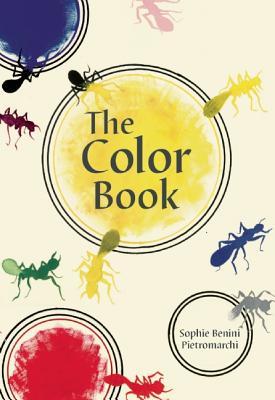
Hmmm… don’t colours in a box seem like birds shut up in a cage? The poor creatures don’t know where to go, they know nothing outside their cage. So let’s free them, and see where they go”. Beautiful analogies like this one are part of The Colour Book, a new children’s book by Sophie Benini Pietromarchi. Published by Tara Books¸ The Colour Book is an imaginative foray that invites its readers to step into the world of colours.

An artist and teacher, Benini Pietromarchi’s latest creation lets “colour speak for itself”. The Colour Book is a sequel to The Book Book, another Tara publication where the artist delved into the art of bookmaking and encouraged kids to become authors. “The seed for this book was in my previous book, The Book Book,” said Benini Pietromarchi, over email. “It’s a chapter called ‘Falling in love with colours’. While I was writing it I realised the subject had lots of potential for further development. So when I had the joy that Gita Wolf [Tara Books co-founder and publisher] asked me for a new book that could be done after The Book Book, it became The Colour Book.”

In the book, the artist first takes a walk down memory lane looking for colour associations by remembering her own land of childhood colours. She describes eating half a large tomato that was deep red in colour and when she sprinkles white salt over it, the salt turns transparent. The artist then goes on to liken this magical process to how you can make colour transparent by adding water to it. Benini Pietromarchi grew up in Paris and went on to study graphic design and literature in Italy. “One of my strongest influences is 1920s and ’30s Paris, where my grandfather was very active in the artistic community,” revealed Benini Pietromarchi, who now lives in Rome.“He wrote surrealist poems and was a jazz musician. On my Italian side there is Tuscany, with its beauty and its light. I’ve always lived between these two cultures without truly belonging to either, my home is in the in-between.”

The book is meant for children above the age of eight, a time when budding artists begin to take painting more seriously. However, the book will be a collectible for pretty much any artist. Lavish and endearing, The Colour Book is one of the most interesting books to have been published in 2013. The writing is evocative and the collagestyle layout makes it a fun read. From understanding the basics of colours to mixing them and maintaining a colour book, the ultimate guide to hues and tints.

In one of the chapters, the author asks the readers to become a colour explorer. “You need to be a sort of collector butterfly (as opposed to a butterfly collector),” said Benini Pietromarchi. “That is, you need to have both freedom and curiosity, and to look, look and look some more. You need to collect photos, words and objects and organise them according to your own very personal system.”

Putting together The Colour Book wasn’t an easy task though. “I started with an ambitious research on the literature of colour, and I read Goethe, Wittgenstein, Brusatin and so on and also the writings of Klee, Matisse, Kandinsky, Bacon, and so on the subject of colour,” recalled Benini Pietromarchi. “The scientific approach fascinated me but it did not work for the type of book I had in mind. So I started again, and I thought of colour as a stain, as a rebellion against the neatness, the cleanliness that mothers demand of their children. Colour as discovery, as individual awakening and as surprise.”

Children are curious and it’s that curiosity that Benini Pietromarchi feeds in her book. “Children like to poke at things to see how they behave, they like to play with food, to see how a punctured egg yolk spreads out on a plate,” she pointed out. “Those are the first experiments with textures and colours, the first instances of making magic potions. So I had the intuition that to make magic potions is similar to creating a colour. In a magic potion we confer magical powers to the elements that compose them and the result is a one-of-akind potion with a specific property. That’s what a colour is, it’s a mixture of different forces that yields its own property. So that was the begining of this long journey on colours.”

Apart from the novel concept, what sets the book apart is that it encourages children to think outside the pencil lines. There’s a red-and-white striped zebra, a blue Chihuahua and an orange rhino in the book. This becomes more relevant when kids are often rapped on their knuckles by art teachers for painting different colours on to a tree or a dog. “The book starts from the premise that colours in their colour boxes are like caged birds that must be freed,” said Benini Pietromarchi. “I insist on saying that I cannot ‘explain’ colours, they are for every person to subjectively discover through their own colour dance. It’s essential to learn to see and observe the colours around us, so as to be able to create them anew, to recreate the atmosphere they convey to us.”

When not writing books, Benini Pietromarchi conducts children’s workshops. “I don’t have a favourite colour, what excites me the most are colour combinations. I feel as if I lived inside a colour book. In fact my studio’s walls are covered from floor to ceiling with colour combinations. They’re of an ongoing exploration, it’s a necessary game where I match colours I need to gaze at eventually will end up in a book of colours, but for now it is as if I was working in a giant nest of little colours combinations.”

The Colour BookTara Books, R700.

By Bijal Vachharajani 

Vikas Khanna: Young Chefs

http://www.timeoutmumbai.net/kids/featuresfeatures/vikas-khanna-young-chefs

DK, R499

As children of the ’80s, some of us grew up making, what was back then, a particularly decadent dessert. Store-bought Marie biscuits would be dunked into a pool of melted Dairy Milk chocolate. The chocolate-covered biscuits would be stacked on top of each other and then left to set in the fridge. The result was a rudimentary frozen chocolatebiscuit cake that had the best of both worlds – biscuits and chocolate. Children today are surrounded by more sophisticated desserts ranging from macarons to tiramisus; and gananches to tortes of all sorts. Many urban kids know their gnocchi from linguini and can pronounce quesadilla and bruschetta (it’s kay-sa-dia and brusque-ta). They watch MasterChef Australia and, going by what the show’s junior version displayed, some children can easily put our cooking skills to test.

Feeding that frenzy of junior masterchefs-in-the-making comes chef Vikas Khanna’s book, Young Chefs. Khanna is the author of Khanna Sutra, a collection of his Valentine’s Day menus, and has hosted MasterChef Indiaand been awarded a Michelin star for his upscale New York restaurant, Junoon. In the introduction to Young Chefs, Khanna writes, “I grew up learning to cook as my grandmother’s little kitchen helper. I ran to her kitchen at every opportunity I got, fascinated with all the smells and action in the kitchen: rolling, baking, chopping, stirring, and whisking”. He goes on to talk fondly about memories in the kitchen and then expounds on “healthy eating, balanced diet and fresh ingredients”.

Khanna’s kids’ cookbook is a lavishly produced one, with tasteful photographs and black-and-white illustrations. The beginning of the book has some handy tips about kitchen hygiene and an illustrated guide to different foods such as proteins, fats and sugars. Khanna goes on to explain the metric and also the imperial measures he’s used in the book, even though most Indian kitchens don’t use ounce and pound measurements. The Cooking Tools guide would make any home cook envious given the gorgeous display of utensils. The chef also gives a pictorial guide to cooking methods such as boiling, simmering, and deep-frying.

The cookbook is divided into Breakfast, Lunchbox, Main meals, Sweet treats and Drinks. The range of recipes includes Indian and international ones, each with a step-by-step pictorial guide. Some recipes are simple, like boiled egg, fruity cereal, and tomato & couscous salad. Others are more complex, such as basic bread, bbq chicken and chicken tikka masala. What we liked about the book though was the fun and simpler recipes such as carrot butter and beetroot raita which find resonance with Khanna’s outlook of healthy and fresh ingredients. We can also see kids enjoying experimenting in the kitchen with some of these recipes.

We were dismayed to find that most recipes required cooking on the stove (though there’s a sign to show adult supervision required. The book’s for a slightly older audience, aged 11 and above.) Further, some of them called for ingredients that are either not easily available in supermarkets such as crème fraiche or readymade shortcut pastry. Going by the photos, in which kids from different nationalities are doing most of the cooking, it’s evident that the book is meant for an international audience.

Keeping these thoughts aside, we decided to give two recipes a whirl, one from breakfast and the other, of course, from dessert. Khanna’s Eggy Bread is basically French toast, and he explains that it’s “popular around the world… eaten in Portugal at Christmas and in Spain and Brazil at Easter”. We whisked four large free-range eggs in a mixing bowl along with milk and cinnamon. And then soaked the white bread for about 30 minutes. Then we fried the bread on both sides until golden and the result was a crisp yet spongy French toast. The recipe suggested accompaniments such as blueberries and maple syrup. Given the price of those at gourmet stores, we ditched that and chose the second suggestion of butter and jam. A perfect Sunday morning breakfast.

Next up, we wanted to try a dessert that didn’t require an oven. We picked the creamy pista ice cream – a sinful combination of condensed milk, pistachios and cream boiled together. Our end result looked like Hulk’s back – greener and gloopier than the photo in the book. We popped the ice cream in the freezer and suddenly found ourselves back to our 12-year-old self when our mother would put her hand-churned strawberry ice cream into the freezer. We had to restrain ourselves from opening the freezer again and again to see if the ice cream had set. But the patience paid off, the pista ice cream was creamy and tasted of summer and childhood. We couldn’t have asked for more.

By Bijal Vachharajani on January 03 2014

Mahua power to you

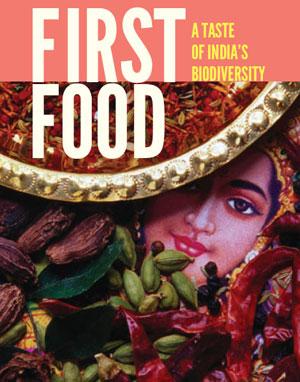
A new recipe book for food celebrates India’s biodiversity. Bijal Vachharajani leafs through its pages.

 http://www.timeoutbengaluru.net/around-town/features/mahua-power-you

0.07913000_1436338803_food

A quick rummage through the contents of our refrigerator reveals how much our eating habits have changed over the last decade. Emerald broccoli florets, butter yellow zucchinis and bitter rocket leaves lie next to pods of country peas, spinach leaves and strings of cluster beans. When pressed for time, it’s easy to rustle up pasta with bottled pesto. When cooking a more fancy dinner, Thai curry with jasmine rice, lasagna or tacos are often on the menu. Yet, while we are embracing world foods and making them an integral part of our larders, we are increasingly alienating the more indigenous foods that used to be part of our grandmothers’ lives.

Take for instance, makhana. For those unfamiliar with it, these cloud-like seeds look like an inflated, rustic version of popcorn. A member of the water-lily family, makhanas grow in the wetlands of Bihar and ponds of West Bengal. Also called foxnut, the thorny plant bears fruits that encase black seeds. The seeds are roasted and cracked open and then sold in the market. Easy to grow and digest, the makhana is also versatile. According to the book First Food: A Taste of India’s Biodiversity, it can be stuffed into a paratha, added to a raita to give it that extra crunch, tossed into a gravy and made into a creamy kheer.

Published by the Delhi-based Centre for Science and Environment, the cook book is a treasure trove of 100 regional vegetarian recipes that highlight forgotten, and often endangered, herbs, spices, fruits, leaves and vegetables from the country’s farms and forests. Some of them, such as bajra, papaya and ragi, are familiar names. Others are more unusual. There is palash sherbet, made from the dried flowers of the flame of the forest tree; chaulai laddoos, a sweet made from the amaranth grain; and mahua poda peetha, a pancake made out of the intoxicating mahua flower. There are also quirky recipes where jute leaves are made into saag and chutney from bhang seeds.

In the foreword, Sunita Narain, the director general of the CSE who gave editorial direction to the book, writes, “We cannot manufacture biodiversity. But we can choose to live with it. We can value it in the wild and in the farm. We can savour its taste and smell. This is joy of living. This is what we must not lose. Ever.” She further points out that each region of India is “diverse in its food habits. It has its own recipes; it cooks with different ingredients; it eats differently.”

First Food brings together writings that reflect nutrition, diversity and culture of indigenous foods from past issues of Down to Earth, an environmental magazine by the CSE. The 39 writers, a mix of scientists, academicians, activists and journalists, include Pushpesh Pant, the founder director of the Academy of Natural Nutrition in Uttarakhand; Madhu Bala, an economics professor from New Delhi; and Devinder Sharma, an agriculture and food policy analyst, apart from CSE staffers. “Everyone has a story on food,” said Vibha Varshney, who is credited with concept and research for the book. “Reporters often come back from different parts of the country with stories of local food. Similarly, nutrition experts tell us about healthy food. First Foodbrings together all this learning.”

Many of the ingredients mentioned in the book are regional. Sangri, pods of the khejri tree, is from Rajasthan; or selni, a wild fruit is common to central India. But First Food encourages readers to go beyond those recipes to rediscover other traditional, local food. “That is the basic idea behind the book,” agreed Varshney, who is also the science editor at Down to Earthand a botanist who has been writing about health and science for over 13 years. “We feel that unless this food becomes part of our lives, we’d end up losing it.”

First Food is divided into Breakfast and Snacks, Meals, Chutneys and Pickles, Beverages, Sweets, About the Plants and Traditions. The recipes are simple. When we tried the makhane ka raita, we found that the curd-based recipe tasted similar to dahi bhalla and was a refreshing accompaniment to our foxtail millet upma. And best of all? It took us less than five minutes to whip up. One minor quibble – while the book is lavishly produced with some beautiful photographs, we wish there were more images of the lesser-known ingredients.

First Food highlights food security, but it’s really a showcase of India’s vibrant biodiversity. “Through ages, people have depended on local biodiversity for food,” said Varshney.“But with the new agricultural practices which promote monocultures, this connection is now broken. We hope that with revived awareness, this link would be renewed. For one, it would give farmers additional livelihoods. This would give them an incentive to protect the environment.”

First Food, Rs950. To order, visit cseindia.org.

Think Local, Eat Local

http://www.timeoutbengaluru.net/around-town/features/think-local-eat-local
Coverstory

It’s easy to be a locavore in Bangalore (people who choose to eat locallyproduced food, rather than food that’s travelled miles to reach the table). Our city is teeming with locally-grown vegetables and fruits, for instance. Vegetable or meat shopping isn’t a chore for us – a walk through the tarkari market is like a social visit, where we bemoan the price of tomatoes with the vendor or trade recipes with fellow shoppers. It may not be organic produce, but we do end up supporting local farmers. Many of us have pretty balconies, gardens and window sills, where we can grow fresh herbs. Concerned individuals and collectives have kick started local initiatives to ensure that our food is less jet lagged. Our city chefs proudly doff their hats to local foods, using them in their gorgeous creations – from millets to lesser-known leafy vegetables; they have figured it all out. At a time when food miles and communities are taking precedence, Time Outhelps you think local, shop local and eat local.

DVD Review: Epic

http://www.timeoutdelhi.net/film/dvd-reviews/dvd-review-epic

It’s a green, green world in Epic, one of the latest animated offerings from the creators of movies such as Ice Age. Teenager Mary Katherine, who goes by MK, is exasperated with her dad, an eccentric scientist who is convinced that the forest is teeming with tiny denizens. Of course he’s right and these miniature soldiers are called Leafmen, who ride humming birds and have one task in life – to protect the verdant forest from the Boggans, whose sole purpose is to cause decay on the forest. To the Leafmen, all humans are slow and stupid beings called stompers.

MK gets stuck in the middle of this tussle, when the forest queen Tara entrusts her with the all-important flower bud that will ultimately reveal the next heir of the jungle. In a manner that’s reminiscent of Alice in Wonderland and Honey, I Shrunk the Kids, MK is reduced to the size of the Leafmen. MK finds herself on a quest with Ronin, the rugged, taciturn chief of the Leafmen; Mub and Grub, the snail and slug who are thrown in for comic relief; and the handsome, rebellious Nod.

Epic presses all the right buttons – spectacular animation, a not-so-subtle message about conservation, and of course, dollops of romance and humour. A beautiful movie – with colourful flowers and gnarly trees dotting stunning landscapes– we can see that the 3D version must have been enthralling to watch on the big screen. Yet, there’s something missing in the movie. We already know that good will triumph over evil, and that means there’s just not enough drama to pull the film together.

We loved the DVD’s special features, but they are just five to ten minutes long. In Birds, Bugs and Slugs: Forest Explorer, children can learn about the animal world through the movie’s characters. For instance, Nim the caterpillar becomes a tool to explain that the insect has a ferocious appetite and can eat up to three times its body weight. In Rot Rocks, we take a look at the forest from its darker side and see the point of view of decay and rot. A back story about the making of Epic was sorely missed.

Excel Home Entertainment, R599.

By Bijal Vachharajani on October 25 2013 

The Cuckoo’s Calling

http://www.timeoutbengaluru.net/books/reviews/cuckoo%E2%80%99s-calling

Our copy of The Cuckoo’s Calling came with a carefully-stuck on round label, announcing that the book’s author is “JK Rowling writing as Robert Galbraith”. This little fact is now quite well-known, thanks to an anonymous tweet and some smart and meticulous reportage by London’s Sunday Times. But this nugget is purely incidental to the book, except that now that the identity of the author is known, The Cuckoo’s Calling is a bestselling book.

Rowling/Galbraith’s book is a fairly enjoyable read when it comes to the genre of crime novels. The story’s protagonist is the magnificently etched out Cormoran Strike, a war veteran turned private investigator. A massive hairy man, Strike resembles a grizzly bear, but his sharp memory and keen intellect are what make him intriguing. When the book starts, we find out that he is veering on the edge of bankruptcy and has once again broken up with his gorgeous but impetous girlfriend. He ends up living on a camp bed in his tiny office.

Yet little fazes Strike, including be-kittened death threats from a disgruntled former client (invoking the ghost of Dolores Umbridge for some). The perfect foil to Strike is Robin Ellacott, a temp secretary who ends up liking this strange detective work a lot.

Three months after Lula Landry, a beautiful but troubled model falls from the balcony of her posh Mayfair House, her brother approaches Strike to investigate the death. The police have dubbed it as a suicide but the brother John Bristow isn’t quite convinced. What follows is a journey into the seemingly lustrous world of modelling where designer labels and contracts are ominous objects of desire. Then, there’s Landry’s dysfunctional adopted family – a dead brother, an ailing mother, a charming but suspicious uncle. Strike, with Robin at hand, has to sift through multiple suspects including Landy’s famous boyfriend and an elusive girlfriend, but then he is a resourceful sort of bloke.

The Cuckoo’s Calling is Rowling’s second adult novel, after the much anticipated The Casual Vacancy. But it manages to engage the reader, mainly because of the meticulous detail that has gone into painting the characters. For instance, Bristow has “rabbity teeth and blotchy skin”, while Landry is “dark, luminous, fine-boned and fierce”. Physical appearances apart, most of the characters are complex enough to keep the page turning. Yet, there’s a pitfall – sometimes the story becomes too detailed and ponderous. Rowling/Galbraith isn’t always charitable, especially when it comes to writing about the bourgeoisie or members of the richer class.

The story visits the murky realms of drugs, alcoholism and racism, touching the subjects lightly. But what makes the book immensely readable is the chemistry between Strike and Robin, and the reader gets the sense that there’s more to come in future books. Rowling/ Galbraith has said there’s another book in the pipeline. We can’t wait.

Robert Galbraith Hachette India, R599

By Bijal Vachharajani on September 27 2013

The bone ultimatum

http://www.timeoutbengaluru.net/books/features/bone-ultimatum

Bijal Vachharajani spoke to the author of The Bone Season


17199504

In May 2013, The New York Times profiled a slew of 20-somethings who are on the brink of success or already successful. Rubbing shoulders with Chris Hughes, co-founder of Facebook, and Alexander Wang, creative director of Balenciaga fashion house; was Samantha Shannon, a 21-year-old Oxford student. Shannon is the author of a seven-part literary fantasy series, The Bone Season, the first of which has just been published. The reason Shannon makes the list is that Bloomsbury, the British publishers of JK Rowling’s Harry Potter series, have given “Shannon a six-figure advance for the first three books, an unprecedented show of support for such an untested first-time author”.

The Bone Season revolves around Paige Mahoney, a 19-year-old who lives a double life in London because she’s clairvoyant. While her father thinks she works in an oxygen bar, she’s actually part of a syndicate that is full of people with psychic abilities, which is a crime under the Scion rule in London. Mahoney is a dream-walker, which means her spirit can go hurtling into the aether. Her life changes when she’s arrested and finds herself in an abandoned version of Oxford city where the Rephaim – cruel, infallible beings – dwell. Shades of Suzanne Collins’ The Hunger Games and George Orwell’s Ninteen Eighty-Four emerge, as Mahoney discovers the truth behind the Rephaim regime.

The story isn’t very original, but what brings it to life is Shannon’s imagination – her inventiveness when it comes to the Rephaim-infested Oxford and the colourful details she weaves into her narrative. There’s also the good looking and mysterious Warden Arcturus, who happens to be Mahoney’s master. But the story falters towards the end. However, going by the vein of popular books today, The Bone Season is right on mark – dark, check; good-looking protagonists, check; magic and sci-fi, check. In an email interview with Time Out, Shannon talks about how her debut novel is “penny farthing futurism”.

Tell us about The Bone Season.
I started writing The Bone Season when I was 19 years old, shortly after completing an internship at David Godwin Associates, a literary agency in Seven Dials, a small district in London. While I was there, I had a vivid image of a girl having the same day at work as me, but she happened to be clairvoyant – and The Bone Season was born. I sent the finished book to the same agency in April 2012 and it was bought by Bloomsbury a month later.

You’re a student at Oxford and have placed your university into a disturbing dystopian world. Tell us about it.
The novel begins in 2059, 200 years after the day that triggered its events, but 1859 still shapes the world of Scion. The way I handle this in the book is through anachronism. You’ll see gramophones, Victorian clothes and herbal remedies in the same space as oxygen bars, data pads and advanced painkillers. I’ve tried to find a word that fits what I’m doing with the novel in this respect. One of the guys at Bloomsbury suggested “penny farthing futurism”, which I love. The idea of clairvoyant powers just came to me while I was working at Seven Dials.

On your blog, you mention that music is inherent to your writing process. How did you mix it into The Bone Season?
I’m a big fan of old music, from the Victorian era onwards. I’d love to own an antique gramophone. The Bone Season is set in 2059, but shaped by events occurring in 1859. I try to bridge the two timelines through anachronism, and weaving in some tunes from the 18th, 19th and 20th centuries helped me create an “old world” atmosphere.

Your story comes on the heels of a slew of books set in dystopian worlds. Yet, there’s a vein of disturbing reality to it – politics, inclusiveness. How difficult was it to write two worlds?
It was surprisingly easy. Just as Paige operates on two levels – spirit world and physical world – I operate on “book level” and “reality level”. When I walk around London I see both my London and Paige’s. The two worlds overlap and blur together in my mind.

A seven-part series – how daunting is this, especially when everyone’s drawing parallels to Rowling?
It’s been overwhelming, to say the least. I’m a young, unknown author and there’s a lot of anticipation to live up to. Having said that, it’s been great to have so much early interest in The Bone Season.

I’m a huge fan of Harry Potter and devoured the books with every new release. I was born in 1991, so I’m very much part of the “Harry Potter generation” – those whose childhoods just wouldn’t have been the same without it. JK Rowling is a luminous storyteller. I love her sense of humour and the intricate wizarding world she built around Hogwarts.

I think all writers aspire to be like her, to capture readers like she does, but I didn’t think about Harry Potter when I wrote The Bone Season. The comparison just came from our similar deals: seven fantasy books with Bloomsbury.

The Bone Season, Bloomsbury, R499.

By Bijal Vachharajani on September 27 2013