
Cooked: A Natural History of Transformation

http://www.timeoutmumbai.net/restaurants-caf%C3%A9s/featuresfeatures/cooked-natural-history-transformation

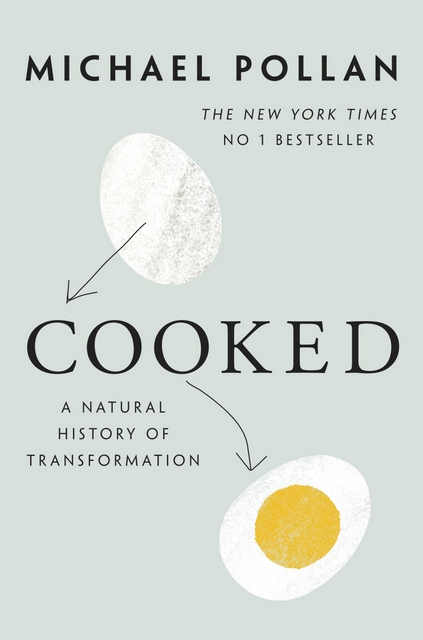
Pollan dons an apron and heads into his home kitchen to understand the fundamentals of cooking
Michael-Pollan-Cooked

Fifty years ago, my mother, then a teenager, lived in a joint family in a flat in Bandra East in Mumbai. For her family, making nankhatai was something of a bonding ritual. My mother and her two sisters would prepare the dough for this soft biscuit. My grandmother would keep an eagle-eyed watch as they measured out plain flour, crushed sugar, mixed the ghee and finally crumbled in cardamom seeds. The pliant, fragrant dough would be worked into plump white balls and the sisters would hop onto a train to visit their local bakery in Andheri, five stations away. There, they would stand in line with other home bakers, waiting to place their miniature moons on beaten aluminium trays that would be hefted by the bakers into the bakery’s massive oven. My mother still remembers the taste of fresh nankhatai – fragile white balls with crisp, golden edges that dissolved into your mouth. My mother’s memories of nankhatai was on the edges of my mind as I read Michael Pollan’s latest book, Cooked: A Natural History of Transformation. A food activist and professor at the UC Berkeley Graduate School of Journalism in California, Pollan has previously investigated the intimate relationship that humans share with their food sources, through books such as The Omnivore’s Dilemma: A Natural History of Four Meals and The Botany of Desire: A Plant’s-Eye View of the World. This time, among other things that Pollan writes about cooking as a “much more sociable activity” than it is today. “Even today,” writes Pollan in Cooked, “in many Mediterranean villages, you find communal ovens, where people bring their proofed loaves, roasts, and braises, and pass the time in conversation while waiting for their dishes to come out of the oven.” For my mother and her sisters too, the nankhatai ritual was also a time to discuss mundane occurrences, share intimate stories, and bond.

How food is woven into a community’s social fabric is just one of the many ingredients in the elaborate recipe that is Cooked. For this new book, Pollan dons an apron and heads into his home kitchen to understand the fundamentals of cooking. His culinary journey looks at four basic elements – Fire, to understand which he goes back to the oldstyle barbecuing of meat slowly over fire; Water, which takes Pollan on a quest to make the perfect stew/braise; Air, which is understood through the workings of baking bread; and, Earth, for which the author experiments scientifically by brewing beer.

Through his experiments in the kitchen, Pollan puts together a compelling argument about cooking as an art, a survival skill and as “an essential, defining human activity”. He questions the futility of the processed foods that are now standard fare in our refrigerators and cupboards. Those cans and plastic boxes encroach upon our memories of food and its cultural vitality. He wonders why we spend less and less time in the kitchen and takes journeys to understand where his food comes from and how it is cooked. Pollan goes beyond the supermarket aisles and into the farmyards and some master kitchens. He also get us to chuckle at some of his trials, which include chopping pork until his arms grow rubbery. From the humble yeast to innocuous plant matter and the whole hog, Pollan gives the reader a taste of what it is like to get back into the kitchen and cook. Recipes from his culinary escapades are available in the concluding section.

Pollan’s book, though very North American, comes at a poignant time for India. He writes, “How’s it that at the precise historical moment when Americans were abandoning the kitchen, handing over the preparation of most of our meals to the food industry, we began spending so much of our time thinking about food and watching other people cook it on television?” This line could uncomfortably reverberate in many urban Indian households. Our supermarkets are packed with processed foods – from ready-to-eat dals to prepared ginger-garlic pastes and assembly-line bread to instant noodles. Of course, their popularity is fuelled by their easy accessibility as compared to more responsibly grown and healthier produce. Since they are mass-produced, it is cheaper to buy biscuits, than to prepare them at home. Not to mention the effort that goes into, say, baking a nankhatai. While we load our trolleys with precisely these foods in an attempt to cut our time in the kitchen, we spend more time watching TV shows such as Masterchef Australia, debating restaurant food reviews and Instagramming photos of meals. There seems to be time to do all of that, yet when it comes to cooking our meals, as Pollan points out, “fresh is a hassle” and “time is the missing ingredient in our recipes – and in our lives”. At the end of Cooked, Pollan manages to pique the reader’s interest in the intrinsic value and joy of making food in your home kitchen. While, I doubt that most readers will start baking bread or brewing beer after reading Pollan, I for one, am going to my oven to bake a batch of fresh nankhatai.

Michael Pollan Penguin,

By Bijal Vachharajani on September 27 2013
Book nook

http://www.timeoutbengaluru.net/search%3Fkeyword%3Dmortality-doctrine-eye-minds
Mortality Doctrine: The Eye of Minds
Dashner, Random House, Rs866. Ages 14+. 

James Dashner is best known for his Maze Runner series – the postapocalyptic books are set in a labyrinth inhabited by a group of boys. Every night, the maze door is shut and the boys temporarily safe inside a space called the Glade. Outside the Glade, all kind of perils lurk. Dashner’s latest book series is not set in a maze but is reminiscent of his earlier books.The Eye of Minds is the first book in The Mortality Doctrine series, set in a futuristic high-tech world of gaming. Michael is one such gamer whose life revolves around the VirtNet, a hyperreality game which is played by encasing yourself inside a coffin and letting wires snake beneath your skin. Things change when the government enlists Michael to help them nab Kaine, a rogue gamer who’s hacking into players’ virtual lives and destroying their real ones. Young adults addicted to their Xboxes and PlayStations will love this futuristic world where gaming takes on a largerthan- life avatar. Yet, there are subtle plots at play here as real and fictional worlds blur together, throwing up questions about this addictive space, hacking, and the use of technology against the backdrop of cyber terrorism.  

The Screaming Staircase:Lockwood & Co
Jonathan Stroud, Random House, Rs550. Ages 12+.

Over the last few years, London has been plagued by some serious monsters when it comes to literary fiction. From dementors looming over the city in JK Rowling’s Harry Potter series to zombies taking over the country in Charlie Higson’s The Enemy, it’s all been done. This time around, author Jonathan Stroud unleashes a world where Britain’s haunted by ghosts whose touch can kill a person Only some children have the ability to vanquish these spirits.

Lucy Carlyle is one such investigator who joins Lockwood & Co, London’s most nondescript ghost hunting agency, run by teenager Anthony Lockwood along with the nonchalant and sarcastic George. They go ghost-hunting with all sorts of equipment from iron filings to tea bags. The agency’s reputation is up in shambles after they botch up an assignment. They have a chance to redeem themselves, but it involves spending a night in a haunted house.

Stroud is the author of The Bartimaeus Trilogy. His new series is chilling and funny at the same time. The ghosts portrayed in the book are macabre and frighteningly real.Yet, it’s a compelling read, with endearing characters

Munch kin

Bijal Vachharajani leafs through the pages of a new handmade book


51gOKYnYFLL._SY344_BO1,204,203,200_

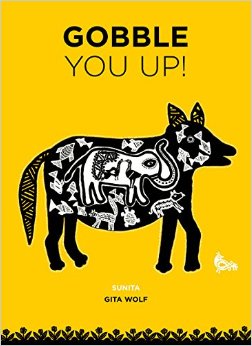
What is a wily but lazy jackal supposed to do when he’s hungry? According to a Rajasthani folk tale, he gobbles up a crane. And then he goes on to make a meal out of a slowpoke tortoise, a cheeky squirrel and pretty much most of the forest. They all end up inside his tummy. This humorous oral trickster folk tale, which subtly throws in themes of greediness and the perils of being idle, is now rendered lavishly in Tara Books’ latest offering, Gobble You Up! Adapted by Tara Books’ founder Gita Wolf in rhyme, the handmade book has been illustrated by Sunita, a Rajasthani Meena tribe artist. The book uses an art form called mandana, which is traditionally painted by women on the walls and floors of their village homes. “We make a paste of khadiya (chalk) with lime, and paint with our fingers using a cloth,” said Sunita, over the phone from Sawai Madhopur, where she lives with her husband Prabhat and two children.

Sunita’s style is fluid and each page is filled with striking illustrations. Since the mandana art form has nature as a recurring theme, Gobble You Up! also has bold yet intricate nature drawings. The richest image is that of the swollen jackal, his tummy full of a forestworth of animals. Sunita and her husband first met the people at Tara Books when the publishing house was creating Nurturing Walls, an art book based on wall paintings by Meena women. “We invited Sunita for a workshop on women’s everyday art in Chennai in February 2011,” said Wolf, over email from Chennai. “We were inspired by her art, and began to discuss a project. The theme of pregnant animals (one inside the other) as well as animals and their young is a common theme in Meena art, and helped to guide the direction of the project.”

Turning Sunita’s art into a book wasn’t easy. “The first challenge was to build a visual narrative sequence from a tradition which works predominantly with static images,” said Wolf. “The second was to retain the original feel of the wall art on a different (and smaller!) surface.” For that, Sunita squeezed diluted white acrylic paint fingers on brown paper. The book is also printed on the same kraft paper, since it “mirrors the mud walls of a traditional village setting,” said Wolf. To define the details of the animals, book designer Rathna Ramanathan split the images into two colours – the jackal is rendered in black and the creatures he swallows are in white. It’s all in the details – a modern Gotham typeface was used to complement the contemporary quality of the art work and the book was hand silkscreen printed in two colours and then hand-bound. For Sunita, this is the first time she’s stepped out of Rajasthan to work on an international publication. Sunita grew up in Ramsinghpura and learnt mandana from her maternal grandmother and cousin sister. “The women in our village would practice mandana especially during festivals like Diwali,” said Sunita. “I was fascinated by it and started learning from them.” Sunita and her family are excited about her book. “We get happy when we buy new clothes, and this is a book,” said Sunita. While this is an art book, Gobble You Up! is meant for children. “When you are working with art forms which are normally not used for children’s books, the balance has to be struck between retaining the essence of the form and communicating the story to children,” said Wolf. “We worked intensively with Sunita so that the essence of the story, and the sequence of images is easy for the child reader to comprehend.”

Gobble You Up! Tara Books, Rs850. Ages 3+.

By Bijal Vachharajani 

Book nook

http://www.timeoutmumbai.net/kids/features/book-nook

Time Out rounds up the latest children’s book releases

Bungee Cord Hair
Ching Yeung Russell, Scholastic, R175. Ages 12+.
Books in verse seem to be the newest form of young adult fiction to be lining the shelves of bookstores. Right after Inked’s Karma, comes another one, this time all the way from Hong Kong. A 12-year-old girl has to leave her grandmother in Mainland China to rejoin her family in Hong Kong. The narrator finds herself lost in this strange city, striving to continue her education while grappling with questions of identity and trying to understand where she actually belongs.

Set around the time when the Chinese government closed the door to Hong Kong, the book is a forceful read that deals with complex issues of immigration, displacement and growing up in the backdrop of political upheaval. In her author notes, Russell confesses that the protagonist reflects the struggles she faced as a child – “When I first came to Hong Kong at age 12, like most people who first immigrate to a new place, I faced quite a bit of discrimination (I didn’t even know that term then), which I had never anticipated.”

Russell writes compellingly, using simple words to sensitively portray how children feel when uprooted from familiar spaces and how little choice they actually have in matters that impact them hugely. Winner of the Scholastic Asian Book Award 2012, the book’s a sequel to Ching Yeung Russell’s Tofu Quilt. There’s a helpful glossary at the back which explains the lesserknown Chinese references.

The Diary of Amos Lee: Lights Camera, Superstar!
Adeline Foo, Hachette, R225. Ages 12+.
Yet another edition of Amos Lee’s out, the Wimpy Kid doppelganger who is based out of Singapore. This time around the school kid finds that his diaries have been stolen and the thief has gone ahead and published them online. Things start looking up when Lee gets tons of fan mail, thousands of people clamouring to be his friends on Facebook and a television director offering to make a show on his diaries. Of course, it’s Lee, so there’s plenty that can go awry, and it does. The end is kind of predictable, but by then we were too busy cracking up to actually mind. Adeline Foo’s writing is funny in parts, and there is a lot of restrained toilet humour predictably. But she manages to bring out tweenage angst well. Stephanie Wong’s illustrations make the book an easy read.

Hole books
Duckbill, R125 each. Ages 6+.
When we were children, a hole in our books would send us scurrying to our mommies in order to get rid of the culprits, those evil weevils and horrid silverfish in our cupboards. And now, Duckbill has introduced books that come with a hole. Only they aren’t of the alarming nature. Instead, the idea, as explained on the back cover is for kids to “Jump into reading through a Duckbill hole”. We couldn’t help but do that given how inviting the books looked. There are four books to choose from – Meera Nair’s Maya Saves the Day, Asha Nehemiah’s Trouble with Magic, Parinita Shetty’s The Monster Hunters and Sharanya Deepak’s The Vampire Boy. The books are beautifully illustrated, with an international feel.

The Maya of Nair’s imagination is a little girl who manages to meet an escaped tiger, rescue her little sister from being lost in a giant mall and also help out a few puppies along the way. In Shetty’s book, Abhay and Nitya take on a school project and decide to hunt down monsters which of course lead to some funny moments. Nehemiah writes an adorable tale of Veena and how her cockamamie ideas usually land her Aunt Malu into trouble. Deepak’s story tackles the familiar world of vampires, but with a quirky twist. All in all, a fun set of books. What’s the point of the hole? We will leave that to the kids to figure out.

By Bijal Vachharajani 

Hades and tales

Bijal Vachharajani spoke to author Rick Riordan about his newest book, House of Hades

http://www.timeoutmumbai.net/books/features/interview-rick-riordan

IMG_3737

At the start of his latest novel, American author Rick Riordan dedicates House of Hades to his readers, apologising for “that last cliff-hanger” on which the Heroes of Olympus’ third book, The Mark of Athena ended. We won’t play spoiler, but we do agree that he left us waiting anxiously for the next book. House of Hades is finally out and the quest continues where a motley crew of Roman and Greek demigods, including Percy Jackson, have to battle deadly monsters and infuriating gods, and even take on Cupid. The bestselling author mashes up mythology (at last count, it was Roman, Greek and Egyptian) with the contemporary world and the result is a series of roller coaster adventures that’re hilarious and insightful page turners. In House of Hades, the characters seem more mature, and while there’s plenty of action, there’s a tinge of melancholia as well. In an email interview with Time Out, Riordan spoke about writing contemporary mythology for young adults and on The House of Hades.

Tell us about your new novel.
The House of Hades is probably the most intense novel I’ve yet written. Two of my characters, Percy and Annabeth, must navigate Tartarus, the most dangerous part of the Underworld, while five of their friends must journey across the Mediterranean to find an ancient temple, the House of Hades, and find a way to bring Percy and Annabeth back to the world of the living.

Your novels bring together two disparate worlds – mythology and the modern world. Tell us about that.
I suppose they’re not as disparate as one might think. I like to take ancient myths and figure out what they have in common with the modern world. I have sons and daughters of the Greek gods running around in 21st-century America, fighting monsters and interacting with the Olympians. It’s a pretty easy match, actually. The myths are timeless and still relevant.

How do you craft characters such as ferocious cheerleaders and rebellious grain spirits? 
I have great fun bringing old monsters up to date. There are so many wonderful creatures from the classic myths. It’s just a matter of finding a way to make them colourful, funny    and engaging for modern kids. Vampire cheerleaders, evil grain spirits who look like babies with piranha teeth – why not?

How do you manage to extract humour from evil?
Humour is important to any story. It’s a leavening ingredient, and the more intense the threat, the more important it is to throw in a little comic relief. You see this in Hindu mythology as well, with Hanuman running around with his tail on fire. I think it’s just a natural human reaction, when faced with great darkness, to try lightening the mood with humour.

Despite the lead protagonist being male, your series has strong female characters. 
In my personal life, I am fortunate to be surrounded by strong women – my wife, my editors, my agent, my mother. They all advise me and have helped guide and shape my career. Given that, it would be very difficult for me to craft a weak, helpless female character. It simply wouldn’t ring true for me, and I’d get lots of grief about it if I tried!

When you started writing mythology-meets -the-contemporary world, how difficult was it to humanise these gods?
I love classic mythology but unless it is told very well it can seem remote to modern children. Setting the stories in the modern world can be very invigorating. As for humanising the gods, I’d argue that the Greek gods are very human to begin with. They have all the flaws humans do – jealousy, anger, envy, hatred etc. They are the human experience, only writ large.

You mentioned in an interview that if you could choose to be a god for a day , you would choose to be Hermes. 
Being Hermes would never get boring. He’s the god of so many things: communication, games of chance, commerce, trickery, ambassadors, thieves and travel. I love to travel. I’d also love to have his pair of winged shoes. That would save so much time in the airport.

How did you start writing children’s books?
My son Haley asked me to tell him some bedtime stories about Greek gods and heroes. I had taught Greek myths at the middle school level, so I was glad to comply. When I ran out of myths, he was disappointed and asked me if I could make up something new with the same characters. I thought about it for a few minutes. I remembered a creative writing project I used to do with my sixth-graders – I would let them create their own demigod hero, the son or daughter of any god they wanted, and have them describe a Greek-style quest for that hero. Off the top of my head, I made up Percy Jackson and told Haley all about his quest to recover Zeus’ lightning bolt in modern day America. It took about three nights to tell the whole story, and when I was done, Haley told me I should write it out as a book. I had a lot to do already, but I somehow found the time to write the first Percy Jackson book over the next year. I just really enjoyed writing it. The story was such fun, and so different from my adult fiction, that I found myself spending a lot of time on it. Now, I’m sure glad I did!

Tell us more about your crossover series, The Son of Sobek. Can we expect to see more?
The Son of Sobek was an experiment – combining the Greek world of Percy Jackson with the Ancient Egyptian mythology of the Kane Chronicles [Riordan’s Egyptian series]. I made it a short story, about forty pages, just to see what would happen, but it turned out so well and the fans reacted so positively I will be continuing the idea. I’m working on a second short work in which two other characters cross paths – Annabeth Chase and Sadie Kane.

Heroes of Olympus: The House of HadesPuffin, R499

By Bijal Vachharajani

The milky way

Author Neil Gaiman talks to Time Out about his latest book.

Where there’s cereal, there must be milk. And that sets off the story ofFortunately, the Milk, the latest children’s book to come from author Neil Gaiman’s stellar pen. Two siblings, a boy and a girl, are waiting for their father, who has popped out to buy milk for breakfast and is inordinately late. Turns out the father, who looks suspiciously like Gaiman, got waylaid because he was abducted by gloppy-looking aliens, walked the plank for a swaggering crew of pirates and was whisked away by a Floaty-Ball-Person Carrier. And to add to the dizzying lactic (and galactic) adventure, there is a bowlful of piranhas with sharp teeth, pretty little ponies and a clever dinosaur who has an aunt called Button.

Alaugh-out-loud book, Fortunately, the Milk comes with Gaiman’s trademark whimsy. Gaiman’s written the much darker Coraline and The Graveyard Book for young readers, but this one takes a sharp detour from those stories. The book is an imaginative romp that’s deliriously funny and downright silly. It’s fantasy and sci-fi rolled into one narrative – think Douglas Adams, Terry Pratchett and Gaiman’s own Doctor Who. It’s a lovely father and child story – we can just imagine fathers regaling their kids with such a tale when having to make up an excuse for missing a cricket session or a school play.

What really makes the book a complete adventure, though, is Chris Riddell’s black and white illustrations. Riddell brings to life the objects of Gaiman’s imagination with his detailed and quirky drawings of the characters and the setting – whether it’s a bereft-looking breakfast table, a disquieting castle or a carton of milk. The artist, young readers will be delighted to learn in the book, when asked “how he imagines the peculiar things that Mr Gaiman asks him to draw, [replied that] he had no imagination whatsoever, but that he was fortunate in having excellent models, and in drawing all his characters from life”. Real or unreal? Present or future or past? These are all questions that pop up in the book. But then fortunately, the answers are all there as well. Time Out got some more answers from Gaiman about his latest children’s book, films and Doctor Who.

Fortunately, the Milk is your latest kids’ book – what’s it about?
It’s the silliest, strangest, most ridiculous book I’ve ever written. It’s the story of a father who goes out to buy milk for his children and – at least according to him is kidnapped by aliens, kidnapped again by pirates and rescued by a stegosaurus in a hot-air balloon. There are ponies, vampires and dinosaur police.

Sounds like a particularly weird episode of Doctor Who. You’ve written two episodes of that series – how did that come about?
Early in the process of Stephen Moffat taking over as executive producer, I had dinner with him and told him that I’d love to write for Doctor Who. Actually, I wasn’t meant to know that he was taking over, so we were having this weird hypothetical conversation about it, and half way through the meal, he said: “Oh, fuck this! You know I’m taking over, I know that you know. Do you want to write an episode?”’

Hollywood seems to love you; do you love it?
I love the fact that millions of people have read Stardust because they liked the film. And Coraline was a lovely film – the director Henry Sellick did an astonishing job. There’s going to be a Graveyard Book movie – Ron Howard is meant to be shooting it next year, which is kind of wonderful. AndAtonement director Joe Wright is going to be filming The Ocean at the End of the Lane.

You’ve perhaps reached modern day immortality with a guest spot on The Simpsons. Was it fun?
That was awesome! I’d run into Matt Groening over the years and he’d always say: “You’ve got to come on The Simpsons.” One day a script arrives and I sit down to read it, looking for my one-line cameo – and I’m in the whole thing! I love the idea that some yellow, threefingered version of me is heisting his way to the top. And that I’m the evil bad guy.

Fortunately, the Milk, Bloomsbury, R250.

Interview by Adam Lee Davis, review by Bijal Vachharajani

http://www.timeoutmumbai.net/books/featuresfeatures/interview-neil-gaiman

Bear necessities

http://www.timeoutmumbai.net/mumbai-local/features/bear-necessities

As a former employee of People for the Ethical Treatment of Animals (Peta) India, I have done some bizarre things in the line of duty. I have walked with a giant chicken mascot on crutches on the roads of Bengaluru, wriggled my way out of awkward situations such as explaining to suspicious customs officials at the Delhi airport what I was doing with a bulbous cow head (protesting against animal abuse in the leather industry outside Connaught Place), and chased snake charmers across Mumbai.

In 2003, my former colleague Dilpreet Beasley and I found ourselves dashing across Bandra to find six performing sloth bears. We were acting on a tip that the bears were last spotted moving towards Carter Road. Performing bears used to be a common sight in India – cubs are nabbed from forests and through a method of punishment and pain made to learn silly acts such as dancing on two legs, saluting onlookers and smoking a cigarette. This is a far cry from the way these bears live in the jungle – where they can climb even 35-ft tall trees with their long hook-like claws to raid honeycombs, close their nostrils at will to protect their sensitive muzzles while feeding on termites and as cubs, suck their front paws while sleeping, much like human babies.

Luckily, bears are not a common sight in Bandra, and most fruit and vegetable sellers were happy to point us in the right direction. Dilpreet and I reached Carter Road and proceeded to bundle the kalandars and bears into a truck and hauled them to the police station. The six bears were taken to a temporary rescue space at the Sanjay Gandhi National Park. As we made our way back, two of the kalandars blocked our path. In a scene straight out of a B-grade Bollywood film, we were warned, “It’s not a good idea for girls to do such dangerous work and it could lead to trouble.” Worst, they decided to make good the threat. The madaris traced down Peta’s Juhu office and camped outside it every morning. Dilpreet and I felt very James Bond-esque as we disguised ourselves with scarves and huge shades and ducked inside an autorickshaw to sneak past them. Happily, the story did have the quintessential fairy-tale ending: the six bears now live at Wildlife SOS’s bear sanctuary in Agra, where they have plenty of space to roam about in, forage for food and swing on hanging tyres. The kalandars have found alternative vocations with the help of the NGO.

Animal rescues are not simple affairs, especially as they raise questions of sustenance versus exploitation. When it comes to animal rights welfare, there aren’t easy answers, but some are simpler than the others. For instance, the successful stray dog sterilisation and vaccination programmes by organisations such as the Welfare of Stray Dogs, Plants and Animal Welfare Society, Ahimsa and In Defense of Animals has made a substantial difference to the way stray animals are viewed in the city.

Then there are ongoing campaigns, such as the one at the 150-year-old Rani Bagh zoo, or technically the Veermata Jijabai Bhonsle Udyan. The 53-acre garden is a vital green open space for Mumbai. But controversy often yaps at its heels, like the death of a large number of blackbucks in 2006 and the single status of Shiva the rhino for 35 years. According to the Central Zoo Authority Recognition of Zoo (Amendment), Rules, 2004, “No animal shall be kept without a mate for a period exceeding one year unless there is a valid reason for doing so or the animal has already passed its prime and is of no use for breeding purposes”. Then there was the grand master plan proposed by HK Consultants – picture a R400-crore plus makeover that would have impacted the fragile biodiversity of the green open space adversely. Several groups have intervened – in 2004, Peta filed a public interest litigation against the zoo, the Save Rani Bagh Botanical Garden Action Committee mobilised civic support for sustainable redevelopment and college volunteers patrolled the zoo to keep visitors from harassing the animals. Peta worked with experts and volunteers to environmentally enrich enclosures by replicating the animals’ natural surroundings – branches and rocks for the snake enclosure, resting logs for the leopards and a network of ropes and hammocks for the monkeys.

Over the years, the city’s activists have got a ban on animal joy rides on beaches, broached public-state partnerships for programmes such as sterilisation of stray dogs, and continue to work tirelessly to rescue animals and spearhead adoption campaigns. But then that’s what makes Mumbai special – an active civil society that rallies for animals.

By Bijal Vachharajani 

Inked heart

http://www.timeoutbengaluru.net/books/featuresfeatures/inked-heart

A sneak-peek into Penguin’s new imprint Inked

The behemoth publishing house, Penguin, has expanded its footprint in India with a new subdivision, Inked, which is meant for young adults. This one is separate from Puffin, the group’s children’s imprint. Their debut offering comprises a mix of books by Indian and international authors, including Cracked by Eliza Crowe, a story about a half-demon girl;Seventeen and Done: You Bet! by Vibha Batra; a teen romance and Karmaby Cathy Ostlere, written in verse. Batra’s book is a breezy read and reminiscent of high school books such as the Sweet Valley High series, and Crowe’s book follows the Twilight vampire books phenomena. Ostelere’s book is a riveting read, but feels a bit archaic. In the future, Inked plans to release books by blogger and writer Meenakshi Reddy Madhavan, author Ranjit Lal, Shiv Ramdas, who has worked in radio previously, and Unmukt Chand, the captain of India’s under-19 cricket team. In an email interview with Time Out, Ameya Nagarajan, the assistant commissioning editor of Penguin Books India and the editor of Inked, shared their plans for the near future.

Why do you think the Young Adult (YA) category is now seeing a spurt of growth in India?
I wouldn’t say that the category is seeing a spurt now—it’s being going strong for a while. Just look at the popularity of Rick Riordan, Stephenie Meyer, Jeff Kinney and so on. It is true that publishing houses here are making a concerted effort at the moment, but I can’t speak for anyone else. At Penguin, Inked has been on the cards for a while, and we are launching now that our plan is in place.

What made Penguin decide to launch a separate YA category?
No one can deny that children today are growing up very fast. There’s a whole new stage of emotional growth that’s popped up, and teenagers want and enjoy far more autonomy than they ever have before. They demand and get the freedom to access information, to express themselves and to make choices for themselves. This means that the traditional division of children’s writing vs adult writing just doesn’t work anymore. Children’s writing, especially in India, tends to be nostalgic and occasionally didactic, and seems to come from an external voice that is directed at the children. Your modern teenager wants none of that! Internationally the YA space has taken off in the past few years, with Harry Potter and Twilight becoming overall sensations, which led us to believe it was time we started to explore this space in India.

What are the different genres we can expect to see from Inked?
Well, my whole philosophy with Inked is very simple — if it’s a good book, well plotted and well written, and it speaks to the audience, let’s do it. I will say though that there is a tendency in YA to gravitate towards fantasy, especially paranormal, and romance, and I find this a bit problematic, because the interests of such a large demographic cannot be so limited! We definitely want to publish across all genres, so later this year you will be seeing science fiction, non-fiction and a coming-of-age novel. I’m hoping to publish more genres next year, more non-fiction for sure, maybe some horror and humour. Both fantasy and chick lit will continue to feature in our list.
What is the kind of readership that Inked is looking at?
Anyone who likes our books! Technically our readership is about 13-19 years, but the beauty of YA is that, because the themes transcend generations and age, they can be read by anyone!

Inked books are available on flipkart.com

By Bijal Vachharajani

Purr desi

Hand-drawn beasts are the star of a new book series about life in India, finds Bijal Vachharajani.

When cartoonist Ananth Shankar looks at people, he sees them not as bipeds; but as animals. When I met him (and co-author Nidhi Jaipuria) to talk about their latest book, The CrazyDesi Book!, he pronounced that I looked like a Sarus Crane to him and proceeded to describe the characteristics I shared with the bird. Then he asked me to draw a squiggle on a blank page, and the S-shaped line was turned into an elephant, sloth bear, owl and tiger, in just a few minutes. Shankar is nothing if not prolific. And this is evident in the book, a series of animal cartoons that are focused on the theme of travel.

Planned as a series, the first volume is rendered in black-andwhite by Shankar and written by Jaipuria. “Each CrazyDesi Book! is a take on a typical Indian slice of life looked at by the most unique animal characters that come alive as ‘Man’imals!” A range of characters – ‘Cow’alli, ‘Cat’reena, Yo!bra, Ratappa, ‘Woof’adar Bhai, Durga Murga, Goa‘tee’, KA Raddy and ‘Ullu’da – navigate the perilous Indian roads to narrate stereotypical travel anecdotes. The cartoon book is presented in an alphabetic manner, with each letter attributed to a word. For instance, N stands for “Naturalist”, and it talks about how “the naturalists [are] ‘pee’s-fully working at keeping our highways green!” And this is accompanied by an image of a car parked on the highway and four “naturalists” peeing on the green patches.

Each page presents questions such as environment degradation and social conduct and takes a gentle dig at some of the typical behaviour of Indian tourists. “It’s a velvet glove within an iron fist,” said Jaipuria, who has been an English teacher with Mallya Aditi International School in Bangalore for a decade, and now conducts a range of workshops for children. “The series uses an unusual style of cartoons and wit to present India back to Indians.”In many ways the book manages to do that, but we could do without the many quotation marks that are used to emphasise the obvious puns in the text, which only serves to distract from the narrative.

Shankar and Jaipuria said that the book grew out of their daily banter, which usually revolves around puns. In the book, Shankar dubs himself as Draw Dog, Jaipuria is Word Bird and the book designer Vivek Krishnappa is called Tool Toad. Travel is the first in a series for The CrazyDesi Book! Next, the authors are working on the theme of shopping.

The CrazyDesi Book, WagsintheBags, Rs1,000 for a limited-edition Collector’s Pack (set of four). Rs300 for each book. Visit wagsinthebags.comfor details.

 http://www.timeoutbengaluru.net/books/features/purr-desi