Watch, absorb and act upon Leonardo DiCaprio’s dire warnings on climate change in ‘Before the Flood’

44638-jkyuyaniei-1478116706.jpg

http://thereel.scroll.in/820593/watch-absorb-and-act-upon-leonardo-dicaprios-dire-warnings-on-climate-change-in-before-the-flood

The Hollywood star uses his fame to ask tough questions about global warming, fracking, and alternative energy sources.

There’s a point in the richly informative documentary Before the Floodwhen actor Leonardo DiCaprio is in conversation with Sunita Narain, the director general of Centre for Science and Environment. He explains that while he doesn’t see the North American lifestyle changing any time soon, he hopes to see renewables such as solar and wind becoming cheaper and solving the problem of fossil-dependent consumption. DiCaprio breaks off when Narain starts to shake her head vigorously and listens as she talks about how both India and China are investing more in solar power than the USA and urges them to take up leadership on renewable energy.

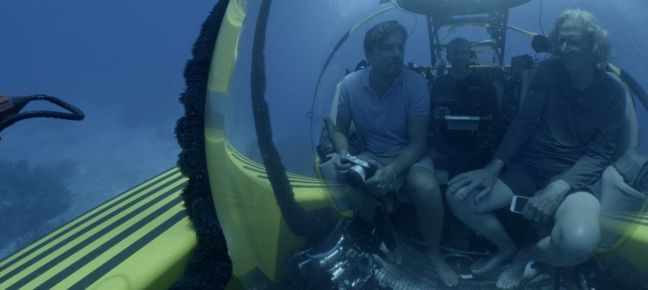
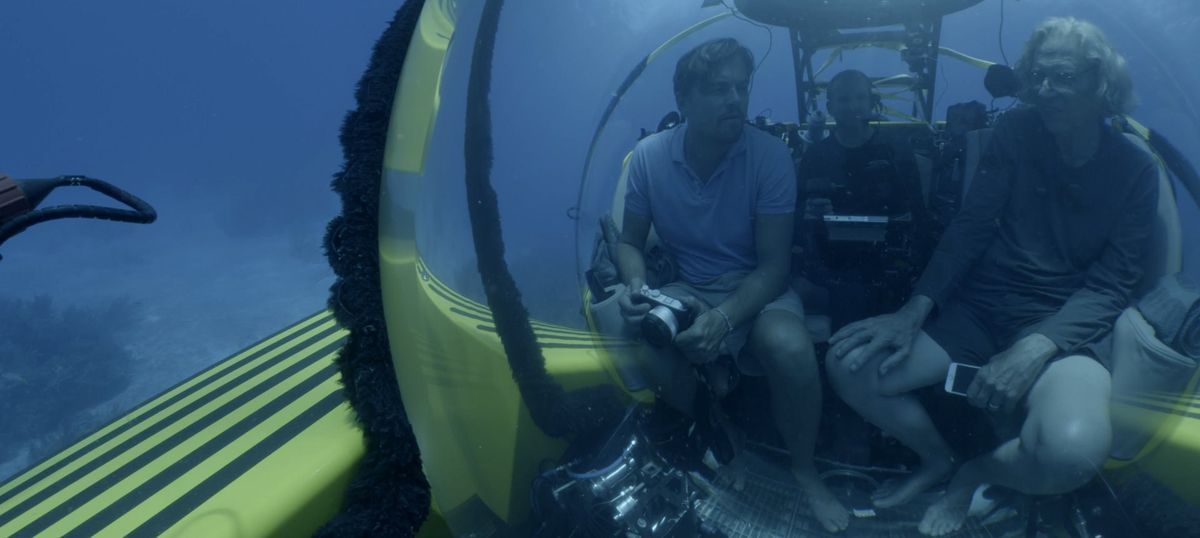
This is the vein in which Before the Flood is presented. The Hollywood star, as the United Nations Messenger of Peace on Climate Change, is on a mission to see “how far we have gone, how much damage we’ve done and if there’s anything we can do to stop it”. DiCaprio asks some hard questions at times and at others, steps back and lets the experts do the talking. The 95-minute documentary, directed by Fisher Stevens, was premiered on the National Geographic channel on October 30 and was released online simultaneously.

In many ways, Before the Flood feels like a follow-up to Al Gore’s An Inconvenient Truth – it runs with the science, but backs it with real-life examples, making the facts less abstract and more tangible. The film feels a lot more real as it examines the impact of climate change on the ground rather than poring over models or newspaper articles. Show, rather than tell, is what makes Before the Flood different.

DiCaprio deploys his stardom to make people listen to many uncomfortable truths. “As an actor, I pretend for a living,” he says during a speech at a UN Assembly. “I play fictitious characters often solving fictitious problems. I believe that mankind has looked at climate change in the same way.” Like he does in his films, DiCaprio heads off to locations across the world (all offset by a voluntary carbon tax) to explore a subject that he humbly explains “the more I know, the more I realise how much I don’t know”.

The actor’s quest takes him to Alberta in Canada, Greenland, Baffin Island in the Arctic, India, China, Pulau, Kiribati and the Sumatra islands – all places that have been affected by fossil fuel extraction and climate change. He uses his celebrity pull to interview Barack Obama and meet the Pope. He also talks to corporate bosses, policy makers, scientists and environment activists.

“If we have to fight climate change, we have to start by acknowledging most of our economy is based on fossil fuels,” says Michael Brune, executive director of the environmental organisation Sierra Club. Brune goes on to explain how the world is employing extreme methods to remove these resources, including fracking, offshore drilling for oil, and tar sands. “There is not thing such as clean fossil fuels,” Brune adds. Proof of Brine’s statements emerges in footage of the devastation wreaked by crude oil extraction in Alberta. What were once boreal forests are now barren potholes of oil.

At Baffin Island in Canada, DiCaprio listens as Arctic guide Jake Awa guide tells him that the solid blue ice is melting faster than ever before, like ice cream. In Kangerlussuaq in Greenland, climatologist Jason E Box warns that climate change projections are actually conservative, and that the effects will be far worse than imagined.

DiCaprio then jets off to Asia and the Pacific. He looks at alarming pollution levels in China, the impact of unprecedented rainfall on farming in India, the future of island nations such as Palau and Kiribati, and the devastation caused by the palm oil industry in Sumatra. Back home, DiCaprio heads to Miami in Florida, a state susceptible to flooding as the sea water level rises. Mayor Philip Levine says that the City of Miami Beach is investing 400 million dollars on a project to put in electrical pumps to drain out the water and to raise road levels. This adaptation measure will only last for 50 years. This from a state that in 2011 stopped the Florida Department of Environmental Protection from using the words “climate change” and “global warming”.

American public opinion on climate change has been adversely influenced by the nexus between policy makers and fossil fuel industries and climate change deniers, many of whom are in the media. Levine puts it succinctly, “The ocean is not Republican. It’s not Democrat. All it knows is how to rise.”

The film also questions reckless fossil fuel-addicted consumption while touching on climate refugees and livelihood and food security. Some solutions emerge out of the thicket of warnings: the filmmakers advocate the enforcement of the 2015 Paris Agreement – a deal in which world leaders agreed to limiting global warming to well below 2°C – substantial investment in renewal energy, and carbon tax.

The overall impact is undeniably powerful. Before the Flood invokes a sense of urgency when it comes to protecting the earth’s biodiversity. There is room for wonder too at nature’s riches. At Baffin Island, DiCaprio looks on in awe at a group of narwhals. Enric Sala, National Geographicexplorer-in-residence, says, “I don’t want to be in a planet without these animals.” Moments like these demand that Before the Flood be watched, absorbed, and acted upon.

Corrections and clarifications: The article has been edited to reflect the fact that the City of Miami Beach is the entity investing $400M on a project to put in electrical pumps.
Food on the go

img_3269.jpg

http://www.thehindu.com/news/cities/mumbai/Food-on-the-go/article16087522.ece?ref=tpnews
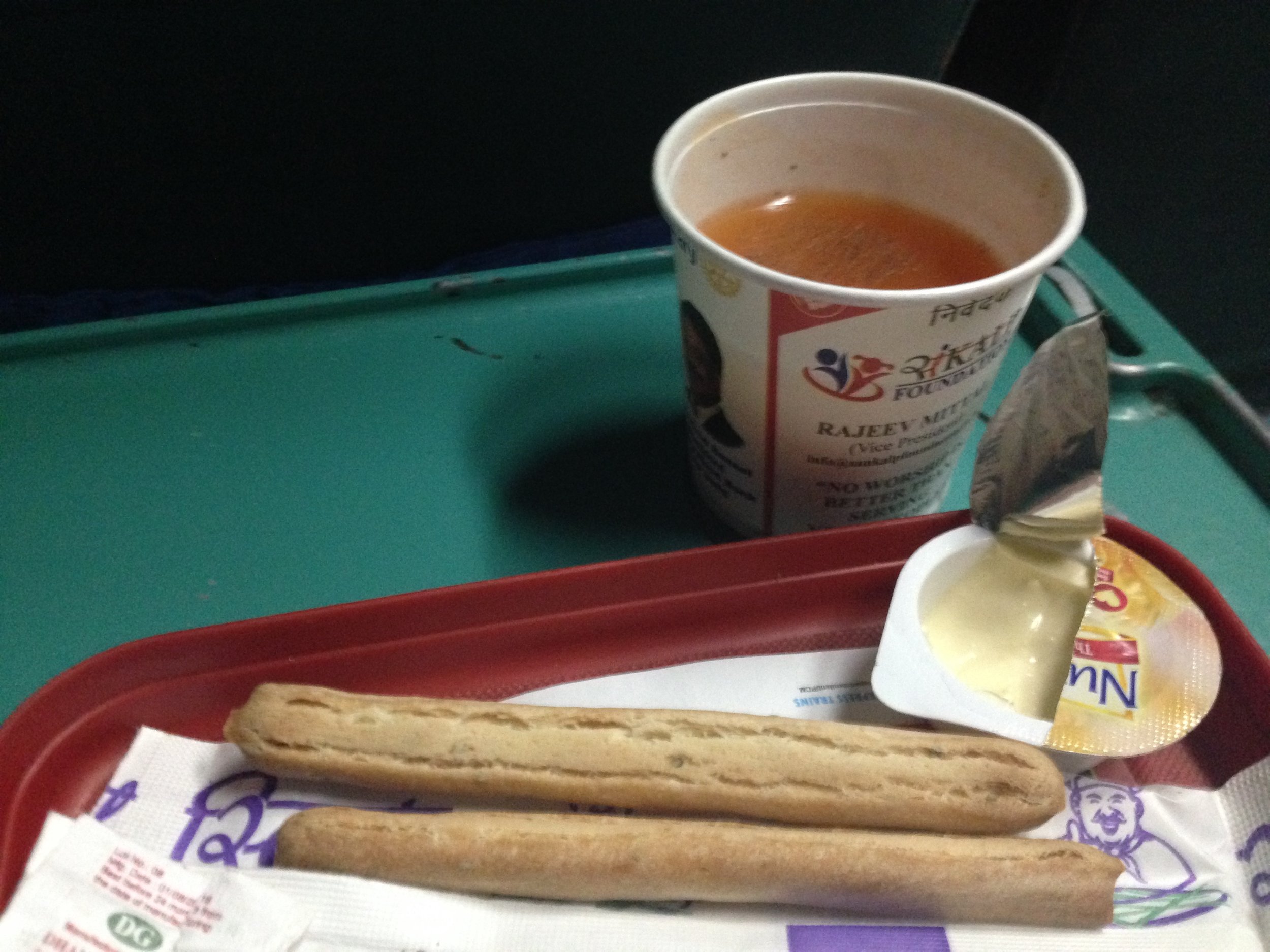
Over the last few weeks I have been on a whirlwind series of travel for work and vacation — and I have taken all sorts of transport — flight, rail, bus, car, hikes, the works. For me, food and travel are inherently connected, like so many of us. And so, I found myself abandoning my Kindle to observe just how the nature of food we eat as we travel has changed.

A toddler ambled across our coach’s corridor, his beaming face crumpling when he saw his brother tucking into a packet of Kurkure. “Kudkude,” he yelled, his hand outstretched, trying to grab at that packet. His brother sulked as he was forced to share his precious stash, while the toddler settled into someone’s lap, happily nibbling at his Kudkude. He couldn’t say “Delhi” — his uncle was trying to get him to say that, but he could say “Kurkure”. Priorities!

On another train journey, a pair of tweens switched on their MacBook, attached a dongle, and promptly ordered themselves Domino’s Pizza, after a fairly intense discussion about the toppings. The pizza, it seemed, was scheduled to reach home about the same time that we would all get home. Not to mention, it would be washed down by the accompanying bottles of cola. At the hotel we stayed in Binsar in Uttarakhand, a mother proudly told the wait staff that her son just loves Uncle Chipps, and no meal is complete without it. On another flight, the cup-o-noodles were what most families were ordering for their children.

Our cities and villages are now dotted with little kiosks, where traditional local food such as podi idlis or banana chips are shoved aside by shiny packages of processed foods of all sorts. Our trekking guide at Binsar in Uttarakhand kept stopping to pick up remnants of such packaging that were littering his beloved forests, even though there were dustbins inside the sanctuary. Our walk in beautiful Andretta in Himachal Pradesh was strewn with packets of Uncle Chipps, Lays, and Kurkure, wrapped around plants and trees. All of this only underscores the many studies and research floating about — that Indians, including children, are taking to packaged and hyper-processed food with gusto. This, at great cost to our collective well being, including our children’s health.

Many of us un-millennials (is that a word?) have fond food travel memories. Our family summer vacations would almost always commence with us lugging Milton flasks filled with ice and water onto the train. As the train trundled on, mum would produce crisp aloo nu shaak, potatoes cooked in their jackets Gujarati style, along with methi theplas, a dab of mango pickle, and of course dahi. In intervals, sev mambra would be produced, carefully stored in ziplock bags ordered from the USA aunt, as well as sliced fruits, and godpapdi. Yet now that we’ve grown up and have our own families, we don’t always do that.

Of course, as I grew older, I would often be embarrassed by this stash of food we carried along with us — whether it was to Baroda or to Cape Town. It’s only now that I have come to appreciate the hard work that my mum put in, in the form of hours in the kitchen, to ensure that we would be well-fed through the trip.

But then let’s face it — all of this eating well takes effort and the burden almost always falls on the women of the household, unfairly so. I cook almost every day, but even the thought of producing that quantum of food is daunting for me. And it’s getting harder to trust street food — you don’t know what oil or water it was cooked in, cut fruits and vegetables are a strict no-no, and it is often deep fried starchy food such as samosas, kachoris, or vada paos.

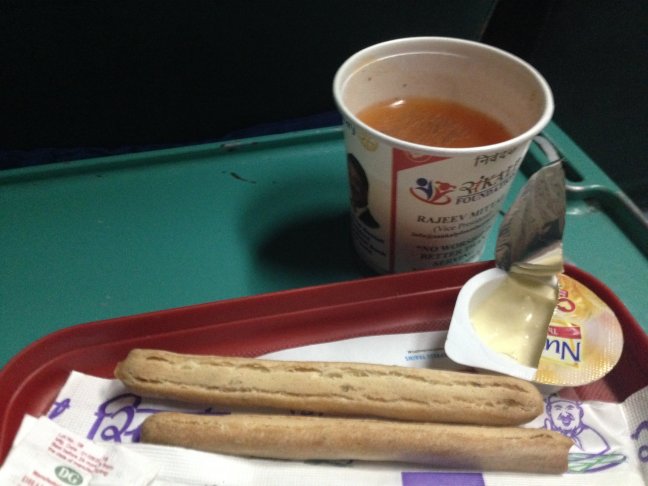
It’s not surprising that hard-pressed for time and with fewer healthier choices on sale, we are choosing to pick up ready-to-eats, convenience foods, outsourcing our food decisions to corporates. The difference is evident in the way we travel. We can’t even be bothered to carry our own water bottles, preferring to buy plastic mineral water bottles instead. Who wants to lug about a steel water bottle when you can use and throw a plastic one. Never mind the environmental impact.

Yet does it have to be all packaged, salty, additive-laden food that we need to pack into our travel schedule? Many of these food labels read like a sci-fi movie, undecipherable, straight out of a lab, rather than a farm. Now when I travel, I pack myself a sandwich or get my cook to make me a stack of theplas. Add some fruits and you’re sorted for the journey. A friend carries homemade granola with her, another carries packets of puliyogare to mix into rice. On a trip to Madhya Pradesh, we looked at the unappetising train fare (no it wasn’t the Shatabdi) and cheered up when a friend produced luchis and aloo sabji for dinner from her bags. Really, who needed chips?

Why you should go back to the book of ‘Fantastic Beasts & Where to Find Them’ before the movie

vqcozywsjl-1479197790.jpg

http://scroll.in/article/821587/why-you-should-go-back-to-the-book-of-fantastic-beasts-where-to-find-them-before-the-movie
Read it if only to be able to identify all the strange creatures in the film.

When it comes to Potterhead Muggles, there are few things more exciting than being able to sample Butterbeer, organise Harry Potter book nights, and eagerly wait for a new film from the wizarding world of Harry Potter, even if it’s set in a time when the boy-who-lived was not even born.

While we all wait to see the adventures of Newt Scamander, Order of Merlin Second Class, on the big screen, some of us have to comfort ourselves by revisiting his seminal book, Fantastic Beasts & Where to Find Them. Which is not to be confused with the book that is the screenplay of the movie.

In 2001, the fifty-second edition of this masterpiece was released simultaneously in the wizard and Muggle worlds. As Albus Dumbledore, the erstwhile headmaster of Hogwarts School of Witchcraft and Wizardry, writes in his foreword, “No wizarding household is complete without a copy of Fantastic Beasts…

The textbook that taught Hermione Granger – perhaps even Harry Potter and Ron Weasely learnt a thing or two from it – has been written by JK Rowling and published in aid of Comic Relief UK, along with the library copy of Quidditch Through the Ages.

From the introduction, we know that the book is the result of many years of travel and research by Magizoologist Newton (“Newt”) Artemis Fido Scamander, some of which we can hope to see in the David Yates film. Scamander sounds a bit like Gerald Durrell when he describes his childhood – a “seven-year-old wizard who spent hours in his bedroom dismembering Horklumps” (a creature that resembles a fleshy mushroom and is covered in black bristles).

Born in 1897, Scamander found his interest in fabulous beasts being encouraged by his mother who bred fancy Hippogriffs. He then went on to join the Department for the Regulation and Control of Magical Creatures at the Ministry of Magic, and is remembered for the creation of the Werewolf Register in 1947 and later, the Ban on Experimental Breeding in 1965.

Most Potterheads across the world are probably brushing up on their knowledge of fantastic beasts right now – so that they can sit in the movie hall and scream, like insufferable know-it-alls, the names of species: “That’s a Chizpurfle” (small parasites with large fangs) or “Ooh, look a Grindylow” (a horned water demon), if these creatures make their appearance in the film. But what makes the Muggle copy immensely readable is not the fact that it’s an encyclopaedia of beasts, though Care of Magical Creatures Professors Hagrid, Kettleburn, and Grubbly-Plank would consider that meritorious enough.

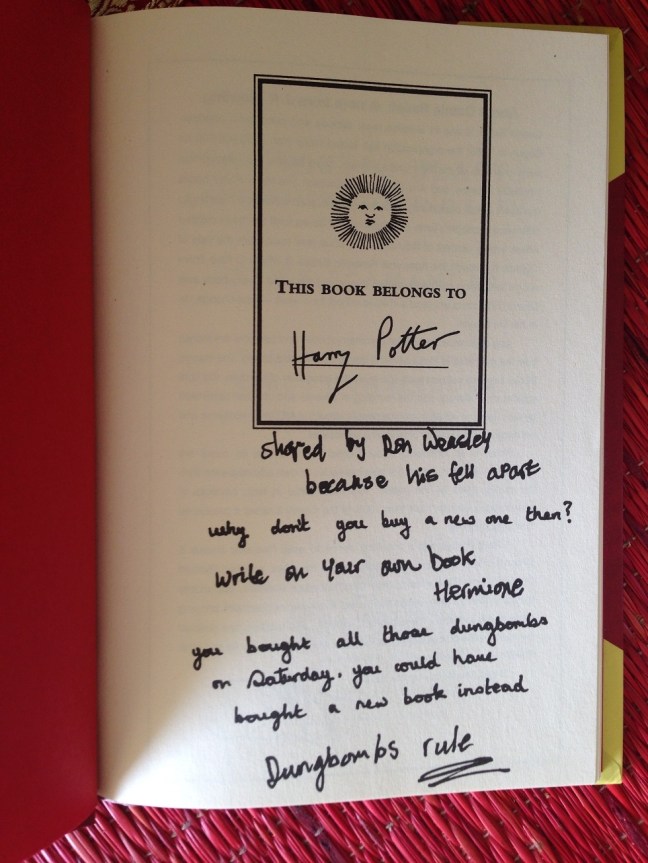
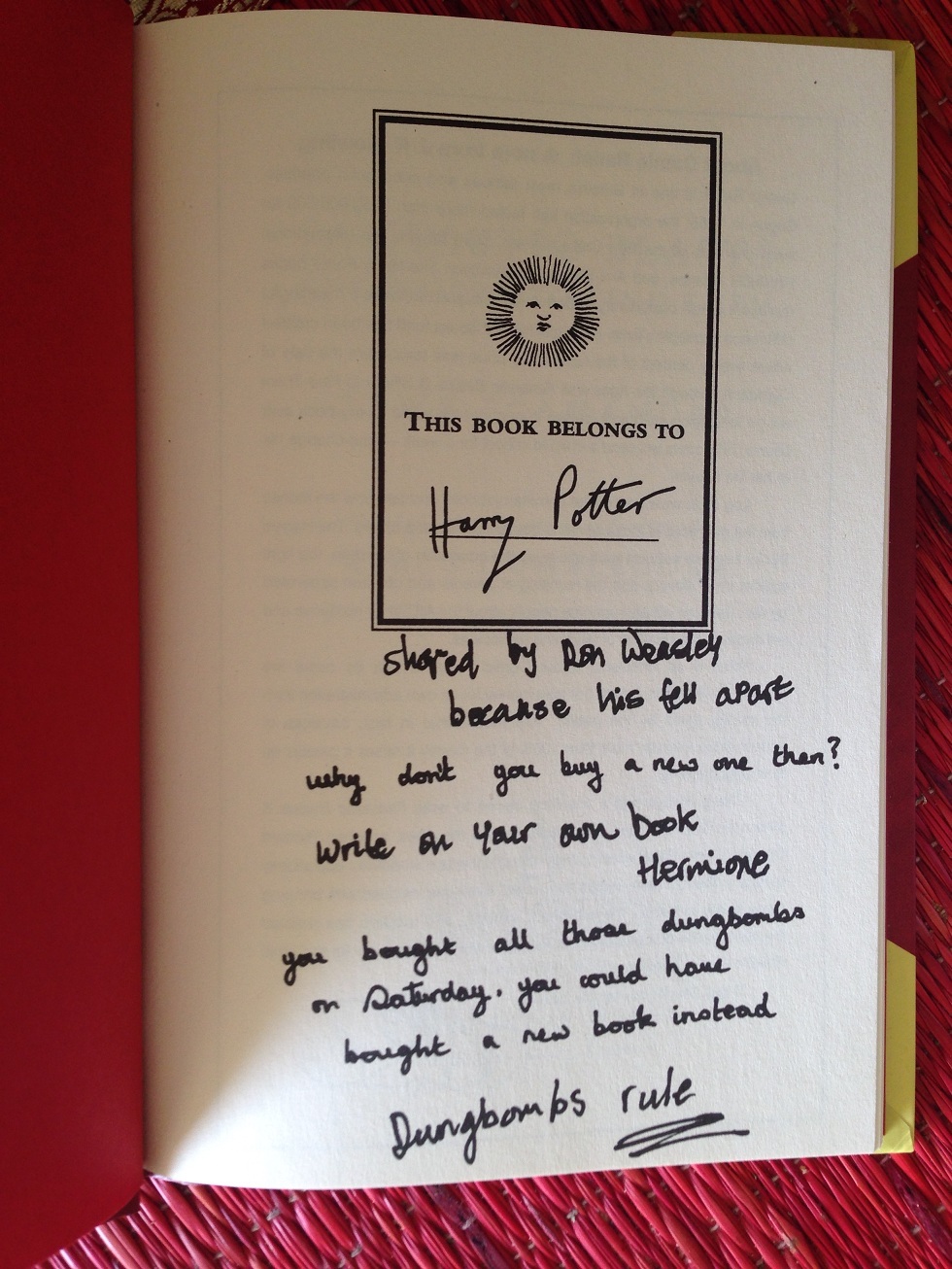
No, it’s because Fantastic Beasts is a duplicate of Harry Potter’s personal textbook and comes with “informative notes” in the margins. The book is shared by Ron, because “his fell apart” and Hermione chimes in from time to time. So while Scamander takes great pain in describing “what is a beast” in academic terms, the students explain it succinctly – “big hairy thing with too many legs”.

When the Magizoologist embarks on the chapter “A Brief History of Muggle Awareness of Fantastic Beasts”, someone, presumably Ron, circles the word “brief” and annotates it with “you liar”. The clever design is reminiscent of our school textbooks, full of scribbles that had little to do with what the teacher was droning on about in class.

In this slim edition, too, Rowling manages to slip in a message, this time about wildlife protection and conservation. Scamander writes about the importance of Magizoology and the need for the community and individuals to protect and conceal these magical beasts. The answer, he explains, is “to ensure that future generations of witches and wizards enjoy their strange beauty and powers as we have been privileged to do”. Even then, Dumbledore does attempt to reassure Muggle purchasers “that the amusing creatures described hereafter are fictional and cannot hurt you”. Weasley is rolling his eyes somewhere in the wizard world.


Staying true to Valmiki’s spirit

8bm_lead-arshiag96mmu5r-3.jpg

http://www.thehindu.com/news/cities/mumbai/Staying-true-to-Valmiki%E2%80%99s-spirit/article15475307.ece

Arshia Sattar’s vivid prose retells an epic for the kids staying firmly focused on fascinating characters, human foibles and the wonder that is nature

Reading Arshia Sattar’s Ramayana for Children (Juggernaut) , is like sitting alongside a masterful storyteller, and listening raptly, as she narrates the familiar story. With her words, she deftly conjures up images of kings and princes, battles and victories, pettiness and bravery, jealousy and fast friendships.

Strong credentials

Sattar has a PhD in classical Indian literatures from the University of Chicago and has previously translated The Ramayana of Valmiki (Penguin Classics) for grown-ups, and has written The Adventures of Hanuman (Red Turtle) for children, among other books . Like The Ramayana of Valmiki, the children’s edition has also been translated from Valmiki’s original Sanskrit text. In her author’s note, Sattar writes, “It was composed in Sanskrit about two-and-a-half thousand years ago, perhaps put together from many other versions of the same story that people were telling.”

For many children, Ramayana is not a new tale, but Sattar’s book will invite young readers to explore the story in detail, discovering different nuances and facets of the narrative. “I guess the Ramayana has been sitting inside me for so long, it was dying to jump out into the world,” says Sattar, over email. “What I needed to be most aware of was language and vocabulary,” she says. “I worked with fewer words than I normally would; in a translation, you look for as many words as you can to express the original language text as accurately as possible. Here, it was the opposite. I had to use fewer words and still be true to Valmiki’s spirit,” says Sattar. The book is stunningly crafted. Sonali Zohra’s illustrations are evocative and compelling, recreating the forest and the characters in gorgeous Earth colours.

Retelling an epic

Like many other Indians, Sattar heard the Ramayana when she was about four or five years old. “A little later, I got familiar with myths and legends and folk tales from other countries. My parents were always buying me books like that and I was an early reader,” she says. The scholar shares that since then, different parts of the Ramayana have engaged her at different times in her life. “I guess that’s really what it is,” she says, adding, “The Ramayana can stay with you your whole life, it’s that rich.”

And that richness comes across in her storytelling. Most of us are well-acquainted with Ramayana ’s characters. But unlike a lot of the texts which cast the characters in a rather distant and other-worldly way, Sattar keeps them real. Dashratha, for instance, puffs and gasps when rushing to Kaikeyi’s Anger Room, something you don’t usually find kings doing in stories. Another time, when Sita faints, Rama and Lakshmana massage her feet to revive her. There’s also an inherent playfulness to the text. When sage Vishwamitra says that he’d like to take Rama to Mithila where King Janaka has set a task for suitors who want to marry his daughter Sita. “Lakshmana understood what the sage was hinting, and winked at Rama, who looked away with a smile,” writes Sattar.

The author says that she wanted to humanise the characters. “I wanted children to identify with them rather than see them as distant ideals who live in an entirely different universe and with an entirely different set of values and possibilities,” says Sattar. “Also, I enjoyed building character for these well-known and well-loved figures who can so easily be placed on pedestals and become all about morality. I think children will learn far more about ethical behaviour and good actions from characters that they see as human, facing the same questions and dilemmas that they do, experiencing the same confusions and finding solutions to them on their own.”

Not a morality tale

One such character is Hanuman. As Sattar says, “Hanuman is THE magic in the story. Who can resist a monkey that flies and speaks Sanskrit, or Hindi or Tamil or Bangla, depending on which language the story is told in. He’s an amazing character, simultaneously wise and silly, playful and serious, loyal and brave. He can do anything he wants, and he’s always trying to help other people, make their lives easier. For children, he’s the obvious entry into the story because he is familiar and magical at the same time. Adults get more involved with Hanuman as a symbol or an allegory. Either way, he’s the hook.”

The literary landscape for children is often dominated by Hindu mythology, but Ramayana for Children attempts to offer it as a story, rather than a moral or divine text. Sattar says this version is focused on the main narrative; the characters and events are in the foreground rather than the ideology and politics of the text. “Like any writer in any genre, you decide what it is that you want to say and then you try and say in the best way that you can,” says the writer.

For Sattar, it’s most important that young readers get to know and love the story of the Ramayana . “They can come to questions of sacred texts and complex understandings of god when they are older. It’s not that we should excise the idea of god from the narratives we create, but we should think about the fact that children are drawn to stories more than they are to lectures about morality and divinity. You can tell the Ramayana in such a way that children understand its central question: how can we be good, how can we do the right things even when it is the hardest thing to do,” she says.

Focus on nature

Another way that Sattar stays true to the original text is in the lyrical way that nature is an integral part of the story. As Rama, Lakshmana, and Sita go deeper into the forest, Sattar writes, “At night, they slept, warm in their beds of leaves and dried moss in the shelter of trees with wide canopies, watching the stars and listening to the night birds.” “Nature and its descriptions are central to Sanskrit poetry and Valmiki’s Ramayana is a poem,” says Sattar.

Of course, Sita was born of the Earth, and when she insists on accompanying Rama to the forest, he remembers that she “was more familiar with plants and trees and animals than he would ever be”. “Many contemporary interpretations of Ramayana see her as representing feminine nature. In this book, I thought it was important to distinguish between the masculine and the feminine, between the city and the forest,” Sattar says.

At a time when much of kid-lit engages with the urban, Ramayana for Childrenresonates with the story of co-existence with nature. Sattar explains that she also wanted to “engage children with the idea that nature is so close to us, it’s everywhere — trees, flowers, the sun and the moon, the rain — even in the city. We should know nature better than we do and think about it more than we do.”

Growing up with 400

3081800469_f59af01364_m.jpg

http://www.thehindu.com/todays-paper/tp-national/tp-mumbai/growing-up-with-400/article9186570.ece

That’s it then; scientists have confirmed that the carbon dioxide level in the Earth’s atmosphere has crossed 400 parts per million. And the way it looks, it’s probably the point of no return. According to the Scientific American, the last time the world saw carbon dioxide levels above 400ppm was some 3.6 million years ago, a period that was known as the middle Pliocene.

So how do we understand the crossing of this threshold exactly?

Imagine the planet is a car. All of us — you, your friends and family, colleagues, and strangers — have been driving about for a while. Some, more than others, have heated up the car by driving it recklessly (pumping fossil fuels and greenhouse gases deliriously into the atmosphere). The temperature is soaring, and it’s getting hotter inside the car. It doesn’t matter that we know, like climatologist Dr. James Hansen has said, that 350ppm is the optimum amount of CO2 in the atmosphere. But now that we’ve crossed over to the dark side of CO2, we realise that turning the ignition off isn’t going to change anything. We’ve got to keep driving in that hot car full of seven billion people.

What’s growing up in a world with 400ppm of CO2 going to be like? It’s not going to be pretty.

Already, 2016 is slated to be the hottest year on record. We have all, in some form or the other, been witness to the impacts of climate change. Unpredictable weather has wreaked havoc in different parts of the country and the world, threatening livelihood and food security. Droughts, famines, air and water-borne diseases are proliferating.

Worse, when it comes to climate change, children are the most vulnerable. The UNICEF report ‘ Unless We Act Now: The Impact of Climate Change on Children’ puts it succinctly: “There may be no greater, growing threat facing the world’s children — and their children — than climate change.”

Another UNICEF report, ‘ Children and Climate Change: Children’s Vulnerability to Climate Change and Disaster Impacts in East Asia and the Pacific’, explains further: “The types of climate risks confronting children are diverse, ranging from direct physical impacts, such as cyclones, storm surges and extreme temperatures, to impacts on their education, psychological stress and nutritional challenges.” The report mentions that soaring temperatures are linked to “increased rates of malnutrition, cholera, diarrhoeal disease and vector-borne diseases like dengue and malaria”.

“For me, growing up in a warmer world means that each month is likely to be warmer than the next, and the weather is going to be extremely uncertain (erratic monsoons, increase in typhoons),” says Payal Parekh, the programme director of climate group 350.org. “When these storms hit, children have the least resources and abilities to survive them, especially children in the poor villages along the coast; they suffer when there is drought in the form of malnutrition and we know that often means girls are the first to get less to eat,” adds Parekh. The organisation 350.org is named after the optimum amount of CO2 level in the atmosphere.

The good news, of course, is that on Gandhi Jayanti, India ratified the Paris agreement, right on the heels of the USA and China. India became the 62nd country to ratify the agreement, which looks to keep global temperature increase between 1.5 to 2°C. These may seem like small degrees of temperature change, but the repercussions are far-reaching. A World Bank Report, Turn Down the Heat: Why a 4 °C Warmer World Must be Avoided, warns that a “4°C world is so different from the current one that it comes with high uncertainty and new risks that threaten our ability to anticipate and plan for future adaptation needs”. This includes higher malnutrition rates, unprecedented heat waves, and loss of biodiversity.

As Anthony Lake, UNICEF’s executive director writes in the foreword to the Unless We Act Now report, “No human responsibility runs deeper than the charge of every generation to care for the generation that follows it. For current and future generations of children, and for us all, the stakes could not be higher.”

Farm-fresh for your table

25bm_farmer_s-m_g0_3022606f.jpg

http://www.thehindu.com/news/cities/mumbai/farmfresh-for-your-table/article9146189.ece

Bijal Vachharajani spends a Sunday morning shopping at theFarmer’s Market and is mighty pleased with the expedition’s results.

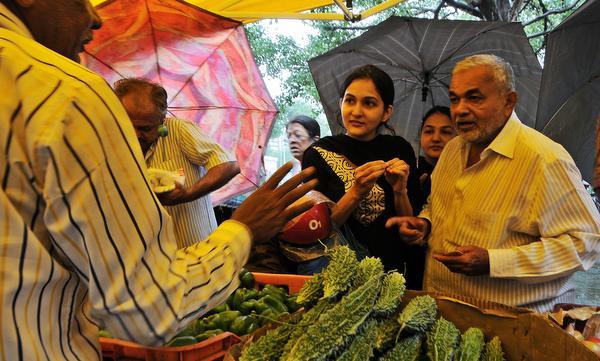
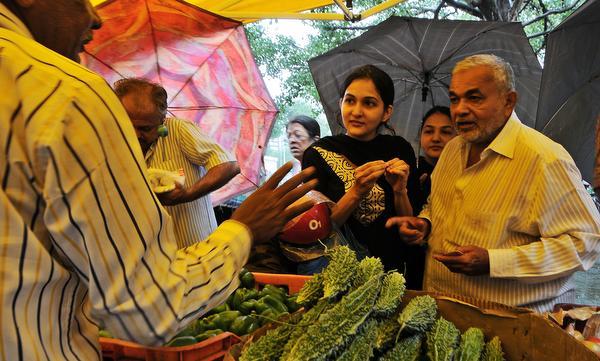
The promise of fresh vegetables and fruits is one of the few things that I will wake up early on a Sunday morning for. Even as I grumbled to my friend who had suggested the morning expedition, I found myself heading to Nariman Point two Sundays ago for the Sant Shiromani Shri Savta Mali Athavda Bazar, Vidhan Bhavan’s farmer-direct market. The weekly market that has been set up across the State by the Maharashtra State Agriculture Produce Marketing Board.

Of course, I was armed with cloth bags and plenty of change. Since mid-August this year, every week, the lot between the Vidhan Bhavan and Inox theatre is transformed into a bustling bazaar of more than 30 stalls with farmers selling a staggering range of local and seasonal produce.

We joined the throng of people shopping for their weekly veggies, and marveled at the glistening tomatoes, fat sitaphals, fresh cluster beans, and pumpkins the size of Ravana’s head, that jostled for space with mounds of lettuce, stacks of asparagus, and luscious-looking purple cabbage.

Apart from the usual suspects, there was some wonderful indigenous produce. We found some early green mogri (as the Gujaratis call it), which I had last eaten in Delhi. Winter vegetables, these radish pods are spicy: the purple ones add a nice bite to raitas while the green ones are cooked into a vegetable, usually with brinjals. Though, these are just as delicious when eaten alone.

The market also sold fresh kidney beans in their pods, khatta sorrel leaves, and colocasia leaves for patras and stir-fries. We also found wild chikoos and guavas that when sliced open revealed a soft pink flesh. Flowers such as marigolds and asters were also available.

I went back to the Sahyadri Farmers Producer Co. Ltd. stall multiple times for their glorious pesticide-free black raisins, plump and sweet. My friends kept texting me that they also wanted a packet, and so I would return to the stall to buy yet another kilo, while sampling more of the raisins. The same stall promises chemical-free bananas as well, and are considering home delivery in the future. Another farmer who stocked garlic showed us how to plant the pod to grow it.

The haul from the market was a reassuring one, given that just the other day, my friends and I were bemoaning the lack of good produce available in our bazaars. The prices at the Sant Shiromani Shri Savta Mali Athavda Bazar are more than reasonable, and for those tired of the usual apples and bananas, there’s much diversity in the produce available. This is a definitely affirmative step by the government in enabling fair trade, by cutting out the middle men, and letting people buy directly from the farmers.

Don’t forget to carry your own cloth bag though.

The Farmer’s Market is held every Sunday in the parking lot of the Vidhan Bhavan, Nariman Point, from 8 a.m. to 12 p.m.

The market enables fair trade by cutting out middle men and letting people buy directly from farmers

A is for Art

eyespy-outer-covers_04_mockup-2.jpg

http://www.thehindu.com/todays-paper/tp-national/tp-mumbai/a-is-for-art/article9134413.ece
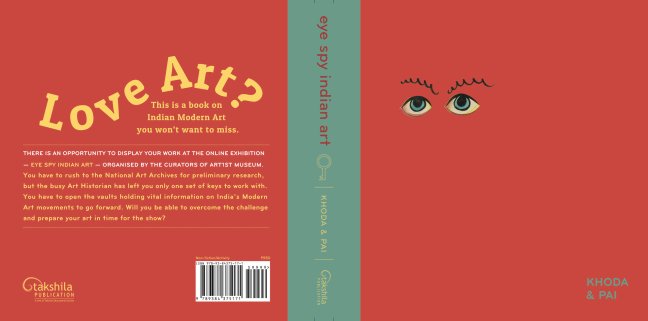
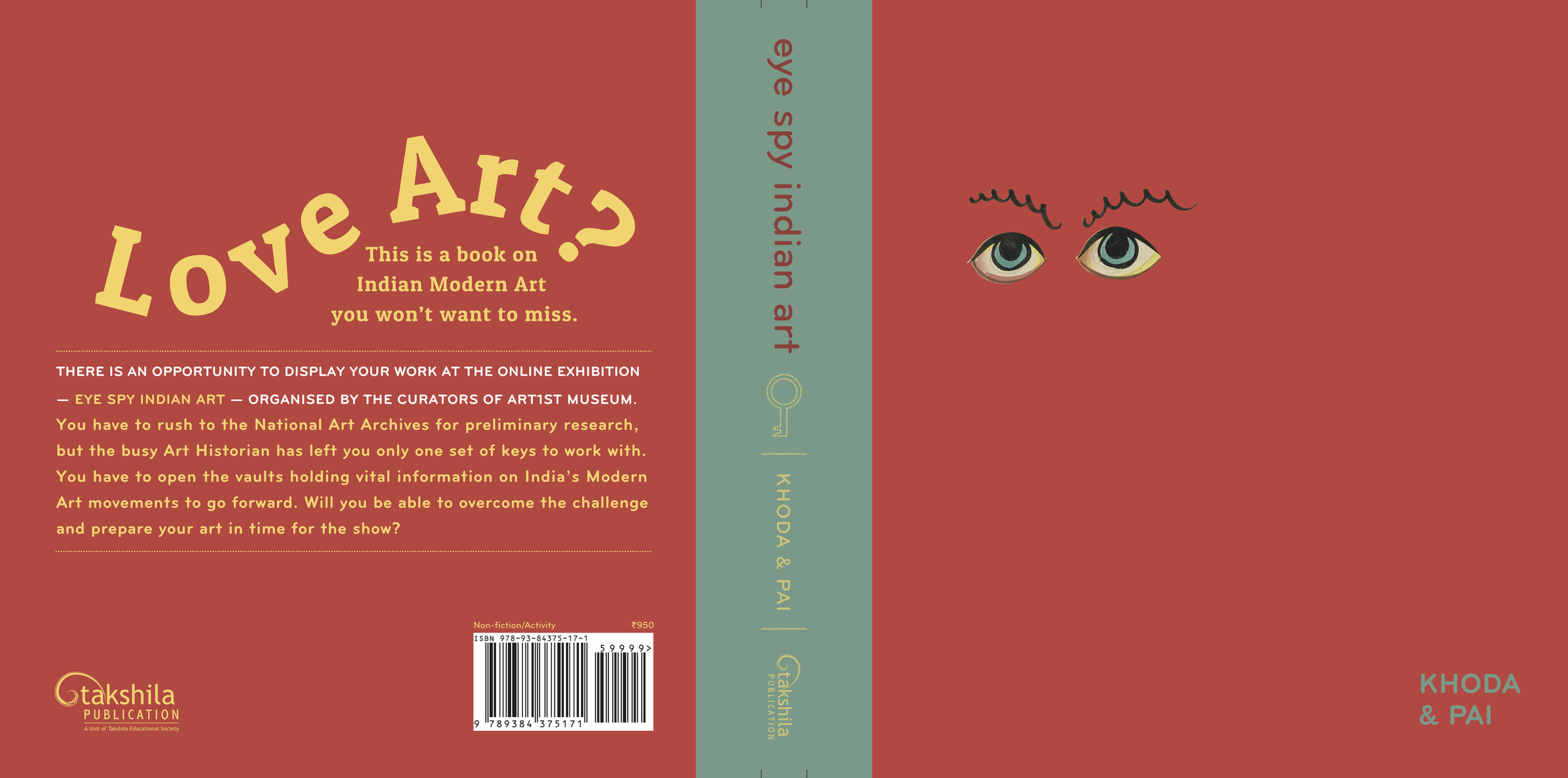
A pair of eyes peer out from the cover of Eye Spy Indian Art by Khoda & Pai. The book, which recently bagged the runner-up award for the best printed children’s book at the Publishing Next Awards, is a window to India’s modern art movement.

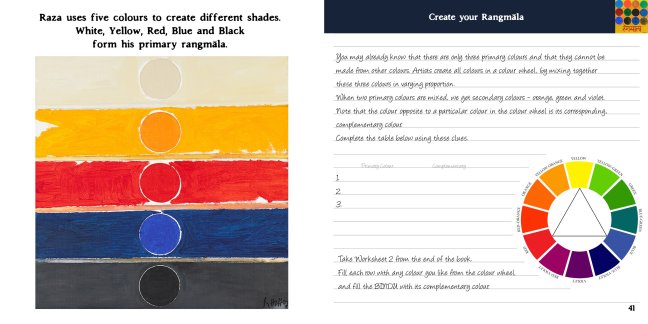
Beautifully produced, Eye Spy looks at the evolution of modern art history and introduces young readers to prominent artists of that time. “In this book, we highlight elements of art, perspective, size and proportion, and symbolism, through featured works,” says Vanita Pai, who co-authored the book with Ritu Khoda, founder of the Art1st Foundation. “We bring in conceptual thinking. It is interdisciplinary. It is written for middle school kids who already study Indian history and are old enough for offline and online research,” she says.

What makes the book unique is not just the amount of research that’s gone in, but also the way it has been interpreted through design. Each chapter is crafted thoughtfully; you have to find different keys and guess what art movement you’d be reading about. Pages need to be opened carefully as they reveal hidden information, reproductions of artwork are produced vibrantly, and questions are posed in a manner that encouragesc hildren to think, explore, and marvel at the works before them. “Children enjoy tactile activity,” says Pai. “So, we build in a great number of flaps, foldouts, stickers, and die cuts, besides drawing and painting exercises.”

For instance, to get children to appreciate the quality of line work by Nandlal Bose, right atop the painting Untitled (Esraj Players) is a tracing paper where budding artists can trace the figure of the musician.

In Untitled (The Village Cow), readers have to flip the transparency sheet on top of the painting to understand how adding or removing strokes can alter an artwork.

And Gulammohammed Sheikh’s Alphabet Stories II is cut into layers, and as you turn each flap, the writers pose questions about your perception of the painting. Each caption also reveals the material used, the size of the work, and the year in which it was created.

Play is the central idea in both their books, Eye Spy and Raza’s Bindu: Art Explorations. “We want our books to be fun,” says Pai. “We pushed our designer to go with the final cover of Eye Spy Indian Art, which does not carry a title , only die-cut sockets with a pair of eyes peering through. We were convinced kids would love that.” Pai says that the minimalist cover became a talking point; one parent wrote to them saying that his child was pretending the cover was a mask.

razas-bindu-_inner_40-41

Designed by Ishan Khosla Design, Eye Spy Indian Art has been edited by Meera Kurian. Psychology professor Tanu Shree Singh, the founder of Reading Raccoons on Facebook, helped analyse design elements from a child’s perspective. Deconstructing artists isn’t an easy task, but Pai and Khoda are very much up to the challenge, collaborating with experts, wading through tonnes of research, and organising workshops with children. “We begin work keeping in mind our objectives: generate awareness about Indian art and artists, enhance visual literacy, help develop a language of art in our audience, and this process of discovery should be fun and not a chore,” says Pai.

The authors said that their books, so far, have focused on modern Indian art. For the Art Explorations series, which focuses on artists, they plan to feature abstract artists Ram Kumar and Ambadas Khobragade in the future. “We have had the privilege to meet [S.H.] Raza saab and Ramkumar ji ,” says Pai. “India’s modern artists witnessed the struggle for Independence and the turbulent aftermath. Their art reflects a search for identity, a return to roots, and evolved accordingly. Their life stories are very inspiring. Raza, as you know, passed recently and this has been our foremost concern. Very few modernists remain and it would be a pity if their art goes unappreciated by later generations. We started with Raza because his vibrant art greatly appeals to children, and also because when you bring pen to paper, what emerges first is a bindu,” says Pai.

The series stemmed from a mutual concern shared by the authors that despite learning art in school, most children don’t know the names of Indian artists or enough about Indian art. “We decided to make books that would instil a sense of pride and heighten awareness about our rich visual art heritage,” says Pai. “So all our work is interlinked. Through our art education programme, we are trying to change the way art is taught in schools, and through our books, we aim to increase art awareness among Indians.”

Of Mosquitoes’ Toes and Wampfish Roes

dhal_nenfcq.jpg

http://www.arre.co.in/culture/of-mosquitoes-toes-and-wampfish-roes-roald-dahl-willy-wonka/
Roald Dahl’s birth centenary is a reminder that treats were an essential part of the beloved children’s author’s life – “never too many, never too few, and always perfectly timed.”

A few weeks ago, my family and I were dismayed at the prospect of the Parle Biscuit Factory in Vile Parle shutting shop. When we first moved to Mumbai in the late ’80s, we lived in an apartment block that faced the landmark plant. On most days, we’d abandon our game of Monopoly or our attempts at mugging up Shakespeare to sniff out what was being cooked up at the factory. “It’s Kismi Toffee bars they’re making today,” my mother would say, as a sweet caramel aroma wafted across the railway tracks. Another day, a nutty scent would linger in the air, and we’d agree that a fresh batch of Parle-G biscuits was being baked. Living there was almost like being inside a Roald Dahl book.

So I knew exactly what Charlie would feel like when he’d pass Mr Willy Wonka’s giant chocolate factory on his way to school. “And every day, as he came near to it, he would lift his small pointed nose high in the air and sniff the wonderful sweet smell of melting chocolate. Sometimes, he would stand motionless outside the gates for several minutes on end, taking deep swallowing breaths as though he were trying to eat the smell itself,” wrote Roald Dahl in Charlie and the Chocolate Factory in 1964.

Dahl effortlessly captured the luscious aromas and subsequent yearning for melting chocolate, and pinned it down in a book that would go on to become our strongest confectionary-related literary memory. Dahl went so far as to write, “If I were a headmaster I would get rid of the history teacher and get a chocolate teacher instead.” Not surprising coming from a schoolboy who signed up to test chocolate inventions for Cadbury.

On most days, I find myself baking or reading children’s books (so that I can write about them), and in Dahl’s writing, both my enduring interests dovetail. Every time I melt a block of dark chocolate, I think about The Chocolate Room, with its verdant meadows and chocolate river. I hear Mr Wonka say, “The waterfall is most important! It mixes the chocolate! It churns it up! It pounds it and beats it! It makes it light and frothy! No other factory in the world mixes its chocolate by waterfall.”

Like most children growing up during the ’80s, I discovered Dahl’s splendiferous stories only as a teenager. I was growing up on a steady diet of Indrajaal, Archie comics, and Enid Blyton. Dahl came to my neighbourhood library much later, and when I picked up his books as a gangly adolescent, people would look at me all biffsquiggled and wonder why I had never read him before. Once I started though, it was like being on a scrumdiddlyumptious rollercoaster ride for this human bean.

The recipe sounded swatchschollop (as revolting as the title promised): It’s a mix of butter, milk, and yogurt. But the result is surprisingly comforting.
I’m not sure whether it’s the fantastical stories that he spun, of a Big Friendly Giant who caught dreams for children or the horribly hairy Mr Twit with a food-speckled beard. Maybe it was the wondrous words that he conjured up: Over 500 of them from whizpopping to sogmire to mispise, that deliciously roll off the tongue. Or perhaps it was the worlds he dreamt up, where lickable wallpaper, rivers of chocolate, and a peach that’s actually an edible ship are as commonplace as a beanbag in a start-up office. Dahl’s stories are the zozimus (a dream ingredient, for the uninitiated) that childhood should be made up of.

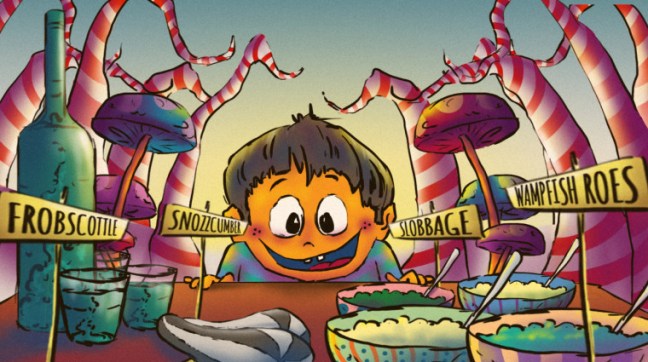
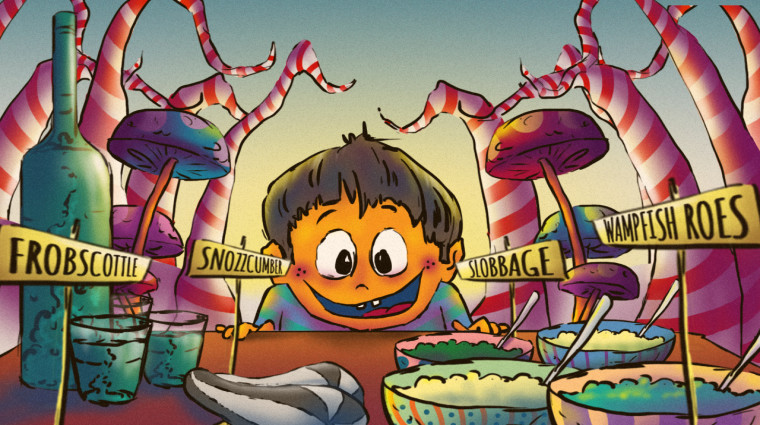
And then there is the food itself – the glorious, scrumdiddlyumptious food. Before molecular gastronomy became something of a trend, Dahl’s stories were already a whizpopping culinary delight. They are replete with familiar foods and mysterious ones, those that had no explanations in the human bean world. But it doesn’t matter, because our imagination fills in the gaps. We were a generation anyway accustomed to reading about scones, ginger pop, and humbugs, without the faintest idea of what they actually looked or tasted like. So it wasn’t hard to imagine what Frobscottle – that fizzy green drink where bubbles sink down rather than rise up – felt like. Even now, tinda and karela distinctly remind me of the ghastly snozzcumber, a knobbly vegetable with black-and-white stripes. All of these were brought alive by Quentin Blake’s illustrations.

Invention was key to these stories. Who else could dream up the concoctions in George’s Marvellous Medicine, full of ingredients such as Golden Gloss Hair Shampoo that was sure to wash Grandma’s tummy nice and clean, and toothpaste to brighten up her horrid brown teeth? It’s remarkable how Dahl knew just what children loved to do: My nephew can spend hours concocting all sorts of potions with coffee beans and water. He looks high and low for bits and bobs to add to it, relishing the results that look more and more vile. Rules, when it comes to invention, must go straight out of the window.

Like this particular ditty from James and the Giant Peach:

I often eat boiled slobbages. They’re grand when served beside
Minced doodlebugs and curried slugs. And have you ever tried
Mosquitoes’ toes and wampfish roes
Most delicately fried?
(The only trouble is they disagree with my inside.)

I don’t know what a doodlebug is, but just the thought of a boiled slobbage is enough to make me want to unwrap a piece of dark chocolate and try to forget about it. Or wickedly threaten my nephew with that when I meet him next. But then perhaps, Dahl was just prophetic, with insects being proposed as staple, resilient food thanks to climate change.

Just as Dahl’s stories were cautionary about the excesses of food, they tackled the grave idea of hunger. As Mr Fantastic Fox’s family go hungry, Dahl describes the anguish the fox parents go through. When the cubs cry from hunger, he writes, “‘How long will it be till we get something to eat?’ their mother didn’t answer them. Nor did their father. There was no answer to give.” Later, Mr Fox says, “Do you know anyone in the whole world who wouldn’t swipe a few chickens if his children were starving to death?”

In The Chocolate Factory, Charlie’s family is so poor that “the only meals they could afford were bread and margarine for breakfast, boiled potatoes and cabbage for lunch, and cabbage soup for supper. Sundays were a bit better. They all looked forward to Sundays because then, although they had exactly the same, everyone was allowed a second helping.” The same book is a lesson in food security: On one hand Dahl writes about poverty and malnourishment, while starkly contrasting it with the “haves” who revel in gluttony, but ultimately are acquainted with the pitfalls of greed. Obesity, in most of his books, was not a trait he loved.

Yet, what’s unmistakable is that so many of the stories are about the joys of food, sharing it, and eating it. And some of the recipes are not even that difficult to pull off. In Roald Dahl’s Revolting Recipes, “an interpretation of some of the scrumptious and wonderfully disgusting dishes” from his books, you will find recipes for Mosquitoes’ Toes and Wampfish Roes made with cod fillets and Lickable Wallpapers made with fruit and gelatine. In the introduction, his wife Felicity Dahl writes, “Treats were an essential part of Roald’s life – never too many, never too few, and always perfectly timed.”

Parsing the recipe book, I couldn’t help but wonder about Butterscotch, which makes the Oompa-Loompas whoop up with joy. The recipe sounded swatchschollop (as revolting as the title promised): It’s a mix of butter, milk, and yogurt. But the result is surprisingly comforting. It didn’t make me tiddly, but it was “tasting as wonderfully of crodscollop”. I replaced the corn syrup in the recipe with golden syrup, and the skim milk with normal milk, and used a blender to mix it all up (the Oompa-Loompas would be scornful of the skim milk, I’m sure).

Next on my agenda is the Lickable Wallpapers recipe. In an America’s Test Kitchen podcast, Felicity Dahl talks about how children would come out of a screening of Charlie and the Chocolate Factory, begging their parents to buy some Lickable Wallpaper. Whenever my nephew watches the movie, I know I can be ready with some.
#Culture
When Bijal Vachharajani is not reading Harry Potter, she can be found traipsing around the jungles of India. In her spare time, she works as a communications consultant and writes about education for sustainable development and food security so she can fund those trips and expensive Potter books.

The Loneliest Animals in the World

7bm_kids-column_6__3000749g.jpg

http://www.thehindu.com/todays-paper/tp-national/tp-mumbai/the-loneliest-animals-in-the-world/article9079043.ece

More than a decade ago, I got into an argument with a cousin-in-law because she was incredulous that I had issues with Rani Bagh (the old name for our city zoo now known as Jijamata Udyaan). I argued back, talking about the dingy cages, the lack of stimulation for the animals, and the general despair I felt every time I went there. All that’s fine, she said, brushing my complaints aside by asking how she would show her children what animals look like without the zoo.

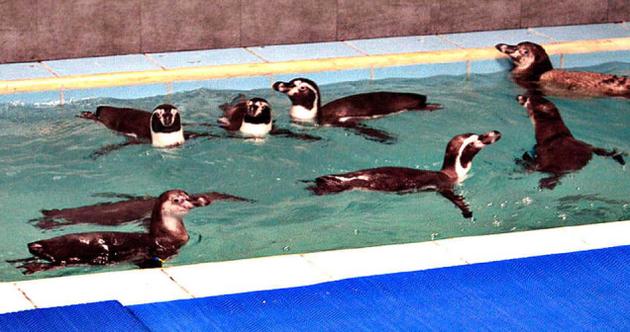
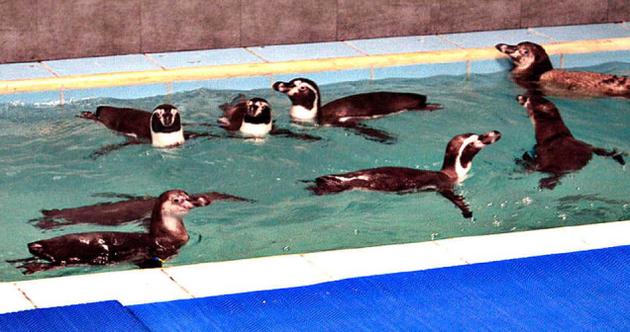
That was a statement I was completely gobsmacked by. And it’s one that I have been returning to over the last few weeks as the Jijamata Udyan gears up to display eight Humboldt penguins by November. While these penguins have been bred in captivity and come from South Korea, that doesn’t take away from the fact that these birds have a rich natural history.

According to the Centre for Biological Diversity, Humboldt penguins in the wild live along the coasts of Chile and Peru and are “known to travel long distances at sea to find food”. Their “habitat is highly influenced by the cold, nutrient-rich Humboldt Current flowing northward from Antarctica, which is vital to the productivity of plankton and krill and fosters fish abundance”. And they live for almost 20 years.

Twenty years! That is a long time to stay in a glass air-controlled enclosure. With people knocking at your enclosure, pulling faces at you, and the barrier, a final difference between freedom and captivity.

As John Berger wrote in About Looking , “The zoo cannot but disappoint. The public purpose of zoos is to offer visitors the opportunity of looking at animals. Yet nowhere in a zoo can a stranger encounter the look of an animal. At the most, the animal’s gaze flickers and passes on. They look sideways. They look blindly beyond. They scan mechanically. They have been immunised to encounter, because nothing can any more occupy a central place in their attention. Therein lies the ultimate consequence of their marginalisation… This historic loss, to which zoos are a monument, is now irredeemable for the culture of capitalism.” We, as a species, have always been fascinated by our fellow animals, constantly attempting to observe, tame, cage in a bid to understand our sameness and our difference. And reducing animals to a commodity.

British naturalist Gerald Durrell once said that “Zoos should concentrate more on the preservation side of things”. Zoos, when managed well, could potentially have a role to play in species conservation. But Mumbai’s zoo doesn’t serve that purpose. It has a history rife with problems, but that hasn’t stopped it from drawing up plans of grandeur, of being a “world class” zoo with polar bears and penguins.

A petition on the Sanctuary Asia website expands, “While Jijamata Udyan (Rani Bagh) has immense architectural and botanical heritage value, the zoo serves no meaningful conservation or scientific purpose. The death and unspeakable suffering of scores of incarcerated animals has brought great ill-repute to the Brihanmumbai Municipal Corporation. Yet it is considering spending over Rs. 20 crore on yet another misadventure while the city claims to have no funds to properly maintain the existing animal facilities in their current situation.” You can log on to their website to support their Unhappy Feet campaign.

One of the things that children take away from zoos is that it’s okay to confine animals for purported educational and entertainment reasons. It also tells them that it’s perfectly reasonable to spend a colossal amount of money on imprisoning animals that are not even suited to this climate. All this, when we should be looking at fortifying Mumbai with some serious climate adaptation methods.

I don’t know why anyone has to see animals in captivity to understand what they “look” like. In the forest, you are not likely to see an elephant swaying its trunk incessantly or a fox pacing its cage up and down because of zoochosis, a form of abnormal and stereotypical behaviour displayed by animals in captivity. Nor are you going to understand animal behaviour if they are languishing in constricted spaces with little environmental enrichment, when in the wild they are accustomed to realms of land or water.

Mumbai, for instance, has no excuse with Sanjay Gandhi National Park in its backyard. The city forest is teeming with a glorious abundance of trees and plants, expansive moths, elusive leopards, spiders spinning silken webs, shrieking parakeets. They are all there, we just need to look. Rani Bagh itself is a botanical garden, with some truly spectacular trees which are home to birds and bats. Why then import misery into its grounds? Definitely not in the name of children, who are way more sensitive to cruelty and have a natural affinity towards animals.

The excruciating misery and tedium of captivity is not hard to understand. And children get it. Take a look at The One and Only Ivan by Katherine Applegate. In the book, a silverback gorilla, Ivan, lives in a glass cage in a mall. He describes his life in an unforgettable manner: “Not long ago, a little boy stood before my glass, tears streaming down his smooth red cheeks. ‘He must be the loneliest gorilla in the world,’ he said, clutching his mother’s hand. At times like that, I wish humans could understand me the way I can understand them. It’s not so bad, I wanted to tell the little boy. With enough time, you can get used to almost anything.”

BOOK OF THE WEEK: HARRY POTTER AND THE CURSED CHILD

hp.png

http://elle.in/culture/elle-book-club/book-of-the-week-harry-potter-and-the-cursed-child/
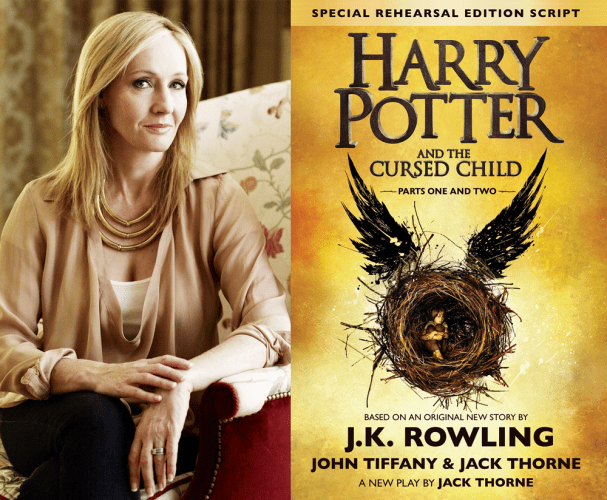
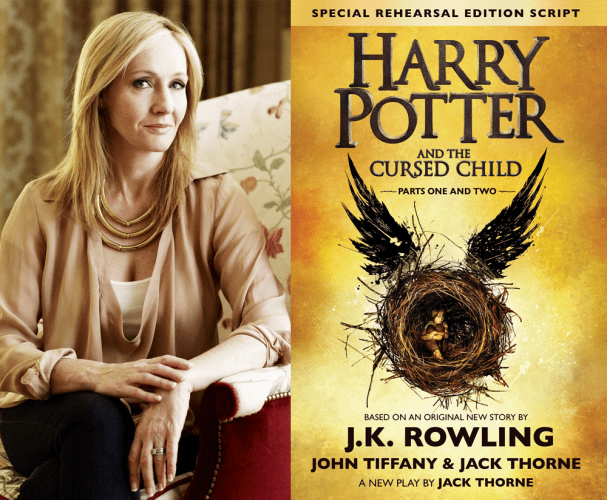
CliffsNotes: “After all this time”, there’s a story from the Harry Potter universe. That’s not counting the many Pottermore missives and Twitter posts from JK Rowling over the last nine years. Harry Potter And The Cursed Child: Parts One And Two is written by JK Rowling, John Tiffany, and Jack Thorne. The fat book is a Special Rehearsal Edition of the script of the play that premiered in London on July 30.

Cursed Child opens at the close – taking off from where the last book of the series, Harry Potter and the Deathly Hallows, ended – at King’s Cross, with Potter seeing off his children on to the Hogwarts Express.

So far, we had been lulled into believing that 19 years on, everything is alright, because The Chosen One’s scar hasn’t prickled for a while. But then this isn’t exactly Harry’s story. The wand passes on to Albus Severus Potter, Harry and Ginny Weasley’s middle son, who is buckling under the burden of his heavyweight names and surname. Things get worse when he gets sorted into Slytherin at Hogwarts. Not only that, he ends up befriending Scorpius Malfoy, that’s right, the son of Draco Malfoy. Throw in a “twenty-something determined-woman” called Delphi who convinces them to go time travelling for a seemingly noble cause and that’s Cursed Child sans-spoilers for you. But the two young wizards discover that time travelling comes with serious repercussions, as they stumble through one horrifying alternative reality after another.

Get a taste: The Cursed Child is ultimately a script for the stage, and at times it leaves you cold or at least wanting for more, such as knowing what the characters are thinking or feeling. Instead you have narratives such as “An OVER-ATTENTIVE WIZARDS begins to circle them” or “ALBUS hesitates a moment, and then his face strengthens”. Okay then. Of course, the good thing is that for many children and adults, this will be a lovely way to read a play script and understand its subtleties. And going by the reviews, it seems like the play is quite spectacular, and that is the whole purpose of this story.

Of course, The Cursed Child will take place pride beside our first edition Potter books, and that’s because it has its moments. Moments of nostalgia, humour, and poignancy. And magic. For Potterheads, it’s one more chance to hop aboard the Hogwarts Express, revisit some of their favourite characters, and silently cheer as Albus and Scorpius take us back into the magical world of witches and wizards. This is a story to be cherished, because it reveals Harry’s vulnerability as a parent and reminds us once again, the power of love and friendship. Like in this scene where Harry talks to Professor Dumbledore’s portrait, who is barely paint and memory.

“DUMBLEDORE: A difficult thing. I imagine, to watch your child in pain.

HARRY looks up at DUMBLEDORE, and then down at ALBUS.

HARRY: I’ve never asked how you felt about me naming him after you, have I?

DUMBLEDORE: Candidly, Harry, it seemed a great weight to place upon the poor boy.

HARRY: I need your help. I need your advice. Bane says Albus is in danger. How do I protect my son, Dumbledore?

DUMBLEDORE: You ask me, of all people, how to protect a boy in terrible danger? We cannot protect the young from harm. Pain must and will come.

HARRY: So I’m supposed to stand and watch?

DUMBLEDORE: No. you’re supposed to teach him how to meet life.

HARRY: How? He won’t listen.

DUMBLEDORE: Perhaps he’s waiting for you to see him clearly.”

Professor Dumbledore, still able to turn a phrase, and how.

Author 101: You don’t need a Rememberall to recollect that The Cursed Child is not written by Rowling alone. There are two more writers involved, director John Tiffany and playwright Jack Thorne. Tiffany directed Once, for which he won awards on both Broadway and the West End. Thorne writes across theatre, film, TV, and radio.

Fun Fact: This one’s the exact opposite of a fun fact. In one of the alternate realities that pop up on Albus and Scorpius’ time travelling sojourns, Ron Weasley ends up marrying Padma Patil, and for some inexplicable reason, they choose to name their son, Panju. What we can conclude is that with an unfortunate name like that, it is Panju who must be the Cursed Child. Seriously, Albus Severus Potter may be named after two headmasters of Hogwarts and is the son of The Boy Who Lived, but at least he’s not named Panju.

Similar reads: The Harry Potter (seven books) series by JK Rowling and The Hogwarts Library Set: Fantastic Beasts And Where To Find Them: From The World Of Harry Potter,

Quidditch Through The Ages: From The World Of Harry Potter, and The Tales Of Beedle The Bard by JK Rowling.