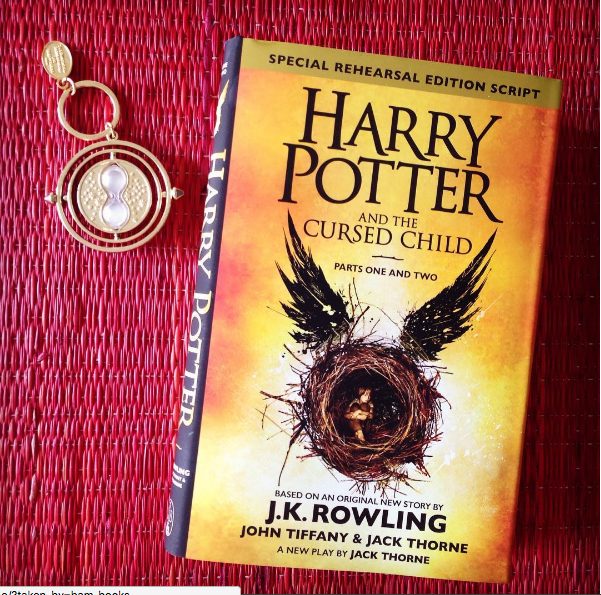
New Harry Potter book is both fan fiction and ode to magical what-ifs

screen-shot-2016-09-06-at-5-55-03-pm.png

http://www.dailyo.in/arts/harry-potter-and-the-cursed-child-jk-rowling-hermione-granger-ronald-weasley-hogwarts-magic-dumbledore-voldemort/story/1/12107.html

JK Rowling’s ‘Cursed Child’ is really about the fathers and sons who struggle with the imperfections in their relationships.

Of course, it opens at the close.

Harry Potter and the Deathly Hallows ended on a comforting, if somewhat pat, epilogue – nineteen years after the Battle of Hogwarts, The Boy Who Lived is untroubled by his scar.

Harry Potter is weaving his way through Platform Nine and Three-Quarters, along with wife Ginny Weasley and daughter Lily, to see his sons James and Albus on to the Hogwarts Express.

Ron Weasley and Hermione Granger’s daughter Rose is about to begin school at Hogwarts, along with Albus Severus Potter.

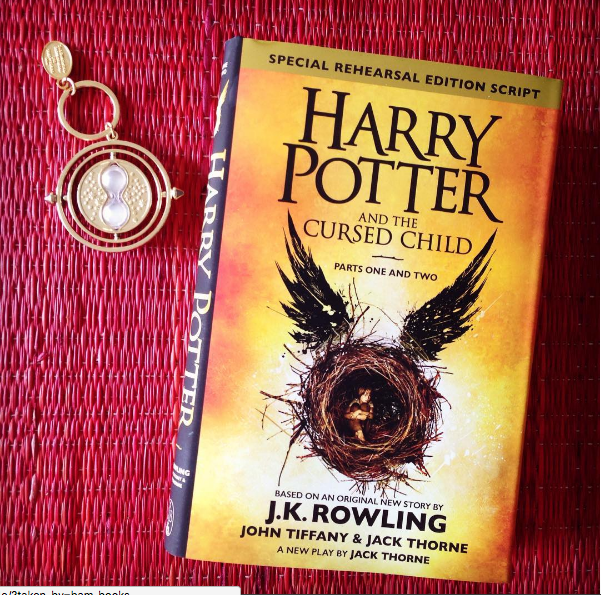
Harry Potter and the Cursed Child: Parts One and Two takes it from there.

Written by JK Rowling, John Tiffany, and Jack Thorne, the book is a Special Rehearsal Edition of the script of the play, which premiered in London on July 30.

Albus’ worst fears come true when the Potter boy finds himself sorted into Slytherin, not Gryffindor as expected.

Unlike his father, he doesn’t instantly love Hogwarts, but like him, Albus makes a fast, seemingly unusual, friendship with the amiable nerd-fighter Scorpius Malfoy. That’s right, the son of Draco Malfoy, who in turn has his own personal battles to fight.

While Albus is dogged by the burden of his surname, Harry is drowning in paperwork as the head of the Department of Magical Law Enforcement and confounded over the complicated relationship he shares with his younger son.

Scorpius and Albus, (slight plot spoiler alert in this para!) set off on a quest, with the aid of a recently-confiscated Time Turner. Things spiral out of control, with possibly disastrous consequences. But Cursed Childis not about this misguided mission.

It’s about an author playing around with the many “what-if” scenarios in her head, exploring the infinite alternative realities that are plausible because of small ripples in time.

Of course, it’s not Rowling’s story alone, perhaps that’s why it feels like reading a piece of well-written fan fiction at times.

Cursed Child is really about the fathers and sons who struggle with the imperfections in their relationships, and the fragility of it. In doing so, it reaffirms some of the values the Harry Potter books stand for – friendship and love.

Through it all, Hermione, who is now the Minister of Magic (raising our flagon of Butterbeer to toast the cleverest witch ever) and Ron who manages Weasley’s Wizard Wheezes, stand by their friend.

Hermione is still books and cleverness, but with tons of power to back her, and Ron definitely has some of the better jokes.

Disappointingly, Neville Longbottom doesn’t make much of an appearance, while Draco has made some unexpected life choices.

Professor McGonagall is now the Headmistress at Hogwarts and Professor Dumbledore is barely “paint and memory”, but it doesn’t stop him offering a few memorable turn of phrases. There’s more, but we will #KeepTheSecrets. But what’s with the regretful addition of Panju (you will have to read the book to figure out that one)!

Cursed Child is a play script, and unlike the books, it doesn’t have the vivid imagery of Rowling’s narrative. Of course, the book has its warm, fuzzy, and witty moments – you still get swept away on a tide of emotions. But what comes alive on stage splendidly doesn’t always translate to a script book.

For instance, you don’t know what Harry or Albus are feeling or thinking at all times, making it harder to stay with the characters (though Scorpius is such a dear).

A disconcerting fact for Potterheads, who are used to being in Harry’s mind, apart from Voldemort, of course.

But what’s exciting, as a friend pointed out, is that it will encourage children to read a script, understand the nuances of theatrical writing, and how it translates to performance.

Reading Cursed Child is like going to a school reunion, where after two decades, everyone is familiar but strange at the same time.

The first page of the special rehearsal edition script is a plunge into a pensieve of nostalgia for Potterheads across the globe.

Well-loved phrases leap out, and while they evoke a tug of pleasure for the reader, they are written to elicit happy sighs in the audience.

What Cursed Child does is to revisit the magic of Harry Potter, once again, after all these years.

And in doing so, it unites children and adults with the power of its words, as Dumbledore would say, our most inexhaustible source of magic.

With new Potter book, you have to finally let go of the child Harry

screen-shot-2016-09-06-at-5-55-16-pm.png

Even Hermione and Ron, the other two main characters, like many of us, have aged and are wiser.

http://www.dailyo.in/arts/harry-potter-and-the-cursed-child-jk-rowling-albus-scorpious-time-turner-nostalgia-magic/story/1/12126.html

thumb_IMG_1225_1024

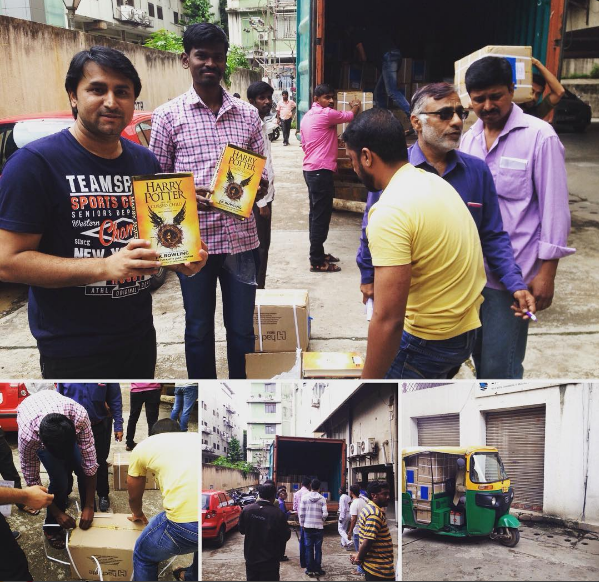
The tension in the air could have been cut with a wand. It was getting close to the magic hour, and we were waiting for the first copies of Harry Potter and the Cursed Child: Parts One and Two from Hachette.

I was the only journalist alongside book distributors and booksellers on July 31. Gangarams Book Bureau in Bangalore had pre-booking orders of 350, and was expecting to run out during the day.

A manager from Crossword Bookstore was eagerly awaiting the copies, as they had an event at 11.30am, when the books would be officially released in India. At India Books Distributors, the phone didn’t stop ringing, with anxious bookstore owners calling to enquire after their stock.

As we waited, most couldn’t understand the fuss around the new book. As one bookseller put it, “It’s all done, what’s left to say”.

We talked about Cursed Child, and how the script takes up the thread of the story, 19 years on, just where the epilogue of Harry Potter and the Deathly Hallows had left it.

Suddenly the room erupted into activity. The trucks had arrived, a little later than expected, possibly thanks to the bandh the day before.

People ran, some glued to their phone barking instructions. A big fat truck turned into the parking lot, along with two autorickshaws, all stacked with spanking new copies of Cursed Child.

Phones were whipped out, videos taken of the opening of the first box. A collective sigh of relief was let out.

I grabbed my copy, jumped into a cab and rushed to Lightroom Bookstore, giddy with the smell of a new book, and that too a Potter one.

I reverently touched the cover, bright as the golden Snitch. It was an exuberant feeling, like catching the Snitch during a match perhaps.

I wasn’t the only one. Writer Andaleeb Wajid later told me, “I also smelled it. Touched the cover with my cheek”.

I tremulously read the first page. “Act One, Scene One: King’s Cross”. I sat back, feeling all goose bumpy, the book indeed opened at the close.

That’s all I could read before I stepped into Lightroom, where we were slated to have a Potter party in a few hours

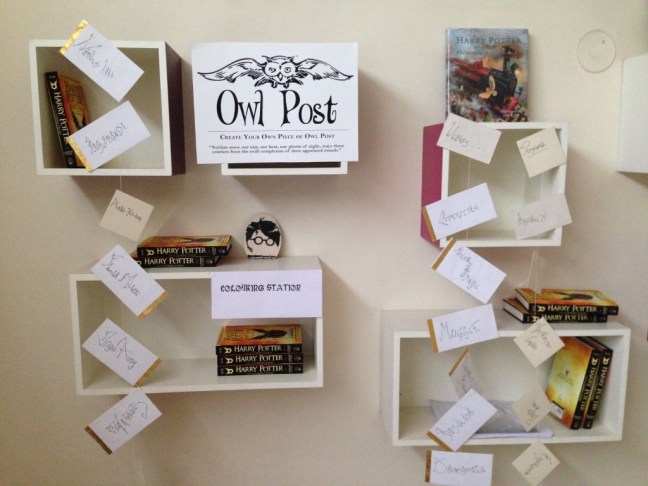
We dashed about setting up a Potions Lab, a Cupboard Under the Stairs corner, and marvelled at the Butterbeer Cupcakes and Pumpkin Spice cake.

The bookstore was transformed into Platform Nine and Three-Quarters on September 1 as children and adults dressed up as witches, wizards, and muggles milled about, got sorted, and shouted quiz answers.

They clutched the copies excitedly and with care – a new story, after all this time. If you could bottle that happiness, Felix Felicis, the liquid luck potion would have had some serious competition.

Later at night, as I curled up with my copy of the Cursed Child, I realised that what The Boy Who Lived has done is to bind children and adults together into a realm of magical words and a love for stories.

Distributors, booksellers, Potterheads, writers, artists, first-time readers had all been gripped by its imagination. It doesn’t matter if the Cursed Child has mixed reviews as a book, or that most muggles will not see the play in its first year, or pretty much ever.

Shinibali Mitra Saigal, who runs Kahani Karnival in Mumbai, pointed out – the three main characters, like many of us, have aged.

Characters, who were familiar as the back of our hands, are recast as they grow older – some wiser, others less changed with the touch of time.

Ron Weasley, we already know, has the beginning of a gut, while Harry and Hermione are entrenched in the daily grind of their jobs. What looked glamorous as a child has suddenly become work. Familiar stuff for most of us.

“It’s also a feeling of loss,” said Mitra Saigal. “Because you have to finally let go of Harry. He is no longer a boy, or a teen. He is now us.”

But nothing dampens the excitement that comes with a new Potter story. Because what matters is revisiting the magic one more time – walking the corridors of Hogwarts, climbing the moving staircases, and reading about the beloved characters again.

As Wajid said, “I’m just happy there was a Harry Potter story to read and I’m alive when it happened.”

Of course, all of this goes back to the creator, JK Rowling. Some claim that there’s too much of Potter out there. Perhaps.

Others may dismiss these spin-offs as hype or clever marketing strategies. But it’s a joy to see her beliefs, so inexorably weaved into her narratives, play out on social media.

When Professor Dumbledore says, “It is our choices Harry, which show what we truly are, far more than our abilities,” he’s only echoing what Rowling stands for.

As Albus and Scorpius turn the Time Turner, it can easily lead to a deliberation of our times as well. Our choices, even the minor ones, impact the events to come.

The prospect of a hideous world governed by dark forces, the cruelties we see around us, and our sinking sense of helplessness, is very much there. The Imperius and the Cruciatus curses reverberate in the muggle world as well, in horrifying ways.

Imperative to think of all of this in a year that has been plagued by Dementors – whether it is the impacts of the unequivocal warming of our planet, the refugee crisis, or the polarisation we are seeing across the world and in India.

Yet, people continue to stand up for their beliefs and their rights.Cursed Child, as writer Maegan Dobson Sippy pointed out, comes as a bright ray during these bleak times, a reminder of friendship, love, justice, and unity.

Magical values that perhaps need reaffirmation. Especially now, when our choices will determine the kind of world, wizard children such as Albus and Scorpius and muggle ones will inherit.

Rupa Gulab: Interviewed by Bijal Vachharajani

screen-shot-2016-09-06-at-5-50-28-pm.png

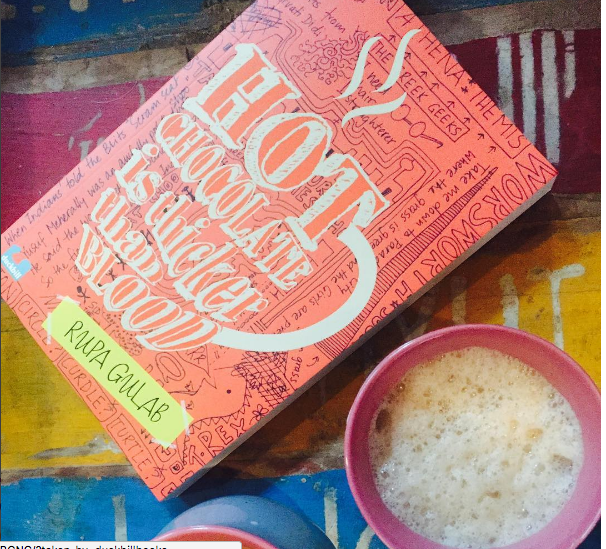
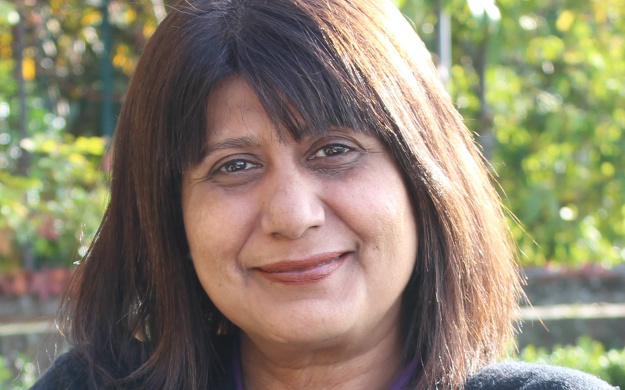
Rupa Gulab is the author of Hot Chocolate is Thicker than Blood (published July 2016), which looks at adoption and the wonderful relationship that siblings share. She is interviewed by journalist Bijal Vachharajani, who is constantly found reading children’s books.
https://theduckbillblog.wordpress.com/2016/07/27/rupa-gulab-interviewed-by-bijal-vaccharajani/

rg

BV: You’ve got the sibling relationship spot on. Squabbles, petty jealousies, and unconditional love over mugs of hot chocolate. Tell us about that.

RG: I have siblings, so squabbles, petty jealousies and unconditional love come easy to me. Especially squabbles – I used to enjoy them tremendously!

BV: How did you decide to write a story about adoption?

RG: I’m very clear about one thing: when I write books for young adults, I always cover social issues. I abhor the hypocrisy and small-mindedness that’s intrinsic in our society and have this scary, almost missionary zeal to fight it with all the energy I can muster. My first book for young adults, Daddy Come Lately, was about normalising divorce. I thought long and hard about what I would cover in my next book, and adoption appealed to me. See, when I was young, I read terrific heart-warming books about orphans (Daddy Long-Legs and Anne of Green Gables, to name a few). However, in real life, I recall a few creepy adults talking about adoption in hushed tones, like it was a bad thing, a blot on the family name, etc. It shocked me. Since I’ve grown up, many friends, a few acquaintances and a cousin have deliberately chosen to adopt children instead of having any of their own, and I love them for it! However, the stigma still exists in some teeny weeny Indian minds and that must be sorted out!

BV: There’s so much anger, bitterness and sadness, but at the same time humour and warmth. Tell us a little bit about writing Hot Chocolate is Thicker than Blood?

RG: I wrote Hot Chocolate in a leisurely manner, over about eight years. I started writing it in 2008, but I kept taking breaks and even wrote a couple of books in the middle. All the anger, bitterness and sadness came about because I put myself in Anu’s and Diya’s shoes. As for the humour, well, I firmly believe that almost anything can be funny in retrospect. I fall back on humour all the time when I’m feeling blue – sort of laugh myself out of misery, and it works!


BV: How did you get most of the YA tone right in the story – the sarcasm, humour, and outrage.

RG: Because I was like that when I was young. Still am, in my adult avatar.

BV: Poetry/ rap lyrics with history and dates is pretty genius (Especially Azad and wizard). Is that how you remembered your history lessons?

RG: That was one of the ways. I tried several association techniques to remember dates, facts, etc. The thing is, my brain is like a sieve.

The reason why I think poetry is the best method is because I still remember how many days there are each month thanks to a little rhyme that was taught at school (I bet you know this too!):

‘30 days hath September, April, June and November,

All the rest have 31, except February alone,

 Which has but 28 days clear,

 And 29 on each leap year.’

BV: There is an interesting mix of teachers in your book. Are they based on real life or mostly imagined?

RG: A little bit of both. I had a few super teachers who were cool and inspiring, but perhaps not cool enough as the ones in my books (I have extremely high standards when it comes to coolness!). The nice teachers here are how I wish mine had been – if only.

BV: Clever hand-drawn doodle notes over cheesy heart cushions as gifts. Tell us a little bit about writing teen romance/ crushes.

RG: Just remember your own crushes and romances as a teen, that’s all. Technology and mind-sets change, but relationships don’t. Sadly, cheesy hearts never go out of fashion.

BV: Your books have some kickass female protagonist, dealing with difficult childhoods, and it’s great to see some really spunky ones in Hot Chocolate. Tell us a bit more about Anu and Diya.

RG: All my heroines are spunky. All of them, whether I’m writing for adults or teenagers. I couldn’t bear to write about wishy-washy, wimpy characters – I’d probably fall asleep over my manuscript. Anu and Diya are just normal kids behaving normally, as far as I’m concerned.

One of the things that also stands out is how counselling can be a huge support. Important, in a place that often pooh paahs going to one.

I am a huge, huge fan of counselling. We tend to neglect mental health in this country, and are in a constant state of denial. A lot of teenagers suffer from depression and parents have got to understand that it just won’t go away if they ignore it. A lot of parents find the idea of taking their kids to counsellors shameful. And then they’re broken when the child does something drastic like commit suicide. Bah.

BV: There are so many literary references in your story. What books did you grow up reading?

RG: My parents were voracious readers, so most of the books we read while growing up were recommended by them. My mum’s favourite books were Pride & Prejudice, Daddy Long-Legs, Alice in Wonderland and the hilarious William series by Richmal Compton. My dad’s were How Green was my Valley, the laugh-out-loudJennings series by Anthony Buckeridge, Billy Bunter and World War II books. The writers they had in common were P.G. Wodehouse, Agatha Christie and Charles Dickens. So yes, very eclectic, with a lot of humour. That’s how my siblings and I grew up.

BV: How do you make your mug of hot chocolate? And how good a magic potion is it?

RG: I’m a disaster in the kitchen – a total disaster! The reason why I have fond memories of hot chocolate is that I drank it very often with my friends. All of us were cash-strapped hostelites, but at least twice a month we’d go to the Shamiana Coffee shop at the Taj Bombay (the city was called Bombay then!) and order one pot of hot chocolate between us. There would be about seven of us, and we’d only get about an inch in each mug, but it was so worth it. We had lovely bonding sessions while sipping it, and over time, the fantastic staff at the Shamiana used to grin when we entered and sneak in extra hot chocolate for us.


A most unusual friendship

mg.jpg

Maya G. Leonard’s fictional tale of a boy and the world of beetles is written with humour, warmth and respect

http://www.thehindu.com/news/cities/mumbai/entertainment/a-most-unusual-friendship/article9022609.ece

bb

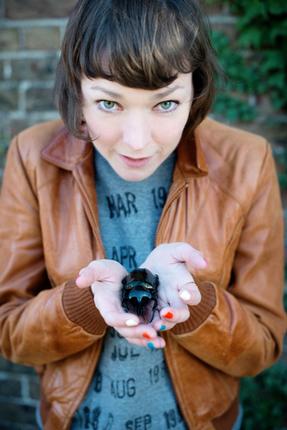
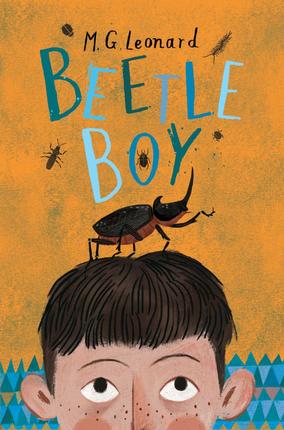
What happens when you’re terrified of insects? You write a book about them, of course. Or at least that’s what Maya G. Leonard did, and the result is the brilliant Beetle Boy (Scholastic), the first of a three-book series.

“I was writing a different story, about a villain who I imagined living in a place filled with insects, which I recognise now is a terrible cliché,” says Leonard, who lives in Brighton and works as a digital producer with the National Theatre in London. “Insects are often used to suggest a negative otherness,” she adds.

Fascinating insects

As Leonard began researching insects, she found herself fascinated by them. “I Googled different types of insects, to describe them accurately, and I was genuinely shocked when I learned about beetles and how adaptable, important and beautiful they are,” she says, in an email interview. “I don’t know if it was my own fear of insects, lack of education in the natural world or plain ignorance that meant I’d grown to adulthood without realising how wonderful these creatures are, but I was interested in that ignorance. I’m very ordinary, and I thought, if I didn’t know how essential beetles are to our ecosystem, then there is a good chance that most people don’t know. I decided to do something about my ignorance, something positive, and tell a story where the insects are the good guys.”

About a boy

The book, Beetle Boy, is the story of Darkus Cuttle, a 13-year-old boy whose father suddenly disappears from his workplace, the Natural History Museum. The mystery deepens when Baxter, a clever rhinoceros beetle befriends Darkus. So many questions: how does Baxter understand Darkus, are these mysterious events connected with the evil Lucretia Cutter who has built an empire of insect jewellery, and can Darkus count on his new friends, Virginia and Bertolt?

Of course, Beetle Boy is a triumph in that it underscores the value of unlikely friendships and makes for a thrilling read. “Children’s hearts and eyes are open to the wonder of the world and they are slow to judge,” says Leonard. “The story had to be about children discovering the wonderful world of beetles because adult’s opinions are often already formed and resistant to change. At the heart of this story is the powerful relationship between a boy and a beetle, and the friendships he makes in the face of adversity. It is those friendships that give him the courage to be heroic and find his father.”

But what also makes it an unusual story is the manner in which Leonard conjures up a sense of wonder about arthropods. You can’t help but marvel at her descriptions of the stag beetles with their “monstrous antler-like mandibles” or frog-legged beetles with their cherry-red exoskeleton that shimmers as it moves, or wonder at dung beetles and Hercules beetles. There’s awe, humour, warmth, and respect in Leonard’s portrayal of beetles. Suddenly, you want to be out there, peering at every blade of grass, observing these beautiful, wondrous creatures.

“I did all of the research for Beetle Boy by myself, over four years,” says Leonard. “I read everything I could, watched every video, looked at a billion images and filled my head with beetles. I care greatly that I do justice to the beetles, and in writing about entomologists, I wanted to show the importance of the science and the work they do.” When Leonard got a publishing deal with Chicken House, she decided to get an entomologist to look at the story. “I wouldn’t have let it be published without a scientist approving of the content,” she says. “That’s how I met Dr. Sarah Beynon, who is a specialist in dung beetles and runs The Bug Farm in Pembrokeshire. She was amazing, and edited the book for factual accuracy, pointing out my rookie errors. For example, I’d referred to a beetle’s exoskeleton as a shell, which I corrected.”

Cast of characters

Leonard also throws in a handful of unforgettable characters: human and insects, one of the most compelling being Lucretia Cutter. “I love a good villainess, because they shock or frighten a reader by violently bucking the gender stereotypes of women as fragile, maternal or compliant,” says the writer. “For me, a great villainess has to have intense desires, a searing intellect and an intriguing glamour or mesmerising repulsiveness.

I knew before I started writing Beetle Boy that my power-hungry scientist and super-villain would be a woman. I named her ‘Lucretia’ after the infamous Lucrezia Borgia who has inspired many villainous incarnations and ‘Cutter’ for the tailoring job it describes, as well as the literal meaning of the word. There is nothing soft about Lucretia Cutter, she’s all malicious intent and sharp edges. I can’t say much more about her without ruining the story, but she will horrify you.

Respecting nature

A recurrent theme in Beetle Boy is respect for nature: there’s sinister genetics engineering at play, and at the same time, you realise how unique the insects are, without being tampered with. “When I was researching for Beetle Boy I discovered that humans have already genetically engineered insects, fruit flies and mosquitoes,” says Leonard.

“The debate around the possible dangers of meddling with genetics and the impact on the ecosystem interested me,” she says.

“I wondered what might happen if you genetically engineered the most adaptable creature on the planet, which is of course the beetle. As far as I know, there has been no genetic engineering of beetles, which left me free to imagine. I love the Frankenstein story and am drawn to questions of this nature, because there is no right or wrong, just responsibility and consequence.”

The second book in the trilogy, Beetle Queen, is slated to be published in April 2017, with Leonard promising that the “adventure gets darker, funnier, and travels further than Beetle Boy”.

If we were beetles, our antennae would be quivering with anticipation.

Three things you must know about the author

Favourite beetle

“My favourite beetle changes every week because with over 3,50,000 known species to choose from, it’s impossible to pick one. I find the tiger beetle very funny. A tiger beetle runs so fast it can’t see, so sprints in short zig-zag bursts and has giant bulbous eyes to orientate it when it stops.”

Writing stories

“I’ve always been drawn towards performed stories, and have worked with a rich variety of artists in my professional life from The Royal Ballet to Shakespeare’s Globe. I struggled with words and grammar when I was at school, which was why dance was the initial area of the arts that interested me, but as I’ve grown and become more practised with language my desire to write my stories down has increased, and I don’t mind admitting I’m proud of Beetle Boy.”

Once-upon-a-time fear of insects

“My fear of insects is important because I have come to realise that fear stems from a lack of understanding. It was an interesting challenge to use positive language to describe the insects because my brain initially gave me words with negative associations. In striving to think of the beetles positively, describing them as friendly and wonderful, I have somehow reprogrammed my own brain.

“A spider can still startle me, but I keep a pair of rainbow stag beetles at home now, and I love them. Perhaps if this book had existed when I was young, I wouldn’t have spent 20 years frightened of mini-beasts. The imagination is a powerful thing.”

Bijal Vachharajani writes about education for sustainable development, conservation, and food security. She’s the former editor of Time Out Bengaluru

Creating a picture book challenge

pratham.jpg

http://www.thehindu.com/news/cities/mumbai/creating-a-picture-book-challenge/article8972333.ece
The ‘ChallengeAccepted’ hashtag has been perplexing me for a while. I keep seeing people post the hashtag along with a photograph of them in black-and-white or some such confounding theme on social media. And honestly, I looked for a challenge, I solemnly swear I did. I looked high and low for one. I even googled it to understand better, but I just couldn’t find it. I mean, I have been in more challenging situations, including getting my 3G to work, on most days. And honestly, Barney Stinson would not be impressed.

Maybe it’s just me, but I don’t see the difficulty in putting up a black-and-white profile picture, and not only because we now have filters to do it in a few taps. It’s pretty, yes, but I think we can afford to have some actual challenging posts for a change.

Over the past few years, we have seen plenty of stuff go viral: from the ALS Ice Bucket Challenge, in all its incredulousness, spotlighted the disorder (not to mention spurring countless analyses of the social media phenomena), to book swaps to people showing off their beautiful handlooms on National Handloom Day and committing to the #100SareePact.

Given how much time we while away on social media, maybe as people who love children’s books — as parents, teachers, enthusiasts — we can put that to good use. Like setting our own #Challenge, both offline and online, about sharing stories and the joy of reading.

In less than a month, on September 8, we will be celebrating International Literacy Day.

According to a UNESCO report, India has a 76.43 per cent literacy rate. However, that doesn’t necessarily translate to actual learning. According to a story by IndiaSpend, “Only a fourth of all children in Standard (Std.) III can read a Std. II text fluently, a drop of more than five per cent over four years. With math, a quarter of children in Std. III could not recognise numbers between 10 and 99, a drop of 13 per cent over four years, according to the 2014 Annual Status Report on Education (ASER).”

These figures tell a bleak story about reading and learning.

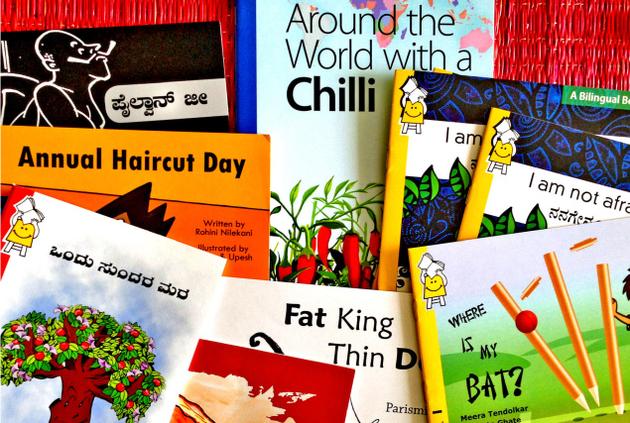
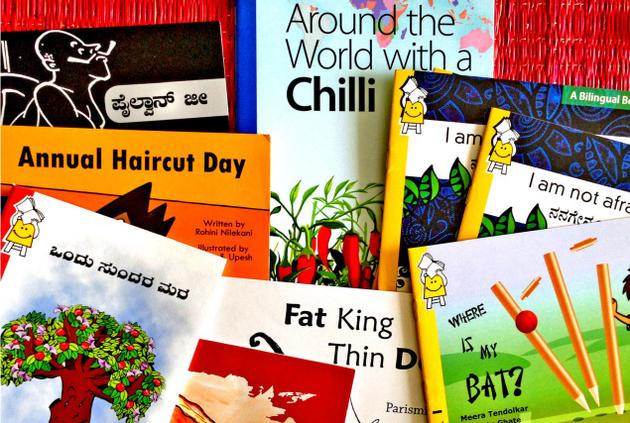
Picture books are a great starting point for visual literacy. Many of us have a stack of them lying around, and when our kids grow older, we donate those books to libraries, schools, and NGOs, or pass them on to other young readers. Some people directly read to children, and others support charities that enable access to books. Donate-a-Book by Pratham Books is one such initiative. It aims “to help bridge the gap between those who want to help children read and those who need books for children.” Here, institutions such as schools and libraries put in book requests and people can donate money to help get books to them. According to their website, even Rs. 500 can translate to 15 books.

Apart from that, there’s the Pratham Books’ Champion campaign where volunteers can sign up to conduct storytelling sessions in their community. This year, they are celebrating One Day One Story, where the “idea is to encourage children to fall in love with reading. These sessions are conducted free of cost and mostly with children from under-served communities. We hope that these storytelling sessions will also bring to light the issues of joyful reading, access and multilingual publishing.”

Similarly, you can choose to support Room to Read, whose literacy programme “transforms primary schools into child-friendly learning environments that enable children to develop the skills and habit of reading throughout primary school and become life-long, independent readers.” Or volunteer with Akanksha Foundation that looks at providing “children from low-income communities with a high-quality education, enabling them to maximise their potential and transform their lives.”

And of course you can throw open the challenge on social media. Invite your virtual (and real) friends to commit to sharing at least five picture books with a child or a parent who doesn’t have easy access to books.

My go-to sites are Pratham Books, Eklavya, and Tulika Books. The books start from as little as Rs. 12, so they won’t burn a hole in your pocket. You can get bilingual and activity book sets at fabulous prices as well. May I suggest posts like this one: Calling out to who love stories. All you have to do is buy five picture books and share it with someone who has a child but doesn’t have easy access to books. It could be your auto rickshaw driver, your bhajiwallah , your fish lady (so on and so forth). Let’s share stories with children in the offline world. If you agree, copy and paste this post on your wall, starting with #ChallengeAccepted.

Alright, perhaps not. But you get the drift. What would be wonderful if you can, along with keys, cell phone chargers, and mints, pop in a few picture books in your bag. Share them with children you meet, or parents. Invite them into the magical world of stories, and with that literacy. So, challenge accepted?

Amplifying unheard voices

aamu.jpeg

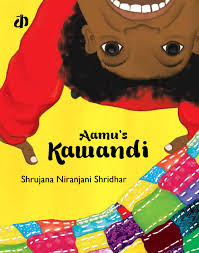
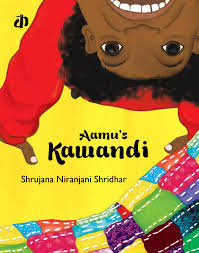
Using illustrations and text, Shrujana Niranjani Shridhar’s book, Aamu’s Kawandi, tells a subtle story of the Siddis, the people of African origin in India

shrujana

http://www.thehindu.com/todays-paper/tp-features/tp-metroplus/amplifying-unheard-voices/article8965473.ece

In the year that President Barack Obama was re-elected, Shrujana Niranjani Shridhar came across a story in The Hindu (January 21, 2013) about the Siddis celebrating the victory. The Siddis are people of African origin who have been living in India for centuries. “That was really how I found out about the Siddis,” says the Mumbai-based artist.

As a student at the Srishti School of Art, Design, and Technology in Bengaluru, Shridhar got the opportunity to work on a picture book on the Siddis for her final diploma project in 2014. “We had a choice between many different communities and I went with the Siddis,” she says. “Indian society is very racist and casteist, and one can only imagine how marginalised an Indo-African tribe would then be. I thought it was important that the new generation have the chance to learn of India’s pluralism and all the different kinds of ‘Indians’ who struggle to survive.”

Patchwork stories

The result is Aamu’s Kawandi , written and illustrated by Shridhar and published by the Delhi-based Katha. The story is about a little Siddi girl, Aamu, who flits about the pages of the picture book, introducing the reader to her friends Chinni and Jojo, her family, and her community that lives in Mainalli in Karnataka.

Aamu’s mother makes beautiful patchwork quilts called kawandi , and so the little girl decides to make one as well, but out of paper. “Siddi women traditionally make one big quilt, or even a baby quilt, out of scraps from everyone’s clothes. Aamu’s mother also makes quilts, and like most little girls, she’s very proud of her mother and imitates her, which is why she also makes a kawandi ,” says Shridhar.

Her prose is exuberant, taking you on a whirlwind tour of Aamu’s life. Her illustrations are bright and happy, just like the colourful patchwork quilts, with myriad textures and hues popping up all across the book. At the same time, she manages to talk about some of the struggles the community faces. “It was difficult to introduce concepts of identity, poverty, pride etc. to children in a storybook,” she says. “We’re not used to reading about stories like these, so even as an author, one found it challenging to fit it into the framework of a storybook. Children are very intelligent and pick up on small subtle things.”

Shridhar says one of the aspects that she struggled with was explaining that most Siddis used to be bonded labour. “How do you explain that to a child?” she asks. “But I just had to subtly state that Aamu’s grandmother used to work on someone else’s land and that now her mother works for herself. A little boy who read the book identified that the grandmother might not have been treated very well, and was very curious about what ended up happening to her,” she recounts.

Grappling with complexities

Shridhar began her project by researching dthe Siddis. “At the start, I didn’t draw anything. Just read a lot,” she says. “I read works by sociologists on the African diaspora, I read some of Margret Mead’s work. I even read [Jyotirao] Phule’s Slavery (which he had dedicated to the African-American slaves); basically, everything to help me understand the general situation.”

When they went on their first recce, the book team met Obeng Pashington, a scholar in African diaspora studies who has worked with the Siddis for many years. It turned out to be an inspiring experience for Shridhar, but for her, most of the observations happened while sitting around sketching the village and its people casually, or through conversations with them.

Of course, it wasn’t easy to translate all that she observed into a picture book. “After a couple of us went on-field for the first time, I was totally devastated,” says Shridhar. “I couldn’t connect anything I had read to what I had seen. Every time I’d come back home from a visit to Mainalli, I would be in a daze. I wanted to explore some very complex subjects like the identity of politics or gender segregation that I didn’t have a total grasp on myself. But one day after I came back from a trip to Mainalli, I realised that if I had to present my culture to someone new, I’d do it from a place of pride, and that sense of pride set the tone for the story,” she adds.

Building character

One of wonderful things about Aamu’s Kawandi is Aamu. She’s boisterous, adorable, and a complete loveable child. “I loved designing Aamu’s character,” says Shridhar. “The children I’d spend time in Bangalore were obviously very different from the ones at Mainalli. The children at Mainalli were very active and physical children because they have that kind of physical space. For Aamu, I thought of everything from how her mother would tie her hair to what her favourite colour was. There were details about her character that obviously wouldn’t be part of the story but it helped in forming it. In fact, once I had Aamu down, the story just fell in to place.”

Since her graduation, Shridhar has been trying to merge her art with activism, to amplify unheard voices. Aamu is just the start. “I believe firstly, as humans we don’t exist in isolation and so naturally nor does an artist,” she says. Adding that, “All our ideas that we attribute to being our own come from the world around us and that’s why my work is a reflection of it. I believe in standing by people because that’s where you come from, I mean we have only one home (for now at least) and we only have each other. Art is just a medium for me.”

The author writes on education for sustainable development, conservation and food security. She’s the former editor of Time Out Bengaluru

The story is about Aamu, who introduces the reader to her friends Chinni and Jojo, her family, and her community

How the gulab jamun travelled from Iran to India and other stories

fullsizerender-2.jpg

http://www.expressfoodie.com/main-course/gulab-jamun-travelled-iran-india-stories/
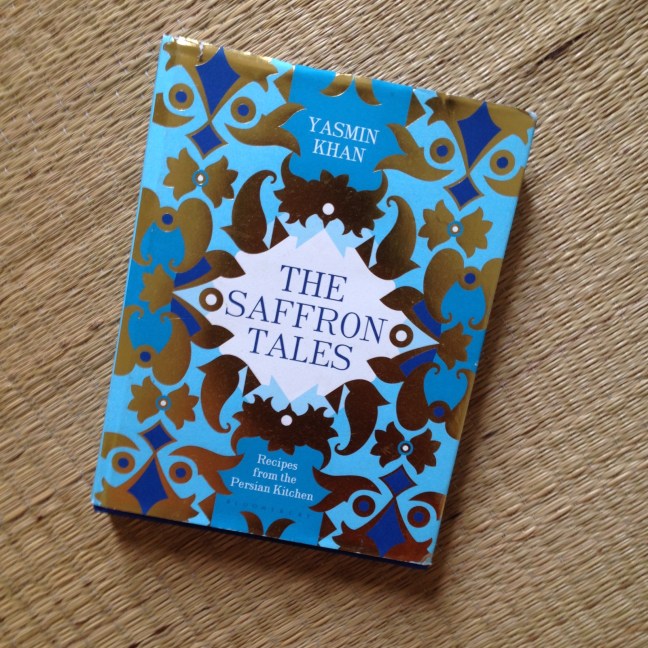
Reading Yasmin Khan’s The Saffron Tales is like tucking into an expansive meal. As you turn the pages with luscious photographs and read the lovingly documented recipes and stories, you are enveloped in a sensual world of delicate aromas, myriad textures, and subtle flavours.

Khan’s book is a celebration of harvests, traditions, and stories. She writes about the delicacy of the saffron harvest, traces the history of some of the celebrated Iranian produce such as pomegranate, and delves into their contemporary use, while taking the reader through the many different sofrehs (the patterned tablecloth on which dishes are served) of Iran. The Saffron Tales coaxes you to step into the kitchen and try many of the recipes out. And it’s not difficult, and that’s mainly because when you rummage through Khan’s extensive ingredients list, you realise that most of these are easily available in our kitchens.

Iran was at the heart of the old Silk Route, and its location enriched its cuisine, making it, Khan says, “a poetic balance of subtle flavours such as dried limes, saffron and orange blossom”. In India Food & Cooking: The Ultimate Book on Indian Cuisine, Pat Chapman talks about how Iran’s monarchs Cyrus, who invaded northwest India in 532 BC, and Darius, his successor, introduced the region to Iran’s “indigenous ingredients such as spinach, pistachio, almond, pomegranate, saffron, and rose water”. Chapman further writes, “Rice was not indigenous and probably arrived there by trade after the Aryans first encountered Dravidian cultivation terraces. But it soon became the Iranian staple”.

Later, the Mughals and the Parsis enriched and cemented the culinary synthesis. In her book, The Penguin Food Guide to India, Charmaine O’ Brien talks about the influence of Persian cuisine during the Delhi Sultanate rule. “The hallmarks of medieval Persian cuisine were dishes of meat cooked with rice; meat cooked with fruit; and a generous use of nuts, dried fruit and distilled flower essences such as rose water to flavour both sweet and savoury dishes.” From the biryani to naans and kebabs, so many of our foods trace their origin to Persia. For instance, Michael Krondl writes in The Donut: History, Recipes, and Lore from Boston to Berlin about how Persian invaders brought with them a “round fritter that eventually became gulab jamun. (gulab comes from the Persian word for rose water, while jamun refers to a local fruit of roughly this size.)” He adds, “The [Indian] recipe is more complex than in the Middle East, requiring a mixture of dried and fresh milk thickened with flour. But as in Iran, the mixture is fried and soaked in rosewater syrup”. Most commercial gulab jamuns now come without the rose water, but it still conjures up the beauty of rose petals being distilled into a fragrant essence.

It’s not just a spice whammy

At the beginning of her book, Khan writes, “Those unfamiliar with the food often come to the sofreh… expecting spicy, fiery flavours, perhaps more befitting the country’s climate and politics, and are often surprised to find that the cuisine is gentle and soothing…” Not unlike our country, where different regions have a different staple, produce, and recipes.

Khan explains “slow-cooked stews known as khoresht and elaborate rice dishes layered with herbs, vegetables, legumes, meat, nuts and fruit are the bedrocks of Persian cuisine, creating a dazzling mosaic of scents, textures and colours…” The khoresht is cooked depending on the region and the seasonal produce, but each has a distinct sour and sweet taste balance. In India too, spice doesn’t dominate the palate, rather it’s about striking that perfect balance.

Persian cooking, of course, uses more herbs, than spices. Flavours stand out like in the Chelow, a classic Persian dish, which is perfectly cooked rice with a “buttery saffron crust”. Or, the Bagalee ghatogh, where fresh beans are cooked with turmeric, garlic, and dill. Even the gheimeh, slow-cooked lamb shoulder with dried lime split peas, doesn’t have a lengthy list of ingredients, but promises a unique citrusy flavour with the addition of dried limes.

Familiar ingredients and recipes, with a twist 

Seasonal produce and ingredients sparkle in The Saffron Tales. For instance, Khan writes about Rasht, the capital of the Gilan province in northern Iran, where fresh young garlic is often eaten raw at the dinner table. Similar to what Gujaratis do in the winter months, the only difference being they sauté it in ghee before serving.

Many of the recipes are familiar – burnt aubergine dips (think baingan bharta), yoghurts flavoured with vegetables and herbs (raitas), and naan (well, naan). Like many Indian recipes, Iranian cooking constitutes of approximate measurements of ingredients, easily substituted with another based on availability, and mostly by following the smell and taste of food as it gets prepared.

Fresh fruit, salads, and yoghurt are ubiquitous. Like most of our meals, Persian meals are not complete without the salad, “adding a welcome crunch and freshness to complement the hearty stews and gentle rice dishes”. Salad Shirazi, for instance, is a simple mix of cucumbers, tomatoes, red onion, and radishes tossed together with dried mint, olive oil, lemon juice, sea salt, and black pepper. Quite like the Maharashtrian kachumber of onion, tomatoes, green chillies, and coriander tossed with nimbu, salt, and pepper. But the dried mint is a fabulous addition.

One big Hum Saath Saath Hai meal 

Khan points out that sharing food is central to the Iranian approach to eating. “An Iranian would never simply reach into the fruit bowl and take a bite of an apple; instead they would cut the apple into slices and offer it around the whole group, even if that meant there was only one slice left for them at the end”. In her introduction, she writes about how usual it is for food to be offered to strangers in bus or plane journeys. And that reminds me of the great Indian train journeys, where dabbas of food are generously shared with co-passengers.

Traditionally, writes Khan, “Persian food doesn’t separate starters from main courses. Instead, the table or sofreh is dotted with small plates of vegetables, yoghurt, olives, pickles and salads that are eaten alongside the rice dishes, stews and kebabs”. Much like our thalis and thaals, where everything is served together.

The sweetness doesn’t always come from fruits 

In the way that Indians coax the natural sweetness out of vegetables, Khan’s recipes do the same. One such recipe is the morab-ye kadoo halvaa-ee, a spiced butternut squash preserve. Unlike our mango morabba which is more gelatinous in texture, this one is a sweetened pumpkin puree which works beautifully with morning granola and cheese cake toppings. Her carrot, cardamom and rosewater jam with a dash of orange zest will most probably elevate the humble bread and butter as a breakfast option.

Fruits, conversely, are used to flavour savoury dishes. There’s a river fish that is stuffed with walnuts, basil, and pomegranate molasses and baked. Plums and apricots are salted and dried added to stews and soups.

Before they grow up

13bm_kids_column_p_2930308g.jpg

As the sole maasi to a nine-year-old nephew, I am afforded certain privileges that few in the family are privy to. The nephew would call me in urgent tones from his Dubai home to discuss a paragraph in the sixth Harry Potter book, or to ask when I think he will get his Hogwarts letter. His mother would shake her head in exasperation at the long distance call, as he whispered confidences about his classmates and discussed the latest books and games with me. I only see him a few times a year, and sometimes I get the feeling that he’s growing up like a weed, too fast for me to catch up.

It’s not only that every time I see him he’s about a head taller. He now inhabits a world that I am not always familiar with: the video games he plays, the YouTube channels he follows, and even the fact that he’s moved on to Alex Rider from Harry Potter! It was easier talking about The Gruffalo and the lives of adventurers, rather than the merits (what demerits?) of Minecraft. Suddenly, I was worried that maybe I was slipping from cool aunt position: at one point he thought I was a witch who went to Hogwarts and an explorer, rolled into one.

Since his nose is often buried in an iPad or another screen, I had a full-scale plan drawn up for when he visited Mumbai this year for his annual holiday: ‘Mission Explore Mumbai and Think Maasi is Cool Once Again’. From a leisurely hike in Sanjay Gandhi National Park to a museum day and taking a walk around Bandra marvelling at street art, I was ready with an itinerary.

Of course, I didn’t factor in on our city’s torrential monsoon; we spent most of those days cooped up at home playing Battleship and Jenga Quake. Much to my dismay, we ticked off something like one-and-a-half things from my itinerary. We managed to reach Chhatrapati Shivaji Maharaj Vastu Sangrahalaya (CSMVS) from Andheri, but first made a beeline for lunch, because it took so long to get there. After being fortified by Suzette’s hot chocolate and crepes, we spent an afternoon muddling around the museum. The nephew tried on different turbans, made himself several block-printed cards, a roller press print, and a Lung-ta prayer flag, was equally fascinated and repelled by the bone jewellery in the Himalayan Art Gallery, and giggled at the size of some of the Mughal costumes.

That day, it took us four-and-a-half hours to get back home. To my surprise, he didn’t fret for a tablet (‘no screens’ was my one condition of taking him out). Instead, he spent the hours experimenting with some coffee beans he had taken from Starbucks and a bottle of water. He sniffed at the decoction he had created and made observations. I answered questions about Mumbai’s history and the sights we passed. The nephew drew a poop family tree in my notebook, while I met a friend for a quick cup of coffee, and then judiciously explained each family member to us. When I picked up my phone to message my sister, with a slight air of superiority, about the screen-free day and the value of boredom, the nephew pointed out that I was using my phone too much. I couldn’t help but make a comment about smart alecks, as I dropped my phone back into my purse.

Another day, we visited Trilogy by the Eternal Library, and I lost him to the world of books for some time.

One evening, we walked down to say hello to a friend’s dog. My sister is terrified of dogs, and the nephew hasn’t met too many in Dubai. But Dane is the gentlest dog I have met; he let himself be pet, and didn’t jump at the nephew, who is still a bit skittish around animals. He came back home announcing, “Dane is the best dog ever”, going on to give an embellished account of the play time to his nani.

We watched Howl’s Moving Castle and agreed that the hopping scarecrow was creepy enough to keep the lights on a bit longer that night.

On the penultimate day, my father had an appointment in Santa Cruz, so despite the crazy rain, we crammed into the car. My parents did their visiting, while my nephew asked if he could wait outside and look at the rain. Armed with a pair of umbrellas, he and I watched the rain fall all around us, pointing out the patterns that rivulets made on leaves and the way everything looked scrubbed clean. We made pretend-rain measurement tools with twigs to guess how much rain had fallen so far. He put out his hand and squealed with delight as the rain fell on his outstretched palm. We tore out pages from my notebook to make paper boats.

As we carefully set the first one in a puddle, I asked him if he’s ever sailed a paper boat. He thought carefully, and said no. We watched our paper boats wend their way through precarious roots, whirlpools, and bob across pebbles and leaves. A blue plastic wire became the Bermuda Triangle that the boats needed to avoid, while the nephew took on the role of on-shore captain. As the tiniest boat started to sink, the nephew let go of my hand, to raise his wrist to his mouth, as if talking into an imaginary gadget. He reported that the boat has been torpedoed by the enemy pirates.

For now, he wasn’t growing up too fast, for me.

http://www.thehindu.com/news/cities/mumbai/before-they-grow-up/article8842436.ece

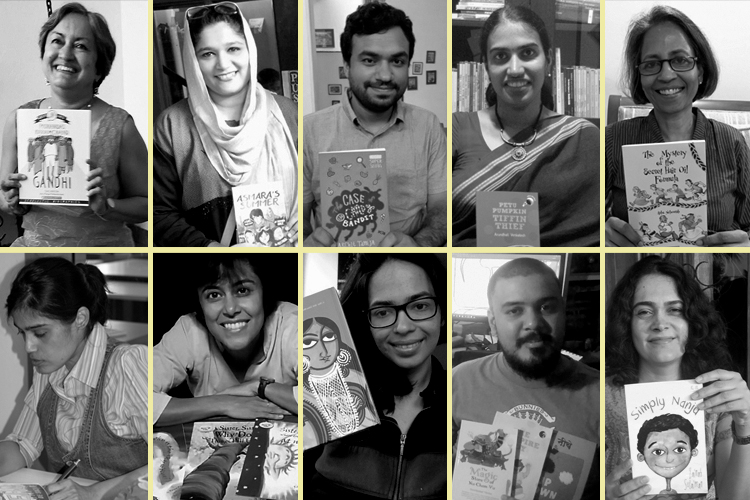
10 Children’s Writers From Bangalore We Absolutely Love

childrensauthor.jpg

https://lbb.in/bangalore/kids-writers-bangalore/

From the balmy weather to the abundant bookshops — there’s much to inspire authors in the city we call home. With some of India’s finest children’s writers living right here, you’ll find places and people you recognise on every page. Meet some of Bangalore’s writers who dream up the loveliest stories for children.

 Aditi De

AditiDe

Usually found: Gazing over her computer and out of wide windows which overlook her neighbour’s Singapore Cherry Tree.

It’s hard not to be impressed by an author who has written about some of India’s most iconic figures in her work — including Gandhi in a recent graphic novel, and Nehru as part of the Puffin Lives series. De has a special knack of making her writing both accessible and relevant for children. Reading her life of Gandhi is particularly special because of the attention she pays to his {often neglected} childhood years.

Bibliography: A Twist in the Tale: More Indian Folktales, Jawaharlal Nehru: The Jewel of India, The Secret of the Rainbow Phoenix, and Mohandas Karamchand Gandhi.

Reading recommendation: The Mozart Question by Michael Morpurgo

Andaleeb Wajid

AndaleebWajid

Usually found: Writing at her desk, especially when she has time to herself.

Food and slice of life stories come together in Andaleeb Wajid’s books. The Young Adult author has recently written Asmara’s Summer about the very posh Asmara, who much to her horror, finds herself spending a month at her grandparent’s on Tannery Road. If you’ve read Wajid’s books — YA or adult — you will find that Bangalore is a key protagonist in her stories. “All my books feature Bangalore for the simple reason that while I may have travelled to many places around the world, I’ve only lived here,” she said. “This is home and it is predominantly evident in all my books.”

Bibliography: Asmara’s Summer, When She Went Away, The Tamanna Trilogy series, and Kite Strings.

Reading recommendation: The Fablehaven series by Brandon Mull.

Archit Taneja

ArchitTaneja

Usually found: Writing while enduring the long commute from Indiranagar to Whitefield.

For Archit Taneja, who began his writing journey at a workshop organised by Duckbill Books in Chennai, it had to be children’s books because he, “enjoys telling goofy stories that most adults frown upon.” His debut novel for middle readers, The Case of The Candy Bandit, certainly adds a goofy charm to the typical detective story, and the sleuths from the book are ready to take up a new case in the second installment, which will be published soon.

Bibliography: Superlative Supersleuths: The Case of the Candy Bandit.

Reading recommendation: The Selected Works of T.S Spivet

Arundhati Venkatesh

ArundhatiVenkatesh

Usually found: Madly trying to make a break through the madness to the relative calm of her desk.

Food is certainly a recurring theme in her books for both younger and middle readers — with characters like Junior Kumbhakarna and Petu Pumpkin, who just love to eat. Her latest release, Koobandhee – The Adventures of Bala and the Book-barfing Monster hit shelves just this month and tackles another theme that’s close to her heart … books! With some sibling rivalry and feminism thrown in for good measure. While she nurtures dreams of writing in the hills à la Ruskin Bond, she can’t imagine doing what she does in any other city than Bangalore.

Bibliography: Junior Kumbhakarna; Petu Pumpkin: Tiffin Thief, Petu Pumpkin: Tooth Troubles, Bookasura – The Adventures of Bala and the Book-eating Monster, and Koobandhee – The Adventures of Bala and the Book-barfing Monster

Reading recommendation: Coraline by Neil Gaiman {if excitement is what you’re after}. Saffy’s Angel by Hilary McKay {which will leave you feeling good} and Vanamala and the Cephalopod by Shalini Srinivasan {takes you into a fantastic world that’s not too far from Bangalore}.

Asha Nehemiah

AshaNehemiah

Usually found: Writing at her home, where many of the windows look out to trees full of birds.

You can’t help but giggle at a title like The Boy whose Nose was Rose and Other Rollicking Stories. But then that’s the magic of Asha Nehemiah’s writing, it’s warm, humorous, little wonder that children love her stories. “I started writing children’s books because it brings together, in the most fun way possible, all the things that are closest to my heart — writing, stories, fantasy, humour, mystery and children!” said Nehemiah.

Bibliography: The Mystery of the Silk Umbrella, Trouble with Magic, The Mystery of the Secret Hair Oil Formula, Zigzag and Other Stories, Meddling Mooli series; The Boy whose Nose was Rose and other rollicking stories, six CBT books — Granny’s Sari, The Runaway Wheel, The Rajah’s Moustache, Wedding Clothes, Mrs Woolly’s Funny Sweaters and Surprise Gifts. 

Reading recommendation: Bear Snores On by Karma Wilson, The Why-Why Girl by Mahasweta Devi, Book Uncle and Me by Uma Krishnaswami.

Jane De Suza

JaneD

Usually found: Sitting at her antique desk contemplating the view out to the sky above her terrace.

A love of detective fiction and a good old mystery guides Jane De Suza’s writing for children, which is characterized by her laid back humour and sense of irreverence. Despairing of the “abominably serious world” kids live in today, she writes, “to get them giggling again” and to show them that, “there’s an equally fun world for the quirky ones, the ones who don’t fit in.”

Even though her Superzero books are set in a fictitious superhero town, don’t be surprised to find elements that you recognise — as everything from her neighbourhood bakery to the slang she hears kids using on the city streets finds its way into her work.

BibliographySuperZero, SuperZero and the Grumpy Ghosts, The Party in the Sky, The Big Little Want.

Reading recommendation: From Call of the Wild by Jack London to The Black Stallion by Walter Farley and Marley and Me by John Grogan, to everything by James Herriot, Ranjit Lal and Gerald Durrell.

Roopa Pai

RoopaPai

Usually found: Writing in front of her desktop in her room, and when not writing, goes out to enjoy her city.

Although Pai said she started writing children’s books rather late in life, she has contributed stories to magazines, newspapers, workbooks, and textbooks. Pai has gone on to write the brilliant Taranauts series and the extremely popular The Gita For Children, making her one of the most beloved contemporary children’s books writers.

Bibliography: The Taranauts series, The Gita For Children, What if the Earth Stopped Spinning, the Sister, Sister science series, UNICEF’s Children For Change series — Mechanic Mumtaz and Kalyug Sita, Starring Taka-Dimi: My Space, My Body and Frobby and Friends: My Home.

Reading recommendation: Survival Tips For Lunatics by Pakistani writer Shandana Minhas.

Samhita Arni

SamhitaArni

Usually found: Writing in her study, looking out at trees, with a small chair and an extra cushion for her cat, who keeps her company when she writes.

Samhita Arni started writing children’s books at the age of eight! That was The The Mahabharata – A Child’s View which has since then been published in seven languages and sold over 50,000 copies across the world. The award-winning author has written children’s and adult books including the graphic novel Sita’s Ramayana. “The writing community and events in Bangalore is low-key and down to earth, so much less pressure for me, as a writer and fewer expectations to live up to — which translates into more freedom for me as a writer,” said Arni.

Bibliography: The Mahabharata – A Child’s View and Sita’s Ramayana.

Reading Recommendation: Sorcery and Cecilia or The Enchanted Chocolate Pot by Patricia Wrede and Caroline Stevermer.

Vinayak Varma

VinayakVarma

Usually found: Writing in his study or rocking chair, late at night or late afternoon, when it’s silent.

Illustrator Vinayak Varma stumbled into writing children’s books purely by accident. Varma wasn’t able to get a sound-mixing internship in 2002, as part of his digital filmmaking course at the Srishti School of Art, Design and Technology. He ended up ‘begging’ his way into Tulika Books as an intern. During his stint there, Varma proposed an idea about a child learning about weight and gravity by playing seesaw with animals of varying sizes. The result was the lovely picture book Up Down. Since then Varma has illustrated many children’s books, written articles and comics for Tinkle and Amar Chitra Katha, edited the science magazine Brainwave and written and illustrated Jadav and the Tree-Place for StoryWeaver.

Bibliography: Jadav and the Tree-Place and ­Up Down.

Reading recommendation: All of Asterix and Tintin, which are full of grand adventure, history, humour and excellent visual storytelling. They were easily the most memorable books from my childhood.

Zainab Sulaiman

ZainabS

Usually found: Parked up outside Airlines Hotel, sipping filter coffee and trying to write.

A self-proclaimed ‘old, hard-core Bangalorean’ Zainab Suleiman’s debut novel Simply Nanju was inspired by her time working with differently-abled children at a local school. It’s a gentle, moving read, with characters you really believe in — and whose voices stay with you. You can expect to see lots of Bangalore inspiration in this {and future!} books, keeping in mind that Sulaiman is a loyal city resident who has spent her whole life here.

Bibliography: Simply Nanju

Reading recommendation: Trash! by Anushka Ravishankar, Swamy & Friends by RK Narayan, Little Women by Louisa May Alcott and Calvin and Hobbes. Plus, anything written by Roald Dahl.

 

Tell me a story of the wonderful witch

thinkstockphotos-jpg.jpg

http://indianexpress.com/article/lifestyle/books/tell-me-a-story-of-the-wonderful-witch-2889815/

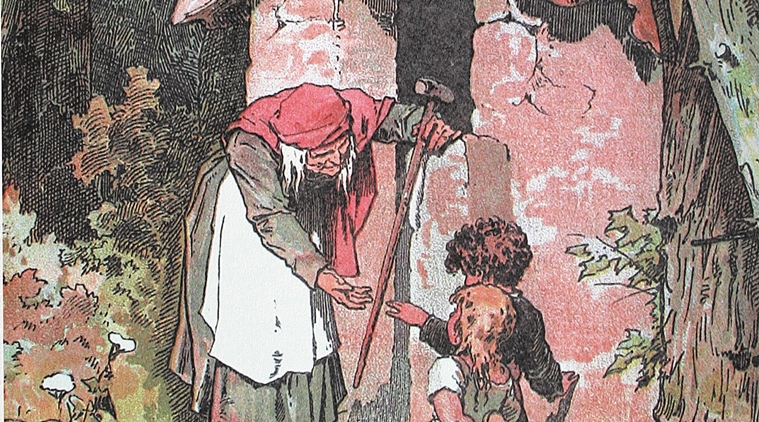
Do you worry about the stereotypes in your child’s books, from the good wife to the fair princess? Here’s how to free fairy tales from prejudice.

Who doesn’t know Cinderella’s horrible step family? The stepmother and ugly stepsisters were “with fair faces, but evil and dark hearts” and they made sure that “times soon grew very bad for the poor stepchild.” You may have also read about the good wife, who is always slaving away at the stove, while pundits dole out sage advice and peasants toil and serve. Many stories come with a bevy of people engaged in servitude, either helpful or malicious, stupid or cunning, always at the service of the privileged.

images

While some of these stories are charming, others entertaining, as a child reading them, it’s hard not to believe that all step-parents cackle and are horrid, that girls must do the dishes and wait to be rescued, while boys must do the rescuing. It’s also easy to assume that pundits are wise and peasants are thick-headed.
“These stories reflect the times and cultures in which they are set,” said Radhika Menon, managing editor of Tulika Books. “They are timeless concepts — the good vs evil, the wise vs foolish, the strong vs weak. And overriding all this are notions of beauty and gender, which continue even today.” Menon points out that, often, writers and illustrators unconsciously reinforce the stereotypes even while the stories or illustrations try to break free of them. “It requires skill and understanding to change or subvert stereotypes in children’s books,” she added. “The challenge for editors is to identify such writers and illustrators and for parents and teachers to find such books!”

Narratives have the power of influencing children’s attitudes, behaviour, and perceptions. For one, new research from the Brigham Young University, US, suggests that the Disney “princess” culture can “influence preschoolers to be more susceptible to potentially damaging stereotypes”. The study, which involved 198 preschoolers, revealed that “more interaction with the princesses predicted more female gender-stereotypical behaviour a year later” — this affected their confidence to do well in maths and science. The girls didn’t like getting dirty, and were “less likely to try and experiment”.

But then, if some stories can reinforce biases, others shatter them. Which is why we have films such as the fabulous Shrek series (okay, some of them, at least), a delightful parody on stereotypical fairy-tale characters, as well as children’s books with protagonists who refuse to be pigeonholed. In Oliver Jeffers’s The Heart and the Bottle (HarperCollins), there is a girl “whose head was filled with all the curiosities of the world”, and a brave toddler outwits a slew of monsters in Maurice Sendak’s Mommy! (Scholastic). “The Greatest Magic of Harry Potter: Reducing Prejudice”, a study published in the Journal of Applied Social Psychology, showed that children who read Rowling’s books were less prejudiced and more open-minded.

Closer home, writers are cutting through stereotypes and superstition to write books that are reflective of our times. Ranjit Lal writes about female infanticide in Faces in the Water (Puffin). Mathangi Subramanian’s Dear Mrs. Naidu (Young Zubaan) has spunky female protagonists who take their schooling future in their own hands. In Nandini Bajpai’s Starcursed (Red Turtle), reason trumps astrology, while girls play some excellent football in Swati Sengupta’s Half the Field is Mine (Scholastic). Himanjali Sankar’s Talking of Muskaan (Duckbill) has an LGBT theme, and Zainab Sulaiman’s Simply Nanju (Duckbill) is set in a school of differently-abled children.

Yet, log onto a bookseller’s website or visit an average bookstore, and you will see fairy tales, mythological and gendered books topping the popularity lists. The appeal of these stories is undeniable. Many of them are better packaged and marketed. Spend a few minutes in the aisles of an airport bookstore, and you will observe that many parents are clueless about most Indian authors.

Additionally, the power of popular culture is impossible to ignore. Little wonder then, that children covet Disney princess-themed birthday parties, Chota Bheem backpacks and lunchboxes. Chota Bheem maybe everywhere, it doesn’t take away from the fact that the series has strong gender biases and borders on tokenism. For instance, the fair-skinned Chutki may play with her friends and embark on adventures, but she’s the one burdened with household chores.
But then, books and media are not the only sources of prejudice. “I feel stereotypes and labels are bound to creep in to our children’s lives and books are not the only influence,” said Aashti Mudnani, who owns Lightroom Bookstore in Bangalore. “[I] am mostly speaking from personal experience with my own children and feel that reading books to a child often involves questions and discussions and it is important to engage in these.”

But then, books and media are not the only sources of prejudice. “I feel stereotypes and labels are bound to creep in to our children’s lives and books are not the only influence,” said Aashti Mudnani, who owns Lightroom Bookstore in Bangalore. “[I] am mostly speaking from personal experience with my own children and feel that reading books to a child often involves questions and discussions and it is important to engage in these.”

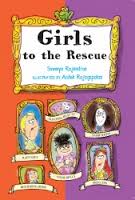
At Lightroom, Mudnani and her team handpicks the books, creating a veritable Narnia for children. Here, you won’t find Cinderella or Jack and the Beanstalk, but you will stumble upon a modern retelling such as The Princess and the Giant (Nosy Crow) by Caryl Hart and Sarah Warburton, where the princess helps the angry giant who won’t stop stomping about. You will also find Girls to the Rescue (Tulika) by Sowmya Rajendran, where six fairytale leading ladies stray from the hackneyed path. “Princesses are a mega bore,” writes Rajendran, in the epilogue. “The ones in the stories I grew up reading anyway. They are in the situation where they can do whatever they want but they never do anything.” Her stories are fairytale emancipation at their best.

Writer Subramanian believes that modelling is important when it comes to tackling biases. “Children are always watching,” said Subramanian, who has been a public school teacher in the USA. “If you are kind to domestic help, if you make friends with diverse families, and if you question injustice, they’ll notice. They’ll read that book about an unintelligent servant and think, ‘But the akka in my house isn’t like that. Why is this akka like this?’ Nothing is more important than giving kids the opportunity to be around diverse peers and adults.”

So if your children prefer reading Cinderella, don’t hit the panic button. Mudnani says one shouldn’t necessarily shy away from reading Cinderella and Snow White. “Instead talk with children on certain parts of the story or characters that may not necessarily be true to life, the wicked stepmother, as an example,” she said. Menon agrees, “A story does not in itself necessarily reinforce unpleasant stereotypes, it depends on the way in which it is told and the way in which it is understood.” Parents, teachers, writers and illustrators need to step up to the task.

Both Menon and Subramanian recommend giving children choices to read from, acquainting them with a range of writing, and discussing the stories. “Kids can handle a lot more than we think,” said Subramanian. “They see stereotypes all the time. Books are a lens to interpret these stereotypes. It’s important to be there when kids are deciphering topics that might be uncomfortable to process. Let them experience it, but make them feel comfortable enough to be able to discuss these difficulties with you. Let them talk.”

Bijal writes about education and food security. She has co-founded BAM! Books on Instagram to talk about children’s books that break new ground