Negotiating the in-betweens

img_9520.jpg

http://www.thehindu.com/news/cities/mumbai/entertainment/article8439992.ece
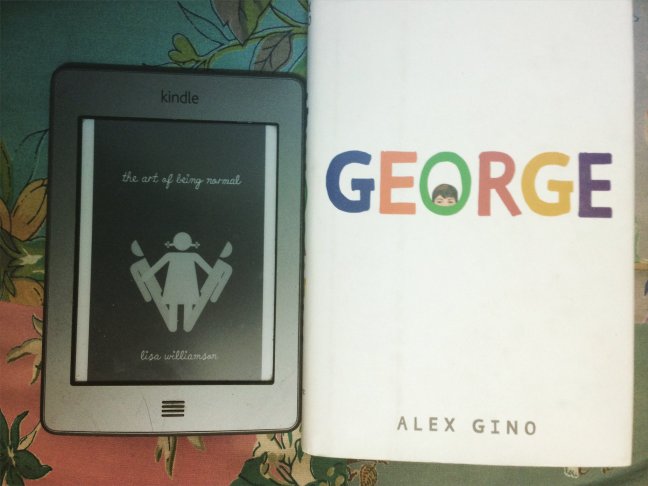
Alex Gino’s book George starts with its eponymous protagonist poring over fashion magazines. The fourth grader reads about make-up, even though she’s never worn it but tries to imagine herself with a slash of lipstick. George, we find out, doesn’t like her name much, preferring to think of herself as Melissa. She also wants to play Charlotte in the school play, but it’s looking impossible. Her brother teases her, saying she’s got girls on her mind. She does, only not in the way her brother thinks. That’s because George is a boy who actually identifies himself as a girl.

George is one of the slew of international books that gently explain the confusion and discrimination transgender people face. These books reinforce the fact that gender is something children learn from social conditioning – their parents, peers, schools define what it means to be a boy or a girl. And when a child like George strongly feels he is a girl, he finds himself alienated, bullied viciously at school. George is nothing but a mere reflection of real life.

Recently, I came across India’s Youth Speak Out About Higher Education, a report prepared by UNESCO Mahatma Gandhi Institute of Education for Peace and Sustainable Development (MGIEP) to Support Ministry of Human Resources Development’s 2015 Revision of the National Education Policy. The report included 44 transgender respondents and the findings were telling. The data suggested that “bias about gender and sexuality is, unfortunately, common in Indian higher education, and must be addressed”. As many as 85 per cent of the transgender respondents had never been enrolled in an institution of higher education. The reasons were multifarious, ranging from family constraints, and social unrest at their native places, to lack of financial support. Some dropped out after they felt they weren’t accepted by their peers.

In 2014, the HRD Ministry advised all States and Union Territories (except J&K) to include “third gender” children as part of the socially and educationally backward classes for admission under the Sarva Siksha Abhiyan. Yet, apart from reservation, there’s a lot that needs to be addressed to makes schools and colleges more inclusive for transgender students.

In the focus group discussions conducted by the UNESCO MGIEP, students of all genders agreed that on campus, those who were transgender and/or sexual minorities were bullied. One transgender student from the east mentioned in the report that he dropped out because the campus climate was too hostile. He said, “I had to face harassment in college because of my gender identity… Whenever they would see me, they identified themselves as ‘straight’. They would completely ignore me. In the three years of college, I went for the first one-and-a-half years because of attendance. After that, I didn’t go. I didn’t have friends. I didn’t have anyone to share things with.”

The fictional George’s best friend, Kelly, on the other hand, is more accepting. And that makes a world of a difference for George. It’s the same for David Piper, the protagonist of Lisa Williamson’s book, The Art of Being Normal . His two best friends couldn’t care less, unlike most of his school mates. Both books are written with sensitivity and a keen perception about young adults and children struggling to understand gender identity.

Then there’s How to be a Girl , a podcast where a single mum documents life with her six-year-old transgender daughter. The audio-series is heart-wrenching as it attempts “to sort out just what it means to be a girl”. At the age of three, we hear the toddler beg his mum to fix the mistake and put him back to being a girl. The mother is confused and distraught but supportive. That kind of family support is rare. In Presentation of Gender Dysphoria: A perspective from Eastern India , Debmalya Sanyal and Anirban Majumder studied “the clinical, biochemical profile, personality characteristics and family support of GID subjects”. Their findings revealed that it is difficult for transgender people “to express their sexual identity in family or in society” – only 10.96 per cent had their family’s support. Their conclusion states that “social taboo and lack of informative, family support [led] to delayed medical consultation and have accounted for complexities in presentation indicating a huge need for awareness programmes.”

The UNESCO MGIEP report outlines recommendations on making higher education campuses more inclusive. Suggestions included orientation sessions and mandatory course modules to sensitise students, faculty and administration about gender and sexuality from the primary school level, faculty training, privacy protection, counselling, and infrastructure such as gender-neutral toilets. In George , one of the things George hates is the boys’ bathroom. “It was the worst room in the school… the whole room was about being a boy…”

Books like George and The Art of Being Normal are few and far between. They are powerful stories with well-etched characters. These stories help children feel it’s okay to be different, and as Gino puts it, it’s okay to “be who you are”.
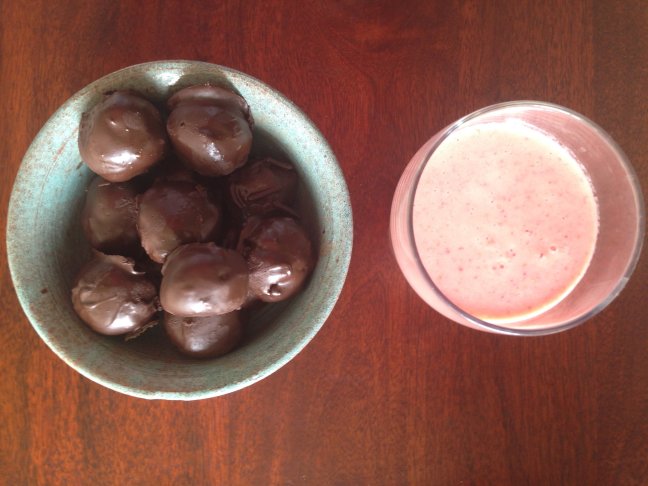
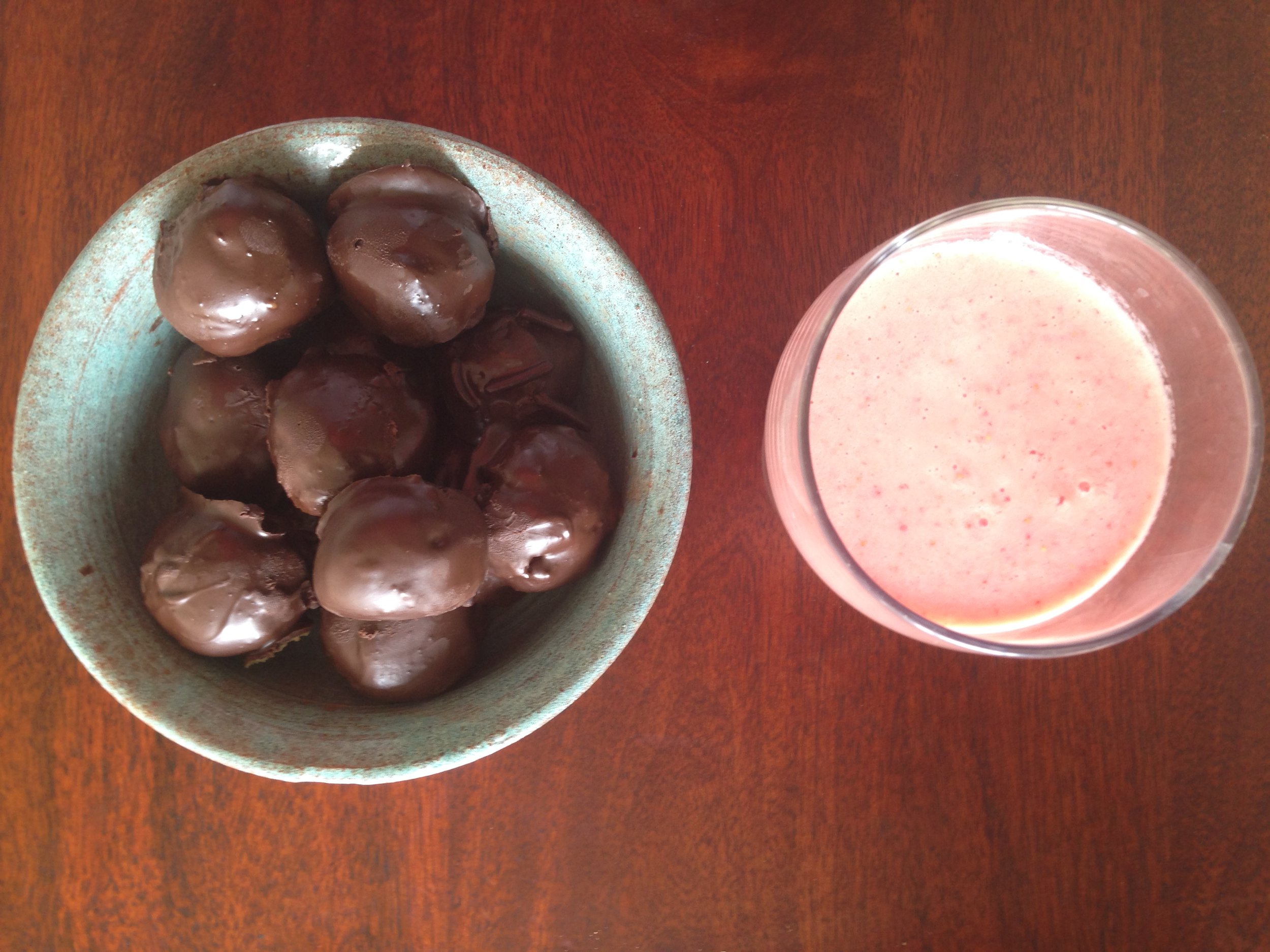
How to make these cake pops that are a hit with the kids

img_8964.jpg

http://indianexpress.com/article/lifestyle/food-wine/express-recipes-chocolate-cake-pops-kids-foodie/#sthash.v5odNlWt.dpuf

It was meant to be a Victoria sponge – that classic British vanilla cake that is sandwiched with jam and whipped cream. But a few minutes after my sponge cake batter went into the oven, the electricity once again went off. I watched helplessly as my cake — which was happily swelling with pride — sank like a punctured balloon. I took the cake out of the oven – it wasn’t bad, just sunk, making it unpresentable in its current avatar. Usually, I would have cut it up into pieces and no one would have been the wiser. But I had to take the cake for a Harry Potter-themed party the next day, and now I had no dessert. Disaster with a capital D.

After I hopped around my house, shaking my fist at the electricity board for a while, I calmed down enough to head to Bakerella’s website for her cake pop tips. Bakerella, aka Angie Dudley, made these delectable desserts famous with some of her innovative decoration ideas. Cake balls are basically cake mixed with frosting and rolled into balls and dipped into a chocolate or candy coating. Add a skewer to it, and it becomes a cake pop. Ice spooky eyes onto them and they become Halloween treats, or ice on a pair of spectacles and a scar and they become perfect for a Potter party. Cake pops are so much fun.I didn’t have skewers or toothpicks – it was just one of those days! So, I rummaged through my baking cupboard and found a box of hagelslag, Dutch chocolate sprinkles. I rolled half the the cake balls onto the sprinkles (you can get kids to help), and happily dubbed the creation Cockroach Clusters. In case you are wondering, that’s straight out of a Harry Potter book. The other half I refrigerated and served cold.

The fabulous thing about these pops is the versatility. You can dip them into white chocolate or dark, use candy melts to coat them, ice them or leave them plain, use chocolate or vanilla cake. It doesn’t matter. They are still perfectly gobble-able. As one of the teenagers at the party told me, “These are the best chocolate whatevers’ I have ever had.” I will take that as high praise.

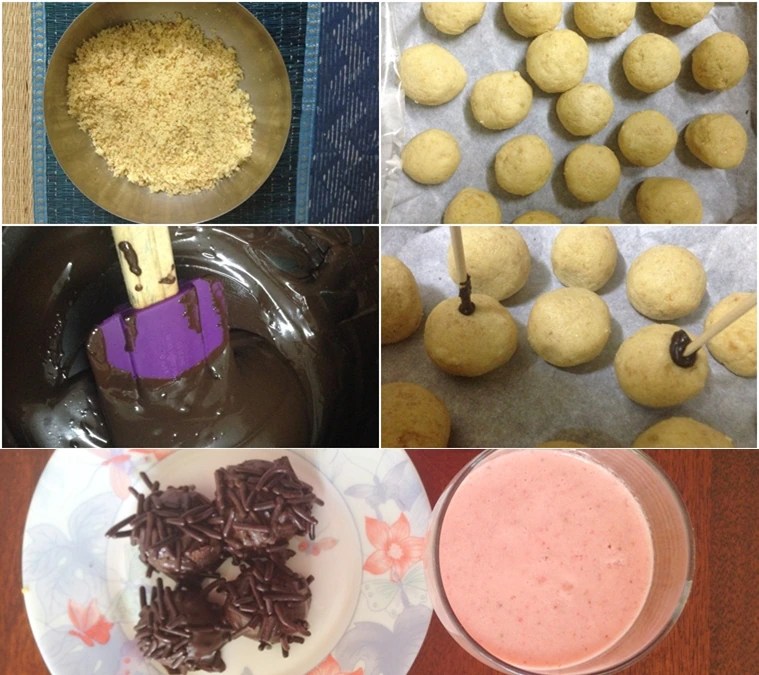
cake pops process1_759 The process (clockwise from top-left): 1. Crumble the sponge cake slowly; 2. Keep mixing frosting with cake crumbs until you can shape the dough into balls that will hold their shape; 3. Melt the chocolate along with the butter, taking care to not overheat the chocolate as it will harden; 4. Dip skewers into chocolate and insert into cake balls if you’re making cake pops; 5. Roll the cake balls in sprinkles when the chocolate layer is still wet.Cake Pops
Serving: 35 nos

Ingredients
1 – sponge cake (I used Delia Smith’s recipe, but any will do)
200g – Dark chocolate, used for cooking
25g – Butter
1/4 tsp – Vanilla extract
Block of Styrofoam or a dhokla steamer (the round one with holes)

For the vanilla frosting
1/2 cup – Unsalted butter at room temperature
1 1/2 cup – Icing sugar, sifted
1/2 tsp – Vanilla extract
1-2 tbsp – Milk

Method
* Crumble the cake with your fingers into a mixing bowl. Work slowly until you have even, fine crumbs. You can use a food processor if you like. You can cut off the crust of the cake if it’s too hard, but honestly, it crumbles fine, unless it’s a burnt cake.

Prepare the frosting
* Using a hand blender or stand mixer, beat the butter until very smooth. You can do this by hand, but it takes ages.
* Add the vanilla extract.
* Reduce the speed of the mixer and add sugar, a little at a time. Sifting the sugar in advance means there will be no lumps.
* Beat for 5 minutes until the mixture is light and fluffy. You can add some milk if you need to give it a slightly softer consistency.

* Spoon in the frosting, a little at a time, into the cake crumble.
* Keep mixing until you can shape the dough into balls that will hold their shape. If you add all of the frosting at once, it will become soggy. Instead, add little at a time and the rest you can save for frosting the cake pops if you wish.
* Shape the dough into ping-pong sized balls. I made two sizes, one small and the other slightly larger so that they could become hefty cockroach clusters.
* Place the cake balls on a shallow tin, lined with baking paper. Cover with cling wrap and refrigerate for at least an hour. Two hours is better. This ensures that the balls retain their shape. (Note: At this point the cake balls can be frozen for later use. But if you plan to make them a day or a few hours in advance, then avoid freezing them as they may crack.)
* On a double boiler — put a pan with water to boil and place a thick-bottomed pan on top of it in such a way that it doesn’t touch the water – melt the chocolate along with the butter. Be very careful at this stage. Overheat the chocolate and it will harden unattractively. What I do is when the chocolate has almost melted, I remove it from the heat and beat the rest of the lumps into the sauce.
* Add a few drops of vanilla extract.
* Transfer the chocolate to a deep bowl and cool slightly.
* Meanwhile, remove the cake balls and let them thaw slightly. If you’re making cake pops, insert the skewers at this stage. Remember to insert them only halfway through.
* Now, dip the cake balls into the chocolate. Don’t roll them or else they will get an uneven texture of the chocolate. Just turn them to get an even coating and let the extra chocolate drain off. Stick them onto the Styrofoam block or, like I saw someone do online, into the holes of the dhokla steamer. Basically, use something that will prop them up. If you’re making cake balls, then use a spoon to dip them and place them on a baking paper.
* If you plan to add sprinkles, now’s the time to roll the pops onto the sprinkles, while the chocolate is still wet. Once the chocolate hardens, you can keep them at room temperature or pop the extra ones into the refrigerator. I doubt you will have any leftovers.

Let’s get serious about being curious

screen-shot-2016-03-30-at-5-31-23-pm.png

http://www.thehindu.com/news/cities/mumbai/entertainment/lets-get-serious-about-being-curious/article8387689.ece

Over the last few months, every time I have logged on to social media, I have stumbled upon a conversation about podcasts — whether it was the last episode of Serial or its latest season, the newest science on Invisibilia , or closer home, food talk and more by the people behind Audiomatic. A Google search revealed a range of podcasts for children: from science shows to plays to dramatised storytelling, there’s a whole aural world out there.

I couldn’t help but wonder if podcasts would appeal to children who are constantly surrounded by screens, enveloped in a dense fog of audio-visual clutter. Getting a child to listen to a podcast would be as impossible a task as winning a round of Candy Crush Saga in the first go. But after tuning into some of the podcasts, I changed my mind. Okay, kind of.

When it comes to podcasts for children, science seems to rule the roost. There’s Brain On! , which claims to be “serious about being curious”. Produced by MPR News and Southern California Public Radio, the science show for kids is hosted by Molly Bloom along with two children co-hosts. Topics bounce from what makes a spider a spider and the science of baking to the language of cats and dogs. There are songs, skits, and interviews with some really cool people. What’s really fun is the Mystery Sound section: try guessing the sound, it’s really hard.

Then there’s The Intersection , a show produced by Audiomatic, which is all about science, history, and culture. Journalists Padmaparna Ghosh and Samanth Subramanian set out to explain the complex gravitational waves, inform about ISRO’s indigenous navigation systems and trace mysteries such as the case of the stolen data and bird samples by the famous ornithologist Richard Meinertzhagen. While the show is for adults, the science and history is something that young adults will enjoy listening to. It helps that both Subramanian and Ghosh talk in an easy, casual manner, blending facts with stories and interviews. “As it is, science has a bad rep for being dry and boring,” said Ghosh. “But at the end of the day, everything is a story and the trick is in how you tell it: turning an invention into one person’s quest or explaining deep space through sounds.”

Ghosh points out that children first come across stories when parents read it to them. “Voice is a very intimate medium, especially if it is a voice you get to trust and even fall asleep to,” she said. “It is disembodied, yes, but friendly and warm. It can take us places. Voice leaves space for imagination, which I feel is very important for kids. It lets you travel to places and through time.” Ghosh recommends a few podcasts as well: Stuff You Should Know, StarTalk Radio Show by Neil deGrasse Tyson and NPR Science Friday .

If your child is obsessed with all things culinary, then Vikram Doctor’s The Real Food Podcast will whet their appetite about Indian food history, culture, and agriculture. For older children, The Secret Ingredient by Raj Patel, Tom Philpott and Rebecca McInroy chooses one food per episode to talk about its history, production, and impact on our lives. The topics are often serious and dense, and the format of the podcast is usually one-on-one interviews, so it’s definitely for much older children who are interested in agronomy and food history.

While there are plenty of audio books to choose from, Story Pirates stands out for taking children’s stories and turning them into “awesome radio plays”. Story Pirates “celebrate[s] the words, ideas and stories of young people”. The group is comprises actors, comedians, improvisers and musicians who first narrate the original story written by the child, and then adapt it with music, dialogue, and lots of jokes. Story Pirates gives free rein to a child’s imagination, bringing it to life with their words and music. One such story by a third grader is about two dino bank robbers who decide to well, rob a bank. The Coposauras’ give chase only to find out that the robbers stole the money for charity. Robin Hood dinos!

For fans of TEDTalks, there’s TEDTalks Kids + Family podcast, an audio version of the videos. There’s a lovely one by McKenna Pope, who at the age of 13, started an online petition for a gender-neutral toy oven. Why? Because her younger brother loved to cook but all of Hasbro’s Easy-Bake Ovens were “for girls”. She ended up meeting the American toy company who started a new, inclusive oven line. Her talk, “Want to be an activist? Start with your Toys” is powerful and evocative.

One of my favourites is BBC 4’s Natural Histories , a set of 25 beautifully narrated stories about 25 groups of animals and plants, which has been produced in collaboration with the Natural History Museum, London. Literature, movies, and legends come together with interviews and anecdotes to explore how nature had influenced human culture. Host Brett Westwood is introduced by saying that he has fewer chromosomes than a gorilla or a potato. In one episode, they dramatise an extract from Sir Arthur Conan Doyle’s The Lost World to introduce dinosaurs. In another, Westwood talks about Billy, a stranded Northern bottlenose whale in central London who was actually a girl! The episode includes the history of whaling, the book Moby Dick and what it reveals about human relationship with these sea creatures, and the need for conserving the species. There’s an entire episode on fleas, about these parasites that can leap stupendously, along with archival interviews with naturalist Miriam Rothschild, and discussions on the fleas’ reputation of being disease-carriers.

Most podcasts have a lot of engagement with their audience, making sure that young minds don’t tune out. “In India we are used to radio only as a source of entertainment — songs — and not news or information,” said Ghosh. “Listening for stories is not something we are habituated to. On the other hand, radio is a great medium. It is passive, so you can easily multi-task while someone is reading you a story unlike, say, reading or watching a documentary. It can be creative and challenging too.”

Middle class India gets a helping in Michael Pollan’s new food show Cooked

screen-shot-2016-03-22-at-10-19-10-am.png

http://www.dailyo.in/arts/netflix-cooked-micheal-pollan-food-health-middle-class-kitchen-india-culinary-culture-water-earth-fire-air-nestle/story/1/9660.html

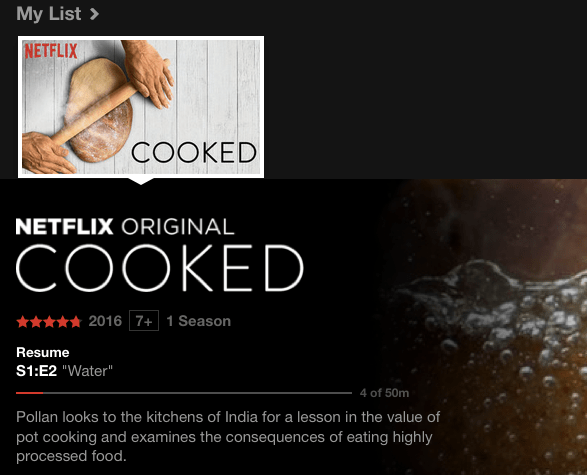
In the second episode of Cooked, food writer and activist Michael Pollan’s docu-series, we meet Mumbai resident Lynett Dias. We see Dias prepare kori rotti chicken in her kitchen from scratch. As Dias makes fresh coconut milk, she explains that she learnt the process from her mother. Another scene is set in a Bohri community kitchen, where chicken nihari is being cooked as part of a subsidised meal, which will be distributed to houses in tiffins.

In sharp contrast, a family orders in from KFC after a long day at work; a regular three to four times a week affair for them. They are sheepishly conscious of the health problems the greasy burgers come with, but admit that it’s easier to order in when pressed for time. “Cultures that once held tight to their ways of eating are finding it difficult to spend time in the kitchen,” points out Pollan. “How did we get to this point, and what have we lost in the process?” “Water”, the second episode in the series sets out to answer this question.  

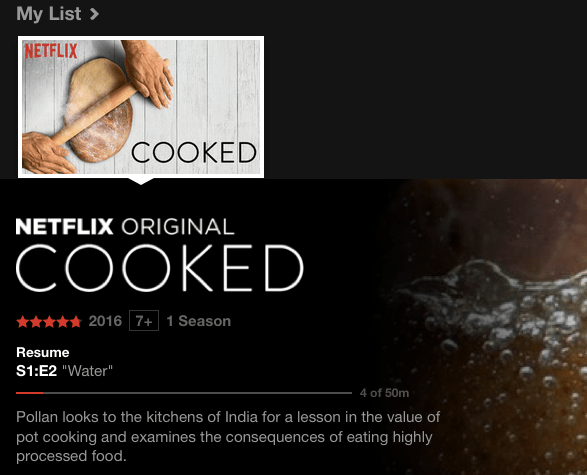
While Netflix is yet to live up to its potential in India, one of the few documentary films that is available for viewing is Cooked, in which filmmaker Alex Gibney teams up with Pollan to bring his 2013 book to the screen. Like the book, the Netflix documentary series is divided into four parts, basically the elements of cooking – Fire, Water, Air, and Earth.

“Water” explores pot cooking in different communities in India and the gradual transition from traditional home food to processed, instant food. Cooked doesn’t always stick to the stereotypes, instead it offers a slice of middle class India. Shots of housing colonies, streetscapes, and interviews with different communities come together to map the changing landscape of home cooking.

cooked-embed_032216090700.jpg
Cooked, food writer and activist Michael Pollan’s docu-series on Netflix.

Meanwhile, Pollan is in his kitchen with the USA-based chef Samin Nosrat, cooking up pork braised with chiles for three and a half hours, while talking about the myriad flavours that come together in pot cooking.

Nosrat remininsces about the “grandma” style of cooking that puts together humble ingredients with skill and time. “Time,” said Pollan. “is the missing ingredient in our recipes and our lives. Most of us are moving too fast for slow cooking.”

In his book, Cooked, Pollan talks about, what he calls a curious paradox. “How is it that at the precise historical moment when Americans were abandoning the kitchen, handing over the preparation of most of our meals to the food industry, we began spending so much of our time thinking about food and watching other people cook it on television?” he asked.

The paradox is reflective of a section of urban India as well – we constantly Instagram our latest (or half-eaten) meals, review restaurants on apps, and gush about reality cooking shows, but spend lesser time in the kitchen. And it is hard to spend a lot of time by a stove after a long day at work.

Food industry market researcher Harry Balzer puts it succinctly that eating food and preparing it are not the same, because making food is work. He makes a pertinent point – when you eat food without spending time in getting it, you eat more of it. Example: French Fries or potato crisps. He suggests that you eat anything you want – pizza, apple pie, the works – but you make all of it. It makes sense that you would end up getting the best quality raw ingredients and eat better.

Cooked points to India’s rising fast food ecosystem, where food preparation is outsourced. An affluent middle class is eating out more and more because of rising and disposable incomes and the availability of fine dining options. Urban lifestyles, slick advertising, and social media chatter are influencing and moulding aspirations and choices about food, its economics, and its consumption.

At the same time, our relationship with food is more distant. We don’t know how our food is grown or cooked. Instead of eating locally and seasonally, the aesthetics of food plating and the quest for a wider palate has started to dominate our choices. Invariably, we end up incorporating unsustainable practices in our daily diets.

Yet, it’s not that hard to get fresh home-cooked food in India. Cooked refers to the dabbawallas as a “clever system for getting home cooked food at work”. In the documentary, a maushi fries up paneer, rolls out rotis and packs four dabbas for Yari Road. The ubiquitous dabbawalla picks up the tiffin carriers and cycles away. Of course, dabbawallas are unique to Mumbai and the system does not cover the entire country. Rather, urban centres are seeing a surge of apps that deliver restaurant food or pre-packaged meals and salads to your doorstep at the tap of a few buttons.

In many ways, “Water” is limited in its social and cultural depiction of India’s vast landscape. The narrative is mostly uni-dimensional, the complexities of food production, rituals, habits, and economics don’t always come through. Pollan talks about the history of food processing, feminism and cooking – a point he had been previously criticised about – but the episode doesn’t delve into the politics of food in the Indian context. It also doesn’t look into social dynamics, where a lot of the home cooking is done by a cook or a maharaj.

Instead, it concentrates on our gradual dependence on the food industry and its impact. Sunita Narain, the director general of the Centre for Science and Environment, explains on Cooked that urban India consumes some 10 per cent processed food in its daily diet, while rural India consumes five per cent. It’s not a small number given the size of the country. Most processed food is layered with salt, sugar, and fat, making it unhealthy and addictive.

The narrative moves to Nestlé India’s Research and Development Centre in Manesar, where chefs (some have worked at Michelin Star restaurants) and scientists are trying to crack the recipe for a Chicken Tikka Maggi noodles.

A study conducted by a German market researcher GfK revealed that people in India spend over 13 hours a week cooking, compared to the international average of less than six-and-a-half hours. But Nestlé is well aware that over the next two decades, Indians will have lesser time to cook food, and their lab work is preparing to be the food of the future.

With an increasingly fragmented audience and media that focuses on instant gratification, Cooked, despite its limitations, is a form of critical and reflective storytelling that questions our engagement, not only with food, but also media content. Pollan wraps up the episode by calling for a food renaissance and reminding viewers that the “industry doesn’t feed us. Nature feeds us. And that’s something that’s available to all of us.”

One of the most poignant takeaways from the episode comes from Nosrat. As she peels garlic, she describes these seemingly mundane tasks as mindful. “As a culture, we have just gotten so far away from these little tasks, it seems like it’s getting in the way of life,” she said. “But, actually, this is life.”

Taste of India in Yelahanka doubles up as an Art Gallery

tasteofindia-feat-750x400.jpg

https://lbb.in/bangalore/taste-of-india-restaurant-yelahanka/
Ten-second takeaway

Eat

Palak Paneer, Stuffed Paratha, and Kaali Dal

Drink

Sweet Lassi and Aam Panna

Winning for

Fresh, good food {reminiscent of Himachal and Delhi dhaba food}, reasonable prices, and art

What we ate

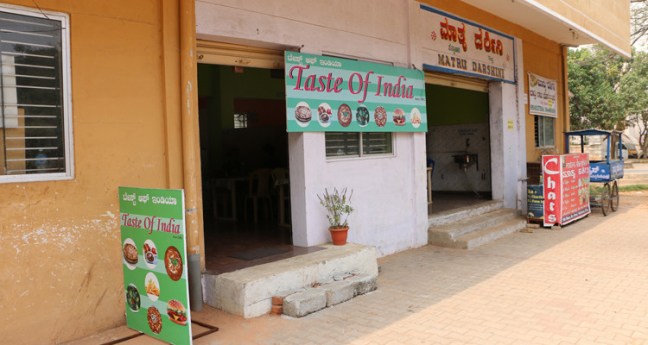
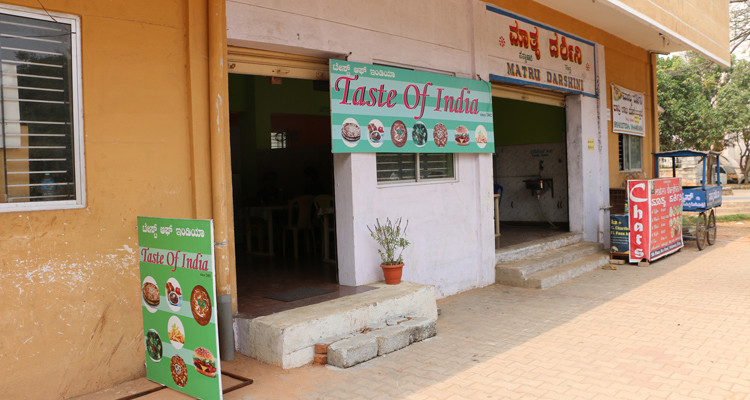
Recently, a British friend of ours came over for lunch and was a tad dismayed at the prospect of eating at the non-descript eatery Taste of India. With trepidation, she started to explain her gluten and lactose allergies to Amod Uncle, the proprietor and chef of the restaurant. He nodded solemnly and prepared a Besan Chilla {with a side of rajam}, solving her problem.

The food shines at Taste of India. Uncle, as he’s popularly known, shops locally and seasonally, preparing a range of North Indian dishes. The Palak Paneer and Adrak Gajar are always fresh, and go well with the right-off-the-tava flaky, Lachha Parathas. The Kaali Dal {with desi ghee} is just like what you’d get in a dhaba, as are the stuffed parathas, with an extra dose of butter. While there’s paav bhaji on the menu, go for the chaat instead – the sweet-and-spicy Dahi Puri is perfect for the summer. #LBBTip: If you find yourself hard-pressed to make a choice, ask Uncle to make you a plate with small portions.

What we drank

And to wash it all down, we recommend the sweet lassi or the seasonal favourite aam panna.

The DL on the ambience

tasteofindia-f

Taste of India is housed in the same complex as the Yelahanka bus depot and is basically a room with an open kitchen and simple seating. Lunch times and weekend breakfasts see a bevy of Srishti School of Art, Design, and Technology students and faculty descending on Taste of India. Most open the fridge and help themselves to fresh lime juice or cold coffee.

Art attack

On most days, there’s an art show on display – in fact, their Facebook page introduces itself as an art gallery and Indian restaurant. Recently, it was a collection of 20 storefront photographs of  Taste of Indias from acoss the globe {you will pretty much find one in every country} and before that was The King and Prime Minister, where photos of Shah Rukh Khan hawking all sorts of products dotted the walls.

So, we’re thinking

Taste of India’s appeal is its food and its proprietor. Uncle is popular with Srishti students and faculty, so much so that he’s also the subject of a documentary project. It’s a restaurant that you can return to pretty much all the time.

Where: BMTC Bus Depot Complex, Yelahanka New Town

When: 9am-6pm

Contact: +91 9823039230

Price: INR 500 for two

Find them on Facebook here.

Pic credit: Nihaal Faizal


Shaktimaan’s broken leg isn’t about politics, but animal abuse

article-image2-2.jpg

He’s currently the most famous horse in India, only because his leg was broken. India’s big media needs to show more love to animals

http://www.newslaundry.com/2016/03/16/shaktimaans-broken-leg-isnt-about-politics-but-animal-abuse/?utm_content=buffere306b&utm_medium=social&utm_source=twitter.com&utm_campaign=buffer

Earlier this week, a police horse was allegedly attacked by Ganesh Joshi, a BJP MLA, in Dehradun, during a protest. While the videos don’t show the horse being hit directly, there’s enough evidence that the horse suffered multiple fractures because of the mayhem at the scene. What followed was outrage – at the horrific cruelty, the inappropriate headline by India Today (which broke the news), and of course realms of political trolling online. Although the ensuing media focus on the trending hashtag #ShaktimanSuffers is primarily political in nature, at least it’s mobilising action.

Because let’s face it, a horse’s broken limbs wouldn’t have grabbed headlines if it didn’t come with a splash of politics. The videos, while grainy, show a despicable truth – a shouting mob, a man brandishing a stick and charging at a horse, a horse being yanked down. Whichever way you see it, it’s an appalling act of animal abuse. “Animals claim no political sides. For them, there are no voting rights, just our mercy,” said Bhuvaneshwari Gupta, campaigns advisor at People for the Ethical Treatment of Animals India, an animal rights NGO. “The horse’s leg is absolutely mangled, as can be seen in photos online, and the abuse has shocked the entire country.”

PETA India, Humane Society International-India and other NGOs are now petitioning the police, Uttarakhand Legislative Assembly and Bharatiya Janata Party president Amit Shah to investigate and take action.

Shaktimaan’s story is not an isolated incident of cruelty. Everyday animal abuse is all around us – owls are stoned down from trees because they are considered inauspicious, fire crackers are burnt on a cat’s face because that’s someone’s idea of a sick joke, dogs are being poisoned or abandoned in cities. However, few of these incidents make it to the news. Rarely are they as hotly debated on national television during prime time as Shaktimaan was. Even on slow news days, animal welfare takes the lowest of priorities.

This is ironic when you consider how social media is overflowing with people cooing over #catsofinstagram, #owlsoftwitter or #funniestanimalsonfacebook. Of course, there are journalists who diligently write about animal rights and do fine stories, but it’s not even close to being a respected beat.

“The media has played an important role in talking about many animal issues,” said NG Jayasimha, the managing director of Humane Society International-India. However, he agreed that it is easier to get media support for issues that are already popular with the public and create headlines. “The difficulty with this approach is that bigger issues such as factory farming and animal testing that are not sensational, don’t get enough media attention,” he added.

This article is made possible because of Newslaundry’s subscribers.Click here and Pay To Keep News Free

It’s not surprising then that animal rights activists have dressed up as crippled chickens to draw attention to battery chickens in the poultry industry, donned a pig costume in the sweltering May heat of Delhi to make a point about cruelty in pig farms, and roped in celebrities to give voice to their issues. “We don’t have the big budget of large corporations to help us reach out to people—like the millions of US dollars McDonald’s reportedly spends on advertising each day,” said PETA’s Gupta. “And with so many kinds of stories for media to consider every day, we have to compete. We instead ensure a high standard of our research and investigations, and rely on our own creativity to share information about animal rights in an eye-catching way to grab the media’s attention.”

Too often, if animals do make it to the news, the media whips itself into a frenzy, framing headlines such as “Sink Teeth into Stray Dog Menace” or “Where Streets are Thronged with Strays Baring Fangs” (don’t miss the quote in the last article – “Stray dogs are dangerous not only because of their teeth but also because they help ticks and other parasites thrive”). Irresponsibly, the media doesn’t challenge the wisdom of statistics such as this one: “Dog bites in Mumbai accounted for more deaths in 20 years than the combined toll in two deadly terror strikes in the city-the 1993 serial bomb blasts and 26/11 attack”.

The Indian media has encouraged everyone to take sides when it comes to man-animal conflicts, traditional animal sports, and dog biting. Yet, connecting the dots, presenting both sides of the story with solid research isn’t that hard. Nuanced journalism, such as this article which sensibly says “Killing isn’t the answer: Kerala must learn from Jaipur how to control stray dogs”, is not just possible, but critically important. “We believe that animal welfare issues cannot be looked in isolation and a balanced approach which looks at the issue in totality is needed,” said Jayasimha.

In some ways, social media is in its own way building pressure on big media, by drawing attention to animal rights violations. In the USA, a study by PETA showed that “animal causes and social media seem to be made for each other” and that there’s increased interest in not only cute animals, but also their natural history and in condemning cruelty. Jayasimha also said that social media is quite animal-friendly and posts about animals do go viral quite easily, especially when they’re accompanied by photographs. “Animal rights is increasingly becoming a priority with the media and public as we can see from the national reaction to the recent horse cruelty case,” said Gupta. “This will certainly help reinforce the fact that nobody should be able to get away with cruelty to animals.”

Where big media becomes important is that it can be less sensational and more balanced in its coverage than social media. It can draw upon science and hard facts. Leave aside the sensationalism, the Shaktimaan case shows that Indians are also concerned about animals abuse and it may have garnered the all-important TRPs, even if animals don’t watch TV or read the news or if there isn’t a political controversy involved.

Found in translation: Blog post

final-logo-pratham-books.jpg

http://blog.prathambooks.org/2016/02/found-in-translation.html

1st February is International Mother Language Day and our blog is hosting a 2 day celebration of languages. A series of blog posts by people from different walks of life – sharing their thoughts on languages, memories and more. International Mother Language Day is an observance held annually on 21 February worldwide to promote awareness of linguistic and cultural diversity and multilingualism.
 

(This post was sent in by Bijal Vachharajani. When Bijal is not reading Harry Potter, she can be found looking for tigers in the jungles of India. In her spare time, she works to fund the trips and books. She did this by working as the Editor at Time Out Bengaluru. She now writes about education and sustainable development and is a consultant with Fairtrade Asia Pacific. She tweets at @bijal_v. She’s yet to read Harry Potter in Gujarati. )

**********
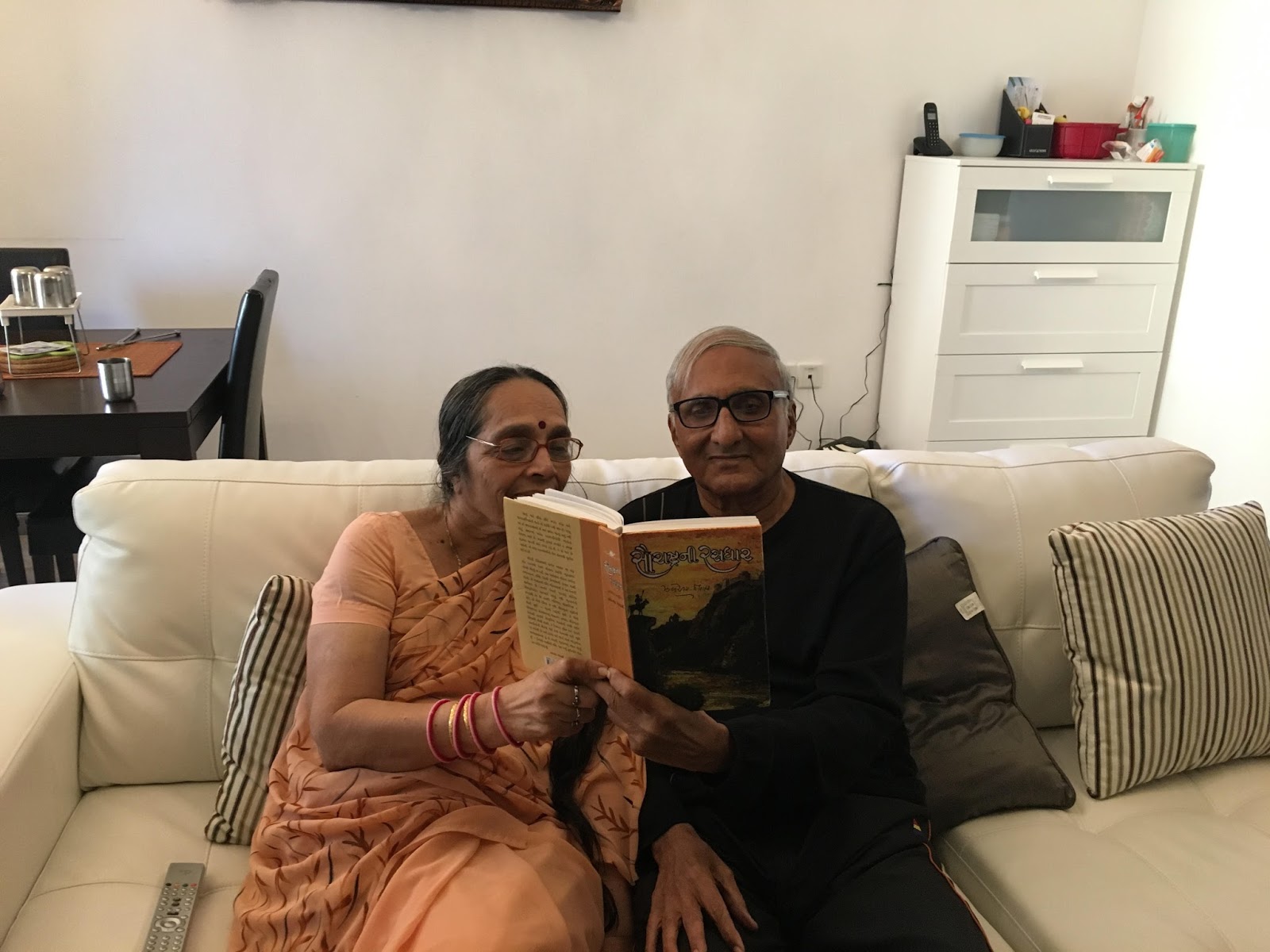
Bakor Patel isn’t an ordinary goat. He is a Gujarati businessman who lived in Mumbai and was married to Shakri Patlani. He’s also the protagonist of a series of Gujarati children’s stories by Hariprasad Vyas. I still remember many of his adventures, but I have never read any of them. That’s because I grew up listening to them. My mother would open her magazine and read the anthropomorphic goat’s next adventure to us, and then open Mumbai Samachar to tell us the latest escapade of Jeff and Mutt in Gujarati.
While I could understand and speak Gujarati, my mother tongue, I never ended up learning to read and write it as a child. As a young student, I already had to learn to read and write English, Hindi, and Sanskrit (which I have promptly forgotten). And trust me, the CBSE Board keeps you busy. When I was in my sixth standard, my family moved from Delhi to Mumbai, and suddenly I had to learn a third language and Sanskrit wasn’t on offer. Instead of having to learn an entire new script for Gujarati, I was (ill)-advised by the school to opt for Marathi.

Exams passed, I blissfully forgot about languages until years later, I took up my first job in the media department of an animal rights NGO. Part of my profile included overseeing the translation of communication material into some nine regional languages. I would be faxing (ah yes, those good ole’ days) translated materials to volunteer proof readers across the country, waiting anxiously for them to check the language, grammar, and context.

As I was carting a Gujarati press release home for my mother to proofread, the ridiculousness of the situation struck me. I should be able to read this press release. I can understand the language; how hard can it be to read it? I started teaching myself to read Gujarati. I began reading my parent’s newspapers, starting haltingly with the headlines, and then moving on to the opening paragraphs, and finally an entire article. My parents would point out difficult letters to me and explain the meaning of words to me patiently.
I could now go to our local library and pick up books for my mother instead of relying on staff to point out Chandrakant Bakshi novels to me. When I travelled to meet my cousins in Gujarat, I could read shop signs, instead of having them giggle at my ignorance. And of course, I could read Bakor Patel and proofread basic communication material.
But more than that it was another thing I could share with my parents. When I visit home now, I spend some evening with my parents – my mother curled up on a sofa and solving her Gujarati crossword puzzle, her face creased with concentration. Every few minutes, she would look up and recite a clue to my father. They would both think and then one of them would answer it and my mother would carefully print the answer in the white boxes. And I listen carefully, reciting the words in my head, making sense of them. After all, I am still learning.

Adventures in tween land

51c6ntu6hdl-_sx324_bo1204203200_.jpg

http://www.thehindu.com/news/cities/mumbai/entertainment/adventures-in-tweenland/article8329824.ece

Tweenager Stoob has a plan: it’s to grow up and “be a celebrity when not inventing things and saving the world.” When I read that in the latest instalment of The Adventures of Stoob: Mismatch Mayhem , I couldn’t stop chuckling. After all, how many times had my friends’ children voiced the exact same plan of becoming adventurers, inventors, or superheroes (preferably all at the same time), opting for exciting career options over the ones their parents had chosen? Samit Basu’s book series is a running commentary on the everyday life of Subroto Bandhopadhyay, otherwise known as Stoob, where the protagonist is contemporary, very Indian, and very real.

Stoob and his friends Rehan and Ishani don’t have to embark on perilous quests to save a gem that will in turn save all of humankind nor do they have to battle a crowd of meat-chomping zombies. Instead, the series celebrates the ordinary and special moments that childhood is made of. In many ways, Stoob can be (and has been) compared to the Enid Blyton’s school books, Jeff Kinney’s Diary of a Wimpy Kid series, Sue Townsend’s Adrian Mole, or Lincoln Pierce’s Big Nate series. Yet, it manages to stand out on its own. Mainly because Basu creates characters and narratives that are entirely believable. So, Stoob and his friends worry about exams in Testing Times ; in A Difficult Stage , play rehearsals take precedence over everything else in life; and in the latest instalment Mismatch Mayhem , a classic love triangle threatens a deep friendship.

Sudeshna Shome Ghosh, the editorial director of Red Turtle, Rupa Books’ children imprint, said, “When Red Turtle started, we wanted to publish a funny, contemporary fiction series that would capture the voice and feelings of the modern Indian tween. Their thoughts and feelings, both profound and banal. There are lots like this in the West, but few Indian ones that work as a series.” And that’s what sets Stoob apart from his Western counterparts, the little details which make him real to the upper/middle class, urban reader. Basu writes convincingly, portraying the awkwardness of being a tween poised at the brink of adolescence. “Writing in different voices is a simple question of seeing the world through what you imagine are another person’s eyes: much like acting, I presume,” said Basu, over email. “So if you can get in character, it hopefully flows quite smoothly. And it’s easier to get in character as Stoob, which is mostly a matter of memory and identification, than it is to the protagonists of any of my previous books, who are mostly able to defy physics but not turn into sociopaths.”

This time around in Mismatch Mayhem , Stoob is “A Man Who Has Seen Life, Its Sorrows and Joys… A Man Whom James Bond and Alex Rider would have Known and Respected.” That’s because he’s dated a girl from another school who seems to prefer earrings over Calvin and Hobbes (like seriously). Things get complicated when best friend Rehan also likes the same girl. What follows is a rollicking adventure, pretty much laugh-out-loud all the way.

Basu said that he has many friends whose kids are the same age as Stoob and their stories were reminiscent of his childhood. “Not that much has changed, except the technology around the kids,” said Basu. To write the series, Basu spoke to many children, learning about their concerns, and hearing anecdotes from their schools.

Basu said, “My favourite reactions are when parents or children come and tell me their own school stories that Stoob reminded them of, because this also doubles up nicely as research. I’ve also been trying out a writing experiment, which is reading out first drafts of Stoob chapters to key readers as I write them. It’s something I would never do with books for adults, because adults would feel compelled to have thoughts: kids just listen and respond without overthinking it, which I enjoy hugely.”

What also makes the books fun are the illustrations by Sunaina Coelho. They have a life of their own, with the characters doing their own thing in the illustrations, almost like doodles in a school notebook. “I write the illustration requests out the way I write out comic scripts: a visual description, text captions. Really good artists are able to take that and then take wing, making illustrations richer and deeper than the text they start out from. They’re on their own trip very deliberately; the idea is to step into Stoob’s imagination and hopefully recreate the kind of effect that a Terry Pratchett footnote does, which also fits in nicely with the kind of hyperlinked thinking that kids do very naturally nowadays. There isn’t much of a process after that because I always just really like Sunaina’s work, so I send a list of illustration-base text, she sends the artwork, and I send a mail telling my editor how much I love them.”

Although irreverent in tone, the series manages to underscore contemporary markers and issues, such as the poor quality of children’s television programming, the stress of exams, the struggle to be perceived as cool and fashionable, and the constant presence of technology in their lives. All of this makes Stoob relevant to a contemporary, urban audience who will easily relate to him and his gang.

If humour was a pre-requisite super hero power, then Stoob would join the legion of fictional caped men, women and beasts. But since it’s not, he will have to settle for the title of one of the funniest and endearing school children in fictional history in children’s literature.

Make a summery mosambi pie

img_92461.jpg

http://indianexpress.com/article/lifestyle/food-wine/make-a-summery-mosambi-pie/

Indian citruses work brilliantly for desserts.
Written by Bijal Vachharajani | Mumbai | Updated: March 15, 2016 3:26 pm
mosambi, pie, mosambi pie, Express recipes, citrus fruits, Ganga Jamuna, mosambi juice, sweet lime, sweet lime desserts, nimbu juice, lime pie,

Say the word ‘Ganga-Jamuna’ and most of us probably know that it doesn’t refer to a confluence of the two Indian rivers. Rather, it’s the name of a ubiquitous fruit mocktail which is a blend of narangi and mosambi juice. We are at a time when our shopping baskets are bursting with navel oranges and mandarins flown from different parts of the world, but Indian citruses have their unique flavours that work wonderfully in desserts. For instance, sweet limes or mosambis that grow mainly in the Northeastern part of India are equally sweet and tart to taste. You won’t find recipes for sweet lime desserts easily, but it’s not hard to swap lemon or oranges for this fruit.

Mosambi — when mixed with nimbu juice — as I discovered, is a fabulous substitute for key limes in key lime pie. And to be honest, no one in my house is a big fan of sweet limes — simply because they are too lazy to quarter the fruit and eat it. But mix it into a pie, and it’s gobbled up quickly. Also, it’s the perfect antidote to the relentless summer heat.

I turned to Smitten Kitchen’s recipe for the American dessert, which she has adapted from Miami-based Joe’s Stone Crab. But the recipe more or less holds the same across most cookbooks and is extremely versatile. If you don’t want to add sweet limes, making it with nimbu works fine as well.

Ingredients

For the crust

170g – Digestive biscuits
100g – Unsalted butter (melted and cooled)
3 tbsp – Sugar (granulated)
2 pinches – Sea salt

For the filling

1.5 tbsp – Sweet lime and lemon zest
3 large free range egg yolks (add an extra egg yolk if the eggs are small)
400g can – Condensed milk (1 can)
2/3 cup – Sweet lime juice and lemon juice (fresh, from 3-4 sweet limes and 2-3 lemons)

Method

* Preheat oven to 180° C.

For the crust

* Blend the biscuits in a mixer until they become fine crumbs. In a bowl, mix the biscuit crumbs, sugar and salt.

*Add the melted butter and mix it well.

* Use a 9-inch pie dish – I prefer to use the ones with false bottoms because it’s easier to remove the pie and cut it after baking. Spread the crumb mixture on to the bottom of the pie pan and then up the sides. You can press it with a bowl to make it evenly flat. Work quickly or the mixture will become gooier and difficult to spread.

* Bake the crust for 10 minutes until it’s light brown in colour. Leave it to cool.

For the filling

* Beat the citrus zest and egg yolks for five minutes until it’s thick and slightly pale in colour.

* Add the condensed milk and beat for another four minutes.

* Now add the freshly-squeezed citrus juice to the mixture slowly. Don’t over mix, or else your batter will curdle.

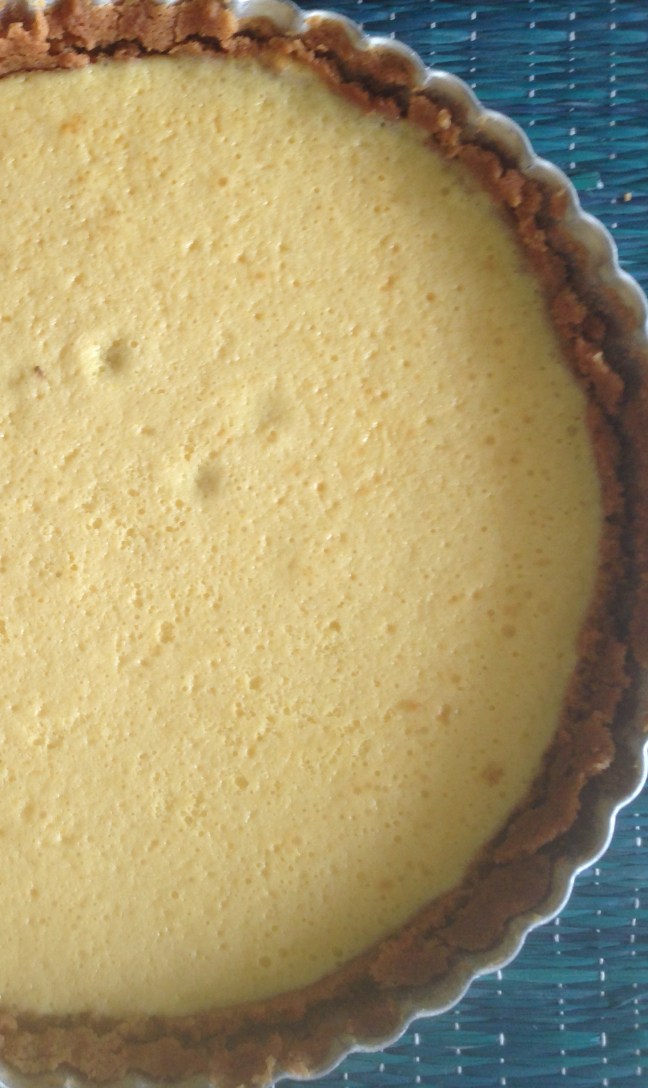
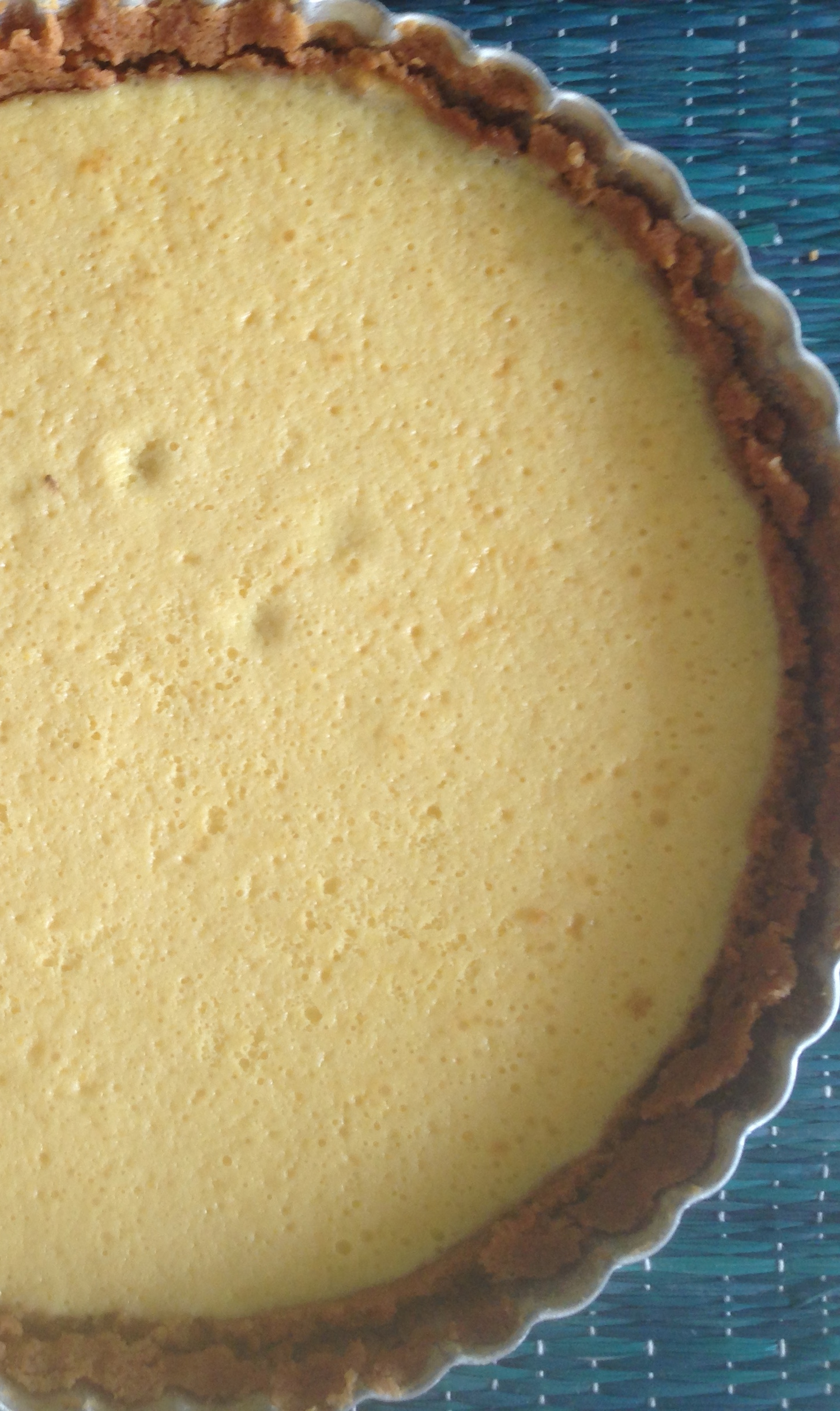
* Pour the batter into the pie crust and bake for another 10 minutes. You know the pie is done when it’s set — but it shouldn’t have brown spots on top.

* Cool and refrigerate for 4-5 hours. The pie tastes pretty much like key lime, only it’s slightly sweeter and more buttery yellow in colour.

* You can serve with a generous topping of sweetened whipped cream or sliced fruits.

– See more at: http://indianexpress.com/article/lifestyle/food-wine/make-a-summery-mosambi-pie/#sthash.Hc6N2USx.dpuf

Days and nights of nankhatai: A grandmother’s magical recipe, recreated

nankhatai1_759plus_bijal-vachharajani.jpg

http://indianexpress.com/article/lifestyle/food-wine/days-and-nights-of-nankhatai-a-grandmothers-magical-recipe-recreated/

A family that makes and eats nankhatai together stays together. Resurrecting my mother’s and aunts’ recipe.
 nankhatai2_759_Bijal Vachharajani

Diwali, for my mother and her four siblings, wasn’t complete without a mountain of homemade snacks. The coffee table groaned with painstakingly rolled mathiyas, crispy chaklis, poha chivda, coconut-stuffed ghughras, shakkar paras, and cardamom-laced nankhatais. Preparations started a week in advance under the watchful eye of my maternal grandmother. Recipes were perfected — a vatki (steel bowl) of this, a pinch of that — and committed to memory. Two days before the festival, the sisters would wake up early in the morning to prepare the nankhatai dough.

My grandmother’s recipe was simple and she used steel vatkis to measure the ingredients. Cardamom was mixed with powdered sugar until it became fragrant. The sugar was mixed with generous lashings of homemade ghee. Once the mixture was creamy and fluffy, maida and vanilla essence were added and kneaded into a crumbly, sweet-smelling dough.

Forty years ago, my mother’s family didn’t have an oven. So my mother and her sisters would pop the dough into containers and hop onto the local train to go to a bakery, five stations north to Andheri, in Mumbai. No one from the family can remember where this bakery was, except that it wasn’t too far from the station. There they would line up with other home bakers waiting for their turn at the oven.

My mother remembers this ritual with fondness — it was a time meant to be spent with her sisters, when they would chat, laugh and bond over one of their favourite foods. As they waited, they would tear off tiny pieces of cream-coloured dough and shape it into plump moons and lay it out on the massive aluminium trays provided by the bakery. A chironji was pressed to the center of the biscuit. The chironji, my mother said, added an almond-like flavour. When their turn came, the bakers would heft the aluminium trays into the industrial-sized oven, and in a matter of minutes the nankhatais would be ready to take home.

When I asked for the family recipe, it came to me in bits and pieces – my mother remembered the process, one aunt remembered the amounts, and another knew what didn’t go in. I set about recreating it, swapping vatkis with measuring cups, until I had anankhatai recipe that my mother approved of.

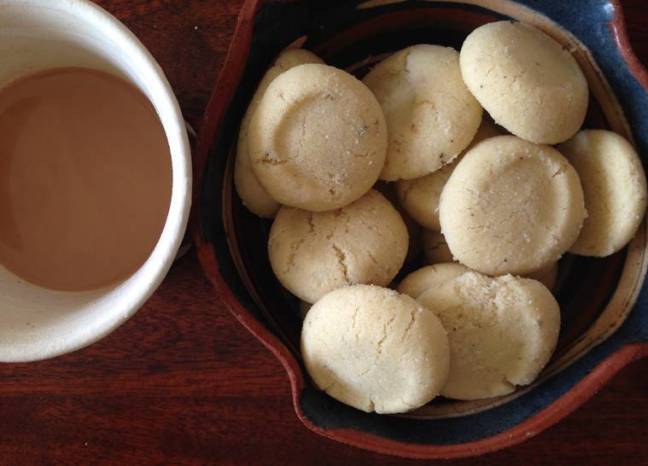
Most people when describing nankhatai call it an Indian version of the shortbread. I am not sure if I completely agree with that – the nankhatai is richer, flakier and more fragrant, the ghee adds a distinct flavour and texture. It’s crisp on the outside with a soft center that crumbles and melts in the mouth, releasing the sweet taste of cardamom. And, of course, the delicate biscuit is perfectly paired with a cup of masala chai.

Nankhatai
(Makes about 35 biscuits)

Ingredients
1 1/2 cup – Maida (flour)
1/2 cup – Caster sugar
1/2 cup – Ghee, at room temperature
1/4 tsp – Vanilla essence
1/2 tsp – Powdered cardamom
Toasted chironji seeds or slivers of pistachio and almonds, for topping

Method
* Using your hands, rub in the cardamom powder with the sugar until it’s fragrant.
* Now, add the ghee and mix until light and creamy. Add vanilla essence and mix well.
* Sift the maida and add to the mixture.
* Using your hands, knead the mixture into a slightly crumbly dough.
* Shape the dough into tiny balls.
* Flatten the biscuit slightly, and add a chironji or almond sliver to the centre. I couldn’t find any chironji in Bengaluru, and so went without.
* Bake at 170 degrees for 15-18 minutes.

When Bijal Vachharajani is not reading Harry Potter, she can be found looking for tigers in the jungles of India or baking in her tiny kitchen. In her spare time, she writes about sustainable development and is a consultant with Fairtrade Asia Pacific.

– See more at: http://indianexpress.com/article/lifestyle/food-wine/days-and-nights-of-nankhatai-a-grandmothers-magical-recipe-recreated/#sthash.oWqybg5G.dpuf