
Shopping for dreams

http://www.thehindu.com/news/cities/mumbai/entertainment/the-shop-of-dreams/article8044145.ece?ref=tpnews
IMG_7885

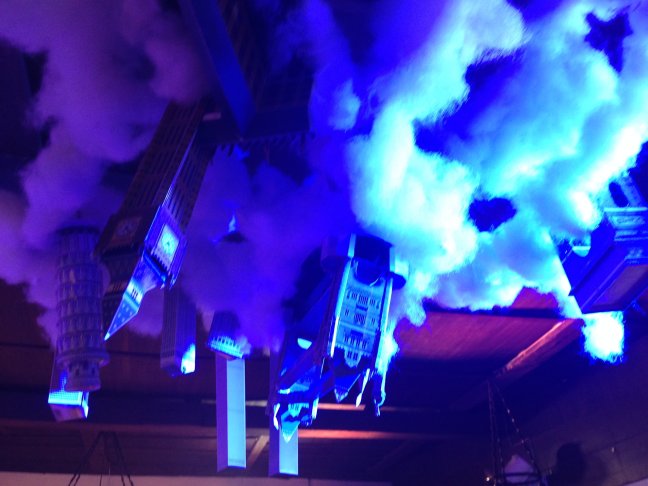
A few weeks ago, I went to a Shop of Dreams, a pop-up store which was actually an exhibition. It was a collaboration between Edinburgh-based artist Symon MacIntyre, faculty/artist Amruta Shah and students of the Srishti School of Art and Design in Bengaluru, as part of their interim project.

Along with a group of children, I was welcomed into a pop-up store that looked like it belonged in the pages of an Enid Blyton book or a Neil Gaiman short story. Like me, the children felt like they had climbed atop the Magic Faraway Tree and were whisked into the fantastical land that was the Shop of Dreams.

The children, a boisterous bunch, excitedly window-shopped for dream jars, where owls nestled in tree holes and upside-down houses, pixie dust in purple and turquoise blue, and the stuff of nightmares was ensconced in matchboxes. You needed drupees, dream currency, to shop and for that, you had to earn them by playing games.

What fascinated me about the exhibition was how it engaged children (also adults) with something as familiar as dreams and nightmares. Play blended with art to become a space where reality was suspended for a little while. Children could explore the exhibits that were not just sterile objects hung on walls. They could pick them up, and examine them to their heart’s content. Well, until the next tot shoved them aside at least.

Since you couldn’t shop with money, you could almost see the conundrum children faced about ‘earning’ enough dream currency to be able to ‘buy’ their favourite fancies. One parent complained that the announcement didn’t mention money, until the students pointed out the concept of a dream currency. She relaxed and set off to make some herself.

In many ways, the exhibition was a stark reminder of growing up in a capitalistic world where even dreams can be traded for the right currency. On the Srishti website, the project was explained: “Every day, in and around us, we see advertisement hoardings selling us some kind of dream. This concept is about the essence of dreams. It is about the de-commercialisation of dreams. Although it is a shop of dreams, the dreams can only be bought by someone prepared to give us something in return. It’s a barter system. There is no currency in our shop. It’s a room full of ideas, imagination and little triggers that can trigger your own imagination.”

And truly, there was a sense of wonder in getting something without actual rupees passing hands, taking them away from their consumerism-centric world. A hark back to the history of money and the barter system. Moreover, the exhibition didn’t have any videos or screens.

In fact, the games were based on traditional board games, word puzzles and a dart board. The Shop of Dreams was all about discovery. A Cheetah-branded matchbox opened to show a skull and bones or a fluffy cloud studded with stars. Inviting bottles were filled with curious potions, where we had to use our imagination to think what a nightmare concoction would taste like. Everyday, objects were transformed into the extraordinary. And I heard a boy and girl decide they were going to try to replicate one of the exhibits for a class project.

As I left the shop — clutching my precious stash of pixie dust, a dream jar, and a nightmare potion — I couldn’t help but think that increasingly what we see and what we touch is becoming homogenised. Our visual culture is more and more limited to screens where images are beamed to us constantly, and games packaged for us. Yet, right here was an example that our experiences don’t have to be limited to screens.

In a city like Mumbai, we are starved for open and play areas, and green spaces. Our idea of a weekend well spent is going to the mall. It would be wonderful if more artists and educators would come to create such spaces where children can play, explore, and innovate. And where going out doesn’t have to be about ‘shopping’.

(The writer is the former editor of Time Out Bengaluru and writes about education for sustainable development, conservation and food security)

My favourite children’s books of 2015

http://www.dailyo.in/arts/childrens-books-2015-the-diary-of-wimpy-kid-mahasweta-devi-greg-heffley-samit-basu-the-adventures-of-stoob-super-zero-payal-kapadia-sundarbans-sarojini-naidu-razia-sultan-/story/1/8112.html

School books, quirky ghosts, funny superheroes- there’s a lot to choose from.

It’s been quite a year for children and young adult books in India. Here’s a look at some of my favourites this year.

School books ruled the roost

Greg Heffley of The Diary of Wimpy Kid fame had serious competition this year. When it comes to schools, the children’s publishing industry was busy with sequels. Samit Basu’s The Adventures of Stoob: A Difficult Stage is a whirlwind read. Stoob’s childhood is firmly behind him, after all he is now in Class 6 and wears full pants. When his classmates are not discussing relationships and icky stuff, they are auditioning for the school play.

Stoob is rip-roaringly funny, and Basu steps into the canvas shoes of a school student with ease. He also takes on certain television series meant for children and manages to make a point about today’s intelligent young audience.

stoob_122415011752.jpg
 The book is rip-roaringly funny, and Basu steps into the canvas shoes of a school student with ease.

Jane De Suza’s little superhero has his hands full in Super Zero and the Grumpy Ghosts. In the second installment of the series, Super Zero has to rid a mall of a motley crew of ghosts. De Suza keeps the reader laughing from the beginning to the end – Super Zero is full of mad-cap jokes and punch lines, with a fun story to match.

sz_122415012125.jpg
 Super Zero is full of mad-cap jokes and punch lines, with a fun story to match.

Horrid High: Back to School by Payal Kapadia returns with another adventure. Horrid High is no longer the horrid school that it once was – Granny Grit is now principal and has a new fleet of teachers.

But when Granny Grit has to rush to the Amazon, 12-year-old Ferg and his friends are left to figure out the mysterious Grand Plan, dodge Cook Fracas’s food fights and attend classes with some weird teachers. A spirited read.

hh_122415012252.jpg
 Horrid High: Back to School by Payal Kapadia returns with another adventure.

Showing their stripes 

Both Nayanika Mahatani’s Ambushed and Mitali Perkins’ Tiger Boyinvite young readers to the forest with their stories. In Ambushed,Gadget-addict Tara stumbles upon an international ring of poachers at a tiger reserve. Now it’s up to the ten-year-old girl and Satya, a tribal boy to save a tigress and her cubs. A wonderful read, Ambushed is a treasure trove of information about the striped cat and the need to save them.

Tiger Boy is the story of Sundarbans, its people and its wildlife. Neel and his sister get together to help a tiger cub who’s gone missing in the mangrove forest. Even though he has a scholarship to study for, Neel forgets everything in order to save the tiger.

ti_122415040619.jpg
It is a story about the complex relationship between humans and animals.

Tiger Boy is a wonderful story about the complex relationship that humans and animals share – fragmented, ethnocentric, wondrous, and symbiotic.

Beautiful picture books

Illustrator Ruchi Shah renders Mahasweta Devi’s Our Incredible Cowinto a gorgeous picture book. Nyadosh, the cow goes about chewing everything in sight, while Shah reinterprets the story imaginatively, giving the cow different avatars of what she eats. Fabric, books, banana leaves, and even onion rings become part of innovative collages to form Nyadosh.

inc_122415012848.jpg
 Ruchi Shah renders Mahasweta Devi’s Our Incredible Cow into a gorgeous picture book.

Roopa Pai and Archana Sreenivasan’s My Space, My Body takes on the subject of personal space and body awareness. Parents often find it hard to talk to their children about these topics, but now help is at hand in the form of siblings Taka and Dimi. Sreenivasan’s illustrations are lively as is Pai’s storytelling.

my-body_122415013219.jpg
 My Space, My Body feaures worksheets and fun activities like this.

8 Ways to Draw an Elephant is an art activity book that not only introduces children to natural history, but also to different Indian art forms. Children will love learning about Asian and African elephants and then tracing, patterning, and colouring the pachyderms in different folk and tribal styles.

Lots of history, some with mystery

Subhadra Sen Gupta’s A Children History of India is an omnibus of sorts. Children can step back into time to ancient and medieval India. Sen Gupta then takes young readers to the British period and then writes about growing up in a free India.

Sen Gupta not only talks about the empires that ruled India but also how the common people lived – the houses they lived in, their clothes, and what kids studied at school. It’s a wonderful way to learn about India and its people.

With the history-mystery series, no one’s ever going to accuse the subject of being dull. Razia and the Pesky Presents by Natasha Sharma is a delightful book about Razia Sultan.

razia_122415014153.jpg
Razia and the Pesky Presents is a delightful book about Razia Sultan.

The Delhi ruler finds herself being sent some really pesky gifts with rude notes. It’s nice to get presents but not if they are challenging your right to rule as a woman. While the series is based on real historical characters, the stories have their own quirks and narratives.

The real super heroes

Written in the form of letters from 12-year-old Sarojini to freedom fighter Sarojini Naidu, Mathangi Subramanian’s Dear Mrs. Naidu is a powerful story about empowerment. Sarojini decides that her government school’s going to have to pull up its socks and do better under the Right to Education Act.

Help is on hand in the form of unlikely friends and a human rights lawyer who is also an evil genius. There are hurdles to face – from a headmaster who can’t be bothered to care, mothers who are busy with thousands of chores, and one of the best characters ever – a nightie-clad councilor tapping away on her phone and ignoring her constituency. Subramanian’s story feels very much real, but in that gritty reality she also finds hope and humour.

naidu_122415014347.jpg
It is in the form of letters from 12-year-old Sarojini to freedom fighter Sarojini Naidu.

Half the Field is Mine is a spunky tale about two friends whose dearest wish in the world is to play football. But the boys’ team does not want girls to play with them any longer, and the two girls set out on different journeys to question gender differences. Swati Sengupta comes up with interesting questions about sports and gender.

Another superhero is nine-year-old Nina in Shabnam Minwalla’s The Shy Supergirl. As the book starts, “But sometimes, just sometimes, they [superheroes] turn out to be small girls who weigh twenty-one kilos and hate Hindi homework.”

shy_122415014608.jpg
 Shabnam Minwalla’s The Shy Supergirl.

Nina, we find out, has a superpower to see if people are nice or nasty, or “a messy mix of the two”. She wields it to solve a mystery in her building. Part of the hOle book series, The Shy Supergirl is about people, and what propels them to be nice or nasty, greedy or kind, sly or compassionate.

Review: Career of Evil

http://indiatoday.intoday.in/story/jk-rowling-career-of-evil-third-cormoran-strike-novel-robert-galbraith/1/523394.html

Review: JK Rowling’s Career of Evil keeps the reader guessing

Career of Evil, Rowling’s third Cormoran Strike novel, is an emotionally taut read.

Detective Cormoran Strike and his secretary-turned-partner Robin Ellacott are back for the third time with a case that’s equally bloody and emotional in parts. This time around, the investigative pair is embroiled in a mystery that is pretty personal–someone sends a woman’s severed leg to Robin accompanied by lyrics from a song by the American rock band, Blue Oyster Cult. It’s a chilling message for Strike, given his disability–he was injured and lost a leg in Afghanistan. It’s also clear that someone has a bone to pick with Strike and won’t stop at just a leg. Rather, as you find out from the killer’s perspective, his next target is Robin. What follows is a trip down memory lane for Strike, as he pursues four possible suspects, each with a sinister and bloodthirsty history. In an interview with NPR, JK Rowling, who writes this series under the pseudonym Robert Galbraith, said that she read Ted Bundy’s accounts to understand a killer’s perspective and also trawled through forums frequented by men who discuss women in terms of murder and sexual violence.

The suspects are twisted as they come with a long history of violence–Terence ‘Digger’ Malley, a gangster who is known for his body-cutting skills; sociopath Donald Laing who is a British veteran and blames Strike for all his misfortune and problems; Noel Brockbank who has a history of paedophilia and is not quite right in the head; and Jeff Whittaker, a junkie musician who was married to Strike’s mother and tried and acquitted for her murder. They all have one thing in common–they hate Strike. To complicate matters, after their last two cases–The Cuckoo’s Calling and The Silkworm–Strike is kind of famous and he is no longer able to go out and pursue persons of interests as he once could. And with the infamous publicity about the severed leg, Strike and Robin are losing cases and with that money as well. At the same time, Robin is grappling with a tense engagement – her fiance Matthew has always been vocal about his dislike for Strike but now their relationship has taken a turn for the worse. She’s also worried about her position at work – at times Strike calls her a business partner, at others he does everything to shield her from the nastier parts of the business.

For Robin, horrific memories of sexual violence resurface–you find out that she had been raped at a university. Your heart goes out to Robin and Strike, who for a change, shows his vulnerable side, especially with his bias towards his stepfather. You also get a bit closer to understanding the person behind the hulking, impassive facade. On top of all this is Robin’s impending wedding–dresses, flowers and seating arrangements add to the chaos, while both Robin and Strike are trying hard to ignore their feeling for each other. In her acknowledgements, Rowling writes, “I can’t remember ever enjoying writing a novel more than Career of Evil. This is odd, not only on account of the grisly subject matter…” And it shows. The author takes her time building the emotional tension in Career of Evil. At the same time, she lets the tension unwind slowly, following the suspects at an easy pace all across the country, while allowing personal emotions to bubble up to the forefront. Rowling runs through a gamut of bloody and violent crimes–sexual violence, serial killings, drug abuse, and paedophilia, it’s all in there. Yet she takes her time in telling the stories. And because of that, Career of Evil tends to flag a bit. Although it has a compelling and dark storyline, the narrative takes time to pick up, and you tend to lose interest in the middle.

Suspense

That said, the suspense builds up, and you’re hard-pressed to choose between the suspects. Strike is gunning for Whittaker with obvious reasons, but the others seem equally menacing and they all seem to have had an opportunity. And that’s where the author keeps the reader guessing, making it an immense emotionally taut read. PS: A request for the writer; can we please get Strike to mop up his curry with naan, instead of naan bread next time?

The reviewer is a Bengaluru-based writer.

On Shock Waves: Managing the Impacts of Climate Change on Poverty.

http://www.boomlive.in/forget-gm-seeds-go-organic-and-india-will-have-a-better-chance-at-weathering-climate-change/

Forget GM Seeds, Go Organic, And India Will Have A Better Chance At Weathering Climate Change

02 Dec 2015

Last month, while the Indian social media was going berserk over the many Khans of Bollywood, a World Bank report about climate change and poverty was published. It contained warnings about a horrible future that is right around the corner, but few paid attention to the concerns outlined in Shock Waves: Managing the Impacts of Climate Change on Poverty.

According to Shock Waves, by 2030, over 100 million people would have been forced into extreme poverty because of climate change. That’s just 15 years away.

The report offers two scenarios for the future of poverty by 2030 – optimistic prosperity, and pessimistic poverty. In the event of prosperity as a result of high-impact climate change, India would see two million people being brought into poverty. If things go the pessimistic poverty way, Shock Waves estimates as many as 50 million joining the impoverished in India.

The year 2030 is a deadline date. India has pledged to reduce emissions intensity by 33 per cent of the 2005 levels by 2030. We’ve also committed to generating 40 per cent power from non-fossil fuel sources. As goals go, it’s a good one. Like many life goals, however, attaining this one seems unlikely without some serious policy changes.

At the 2015 Paris Climate Conference (COP 21) talks this year, India has just announced the global solar alliance between countries and big industries. It aims to get affordable power to off-the-grid, remote and rural areas. That ambitious plan will be critically important, given that the International Energy Agency’s World Economic Outlook 2015 estimates that by 2040, India’s coal consumption will be second only to China. Our demand for oil is also set to rise.

Shock Waves’s insistence upon good, climate-informed development is particularly timely under the circumstances. This week, world leaders are meeting for COP 21, to try and negotiate an agreement to limit global temperature rise. The threat that rising temperatures poses are undeniable today, particularly in the way it affects food security in poorer regions such as Sub-Saharan Africa and South Asia, adding stress to an already fragile ecosystem.

Unpredictable weather and agriculture in India

Fifty six per cent of India’s agriculture is rain-fed. This year has been seared with news of extreme weather conditions and an erratic monsoon that wreaked havoc on crops across the country. In Punjab’s Malwa region, whiteflies destroyed 60 per cent of the Bt cotton crop, causing a loss of approximately Rs. 4,200 crore. Delayed monsoon and prolonged hot summers have already impacted cotton and food crops across the country. In November, a survey conducted by farmer activist group Swaraj Abhiyan showed the severity of drought and famine in the Bundelkhand region of Uttar Pradesh.

Over the last 17 years, three lakh farmers have committed suicide in India. This is a statistic that should punch each one of us in the gut. Their deaths are not just testaments to the severity that farmers encounter today, but also an ominous portent of times to come. In simple terms, poor yields, escalating input costs and fluctuating market prices push farmers into an endless cycle of debt. Some are pushed to commit suicide, and some leave agriculture to become labourers.


Climate-informed development

In developing countries, the poorest households already spend 40 to 60 per cent of their income on food and beverages. Organisations such as the Fair Trade Alliance Kerala are encouraging farmers to follow mixed agriculture practice, which acts as a safety net – if cash crops fail due to an erratic monsoon, farmers are at least food secure in these climate-challenged times.

“Each farming family that has for decades now been growing cash crops for the distant markets is committed to being net staple food suppliers,” said Tomy Mathew, the co-founder of the FTAK, a democratically-governed small-holder farmer organisation. “In terms of calorie value, the food that they produce will be more than the requirements of the family,” he added. The FTAK focus is on climate mitigation through fair terms of trade, biodiversity, food security, and gender justice.

These principals will be the foundation for climate justice for the poor, who are not the biggest contributors to climate change but are the ones who bear its brunt.

Shock Waves: Focus on India

In the section, “Bad Seed: Climate Change, Agriculture, and Food Security”, the authors of Shock Waves points out that by 2080, “the average yield declines estimated from all climate models could be as severe as 23 percent for South Asia”. This means there is no time to waste. It’s essential we develop climate-smart, smallholder farmer communities that will enable farmers to survive the new challenges and keep all of us food secure.

For instance, Shock Waves highlights the need to “develop higher yielding and more climate-resistant crop varieties and livestock breeds, adapted to developing country contexts and climate conditions”. It cites the example of Scuba or Swarna-Sub1, a “climate-ready rice” which is being field-tested in Odisha. Reports claim that the flood-resistant rice is not genetically-modified, but is a hybrid of two rice varieties.

One of the ways that some hope to tackle the problems of yield and climate change are GM seeds. In India, we’re seeing the debate heat up over genetically modified cotton, mustard and even mosquitos. The social and ecological impacts of these seeds will require a closer and objective look. What needs to be kept in mind is the larger picture. There may be immediate gains to GM seeds. For instance, over 90 per cent of cotton in India is genetically modified Bt Cotton, which is resistant to certain pests and has an initial high-yield. However, it has a high input cost. The seeds are expensive (approximately three to eight times the price of conventional seeds) and require specific pesticides that over time strip the soil of its richness. Once harvested, hybrid cotton seeds cannot be replanted. In the long run, this is more damaging than helpful.

Farmers need to be put in control of their seeds, rather than corporate entities. Take for example Chetna Organic, a group in Odisha that is working to enhance sustainable livelihood options for small-holder farmer families. It empowers women to manage and control local seed enterprises. The programme is in its third year, but already women farmers are conserving local and indigenous food and fibre seeds that are also high yielding.

According to the United Nations, India is home to one third of the world’s extreme poor population. It’s a figure that’s set to rise, until we and our government make a conscious choice towards equitable development that is climate-informed and inclusive. It’s good that there are speeches and conversations at the Paris Climate Conference, but Shock Waves is a reminder that development that is rapid, inclusive and climate-informed is the need of the hour.

9 Green Gifts For The Festive Season

http://www.natgeotraveller.in/web-exclusive/web-exclusive-month/9-green-gifts-for-the-festive-season/

Spread the holiday spirit by cheering on artisanal, social, and eco-friendly enterprises.

    • TEXT: BIJAL VACHHARAJANI
POSTED  ON: OCTOBER 21, 2015 12:00 AM

These single-origin chocolates are handcrafted in Karnataka. Photo courtesy Earth Loaf

click me

Artisanal Chocolates

What’s sweeter than gifting chocolates for Diwali, Eid or Christmas? Making sure that those treats are organic and handmade. Mason & Co. sources their organic cacao beans from a family-run smallholding in Tamil Nadu. Try their 75 per cent Zesty Orange or 70 per cent Sea Salt Dark Chocolate that they make at their factory in Auroville. A far bigger temptation is their eight-bar dark chocolate collection gift pack.

Earth Loaf’s organic chocolates are handcrafted in small batches from cacao beans from a single estate in Karnataka, and their gorgeous wrappers are silk-screened by hand in Mysore. Try their 72 per cent Raw Dark Chocolate bar and the Gondhoraj & Apricot one.
Available at www.placeoforigin.in.

Handcrafted Pottery

Curators of Clay pottery is perfect for those with a sweet tooth. Photo courtesy Curators of Clay

Curators of Clay pottery is perfect for those with a sweet tooth. Photo courtesy Curators of Clay

click me

Bhairavi Naik and Rohit Kulkarni’s ceramic studio, Curators of Clay, will make you want to trade your space-saving, stacking Tupperware for their bespoke pottery. Their tableware and home decor accessories are handcrafted in small batches by the two potters in Bhugaon, Pune. Tea drinkers will be delighted by their gorgeous range of teapots, creamers, tumblers, and mugs. For those who have a sweet tooth, Curators of Clay pottery is perfect for baking; they even have custard jugs! They also have handcrafted porcelain tea lights for the festival season.
To order or customise a gift, drop in at their Pune store, visit their Facebook page or write to bhairavi@curatorsofclay.com and rohit@curatorsofclay.com.

Fairtrade And Organic Tea Hamper

Look for the Fairtrade and Organic Mark on a tea carton.

Look for the Fairtrade and Organic Mark on a tea carton.

click me

If you’re planning on assembling a food hamper, choose a tea carton with the Fairtrade and Organic Mark. The Fairtrade Mark means that apart from meeting social and environmental standards, an additional premium is paid to the producers for the purchase you make. Oothu green and black teas come directly from the Nilgiris, while Monteviot and Makaibari Tea have a dazzling range from Darjeeling. Pukka Tea’s Vanilla Chai, Supreme Matcha Green, Clean Green, and Cool Mint Green are perfect for detox after a festive binge. Best of all, you can feel zen knowing that the money will be democratically spent by farmer and producer committees on community projects such as education, eco centres, and smokeless chulhas.
Available on Amazon and Makaibari.

Single-Origin Honey

Over the last few years, Under the Mango Tree has become known for its fair-trade sourcing practices, in which they procure honey directly from beekeepers. Their fabulous Bees for Poverty Reduction programme enables farmers to generate additional income through honey, with the bees boosting yield through cross-pollination – a sweet deal for both bees and farmers. UTMT has a range of single-origin honeys – Eucalyptus Honey is perfect to soothe sore throats after a night of inhaling firecracker fumes, while their Sweet Clover Honey is a delicious addition to sweets.
Available at most grocery stores and on www.bigbasket.com

Handmade Books

It's hard to part with these gorgeous children's books. Photo courtesy Tara Books

It’s hard to part with these gorgeous children’s books. Photo courtesy Tara Books

click me

We’ll be honest: it’s hard to actually give away Tara Books’ stunning children’s books to kids. The Chennai-based independent publisher of picture books for adults and children has an eclectic list of titles created by writers, tribal artists and designers. To Market, To Market! by Anushka Ravishankar and Emanuele Scanziani charmingly portrays an Indian market, and is perfect for curious toddlers. Adults will love The Nightlife of Trees, an award-winning handmade book by Gond artists Bhajju Shyam, Durga Bai, and Ram Singh Urveti. The arresting visuals are a tribute to the magnificence of trees, and draw from the art and folklore of the Gond tribe. Don’t forget to check out their stationery section for the one-of-a-kind Flukebooks, perfect for jotting down organic recipes.

A funky Flukebook is great for jotting down organic recipes. Photo courtesy Tara Books

A funky Flukebook is great for jotting down organic recipes. Photo courtesy Tara Books

click me

Bengaluru-based Little Latitude has a range of books and toys which are not only beautiful but also environment-friendly. For instance, Vinay Diddee, who started Little Latitude, makes toys with rubber wood that is not treated with harmful chemicals.
Available at www.tarabooks.com. Find the store list for Little Latitude here.

Organic Cotton

Organic cotton is not only good for your skin but also for the soil, and farmers. With the use of integrated pest management measures, the soil retains its fertility, and farmers practise inter-cropping, which ensures their food security. Good Earth’s Gumdrops kids collection is eco-friendly and adorable. There are elephant soft toys, sleeping sets for infants, and quilts to choose from.

No Nasties clothing uses organic and Fairtrade cotton. Photo courtesy No Nasties

No Nasties clothing uses organic and Fairtrade cotton. Photo courtesy No Nasties

click me

Grown-ups can head to No Nasties to buy colour-block pocket tees made with organic and Fairtrade cotton. Each purchase comes in organic cotton bags and recycled cardboard tags made by a women’s self-help group near Pondicherry. While you’re at it, slip in a little Doug accessory as part of your gift. No Nasties’ Once Upon A Doug project supports women cotton farmers who make these adorable clouds with a silver lining, from scraps of recycled cotton during the lean season.

Once Upon A Doug supports women cotton farmers. Photo courtesy Once Upon A Doug

Once Upon A Doug supports women cotton farmers. Photo courtesy Once Upon A Doug

click me

If you’re looking for something more ethnic, check out Ethicus and Tula, two fabulous seed-to-stitch enterprises that are revolutionising the cotton supply chain.
Available at all Good Earth Stores. Shop at www.nonasties.in,www.onceuponadoug.com, www.jaypore.com, and www.tula.org.in.

Natural And Seasonal Cosmetics

It’s tough finding cosmetics that are made completely with natural ingredients. SoulTree is certified by BDIH Germany. The brand pays fair price to farmers, ensures that plants are not picked clean of flowers or fruits, and that harmful chemicals are not used in their products. They have a wide range of beauty products, but check out their Traveller Essential Miniature Kit which has 30ml bottles of moisturiser, shower gel, and shampoo. Their lipsticks use organic ghee as a base.
Available at www.soultree.in.

Coffee Subscription

Fuel that caffeine addiction with a coffee subscription to Blue Tokai. The hand-picked, single-origin coffee is roasted and then ground as per your specifications and delivered to your doorstep. Whether you like the full-bodied, low acid Monsoon Malabar coffee or the dark, oaky Vienna roast, there’s plenty to choose from. If you are not sure of which blend to gift, choose the Mixed Bag.
Available at www.bluetokaicoffee.com.

Gentle Detergents And Cleaners

Most homes get a thorough cleaning before Diwali, so eco-friendly soaps and detergents make an offbeat but handy gift. Common Oxen products use safe or natural ingredients, and are also a great gift to yourself. Their detergent Swish Wash is free of synthetic fragrances, phosphates, and carcinogenic chemicals. It is made of botanical oil soap, washing soda, baking soda, borax, rock salt, and lime and orange essential oils, and leaves your laundry smelling of the sun. Common Oxen also has kitchen dishwashing soaps, bathroom cleaners, and body soaps.
Available at www.commenoxen.in.

When Bijal Vachharajani is not reading Harry Potter, she can be found pottering about in the jungles of India. In her spare time, she works so she can fund the trips and those expensive Potter books. She did this by working as the Editor at Time Out Bengaluru. She writes about education for sustainable development and sustainable livelihood.

11 Books That Will Get Children To Explore The Wild

http://www.natgeotraveller.in/web-exclusive/web-exclusive-month/11-books-that-will-get-children-to-explore-the-wild/

World Habitat Day Special: Let a book lead you into swamps, seas and more

TEXT & PHOTOGRAPHS: BIJAL VACHHARAJANI

POSTED  ON: OCTOBER 5, 2015 12:00 AM

Hitch a ride on the back of a glorious book about wildlife.

click me

Children’s books can work like portkeys to nature. Turn the pages and you can be whooshed into a dense green jungle full of mysterious tigers and merry bears, transported to a bleak desert landscape, or plunged deep into the ocean, swimming with sea turtles and dodging jellyfish. On World Habitat Day, we pick 11 books that will enchant young readers and introduce them to habitats where the wild things are.

Sundarbans with Tiger Boy

In Mitali Perkins’ Tiger Boy, Neel’s parents and teachers want him to study hard for a scholarship that will take him from the Sundarbans to Kolkata. But Neel loves his home – he can splash like a river dolphin in the freshwater pond, climb tall palm trees, and forage for wild guavas. Besides, he has a bigger problem than geometry and algebra to worry about: there’s a tiger cub missing from the reserve. With the help of his sister Rupa, a spunky girl who has been forced to drop out of school, Neel decides to find the cub and save it from being trafficked by the evil Gupta. After all, who knows the island better than him?

Tiger Boy takes children into the swampy forests of the Sundarbans. Perkins paints a vivid picture of what it’s like to live in a place threatened by climate change: islands bolstered against rising sea levels by sandbags and furious cyclones tearing away mangroves. Yet, Tiger Boy is a story of hope; it’s about the splendour of the mangrove forests and islands, the magnificence of the tiger and its vulnerability, and human resilience in the face of adversity.

Also see:The Honey Hunter by Karthika Nair and Joëlle Jolivet is a sumptuously illustrated book that brings alive the richness of the Sundarbans. Nair’s story takes children through the mangrove forest, while Jolivet’s candy-coloured illustrations bring to life the honeybees, tigers, and trees of the Sundarbans.

Africa with The Akimbo Series

“Imagine living in a place where the sun rises each morning over blue mountains and great plains with grass that grows taller than a man.” This is where Akimbo lives, on the edge of a large game reserve in Africa. Readers will be enchanted by young Akimbo and his home. British author Alexander McCall Smith is best known for The No. 1 Ladies’ Detective Agency series, but he has a delightful repertoire of children’s books as well, which includes the Akimbo series.

Set in the heart of Africa, Akimbo lives alongside zebras that graze in the plains and lions, leopards, and baboons in the hills and forest. Man-animal conflict, poaching, conservation, and endangered animals are all part of the narrative. In Akimbo And The Elephants, his father who works on the reserve points out an animal and cautions him, “Don’t make a noise. Just look over there.” If only everybody on a safari would listen to Akimbo’s father, we would have so many more quiet and pleasant trips into the forest.

Also see: You’ve watched the movie Duma, now read the book it is based on.How It Was With Dooms is the story of Xan Hopcraft who grew up with a cheetah at his home in Nairobi. There are some lovely photos by his mother Carol Hopcraft in the book as well.

The Western Ghats with The Adventures of Philautus Frog

If you thought frogs lived only in ponds, then Kartik Shanker’s book will make you think again. Shanker’s protagonist is Philautus or Thavalai, a tree frog who has never ever come down from his Big Tree home. One day, Thavalai decides to hop off to look for the big blue sea. He has many adventures, including getting directions from a snake who could have easily swallowed him whole.

Maya Ramaswamy’s illustrations recreate the dark, deep shola forest, the surrounding hills and grasslands, and their many denizens. A hornbill sits placidly in one corner of the page, while a balloon frog puffs up in purple glory on another. Venomous snakes slither across the book and a dragonfly flits over the words. The book is packed with nuggets of information, such as that grasslands are hot in the day and cold at night, but the shola is always cool. Readers also learn that Thavalai often gets teased because Philautus frogs bypass the tadpole stage and froglets hop straight out of eggs.

Also see: Children can Walk the Grasslands With Takuri, a pygmy hog who is the protagonist of this book by Nima Manjrekar and Nandita Hazarika. Part of the same series is Aparajita Datta and Nima Manjrekar’s Walk The Rainforest With Niwupah, where a hornbill takes readers on a tour of his rainforest. Both books have been illustrated by Ramaswamy.

Hingol National Park with Survival Tips For Lunatics

Shandana Minhas’ Survival Tips For Lunatics is a rollicking tale that throws together a motley bunch of characters. There’s a squabbling pair of siblings, a Protoliterodragon who cannot stand bad poetry, and an angry black bear “with a dislike of the species that had put him on the endangered list”. The story is set in Hingol National Park in south-west Pakistan which is home to Chandrakup, the largest mud volcano in South Asia.

Changez, 12, and his brother Taimur aka Timmy, 9, go camping with their parents. Next morning, Changez wakes up to realise that the parents left them behind by mistake. Help is at hand in the form of a talking sparrow and other animals. The unlikely group end up across the Pakistan-Afghanistan border where they find that the human world holds more dangers than the forest. Survival Tips For Lunatics also explores the multifarious wonderful and fraught relationships that humans and animals share, and while doing so, holds up a mirror to our flawed ideas of civilization. But Minhas’ touch is always light, keeping the reader chuckling and turning the page.

Also see: Jungu The Baiga Princess by Vithal Rajan is set in the jungles of Madhya Pradesh and spotlights conservation and tribal rights. It’s a story about the Baiga tribe and their commitment to protecting their forest.

Around the World with The Snail And The Whale

What happens when a snail has an itchy foot and wants to see the world? He hitches a ride on the tail of a humpback whale for the journey of a lifetime. Illustrated by Axel Scheffler, Julia Donaldson’s picture book is a real treat. Young readers will join the snail and the whale to see “towering icebergs and far-off lands” where penguins frolic in the water. Then they go on to “fiery mountains and golden sands” to say hello to monkeys and turtles. While Donaldson doesn’t dwell on any particular habitat, the book makes for a fun guessing game about possible locations. For instance, where in the world are caves beneath waves where sharks with hideous toothy grins lurk?  Or which place is sunny and blue and has thunderstorms?

Also see: In The One And Only Ivan, Katherine Applegate talks about the tyranny of captivity and the yearning for the wild. The story is narrated by Ivan, a silverback gorilla who lives in a glass cage in a performing mall. Ivan introduces himself in the most heartbreaking manner by saying, “I used to be a wild gorilla, and I still look the part.” Ivan chooses to not remember his real home, where his father had a bouncy belly that was the perfect trampoline for his sister Tag and him. It’s the only way he can cope with living in a cage. Based on a real life story, Ivan is both beautiful and moving – a poignant reminder of the absence of home.

There’s a bit of magic in the illustrated Harry Potter series

http://www.dailyo.in/lifestyle/harry-potter-jk-rowling-bloomsbury-jim-kay-hogwarts-diagon-alley-hagrid-muggles-platform-93-4/story/1/6690.html

Jim Kay’s attention to detail is a fitting tribute to JK Rowling’s fabulous story.

Over the last few months, Potterheads have been getting email owls from Bloomsbury announcing the launch of an illustrated Harry Potter book series. It was reported that Jim Kay, who won the Kate Greenway Medal for his gothic illustrations of Patrick Ness’ A Monster Calls, has been commissioned to illustrate one of the most popular books of our times. In an interview to The Guardian, Kay said that he reacted to the news with an “explosion of delight, followed instantly by an implosion of brain-freezing terror”. An understandable reaction.

After all, every Potterhead in the Muggle universe has a distinct visceral idea of how the staircases in Hogwarts move, what the chaos on Platform 93/4 looks like on the day the Hogwarts Express leaves for the Best School Ever, and how the castle changes as autumn slips into winter. The world of Harry Potter which was created by JK Rowling some 18 years ago continues to exist in the collective imagination of Muggles across the world.

img_4910_100915121329.jpg

Given that I own all the Potter books and the spin-offs, a handsome army of figurines, and bits and bobs such as the Elder Wand and the Gryffindor pen, I had told myself sternly that I did not need to buy this book. My imagination was good enough. Further, like all Potterheads, I had already had to contend with the film versions and my opinionated thoughts about the adaptation.

But merely hours after the book launched on October 6, I succumbed to temptation. A shiny copy of Harry Potter and the Philosopher’s Stone has been added to my considerable collection. And I don’t need Veritaserum to admit that I have no regrets. The new book is a coffee table tome (costs like one too), resplendent with colours and quirky characters. A word of warning: If you are planning to tote it around to show it off to your Muggle friends, think again. The book is Hagrid-size.

Also read: Five spells every Indian could learn from Harry Potter

As I opened the book reverently, it took me back to my childhood, to the eighties, when we read beautifully illustrated books from Russia, UK, and Europe. Those books were interspersed with dreamy water colour illustrations sandwiched between the stories. Kay’s book is reminiscent of those classic stories, but with his personal, quirky twists.

The good news is that The Boy Who Lived has green eyes, while Dumbledore has piercing blue eyes. On that happy note, let us reread the beloved tale. Each chapter starts with a detailed illustration which gives the reader an inkling of what’s about to come. In a YouTube video, Kay explains how he even made 3D models to understand how the light would fall before illustrating the final version.

And Merlin’s Beard! The details are what make the book a treat. For instance, he puts the hog in Hogwarts with boar gargoyles on the intricate castle of his imagination. Backgrounds are richly textured, as is the landscape.

The illustrations get richer as Harry steps into the wizarding world. Diagon Alley will make you gasp with delight. This is Harry’s (almost) first glimpse of the wizarding world, and true to Rowling’s prose, the illustration shows a cobbled street that twists and turns with shops piled high with strange wares. Draco Malfoy makes an appearance – pale, pointed face (check) with cold eyes. On his website Kay says that he achieved the slightly unsettling effect using a simple trick – “If you illustrate a person’s eyes perfectly symmetrical, there’s something creepy about their appearance”.

Also read: Why I feel Harry Potter made the world a better place

The Sorting Hat is a wonderful surprise. Rowling described it as patched and frayed, and Kay’s Hat is all of that. But it’s also bright and happy with textured, colourful patches – poles apart from the comparatively surly movie version. On his website, Kay describes the making of the Sorting Hat, “One of the fabrics is from a beautiful book of fabric samples I saw years ago in the Royal Museum, Edinburgh. Never know when you’ll find a use for the little notes you make.”

img_4912---copy_100915121240.jpg

It’s evident the Kay has drawn Hagrid with much affection. The bearded half-giant sports a skull and bones scarf and has little badges on his coat, an idea that Kay borrowed from his school caretaker. A lot of Kay’s inspiration comes from the world around him – whether it’s strangers he bumps into or people he knows well. Like Rowling, Kay seems to love metaphors and symbols. Dumbledore sits at his desk, choosing a Sherbet Lemon while a praying mantis sits close by. In an interview to Pottermore, Kay said that the mantis, which means prophet, depicts the headmaster’s honesty.

img_4874_100915121257.jpg

Most of the characters only appear once or twice in the book, which is a bit of a disappointment. Like Oliver Twist, you can’t help but want more. But don’t get your wands into a knot – when you have majestic Norwegian Ridgeback dragons flying across the page and Mountain Trolls thumbing their snouts at you, there’s really not much room for complaint. Wait until you get to Quirrell/Voldemort, the tantalising peek will ensure impatience for the second book to come out soon.

At the back of the book, Rowling says that she was moved profoundly by Kay’s illustrations. The attention to detail, the masterful paintings, and the thoughtful deliberation on the characters, all of it is a fitting tribute to her fabulous story. The illustrated version is something that Madam Pince will guard fervently in her library, and as will us Potterheads.

We need to pass our love for nature to children

http://www.dailyo.in/lifestyle/wildlife-environment-world-wildlife-week-enid-blyton-winnie-the-pooh-rachel-carson/story/1/6549.html

World Wildlife Week starts on October 2, celebrate it by taking a walk in the park or having a picnic.

The tabby kitten was a quivering mass of fur and bones when my mother scooped her up from the roadside and brought her home. My sister, with her zoophobia, promptly locked herself inside the kitchen, making cooing noises from a safe distance. I was all of seven, and fascinated by the kitten’s round eyes and persistent mews. From the time I can remember, wayward kittens, injured rose-ringed parakeets, and heat-stressed munias found a foster home with my mother. Spiders weren’t whacked to death, instead they were gently carried out to the plants on our balcony. Lizards were pronounced cute, much to our collective horror. All cats as a rule were called Jinglu and Minglu, other animals got various names until they were well enough to go back into the big bad world of Delhi.

Years later, I picked up a copy of The Sense of Wonder by conservationist and author Rachel Carson and read this wonderful line – “If a child is to keep alive his inborn sense of wonder, he needs the companionship of at least one adult who can share it, rediscovering with him the joy, excitement, and mystery of the world we live in.”

Those words made perfect sense to me. Growing up, one of my most treasured memories is of my mother reminiscing about her childhood. My mother’s family lived on the outskirts of Bhuj in Gujarat, close to a forested area. She told us about a brown owl who would knock on their front door thrice – tap, tap, tap. He (perhaps she?) would uncannily mimic the knock that was the agreed signal for my grandfather to announce that he was home. My mother would open the door ready to greet her father, only to have the tiny owl quickly dash into the house or retreat to his favourite perch on the tree outside, staring at them solemnly with his big eyes.

There were stories of a cobra cooling off in their bathroom, and another of a fighting pair of snakes who borrowed the living room as an arena. On such occasions, a local snake catcher caught the snakes and released them back in the wild.

My mother inherited this compassionate streak from her father. Their brown-and-white cow would only go to bed after my grandfather had petted and talked to her. When my grandfather was transferred to Mumbai, the most heartbreaking part of the move was leaving their cow behind. My mother still remembers the cow mooing sadly, while the siblings sulked, unable to understand why the cow couldn’t accompany them to the city. Surely people in Mumbai drank milk.

Fascinated, I took to reading about these animals in books. I was enchanted by Enid Blyton, with her stories about children taking long walks in the moors, climbing sturdy oak trees in the woods, and meeting animals in the wild. Richard Louv, in his book, Last Child in the Woods, writes that “environmental educators and activists repeatedly mention nature books as important childhood influences”. Indeed, stories such as AA Milne’s Winnie-the-Pooh or Gerald Durrell’sMy Family and Other Animals, have inspired generations of wildlife lovers. I yearned to have owls knocking on the door at our Defence Colony house, and comforted myself with fiction badgers, elephants, and Pooh bears instead.

My father, while evading my constant demands for a dog, took us to city gardens on weekends, while holidays were spent in forests and hill stations. We climbed trees, picnicked at Lodhi Gardens, and were constantly gifted books about animals. All these fuelled my sense of wonder for nature. It didn’t matter that we didn’t always know the name of the brightly-coloured birds, majestic raptors, or creepy crawlies we saw. It was enough to be able to observe them.

World Wildlife Week starts on October 2, and there’s no better way to celebrate it than by passing on your love for nature to children. Take them for a nature ramble or a hike, let them observe and learn about animals and their habitat, and share a story or two about wildlife. As Carson reminds us, “A child’s world is fresh and new and beautiful, full of wonder and excitement.” It’s up to us, the grown-ups, to keep it that way.

PS: No owls have come calling to my house, although I have helped rescue a few. Even now when I meet a tiny brown owl, such as the spotted owlet, in the wild, I wonder if it’s the same species as the one that used to knock on my mother’s door.

Five books that make history fun for children

http://www.dailyo.in/arts/indian-history-mughals-mauryan-age-ashoka-chola-razia-sultan-ajanta-caves-books/story/1/5596.html

Textbooks apart, there are different ways of bringing the country’s past alive for young readers.

Decades ago, my school days were tortured by numbers. Whether it was complex equations in Maths or the dates in History and Civics, the figures just refused to stay put in my head. Apart from key dates in India’s history, it was almost impossible for me to remember in what year did a particularly bloody battle happen or when did some dynasty ruled what part of India.

Further, history is a reflection of cultural and political values of a particular time. Over the last few years, there has been a lot of opposition and public debate about the rewriting of text books with nationalist themes in them.

Textbooks apart, there are different ways of bringing history alive for young readers, and one is the substantial number of children’s books – both fiction and non-fiction – that are available today.

A Children’s History of India, by Subhadra Sen Gupta

a-childrens-history_081115033425.jpg

Written at the back of this 445-page book is a relevant message – “History is not just about kings, battles and dates, it is also about how ordinary people lived… it is the story of our past”. Now, if only someone had told me this when I was a child. A Children’s History of India starts from the time there was a land called Jambudvipa, the land of the rose apple. The author describes the landscape beautifully. She writes: “With soaring snow-capped mountain ranges of the Himalayas in the north and the tumultuous waters of the Indian Ocean in the south…” Sen Gupta’s lucid prose brings the past to the present, as she takes the readers on a journey from Harappa to the rise of Vijayanagar to the Mughal period and the fight for Independence to growing up in a free India. The book is full of snippets, such as the first railway line was laid between Bombay and Thane in 1853 CE (see, how much easier it is to remember dates like this one?) and how trains initially created panic among people who had “never seen anything like it before”. What really is interesting is the way Sen Gupta connects the reader to present day India, by recommending walkabouts to old buildings and museums in the country, offering trivia from the internet and suggesting classroom activities such as creating a Mughal manuscript.

Queen of Ice, by Devika Rangachari

queen-of-ice_081115033516.jpg

Once in a while comes a book with a kickass female protagonist, and that’s Devika Rangachari’s Queen of Ice. This is the story of Didda, the princess of Lohara who is beautiful, intelligent and lame, but destined for greatness. Loathed by her father, Didda is married off to King Kshemagupta, the ruler of Kashmira, who prefers jackal hunts to attending to the grievances of his subjects. That’s when Didda realises it’s time to take matters, well the reigns, in her hands.

Didda was part of Rangachari’s doctoral research on women in early medieval north India. In her historical note, the author writes, “Although she was a masterful ruler who ensured an unprecedented era of peace and prosperity in Kashmir, her rule and contributions have been invisibilised or trivialised in accounts of this period.” Kashmir in the 10th century comes alive in this story that’s a clever mix of fact and fiction and Didda gets her fitting place in history.

The Puffin History of India Vol 2, by Roshen Dalal

dalal_081115033741.jpg

While most children’s books focus on pre-Independence India, Roshen Dalal’s The Puffin History of India Vol 2 looks at the events that shaped the country post August 15, 1947. The book starts from Republic Day and goes on to offer a timeline of important events that took place until the turn of the millennium. The Partition, the first year post Independence, writing the Constitution, are all in the book. Dalal writes about 26 January, 1950 – “Celebrations in Delhi began the previous night with a two-km-long torchlight procession.” The author also talks about some of the policies that shaped India. There are whole chapters on foreign policy. Kids can learn about different prime ministers and governments, and also the Emergency, making it a comprehensive roundup of India’s contemporary history.

A Chola Adventure, by Anu Kumar and other series

chola_081115034301.jpg

There are some really interesting series of history books out there by different publishers. There’s Puffin’s Girls of India series, with titles such as A Harappan Adventure, by Sunila Gupte and A Mauryan Adventure, by Subhadra Sen Gupta. Anu Kumar’s A Chola Adventureis based in 990 CE in Tanjore and tells the story of 12-year-old Raji who one day decides to help a Chinese sailor. The Mysteries Series, by Red Turtle includes Kumar’s How Did the Harappans Say Hello? And 16 Other Mysteries of History. Kumar sets out to answer questions such as “Who drew on the walls of the Ajanta caves?” and “Will the real Vikramaditya please stand up?” A seriously fun series is History-Mystery, by Duckbill.

These, the publishers assure us, are mysteries that one will never find in history books. In Ashoka and the Muddled Messages, the Mauryan emperor is hopping mad because someone’s messing around with the messages he wants inscribed on pillars; and in Razia and the Pesky Presents, Razia Sultan, the ruler of Dilli has her own set of problems as someone is insisting on giving her girly gifts and challenging her right to rule as a woman. Based on real historical characters, author Natasha Sharma gives the books a fun twist, while ensuring the kids learn a few valuable lessons along the way.

Amazing India: A State by State Guide, by Anita and Amit Vachharajani

amazing-india_081115034937.jpg

This one’s not strictly a history book, but for the amount of information it packs along with the quality of illustrations, it belongs in this list. Anita Vachharajani takes readers on a state-by-state trip of the country, acquainting them with the rich cultural and geographical diversity of India, while Amit Vachharajani’s quirky illustrations enliven up the book. Each state comes with its own map, fact file and an introduction which includes a short history. For instance, in Orissa, young readers can find out about the battle of Kalinga, who rebuilt the Jagannatha temple, and the dynasties that have ruled the state. What sets this book apart is that the Vachharajanis have written about defining social and environment moments such as the Chipko movement and also the Roerich Pact to protect world monuments during wars. Although the book’s brimming with information and illustrations, it is easy on the eye and a fun, quick read.

Five Indian children’s books on tiger everyone must read

http://www.dailyo.in/arts/world-tiger-day-books-children-national-animal-india-poachers-wildlife-environment/story/1/5300.html

On World Tiger Day, it’s time to show your stripes for India’s national animal.

GROWING PANGS  |  4-minute read |   29-07-2015

It’s time to show your stripes for India’s national animal on World Tiger Day. We give you a round-up of five books about this magnificent animal that should be part of your children’s bookshelves.

1. Ambushed by Nayanika Mahtani:

9780143333609.201503_072915102718.jpg

The ten-year-old Tara is a gadget geek, she even thinks her Papa’s birthday cake should be shaped like his BlackBerry phone. Which is why when her banker-turned-photographer father decides to take her to Ranibagh, a tiger reserve in the Himalayan foothills for the summer, she’s horrified. After all, nothing ever happens there, does it? But then Tara lands splat in the middle of an adventure – who would have thought that the forest was not only home to the beautiful tiger, but also to an international gang of ruthless poachers? Satya, a tribal boy, enlists Tara’s help to literally save the skin of a tigress and her cubs.Ambushed is a fast-paced read that puts the spotlight firmly on conservation. Nayanika Mahtani’s debut novel is peppered with trivia, such as tigers are hard to spot and that some hundred years ago, there were over one lakh tigers in the world. While doing so, she also touches upon themes of social inequalities and the politics of conservation and poaching.

2. Ranthambore Adventures by Deepak Dalal:

deepakdalal_072915102733.jpg

For any child who has visited Ranthambore Tiger Reserve, Deepak Dalal’s Ranthambore Adventures is sure to transport them straight back into the Rajasthan forest. Aditya is planning to join his friend Vikram in Ranthambore, when he stumbles upon the diary of a tiger poacher. Aditya is grabbed by the poachers and his friend Aarti follows their trail, all the way to Ranthambore. At the same time, readers are invited into the world of Genghis, a magnificent tiger and his family. An action-packed adventure, Deepak Dalal’s story is an informative read about tigers and their home, the forest. It’s also a story of friendship and courage, harking back to timeless books such as Enid Blyton’s Famous Five series. Although Ranthambore Adventures was first published in 1998, its message about tiger and forest conservation remains as evocative as ever.

3. The Tigers of Taboo Valley by Ranjit Lal:

27isbs_tiger_2292203_072915102752.jpg

One of the best explanation of a poacher comes from Raat-ki-Rani, a tigress who lives in Sher-Kila National Park. She explains to her cubs that “A poacher is one of those two-legged hairless cowards who will kill you if he can. He might use any revolting method he can think of – poison, traps or guns”. Tragically, the brave tigress dies at the hands of poacher Khoon-Pyaasa, leaving an unwilling boss tiger Rana Shaan-Bahadur to take care of his four cubs, Hasti, Masti, Phasti and Zafraan. But like many forest, this one too is brimming with gossiping animals, a vulture squad called Diclo-Fenac, a photographer from the National Geographic, and an underground group of porcupine terrorists who have it in for tigers. Ranjit Lal offers a hilarious wild rumpus, where readers learn about the fascinating animals, while sparking concern for the forests and its denizens.

4. Tiger by the Tail by Venita Coelho:

full-cover-tiger-by-_072915102803.jpg

Venita Coelho’s book comes with a tagline, “Save the Animals, Save the World” – which happens to be the motto of the Animal Intelligence Agency (AIA). The back of the book explains that the AIA is “a multi-species non-governmental agency. Specially trained animal and human agents work undercover to save animals and save the world. Some of them have the licence to kill”. One of the agents with a licence to kill is Agent No 002 aka Bagha, a member of the Panthera tigris species. The tiger is 250kgs of sheer intelligence and muscle. He’s really what one could call a cool cat. Bagha and Rana, a boy who can communicate with animals because he can JungleSpeak, embark on a mission to investigate the disappearance of tigers from wildlife reserves across South Asia. Tiger by the Tail is a wonderful read, interspersed with pages of trivia and facts about tigers.

5. Tiger on a Tree by Anushka Ravishankar:

61qmujrca0l._sx377_b_072915102813.jpg

Published in 1997, Tiger on a Tree is one of the most iconic books about the big cat. Resplendent in orange and black, the picture book has been illustrated by Pulak Biswas. Anushka Ravishankar tells the story of a scaredy-cat tiger who gets stuck on a tree. As the villagers “Get him! Net Him! Tie Him Tight!” they need to decide what to do with this tiger. Written in verse form, Ravishankar talks about the man-animal conflict, courage, and kindness, in a simple yet beautiful way. Biswas’ illustrations carry forward the tale, bringing the forests, the river and the village alive with his brush.