Dead as a Dodo

http://www.mid-day.com/articles/book-review-dead-as-a-dodo/16424177
Book review: Dead as a Dodo

When it comes to being extinct, the first name that leaps to one’s mind is the Mauritian flightless dodo. After all, the dodo bird went extinct in the late 1600s and even has a famous morbid phrase dubbed after it. But in Venita Coelho’s Dead as a Dodo, the extinct bird gets a new lease of life. After Coelho’s first book, Tiger by the Tail, Agent No 11.5 Rana makes a comeback, along with Agent No 002, Bagha the brave tiger; and Agent No 13, Kela, the mischievous and always-in-trouble grey langur. Rana has a special gift — he can use ‘JungleSpeak’ to communicate to animals, and for this skill, he’s part of the Animal Intelligence Agency.

Dead as a Dodo

This time around, the three protagonists are on Mission: Dead as a Dodo. While on the heels of a missing hangul deer, the trio stumble upon an extinction operation, where a shadowy villain is hell bent on stealing the last specimens of highly endangered species. Now, this villain has managed to lay his hands on an actual live dodo aka the Raphus cucullatus. Their adventure takes Rana, Bagha and Kela from Delhi to Mauritius to North America, in a quest to save the most endangered of species.

Coelho spins a real tale about conservation and international wildlife trafficking, while managing to keep the reader chuckling and guessing right until the very end. Her characters are spunky and the narrative is a lovely way of introducing children to different aspects of natural history.

William Hartston wrote in his book, The Things that Nobody Knows: 501 Mysteries of Life, the Universe and Everything, about the coelacanth, a fish that was believed to be extinct for 65 million years ago, but was caught in 1938, by fishermen off the coast of South Africa. Unfortunately, Hartston adds that the chances of the dodo being alive are only three in a million. As the earth enters into its sixth extension phase — a recent report revealed that “vertebrates were vanishing at a rate 114 times faster than normal” — Dead as a Dodo takes on a special significance. As Coelho points out in her book, it’s in our hands to ensure that today’s endangered species, like the hangul deer, don’t go the way of the dodo.

Dead as a Dodo, Venita Coelho, Hachette India, Rs 350. Available at leading bookstores and e-stores

– See more at: http://www.mid-day.com/articles/book-review-dead-as-a-dodo/16424177#sthash.5xz1cHN9.dpuf

Why I feel Harry Potter made the world a better place

http://www.dailyo.in/arts/harry-potter-jk-rowling-18-years-snape-ron-hermione-warner-bros-bloomsbury-dumbledore-hagrid/story/1/4557.html

It’s been 18 years since the first book took the world by the storm, and the magic hasn’t tarnished still.

At the turn of the millennium, it was definitely uncool to be caught reading a children’s books and that too one with bespectacled wizards riding strange beasts on the cover. I ignored the relentless jibes from my friends (yes, you all know who you are) and lost myself in the wizarding world of Harry Potter and the Prisoner of Azkaban. I reread the books, watched first days, first shows of the movies, did marathon viewings with friends and spent pots of money on merchandise. Potter and his motley crew saw me through good times and bad.

In happier times, I curled up with a mug of masala chai, wishing it was butterbeer, and laughed and cried with the stories. Even now a figurine of Professor Snape stares at me from the top of my desk, threatening me with detention if I don’t finish this article.

It’s been 18 years since the first book took the world by the storm, and the magic hasn’t tarnished still. I rummaged through my pensieve of memories to revisit why the boy who lived continues to beguile us Potterheads.

Harry Potter was a highly unusual boy in many ways, but: Although Harry Potter is a wizard and the Chosen One, young readers were quick to realise that he’s not that different from them – for starters, he’s got unruly hair that makes him look scruffy and the adults keep wanting him to tidy up, he’s an average student who keeps procrastinating over homework and he feels the same fear of a first Quidditch match or exams as any one of us would when faced with a daunting task. In fact, his best friend Ron Weasley was the sarcastic, funny one and we all know that Hermione Granger was truly the brightest witch of her time.

harry_potter_and_sni_062415013010.jpg

The biggest battle Potter fights is against prejudice: In July 2014, theJournal of Applied Social Psychology published a study titled, “The Greatest Magic of Harry Potter: Reducing Prejudice”, which revealed that children who read the books were less prejudiced and more open minded towards immigrants and homosexuals. Earlier this month, another message behind the stories spilled into real life when the Harry Potter Alliance, a non-profit initiative led by fans of the books, won a four-year campaign with Warner Bros studio agreeing to make all Harry Potter-branded chocolate Fair Trade or UTZ certified by the end of this year. Clearly, the HPA took JK Rowling’s words to heart – “We do not need magic to change the world, we carry all the power we need inside ourselves already: We have the power to imagine better.”

550w_movies_harry_po_062415012723.jpg

The books inspired a generation to read: In the year 2000, three years after the first Potter book hit bookshelves, The New York Times Book Reviewannounced that it would print a “separate best-seller list for children’s books… The change is largely in response to the expected demand for the fourth in the Harry Potter series of children’s books, editors at the Book Review said”. JK Rowling’s best-selling series made room for a new brood of children’s books as more and more kids took to reading them. Alas, it also meant we had to suffer certain vampire-related books, but well, we can’t have it all.

j-k-rowling_062415013558.jpg

It’s all about team spirit: Let’s face it, without Hermione, Harry just wouldn’t have got the philosopher’s stone, entered the chamber of secrets, rescued the prisoner of Azkaban… You get the drift. And then there was Neville Longbottom who had to finish off the last horcrux, Dobby who rescued them all, at (sniff, spoiler alert) great personal peril and Ron, erm… who managed to make us all chuckle.

2003_harry_potter_an_062415012621.jpg

It’s all about the choices we make: When Dumbledore says, “It is our choices, Harry, that show what we truly are, far more than our abilities”, it’s reminiscent of how the world – wizarding and muggle – is not just black-and-white. We were all convinced that Snape had it in for Harry, only to be surprised by his goosebump-inducing story, which showed that he was protecting the boy. Tom Riddle was the perfect student but took on the mantle of the Dark Lord with his prejudices and his own fear of death. And Hagrid faced a lot of stigma for being half-giant but is one of the most gentle of the characters in the book series. Except, of course, for his love for Blast-Ended Skrewts, giant, carnivorous spiders and biting books.

dumbledore_062415013436.jpg

Technology and great outdoors, can kids have both?

http://www.dailyo.in/lifestyle/anshumani-ruddra-minecraft-hogwarts-finding-audrey-sophie-kinsella-parenting/story/1/4661.html

Author Richard Louv underlines the importance of adults helping children ‘detach from electronics long enough for their imaginations to kick in’.

Three books for children that take bullying by the horns

http://scroll.in/article/732492/three-books-for-children-that-take-bullying-by-the-horns

YA fiction in India is increasingly pitching kids into real-life situations instead of fantasies, offering strategies for coping.
Bijal Vachharajani  · Jun 06, 2015 · 03:30 pm
Three books for children that take bullying by the horns
20.2K
Total Views

Bullying is often a staple theme in children’s literature – whether it’s Draco Malfoy bolstered by his cronies Crabbe and Goyle in the Harry Potter series or even a teacher like the horrid Miss Trunchbull in Matilda by Roald Dahl. These fictional worlds are not all that different from the ones that children grow up in, even without magical moving staircases or telekinetics.

Here in India, children’s books are tackling the subject of bullying with some solid storytelling and generous doses of humour. These books celebrate diversity, and in doing so remind kids that standing up to bullies takes courage and is the right thing to do. Here are three that take on the issue:

The Dugong and the Barracudas, Ranjit Lal
If you have spent your life hooked onto Animal Planet, you may know that a dugong is a large marine mammal that is known to be quite languid. In nature writer Ranjit Lal’s book, Sushmita is the dugong – a sweet 13-year-old girl who is “not quite like girls her age” because she’s overweight, big and slow.

When she joins Rugged Rocks High School, it’s like a battery of barracudas – her classmates – sinking their teeth into her good nature, pulling no punches while humiliating her. On the first day of her class, the children snicker among themselves, “Fat, fat, fat… everywhere!” and even call her “Mother of all hippos!”

As things take a turn for the worse, Sushmita fights back, but in her own sweet way. Lal tackles the difficult subjects of prejudice and bullying deftly with his usual incisiveness and quirkiness, making the reader chuckle, laugh out loud and think at the same time.

Big Bully and M-Me, Arti Sonthalia
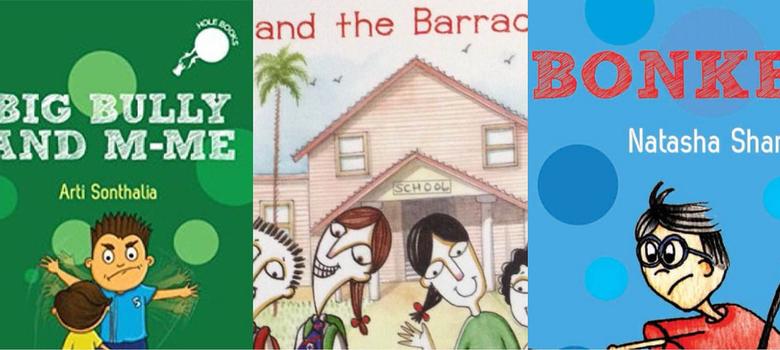
Big Bully and M-Me is part of the delightful Hole Books Series. Meet Krishna, who prefers to be called “Krish without the Na!” You soon realise that Krish is the last one to be picked for team sport because he is the shortest, skinniest boy in class. He finds himself in a fix, when as part of a class assignment, he has to give an extempore speech. For Krish, that’s the hardest thing in the world because of his stammering. And, worst of all, his partner for the assignment is Ishaan, who happens to be “the tallest, meanest bully in the world”.

As Krish preps for the extempore, his Mom gives him some sound advice, “If you get stuck just say ‘I can, I can, I can’”. Arti Sonthalia’s story is short and sweet, and she compels the reader to put themselves into the shoes of Krish and think about his struggle with speech and how it impacts his confidence and relationships.

Also in this series is Bonkers, by Natasha Sharma, which features the bespectacled Armaan and Bonkers, his crazy dog who has just chewed up a cricket ball that belongs to TT, a bully who is the leader of the Ghastly Groundhog Grang. With a combination like that, only chaos can ensue, along with insane amounts of fun and a message that help can come from the most unlikely of sources.

Talking of Muskaan, Himanjali Sankar
Jay Asher’s book Thirteen Reasons Why was a dark book about a teenager who commits suicide and then through a series of audio tapes explains how bullying and abuse drove her to this desperate act. Himanjali Sankar’s protagonist Muskaan also tries to commit suicide in Talking of Muskaan.

As the 15-year-old is fighting for her life in the hospital, three of her classmates narrate the story from their perspective. Muskaan, the reader finds out, has always been different. And for that, her friends tease her brutally. When the teenager confesses to BFF Aaliya that she likes girls, the teasing takes on a cruel edge. Her one confidante Subhojoy has also been dubbed “weirdo” by his classmates because he’s a class topper and hails from a less privileged background. Talking of Muskaan is a compelling, coming-of-age book that brings to the forefront the subject of sexual orientation, class and individuality in an increasingly-homogenous world.

When Bijal Vachharajani is not reading Harry Potter, she can be found traipsing across tiger reserves. In her free time, she is a consultant with Fairtrade India. 

We welcome your comments at letters@scroll.in

Freedom is a bird taking to the skies

http://www.dailyo.in/variety/peta-caged-bird-cockatoos-parakeets-mynahs-sparrows-wildlife-protection-act/story/1/3793.html
bird-embed_051815092305

In recognising for our birds the fundamental right to ‘live with dignity’, the Delhi High Court has done a commendable job.

The rose-ringed parakeet sat dolefully on a window ledge. Like countless other birds raised in captivity, Shawnu couldn’t fly because his wing feathers had been clipped, condemning him to a life where he had to hop from one place to another. Which is why he sat on the wrong side of the window – inside a house, rather than outside perched on a tree or flying happily with his friends.

Rescued from a fortune teller by volunteers of the People for the Ethical Treatment of Animals (PETA) in Mumbai, the rose-ringed parakeet was tiny, almost as if his growth had been stunted from spending a lifetime in a dingy cage the size of an iPad Mini. When anyone came close to Shawnu, he would fluff up his feathers, roll his eyes in fear and make an angry, throaty sound. He constantly groomed himself, to the point that his fragile body was dappled with bald, grey patches. This obsessive, repetitive behaviour called zoochosis is often seen in animals in captivity.

Who could blame Shawnu for being so angry and frightened of human beings? Although trade in indigenous bird species is banned in India, thousands of parakeets, munias and other birds are snatched from their forest homes and smuggled in atrocious conditions to different parts of the country and the world, destined to live a miserable life in captivity. Earlier this month, alarming pictures of yellow-crested cockatoos squeezed into plastic water bottles and smuggled from Indonesia were published online. The photos are truly horrific. The birds look like lifeless feather dusters shoved inside water bottles, their eyes glazed by the trauma. When I worked with PETA India, I came across appalling instances of cruelty to birds – from hornbills being used as roadside entertainment to munias being hawked at traffic signals and chicks being dunked in lurid colours to be sold at Rs 10 apiece.

bird-embed_051815092305.jpg
 The Delhi HC gives ammunition to fight cruelty to birds. Photocredit: Alan Abraham/ PETA India

That is why the Delhi High Court’s observation on May 17 was a shot in the arm for the anti-trafficking movement. Justice Manmohan Singh said, “Birds have the fundamental right to ‘live with dignity’ and fly in the sky without being kept in cages or subjected to cruelty” and “running their trade was a violation of their rights”. It’s a fact that India has strong laws to protect wildlife. The Wildlife (Protection) Act, 1972 prohibits the trade in over 1,800 species of wild animals, plants and their derivatives, and so does the Prevention of Cruelty to Animals Act, 1960.

But ultimately, this violation of rights is down to our apathy and greed. Our desire for entrapping these winged beauties has led to centuries of torture and violence on birds. In his piece Animal Magnetism, evolutionary biologist David P Barash explores our obsession with watching animals and writes, “Animals in captivity might satisfy our desire to cross the existential barrier that separates us from other creatures”. He then goes on to point out, “But for sheer pleasure, there is little doubt that watching birds tops the list. Despite their dinosaur origins… birds are the most assiduously watched wild animals and for good reason: many of them are fantastically lovely, brightly coloured or gloriously iridescent”.

Indeed, there’s nothing more wonderful than watching a bird in the wild – whether it’s a pair of brown sparrows scratching in the dust, a serpent eagle perched majestically on a tree or an owl peeking out of her tree hole. And you don’t have to visit a forest to watch birds. On hot summer days like these, my mother leaves out a bowl of fresh water for birds on our window ledge, and parakeets, mynahs and sparrows swing by for a drink or two. I have spent many mornings standing in my balcony in Bangalore, watching kites soar gracefully above the cityscape.

In the introduction to his book Birds from My Window and the Antics They Get Up To, Ranjit Lal talks about urban bird life. He writes that he has been watching birds from his window and balcony for several years and finds it a “wonderful way of never having to get bored… Peacocks, bulbuls, babblers and sparrows are always at hand to distract him”. And then it’s not hard to understand, why the caged bird does not sing.

Guest post for Snuggle With Picture Books

http://snugglerecommends.blogspot.in/2012/10/bijal-vachharajani.html

When people visit my house, they often think that I am surrounded with books that are meant for my five-year-old nephew. What I don’t tell them is that most of those picture books are mine. While this is in no way an exhaustive list nor does it have all of my favourite books, but these are just some of the top-of-my-mind favourite picture books.

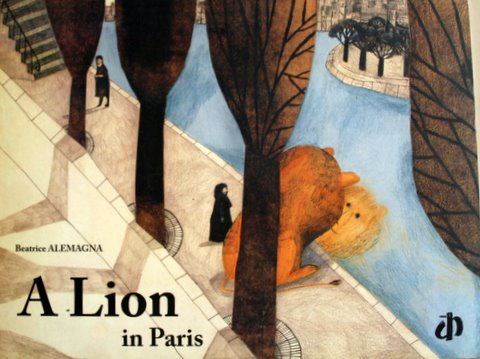
A Lion in Paris: Richa’s already done a fantastic review of this book by Beatrice Alemagna. This is a warm and beautiful book about a lion leaving his Savannah home in search for work, love and a future in Paris. He ambles down the beautiful streets of Paris, wonders why Parisians are carrying swords (read French baguettes) and not challenging anyone to a duel, roars loudly at the underground metro station and then finally settles down in his new found home. Thanks to this book, my poor friend had to suffer Paris with me as I dragged her across the city to take lots of photos in front of a statue of a lion. I am not sure if I found the right one, but hey, it was a lion in Paris. Katha, Rs 150.

The Adventures of Captain Underpants: Parents aren’t going to love me for saying this, but I love this non-superhero series. I have a boxed set that every time you open chimes “Tra-la-la”, the war cry of the school principal Mr Krupp aka Captain Underpants. Harold and George, the resident school trouble makers, successfully hypnotiseMr Krupp into thinking he is a superhero who can fly around in his underpants. And the stories by Dave Pilkey are so much fun: talking toilets, evil cafeteria ladies and there’s even professor called Poopypants.  There’s even a flip book tucked within the pages, which brings the adventure alive. Scholastic.Rs 125 each.

The Lorax: Dr Seuss came late into my life, actually I bought my first book for my nephew and ended up buying another copy for me. Published in 1971, The Loraxstill continues to be an iconic green book. Once-ler, a reclusive man, cut down the Trafulla trees to knit Thneeds – an invention of his that “everyone needs” – at a polluting factory.And the incessant deforestation goes on despite the warning of the Lorax who “speaks for the trees, for the trees have no tongues”. I find the story haunting, with a poignant environmental message, that we continue to ignore. If only the Once-lers of the world would listen to the Lorax more often.

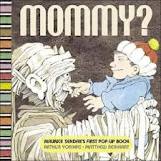
Mommy?:It broke my heart (and many others), when Maurice Sendak died and all I did for the next few days was troll the web for stories about him. I love all Sendak books, but I recently found a copy of Mommy?at Shree Book Centre in Mumbai. This pop-up book designed by Matthew Reinhart and Al Yorinkstakes storytelling to another level. A baby crawls into a haunted house looking for his mommy and just when you think the scary monsters are going to spook him out, you realise why children love monsters. And in this book, the monsters love the baby too, even though he’s not as defenseless as he seems. Every page is a delight, with little pop-ups tucked in every corner.

Thumb Thumb books: The humble thumb art ups its ante with Tulika’s Thumb Thumb books. Featuring Thumb ThumbThambi and Thumb ThumbThangi (try saying it fast), these picture books are illustrated with thumb art. Turquoise thumb prints come together to form a peacock, pink ones form a flower and so on. A lovely book series for beginner readers.Tulika Books.Rs 45 each.

Posted 11th October 2012 by Richa Jha

Review: Dear Mrs. Naidu

http://goodbooks.in/node/7068
By : Bijal Vachharajani  / 2015

Dear-Mrs-Naidu-lo-res.jpg
The first thing that strikes you about Mathangi Subramanian’s book, Dear Mrs. Naidu, is its cover. Rendered in black-and-white by Shruti Shyam, the cover shows vignettes from the book: a woman filling water in a pot, a teacher writing on a blackboard, a boy sipping tea. The protagonist stands out in colour – brown-skinned, neatly oiled hair – sitting on a chatai and writing letters to freedom fighter Sarojini Naidu.

As a classroom assignment, Sarojini starts pouring her heart out to her namesake, in the form of letters. We begin to discover that Sarojini is all of twelve, and from what the government calls the “economically weaker background”. Life for the Bangalore-based tweenager is not easy – whether it’s her best friend Amir moving up in life and shifting to a private school, or living in an informal settlement, or studying in a government school with crumbling walls. She’s further dejected when her mother, under the Right to Education Act, tries to get her admission in the same private school that Amir goes to, only to be rejected and asked for a bribe.

Taking inspiration and help from the people around her – her new friend Deepti who lives at a construction site, a human rights lawyer called Vimala Madam and of course Mrs Naidu herself – Sarojini decides to take matters into her own hands and change things. Rather than get admission in the private school, Sarojini is determined to make her government school better. The odds are stacked against her. There’s the apathetic headmaster who couldn’t care less; the mothers who are neck deep in house work; and even a councillor, who wears a nightie and takes better care of her nails than her constituency (fabulous character that one).

Mathangi Subramanian takes us to the bleaker side of urban life, where toddlers play precariously in construction sites, hoardings are recycled to become roofs for houses and into the hallways of decrepit government schools. These are settings that we are all familiar with, but often choose to turn our eyes away from. There’s a clear demarcation of the haves and the have-nots, and Sarojini is painfully aware of it. But even against this gloomy backdrop, Subramanian’s narrative offers hope and optimism with her characters’ actions and thoughts.

The story challenges the classic Indian fatalistic streak, instead compelling Sarojini and her friends to understand that their actions, however small or big, could lead to social change. It’s refreshing to have a female protagonist like Sarojini, who doesn’t need to be bitten by a mutant spider or be dunked into radioactive waste to be an everyday sort of hero.

As a teacher and policy analyst, the author has done extensive work with children in India and the USA, and it shows in the book. Her characters, especially the children, are very real. They are feisty, witty, and extremely clever. They sometimes hurt each other unwittingly, but then are also resilient kids. The adults are viewed from a child’s lens, making some of them appear stubborn, and others like Vimala Madam as an evil genius.

There’s a short history lesson tucked into the pages of Dear Mrs. Naidu, about Sarojini Naidu and her life. And a crash course on the RTE Act and child rights. There’s plenty of food for thought in here, but mostly Dear Mrs. Naidu works because it’s an endearing story about a girl who wants to change her world and won’t let small things like the government come in her way. For that, the twelve-year-old Sarojini deserves to go down in literary history.

Tiger Talk

http://natureconservation.blogspot.in/2007/05/lmno.html

Found an old old old story of mine online.

Copyright Protected
Date with Tiger:
================

Animals rank high in Bijal Vachharajani’s scheme of things whether as Special Projects Co-ordinator at PETA India or at her stint at Sanctuary Asia. She shares her experiences at the Ranthambore Tiger Reserve with ROUGE .

I was only vaguely aware of my surroundings—tourists were whispering urgently, bickering amiably about who gets the better photograph. But for me, time had stopped. After all, there she was, resplendent in her burnished gold and black striped coat, languidly lapping water from a gushing stream. Her cub, an adolescent tiger, ran around her, amused by the uncalled attention from the excited gawkers. It was my first glimpse of the magnificent Panthera Tigris.

A tip from another canter (that this area was frequented by a tigress with her cubs) had sent our vehicle heading towards this particular stream. The driver shut off the canter’s engine, leaving behind a tense silence. We squinted and strained our eyes, trying to see something through the green and yellow foliage in front of us. Whether it was the rickety boat ride in Periyar Tiger Reserve, where all we spotted was a lone drongo bird, or the unsuccessful quest at Sariska Tiger Reserve, my misadventures with spotting a tiger had left me with the morose feeling that the tigers were eluding me. Immensely adaptable animals, tigers can be found in a wide range of habitats from the arid Ranthambhore to the marshy Sunderbans and the evergreen forests of the Western Ghats. Solitary in nature, tigers are the largest of the cat family and are very territorial. Tigresses, like the one we were waiting to catch sight of, are extremely protective of their cubs.

Suddenly, the driver pointed out, exclaiming, “There she is, I can see her ear!” False alarm. Ready to call it a day, the driver restarted the canter. That was when the tigress suddenly moved from her camouflaged resting place. My date with the tiger was complete.

Most people ask — what’s the big deal about a tiger? As I learnt from Bittu Sahgal, the Editor of Sanctuary Asia, the tiger is a keystone species, the symbol of a thriving forest. He recites this mantra, “To save the tiger, you have to save its home — the forest.” And considering the fact that more than 300 rivers originate from the 28 tiger reserves of India, if you save the forest, you end up saving our water resources. The larger implication? That our subsistence on planet Earth is inextricably connected to the tiger’s survival. The tiger is caught in the throes of a rollercoaster ride to survive. Studies show that tigers only occupy a measly seven per cent of their historic range today, that’s 40 per cent less than a decade ago. Mindless destruction of forests has put India’s wildlife in peril. Worse, poaching for trophies and their body parts, for use in traditional Chinese medicine, only pushed the numbers further down. In 2004, the nation was shocked with news that poachers had wiped out Sariska’s tigers like an epidemic. Suddenly, alarming reports were making headlines in newspapers and magazines. Tiger numbers were dwindling across India and conservationists pegged the number to a meagre 1, 500 to 2, 000. Surely an abysmal report card for our national animal.

I remember chatting with Jaimini Pathak, the writer and director of the heartwarming children’s play Once Upon A Tigerwhich delved on the topic of tiger conservation. When I asked him what ails the tiger in India, Jaimini responded simply, “Human greed.” I rest my case!

Conservationists across India are fighting the battle. We too can help, by sensitively treading upon the Earth’s resources. Save water, paper, and electricity. Invest in corporates who work towards sustainable development. I hope the Earth doesn’t have to witness a time when the tiger draws dangerously close to getting tagged with the phrase “as dead as a dodo”.

Learn to grow: Why children must read books on farmers

http://www.dailyo.in/arts/childrens-books-literature-farming-enid-blyton-roald-dahl-pg-wodehouse/story/1/3426.html

It’s important that these stories go beyond outdated nursery rhymes, especially for kids, who are naturally curious about where their food comes from.