Before they grow up

13bm_kids_column_p_2930308g.jpg

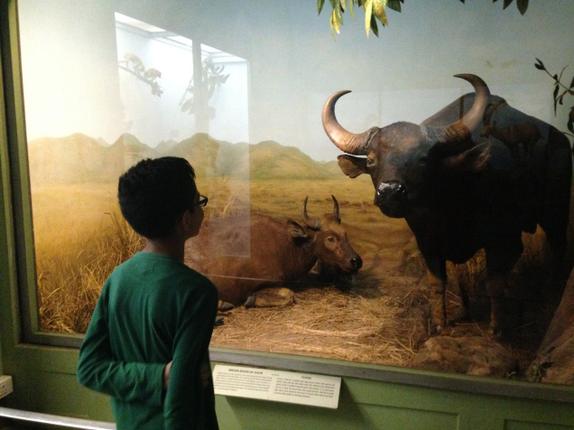
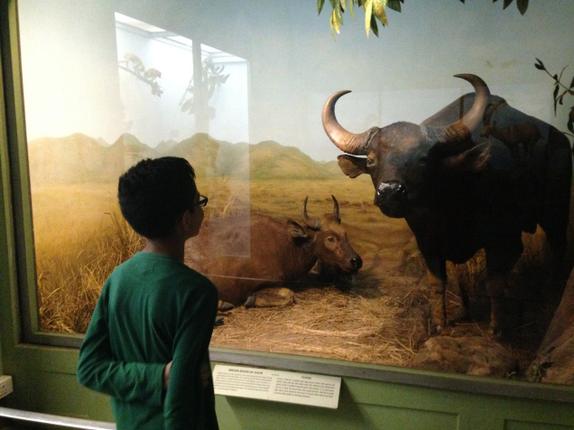
As the sole maasi to a nine-year-old nephew, I am afforded certain privileges that few in the family are privy to. The nephew would call me in urgent tones from his Dubai home to discuss a paragraph in the sixth Harry Potter book, or to ask when I think he will get his Hogwarts letter. His mother would shake her head in exasperation at the long distance call, as he whispered confidences about his classmates and discussed the latest books and games with me. I only see him a few times a year, and sometimes I get the feeling that he’s growing up like a weed, too fast for me to catch up.

It’s not only that every time I see him he’s about a head taller. He now inhabits a world that I am not always familiar with: the video games he plays, the YouTube channels he follows, and even the fact that he’s moved on to Alex Rider from Harry Potter! It was easier talking about The Gruffalo and the lives of adventurers, rather than the merits (what demerits?) of Minecraft. Suddenly, I was worried that maybe I was slipping from cool aunt position: at one point he thought I was a witch who went to Hogwarts and an explorer, rolled into one.

Since his nose is often buried in an iPad or another screen, I had a full-scale plan drawn up for when he visited Mumbai this year for his annual holiday: ‘Mission Explore Mumbai and Think Maasi is Cool Once Again’. From a leisurely hike in Sanjay Gandhi National Park to a museum day and taking a walk around Bandra marvelling at street art, I was ready with an itinerary.

Of course, I didn’t factor in on our city’s torrential monsoon; we spent most of those days cooped up at home playing Battleship and Jenga Quake. Much to my dismay, we ticked off something like one-and-a-half things from my itinerary. We managed to reach Chhatrapati Shivaji Maharaj Vastu Sangrahalaya (CSMVS) from Andheri, but first made a beeline for lunch, because it took so long to get there. After being fortified by Suzette’s hot chocolate and crepes, we spent an afternoon muddling around the museum. The nephew tried on different turbans, made himself several block-printed cards, a roller press print, and a Lung-ta prayer flag, was equally fascinated and repelled by the bone jewellery in the Himalayan Art Gallery, and giggled at the size of some of the Mughal costumes.

That day, it took us four-and-a-half hours to get back home. To my surprise, he didn’t fret for a tablet (‘no screens’ was my one condition of taking him out). Instead, he spent the hours experimenting with some coffee beans he had taken from Starbucks and a bottle of water. He sniffed at the decoction he had created and made observations. I answered questions about Mumbai’s history and the sights we passed. The nephew drew a poop family tree in my notebook, while I met a friend for a quick cup of coffee, and then judiciously explained each family member to us. When I picked up my phone to message my sister, with a slight air of superiority, about the screen-free day and the value of boredom, the nephew pointed out that I was using my phone too much. I couldn’t help but make a comment about smart alecks, as I dropped my phone back into my purse.

Another day, we visited Trilogy by the Eternal Library, and I lost him to the world of books for some time.

One evening, we walked down to say hello to a friend’s dog. My sister is terrified of dogs, and the nephew hasn’t met too many in Dubai. But Dane is the gentlest dog I have met; he let himself be pet, and didn’t jump at the nephew, who is still a bit skittish around animals. He came back home announcing, “Dane is the best dog ever”, going on to give an embellished account of the play time to his nani.

We watched Howl’s Moving Castle and agreed that the hopping scarecrow was creepy enough to keep the lights on a bit longer that night.

On the penultimate day, my father had an appointment in Santa Cruz, so despite the crazy rain, we crammed into the car. My parents did their visiting, while my nephew asked if he could wait outside and look at the rain. Armed with a pair of umbrellas, he and I watched the rain fall all around us, pointing out the patterns that rivulets made on leaves and the way everything looked scrubbed clean. We made pretend-rain measurement tools with twigs to guess how much rain had fallen so far. He put out his hand and squealed with delight as the rain fell on his outstretched palm. We tore out pages from my notebook to make paper boats.

As we carefully set the first one in a puddle, I asked him if he’s ever sailed a paper boat. He thought carefully, and said no. We watched our paper boats wend their way through precarious roots, whirlpools, and bob across pebbles and leaves. A blue plastic wire became the Bermuda Triangle that the boats needed to avoid, while the nephew took on the role of on-shore captain. As the tiniest boat started to sink, the nephew let go of my hand, to raise his wrist to his mouth, as if talking into an imaginary gadget. He reported that the boat has been torpedoed by the enemy pirates.

For now, he wasn’t growing up too fast, for me.

http://www.thehindu.com/news/cities/mumbai/before-they-grow-up/article8842436.ece
On loving and hating Mumbai

29bmdjc-pg5-kid_29_2912739g.jpg

http://www.thehindu.com/news/cities/mumbai/entertainment/on-loving-and-hating-mumbai/article8786404.ece

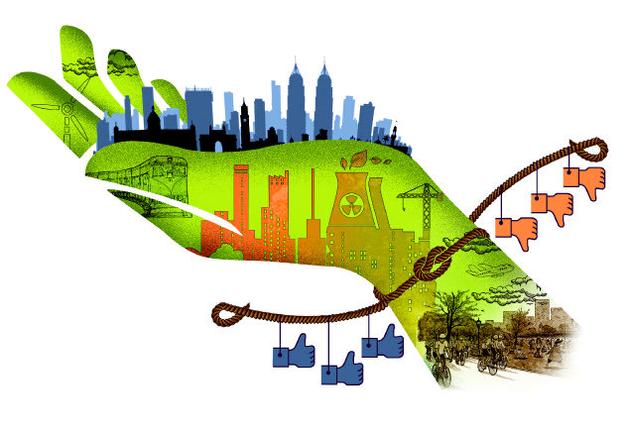
There’s plenty to love about growing up in the madness of Mumbai, but lots to despise as well. I asked a few parents to share what they love and what they hate about bringing up their children in the city.

Rajesh Tahil works in the media and has three children aged 6, 11, and 15

What I love about bringing up my child in Mumbai

It’s home. They are growing up in a neighbourhood that we have lived in for decades. They are close to family, it’s great to see them grow up with aunts and uncles, and their dogs and cats (and fish).

It is a ‘big city’, so they have rich experiences, like visiting museums, music events and food festivals etc. And while these may not be of the best standards, they are certainly not dissimilar to what one would experience in any other ‘big city’.

What I hate about bringing up my child in Mumbai

The lack of open spaces, lack of clean air, too much noise. People generally drive like idiots, a basic lack of civic sense. And because of that, almost invariably “doing stuff”, which equals to spending money i.e. going for a movie or out for lunch rather than just walking or going to a park.

P.S. Also, no beef burgers and mediocre pizza.

Anita Vachharajani is a writer and has an 11-year-old child

What I love about bringing up my child in Mumbai

Growing up in Mumbai, as a single parent who worked two jobs, I never felt restricted in any way. I hope that sense of safety and freedom continues to stay around longer, so that my child can grow up feeling like her city is a safe one.

I enjoy the limited glimpses of nature that this city still offers. Like the squirrels and the birds that visit our balcony, the trees and the mangroves we get to see.

I like that Mumbai exposes my child to diverse people. There is no one language we all speak, no one food we eat, and no one set of gods we pray to. I feel that simply because Mumbai has, in a sense, fewer pretensions, it teaches you basic humility.

What I hate about bringing up my child in Mumbai

Mumbai doesn’t offer some things that I want for my child: like more open spaces, more access to nature, and stricter traffic rules and road safety. I think children need to play more, and it saddens me that in poorer neighbourhoods and ghettos, children have even fewer spaces to play in. But what I resent most is the diminishing greenery in the city. Everyone mourns the lack of trees, but no one objects to individual trees / groups of trees being cut, and that indifference is also peculiar to Mumbai.

Varsha Pawar works as a domestic help and has a 17-year-old child

What I love about bringing up my child in Mumbai

I love that Mumbai has plenty of opportunities, when it comes to colleges and job options, for my son. There’s so much that he can do here.

What I hate about bringing up my child in Mumbai

I live with my brother. Affordable housing is really difficult to find. If that was sorted, it would be a good place to live in.

Brian Rodrigues works in an IT company and has a 3-year-old child

What I love about bringing up my child in Mumbai

Being in one of the biggest metropolitan cities in the world, Mumbai offers you a plethora of options across all fields and avenues. Infrastructure is at an advanced stage in Mumbai.

You can find loads of institutions, be it for elementary or vocational education.

What I hate about bringing up my child in Mumbai

As we go ahead, bringing up a child becomes very competitive in nature. It almost gets them into rivalry mode at school or day care.

Vankshu Shah is an equity investor and has a three-year-old child

What I love about bringing up my child in Mumbai

It is a multi-cultural environment with a very active social and family life with wide exposure to languages and people.

What I hate about bringing up my child in Mumbai

It’s not a child-friendly city, it’s not easy bringing up a child amidst terrible pollution, and one of the biggest worries is safety. A lack of parks and good beaches are some of the other natural activities that a child misses out on. There is a terrible and expensive rat race when it comes to schooling and a very hectic study culture, denying a child the joy of childhood.

Shinibali Mitra Saigal curates children’s festivals. She has two girls, aged 10 and 4

What I love about bringing up my child in Mumbai

I love Bombay as a city because it lets you be. This is applicable not just to adults but children as well. This sense of freedom is a great thing to equip a child with. It’s also a city where a child can grow up without fear.

What I hate about bringing up my child in Mumbai

Alas, there really isn’t a lot for children to do. It’s not a children’s city. We have green spaces but we don’t do enough to lure children there.

We push indoor play areas but not Rani Bagh and Sanjay Gandhi National Park as zones for children to breathe and play in. In terms of just doing nothing yet having fun, Bombay isn’t your city. Here, it’s all about structure and that kind of breaks my heart

Taste of India in Yelahanka doubles up as an Art Gallery

tasteofindia-feat-750x400.jpg

https://lbb.in/bangalore/taste-of-india-restaurant-yelahanka/
Ten-second takeaway

Eat

Palak Paneer, Stuffed Paratha, and Kaali Dal

Drink

Sweet Lassi and Aam Panna

Winning for

Fresh, good food {reminiscent of Himachal and Delhi dhaba food}, reasonable prices, and art

What we ate

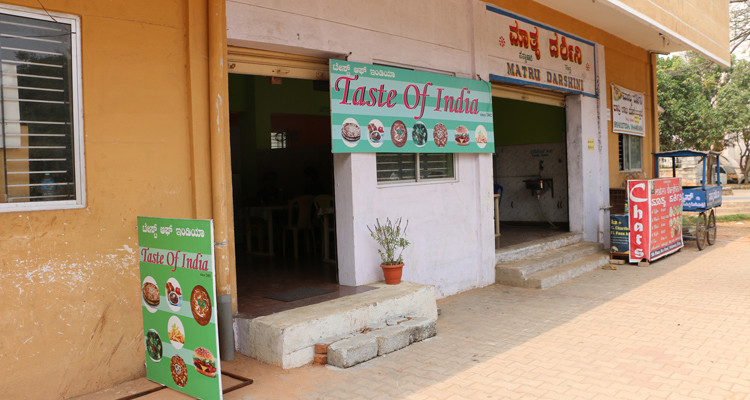
Recently, a British friend of ours came over for lunch and was a tad dismayed at the prospect of eating at the non-descript eatery Taste of India. With trepidation, she started to explain her gluten and lactose allergies to Amod Uncle, the proprietor and chef of the restaurant. He nodded solemnly and prepared a Besan Chilla {with a side of rajam}, solving her problem.

The food shines at Taste of India. Uncle, as he’s popularly known, shops locally and seasonally, preparing a range of North Indian dishes. The Palak Paneer and Adrak Gajar are always fresh, and go well with the right-off-the-tava flaky, Lachha Parathas. The Kaali Dal {with desi ghee} is just like what you’d get in a dhaba, as are the stuffed parathas, with an extra dose of butter. While there’s paav bhaji on the menu, go for the chaat instead – the sweet-and-spicy Dahi Puri is perfect for the summer. #LBBTip: If you find yourself hard-pressed to make a choice, ask Uncle to make you a plate with small portions.

What we drank

And to wash it all down, we recommend the sweet lassi or the seasonal favourite aam panna.

The DL on the ambience

tasteofindia-f

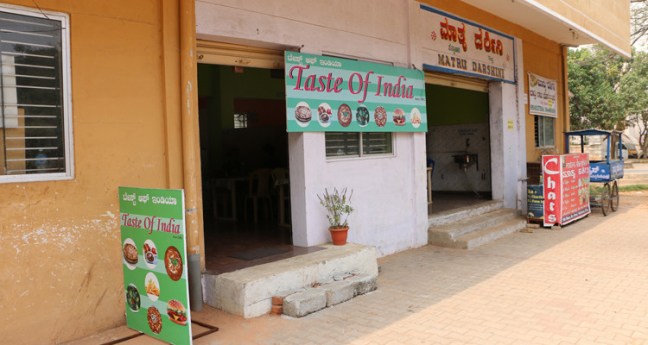
Taste of India is housed in the same complex as the Yelahanka bus depot and is basically a room with an open kitchen and simple seating. Lunch times and weekend breakfasts see a bevy of Srishti School of Art, Design, and Technology students and faculty descending on Taste of India. Most open the fridge and help themselves to fresh lime juice or cold coffee.

Art attack

On most days, there’s an art show on display – in fact, their Facebook page introduces itself as an art gallery and Indian restaurant. Recently, it was a collection of 20 storefront photographs of  Taste of Indias from acoss the globe {you will pretty much find one in every country} and before that was The King and Prime Minister, where photos of Shah Rukh Khan hawking all sorts of products dotted the walls.

So, we’re thinking

Taste of India’s appeal is its food and its proprietor. Uncle is popular with Srishti students and faculty, so much so that he’s also the subject of a documentary project. It’s a restaurant that you can return to pretty much all the time.

Where: BMTC Bus Depot Complex, Yelahanka New Town

When: 9am-6pm

Contact: +91 9823039230

Price: INR 500 for two

Find them on Facebook here.

Pic credit: Nihaal Faizal


Play mats

http://www.thehindu.com/news/cities/mumbai/entertainment/plays-mats/article8020403.ece
IMG_7686

Keeping kids occupied at mealtimes just got a tad easier thanks to these activity placemats

Restaurants often offer puzzle placemats to keep diners occupied while waiting for their order. Spot-the-difference puzzles, word games and number challenges serve as appetisers until the real food arrives. Now, entrepreneurs are creating interesting placemats that can keep the little ’uns occupied at the dining table at home as well.

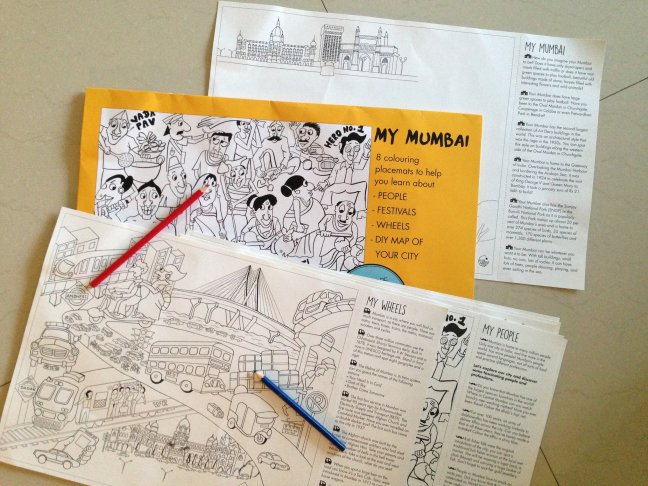
My Mumbai (Rs 500) is a set of eight colouring placemats that introduces Maximum City to children. Perfect for children aged four and above, the black-and-white posters by Yellow Pinwheel Kids Project offer a slice of Mumbai’s life. In one of the placemats, commuters are seen wending their way around the city, passing through the sea link, boarding a local train, and hopping on board a BEST bus. Another one is crammed with the city’s people — street vendors frying vadas for vada pao, Bollywood actors, Koli fisherfolks, paan wallahs, and of course, the dabba wallas. And the third is a glimpse into festivities. The illustrations are done by Abhishek Panchal, who founded Bombay Pencil Jammers.

The placemats encourage children to explore their city with the help of trivia pull-outs. Young explorers will engage with Mumbai’s architecture, the diverse cross-section of its people, and understand its geography. There’s a DIY map of Mumbai, which children have to draw themselves — the map starts at Gateway of India and ends at the Sanjay Gandhi National Park in Borivali. “My Mumbai is targeted for an age group of four to 10. It seems wide but the activity is different for each age segment. The four to six-year-olds will possibly use it just for colouring, but older children will use it as a mapping exercise to discover their city,” said Shinibali Mitra Saigal, who created the activity kit along with Shivani Lath. The entrepreneurs are former journalists, while Mitra Saigal is the co-founder of Kahani Karnival, a Mumbai-based children’s festival.

The Mealtime series by BrownBox Toys (Rs 450) is another charming set of sticker placemats that offer a culinary tour of India, China and England. Each set comes with four posters of typical Indian, Chinese or English meals, with stickers of the food items. The series introduces toddlers to different cultures and helps them understand food habits across the world. For instance, Mealtime England has a poster for fish n’ chips, complete with stickers of tartare sauce, mustard, crisps, peas, vinegar, and other sauces and condiments. Toddlers paste the stickers on the brown paper illustration on the page, to learn what a complete fish n’ chips meal would include. Mealtime India has a range of samosa, thali, kebabs, and dosa and idli. The selection is a mix of familiar and new food, which encourages children to try new dishes as well. The idea is to spark curiosity in young minds.

Then there’s PoppadumArt’s adorable Chalkboard Puzzle Mats (Rs 390) with a range of shapes such as sheep, goats, and bunnies. The animal’s head detaches to become a coaster. Children can write on the mat with chalk, wipe it off, and then scribble again. Made out of medium density fibreboard with a foam backing, the placemat is easy to wipe and reusable, said Saanwari Gorwaney, who started PoppadumArt four years ago to make what she calls “happy things to make spaces happy and bright”. Gorwaney, who is now based out of Gurgaon, worked in advertising before she embarked on this online venture. Out of the three, the chalkboard puzzle mats are easily reusable when it comes to dealing with messy hands. Both Mealtime and My Mumbai would need to be laminated before they can be used as permanent placemats. Of course, they might just end up being displayed on the refrigerator as works of art instead.

To order My Mumbai, visit http://www.facebook.com/My-Mumbai-1701714190047560/?fref=ts. The Mealtime series can be ordered online on http://www.brownboxtoys.com/ and the Chalkboard Puzzle Mats on http://www.poppadumart.com.

Entrepreneurs are creating interesting placemats that can keep the little ones occupied at the dining table

Lightroom Bookstore: The City’s Best-Kept Secret for Kids

https://lbb.in/bangalore/lightroom-bookstore/
Ten-second takeaway

A veritable Narnia for children’s books.

lightroom

A one-stop-shop for children’s books

The delight you feel when stepping into Lightroom Bookstore is comparable to what we think Lucy Pevensie might have felt when she crawled through the cupboard to reach the magical world of Narnia. You can’t help but be spellbound as you walk through the inviting space, surrounded by books and more books.

Aashti Mudnani started Lightroom in 2013, after dreaming about it for seven years. “From the beginning the idea was to have a handpicked selection, keeping books that we believed were good for our children to read,” said Mudnani. “Choosing books is quite an intensive task – we go over endless lists sent to us by publishers, online recommendations, friends’ book lists, reviews etc, to choose the books we keep.”

Go ahead, explore

Lightroom has a range of international and Indian books for children and young adults. Apart from the usual suspects such as Harry Potter, Julia Donaldson, and Percy Jackson, there’s The Amazing Remarkable Monsieur Leotard by Eddie Campbell and Dan Best, Miss Peregrine’s Home for Peculiar Children by Ransom Riggs, and Paper Planes by Dawn O’Porter. There are books published by Tulika, Hachette, Tara, Katha, Pratham, Duckbill, Red Turtle, Puffin, and Young Zubaan, selected by the team at Lightroom.

One wall looks like it belongs on the page of Brain Pickings, Maria Popova’s literary and cultural website. Here you will find displayed the gorgeously-illustrated Animalium: Welcome to the Museum by Katie Scott and Jenny Broom, Neil Gaiman and Chris Riddell’s The Sleeper and the Spindle, and I’ll Be You and You Be Me by Ruth Krauss and Maurice Sendak.

We spent a fair amount of time on the floor perusing Knock! Knock! by Kaori Takahashi. Some of the Lightroom team members joined us in unfolding the beautifully-crafted book. When we gushed over The Giant Game of Sculpture by Hervé Tullet, they opened the book, which transformed into a DIY installation for budding artists. You can also buy notebooks, block stamps and DIY craft kits, apart from children apparel by Hidden Harmony and hand-stitched toys by Blue Mango. Lightroom also holds two events per month.

Why we love them

What makes Lightroom special is its people. Mudnani and her helpful team are knowledgeable and unobtrusive. Need a book for a ten-year-old who loves monsters, a birthday gift, or a first book for your toddler, they know just what you want. And they even smile approvingly if you confess that the book’s actually meant for you.

Where: 1, Lewis Road, Cooke Town

When: Monday to Saturday, 10.30am-6.30pm

Contact: 080 25460466

Price: INR 100 upwards

Find them on Facebook here.

Five books that make history fun for children

http://www.dailyo.in/arts/indian-history-mughals-mauryan-age-ashoka-chola-razia-sultan-ajanta-caves-books/story/1/5596.html

Textbooks apart, there are different ways of bringing the country’s past alive for young readers.

Decades ago, my school days were tortured by numbers. Whether it was complex equations in Maths or the dates in History and Civics, the figures just refused to stay put in my head. Apart from key dates in India’s history, it was almost impossible for me to remember in what year did a particularly bloody battle happen or when did some dynasty ruled what part of India.

Further, history is a reflection of cultural and political values of a particular time. Over the last few years, there has been a lot of opposition and public debate about the rewriting of text books with nationalist themes in them.

Textbooks apart, there are different ways of bringing history alive for young readers, and one is the substantial number of children’s books – both fiction and non-fiction – that are available today.

A Children’s History of India, by Subhadra Sen Gupta

a-childrens-history_081115033425.jpg

Written at the back of this 445-page book is a relevant message – “History is not just about kings, battles and dates, it is also about how ordinary people lived… it is the story of our past”. Now, if only someone had told me this when I was a child. A Children’s History of India starts from the time there was a land called Jambudvipa, the land of the rose apple. The author describes the landscape beautifully. She writes: “With soaring snow-capped mountain ranges of the Himalayas in the north and the tumultuous waters of the Indian Ocean in the south…” Sen Gupta’s lucid prose brings the past to the present, as she takes the readers on a journey from Harappa to the rise of Vijayanagar to the Mughal period and the fight for Independence to growing up in a free India. The book is full of snippets, such as the first railway line was laid between Bombay and Thane in 1853 CE (see, how much easier it is to remember dates like this one?) and how trains initially created panic among people who had “never seen anything like it before”. What really is interesting is the way Sen Gupta connects the reader to present day India, by recommending walkabouts to old buildings and museums in the country, offering trivia from the internet and suggesting classroom activities such as creating a Mughal manuscript.

Queen of Ice, by Devika Rangachari

queen-of-ice_081115033516.jpg

Once in a while comes a book with a kickass female protagonist, and that’s Devika Rangachari’s Queen of Ice. This is the story of Didda, the princess of Lohara who is beautiful, intelligent and lame, but destined for greatness. Loathed by her father, Didda is married off to King Kshemagupta, the ruler of Kashmira, who prefers jackal hunts to attending to the grievances of his subjects. That’s when Didda realises it’s time to take matters, well the reigns, in her hands.

Didda was part of Rangachari’s doctoral research on women in early medieval north India. In her historical note, the author writes, “Although she was a masterful ruler who ensured an unprecedented era of peace and prosperity in Kashmir, her rule and contributions have been invisibilised or trivialised in accounts of this period.” Kashmir in the 10th century comes alive in this story that’s a clever mix of fact and fiction and Didda gets her fitting place in history.

The Puffin History of India Vol 2, by Roshen Dalal

dalal_081115033741.jpg

While most children’s books focus on pre-Independence India, Roshen Dalal’s The Puffin History of India Vol 2 looks at the events that shaped the country post August 15, 1947. The book starts from Republic Day and goes on to offer a timeline of important events that took place until the turn of the millennium. The Partition, the first year post Independence, writing the Constitution, are all in the book. Dalal writes about 26 January, 1950 – “Celebrations in Delhi began the previous night with a two-km-long torchlight procession.” The author also talks about some of the policies that shaped India. There are whole chapters on foreign policy. Kids can learn about different prime ministers and governments, and also the Emergency, making it a comprehensive roundup of India’s contemporary history.

A Chola Adventure, by Anu Kumar and other series

chola_081115034301.jpg

There are some really interesting series of history books out there by different publishers. There’s Puffin’s Girls of India series, with titles such as A Harappan Adventure, by Sunila Gupte and A Mauryan Adventure, by Subhadra Sen Gupta. Anu Kumar’s A Chola Adventureis based in 990 CE in Tanjore and tells the story of 12-year-old Raji who one day decides to help a Chinese sailor. The Mysteries Series, by Red Turtle includes Kumar’s How Did the Harappans Say Hello? And 16 Other Mysteries of History. Kumar sets out to answer questions such as “Who drew on the walls of the Ajanta caves?” and “Will the real Vikramaditya please stand up?” A seriously fun series is History-Mystery, by Duckbill.

These, the publishers assure us, are mysteries that one will never find in history books. In Ashoka and the Muddled Messages, the Mauryan emperor is hopping mad because someone’s messing around with the messages he wants inscribed on pillars; and in Razia and the Pesky Presents, Razia Sultan, the ruler of Dilli has her own set of problems as someone is insisting on giving her girly gifts and challenging her right to rule as a woman. Based on real historical characters, author Natasha Sharma gives the books a fun twist, while ensuring the kids learn a few valuable lessons along the way.

Amazing India: A State by State Guide, by Anita and Amit Vachharajani

amazing-india_081115034937.jpg

This one’s not strictly a history book, but for the amount of information it packs along with the quality of illustrations, it belongs in this list. Anita Vachharajani takes readers on a state-by-state trip of the country, acquainting them with the rich cultural and geographical diversity of India, while Amit Vachharajani’s quirky illustrations enliven up the book. Each state comes with its own map, fact file and an introduction which includes a short history. For instance, in Orissa, young readers can find out about the battle of Kalinga, who rebuilt the Jagannatha temple, and the dynasties that have ruled the state. What sets this book apart is that the Vachharajanis have written about defining social and environment moments such as the Chipko movement and also the Roerich Pact to protect world monuments during wars. Although the book’s brimming with information and illustrations, it is easy on the eye and a fun, quick read.

Vegan City Guides: Mumbai

Rithika Ramesh, Vegan City Guides, R186 

Two years ago, a South African friend and I were discussing the beautiful city of Cape Town. I was complaining that when I visited the country some 15 years ago, I subsisted on French fries as I could barely find any vegetarian food. This is how the conversation went:

Me: “…so basically I starved.”

Friend: “How can that be? We make excellent chicken back home.”

Me: “Umm… yes… I don’t eat chicken…. Hens… you know.”

Friend (nodding in understanding): “Ah, but what about fish, we are next to the ocean!”

Me: “Er… I don’t eat fish as well, you know, they swim and all that! Oh, and I don’t eat eggs.”

Friend (shaking his head): “No wonder you starved.”

Trying to be vegetarian on an international trip is a bit of a challenge, and even more if you are vegan (people who follow a dairy-free diet). Since I visited South Africa in the ’90s, Internet was still something of a mystery and we relied on good ole’ word of mouth for sightseeing and food recommendations. Since then things have changed – travelling for vegans is easier, thanks to the Vegan City Guides, a series of guidebooks published by an independent e-book publishing house which started in South Africa. On their website, the mother-daughter publishing pair explains their mission, “Wouldn’t you be happy in the knowledge that wherever you went, you had somewhere to turn to for advice on where to eat, sleep, shop and enjoy your leisure time as a vegan? No more relying on French salads and pommes frites to get you through the day in a strange city! Above all, it is our aim to help ‘normali[s]e’ veganism to the extent that traveling abroad while maintaining a vegan diet will no longer be perceived as being a burden”.

Last November, they published Vegan City Guides: Mumbai, written by Rithika Ramesh. A vegan since 2009, Ramesh runs The Green Stove, what she calls “Mumbai’s only 100 per cent vegan bakery”. The guide offers a vegan guide to the city’s restaurants, pubs, malls and even vegan catering and shopping. In her introduction Ramesh warns that “Mumbai is yet to wake up to the vegan revolution” but does agree that “it is never hard to find something vegan in a restaurant if you know what to avoid and explain it to the wait staff”. She goes on to explain the green dot system of labelling vegetarian foods, pointing out that it includes dairy products. For tourists, there are some handy translations for words such as “ghee” and “doodh”, and a map that can help them navigate the culinary landscape of Mumbai.

Most of the guide deals with vegan eating. In the Restaurants, Pubs and Takeaways, Ramesh offers a range of restaurants and also advises on the price range. She recommends customising Chetana’s thali by cutting out the non-vegan options like dhokla and kadhi. Then there’s Ray’s Pizza in Bandra which makes a pizza without cheese. What really works is that Ramesh suggests more iconic and local places such as Prakash in Dadar and Ram Ashraya and Café Madras in Matunga. And at the other end of the spectrum, she also includes international names such as the Michelin-star dim sum house Yauatcha and Suzette.

Ramesh writes simply without any frills and that’s perfect for a guide. There is some generalising, but it’s evident that the author has put in a lot of leg work in researching vegan options in the city. That said, it’s a fact that a lot of Indian vegetarian foods can easily be made vegan, by simply cutting out the ghee or using, say, cashews instead of cream to make a rich gravy. Idlis, dal-rice, bhel puri,and many veggies are already vegan.

In many ways, it makes sense that the first India vegan guide is from Mumbai. A few years ago, the residents of the swanky stretch of Malabar Hill to Marine Drive pushed for no-meat restaurants. So much so that Pizza Hut on Marine Drive turned veggie as well. The debate between “vegetarian” and “nonvegetarian” buildings also started in our city. And we have learnt, first hand, that most restaurants are happy to customise food orders based on patron preferences.

The Nightlife in Mumbai was a tad too short, where you mainly learn that “Pub food is not very vegan friendly so it’s better to eat before you hit a pub or you’ll be eating French fries through the night”. The Vegan Shopping section recommends a list of brand names in biscuits, soya milk and chocolate. What really leaps out at the reader is that the list is small. It makes you wonder, if in the future food companies will consider developing healthy and tasty options for lactoseintolerant people, vegans or people with certain kinds of allergies. Until then, this guide is a good primer.

By Bijal Vachharajani on January 03 2014 7.24am
Photos by Mohnish Dabhoya

Urban aria

Urban aria

Lavanya Sankaran’s new book examines the complexities inherent in a postindustrialised metropolis, says Time Out

The Bangalore that’s presented in the pages of The Hope Factory, a book by Lavanya Sankaran, is a familiar city, constrained by bureaucracy, corruption and of course, the limitation of class. The author describes the flesh and bones of this metropolis by way of two parallel stories: that of Anand, an upper middle class entrepreneur whose dream is to expand his factory by buying new land in the city, and Kamala, who works as a maid in Anand’s bungalow, and purposes her life around that of her son, Narayan.

“It’s a personal exploration using whatever talent sets I have, and what I am capable of,” said Sankaran, who worked on the novel for the last six years. “When you’re writing literary fiction, you are not just being a sociologist, you’re being a political analyst, an economic analyst; it’s more multi-layered.”

Sankaran examines the impact of industrialisation and the resultant urbanisation. “We are seeing this huge urban boom – the expansion of cities in what were earlier fields, slums,” said Sankaran, referring to Anand’s plan to buy up for farm land for his factory and Kamala’s home being swallowed up by the city gradually “It’s happening, not just from one generation to the other. It’s happening every five to ten years now.” Through her two protagonists, Sankaran explores the country’s many contradictions – the haves and the havenots, the middle class and the poor, the individual and the family – while steering clear of stereotypes that are often a mainstay in Indian literary fiction. For instance, while Anand is busy negotiating with the Japanese for a new automobile contract, his staff insists on following auspicious temple rituals for the deal to go smoothly.

To colour the character of a young entrepreneur, Sankaran shadowed people who worked in industries to figure out how Anand’s daily life would play out. “If you’re writing about something, you have to do it with an understanding of all the issues involved,” she explained. “But to construct characters that are complete in themselves, that is the crux – one of the reasons why it took six years. I didn’t want to handle anyone with the stamp of a stereotype.” This is Sankaran’s second book – her first, The Red Carpet, is an anthology of short stories about Bangalore. This time around, the city she visits could be any metropolis in the country. “You can think of something complex, and India will out-bizarre it,” laughed Sankaran. “I wanted very everyday characters, driven by very everyday concerns. They are not victims. They are reaching for opportunities. They have to manoeuvre the obstacle race of life.” Sankaran deftly evokes empathy for her characters. In fact, Kamala, who is a single mother and has migrated to the city, turns out to be a strong feminist voice who defies the usual fatalist behaviour expected of her.

What makes Sankaran’s book a refreshing read is that it’s not melancholic. Her characters brave the odds of migration, single parenthood, scheming relatives and keep moving forward. “This is a country that doesn’t give up,” she said. “There is poverty, poor infrastructure and incredibly bad governance, to corruption on an epic scale. Yet we deal with it, we wake up and continue. That’s one of the reasons why I like the title… because India is the hope factory. But, hope is a doubleedged sword, there is epic failure on the other, you can’t look at one without the other.”

Lavanya Sankaran Hachette India, R550

By Bijal Vachharajani

Green light

A new initiative puts Mumbai’s environmental services on the map

http://www.timeoutmumbai.net/mumbai-local/features/green-light


navdanya products, eco food guide, emc's map, green map of mumbai

Mumbai on Google Earth looks like a jagged slice of grey speckled with green; this is a city of few natural spots but plenty of environmental problems. Now all things green about the city – from gardens to environmental services to organic stores – can be seen at a glance on the Environmental Management Centre’s Green Map of Mumbai.

The idea, according to Prasad Modak, executive president of the eco-consulting group EMC, is to create “a social mapping platform to connect citizens, subject experts, researchers, service providers and social workers who aspire for a better environment in their neighbourhood.” Laxmikant Deshpande, who is leading the project, said that while a typical green map would only show the city’s wetlands and gardens, the EMC map serves as a visual directory to a host of environmental services and institutes. These include organisations that work on issues related to solid waste management, biodiversity and sustainable transport such as the Bombay Natural History Society and the National Solid Waste Association of India, as well as lifestyle services including ecotels like Orchid and Rodas and shops that sell eco-friendly and organic products such as Navdanya and Fabindia.

Currently, a PDF version of the map can be downloaded from the EMC’s website along with a resource guide. But Deshpande said that the map is very much a work in progress. More services need to be added. The next step is to put the map on an online platform, where users can network and learn about environmental solutions. This effort will be based on the Ekovoices application that was used for a pilot project the group worked on in Maharashtra. Ekovoices, said Modak, enabled citizens to report on environmental issues in their neighbourhood by pinpointing them on a map. They could then join a discussion group to air their grievances and also connect with subject experts for help.

Deshpande said they hoped to replicate that model in Mumbai, so communities could use the Green Map to solve neighbourhood environmental issues. “If someone has a solid waste management issue, he can visit the map and maybe find another user who is working on vermicomposting close by,” he said.

The EMC also has a carbon footprint calculator you can use to figure out your personal impact on the environment. If the results horrify you, go to the green map for solutions.

Visit www.http://ekonnect.net/emcs-green-map.htmlto download the EMCs Green Map

By Bijal Vachharajani on June 23 2011 

Lore and behold

http://www.timeoutbengaluru.net/kids/features/lore-and-behold

A new book club in the city gives children plenty of reasons to rejoice

Bangalore now has a “big little book club”, named Bookalore, created by the people responsible for some of the more interesting children’s literature in the country. “Bookalore is a collective enterprise and the people behind it have several years experience in writing for children, illustrating children’s books and editing children’s fiction,” said author Asha Nehemiah. Members of the club will participate in monthly activities that will be held in different venues. Asha Nehemiah discussed the idea with Time Out Bangalore in an email interview.

Tell us about Bookalore.
A group of us – authors, illustrators, editors of children’s books and magazines – decided we wanted to do something more than just create books for children. We wanted to become part of the process of actually reaching out and taking books to children in a way that is exciting and interactive. We’d been talking about things which concerned us all deeply: are children getting to read the works of Indian authors? Why is it that Indian children stick with reading the usual bestselling books when there’s a world of fantastic new books that they’ve never tried or explored? To our delight, librarians and educationists became a part of our mission and that is how Bookalore was born. Bookalore hopes to partner with performers, storytellers and other artistes to hold monthly events for children and young adults. These will be held across Bangalore at libraries, schools, bookshops, art galleries, museums and theatres.

What can we expect to see over the next few months?
Our launch event gives you a flavour of the sort of things children can expect from Bookalore. We have a dramatised story-reading of The Story of the Road by author Poile Sengupta for children in the three to five years age group. For slightly older children, we have a wonderful performance by the kids from theatre group Natakvalas; they will be reading from two of my books: Meddling Mooli and the Blue- Legged Alien and Meddling Mooli and the Bully-on-Wheels. For kids aged eight to 12 years, there’s “Magazine Mazaa” where they actually write and put-together their own magazine.

Children will get an opportunity to meet authors and illustrators and buy books. In the next few months, we are planning a Bookalore Folklore Festival, celebrating folk tales which have been retold with a contemporary flavour. Author Roopa Pai will conduct an exciting quiz type of activity with children based on her Taranauts series.

What are the age groups that you are looking at?
We will basically be catering to kids aged three-12 years. We will also have events for young adults and will be introducing them to a genre that is fairly new in children’s publishing in India – young adult fiction, that is.

What prompted you to start a book club in the city?
The fact that all of us live in Bangalore made this city the venue for our early activities. Already, we’ve received requests to have events in other cities and we will consider it at some point if it’s viable. But for the moment, we want to take our events to every part of Bangalore. Bookalore is not a traditional book club. It’s more of a travelling book carnival offering different types of events and activities based around children’s books.

Who else is involved?
There’s writer/poet/theatreperson Poile Sengupta, who has been writing fiction, plays and magazine and newspaper columns for children for many years – decades actually. Roopa Pai is young and dynamic and involved with children in so many ways. She’s written an amazing series of fantasy-adventure books for kids: Taranauts. She also conducts history and nature walks for children. Aditi De has written books for kids and also edited children’s pages in newspapers and a children’s magazine, Junior Quest. Vidya Mani and Shyam Madhavan Sarada have edited and designed children’s magazines for over 15 years – Chatterbox earlier and now Hoot and Toot.

Vimala Malhotra has been something of a pioneer in setting up a dedicated library and activity centre for children (Hippocampus) and is a library consultant working on helping government and private schools set up libraries. Vijayalakshmi Nagaraj – storyteller and author – worked with children in areas such as Jammu & Kashmir and the North-East.

I have been writing for children of all age groups for several years. Apart from these people, there are so many writers and illustrators who’ve come forward to offer time, space, talent to us.

At a time when literary fests are everywhere, conversely book spaces are dwindling. Do you think such initiatives will help bring visibility to the right books?
Literary festivals (with the exception of children’s book festivals like Bookaroo in Delhi and Junior Bug in Bombay) do not give much space or attention to children. I think initiatives such as Bookalore will definitely bring visibility to children’s books.

The Bookalore Launch will be held on Sat Feb 9.

By Bijal Vachharajani on February 01 2013