Good Fellas

the-bad-guys-episode-3.jpg

http://www.thehindu.com/books/Goodfellas/article16966377.ece
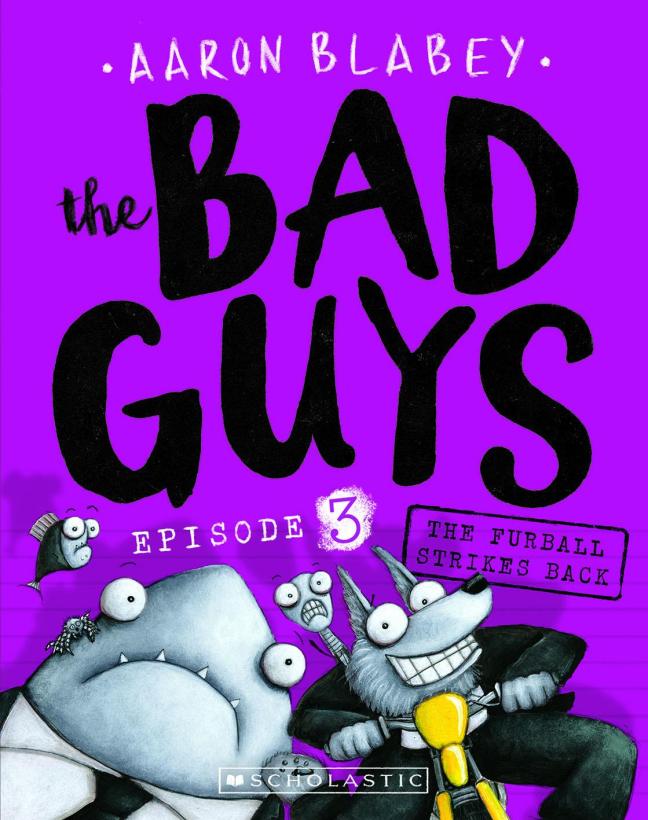
A wolf, a shark, a snake, and a piranha don suits and begin The Good Guys Club. No, that’s not the start of a joke, but the premise of Aaron Blabey’s The Bad Guys series published by Scholastic. The books are about a quartet who really really look like Bad Guys, in fact, everyone thinks they are terribly Bad Guys, scary and dangerous. But what they really really want is to be heroes, especially Mr. Wolf. Unfortunately, everyone keeps judging the Samaritans on how frightening they look, even the dapper suits don’t seem to help their image.

aaron-blabey-2015-new

“I wanted to make something that my overly-sophisticated eight and 10-year-olds would think was cool,” said Blabey over email. “It was also a reaction to seeing a lot of deeply boring Early Reader books being brought home from school. Some books seem to have been designed to discourage children from ever wanting to read again. It was my hope to provide an antidote to that.”

Written and illustrated by Blabey, the comic chapter books are fully fun. Each page elicits a few chuckles, and some are simply laugh out loud. No surprise then that The Bad Guys has been extremely successful in Australia and is now available in India as well. “Kids really seem to love it,” said Blabey. “And kids who don’t like to read books are loving it too. THAT is the greatest thing that has ever happened to me. I’m immensely proud of that: kids who consider books to be Kryptonite are queuing up for the next instalment.”

But they are more than just funny stories. In Episode 1, The Good Guys Club sets off to rescue 200 puppies locked up in a maximum security city dog pound (their hopes and dreams are trapped behind walls of stone and bars of steel) and in Episode 2 – Mission Unpluckable, their daring plan is to rescue 10,000 chickens from a high-security cage farm (never mind that one of their members is a notorious chicken swallower). These are narratives that will be loved by animal advocacy champions. “It’s more about characters who’ve simply been judged their whole lives because of the way they look,” said the Australia-based Blabey. “The fact that they’re animals is inconsequential. One of them — Wolf — wants to transcend his situation. His counterpart — Snake — is resigned to it. Their polar approaches to handling this dilemma is the engine of the series.”

The Bad Guys explores attitudes and discrimination at the same time, using humour deftly to present the issues. “I find Wolf heart breaking,” said the bestselling author. “He can’t understand why no one can see how nice he is. The world’s preconceived notions of what the boys are is a rich and satisfying seam of material to mine and for the record, I love making this series more than I can say.”

Blabey effortlessly switches between writing and illustrating comic chapter books and picture books, including the adorable Pig the Pug series and Piranhas Don’t Eat Bananas. Blabey said that his approach to the books is completely different. “I walk when I write picture books. The rhythm of walking helps me write in verse. I walk until I have a book,” he said. “The Bad Guys, on the other hand, is written like a screenplay, sitting at a desk, on a Mac. The process of switching between them is like crop rotation (Joni Mitchell famously referred to moving between song writing and painting in the same way. I’ve stolen that from her.)”

As he walks about the Blue Mountains thinking up his stories, Blabey pens them down on phones and other such entities. “I like mediums of impermanence, like phones, white-boards and napkins, because they encourage naughtiness,” he said. “Handsome notebooks demand reverence. Every mark seems to diminish their beauty. My notes app, on the other hand, feels utterly transient, so I tend to be more relaxed and playful when I write on it. I love white-board too. Nothing is at stake, so I feel free to play.”

Spinning a different yarn

14bm-kids-column-payal-dhar-nadia-budde-ben-dammers-and-devika-rangachari.jpeg

http://www.thehindu.com/books/Spinning-a-different-yarn/article16806907.ece
In an interview, Maurice Sendak said, “I don’t write for children. I write, and somebody says, ‘That’s for children!’” Ask most writers, and they will say that as a child, they pretty much read whatever they could lay their hands on, as long as it held their interest. Children enjoy reading all sorts of books. Yes, they read the ones about schools and diaries in school, adventures and misadventures, but they also savour those that traverse the darker side of life that adults often shield them from. It’s a subject that has been the focus of my multifarious conversations over ten days at Children Understand More…!, a workshop-cum-residency organised by The Goethe-Institut / Max Mueller Bhavan and Zubaan in Santiniketan.

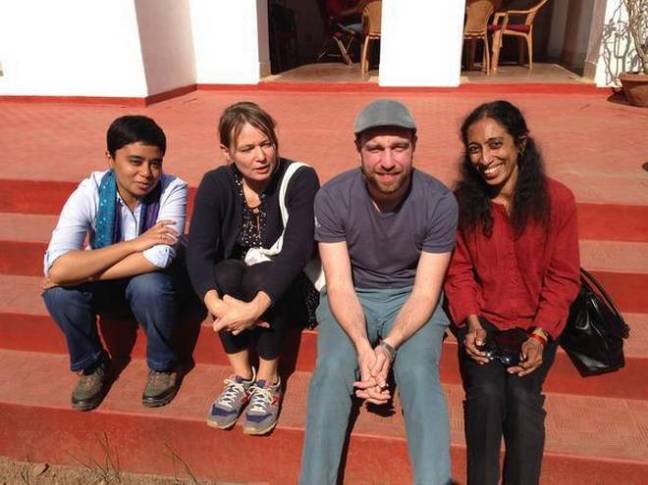
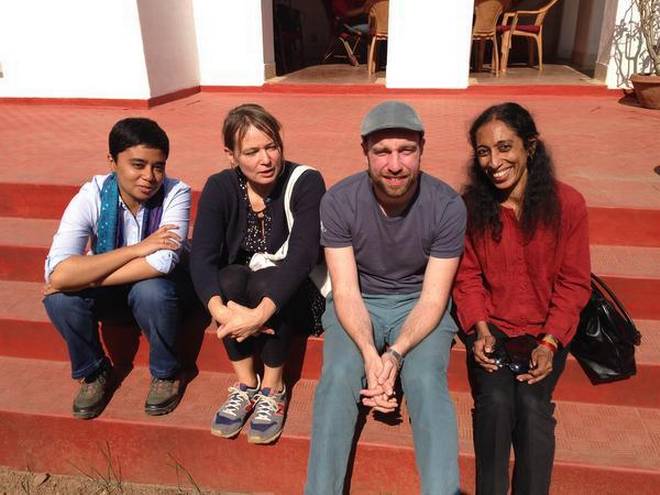
Seventeen writers and illustrators from different parts of the country have been intensely talking, writing, drawing, debating, discussing, and listening everything kid-lit at the workshop. Mentors — writers Payal Dhar and Devika Rangachari from India, and illustrators Ben Dammers and Nadia Budde from Germany — have been sculpting away at the ideas and stories along with the participants, helping shape them into works that engage with the many difficulties of reality. “We have learned a lot as well,” said Budde. “About how people think differently, how they develop ideas.” All these interactions have been bolstered with superlative meals and mishti at the Mitali Home Stay, where we are staying.

Death, climate change, single parenting, religion, family structures, individuality and gender, body image, growing up in a conflict zone, social stigmas and identity are just some of the subjects that are being written about and illustrated at this workshop. “It’s nice to have the chance to move out of thinking about what can I write, will it be published,” said Dhar, the author of Slightly Burnt, a young adult book that explores queerness. “And to be able to give free rein to what you really want to write or illustrate. The constraints have been removed; the participants have carte blanche with a theme, without bothering how adults will react. It’s liberating. It’s almost like taking off your clothes and running down the beach, removing every covering that is there.” Rangachari agreed, adding, “Maybe we will don the covering when we return, but this has been a breather.”

Instead of using images, Bengaluru-based book designer Nia Thandapani is experimenting with typography and lettering to explore identity and how people are given labels by others. “It’s made me question and refresh my practice, and I can see myself taking forward the many conversations and work that’s been going on,” said Thandapani.

Novelist C.G. Salamander and illustrator Sahitya Rani are questioning the academic system through a graphic novel, while Meenal Singh is exploring grief and loss in her story. “It’s been great to see how visual and verbal language works together,” said Dammers. “Writers have seen how text can be represented visually and illustrators are working with the text in an involved manner.”

Samidha Gunjal, an assistant professor at the Symbiosis Institute of Design in Pune, said she had previously attended a similar workshop conducted by Max Mueller and Zubaan, which culminated in the graphic anthology Drawing the Line. “Such workshops provide a platform to share our stories and tell the truth about the current situations to children,” said Gunjal, who is working on two stories, one on manual scavenging with Salamander, and the other on domestic violence.

Karthika Gopalakrishnan, a writer who works for MsMoochie Books in Chennai, has teamed up with Kolkata-based illustrator Shreya Sen to develop a picture book. “Ministry of No is about an eight-year-old girl who is very good at saying no,” said Gopalakrishnan. “The picture book really deals with resilience and family dynamics.”

But what’s truly rare is being able to spend an uninterrupted amount of time in the company of those who care about writing and illustrating for children. “We all work in isolation in this field and as it is, children’s publishing is under-recognised and under-developed here,” said Rangachari, who wrote the historical fiction Queen of Ice. “So it’s a real luxury to have this time and space.”

Shals Mahajan, a Mumbai-based writer-activist, has teamed up with illustrator Tanvi Bhat for a story about Kittu, a child with a peculiarity around his food, and how his family is trying to figure it out. “It’s been a fantastic experience of being in a very peaceful, gorgeous place with a bunch of committed and creative writers and illustrators,” said Mahajan, who wrote the award-winning book, Timmi in Tangles. “It has also been surprisingly very comfortable, and the interaction has been full of camaraderie, which I did not expect. I am really enjoying working with so many people and seeing how they work. I am doing small creative projects with some, with the knowledge that there will be long-term interactions with many.”

Often, in the frenzy of lit-fests, kid-lit is relegated to an inconspicuous corner in the form of workshops or book sales. But now, festivals such as Kahani Karnival, Bookaroo, Peek-a-Book, the Chandigarh Children’s Literature Festival have been offering more curated spaces of storytelling for younger audiences. Then there’s Jumpstart by the German Book Office, which brings together creators of children’s contents in Delhi and Bengaluru for discussions and master classes.

In India, a number of books that explore difficult themes, including sexuality, class, same-sex love, body image, disabilities, and grief, are published, but they are few and far between. The majority continue to be stories about mythology, folk tales, and urban adventure stories. With dwindling brick-and-mortar bookstores, it’s often hard for parents, educators and children to find books with more slice-of-life narratives. But then again, it’s not always easy to find publishers who are willing to back the more difficult themes. Which is why as writers and illustrators of children’s books, it’s sheer joy to be able to step back for a few days, unhindered and uninhibited, to just follow what Dr. Seuss said, “Oh, the thinks you can think!”

Why did the leopard cross the road?

screen-shot-2016-12-23-at-12-46-17-pm.png

https://www.natureinfocus.in/page/why-did-the-leopard-cross-the-road

Here’s a riddle.

Why did the leopard cross the road?

Because she was hungry, and she saw a zebra crossing.

Actually, that’s not true. Unlike us, leopards don’t understand that you need to look first left, then right, then left again, before crossing the road. They don’t know the rules behind the zebra crossing stripes on the road either (honestly, who can blame them, motorists also don’t seem to know that they shouldn’t stand on the zebra crossing; pedestrians have the right of way there). All these rules are made by humans, and it is silly of us to pave a road in the middle of a forest, and then expect leopards or elephants or other animals to know road crossing rules.

Nor do animals get boundaries. Your house or apartment block must have a wall and a gate to mark its perimeter. You know that you can’t just jump into another person’s house (unless you know them) because one, it’s not polite, and two, it’s not safe, and hello, it’s trespassing. But these are man-made boundaries. We don’t ask for permission from forest animals before mowing their trees down to build houses, grow crops, or mine for minerals. According to the World Wildlife Fund’s Living Planet Report 2016, the Global Forest Resources Assessment reports that since 1990, on a gross basis, we have lost a total of 239 million hectares of natural forest!

This means that there is lesser forest cover for animals to call their home, and it’s not that surprising when you hear news of a leopard coming into a school on a Sunday. After all, we can’t expect them to know these man-made boundary walls.

Further, our roads are becoming a point for human-animal conflict. Roadkill — that is wildlife killed on the road by motor accidents — has become a major threat to conservation. A study conducted by Panthera showed that 23 leopards were killed in Karnataka between July 2009 and June 2014 because of road accidents.

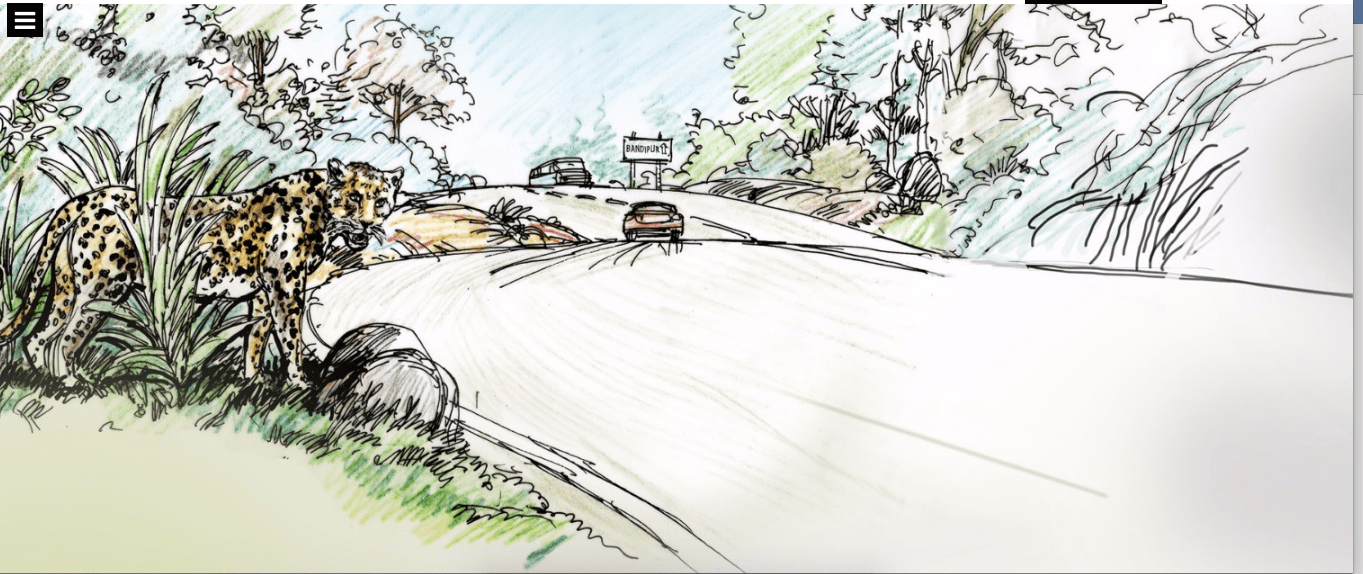
In a research paper titled Roadkill Animals on National Highways of Karnataka, by Selvan et. al, the authors conducted a survey to understand how many animals were killed on National Highways NH212 and NH67, which pass through Bandipur Tiger Reserve in Karnataka in 2007. They found that 423 animals of 29 species were killed between January and June. Isn’t that awful?

According to the Wildlife Conservation Foundation (WCF), at least three large animals are killed in accidents on these highways. And these include tigers, elephants, leopards, deer, sloth bears, snakes and birds. The good news is that in 2010, the group, with the help of the Wildlife Trust of India and the High Court, was able to ban night traffic in Bandipur. A good thing because 65 per cent of wildlife roadkills until that time were being documented at night.

This is, of course, only Karnataka. But there are so many instances of leopards and other animals becoming victims of accidents — either road or rail — across the country. What can be done about this? Plenty. For instance, not allowing roads or rail networks to be built inside forests or corridors, which animals use to pass from one jungle to another. Many forest departments now have installed neon boards and speed breakers to slow those hurtling vehicles going at top speed in the night. Or like the WCF managed to do — restricting vehicular traffic at night.

The good folks at the Nature Conservation Foundation – India have come up with a fabulous strategy in Tamil Nadu. They have installed seven canopy bridges in the rainforests of the Valparai region — aerial bridges (high up above the ground) that connect tree canopies that were otherwise too far apart across the roads. And it’s already showing results — lion-tailed macaques can cross the road without having to look left, right, and left again, and they don’t have to get down from their trees and dodge passing traffic.

What else do you think can be done? We’d love to hear from you with your ideas. Write to us at comments@natureinfocus.in

Why should grown-ups have all the fun?

20bm_the-kids-cg0bo7s88-3.jpg

http://www.thehindu.com/news/cities/mumbai/why-should-grownups-have-all-the-fun/article9242787.ece
As the Jio MAMI 18th Mumbai Film Festival kicks off this week, children and young adults can look forward to seeing a range of acclaimed films especially curated for them as part of the section, Half Ticket. Monica Wahi, who is the founder and director of the Southasian Children’s Cinema Forum has curated the section and says that the section is an attempt to introduce cinema to young children, and encourage them to become cineastes.

This year, Half Ticket will commence with the screening of The Little Prince, an animated adaptation of the 1943 classic by Antoine de Saint-Exupéry. Directed by Mark Osborne of Kung Fu Panda fame , The Little Prince uses stop-motion and CGI to bring to life the beloved story of an aviator who meets a young prince who lives on an asteroid. Wahi says that they are very proud to be screening this internationally-acclaimed film, also because it has had a limited theatrical release across the world, before it premiered on Netflix in U.S.

Half Ticket will present a slate of 28 films from across the world, including 13 features and 15 shorts. “When you put together a programme, the films must be diverse and yet speak to each other to create a larger story,” says Wahi. “From handmade shorts and indie features like The World of Us or The Blue Bicycle to celebrated big studio productions like Heidi and Fanny’s Journey there is a wide range of films.” Apart from the film screenings, nine budding writers will attend a screen writing workshop by Dibarkar Banerjee, Diya Mirza, and Varun Grover.

Half Ticket was introduced last year with schools being its primary audience, and Wahi said that both children and teachers enjoyed the festival immensely. This year, in its second edition, the section is not limited to schools — it is also open to festival delegates accompanied by children and young adults, aged five to 17, for weekend shows. What’s fabulous about the selection is that there’s something for all age groups. Younger children can experience two interactive sessions of animated shorts led by Gillo Theatre Repertory.

Schools too are excited about Half Ticket, and many teachers have expressed an interest on engaging with world cinema across the school year. “This is the kind of impact we hope for,” says Wahi, adding, “When films are no longer looked at as just entertainment content for consumption, but are valued as art, education and culture.”

A lot of the programming is for tweenagers, often the most responsive age group when it comes to new experiences. “At this age, children hunger for something new,” says Wahi. “They are much more open to experimentation, to introspection, and to connect what they have watched inside the theatre to the real world they encounter outside. Introduce them to a new kind of cinema, and they lap it up.” Apart from The Little Prince, Half Ticket will screen films such as Heidi and At Eye Level from Germany, Hang in there, kids! from Taiwan, and Window Horses from Canada. Closer home, children can see Hardik Mehta’s documentrary Ahmedabad ma Famous, Nina Sabnani’s animated short We Make Images and Manas Mukul Pal’s Feature Colours of Innocence among others . Many of these films are difficult to access outside of festivals and Half Ticket offers parents, teachers, and children a space to watch cinema from across the world.

Young adults can look forward to engaging with the films through a series of meaningful conversations and discussions. In fact, for Wahi, one of the highlights of Half Ticket is the discussions that are held with the children, post screening. “We hold discussions with the children, where we deconstruct the films for its artistic and social relevance” she shares. “Every time, I find myself overwhelmed with the kind of responses the children give. Cinema after all is itself a conversation.”

One of the most exciting part of Half Ticket is the children’s jury, which will be comprised of seven children between ages of nine to 17. Last year, the jury unanimously gave the Golden Gateway Award for Children’s Feature to Ottal, a Malayalam film directed by Jayaraj. “ Ottal is a film that’s lyrical and languid. It has a gentle sort of humour and is essentially steeped in sadness. And yet children love it,” said Wahi. The jury choice only underscores the fact that children engage with meaningful cinema, which contrary to popular perception, doesn’t always have to be slapstick or humorous alone.

Wahi adds that the one thing that brings the section together is that the films reflect empathy and openness. “They are about being open and fearless. These films encourage you to empathise with people who are different from you. At the same time, they ask you to be self-critical – compel you to look inside yourself and challenge your own positions. This is very important particularly these days when the world is becoming more and more divisive,” she emphasises.

Money, Money, Money

19bm-pg6-kids-cg3hsk67a-3.jpg

In this capitalist world, it’s imperative that children learn about financial literacy early on.

http://www.thehindu.com/news/cities/mumbai/Money-Money-Money/article16667863.ece

What do you do when you have to sit down with your child and explain the facts of life? Do you squirm and pass the buck on to your partner or another handy grown-up around you? Or do you sit down and tell it like it is – all the things about bulls and bears, currency exchange, and government regulations? With all the economical chaos that has erupted in the last week, now’s a good time to chat with your children about money and get them financially literate.

Explaining demonetisation

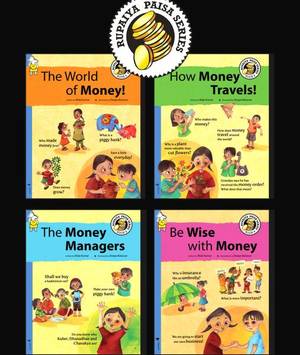
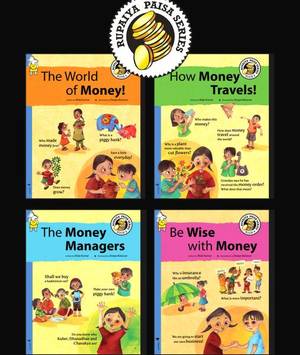
Mala Kumar, Editor at Pratham Books, is the author of the Rupaiya Paisa series, a set of four books that attempts to decode information around money – There’s The World of Money, that takes a look at its history; How Money Travels is about the way transactions happen and the value of currency; Money Managers talks about the people who handle money in our lives; and, Be Wise With Money is about spending, budgeting and government-related plans and insurance. “The ideas for the content for the books were generated during a workshop that included participants from Pratham Books, microfinance company BASIX and other NGOs,” says Kumar. “As a journalist, I was able to collate all the information with valuable inputs from my colleagues. And as an editor and author of children’s books, I was able to sift the mounds of information and present it in byte-sized portions.”

Pratham Books’ aim is to promote reading, and Kumar said that they decided to make financial literacy simple and clear so that young children could enjoy reading and at the same time, imbibe money sense. “Understanding money makes so many things clearer for children – why their parents work, why families do things the way they do, why prudence and thrift are values that families pass on and so on,” explains Kumar. Illustrated by Deepa Balsavar, the four books are a fabulous edition to the library.

When it comes to talking to children about the demonetisation of the Rs. 500 and Rs. 1,000 notes, Kumar offers an easy explanation that parents can use. “Demonetisation involves retiring the existing currency and replacing it with new ones,” she says. “The money is safe, and honestly earned in the form of the old currency that can be exchanged for new notes. Sometimes, this is done when the notes become tattered with use. Sometimes, demonetisation allows governments to ensure that people do not hoard money.”

Encouraging individual opinions

Author Roopa Pai — whose children’s book So You Want to Know About Economicswill be published early next year – says that she wouldn’t get into the debate of right and wrong with children, when it comes to demonetisation. “I would explain why the government thinks it is a good idea and why others think it isn’t, and let them process it in their heads,” she says. “I would talk about the difficulty of executing something as drastic as this in a large country like ours, in which such a large percentage of people still use only cash for all transactions. I would talk about how this kind of thing is easier in other countries because of either political – they are not democracies; or social – they don’t have such large populations, they have more literate populations; or economic – they are almost entirely cash-free and have been for a while – reasons.”

So You Want to Know About Economics , which will be published by Red Turtle, looks at topics such as macroeconomics, microeconomics, trade, taxes and budgets. As a parent, Pai elaborates that she would take her children to the bank to stand in line for an hour or two. This would help them understand the inconvenience felt by people around them and place it in the larger context of the government policy. Pai would encourage them to think how they can help people, such as their household help, who maybe facing a cash crunch. “I would ask them to think about how privileged they are, that they can actually carry on for a long time without using cash at all, and how good it would be for the country if everyone eventually got there,” says Pai, who has also edited a set of math volumes for Pratham Books’ digital platform, StoryWeaver.

Government initiatives

Another way to introduce children to the concept of money is to take them to the Reserve Bank of India Monetary Museum in Fort. It’s a wonderful space for children to understand where their money comes from and its history, currency management in India, and the RBI’s function. The RBI even has a basic microsite, Financial Education, where children can put together jigsaw puzzles of currency notes to understand its design and read short stories. Not the best of designs or concept, but it’s a start, perhaps, especially as it’s available in multiple languages.

Apart from that, the National Council of Educational Research and Training has Personal Finance Reading Materials available online, about the basics of financial planning, investment, and taxes. The website vikaspedia.in has several such examples, including a link to Pocket Money, a financial literacy initiative for students developed by the Securities and Exchange Board of India and National Institute of Securities Markets.

Starting early

Both Pai and Kumar stress the importance of enabling children to take an interest in financial matters. “Financial literacy has to be part of the skills that children learn at home along with other life skills,” says Kumar. “The transfer of knowledge has to be organic. Rather than give them lessons, take children with you when you go to the post office or bank. Help them start a bank account when they turn ten. Allow them to keep and manage their own gift money however small or big the amount is. Maintain a democratic process of discussion and debate around regular family budgets.” Pai recommends talking to children about compounding, the importance of money and how it is earned through hard work, why the government imposes taxes and why it’s vital to pay them, and encouraging them to be entrepreneurs, to earn their own money off school time.

In a capitalistic world, it is increasingly becoming important for parents to ensure their children also grasp the social complexities and the idea of privilege. “I think it’s even more important to weave life lessons into it,” says Pai. “You should save for a rainy day, but how much? There’s nothing wrong in spending the money you’ve worked hard for, but should there perhaps be another column in your Spend-Save account-keeping book, titled ‘Share’? Is it always okay to have premium services for people who can afford it so that you get to stand in shorter lines? Should people have access to the best doctors only because they are able to pay more, or should it be based on the criticality of their illness or whether they stood first in line? Communism has been trashed as a failed system, but is it really that impossible to create a more equitable world in more formal ways? Is money really everything?” It’s imperative the discourse starts early, for children to gain important knowledge as well as formulate their own ideas and thoughts about money.

With ICSE introducing Harry Potter books, the possibilities are endless

screen-shot-2016-11-28-at-5-49-11-pm.png

http://www.dailyo.in/arts/harry-potter-books-icse-schools-children-muggles-jk-rowling-tintin/story/1/14237.html

Students will not just learn wizardly literature but also topics of bullying, democracy, and inclusion.

A couple of weeks ago, I found myself at a hipster coffee joint, chatting with children’s books writers and publishers, and the subject inevitably veered towards children’s books.

Over cups of fragrantly-flavoured latte, we discussed how children’s books tackle a diverse range of subjects – in India and internationally – including themes of environment, gender, sexuality, war, prejudice, and politics. We also agreed that they would make for great classroom reading, and many teachers already use some of these books.

Which is why I was thrilled when I read that the Indian Certificate of Secondary Education (ICSE), an examination conducted by the Council for the Indian School Certificate Examinations, will now prescribe some of the more popular children’s books for the English Literature curriculum for the next 2017-18 session.

As an ICSE alumnus, I have fond memories of reading Shakespeare’s The Tempest, Sir Walter Scott’s Ivanhoe and Arthur Conan Doyle’s The Hound of the Baskervilles.

When I visited The Anne Frank House in Amsterdam, I remembered snippets of classroom conversation about The Diary of A Young Girl.And in my final year, I found The Village by the Sea by Anita Desai compelling, especially as a relative newcomer to Mumbai. These stories have stayed with me over the years, over many other lessons (and it’s been quite a few years).

According to news reports, students will now be studying the Harry Potter series – really, I would have aced this class, got O for Outstanding, rather than T for Troll (that was almost my Math grade).

This means not only will they be reading wizardly literature, but also a narrative that a study, The Greatest Magic of Harry Potter: Reducing Prejudice has shown that children who read these books are more open-minded, and less prejudiced.

The Potter books, which have inspired a generation to take to reading with a gusto, also delve into topics of bullying, democracy, and inclusion. And let’s not forget, it helps to be studying about a boy, who may be The Chosen One, but doesn’t get straight Os or even EEs (Exceeds Expectations for the Muggles) in class always.

Another welcome change from the time when we were told that comics will “spoil your English” is the inclusion of comics such as Tintin, Asterix, Amar Chitra Katha and works by American cartoonist Art Spiegelman.

I hope that it will lead to deliberations about gender representation in comics, the different art styles in graphic novels and contemporary artists, the dominance of Hindu mythology in India, the politics of comics – oh, the possibilities are endless.Closer home, students will get a chance to read Satyajit Ray’s Feluda series, I Am Malala by Malala Yousafzai, and Wings of Fire by Dr APJ Kalam.

There’s now a wide range of Indian literature for children to choose from – whether it’s Simply Nanju by ZainabSulaiman about a differently-abled boy and his classmates, Talking of Muskaan by Himanjali Sankar that explores alternate sexuality, Weed  by ParoAnand on Kashmir, or Dear Mrs Naidu by Mathangi Subramanian that looks at privilege and the Right to Education Act. These are just a handful of examples; the shelves are brimming with choices for reading lists.

Sudeshna Shome Ghosh, a consultant editor with Red Turtle welcomed the decision. However, she also pointed out that it would be wonderful if these books weren’t all intended for testing, because if children are only preparing for exams, it can take away the joy of reading.

Perhaps, she added, it would lead to different kind of questions being asked – that are more critical and analytical, in nature.

Further, many of these books are expensive, which means that the administrators will need to figure out how to make them more accessible economically. But it’s a promising step.

Stories can be powerful learning tools – offering students a different way of interpreting the world around them, while keeping them engaged because of their timeless narrative. With more contemporary novels making their way into the curriculum, children will be able to better relate with the stories and their protagonists.

Given that many of these books have been made into movies, like The Hobbit by JRR Tolkien, it would also make for interesting classroom discussions about scriptwriting, critiques, and screen language.

There’s always a possibility that some students may just watch the movies, instead of reading the books for homework. But then again, what about all those plot points that the movies edit out?

Like, the entire storyline between Albus Dumbledore and Gellert Grindelwald in the Harry Potter books was missing from the movie. There just might be a term paper question on that.


Why you should go back to the book of ‘Fantastic Beasts & Where to Find Them’ before the movie

vqcozywsjl-1479197790.jpg

http://scroll.in/article/821587/why-you-should-go-back-to-the-book-of-fantastic-beasts-where-to-find-them-before-the-movie
Read it if only to be able to identify all the strange creatures in the film.

When it comes to Potterhead Muggles, there are few things more exciting than being able to sample Butterbeer, organise Harry Potter book nights, and eagerly wait for a new film from the wizarding world of Harry Potter, even if it’s set in a time when the boy-who-lived was not even born.

While we all wait to see the adventures of Newt Scamander, Order of Merlin Second Class, on the big screen, some of us have to comfort ourselves by revisiting his seminal book, Fantastic Beasts & Where to Find Them. Which is not to be confused with the book that is the screenplay of the movie.

In 2001, the fifty-second edition of this masterpiece was released simultaneously in the wizard and Muggle worlds. As Albus Dumbledore, the erstwhile headmaster of Hogwarts School of Witchcraft and Wizardry, writes in his foreword, “No wizarding household is complete without a copy of Fantastic Beasts…

The textbook that taught Hermione Granger – perhaps even Harry Potter and Ron Weasely learnt a thing or two from it – has been written by JK Rowling and published in aid of Comic Relief UK, along with the library copy of Quidditch Through the Ages.

From the introduction, we know that the book is the result of many years of travel and research by Magizoologist Newton (“Newt”) Artemis Fido Scamander, some of which we can hope to see in the David Yates film. Scamander sounds a bit like Gerald Durrell when he describes his childhood – a “seven-year-old wizard who spent hours in his bedroom dismembering Horklumps” (a creature that resembles a fleshy mushroom and is covered in black bristles).

Born in 1897, Scamander found his interest in fabulous beasts being encouraged by his mother who bred fancy Hippogriffs. He then went on to join the Department for the Regulation and Control of Magical Creatures at the Ministry of Magic, and is remembered for the creation of the Werewolf Register in 1947 and later, the Ban on Experimental Breeding in 1965.

Most Potterheads across the world are probably brushing up on their knowledge of fantastic beasts right now – so that they can sit in the movie hall and scream, like insufferable know-it-alls, the names of species: “That’s a Chizpurfle” (small parasites with large fangs) or “Ooh, look a Grindylow” (a horned water demon), if these creatures make their appearance in the film. But what makes the Muggle copy immensely readable is not the fact that it’s an encyclopaedia of beasts, though Care of Magical Creatures Professors Hagrid, Kettleburn, and Grubbly-Plank would consider that meritorious enough.

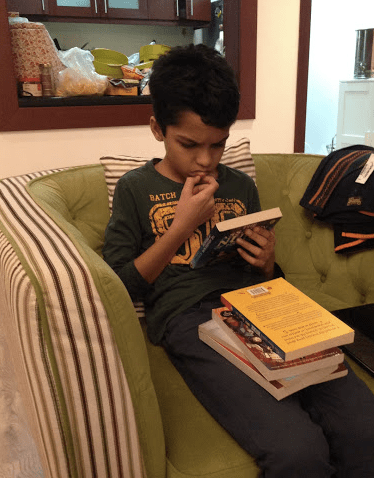
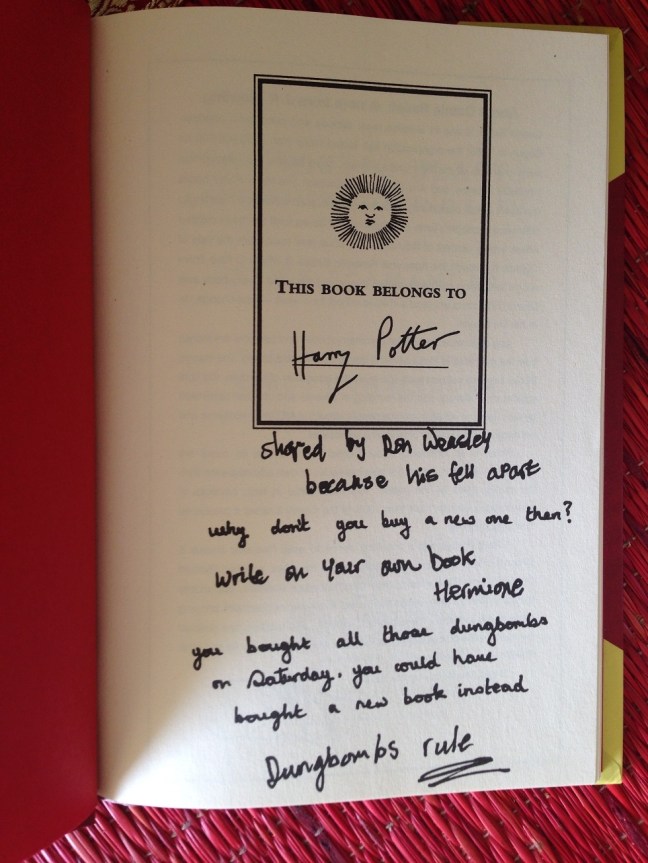
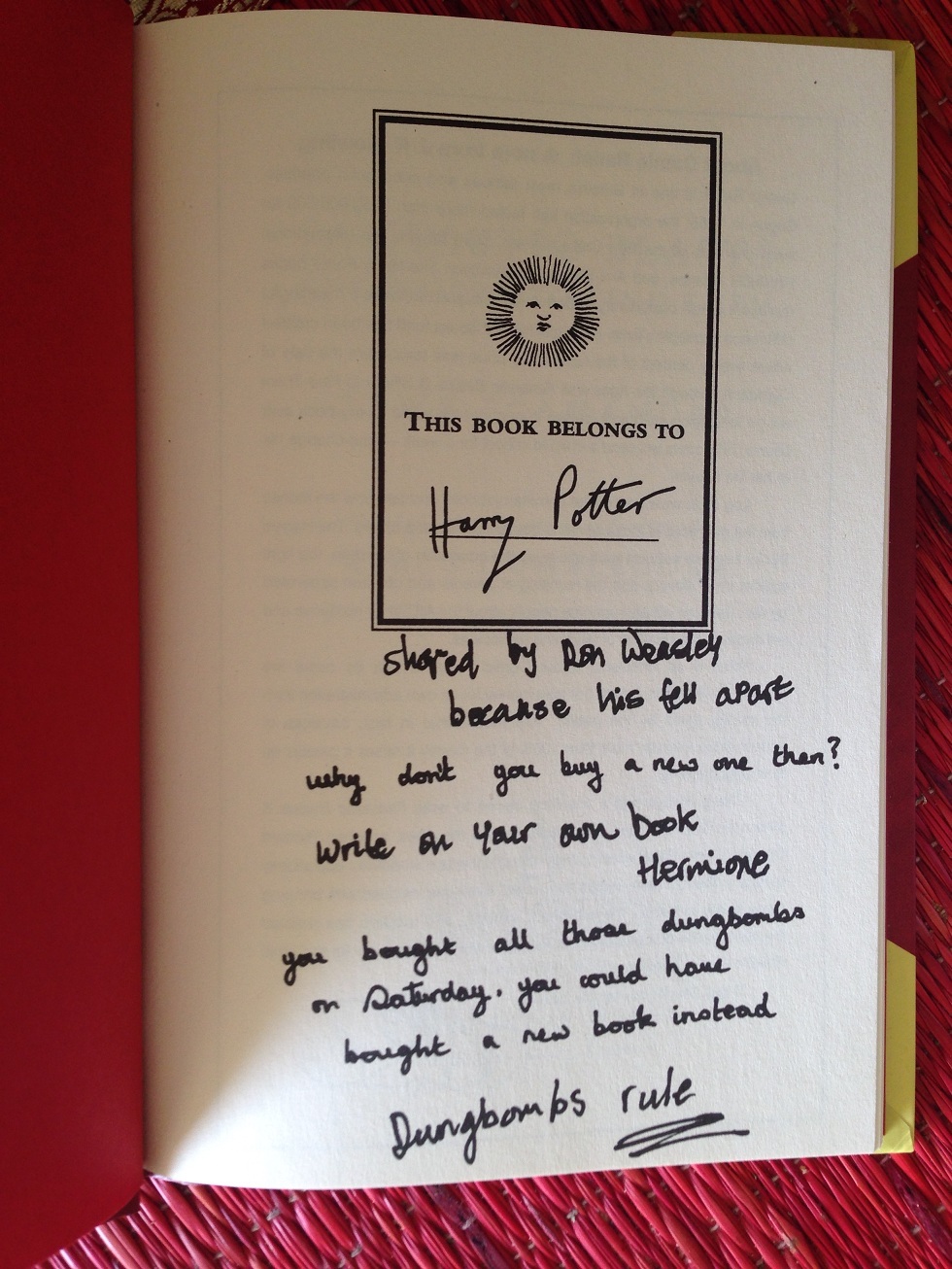
No, it’s because Fantastic Beasts is a duplicate of Harry Potter’s personal textbook and comes with “informative notes” in the margins. The book is shared by Ron, because “his fell apart” and Hermione chimes in from time to time. So while Scamander takes great pain in describing “what is a beast” in academic terms, the students explain it succinctly – “big hairy thing with too many legs”.

When the Magizoologist embarks on the chapter “A Brief History of Muggle Awareness of Fantastic Beasts”, someone, presumably Ron, circles the word “brief” and annotates it with “you liar”. The clever design is reminiscent of our school textbooks, full of scribbles that had little to do with what the teacher was droning on about in class.

In this slim edition, too, Rowling manages to slip in a message, this time about wildlife protection and conservation. Scamander writes about the importance of Magizoology and the need for the community and individuals to protect and conceal these magical beasts. The answer, he explains, is “to ensure that future generations of witches and wizards enjoy their strange beauty and powers as we have been privileged to do”. Even then, Dumbledore does attempt to reassure Muggle purchasers “that the amusing creatures described hereafter are fictional and cannot hurt you”. Weasley is rolling his eyes somewhere in the wizard world.


Staying true to Valmiki’s spirit

8bm_lead-arshiag96mmu5r-3.jpg

http://www.thehindu.com/news/cities/mumbai/Staying-true-to-Valmiki%E2%80%99s-spirit/article15475307.ece

Arshia Sattar’s vivid prose retells an epic for the kids staying firmly focused on fascinating characters, human foibles and the wonder that is nature

Reading Arshia Sattar’s Ramayana for Children (Juggernaut) , is like sitting alongside a masterful storyteller, and listening raptly, as she narrates the familiar story. With her words, she deftly conjures up images of kings and princes, battles and victories, pettiness and bravery, jealousy and fast friendships.

Strong credentials

Sattar has a PhD in classical Indian literatures from the University of Chicago and has previously translated The Ramayana of Valmiki (Penguin Classics) for grown-ups, and has written The Adventures of Hanuman (Red Turtle) for children, among other books . Like The Ramayana of Valmiki, the children’s edition has also been translated from Valmiki’s original Sanskrit text. In her author’s note, Sattar writes, “It was composed in Sanskrit about two-and-a-half thousand years ago, perhaps put together from many other versions of the same story that people were telling.”

For many children, Ramayana is not a new tale, but Sattar’s book will invite young readers to explore the story in detail, discovering different nuances and facets of the narrative. “I guess the Ramayana has been sitting inside me for so long, it was dying to jump out into the world,” says Sattar, over email. “What I needed to be most aware of was language and vocabulary,” she says. “I worked with fewer words than I normally would; in a translation, you look for as many words as you can to express the original language text as accurately as possible. Here, it was the opposite. I had to use fewer words and still be true to Valmiki’s spirit,” says Sattar. The book is stunningly crafted. Sonali Zohra’s illustrations are evocative and compelling, recreating the forest and the characters in gorgeous Earth colours.

Retelling an epic

Like many other Indians, Sattar heard the Ramayana when she was about four or five years old. “A little later, I got familiar with myths and legends and folk tales from other countries. My parents were always buying me books like that and I was an early reader,” she says. The scholar shares that since then, different parts of the Ramayana have engaged her at different times in her life. “I guess that’s really what it is,” she says, adding, “The Ramayana can stay with you your whole life, it’s that rich.”

And that richness comes across in her storytelling. Most of us are well-acquainted with Ramayana ’s characters. But unlike a lot of the texts which cast the characters in a rather distant and other-worldly way, Sattar keeps them real. Dashratha, for instance, puffs and gasps when rushing to Kaikeyi’s Anger Room, something you don’t usually find kings doing in stories. Another time, when Sita faints, Rama and Lakshmana massage her feet to revive her. There’s also an inherent playfulness to the text. When sage Vishwamitra says that he’d like to take Rama to Mithila where King Janaka has set a task for suitors who want to marry his daughter Sita. “Lakshmana understood what the sage was hinting, and winked at Rama, who looked away with a smile,” writes Sattar.

The author says that she wanted to humanise the characters. “I wanted children to identify with them rather than see them as distant ideals who live in an entirely different universe and with an entirely different set of values and possibilities,” says Sattar. “Also, I enjoyed building character for these well-known and well-loved figures who can so easily be placed on pedestals and become all about morality. I think children will learn far more about ethical behaviour and good actions from characters that they see as human, facing the same questions and dilemmas that they do, experiencing the same confusions and finding solutions to them on their own.”

Not a morality tale

One such character is Hanuman. As Sattar says, “Hanuman is THE magic in the story. Who can resist a monkey that flies and speaks Sanskrit, or Hindi or Tamil or Bangla, depending on which language the story is told in. He’s an amazing character, simultaneously wise and silly, playful and serious, loyal and brave. He can do anything he wants, and he’s always trying to help other people, make their lives easier. For children, he’s the obvious entry into the story because he is familiar and magical at the same time. Adults get more involved with Hanuman as a symbol or an allegory. Either way, he’s the hook.”

The literary landscape for children is often dominated by Hindu mythology, but Ramayana for Children attempts to offer it as a story, rather than a moral or divine text. Sattar says this version is focused on the main narrative; the characters and events are in the foreground rather than the ideology and politics of the text. “Like any writer in any genre, you decide what it is that you want to say and then you try and say in the best way that you can,” says the writer.

For Sattar, it’s most important that young readers get to know and love the story of the Ramayana . “They can come to questions of sacred texts and complex understandings of god when they are older. It’s not that we should excise the idea of god from the narratives we create, but we should think about the fact that children are drawn to stories more than they are to lectures about morality and divinity. You can tell the Ramayana in such a way that children understand its central question: how can we be good, how can we do the right things even when it is the hardest thing to do,” she says.

Focus on nature

Another way that Sattar stays true to the original text is in the lyrical way that nature is an integral part of the story. As Rama, Lakshmana, and Sita go deeper into the forest, Sattar writes, “At night, they slept, warm in their beds of leaves and dried moss in the shelter of trees with wide canopies, watching the stars and listening to the night birds.” “Nature and its descriptions are central to Sanskrit poetry and Valmiki’s Ramayana is a poem,” says Sattar.

Of course, Sita was born of the Earth, and when she insists on accompanying Rama to the forest, he remembers that she “was more familiar with plants and trees and animals than he would ever be”. “Many contemporary interpretations of Ramayana see her as representing feminine nature. In this book, I thought it was important to distinguish between the masculine and the feminine, between the city and the forest,” Sattar says.

At a time when much of kid-lit engages with the urban, Ramayana for Childrenresonates with the story of co-existence with nature. Sattar explains that she also wanted to “engage children with the idea that nature is so close to us, it’s everywhere — trees, flowers, the sun and the moon, the rain — even in the city. We should know nature better than we do and think about it more than we do.”

A is for Art

eyespy-outer-covers_04_mockup-2.jpg

http://www.thehindu.com/todays-paper/tp-national/tp-mumbai/a-is-for-art/article9134413.ece
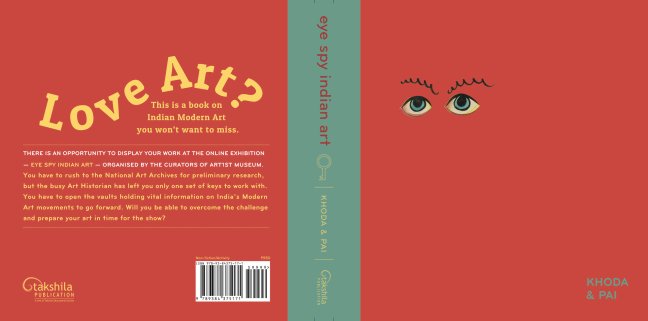
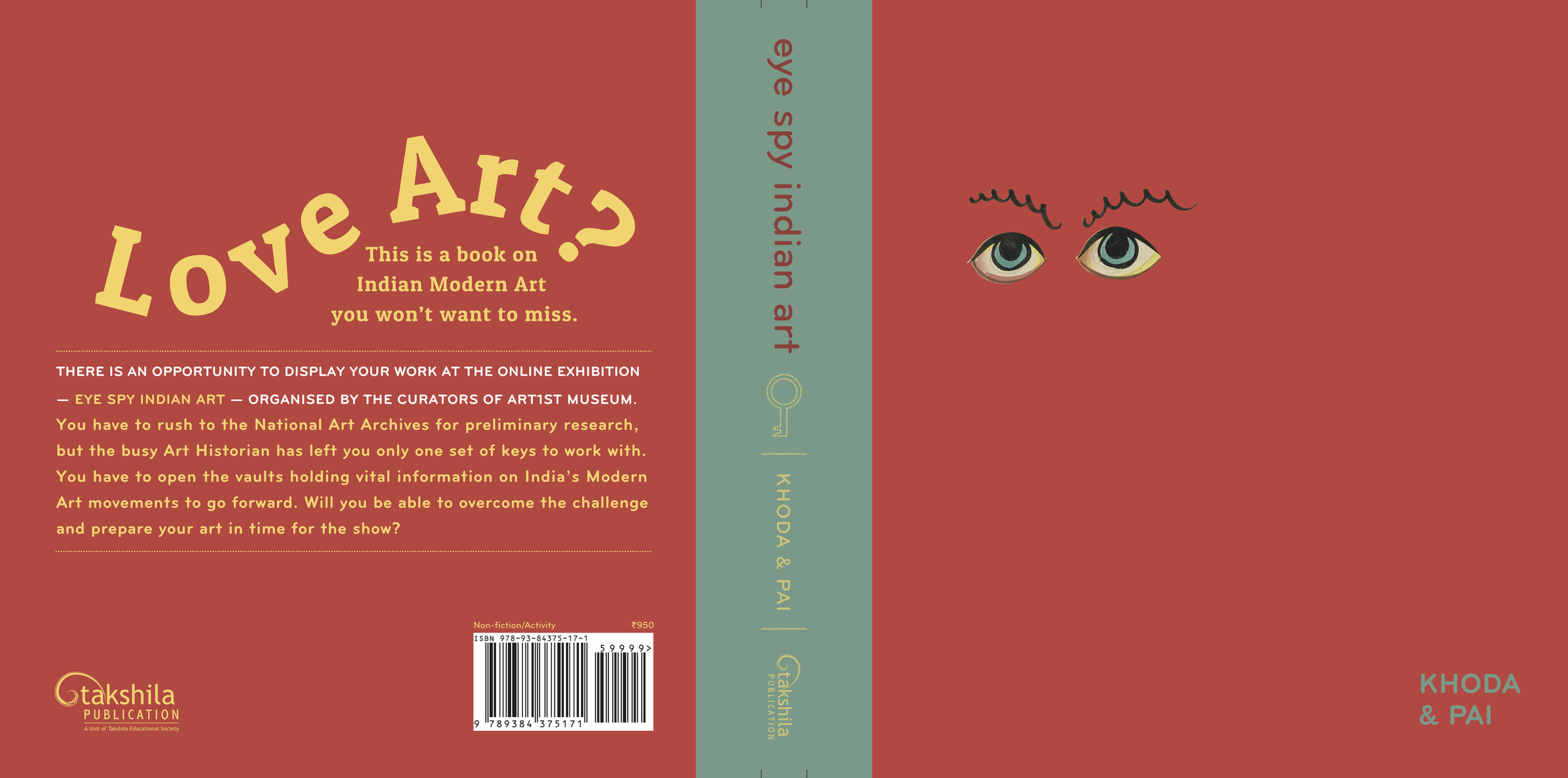
A pair of eyes peer out from the cover of Eye Spy Indian Art by Khoda & Pai. The book, which recently bagged the runner-up award for the best printed children’s book at the Publishing Next Awards, is a window to India’s modern art movement.

Beautifully produced, Eye Spy looks at the evolution of modern art history and introduces young readers to prominent artists of that time. “In this book, we highlight elements of art, perspective, size and proportion, and symbolism, through featured works,” says Vanita Pai, who co-authored the book with Ritu Khoda, founder of the Art1st Foundation. “We bring in conceptual thinking. It is interdisciplinary. It is written for middle school kids who already study Indian history and are old enough for offline and online research,” she says.

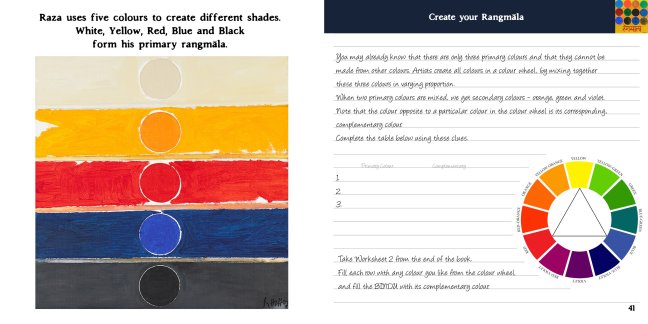
What makes the book unique is not just the amount of research that’s gone in, but also the way it has been interpreted through design. Each chapter is crafted thoughtfully; you have to find different keys and guess what art movement you’d be reading about. Pages need to be opened carefully as they reveal hidden information, reproductions of artwork are produced vibrantly, and questions are posed in a manner that encouragesc hildren to think, explore, and marvel at the works before them. “Children enjoy tactile activity,” says Pai. “So, we build in a great number of flaps, foldouts, stickers, and die cuts, besides drawing and painting exercises.”

For instance, to get children to appreciate the quality of line work by Nandlal Bose, right atop the painting Untitled (Esraj Players) is a tracing paper where budding artists can trace the figure of the musician.

In Untitled (The Village Cow), readers have to flip the transparency sheet on top of the painting to understand how adding or removing strokes can alter an artwork.

And Gulammohammed Sheikh’s Alphabet Stories II is cut into layers, and as you turn each flap, the writers pose questions about your perception of the painting. Each caption also reveals the material used, the size of the work, and the year in which it was created.

Play is the central idea in both their books, Eye Spy and Raza’s Bindu: Art Explorations. “We want our books to be fun,” says Pai. “We pushed our designer to go with the final cover of Eye Spy Indian Art, which does not carry a title , only die-cut sockets with a pair of eyes peering through. We were convinced kids would love that.” Pai says that the minimalist cover became a talking point; one parent wrote to them saying that his child was pretending the cover was a mask.

razas-bindu-_inner_40-41

Designed by Ishan Khosla Design, Eye Spy Indian Art has been edited by Meera Kurian. Psychology professor Tanu Shree Singh, the founder of Reading Raccoons on Facebook, helped analyse design elements from a child’s perspective. Deconstructing artists isn’t an easy task, but Pai and Khoda are very much up to the challenge, collaborating with experts, wading through tonnes of research, and organising workshops with children. “We begin work keeping in mind our objectives: generate awareness about Indian art and artists, enhance visual literacy, help develop a language of art in our audience, and this process of discovery should be fun and not a chore,” says Pai.

The authors said that their books, so far, have focused on modern Indian art. For the Art Explorations series, which focuses on artists, they plan to feature abstract artists Ram Kumar and Ambadas Khobragade in the future. “We have had the privilege to meet [S.H.] Raza saab and Ramkumar ji ,” says Pai. “India’s modern artists witnessed the struggle for Independence and the turbulent aftermath. Their art reflects a search for identity, a return to roots, and evolved accordingly. Their life stories are very inspiring. Raza, as you know, passed recently and this has been our foremost concern. Very few modernists remain and it would be a pity if their art goes unappreciated by later generations. We started with Raza because his vibrant art greatly appeals to children, and also because when you bring pen to paper, what emerges first is a bindu,” says Pai.

The series stemmed from a mutual concern shared by the authors that despite learning art in school, most children don’t know the names of Indian artists or enough about Indian art. “We decided to make books that would instil a sense of pride and heighten awareness about our rich visual art heritage,” says Pai. “So all our work is interlinked. Through our art education programme, we are trying to change the way art is taught in schools, and through our books, we aim to increase art awareness among Indians.”

Of Mosquitoes’ Toes and Wampfish Roes

dhal_nenfcq.jpg

http://www.arre.co.in/culture/of-mosquitoes-toes-and-wampfish-roes-roald-dahl-willy-wonka/
Roald Dahl’s birth centenary is a reminder that treats were an essential part of the beloved children’s author’s life – “never too many, never too few, and always perfectly timed.”

A few weeks ago, my family and I were dismayed at the prospect of the Parle Biscuit Factory in Vile Parle shutting shop. When we first moved to Mumbai in the late ’80s, we lived in an apartment block that faced the landmark plant. On most days, we’d abandon our game of Monopoly or our attempts at mugging up Shakespeare to sniff out what was being cooked up at the factory. “It’s Kismi Toffee bars they’re making today,” my mother would say, as a sweet caramel aroma wafted across the railway tracks. Another day, a nutty scent would linger in the air, and we’d agree that a fresh batch of Parle-G biscuits was being baked. Living there was almost like being inside a Roald Dahl book.

So I knew exactly what Charlie would feel like when he’d pass Mr Willy Wonka’s giant chocolate factory on his way to school. “And every day, as he came near to it, he would lift his small pointed nose high in the air and sniff the wonderful sweet smell of melting chocolate. Sometimes, he would stand motionless outside the gates for several minutes on end, taking deep swallowing breaths as though he were trying to eat the smell itself,” wrote Roald Dahl in Charlie and the Chocolate Factory in 1964.

Dahl effortlessly captured the luscious aromas and subsequent yearning for melting chocolate, and pinned it down in a book that would go on to become our strongest confectionary-related literary memory. Dahl went so far as to write, “If I were a headmaster I would get rid of the history teacher and get a chocolate teacher instead.” Not surprising coming from a schoolboy who signed up to test chocolate inventions for Cadbury.

On most days, I find myself baking or reading children’s books (so that I can write about them), and in Dahl’s writing, both my enduring interests dovetail. Every time I melt a block of dark chocolate, I think about The Chocolate Room, with its verdant meadows and chocolate river. I hear Mr Wonka say, “The waterfall is most important! It mixes the chocolate! It churns it up! It pounds it and beats it! It makes it light and frothy! No other factory in the world mixes its chocolate by waterfall.”

Like most children growing up during the ’80s, I discovered Dahl’s splendiferous stories only as a teenager. I was growing up on a steady diet of Indrajaal, Archie comics, and Enid Blyton. Dahl came to my neighbourhood library much later, and when I picked up his books as a gangly adolescent, people would look at me all biffsquiggled and wonder why I had never read him before. Once I started though, it was like being on a scrumdiddlyumptious rollercoaster ride for this human bean.

The recipe sounded swatchschollop (as revolting as the title promised): It’s a mix of butter, milk, and yogurt. But the result is surprisingly comforting.
I’m not sure whether it’s the fantastical stories that he spun, of a Big Friendly Giant who caught dreams for children or the horribly hairy Mr Twit with a food-speckled beard. Maybe it was the wondrous words that he conjured up: Over 500 of them from whizpopping to sogmire to mispise, that deliciously roll off the tongue. Or perhaps it was the worlds he dreamt up, where lickable wallpaper, rivers of chocolate, and a peach that’s actually an edible ship are as commonplace as a beanbag in a start-up office. Dahl’s stories are the zozimus (a dream ingredient, for the uninitiated) that childhood should be made up of.

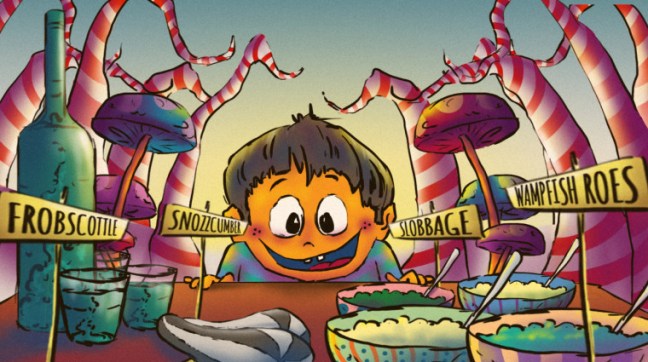
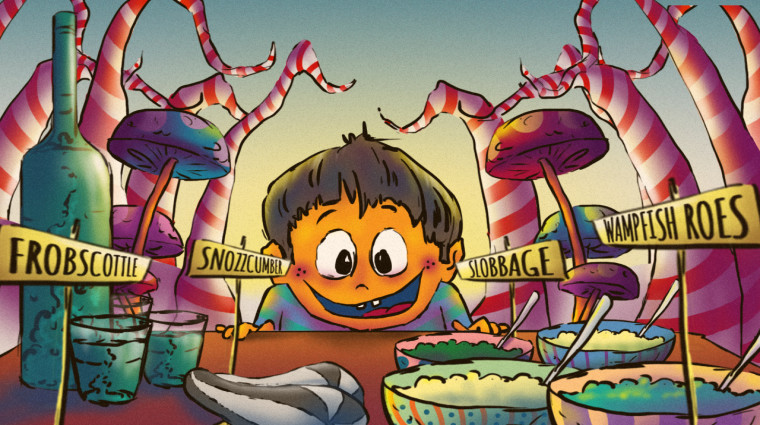
And then there is the food itself – the glorious, scrumdiddlyumptious food. Before molecular gastronomy became something of a trend, Dahl’s stories were already a whizpopping culinary delight. They are replete with familiar foods and mysterious ones, those that had no explanations in the human bean world. But it doesn’t matter, because our imagination fills in the gaps. We were a generation anyway accustomed to reading about scones, ginger pop, and humbugs, without the faintest idea of what they actually looked or tasted like. So it wasn’t hard to imagine what Frobscottle – that fizzy green drink where bubbles sink down rather than rise up – felt like. Even now, tinda and karela distinctly remind me of the ghastly snozzcumber, a knobbly vegetable with black-and-white stripes. All of these were brought alive by Quentin Blake’s illustrations.

Invention was key to these stories. Who else could dream up the concoctions in George’s Marvellous Medicine, full of ingredients such as Golden Gloss Hair Shampoo that was sure to wash Grandma’s tummy nice and clean, and toothpaste to brighten up her horrid brown teeth? It’s remarkable how Dahl knew just what children loved to do: My nephew can spend hours concocting all sorts of potions with coffee beans and water. He looks high and low for bits and bobs to add to it, relishing the results that look more and more vile. Rules, when it comes to invention, must go straight out of the window.

Like this particular ditty from James and the Giant Peach:

I often eat boiled slobbages. They’re grand when served beside
Minced doodlebugs and curried slugs. And have you ever tried
Mosquitoes’ toes and wampfish roes
Most delicately fried?
(The only trouble is they disagree with my inside.)

I don’t know what a doodlebug is, but just the thought of a boiled slobbage is enough to make me want to unwrap a piece of dark chocolate and try to forget about it. Or wickedly threaten my nephew with that when I meet him next. But then perhaps, Dahl was just prophetic, with insects being proposed as staple, resilient food thanks to climate change.

Just as Dahl’s stories were cautionary about the excesses of food, they tackled the grave idea of hunger. As Mr Fantastic Fox’s family go hungry, Dahl describes the anguish the fox parents go through. When the cubs cry from hunger, he writes, “‘How long will it be till we get something to eat?’ their mother didn’t answer them. Nor did their father. There was no answer to give.” Later, Mr Fox says, “Do you know anyone in the whole world who wouldn’t swipe a few chickens if his children were starving to death?”

In The Chocolate Factory, Charlie’s family is so poor that “the only meals they could afford were bread and margarine for breakfast, boiled potatoes and cabbage for lunch, and cabbage soup for supper. Sundays were a bit better. They all looked forward to Sundays because then, although they had exactly the same, everyone was allowed a second helping.” The same book is a lesson in food security: On one hand Dahl writes about poverty and malnourishment, while starkly contrasting it with the “haves” who revel in gluttony, but ultimately are acquainted with the pitfalls of greed. Obesity, in most of his books, was not a trait he loved.

Yet, what’s unmistakable is that so many of the stories are about the joys of food, sharing it, and eating it. And some of the recipes are not even that difficult to pull off. In Roald Dahl’s Revolting Recipes, “an interpretation of some of the scrumptious and wonderfully disgusting dishes” from his books, you will find recipes for Mosquitoes’ Toes and Wampfish Roes made with cod fillets and Lickable Wallpapers made with fruit and gelatine. In the introduction, his wife Felicity Dahl writes, “Treats were an essential part of Roald’s life – never too many, never too few, and always perfectly timed.”

Parsing the recipe book, I couldn’t help but wonder about Butterscotch, which makes the Oompa-Loompas whoop up with joy. The recipe sounded swatchschollop (as revolting as the title promised): It’s a mix of butter, milk, and yogurt. But the result is surprisingly comforting. It didn’t make me tiddly, but it was “tasting as wonderfully of crodscollop”. I replaced the corn syrup in the recipe with golden syrup, and the skim milk with normal milk, and used a blender to mix it all up (the Oompa-Loompas would be scornful of the skim milk, I’m sure).

Next on my agenda is the Lickable Wallpapers recipe. In an America’s Test Kitchen podcast, Felicity Dahl talks about how children would come out of a screening of Charlie and the Chocolate Factory, begging their parents to buy some Lickable Wallpaper. Whenever my nephew watches the movie, I know I can be ready with some.
#Culture
When Bijal Vachharajani is not reading Harry Potter, she can be found traipsing around the jungles of India. In her spare time, she works as a communications consultant and writes about education for sustainable development and food security so she can fund those trips and expensive Potter books.