

On loving and hating Mumbai

29bmdjc-pg5-kid_29_2912739g.jpg

http://www.thehindu.com/news/cities/mumbai/entertainment/on-loving-and-hating-mumbai/article8786404.ece

There’s plenty to love about growing up in the madness of Mumbai, but lots to despise as well. I asked a few parents to share what they love and what they hate about bringing up their children in the city.

Rajesh Tahil works in the media and has three children aged 6, 11, and 15

What I love about bringing up my child in Mumbai

It’s home. They are growing up in a neighbourhood that we have lived in for decades. They are close to family, it’s great to see them grow up with aunts and uncles, and their dogs and cats (and fish).

It is a ‘big city’, so they have rich experiences, like visiting museums, music events and food festivals etc. And while these may not be of the best standards, they are certainly not dissimilar to what one would experience in any other ‘big city’.

What I hate about bringing up my child in Mumbai

The lack of open spaces, lack of clean air, too much noise. People generally drive like idiots, a basic lack of civic sense. And because of that, almost invariably “doing stuff”, which equals to spending money i.e. going for a movie or out for lunch rather than just walking or going to a park.

P.S. Also, no beef burgers and mediocre pizza.

Anita Vachharajani is a writer and has an 11-year-old child

What I love about bringing up my child in Mumbai

Growing up in Mumbai, as a single parent who worked two jobs, I never felt restricted in any way. I hope that sense of safety and freedom continues to stay around longer, so that my child can grow up feeling like her city is a safe one.

I enjoy the limited glimpses of nature that this city still offers. Like the squirrels and the birds that visit our balcony, the trees and the mangroves we get to see.

I like that Mumbai exposes my child to diverse people. There is no one language we all speak, no one food we eat, and no one set of gods we pray to. I feel that simply because Mumbai has, in a sense, fewer pretensions, it teaches you basic humility.

What I hate about bringing up my child in Mumbai

Mumbai doesn’t offer some things that I want for my child: like more open spaces, more access to nature, and stricter traffic rules and road safety. I think children need to play more, and it saddens me that in poorer neighbourhoods and ghettos, children have even fewer spaces to play in. But what I resent most is the diminishing greenery in the city. Everyone mourns the lack of trees, but no one objects to individual trees / groups of trees being cut, and that indifference is also peculiar to Mumbai.

Varsha Pawar works as a domestic help and has a 17-year-old child

What I love about bringing up my child in Mumbai

I love that Mumbai has plenty of opportunities, when it comes to colleges and job options, for my son. There’s so much that he can do here.

What I hate about bringing up my child in Mumbai

I live with my brother. Affordable housing is really difficult to find. If that was sorted, it would be a good place to live in.

Brian Rodrigues works in an IT company and has a 3-year-old child

What I love about bringing up my child in Mumbai

Being in one of the biggest metropolitan cities in the world, Mumbai offers you a plethora of options across all fields and avenues. Infrastructure is at an advanced stage in Mumbai.

You can find loads of institutions, be it for elementary or vocational education.

What I hate about bringing up my child in Mumbai

As we go ahead, bringing up a child becomes very competitive in nature. It almost gets them into rivalry mode at school or day care.

Vankshu Shah is an equity investor and has a three-year-old child

What I love about bringing up my child in Mumbai

It is a multi-cultural environment with a very active social and family life with wide exposure to languages and people.

What I hate about bringing up my child in Mumbai

It’s not a child-friendly city, it’s not easy bringing up a child amidst terrible pollution, and one of the biggest worries is safety. A lack of parks and good beaches are some of the other natural activities that a child misses out on. There is a terrible and expensive rat race when it comes to schooling and a very hectic study culture, denying a child the joy of childhood.

Shinibali Mitra Saigal curates children’s festivals. She has two girls, aged 10 and 4

What I love about bringing up my child in Mumbai

I love Bombay as a city because it lets you be. This is applicable not just to adults but children as well. This sense of freedom is a great thing to equip a child with. It’s also a city where a child can grow up without fear.

What I hate about bringing up my child in Mumbai

Alas, there really isn’t a lot for children to do. It’s not a children’s city. We have green spaces but we don’t do enough to lure children there.

We push indoor play areas but not Rani Bagh and Sanjay Gandhi National Park as zones for children to breathe and play in. In terms of just doing nothing yet having fun, Bombay isn’t your city. Here, it’s all about structure and that kind of breaks my heart
Alphabet Soup

screen-shot-2016-06-21-at-11-46-39-am.png

http://www.thehindu.com/todays-paper/tp-national/tp-mumbai/alphabet-soup/article8730537.ece

Ever asked a toddler to recite the alphabet, or for that matter even an adult? Chances are they will rattle it back to you in a breathless singsong manner, while bouncing on the balls of their feet. Learning the alphabet is usually presented to children in a simple manner, where A is for apple with an illustration of a glossy red apple, B is for ball, Z is for Zebra and so on. For toddlers, books are designed to teach them the letters: the phonetics, their shapes, and basic word associations.

15bm_Kid_s-Colu_15_2895048g

One of the most iconic alphabet books was Rabindranath Tagore’s Sahaj Path , which introduced toddlers to Bengali as a beautiful picture book way back in 1930. The two-part series was accompanied by lino-cut illustrations by Nandalal Bose. The first part centered around the structure of the Bengali alphabet and its pronunciation, and the second used them in sentences and couplets. Then there’s the exquisitely created ABC: Touch and See (Karadi Tales) by Shobha Vishwanath, which is part of their Dreaming Fingers series. The handcrafted pictures are created with a collage of materials and textures, and the printed text goes along side Braille letters to make a tactile book. But ABC books are not just meant for toddlers. Alphabet books for older children, and even adults, are a great starting point to introduce novel ideas and concepts, and they also make for fun reading.

Prabha Mallya’s The Alphabet of Animals and Birds (Red Turtle) is a lovely way of getting children to learn about the collective nouns for animal and birds. The gorgeous illustrations show groups of animals with their collective names: A is for a shrewdness of apes, who are poring over a swarm of ants, while F is for a stand of flamingos, as they, well, stand among a skulk of foxes.

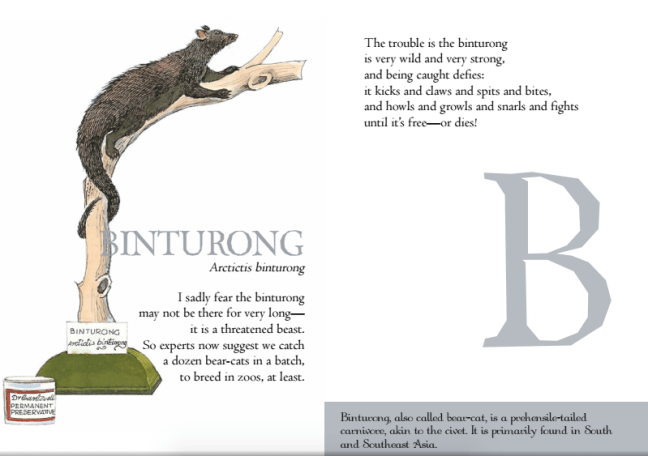
More recently, Duckbill published legendary naturalist, wildlife photographer and writer, M. Krishnan’s Book of Beasts: An A to Z Rhyming Bestiary . The alphabets lead the readers on a global jungle safari where they can meet some unusual animals. B, for instance, is for binturong, which the writer fears “may not be there for very long.” With its cat-like face, long body and prehensile tail, the curious looking animal, the reader finds out, “is very wild and very strong”. M. Krishnan wrote some of these animal verses for his granddaughter Asha Harikrishnan’s birthday, gifting the first set to her in 1990. The quirky poetry and facts are a lesson in conservation, at the same time, they point out the adverse impacts humans have on the natural world.

Alphabet books can be enchanting, irreverent or fabulously dark. Neil Gaiman and Gris Grimly’s The Dangerous Alphabet (Harper) is a subversive “piratical ghost story” where two children embark on a journey in a B for boat which pushes off in the dark in a R which is a river “that flows like a dream”, where E is for the “evil that lures and entices”. Ominous and riveting. Written by Jerry Pinto and illustrated by Sayan Mukherjee, Hey! That’s an A! (Tulika Books) is a delightful romp where the letters race around the page, accompanied by clever puns and verse.

Oliver Jeffers’ Once Upon an Alphabet goes beyond the alphabet. Each letter has its own story, rendered imaginatively, in the characteristic lucid yet dreamy form of Jeffers’ illustrations. And in his classic way, he explores themes in a few words – his verses are tinged with whimsy, fear, sadness, cleverness, and friendship.

Adults will love ABC3D (Tara Books) by French artist Marion Bataille, a book that takes the concept of pop-ups to another dimension, integrating design, architecture and movement. As you open the book, the letter C folds over to form a D, while the lower bar of the letter E retracts to become an F, and the letter V’s reflection becomes a W. The letters, which are rendered in black, white and red, move three-dimensionally across time and space, making the book a delight.

One of the most unlikely alphabet books was recommended to me by an American friend who works in sustainable fashion. He said both his daughter and he love A is for Activist (Triangle Square) by Innosanto Nagara. The board book teaches words that are important, but are not often found in picture books. ““A is for activist. Advocate. Abolitionist. Ally. Actively answering a call to action. Are you an activist?” writes Nagara. His warm and vivid illustrations are the perfect backdrop for his equally bold text. “Equal rights,” he writes, “black, brown, or white. Clean and healthy is a right. Every place we live and play environmental justice is the way!” Feminist, indigenous, immigrant, justice, LGBTQ, are not just words here. Nagara gives them meaning.

Insta-bytes of knowledge

1bm_kids_column_pg_2876817g.jpg

http://www.thehindu.com/news/cities/mumbai/entertainment/instabites-of-knowledge/article8675766.ece

Guess what this is?” asked wildlife photographer and filmmaker Kalyan Varma on his Instagram feed (@kalyanvarma). At first glance, the image looked like a radiating collage of Chiclets, the white chewing gum we were all addicted to as kids. Teeth, I wondered, looking at the hashtags #texture and #wildlife for clues. Finally, Varma answered, “It’s the underside of a Croc called Gharial.” This question was part of a short quiz series where Varma put up close-up shots of animals. What a wonderful idea!

Lately, I have been finding that Instagram can be a wonderful educational tool for children. There are environmental groups talking about the impact of climate change, forums to explore space, art and science, and ideas for the next dreaded craft project. Varma, for instance, posts about his travels in forests in India and different parts of the globe. His photographs inspire awe for the natural world: a shy baby stump-tailed macaque glances at his camera; a plump rare bird, resplendent in sunset colours, from the eastern Himalayas looks askance ‘ a spider hides between spores of a fern in the Western Ghats.

For teens looking for more such information, National Geographic (@natgeo) and Discovery (@discoverychannel) are packed with stunning photographs of the natural world: animals, strange flora, and remote worlds.

The magazine Time for Kids also has its @timeforkidsmagazine handle and it’s full of fascinating trivia. From learning what is lightning to why is Friday the 13th considered unlucky and interviews with filmmakers to sports, it’s all in there. Right now, there’s a call out for their Kids Reporter programme, which sounds very exciting.

Then there’s NASA’s Instagram account (@nasa), which is a wonderful way to “explore the universe and discover our home planet.” Kids can learn about the Hubble Space Telescope, the moons of different planets, and discover geography through satellite images. The photographs are stunning. Mars, for instance, looks like a covetable shiny marble, with its frosty polar caps shining bright among its “rust-coloured landscape.”

In another post, the Nili Fossae region of Mars is similar to a rugged denim-covered outcrop. There are videos of solar flares, images of aurora from space, and solar eclipses. It’s quite a journey into the universe, one told by the experts.

Art projects can do with some inspiration. Get ready to be awestruck by Colossal (@colossal). The six-year-old award-winning blog explores art and visual culture. Photography, animation, installations, drawings, street art are just some of the gorgeous stuff on their feed. As the website says, “Colossal is also a great place to learn about the intersection of art and science as well as the beauty of the natural world.” Then check out Kids Crafts (@produmamka) and Craft Ideas Magazine (@craftideasmag) for more practical inspiration: reusing plastic glasses for art work, making your own paper and creating mini cacti pincushions. Then there’s Emma Mitchell (@silverpebble2), a writer, designer and naturalist. Her Instagram feed is full of beautiful flowers, some fresh and others flattened as part of sketchbooks. It’s a wonderful way to get acquainted with diverse flora. Don’t be surprised if your child’s interest in craft projects suddenly goes up.

Techno-savvy children can check out littleBits (@littlebits), who say they are on a “mission to unleash creativity by empowering everyone to create inventions, large & small, with out platform of electronic building blocks.” On April Fool’s Day, they put up a video of a motion-triggered confetti machine, which looks like the ultimate prank. Then there’s a DIY grand piano for young engineers as well as animatronic animals and characters. Their Instagram handle is only a showcase place: you have to visit the website to understand how to create projects.

For those looking for real time updates, Everyday Climate Change (@everyday climatechange) brings together a group of photographers from five continents who document climate change. Their feed shows how the changing climate is impacting people and landscapes across the world. Don’t miss photographer and writer Arati Kumar-Rao’s (@aratikumarrao) images on Bangladesh and India on the feed.

So, tap away. But cyber safety, of course, is important; note that children below the age of 13 are not allowed to have accounts. Having a private account is also a good idea, so you can control who views the photos.

Once upon a summer’s day

img_9552.jpg

A round-up of the coolest books to keep your kids occupied during these infernal summer holidays

http://www.thehindu.com/books/lose-yourself-in-these-pages/article8649561.ece

The Boy Who Swallowed a Nail and Other Stories Cover AGN.new_Page_1


Summer vacation means the kids get to curl up with a book, a plate of sliced mangoes, and drift off to Storyville. There’s plenty of exciting stuff happening in the world of books this summer. The new Rick Riordan is just out – The Hidden Oracle: The Trials of Apollo I, and then in July, Harry Potter and the Cursed Child – The Rehearsal Edition will be published in the muggle world. Here’s a list of books to add to the reading list this summer.

For Young Adults

Asmara’s Summer by Andaleeb Wajid: A spunky story about Asmara, a hip and popular teen who finds herself relegated to her grandparents’ decidedly not-so-posh place on Tannery Road in Bangalore for the summer. Asmara’s shorts are the cause of horror to her Nani, there’s that stuffy neighbor aunty to contend with, and worse, there’s no Wi-Fi! Asmara decides not to tell her friends about this one-month interlude in her life, so she’s pretty much friendless in the area, apart from Rukhsana who’s about her age. Things start looking up when Asmara discovers that Rukhsana has a gorgeous brother. While Asmara entertains herself by starting an Instagram account to poke fun at the fashion disaster of a neighbourhood, she also discovers that there’s more to life than the way people dress and talk. A breezy read, Asmara’s Summer is also warm and has moments that are wonderfully poignant.

Hedon by Priyanka Mookerjee: Hedon is the story of the millenials. Tara Mullick meets Jay Dhillon at a wedding when she’s a teenager. An awkward, plump teen, that too. Soon she heads off to the USA to study, but she keeps in touch with Jay over texts and quick phone calls. Priyanka Mookerjee writes the story of the privileged – Tara goes to a posh school in Kolkata and then to a US college. She’s surrounded by money and yet it all feels pointless to her. Hedon is a story of debauchery, of existential questions, and of pop-culture. But it also talks about that feeling of alienation, the lusciousness of poetry, and just life as it unravels.

Tanya Tania by Antara Ganguly: An epistolary novel by Antara Ganguly, parts of Tanya Tania are set in the early ’90s. Letters fly between Tanya in Pakistan and Tania in Bombay, talking about their lives, school, home, friends and boyfriends. In many ways, the two pen-friends are self-involved, writing more to share, rather than listen. But ultimately, finding comfort in words. And slowly, the letters begin to reflect the political and social tensions in both countries. A coming-of-age book, Tanya Tania is about aspirations, sexuality, class differences, political ideologies and how they impact everyday people, gender differences, and of course, friendships. A heart-wrenching read, Tanya Tania is also a reminder of how two decades on, very little has really changed.

For Tweens

The Boy Who Swallowed a Nail and Other Stories by Lalita Iyer: A fresh voice in kid lit, journalist Lalita Iyer’s memoir is reminiscent of the simplicity and innocence of childhood. Children will fall in love with her quirky family, where one day Appa is pondering about buying a buffalo much to the horror of the children, and on another, Ammini is telling an impressive story about a fart. It’s the little things that count – such as Amma’s habit of washing clothes in every hotel they stayed in during holidays or the description of foods such as aloo parathas with dollops of white butter and dahi. There’s even a recipe for this tomato jaggery chutney by Paatumami. Shamika Kocharekar’s illustrations are as happy as the stories. The tales are almost like sitting at your grandmother’s knees, listening to one anecdote, after another.

Monkey Trouble and Other Grandfather Stories by Ruskin Bond, illustrated by Priya Kurian: There’s always a steady stream of old and new Ruskin Bond stories jostling for space on bookshelves. But now some of these stories have a new avatar with Priya Kurian’s splendid illustrations in the comic book, Monkey Trouble and Other Grandfather Stories. Kurian takes three of Bond’s stories – “Monkey Trouble”, “Eye of the Eagle”, and a “A Special Tree” and renders them in delightful colours. The most memorable one is “A Special Tree”, where a Ruskin Bond like grandpa encourages his grandson to sow a cherry tree seed and together they marvel at its growth through different seasons.

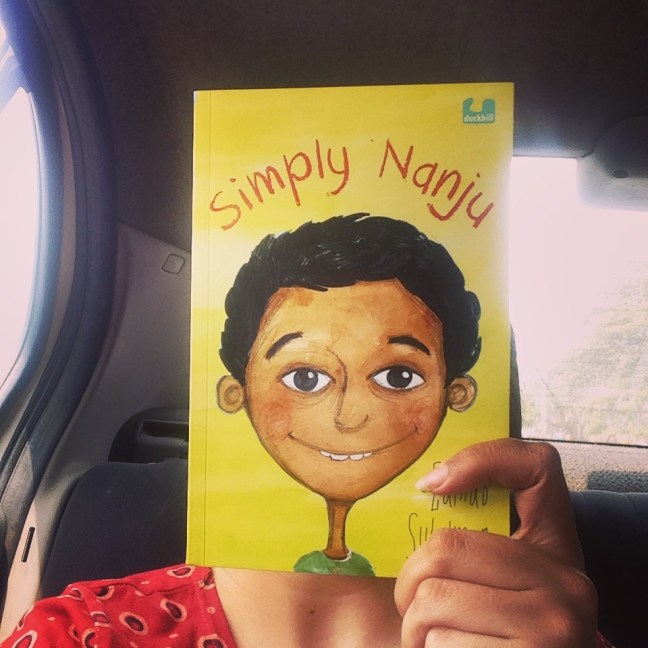
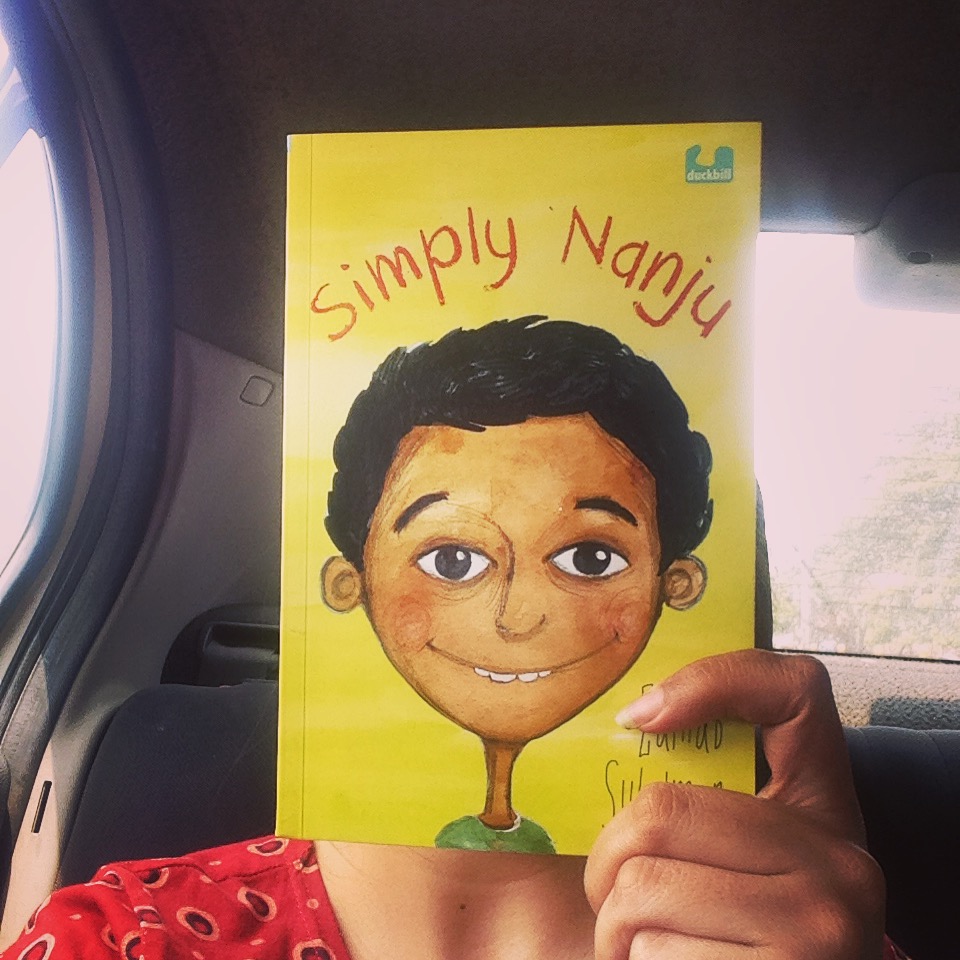
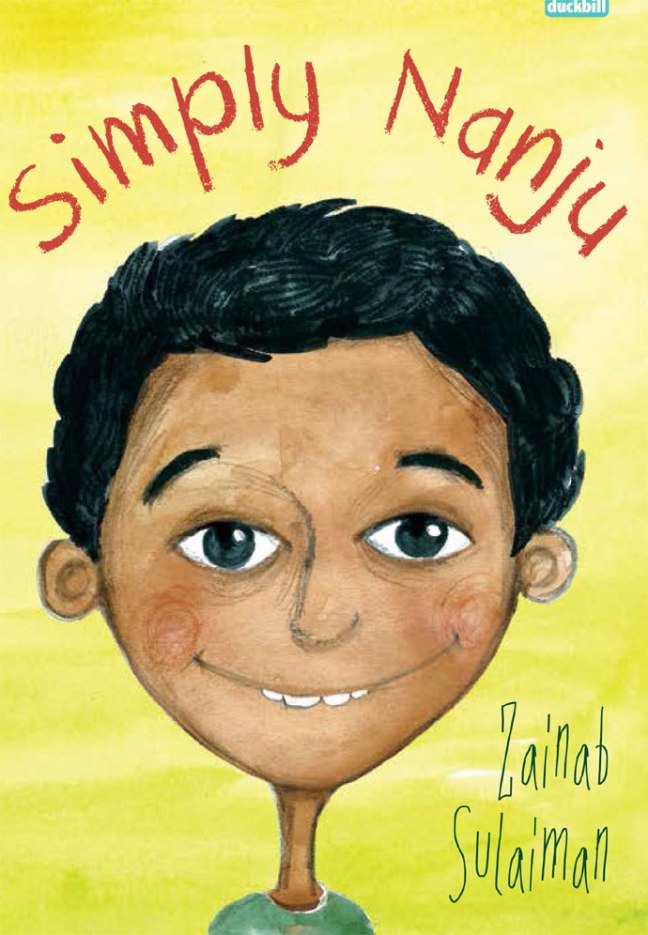
Simply Nanju by Zainab Sulaiman: Life isn’t easy for Nanju – he was born with a spinal problem and is often bullied at school. To make matters worse, Appa is threatening to send Nanju away if his marks don’t improve and someone’s flicking the topper’s notebooks in class, and Nanju is a key suspect. But the boy finds solace in his very smart best friend and plants. Zainab Sulaiman sets her story in a school for the differently-abled, writing about it with sensitivity and masterfully. Simply Nanju is about inclusion, but it’s also about class structures, bullying, and just navigating the bumpy path of school life.

For the younger ones

A Helping Hand by Payal Dhar and illustrated by Vartika Sharma (available on StoryWeaver.org.in): Miss has told “me”, the protagonist of the story, to be the mentor to the new girl in class and show her around. In a series of letters that are never meant to be read, the girl pours her heart out – about her reluctance to befriend the new girl because she’s different. At one point, she writes about a conversation with her older sister. “I told her, ‘There’s a girl in my class and she has a fake hand,’ and she said that the term is ‘prosthetic hand’.” Payal Dhar writes convincingly from the point of view of a child and has shades of empathy, bullying, discrimination, and inclusion. Vartika Sharma’s illustrations are hauntingly beautiful and stark, making the story a memorable one.

Kasturba by Tanaya Vyas: The young Nina is quite an actor. She’s played all sorts of strong female protagonists – from Sita to Razia. But for her next play, Nina’s got the role of Kasturba. She can’t help but wonder about the role, after all she asks herself, Kasturba was only Gandhiji’s wife, wasn’t she? But when Nina starts preparing for the role, she finds out there was more to her than just being a wife.

Thatha at School by Richa Jha and illustrated by Gautam Benegal: Delhi-based Oviyam may just be in second standard but she has a looming black cloud above her head. The school is celebrating their annual Grandparents Day and all grandpas and grandmas are invited. Oviyam’s embarrassed to bring her lungi-clad Thatha, but he’s ever-so excited about it. Richa Jha writes a wonderful, nuanced tale about a child’s relationship with her cherished, if sometimes embarrassing Thatha. Gautam Benegal’s illustrations are spirited and reflect Oviyam’s constantly changing moods perfectly.

The author writes about education for sustainable development, conservation, and food security. She’s the former editor of Time Out Bengaluru

What’s your sustainability quotient?

img_9281.jpg

http://www.thehindu.com/news/cities/mumbai/whats-your-sustainability-quotient/article8613855.ece

Last week, an adorable cat meme popped up on my social media timeline. Yes, just one of many adorable memes, gifs, videos that inhabit the Internet. In this one, a mommy cat was cleaning her face with meticulous care, and in the background, her kitten was trying hard to copy her actions, albeit a little clumsily. The meme went on to impart the gyaan that children learn from their parent’s actions. Didn’t really need a copycat to remind us that children — especially babies and toddlers — learn by copying adult behaviour.

But now is a good time to consider our actions as grown-ups, and for some, privileged grown-ups. India is going through a mega water crisis, which as journalist P. Sainath reminds us, is a drought that is not just the product of the failure of monsoon. Our landfills are smoke-belching, bloated trash monsters. According to India Together , the country is chucking out some 36.5 million tonnes of municipal solid waste every year. Temperatures are soaring while the air quality is plummeting, we may as well log onto eBay and start buying bottles of fresh air, along with the cartloads of stuff we are constantly ordering. All swathed in layers of unnecessary plastic and thermocol. We have also earned the dubious distinction of being number 12 in the top 20 countries to dump heaps of plastic into the ocean, according to a study published in the journal Science.

Let’s leave aside what sort of a planet the kids are going to inherit. Instead, think about how our unsustainable (or sustainable) traits can easily pass on to children, along with beaky noses, eye colour and chin clefts. At “The contribution of early childhood education to a sustainable society,” a UNESCO workshop held in 2008, there was “a strong consensus that educating for sustainability should begin very early in life. It is in the early childhood period that children develop their basic values, attitudes, skills, behaviours and habits, which may be long lasting.” The report further elaborated that at a younger age, children pick up “cultural messages about wealth and inequality” and that’s the time to foster values that support sustainable development “e.g. wise use of resources, cultural diversity, gender equality and democracy.”

Take for instance, water. It’s easy enough to get the society secretary to order water tankers when your building is facing water cuts. We pay so little for water that it’s equally convenient to forget that our reckless water consumption in cities adversely impacts people in remote regions and those living around us. When disasters such as droughts occur, children are the most vulnerable to the crisis.

Here’s a quick water audit. When you travel on holidays or even around the city, do you carry refillable bottles of water, or just buy packaged water? Studies have shown that packaged water is often adulterated or misbranded, and there are valid environmental concerns about the procurement of the water. The bottle is just one more bit of plastic to end up in a landfill and the ocean. It’s suddenly a less gargantuan task to carry a bottle of water from home.

The last time I was at a meeting, I was horrified by the number of bottled water that cluttered the conference table, along with laptops, pens, and fresh notepads, that would also be chucked after a doodle, a note or two. We could take a cue from the Nephelai — Greek nymphs who poured water from pitchers to make it rain — and pour ourselves a glass of water from a jug kept on the table.

Perhaps someone in the house leaves the water running in the bathroom or kitchen and then you lecture the kids about saving water? In Sophie Kinsella’s young adult book Finding Audrey , she makes a clever point about the use of technology. While the parents yell at their son for being addicted to a video game, they can’t do without their phones. No surprise then if lectures fall on deaf ears.

Of course, it’s not easy. Sometimes there is no option but to buy bottled water. Never mind that access to clean drinking water is a right, and should not be a commodity. At other times, you’re compelled to; like in theatres that don’t allow you to carry water bottles inside the cinema hall. How do you wash down the over-priced popcorn during the interval? You buy packaged water or a glass of flavoured sugar water. Maybe float yet another petition, this time to the theatres to allow water bottles in, instead of forcing us to buy packaged water?

So then how do we, as grown-ups, step out of our cosseted liminal world clasping our children’s hands? Talk to children about wasteful practices. You will be astounded at how much they already know. Could we perhaps buy less packaged water? Reuse leftover food — wasting food equals wasting water. Car pool instead of taking a massive SUV to drop just one child to school. Hit pause on the endless obsolesce of gadgets and buying shiny new ones, even if the old phone/ tablet/ indoor entertainment gadget is working perfectly fine?

At the same time, instead of playing football on a virtual field, perhaps step out to a park, if you can find one that is. Start a balcony garden? Even our matchbox houses can sustain a window sill one. Grow easy plants such as tomato and herbs that are hard for even the brownest of thumbs and greyest of smogs to kill off. The other day, someone called me and asked, “What is vermicomposting? My child has a project in class.” Possibly a good place to start is by reading up and becoming a “know-it-some” at least. Children have a natural affinity for the environment, but watching grown-ups being callous often transfers the indifferent behaviour onwards.

All this is intuitive and stuff of common sense. You don’t need to read an article to tell you this. But to use a cliché, let’s lead by example. Because even if children’s heads are eclipsed by a screen or they are breathlessly running from one class to another, they are picking up cues from adults. It’s not just Big Brother who is watching us all the time.

The author writes about education for sustainable development, conservation, and food security. She’s the former editor of Time Out Bengaluru

Read the movie!

in-front-of-the-posters.jpg

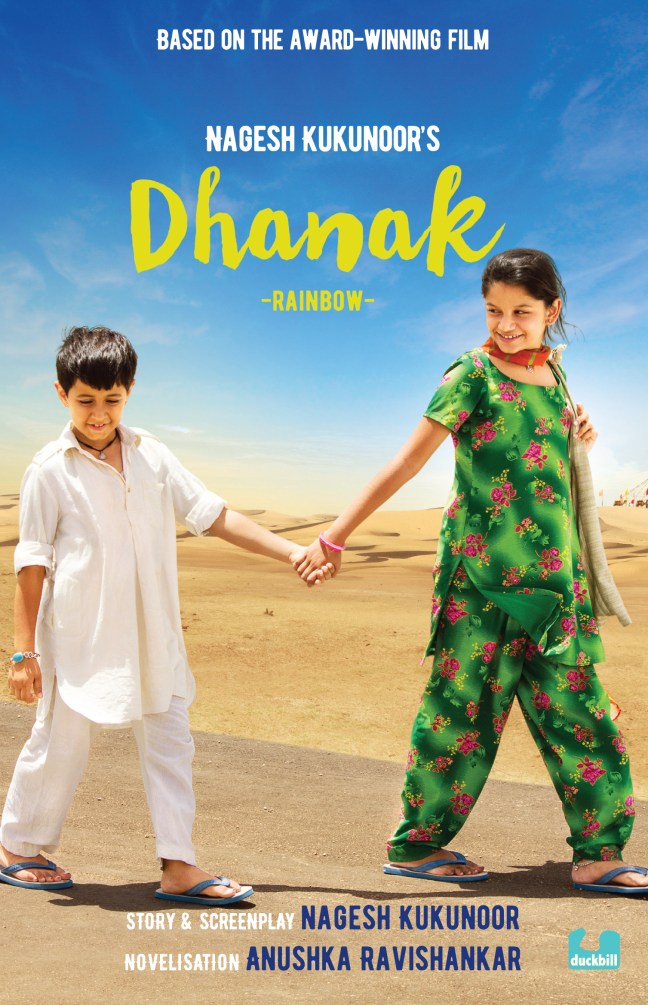
Nagesh Kukunoor’s new film Dhanak has been novelised by children’s writer Anushka Ravishankar

http://www.thehindu.com/news/cities/mumbai/read-the-movie/article8623588.ece?ref=tpnews

Dhanak


All eyes are on Nagesh Kukunoor as the much-awaited film Dhanak is set to release next month. This time around, before they watch the film, children can now read the movie. Duckbill Books is publishing Dhanak ’s novelisation on June 10, a week before the film releases. The book is written by one of India’s beloved children’s books writers, Anushka Ravishankar, one of the founders of Duckbill.

“We’ve been seeing some really good children’s films in Indian languages,” said Ravishankar, over email. “and it has often struck us that the kind of stories being told in films are very different from the kind of stories that are written for children’s books: more experimental, more unusual. Some of those films would make wonderful books.” A friend told Sayoni Basu, Duckbill co-founder, about Dhanak . She then floated the idea to Elahe Hiptoola, one of the producers. “They were cautiously enthusiastic, and sent us a preview of the film,” Ravishankar says. “We saw it and thought it would make a great book.”

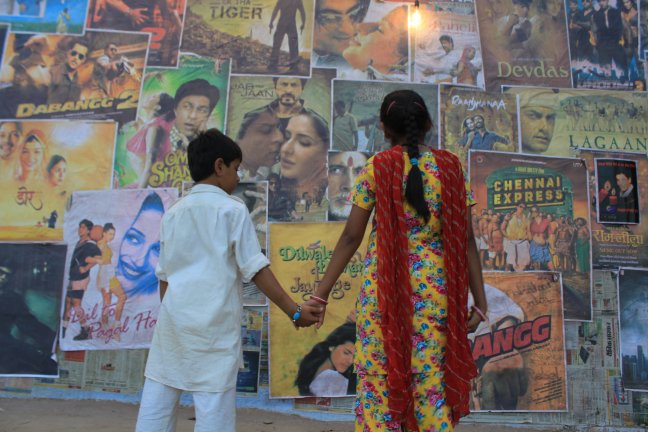
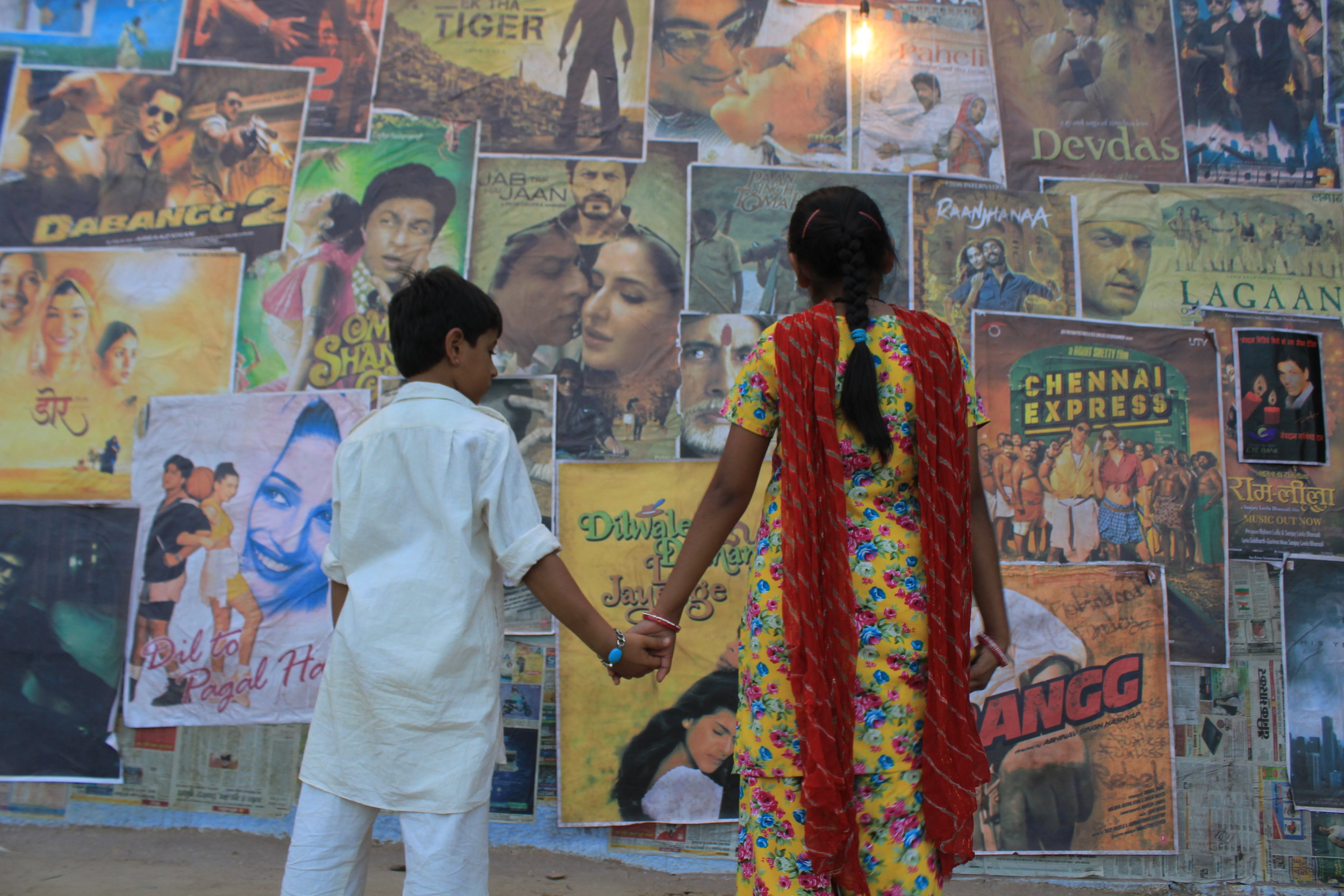
Dhanak ’s trailer already looks promising, and it has been garnering attention internationally. The story is about a pair of siblings who live in Rajasthan with their uncle and aunt. Pari is determined that Chotu will get his eyesight back before his ninth birthday, but that’s barely a couple of months away. Things look up when Pari sees a poster with Shah Rukh Khan urging people to donate their eyes. She starts writing letters to the actor, asking him to help Chotu. When Shah Rukh Khan comes to Rajasthan for a shoot, Pari and Chotu set off on a road trip, determined to meet the actor and get Chotu’s eyesight back. En route they encounter all sorts of people: some helpful, others kind, some horrid, and others mysterious. The book also includes eight pages of colour photographs and interviews with Hetal Gada and Krrish Chabria, the actors who play the siblings.

Ravishankar described the process of turning the film into a book for children as exhilarating and frightening. “It’s a very visual film, and Nagesh has captured both, the spectacular landscape of Rajasthan, and the joyous optimism of childhood. To translate all of that into words seemed like a daunting task. But since I’d never done it before, it was quite an exciting journey of discovery for me. I had to think about practical things like POV [point of view], because it works very differently in a novel as compared to a film. I also had to convert expressions and observations into interior monologue and description. I’ve never been very enthusiastic about describing things in my books, so that was quite a change for me!”

To write the book, Ravishankar spoke to Kukunoor a couple of times. “It was quite lovely. I spoke to him only a couple of times, but they were longish chats, about character, about specific plot points and timelines, what he felt the essence of the film was. He was helpful and forthcoming and I felt comfortable talking to him, even when I didn’t entirely agree with him! If I hadn’t felt that degree of comfort, I suspect it would have been harder to write the book.”

The story is all about moments: the banter between the siblings over Salman and Shah Rukh Khan, Chotu’s incessant demand for food, and the warmth and solidity of their relationship. Rajasthan is an intense, vibrant backdrop, its characters flitting in and out in all shades of grey and myriad colours. Unlikely friendships, the kindness of strangers, and preserving against all odds are themes woven into the plot.

Of course since Dhanak is a Bollywood film, there have to be songs. But Ravishankar manages to integrate them into the story quite seamlessly. “There’s the wedding party which the children join, and there’s the American man with whom Chotu sings and the Kalbeliya singers/dancers whom they sing with around the campfire. None of the situations are implausible. I ignored the songs that were part of the background score, of course!”

At some point, you forget that this is a novelisation of a movie; it’s easy to get lost in the story.

But then Ravishankar has written memorable children’s books such as Tiger on a Tree , Catch that Crocodile! , To Market! To Market! , and Moin and the Monster . Her mathematics degree has been put to good use in Captain Coconut & The Case of the Missing Bananas .

According to the Duckbill founders, Dhanak is the first Indian novelisation of a children’s film. In the past, K.A. Abbas has novelised Bobby and Mera Naam Joker , but there aren’t that many examples. And none for children’s films.

“Children’s films in India seem to be doing interesting things,” said Basu. “but it is really hard to track them down to watch! We still need many more diverse kinds of stories and voices in children’s books, and I do hope we can find them.”

Ravishankar says that one of the problems is that there are few spaces to exhibit children’s films. “Many of them don’t even see theatre releases, and if they do, they probably have one morning show on one screen! I think that is a crying shame. I wish schools would make the time and space for children to see good cinema. There are so many talented filmmakers making powerful children’s films. They need to be seen.”

The author writes about education for sustainable development, conservation, and food security. She’s the former editor of Time Out Bengaluru

Dialling the right number

4bm_kids-column_4b_2839267g.jpg

http://www.thehindu.com/news/cities/mumbai/entertainment/dialling-the-right-number/article8554028.ece

Missed calls, especially in India, are a useful tool. You pass on your number to an acquaintance through a missed call, you “miss call” to let someone know you’ve reached a particular destination, or you get a missed call because the other person wants you to call them back. But last week, these calls got a new twist with Pratham Books’ “ Missed Call Do, Kahaani Suno ” campaign. For two days, emails, WhatsApp messages, and social media posts flew across cyberspace, urging people to give a missed call to a Bangalore number. Pratham Books would then call back and children and adults could listen to a story in five languages: English, Hindi, Marathi, Kannada, or Telugu. The not-for-profit children’s books publisher partnered with Radio Mirchi and Exotel, a cloud telephony company, for the campaign.

missed call

“Most of us were fortunate to grow up in world full of stories,” said Purvi Shah, Head Digital Projects, Pratham Books. “But for millions of children the culture of books and reading for joy in their home environment does not exist. From our varied experiences on the field we constantly heard the need for audio stories. To us, this was a great insight to reach where a culture of reading at home was missing for the child. We felt we could address this need gap because we already had lovely stories in many Indian languages.”

According to the Telecom Regulatory Authority of India (TRAI), India has over a billion mobile phone users, of which 42.39 per cent are rural subscribers. Businesses have long wised-up to this statistic, as have political parties. We have been bombarded with marketing calls and SMSes, electoral campaign texts, and sales alerts and urged to send text messages or call toll free numbers on television shows. The Pratham Books campaign puts phones to better use: getting stories to remote parts of the country.

“The mobile phone as we know already exists in most Indian households today,” said Shah, “and that became an easy, scalable distribution medium, What we needed to ensure was that the parent did not have to pay for hearing the story. This was crucial considering the focus of Pratham Books’ target audience: the underserved child. That’s how we thought of exploring the ‘missed call’ route, which already existed as an idea.”

As part of their CSR initiative, Mirchi Cares, Radio Mirchi recorded the Pratham Books’ stories and then Exotel created the framework to deliver the audio stories. The Delhi pilot saw over 35,000 missed calls from 3,500 phones. For Exotel’s CEO, Shivakumar Ganesan, the campaign’s phenomenal response was “yet another testimony to the power of a simple phone call.”

“When the campaign went live, we received a great response online,” said Maya Hemant Krishna, Community Manager, Pratham Books. “Over the years, we’ve built a community of reading evangelists who are passionate about helping us in our mission of getting ‘a book in every child’s hand’. Many of them pitched in to spread the word about the campaign, actively tell people about how it works and more, ask for an extension because their children didn’t get to hear it, spread it through WhatsApp.”

As a campaign, “ Missed Call Do, Kahaani Suno ” dialled a lot of right numbers: a zero-cost operation that spreads the wonder of stories to children with little or no access to stories, or with limited literacy; and in multiple languages. “Listening to stories is a joyful way to create an interest in reading among children,” said Himanshu Giri, CEO, Pratham Books. “Our aim was to take the magic of storytelling into the homes of children by empowering parents to bring the joy of stories to their children.” Shah further said, “Many studies on language development have documented that children from low income families hear as many as 30 million fewer words than their affluent peers before the age of four. A simple technique like reading aloud can bridge this gap. The idea of ‘ Missed call do, Kahaani suno ’ is to create a culture of listening to stories within the home environment. This will eventually lead to an interest in reading as well.”

To encourage reading, for instance, after you heard the narrator growling away in Pehelwaan ji in Hindi on the phone, you also got a SMS with a link to the e-book on StoryWeaver, an open source repository of multilingual stories for children. Maya Krishna said that the content is available for now on StoryWeaver and on Pratham Books’ SoundCloud account for free download.

Chennai-based Kuppulakshmi Krishnamoorthy was one of the callers. “I have this special connection with this girl whose parents do a bunch of chores in our apartment,” she told Pratham. “I couldn’t wait to sit next to her and make her hear the story. When she and my daughter heard the Mouse in the House story, their eyes gleamed in delight. We learned a bunch of words from the story. Later, I enacted the story for them, playing the grandma, the pa, ma, the baby, and the mouse. They all giggled and clapped. The best part of the campaign was your insisting on sharing this with those kids who didn’t have access to stories.”

Gaming apps for Earth Day

photo-2.png

http://www.thehindu.com/news/cities/mumbai/entertainment/gaming-apps-for-earth-day/article8497301.ece
photo 4

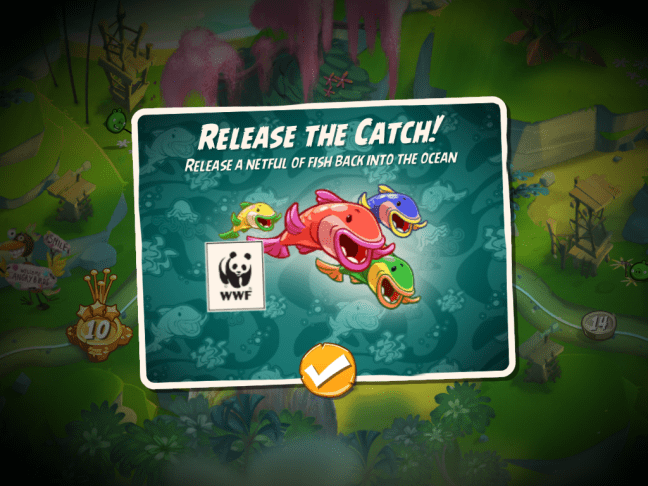
Angry Birds is back, and the birds are angrier than ever. Their wrath, this time around, is being put to good use for the planet. It’s Earth Day on April 22, and for ten days, Apple has an entire section on the App Store called Apps for Earth. It will be a shot in the arm for the environment movement in the form of 27 apps, where children and adults can safeguard wildlife, conserve forests, support sustainable food, preserve oceans, protect fresh water, and combat climate change.

But back to the irate avians: in Angry Birds 2, there are messages about protecting our oceans where players have to stop those annoying piggies from overfishing. Another gaming app, Cooking Dash, offers a menu with sustainable ingredients, a change from its usual steak-and-fries combination, while there are energy-generating turbines in Jurassic World: The Game. And SimCity BuildIt has three new features on forest, energy, and water. Even Candy Crush Soda Saga has joined the fray with a live in-game event called Bamboo Hill. Basically, as they put it, “have fun helping the planet.”

It’s a savvy fundraising drive: proceeds from in-app purchases will go to World Wide Fund for Nature (WWF). Considering that many children are growing up surrounded by screens, it is a smart idea to get them to think about conservation while playing games. Of course, how many games will translate into real action, if any, remains to be seen. That said, after the ten days are up, these apps will most probably return to business as usual. It would be interesting to see how many of these companies will continue to incorporate green messages beyond the token Earth Day promotion.

However, there are plenty of other green games online. PBS Kids has a website called Meet the Greens, where children can watch animated videos and calculate their carbon footprint based on their travel, food, consumption, and waste behaviour. There are games where young players can think about upcycling clothes, efficient lighting, learn trivia and get quizzed on green know-how.

If your children love The Magic School Bus series, then head to their microsite on Scholastic’s webpage for match the animal to its habitat puzzles, science experiments, and trivia. Then there’s British Council’s LearnEnglishKids website, which has an environment section packed with songs about Lisa the Lemur, flashcards, games, and stories.

For older children, there’s Don’t Flood the Fidgits!, which I must confess isn’t as easy as it looks. Players can choose to build flood-safe cities on an island, river, or peninsula, where you work with a budget and a population goal. As you build one city, it gets flooded and you realise you need to add trees, storm walls, and drainage for better cities. The simulation game gets young adults to explore environmental design, understanding engineering, green housing, and ecological landscapes. If they love cooking and gardening, get them to play 3rd World Farmer, an online simulation game about farming in developing countries. Players need to farm sustainably in the midst of droughts, market fluctuations and diseases. Hint: permaculture comes to the rescue.

After all, children are going to spend time online, it’s not a bad idea to nudge them towards gaming that encourages to think about conservation, try their hand at eco-design challenges, and have fun while doing it.

Bijal Vachharajani writes about education for sustainable development, conservation, and food security. She’s the former editor of Time Out Bengaluru.


Simply Nanju is a poignant book to help children understand disability

sn_041816084942.jpg

Zainab Suleiman’s writing stems from her work with different NGOs and special schools.

http://www.dailyo.in/arts/childrens-books-zainab-sulaiman-simply-nanju-differently-abled-duckbill-poverty-disability/story/1/10152.html

The motley crew of Nanju and his classmates have to be some of the most adorable characters in children’s literature in the recent past. Zainab Sulaiman’s Simply Nanju starts with the ten-year-old boy poking his head out of a bathroom stall, worried that someone will find out that he’s soiled his school shorts once again.

Nanju was born with a spinal defect and as a result, he is relentlessly teased about his crooked walk. Nanju, we discover, has pressing concerns that demand his immediate attention at his school, where other children are also differently abled. His classmates suspect him of stealing the topper’s books, there’s a bully to contend with, and on top of that, his father is constantly threatening to send him off to a hostel far away. What follows is a mystery and a school story rolled into one, with everyday heroes as protagonists.

Sulaiman first wrote a grain of the story at a Duckbill writing workshop. “Zainab was one of the participants in a Duckbill workshop in Chennai, where one of the group exercises she had done was a detective story set in a school for kids with special needs,” said Sayoni Basu, director and primary platypus at Duckbill Books. “Afterwards, discussing what she wanted to write, she said that she worked as a special educator and she wanted to write about some of the kids she worked with. Which we thought was a wonderful idea.”

Sulaiman’s book stems from her work – she has been teaching, fund-raising and volunteering with different NGOs and special schools. “I’d been working as a volunteer teacher at an integrated school and everyday I’d practically float out of there, high on the energy generated by a bunch of kids who lived life to the hilt in spite of many of them being severely disabled,” said Sulaiman.

“I began to scribble down things I’d heard, make notes on the hard life many of these kids lived without any display of complaint or self-pity, and mainly how it all made me feel: angry, sad, amazed, overwhelmed. And that’s when I realised I had to write about this world.”

Smply Nanju joins an array of books that help children understand disability. Tulika Books has also published a range of picture books – Why are You Afraid to Hold my Hand? by Sheila Dhar is about attitudes and how people react to someone who is differently-abled, Wings to Fly by Sowmya Rajendran and Arun Kumar where little Malathi finds that she can do a “much, much more” even though she’s wheelchair-bound, and in Tharini Viswanath and Nancy Raj’s tale Catch that Cat!, Nancy doesn’t let her being in a wheelchair stop her from helping a cat stranded on a tree.

Karadi Tales, with its audio book format, is often used as an educational tool for children with learning disabilities. Few years ago, Shaili Sathyu directed Barsoraam Dhadaake Se, a play that was an adaptation of Kalpana Swaminathan’s story, Bangles for Bansode. The cranky old landlord, Bansode, finds that his life changes for the better when a wheelchair-bound girl comes to live in the building.

Stories like these go a long way in creating inclusive spaces, making children comfortable with diversity, and accepting of the fact that everyone is different in their own way.

Sulaiman’s characters come in all shapes, sizes, and shades of blacks, whites, greys, reds, blues and all sorts of happy and gloomy colours. Nanju’s friend, Mahesh, for instance, is really intelligent and uses logic to solve problems. Nanju himself is not all angelic – he’s quick to judge and can be quite sharp at times.

Sulaiman paints a poignant childhood, full of that sense of inadequacy and that particular sinking feeling when you get poor marks. It’s a familiar world of favourite and not-so-favourite teachers, ever-shifting rivalries and fast friendships and shiny compass boxes and new backpacks. All of this in the backdrop of challenges of social inequality and abuse. Not an easy task.

“It was hard,” said Sulaiman. “I was torn between writing a really hard-hitting book which showed how relentless the double whammy of poverty and disability can be, and writing about how inspite of all their hardships, these children really live for the day and are determined to extract every last ounce of joy from it. I choose the latter as I thought it was important for people to realise that it’s us who need to change, and maybe we could change if we realised how much these kids are like us.”

Stories like these are distinctive in the sense of being representative and going beyond the upper middle-class protagonists often seen in children’s books. “Urban kids live largely in middle-class ghettos, where they have little interaction with anyone outside their immediate social group, in a world which regards the ‘other’ with suspicion,” said Basu. “It is, therefore, all the more important that they read about Indian kids who live very different lives, since it is through fiction that we develop empathy and understanding of worlds which are different from our daily experience.”

Duckbill, over the last few years, have definitely hopped (or do platypus’ waddle?) off the beaten path. Rather than the usual lineup of authors and mythological stories, their books have LGBT themes, swashbuckling historical heroines, and differently abled heroes. Their writing workshops have helped them find new and exciting writing as well.

“Our goal has always been to publish books that reflect the contemporary world that Indian children and young adults live in,” said Basu. “And ideally, the books should be funny and wacky.” Simply Nanju checks the boxes.

Negotiating the in-betweens

img_9520.jpg

http://www.thehindu.com/news/cities/mumbai/entertainment/article8439992.ece
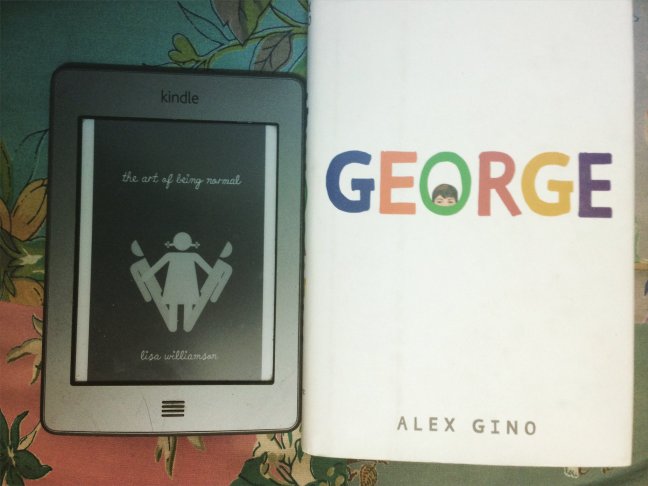
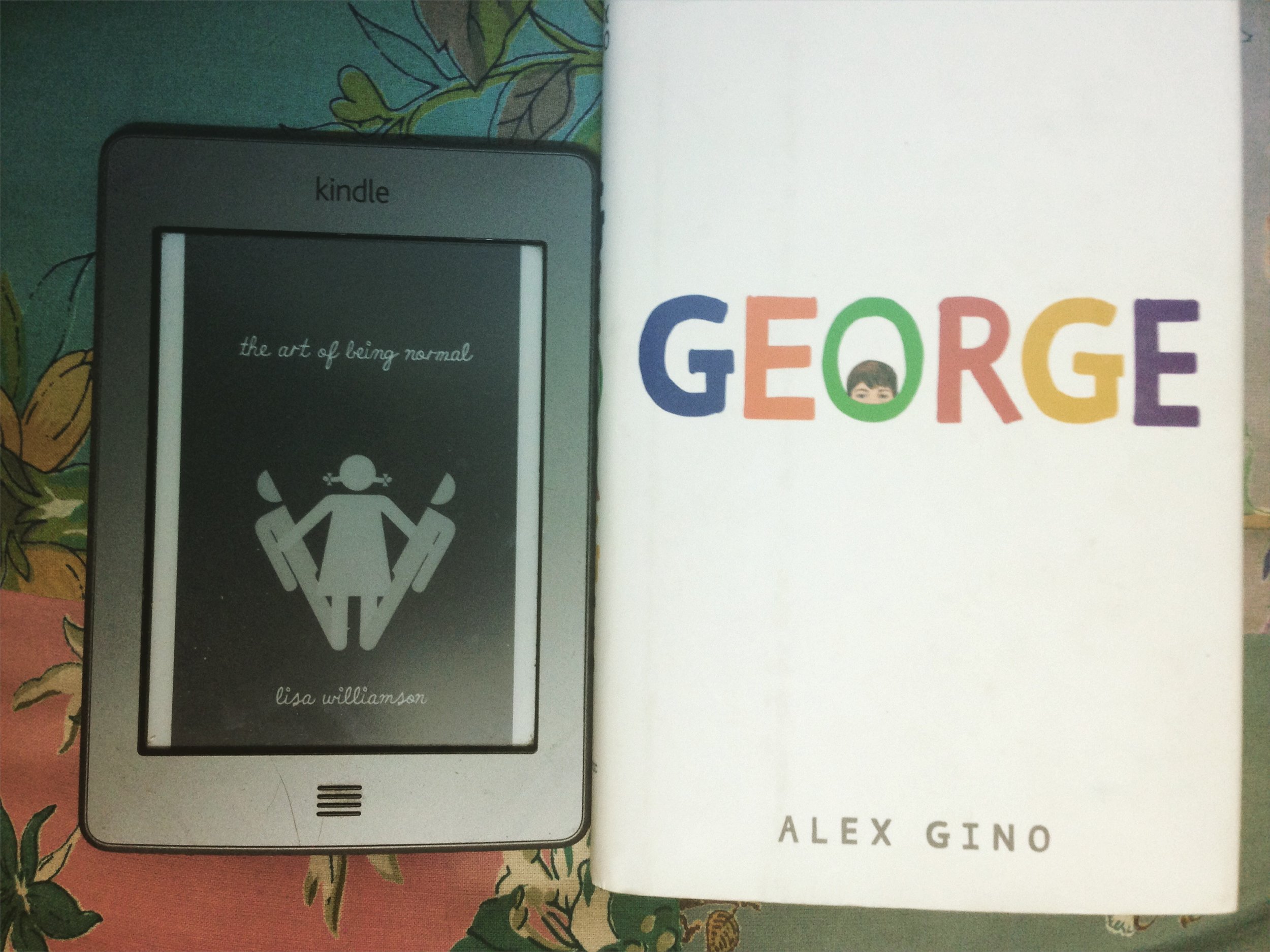
Alex Gino’s book George starts with its eponymous protagonist poring over fashion magazines. The fourth grader reads about make-up, even though she’s never worn it but tries to imagine herself with a slash of lipstick. George, we find out, doesn’t like her name much, preferring to think of herself as Melissa. She also wants to play Charlotte in the school play, but it’s looking impossible. Her brother teases her, saying she’s got girls on her mind. She does, only not in the way her brother thinks. That’s because George is a boy who actually identifies himself as a girl.

George is one of the slew of international books that gently explain the confusion and discrimination transgender people face. These books reinforce the fact that gender is something children learn from social conditioning – their parents, peers, schools define what it means to be a boy or a girl. And when a child like George strongly feels he is a girl, he finds himself alienated, bullied viciously at school. George is nothing but a mere reflection of real life.

Recently, I came across India’s Youth Speak Out About Higher Education, a report prepared by UNESCO Mahatma Gandhi Institute of Education for Peace and Sustainable Development (MGIEP) to Support Ministry of Human Resources Development’s 2015 Revision of the National Education Policy. The report included 44 transgender respondents and the findings were telling. The data suggested that “bias about gender and sexuality is, unfortunately, common in Indian higher education, and must be addressed”. As many as 85 per cent of the transgender respondents had never been enrolled in an institution of higher education. The reasons were multifarious, ranging from family constraints, and social unrest at their native places, to lack of financial support. Some dropped out after they felt they weren’t accepted by their peers.

In 2014, the HRD Ministry advised all States and Union Territories (except J&K) to include “third gender” children as part of the socially and educationally backward classes for admission under the Sarva Siksha Abhiyan. Yet, apart from reservation, there’s a lot that needs to be addressed to makes schools and colleges more inclusive for transgender students.

In the focus group discussions conducted by the UNESCO MGIEP, students of all genders agreed that on campus, those who were transgender and/or sexual minorities were bullied. One transgender student from the east mentioned in the report that he dropped out because the campus climate was too hostile. He said, “I had to face harassment in college because of my gender identity… Whenever they would see me, they identified themselves as ‘straight’. They would completely ignore me. In the three years of college, I went for the first one-and-a-half years because of attendance. After that, I didn’t go. I didn’t have friends. I didn’t have anyone to share things with.”

The fictional George’s best friend, Kelly, on the other hand, is more accepting. And that makes a world of a difference for George. It’s the same for David Piper, the protagonist of Lisa Williamson’s book, The Art of Being Normal . His two best friends couldn’t care less, unlike most of his school mates. Both books are written with sensitivity and a keen perception about young adults and children struggling to understand gender identity.

Then there’s How to be a Girl , a podcast where a single mum documents life with her six-year-old transgender daughter. The audio-series is heart-wrenching as it attempts “to sort out just what it means to be a girl”. At the age of three, we hear the toddler beg his mum to fix the mistake and put him back to being a girl. The mother is confused and distraught but supportive. That kind of family support is rare. In Presentation of Gender Dysphoria: A perspective from Eastern India , Debmalya Sanyal and Anirban Majumder studied “the clinical, biochemical profile, personality characteristics and family support of GID subjects”. Their findings revealed that it is difficult for transgender people “to express their sexual identity in family or in society” – only 10.96 per cent had their family’s support. Their conclusion states that “social taboo and lack of informative, family support [led] to delayed medical consultation and have accounted for complexities in presentation indicating a huge need for awareness programmes.”

The UNESCO MGIEP report outlines recommendations on making higher education campuses more inclusive. Suggestions included orientation sessions and mandatory course modules to sensitise students, faculty and administration about gender and sexuality from the primary school level, faculty training, privacy protection, counselling, and infrastructure such as gender-neutral toilets. In George , one of the things George hates is the boys’ bathroom. “It was the worst room in the school… the whole room was about being a boy…”

Books like George and The Art of Being Normal are few and far between. They are powerful stories with well-etched characters. These stories help children feel it’s okay to be different, and as Gino puts it, it’s okay to “be who you are”.