Harry Potter, you’ve come a long way!

http://www.mid-day.com/articles/harry-potter-youve-come-a-long-way/15771185
By Bijal Vachharajani |Posted 3 hours

Thirteen years ago, on November 16, British author JK Rowling’s star creation, the bespectacled boy wizard Harry Potter made his big-screen debut in Harry Potter and the Philosopher’s Stone. We look at the book versus film debate on one of the world’s most successful literary series

Three years ago, a friend popped by to borrow, I can’t recall exactly what, but let’s assume it was sugar.

She opened the unlocked door and was aghast to see me sitting on my couch and bawling away. Since we were studying in far, far off Costa Rica, she was concerned that something had happened back home.

The said friend enveloped me in a comforting hug and asked haltingly what had happened. “Dobby died!” I wailed, clutching her hand. Puzzled friend responded, “Dobby who?” I pointed at the TV screen where Harry Potter and the Deathly Hallows — Part 1 was being broadcast and Dobby the free elf had bravely rescued Potter and his friends and succumbed to a
knife injury.

Friend, of course, thinks I am nuts, but that’s muggles (non-wizarding people) for you. For Potter heads, the Harry Potter films may be far from perfect renditions of our beloved books, but they are now a wonderful way to revisit our favourite stories. It was thirteen years ago that Harry Potter and the Philosopher’s Stone hit the silver screen and although the eight-film series got 12 Academy Award nominations, it didn’t end up winning any of the Oscars.

But do Potter heads care? No. Are all the films flawless? No. Could we have expected more faithful toeing the book line? Yes. But do we complain now? No.

That’s because for Potter fans, the films are a portkey that transport us back into the magical world that JK Rowling created, where we can leave behind our muggle one. There’s something comforting yet thrilling about the films — the certainty that Neville Longbottom (played by Matthew Lewis) will grow up to be the more good looking of that particular Hogwarts batch, that we will nod sagely when Dumbledore says “It does not do to dwell on dreams, and forget to live” in The Philosopher’s Stone.

Also, that we still feel that Harry Potter and the Half-Blood Prince could have ended with a better face-off between Snape and Potter (while shaking our head exasperatedly, because seriously what on earth was Ginny doing tying up Harry’s shoe laces in that movie).

We know what will happen next in the movies, we can rattle off the dialogues, and yet, we will watch them, again and again.

Bijal Vachharajani is a self-confessed Potter head who spends her salary from Fairtrade India on collectibles, of which she has a sizeable collection now.
– See more at: http://www.mid-day.com/articles/harry-potter-youve-come-a-long-way/15771185#sthash.x3H5tZGg.dpuf

Joy of reading children’s books and discovering treats

http://www.dailyo.in/art-and-culture/joy-of-reading-childrens-books-and-discovering-treats/story/1/661.html
2781707

Winter picnics at Lodhi Garden were an important part of growing up in Delhi. A basket of food would be packed in the boot of our pista green Fiat along with a thermos of piping hot chai for the grown-ups and a large bottle of nimbu paani for us. As casseroles of aloo and mooli parathas were laid out on the chatai, my sister and I would curl up with our favourite Enid Blyton books and secretly crave scones and ginger beers instead.

After all, picnics and tea were a lavish affair for Julian, Dick, Anne, George and Timothy the dog, the Famous Five. And really, if the Famous Five were to be believed, picnics were made better with eggs and sardine sandwiches, great slices of cherry cake, and ginger beer. And tea time meant enormous cakes, new bread with great slabs of butter, and hot scones with honey and homemade jam.

But what in the world was a scone? This was a question that plagued Enid Blyton readers in India for years. When you have lavish descriptions like this one in Five on Finniston Farm – “‘Hot scones,’ said George, lifting the lid off a dish. ‘I never thought I’d like hot scones on a summer’s day, but these look heavenly. Running with butter! Just how I like them!’” – how could you not crave one? A friend thought a scone was like a golden cupcake without frosting. Another was convinced they were the cream puffs we got in local bakeries. The reality, when tea shops started serving them here (somewhere between a cake and a bread), was different from our collective imagination. And really, where was the clotted cream? Hmph.

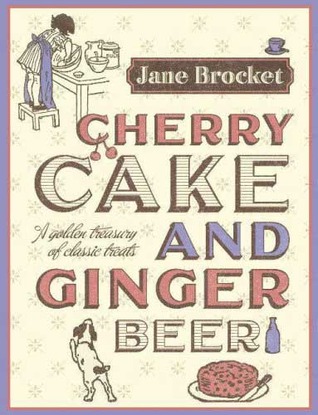
Having grown up on a steady diet of British books, my food memories were sumptuously stitched together by treats that were alien, yet familiar. Recently, a friend and I came across Jane Brocket’s Cherry Cake and Ginger Beer: A Golden Treasury of Classic Treats. The book, we were delighted to discover, offered recipes from children’s books along with an introduction of the story they originated from. The chapters have original illustrations as well as recipes for tuck-box treats, goodies whipped up by storybook Cooks and midnight feasts. There’s seed cake from Swallowdale by Arthur Ransome, pickled lime from Louisa May Alcott’s Little Women and Jean Webster’sDaddy Long-Legs (don’t get too excited, it’s lime brined and stored), and even calf’s-foot jelly from Eleanor H Porter’s Pollyanna.

Brocket tosses together breakfast recipes of creamy porridge and bacon with hash browns. Having grown up in a vegetarian household, I had no clue what bacon rashers were back then, and imagined them to be some cousin of the tomato, since they were all being fried together. It was only when I read EB White’s Charlotte’s Web, did I discover, to my utmost horror, the source of the mouth-watering bacon that all the adventurers loved. Brocket also has recipes for Elevenses, what she describes as “a quintessentially British ritual” loved by Winnie-the-Pooh and Hobbits. There’s Paddington Bear’s favourite marmalade buns, which go well with hot cocoa; and fresh and gooey macaroons from Blyton’s Five Find-Outer series which were adored by Fatty.

Tea-time was sacred in children’s books. How many of us brewed pretend tea for our dolls, teddies and even parents, complete with mini cups and saucers? And before toast became the new global food trend, Mr Tumnus, the faun from CS Lewis’ Chronicles of Narnia – The Lion, the Witch and the Wardrobe, had a toasty tea with “a nice brown egg, lightly boiled… sardines on toast, then buttered toast and then toast with honey”. Since tea-time is really about cakes, there’s Mrs Banks’ bribery and corruption cocoanut cakes from Mary Poppins Comes Back, Milly-Molly-Mandy Has Friends’ muffins which can be toasted on forks over a crackling fire, and treacly, sticky ginger cake, a speciality of Aunty Fanny in Famous Five (“It was dark brown and sticky to eat. The children finished it all up and said it was the nicest thing they had ever tasted”.) Treacle, as I only recently found out, was just liquid molasses.

Brocket suggests an alluring recipe for hunger in which all you need is an outdoor space like a beach, garden or even a secret island. The method is simple – add adults and children to that fresh air along with outdoor equipment “according to season” and allow “to blend for several hours”. Feed the kids and adults well and leave them “to read good books”.

Lesbian love for the troubled teenage soul

http://www.dailyo.in/art-and-culture/lesbian-love-for-the-troubled-teenage-soul/story/1/630.html?page=profile&user=166&type=moderated&start=1

With Duckbill’s “Talking of Muskaan”, Indian young adult books step firmly out of the closet.

On the surface, Muskaan, the protagonist of Himanjali Sankar’s Talking of Muskaan, is a regular 15-year-old. The green-eyed teenager is a great swimmer and class topper. She has loads of friends and lives in a beautiful house with a garden and a tree house. Prateek, the resident stud, has a crush on her. But gradually, the reader discovers, Muskaan is different – she doesn’t want to be forced to do “what girls do” and is ragged mercilessly for this, even being dubbed “macho musko” by her own friends. When Muskaan kisses her best friend Aaliya on the lips, life, as the teenagers know it, isn’t quite the same again. Things go downhill and as is revealed at the beginning of the book, the troubled teenager, in an act of desperation, tries to commit suicide.

Published by Duckbill, Talking of Muskaan is a sensitive and brave portrayal of being a teenager in today’s confused times. It deals with sexual orientation, identity, urban angst and growing up surrounded by hyper-consumerism. But most importantly with this story, Indian YA (young adult) books have firmly stepped out of the closet, by taking on a subject that’s usually-taboo-for-the-young-ones.

Muskaan and her friends are growing up in a homogenous world, grappling with banal and ginormous issues that young readers will be familiar with – the dizzying feeling that comes with that first crush, the vacuum that’s left behind with your best friend’s silence, the horrid realisation that you don’t have enough money to buy an expensive birthday gift for a classmate, the nasty bullying in the school bus. Being a teenager is tough, and being lesbian, is even more so. Teens who are dismissed callously, bullied relentlessly and treated cruelly because they are attracted to people of the same-sex can have a tough time at school.

When Muskaan confesses to bestie Aaliya that she likes girls, she finds herself alienated. Subhojoy, who is from a different socio-economic background and is often marginalised for it, is the only one who understands. At one point, he look at Muskaan and thinks, “She talks about the world as if she is a bystander, not like she belongs to it. I also do that. Perhaps that is what makes us friends”.

talking_of_muskaan-c_111114040440.jpg
Talking of Muskaan, Duckbill Books, Rs 225

When you are 15, perception is everything and Muskaan is defined by her classmates’ opinion. Her sexual orientation eclipses everything else, almost as if she as an individual doesn’t matter. Even her story unfurls from the viewpoint of three classmates – her one time best friend Aaliya, her ally Subhojoy, and Prateek – who tell us Muskaan’s story. Prateek, for one, is full of vitriol – “Muskaan is not only homo, she’s also rude. Maybe homos are like that only”. His classmates mirror his thoughts, they speak of homosexuality in hushed tones, speculating in the school corridors, in whispers laced with ridicule and contempt. Aaliya wonders at the immaturity of her friends, while being unable to accept her own callousness towards Muskaan at the same time. She thinks, “They’d been skirting around the issue like dainty Victorian ladies, not using the word homosexual but delicately hinting at it. Which century are we living in?”

India has its share of adult LGBT writing and Talking of Muskaan now puts YA books on that literary map. Duckbill previously published Facebook Phantom, by 17-year-old Suzanne Sangi. The book was a paranormal romance, but it introduced a gay character who later on becomes straight. For Sangi, it was a way of exploring alternative sexuality and the confusion that comes with having crushes on a person of the same-sex. In contrast, Muskaan is very definitive about not being attracted to boys.

Since only a handful of Indian YA books have LGBT themes or characters, teenagers usually turn to international books to read about this topic. The internet is buzzing with listicles of the best LGBT books for younger readers. For instance, John Green and David Levithan’s Will Grayson, Will Graysontells the story of two American boys with the same name, one straight and gay. Both authors paint the gay and straight characters deftly – they are funny, dark, confused, and quirky. Essentially, they are normal adolescents, whatever orientation they maybe. Levithan’s Two Boys Kissing is poignantly different – a group of dead gay men who succumbed to AIDS narrate the story of two boys and their attempt to create a world record for the longest 32-hour kiss. It lays bare the complexities of parental approval, peer pressure and the relief that comes when friends and families extend unconditional support.

Why Rowling’s Halloween treat for Harry Potter fans is special

http://www.dailyo.in/art-and-culture/rowlings-special-halloween-treat/story/1/528.html?page=profile&user=166&type=moderated&start=2

The author releases an essay on the horrid Dolores Umbridge, a Ministry of Magic official who joined as the Defence Against the Dark Arts teacher in Harry Potter and the Order of Phoenix

Halloween is a special day for Potterheads – it’s the one evening they get to dress up as their favourite Harry Potter character without facing ridicule from Muggles, non-wizarding folks. But apart from that, October 31 also happens to be the anniversary of the fateful day that his parents Lily and James Potter were killed by Lord Voldemort and Harry became the boy who lived, lightening-shaped scar and all.

Thirty three years after this wizarding world-changing event, author JK Rowling offers further insight into the magical world that she created. Pottermore, the website that retells the series in an interactive manner, is also a space where the British writer shares history and trivia about her characters and moments from the books. This Halloween, it is fitting that she’s chosen to sketch out Dolores Jane Umbridge, the horrid Senior Under-secretary to the Minister of Magic who joined as the Defence Against the Dark Arts teacher inHarry Potter and the Order of Phoenix. Umbridge was a squat woman with a penchant for wearing fluffy pink cardigans, collecting ornamental plates with pictures of cats in them, and handing out punishments faster than Snape would ever have been able to deduct points from Gryffindor.

Umbridge, Rowling reveals, had a Muggle mother and a brother who is possibly a squib, a wizard-born person who has no magical traits. Umbridge grows up to be one of the most vociferous supporter of penalising Muggle-born wizards, claiming that “they have “stolen” their wands and magic”.

It seems to be the fate of half-bloods to try and distance themselves from their Muggle lineage. Voldemort, who had a Muggle father, also hated Muggles and other half-bloods. Both Voldemort and Umbridge spread their reign of terror in their unique ways, while pretending to be pure-blooded. Professor Severus Snape, who had a Muggle father and fell in love with the Muggle-born Lily Potter (nay Evans), ended up following the pure-blood supremacist faction of Death Eaters, before (spoiler alert) he switched sides.

At the other end of the spectrum, the Muggle-born Hermione Granger was pretty much known as the “brightest witch of her age”, and Lily Potter was portrayed as “a singularly gifted witch”. It’s not surprising then that Rowling’s careful characterisation evokes questions about prejudices and empathy for readers at an early age. Earlier this year, “The greatest magic of Harry Potter: Reducing prejudice” a study that was published in the Journal of Applied Social Psychology, showed that children who have read the books were more likely to be emphatic towards minorities and immigrants. We doubt that Umbridge would have approved.

On Pottermore, there’s a footnote from Rowling, where she explains how she plotted the character of Umbridge, borrowing physical traits from a “teacher or instructor” who had a “pronounced taste for twee accessories”. Rowling adds that this person’s lemon plastic hair bow was what she remembered when she perched “the fly-like ornament” on Umbridge’s head. A quick refresher for Muggles – when Potter goes for his Defense Against the Dark Arts class, his instant dislike for Umbridge is reinforced as he sees a black velvet bow on top of her head and he “was again reminded forcibly of a large fly perched unwisely on top of an ever larger toad”. Rowling assures us that the resemblance stops at the physical level and she grossly exaggerated her “taste for the sickly sweet and girlish in dress” to create this character.

Umbridge is also reminiscent of a former colleague of Rowling’s who had filled her office wall space with pictures of “fluffy kittens” while actually being “the most bigoted, spiteful champion of the death penalty”. Rowling writes, “I have noticed more than once in life that a taste for the ineffably twee can go hand-in-hand with a distinctly uncharitable outlook on the world”. In her famous 2008 Harvard Commencement speech, Rowling talked about the power of human empathy, and how those who “choose not to empathise enable real monsters. For without ever committing an act of outright evil ourselves, we collude with it, through our own apathy”. Thoughts she continues to echo on her website.

There’s plenty more to discover on Pottermore – such as why Potter was able to see the Thestrals, magical bat-winged horses that draw the Hogwarts carriages and are invisible to “all who have never been truly touched by death”; the wizards who have been Ministers of Magic since 1707; and the history of the wizarding prison Azkaban.

As usual, it is a joy to read Rowling when she’s writing about her world of wizards and witches. Her snippets reveals the meticulous research that went into the books – whether it was the origin of Umbridge’s name or the political context behind a wretched prison like Azkaban. It also reminds us that not only did Rowling write a bestselling series that inspired a generation of children to return to reading, but also that her stories laid bare complexities of inequality, racism and tolerance, issues that cut across both the wizarding and the Muggle world.

Visit www.pottermore.com. Muggles need to register.

Packing Guide For The Travelling Parent

http://www.natgeotraveller.in/web-exclusive/web-exclusive-month/how-to-pack-when-travelling-with-kids/

Blankies, scrapbooks, apps – gear up for a child-friendly vacation.

    • TEXT: BIJAL VACHHARAJANI
POSTED  ON: OCTOBER 21, 2014

Packing for kids can be tricky. In one instalment of Bill Watterson’s iconic comic strip Calvin and Hobbes, Calvin goes off on a trip with his parents and forgets to bring Hobbes the tiger along. His parents, of course, never hear the end of it throughout the car journey.

Travelling with kids, especially younger ones, is never easy, with checklists threatening to be longer than a foot ruler and parents wishing they had an extra pair of eyes and hands to keep an eye on their wards. However, packing is one element of travel that, although quite a chore, can be made easier with simple ideas and checklists.

Pack in advance

Sit your children down and ask them to help you draw a list of the toys, games and clothes that they simply can’t do without. Don’t forget their favourite security blanket if they are attached to one. Negotiate your way around unwieldy accessories – for instance, why that pirate’s chest simply cannot be lugged along. Next, throw everything in the final list into your bag, so that you don’t leave them behind.

Keep them engaged

Each child has different sets of interests, but pack essential games and sports accessories. For instance, Lego, Frisbees and inflatable beach balls are easy to carry and barely take up any space. Of course, you do need a strong pair of lungs to inflate the beach ball. Make sure you carry a drawing pad along with a case of pencils and colours to keep them busy. Toy stores such as Hamleys have nifty travel games like magnetic Snakes and Ladders and Ludo, which means you don’t have to scramble on all fours looking for missing pieces every time the car or bus hits a speed bump.

If you plan to carry some “educational material” along with you, then publishing house Parragon has excellent Gold Star activity books that you can tuck into your handbag and whip out every time your child complains that he or she is bored.

And of course, don’t forget to carry a stack of books – some old favourites and a few new ones.

Let them stay app-friendly

Like it or hate it, the tablet is here to stay. In many ways, a tablet can be a boon while travelling – they are relatively light as compared to laptops and have enough games and stories on them to keep the kids busy during long journeys. Ensure that your tablet is charged before you leave, and your child’s favourite apps are loaded, especially those that don’t need the Internet to operate.

Be weather-ready

Yahoo! has a neat weather app that will tell you what kind of weather to expect, and help you pack accordingly. If you’re travelling during the monsoon, carry a raincoat and gum boots. As a rule of thumb, avoid packing light- or pastel-coloured clothes or anything that gets creased easily.

Keep presents handy

If you plan to buy new toys or books for the journey, save them as presents and hand them out during exceptionally cranky moods; we can promise you instant smiles.

Let them behind the camera

Most kids love to pose, but even more, they love to take pictures. Buy them a cheap camera for their own use and let them take responsibility for the gadget.

Give them their own bag

Pack a small bag for your child, which includes a towel, water, a snack, a book and an address slip with your contact details and the hotel you are staying at. Most kids love to shoulder this responsibility, often lugging their little backpacks across the airport, and refusing to part with them.

Maintain a diary or scrapbook

Lastly, don’t forget to pack a small diary or travel journal. Encourage your child to fill it for 10 minutes daily, recording the trip’s highlight by way of a note, a drawing or even pressing a flower.

Checklist

•    Organic mosquito repellent free of harmful chemicals, such as citronella oil.
•    Medicine kit: Make a DIY medicine kit at home with some basic pills for cold, cough, tummy and motion sickness, band-aids, cotton, wipes, antiseptic cream and a thermometer. Make sure prescription medicines are in, along with the doctor’s prescriptions for the kid. Add a candy or lollipop, it does wonders to soothe aching wounds.
•    Carry a small travel-pouch with bottles that can hold tiny amounts of toiletries for your child. This means you can carry them in hand baggage instead of checking them with your luggage.
•    Gadget chargers and spare batteries for toys.
•    Professor Dumbledore said, “One can never have enough socks.” Can’t argue with that.
•    If you’re travelling by air, keep a pack of chewing gum. Kids can have that in case of ear aches due to cabin pressure.
•    Cap, sun hat, sunglasses, scarves, mufflers, gloves.
•    Slippers or flip-flops, comfortable closed sneakers.
•    Swimwear if there will be a pool or a beach.
•    Water bottles and juice cartons to keep the kids hydrated.
•    Snacks on the go, such as biscuits, dry fruits and fruit bars.
•    A mini night-light to keep the monsters away in hotel rooms.
•    Hand sanitiser or wipes.

Key lessons from travelling with kids

1.    Astalakshmi Venkatesh lives in Bengaluru and often travels with her husband and daughter on holidays. “My daughter is six years old, and she’s prone to motion sickness. If we are travelling by car, I pack lots of plastic bags!” she said.

2.    Venkatesh who works with Fairtrade India remembered another holiday when they were trekking in Thekkady in Tamil Nadu. “She had rubber boots on but leeches kept getting in to her normal shoes,” recalled Venkatesh. “I realised then that I should have packed proper trekking boots. But she didn’t mind, in fact, she was fascinated by the leeches and kept saying, ‘Mamma, see!’” Venkatesh also has a travel pouch with small sterilised bottles in which she keeps small amounts of toiletries and medicines. But her best tip is for infants who cannot sleep without a cradle – “I would carry a sari and we’d tie it between the two berths in a train,” she said. “That would become a makeshift cradle.”

3.    Two years ago, Chaitali Airan was travelling with her family including her five-year-old son to Singapore. “I thought my son was too big for a stroller,” she said. “But after walking around for one day in the hot and humid weather of Singapore, I decided to rent a stroller immediately. I found a ‘Rent-a-Stroller’ service online. Universal Studios, which we visited, was more fun when you don’t have to juggle between lifting your son and your bags and countless other things.”

4.    Airan, who works in the banking sector in Dubai, also suggests that parents carry small change in the local currency. “My son wanted to go to the toilet, minutes after we reached our next destination – a boat ride,” she recalled. “All I had was100 Euro notes. By the time we managed to get change, the ship had literally sailed. We had to go back to the hotel instead. I now carry lots of change – most airports have change machines.”

5.    Jayshree V. and her family are vegetarians. “After four days in South Africa, my three-year-old daughter absolutely refused to have pizza,” she said. “Now on a foreign trip, I carry an electric hot plate, pans and staples like lentils and rice in a zip-lock bag. The content look on my daughter’s face is worth the hotel complaints about smells emanating from our room.”

Kidspeak

Seven-year-old Reyansh Airan draws up his own checklist:

“Sometimes, your parents don’t allow you to carry your iPad or laptop. But that’s not always a good idea. Here are my suggestions for stuff to bring on a holiday.

•    Get your parents to load the laptop with your favourite games and movies.
•    A book that you would read for entertainment, and not a study book.
•    An iPad that is fully charged and has the right apps.
•    Milk, candy, fruits and biscuits.
•    Your own bag
•    Medicine
•    Sunscreen
•    Water
•    Mints for the plane”

When Bijal Vachharajani is not reading Harry Potter, she can be found pottering about in the jungles of India. In her spare time, she works so she could fund the trips and those expensive Potter books. She did this by working as the Editor at Time Out Bengaluru. She is now a consultant with Fairtrade India.

How young adult fiction is helping children battle depression

http://www.dailyo.in/life/depression-dementor-for-children/story/1/238.html?page=category&nid=13&start=2

For a child, coping with a depressed adult is as difficult a task as taking on a dementor.

LIFE

GROWING PANGS  |   5-minute read |   26-09-2014

BIJAL VACHHARAJANI

@bijal_v

In JK Rowling’s Harry Potter series, the idea of depression manifested in the form of dementors, foul creatures that suck on happy memories, draining out all good feelings, spreading despair wherever they go. In an interview withOprah Winfrey, the British author talked about her personal experience with depression which prompted her to create these monsters, “It’s so difficult to describe [depression] to someone who’s never been there, because it’s not sadness. I know sadness. Sadness is to cry and to feel. But it’s that cold absence of feeling – that really hollowed-out feeling. That’s what Dementors are.”

Depression was on everyone’s mind, chiefly with the tragic death of American actor Robin Willaims on August 11, who suffered from the mental illness. For children, depression is a hard concept to understand.

Yet, Google “childhood + depression + India” and a number of studies pop up, along with a bunch of news features. Plus, adult depression is pretty much on the rise, yet another established Google-able fact. For a child, coping with a depressed adult is as difficult a task as taking on a dementor.

Books are one way that children can begin to understand and possibly cope with mental illness. In Rowling’s books, Potter manages to conjure up the Patronus charm, a defensive charm against dementors. On her website, Pottermore.com, Rowling offers a wonderful explanation, “… that a human confronted with inhuman evil, such as the Dementor, must draw upon resources he or she may never have needed, and the Patronus is the awakened secret self that lies dormant until needed, but which must now be brought to light…” Basically, making young readers realise that the ability to battle the monsters of depression lies within them.

 Another book, Jay Asher’s Thirteen Reasons Why released in 2007, and it told the disturbing story of a teenager who comes home to find a box full of audio tapes from him. The tapes have been recorded by Hannah Baker, his classmate, who he also had a crush on, but she committed suicide two weeks earlier.

As Clay Jensen listens to the tape, Hannah recounts 13 reasons why she decided to end her life and one of them is, possibly, him. It’s a chilling story about bullying, sexual violence, abuse and depression, with drastic consequences. A website, 13RWProject.com, stemmed from the book, where fans of the book could “share their thoughts and stories relating to the book”. Teens above the age of 13 have explained how the book changed their life, coming to terms with bullying, making them rethink how they interact with their peers and coming to terms with tragedy as well.

Closer home, books have run through a range of issues – from female foeticide to terrorism, social media woes to sexuality. For instance, Ela by Sampurna Chattarji tells the story of a girl who leads a perfect life until she finds out that she is adopted. Ela has to deal with a gamut of emotions from anger, grief to depression. However, depression, or rather mental illness, hasn’t been the central theme of many children’s books in India. It could be a reflection of how little this grave issue is still understood by us, or it could simply be thought of as too grim a topic for children.

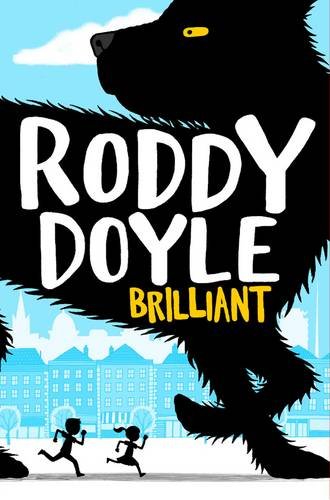
However, in his latest book, Brilliant, Roddy Doyle manages to explain the issue in a simple manner, with a deft touch of humour. In Brilliant, the “Black Dog of Depression” invades Dublin, he prowls in the night, the air above the city becomes darker and the people become gloomier. As the grownups sink deeper in depression, they mumble and slump, and they find themselves down in the dumps. The adults don’t realise what is happening, but the animals do and they also know that only the city’s kids can stop the black dog from spreading his poison.

So off they go, to retrieve Dublin’s funny bone from the black dog. Hordes of children, including the protagonists give chase, aided by a menagerie of talking animals who give sage advice when needed. The solution, the young reader realises, lies in something simple – the power of positivity and optimism. Whenever the kids feel tired, and think that they possibly cannot walk one more step, or start losing faith, an innocuous word gives them a glimmer of hope. Every time the kids say the word “brilliant” out loud, it fills them with courage and lights their way.

Doyle’s story has the children dashing all across Dublin, chasing the black dog. But it essentially deals with issues that are global – recession, the economic slump, its impact on people’s mental health and their ability to cope with it. We live in confusing times, and the kids (and even the animals) inBrilliant try to make sense of it in the best way possible.

Or as Professor Remus Lupin recommends in the Potter books, after an encounter with dementors, one should have a chocolate, at the very least.

The views and opinions expressed in this article are those of the authors and do not necessarily reflect the official policy or position of DailyO.in or the India Today Group. The writers are solely responsible for any claims arising out of the contents of this article.

Writer

Bijal VachharajaniBIJAL VACHHARAJANI @bijal_v

The writer was the former Time Out Bangalore editor and is currently consultant with Fairtrade India.

Proceed to play

http://www.timeoutbengaluru.net/around-town/features/proceed-play

Jumpstart is back with lots of fun plans up its sleeve

This fortnight, if you find your city invaded by a host of writers, storytellers, artists and illustrators, all of them in a seri­ously playful mood, it’s because of Jumpstart, an annual congress of children’s content creators organ­ised by the German Book Office. This year’s edition of Jumpstart is back with a new theme of “Let’s play” and has expanded to include Bangalore as a venue.

“Through experts from the field of writing, illustrations, pedagogy, theatre, games, animation, storytelling and publishing, we wish to talk and experience the ways in which creators in general can play in the process of creating con­tent for children,” said Prashasti Rastogi, director of the GBO, New Delhi, over email. “Whether it be writing a book, illustrating, animat­ing or creating a game, we hope to explore play in all its polysemy – the gaming of play – domestic, public and virtual spaces of sport and leisure and the embodiment and practice of play.”

In Delhi, the programme will be held across two days, with the second day being a master class by the Jumpstart programme team – Anita Roy, director at Young Zubaan; Manasi Subramaniam, commissioning editor at Harper­Collins India; and Samina Mishra, writer and former Time Out Delhi kids editor. “We look at play as any activity that engages, stimulates and motivates,” said Subrama­niam. “Even the act of reading and imagining is a way of playing. We are simply bringing the focus back to good old-fashioned fun.”

The first day will see a series of talks and discussions in collabo­ration with partners Scholastic, Goethe Institut and Embassy of France. Authors Nury Vittachi, Asha Nehemiah and Sophie Benini Pietromarchi will talk about the idea of playing with books in a conversa­tion moderated by Roy. The discus­sion will focus on play and its con­nection to creative work for writers and illustrators. Hong Kong-based journalist Vittachi, who wrote the richly imaginative children’s book The Day it Rained Letters, pointed out, “It is often said that playing is how children learn. That’s certainly true, but I also think playing is how adults learn.”

Benini Pietromarchi is the author of The Book Book and The Colour Book, beautifully illustrated books that get children to explore the world of stories and colours. “My position in my books is not in front of them as a teacher but rather I try to stay side by side to the children,” said the Franco-Italian artist and teacher. “It is as if we were playing a game together where everyone follows the same rules before starting to play. At Jumpstart, I will also explore the different games that you can find in my books. The element that fascinates me in the exploration of play is the ‘new’. Every time you play you are in front of a space and a time that are new, all the possibilities are open. I will also explore the concept that writing for children is not at all to make things simpler to them, but to under­stand deeply the situation or the theme and go to the essential.”

Mishra will moderate a discus­sion on play in pedagogy with educators Amukta Mahapatra, EK Shaji and Sujata Noronha, who runs Bookworm, a Goa-based organisa­tion that offers opportunities for kids to love books. “We’re looking at play and pedagogy where experts tell us how critical it is to keep the element of play in a learning envi­ronment and show us how they do it,” said Mishra. Mahapatra, who was the founder and principal of Abacus School, Chennai, and is currently a member of a commit­tee that is reviewing activity based learning in seven states, including Karnataka, shared her plans for Jumpstart. “Often the word ‘play’ is used patronisingly by adults to describe children’s activity. Children play seriously, even if it is with a bit of a twig or a piece of paper or a math material. There is no clear demarcation of play and work as they learn and live. Work is described as ‘when an effort is put in to produce something’ or when our faculties are being used. Don’t children use all of themselves when they play? Don’t they put in an effort? Don’t they produce some­thing, even if it is intangible? Can we observe, listen and take them forward in their quest to learn and play with the world and the universe that they inhabit?”

Appadurai A from Hewlett-Packard India, one of the festival sponsors along with the Federal Foreign Office of Germany, will talk about augmented reality and innovations in print, while author and game designer Anshumani Ruddra will focus on the nuances of developing a game book. The day will wrap up with a session on transmedia storytelling across books, movies, games and apps with Rastogi; Jiggy George, CEO of Dream Theatre, a brand man­agement and licensing agency that creates and manages iconic brands such as Angry Birds and Warner Bros in India and South Asia; Ralph Möllers, who runs a book and software house, Sys­thema, in Germany; and Shilpa Ranade, who teaches animation at the Industrial Design Centre at IIT Bombay.

In Bangalore, the festival will be held for one day. “Since 2009, Jumpstart has been a platform for authors, illustrators, publish­ers, editors, translators, librarians, educationists to ideate and col­laborate on a relevant theme,” said Rastogi. “All year round we receive mails from people asking us to bring Jumpstart to other cities and we chose Bangalore as the most buzzing creative base with a highly receptive and energetic audience.”

By Bijal Vachharajani on August 15 2014

Of Wizards, Witches and Nephews

Guest post: Of Wizards, Witches and Nephews

Guest post: Of Wizards, Witches and Nephews

By Bijal Vachharajani

Reyansh, my seven-year-old nephew — seven years, nine month old nephew, to be precise — wrangled the phone away from his mother (my sister) while she and I were talking a few days ago. Phone in hand, he raced into his room and huddled in a corner window. Then, he whispered into the phone. “Masi,” said Reyansh. “Are you a witch?”

I paused for a moment and answered, “If I was, you know I couldn’t tell you.”

“I knew it,” answered the nephew softly but triumphantly.

There’s context to this cryptic conversation and for that, I need to rewind to 2006 when Reyansh was born.

I was the fifth person to hold him in my arms, right after his doting parents and excited grandparents. Reyansh was all clenched up – his face tomato red and screwed up, crying with the shock of tumbling into a strange world; his tiny hands curled into tight fists and his skin, fresh and dimpled. It was an immediate, fierce kind of love. One that took the shape of singing lullabies (“In the jungle, the mighty jungle, the lion sleeps tonight) to a baby who was anything but asleep even though it was the middle of the night. I’ve changed diapers with a brave face and without faltering (too much). And I’ve buried him under tons of stories.

When he turned one year old, I got him a big picture book from the Strand Book Stall sale in Mumbai. The nephew was delighted by it. When he opened the book, the dog inside barked and flapped his paper ears. The yellow cat bobbed her head and mewed, and the Jersey cow swished her tail while mooing softly. We spent hours poring over the book. Reyansh was fascinated by the images, running his fingers across the colours, tracing the shapes, giggling and cooing with the joy of discovery.

Many books followed – Maurice Sendak, Julia Donaldson, Tulika’s Thumb books, Tara’s book on cats – and I knew that the family had another bookworm in its fold, when every night his mother would have to tuck him into bed with a kiss and a story.

And then, before I knew it, he was off to Dubai, 1,953 km away from Mumbai. Somehow, reading to him on Skype wasn’t quite the same. From seeing him every day, marvelling at his daily accomplishments (Look! He can hold a spoon in his hand! Oh no, he’s going to hit himself in the head with it) and hearing about his play schools daily feats (he made a tea pot with clay! Oh sorry, I meant a bear, of course it’s a bear), our time together was hastily-squeezed into summer holidays, Facetime calls and iMessage. We didn’t have conversations, we stayed in touch and I wistfully remembered the time Reyansh has asked me if I could give him some tips on becoming an adventurer. (For some reason, he thought I was like Dora the Explorer. Not that I’m complaining.)

Then, he turned seven and he met a wizard named Harry Potter.

tumblr_lo7e8hfNnT1qjln0ao1_500

Let’s fiddle with the time turner once again and tiptoe back to 2001, for my story. For muggles (non-wizarding people), this was five years after Harry Potter and the Philosopher’s Stone had changed the world. The news of the Boy Who Lived began reached us here in India as well and without expecting much from it, I picked up Harry Potter and the Prisoner of Azkaban. Rowling’s story was like a portkey —  I felt like I had been “jerked behind the navel as though an invisible hook and line had dragged” me, “spinning uncontrollably” into a whirling force of words with which Rowling had conjured Hogwarts and Harry’s adventures. Of course, I was teased mercilessly – it wasn’t cool to be reading children’s books in the early 2000s — and I shamelessly fibbed by saying that this was mandatory reading in our creative writing class.

The Harry Potter stories became my Room of Requirement. I retreated to them when real-life dementors surrounded me. Open one of the books and like the room that would always be equipped with “the seekers needs”, I’d find solace in words and wizardly deeds. I read them and re-read them and read them again. Simply put, I’d fallen in love with that world. Mischief managed.

Years later, the Potterhead in me refuses to be snuffed out. My fandom isn’t a horcrux that can be killed off with a basilisk fang. Or maybe it is a horcrux, but of another kind of magic that binds together Rowling’s imagination and my soul… (must stop that train of thought, shuts pensieve cupboard firmly). The nephew, being the sensitive sort, realised Masi’s Potter fixation wasn’t a frivolous matter. The fact that I have an altar to Harry Potter might make some roll their eyes, but Reyansh quickly understood that my Hagrid figurine was not a toy. The only question he had was why I loved the books so much and I told him that some day, soon, he and I would talk about it.

Some Day is here.

Reyansh has taken the same portkey and hurtled into the wondrous world of wizards and witches. He calls and chats with me incessantly to discuss the story and his favourite characters. “It’s Harry, of course, ahem”. He rattles off details from the plot, reminds me of nuggets that I had forgotten. He sends me pictures of his Harry Potter Lego mini figurines, arguing about the merits and demerits of each one. (They’re very cool. I confess I have harboured thoughts of stealing some of them.) He agrees with me that the Hagrid one is pretty awesome, as is the character in the books. He was shocked when I told him that I liked Snape too. Then, with a wise, knowing expression, he said, “You’re kidding, of course.” He can’t wait for me to come to Dubai so that he can sit down with me and talk about the books and the stories within them. Neither can I.

The other day my sister texted me, “Reyansh believes you are a witch and that he is muggle-born. He also believes that he will get his Hogwarts acceptance letter when he turns 11.” That remains my Patronus moment.

Reyansh, Potter and I are now BFFs. Wait, the nephew will not approve of that word. Well, we are now as cool as Harry, Ron and Hermione. Or somewhere in that vicinity at least. All thanks to the world that has been conjured by Rowling with her words and us, with our imaginations.

Bijal Vachharajani is a writer and editor based in Bangalore. At wand point, she will admit she loves Prisoners of Azkabanthe most. She knows that gloomy weather means that dementors are around and immediately reaches out for chocolate.

Paper capers and Harry Potter

http://thegrowlery2014.wordpress.com/2014/07/25/guest-post-paper-capers-and-harry-potter-by-bijal-vachharajani/
Earlier this month, the website Pottermore had a short story by JK Rowling that provided an update of what’s happening with the Harry Potter characters. Bijal, a Potter expert and a connoisseur of kids’ fiction, kindly wrote this little piece about the short story. Enjoy.

***

Rita Skeeter, from the Harry Potter films. (Courtesy: Facebook)

Rita Skeeter, from the Harry Potter films. (Courtesy: Facebook)

Pottermore, the website dedicated to JK Rowling’s Harry Potter series, had a scoop recently.

Seventeen years after Harry Potter defeated Voldemort (and seven years after the last book), there’s news from the wizarding world. Rita Skeeter is reporting live from Patagonia with her acerbic Quick-Quotes Quill, and as usual, it’s dipped in gossip and hearsay. Which means PotterHeads know that they should take all that spews from the pen of the Daily Prophet’s gossip columnist with a huge dollop of salt.

For all the muggles out there, JK Rowling has penned an update on the Dumbledore Army, as they reunite at the Quidditch World Cup Final, an event as big as the FIFA World Cup (if not bigger, then at least more magical).

In 2010, JK Rowling had apparently texted Daniel Radcliffe that she won’t be writing more Potter books. Two years later, she launched Pottermore, a website that retells the story with some wonderful digital interaction and where she offers tantalising bits of history and trivia about the characters to Potterheads. This new column, however, seems to hint at larger offerings from the wizarding world and we are not sure if that means that Rowling is yet to be properly done with that magical creation of hers. For Potterheads, anything Rowling deigns to share about The Boy Who Lived is like finding treasure, so here’s what the author’s given us, through Rita Skeeter’s quill.

Harry Potter aka the Chosen One is almost 34 years old and is the father of two boys, named James Sirius and Albus Severus. He introduces his sons to Bulgarian seeker Victor Krum.

At the risk of sounding like the gossip columnist, we can’t help but wonder why his youngest daughter, Lily Luna, did not accompany her father and brothers. After all most wizard kids grow up on a diet of Quidditch. Could our hero be — gasp! — one of those dads who thinks sports are only for boys?

But coming back to the boys that are Potter’s responsibility, there’s news about Teddy Lupin, son of Remus Lupin and Nymphadora Tonks. He is, we are told, a “wild boy”, but then what else would you expect from a child who is half-were wolf and half-Tonks?

Potter is still married to his best friend’s sister Ginny Weasley. Skeeter also reports that Potter has a nasty cut over his right cheekbone and to her, it looks as if Potter is “desperate to hide” the origins of his injury or there may be trouble in their marriage. As an auror, one imagines Potter would have battle scars, but clearly for Skeeter, it’s much more fun to imagine him as the victim of domestic abuse.

In an older interview, Rowling had revealed that both Harry and Ron Weasley join the Ministry of Magic and become Aurors. Skeeter tells us that two years after becoming an auror, Ron quit and joined his brother George, helping him manage the joke emporium, Weasleys’ Wizard Wheezes. Skeeter speculates aplenty about Ron’s departure from the Ministry job, but we who have read Skeeter over the years know all about the embellishments at which her Quick-Quotes Quill excels.

Hermione Granger remains married to Ron (Rowling once said she regretted that decision and should have paired her with Harry), has bushy hair and is now the Deputy Head of the Department of Magical Law Enforcement. Skeeter dubs her a femme fatale¸ having earlier alleged (baselessly) in Goblet of Fire that Hermione had been toying with Harry’s affections and later Krum’s as well.

The rest of Dumbledore Army have been busy too. The final movie had hinted at a romance between Neville Longbottom and Luna Lovegood, but Rowling dismissed that idea. In her future-forward short story, Neville is now teaching Herbology, a subject he excelled at The Hogwarts School of Witchcraft and Wizardry. Skeeter reports that Neville and his wife Hannah are partial to Odgen’s Old Firewhisky. This could just be Neville drowning his sorrows because the actor playing him in the last movie (Matthew Lewis) is way hotter than Daniel Radcliffe but doesn’t get to be the star (though he did have that swashbuckling moment when he offs Nagini). Luna, on the other hand, is married to a famous wizard, has twins and continues to favour eccentric clothing.

Even in a decidedly short short story, Rowling’s writing of the wizarding world is assured and richly imaginative, tantalising the reader with the possibility of more action (and more stories). Since she finished the Harry Potter series, Rowling has written three novels for grownups. They’ve done well, with her fan base ensuring the books become bestsellers. However, if there’s one thing you can deduce from the new short story, it is that Rowling misses the world of wizardry that she’d conjured for us all.

At the end of Deathly Hallows, Rowling did fast forward 19 years, where you pretty much found out most of the things that Skeeter’s written about in column, minus the gossipy bits. (And since that epilogue took place two years after this column, may we point out to Skeeter that there seemed to be no chinks in any of the three protagonists relationship then?) Many fans had mixed feelings about the epilogue. After all no one really wants their childhood literary heroes to grow up. They need to stay untarnished in our collective imagination. The magic was in growing up with the children, as they became gangly teenagers while taking on fantastical challenges that made Hogwarts so covetable. As muggle children turned 11, we suspect that many of them stared out of their windows, waiting for a tawny owl to deliver a Hogwarts acceptance letter to them as well.

It’s obvious that Rowling misses the characters that have become so dear to so many of us, and so do we. But do we really want to see Dumbledore’s Army all grown up, battling everyday troubles such as an unhappy marriage or thinning hair rather than trying to befriend hippogriffs or fighting noxious dementors?

Still, Rowling signs off promisingly – turns out there’s a second book by Rita Skeeter, Dumbledore’s Army: The Dark Side of the Demob in the offing. And it’s slated to release on July 31, Rowling and Harry’s birthday. Potterheads like me will be sitting and waiting at midnight, much like Harry would on the eve of his birthday, expectantly.

Bijal Vachharajani is a self-confessed Potterhead and at wand point would admit that she loves Prisoners of Azkaban the most. She knows that gloomy weather means that dementors are around and immediately reaches out for chocolate.

Half Bad

Half Bad

Sally Green, Penguin, R299. Ages 14+.

Sally Green’s debut young adult novel, Half Bad, is already slated to be published in 36 countries with a signed film deal. Half Bad is set in a world where witches co-exist with humans (they are called whets) secretly. The story revolves around Nathan, a witch who is half-black and half-white; his mother (the White Witch) killed herself, and his father is the wicked Black Witch who has been absent forever and is on a happygo- killing spree. Nathan grows up with his grandmother and stepsiblings and is closely governed by the White Council, which is forever thrusting new notifications onto Half Codes.

At 17, Nathan will get three gifts to turn into a proper witch. That’s when his own Gift will be revealed and he will find out whether he is White or Black. Things get tense when Nathan’s thrust into a cage and watched over by another witch. There’s a quest thrown in towards the end of the first instalment as well as a love interest, who is, of course a White Witch.

The story may be new, but the threads in the narrative aren’t. There are shades of Twilight – the witches have to drink blood while getting their three gifts – and Harry Potter in it, as well as Ursula Le Guin’s Earthsea series. Nathan’s father sounds quite like Voldemort and Nathan keeps wondering if he’s Black or White, much like Potter’s dilemma about belonging to Gryffindor or Slytherin. There is a prophecy as well, and all that talk about purity of blood.

But Half Bad works because it is fast-paced and a thrilling read. Green writes lucidly, and keeps the story gripping at all times. There’s plenty of gore in the book, but it doesn’t come across as all dark and dreary. She also manages to put together a well-rounded slew of characters – there’s even a gay character (no, we won’t play spoiler). Between all that Black and White business, Green manages to shed enough doubt about the grey areas of life, reminding her young readers that life isn’t neatly divided into monochromes. The sequel is slated to come out next year and is called Half Wild.
Bijal Vachharajani