Play dates

http://www.timeoutbengaluru.net/kids/features/play-dates

Bijal Vachharajani lists some exciting tips and playful tricks to keep boredom at bay for children of all ages this summer
 cover colour 1

Keep your munchkins entertained this summer, but not by packing them off to the usual activity classes and run-of-the-mill workshops. Instead, entice them with our roundup of fun things to do. These are activities that your children can dabble in with their cousins or friends at home or even in your backyard. We tell you how to encourage kids to write better stories, stage home productions of plays, and even devise a quiz. They can also plan a midnight feast, live in a tree house, which you can build without hurting the tree and hone their sense of smell.

Illustrations by Ashwini Pandit.


To bee or not to bee

http://www.timeoutbengaluru.net/kids/features/interview-karthika-na%C3%AFr-jo%C3%ABlle-jolivet

Interview: Karthika Naïr & Joëlle Jolivet

Young Zubaan’s latest book is a stunning blend of prose and art
18yt_book_1_jpg_1759613e

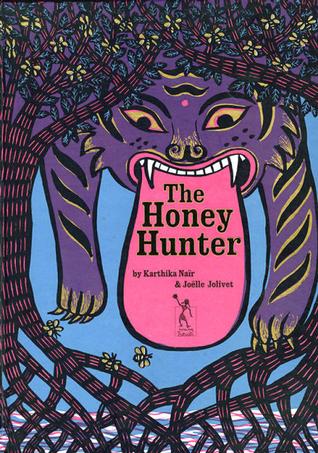
It’s a day like any other in the picture book, The Honey Hunter, as the story unfolds in a neighbourhood not far from where the reader is. There’s a discussion of some importance on at a dinner table, about honey. A child wants more honey, but the last of the summer honey is over and the bees don’t make any during winter. That leads to another story, one about a land of 18 tides, where three rivers meet, and gazillions of honeybees gather golden honey. Thus begins a beautiful story within a story written by poet Karthika Naïr and illustrated by French artist Joëlle Jolivet.

Naïr, a poet and a dance curator based out of Paris, weaves a lyrical tale that is riveting and thought-provoking. The story was earlier written as part of the script of DESH, a dance-drama produced and performed by UK choreographer Akram Khan. It subtly shows how climate change is impacting the mangrove forests and islands of the Bay of Bengal, wreaking havoc with nightmarish cyclones and unruly tides. Shonu lives on one such island with his family and finds himself constantly displaced in the wake of the changing weather. Food is hard to come by and Shonu craves honey. He sets off in search of honey, even ready to raid the beehives. However, Bonbibi, the guardian deity of the Sundarbans, has a pact with the demon king, aka the defender of the forest, aka He-Whose-Name-Must-Not-Be-Taken, that she cannot save anyone who harms the forest. What follows is a fascinating narrative of hunger, greed, the environment, kindness and indigenous beliefs.

The book is not only a delight to read but also to hold and savour for readers of any age. A big-sized book, roughly the size of a table mat, The Honey Hunter is probably one of the most gorgeous tomes to have been published this year. Jolivet, who has studied graphic art and advertising at the School of Applied Arts in Paris, usually works with lithography. Her illustrations are phantasmagorical – from the intricate renderings of the characters and the Sundarbans forest, to the pop of colours like gold and neon pink. Each page is a beautiful painting, delicate with detail, yet boldly rendered. Over email from France, Naïr and Jolivet told Time Out about their collaboration and the kind of research that went into this picture book.

Tell us how The Honey Hunter came about?
Karthika Naïr The Honey Hunter exists primarily because Anita Roy – senior commissioning editor of Zubaan Books – read the first pages of the story (then written as part of the script of DESH, Akram Khan’s dance production) at a dining table in south Delhi, and decided it had to be made into an illustrated children’s book. I was in India on a short trip after an intensive phase of workshops with Akram and about a dozen actors in London, where we had been testing out different rough drafts of tableaux forDESH, and we had decided that one of the tableaux to develop from the various openings I had written was “The Boy, the Bees and Bonbibi” (the working title of what has become The Honey Hunter). Well, Anita dropped in at my friend’s place, read the story I was working on, and asked me to complete it. By the time Anita came to watch the DESH premiere six months later, we were in the thick of the “Great Hunt for the Illustrator”. But that’s just the beginning: it took another two years for the story to become this book.The book uses indigenous art with some really pop colours.

Tell us about the illustration process.
KN This one is really Joëlle’s territory, though I must add that she did about six months of research to make sure she got all the details right – the topography, the costumes, the physiognomy, the iconography of Bonbibi and Dakkhin Rai. This was not easy because there are few formal photos: we see them mostly through street theatre and temple shrines, or local festivals – and that is one of the many reasons it has been so synergising to work with Joëlle! Her attention to detail – both in the text and the real “environment” – was so impressive, even as she adapted it into her visual language and the signature style I adored the very first time I had bumped into one of her wild animals.

Joëlle Jolivet When I work on a new project, in a new cultural background, I’m always curious about popular art, graphics, designs, anything that can feed my inspiration. My usual media is linocut, but for this book I quickly realised that it would not be the right tool. I needed something more spontaneous, more moving. So I decided to use ink and brushes, with black lines and a few strong colours. Blue-green for water and forest, yellow for bees and honey, and pink, because for me, India is shiny pink (Indian pink, of course). As the project evolved, I softly twisted these colours, to get something less obvious. Yellow turned to ochre and pink to neon pink. And Karthika showed me patuas and patachitra, which have something in common with comics. Their narrative streak helped me conceive some of the trickiest pages in the book. To get shiny and deep tones, the book was printed in solid colours. I worked on tracing paper, with black ink, one sheet per colour.

How difficult was it to adapt a script into a children’s book?
KN To be honest, I didn’t think of a young audience at all. Initially, I wrote it as part of the script of a dance piece and that defined the process considerably. Akram and I had discussed the sequence in detail, and how he wanted to stage it – without words, with animation and abhinaya – even before he knew what the story would be. My primary audience was Akram, and Yeast Culture [the animator], who needed to picture a full-fledged world from the text, a world they could transmute it into their respective languages (animation/movement). And even after the story went into “children’s book” mode, I didn’t have to change that approach.

My publishers – Sophie Giraud of Editions Hélium in France and Anita Roy of Zubaan Books – were both quite amazing. They never asked me to “make it more child-friendly” or to change the ending, which is not exactly in the happily-ever-after mode. We did have a lot of discussions about the two-person/dialogue format because it was unusual for children’s fiction in France: there was some initial hesitation about breaking away from an accepted pattern but Sophie was really committed to retaining the spirit of the story (also in publishing, so much text in an illustrated book – that was another instance of going against the norm), and all she asked me to do was add an introduction, so that a child, on reading it, would have a context, a sense of being moored. As you can see I have done that, but without specifying location or time, because I really wanted it to be a tale that could begin anywhere, in any urban household, in any part of the world.

The Honey Hunter narrates a story that delivers many messages without being didactic. How difficult is it to write something like this?
KN I think the intermeshing of myth and quotidian modernity, of proximity and the distant sources of things we take for granted (like honey) in our urban drive for immediate, unthinking consumption is just a reflection of our lives today, anywhere in the world but perhaps more so in an Asian context where millennia-old beliefs drive our lives as much as the new flashy trappings.

What kind of research went into the book?
JJ I met Karthika totally by chance. I received her text by email, in English, and forgot all about it for quite some time, until she called me. Ashamed, I finally read the text and was completely enchanted. I called her back and that’s how Karthika and I met and decided to do the book together. Our respective publishers joined forces and decided to bring it out together in France and in India. During the following months we met often, and I showed her my sketches. Karthika helped me a lot to understand that culture. I did a lot of research on the Internet, never having been to either Bangladesh or West Bengal. I also looked at a lot of regional iconography of Bonbibi and Dakkhin Rai. My imagination is also fuelled considerably by actual, existing details.

KN I did about five months of research before our R&D trip to Bangladesh in November 2010, and then the core creative team was in Bangladesh for about ten days. We travelled from Dhaka to Jessore, Gopalgunj and Khulna, to towns and rivers, and visited the docks and Drik, listening to Shahidul Alam’s [Bangladeshi photographer and human rights activist] accounts of the Dhaka Blockade, and met migrant workers from Bihar and child labourers who were building mammoth ships. We spoke with activists and otter-fishermen, textile conservators (Bangladesh had the largest repository of natural dyes in the world – an industry that was ruined by colonial British import policy, but committed people like Dr Ruby Ghuznavi have made it their life’s work to revive it, to sustain the practice), NGOs, singers and dancers and filmmakers. People were incredibly generous in sharing their experiences.

And then, of course, Joëlle did a huge chunk of research for the visuals. We would have joint sessions whenever we could, where she would show me everything she had found, and I’d add as much as I could to that, or suggest possible sources. She would show me the drafts of the pages, and they were such complete, exquisite worlds in themselves, I was often just dumbstruck at how brilliantly she had morphed the images in my head into something so much more phantasmagorical and vibrant.

The Honey Hunter, Young Zubaan, R395.

 

By Bijal Vachharajani on April 25 2014

The hills are alive

Time Out speaks to author Ruskin Bond about his new books
http://www.timeoutmumbai.net/books/features/interview-ruskin-bond

Ruskin Bond_new

Stepping into the pages of a Ruskin Bond book means stepping out of the world around you. With every sentence you read, you’re cocooned a little more snugly in crisp mountain air. The noise of traffic fades, letting in the gentle rustle of leaves tickled by a breeze, the chirps of many birds. The city recedes, allowing your imagination to travel to remote lakes and hamlets nestled in the hills.

Beautiful as its setting may be, Bond’s fiction does not always inhabit an idyllic world. Here, there be ghosts (albeit harmless ones) lurking in desolate bungalows, whip-smart thieves with nimble fingers, and tales laced with mel­ancholia. If there’s one thing that you won’t find in Bond’s world, it’s horror. This is something Bond’s young readers have noticed. One observed to him that his stories aren’t scary enough. “I told him, I have never met a scary ghost. Usu­ally they are rather gentle,” Bond said, recalling the incident while speaking on the phone from his Landour home. He paused. “I have never met a ghost.”

This is the sweetness and good humour that has made Bond the most popular Indian author in the world of children’s fiction. The author agreed that over the years, his stories have become less seri­ous and more humorous. “Life seems to get funnier as I get older,” said Bond. “I see that in my 20s I took life too seriously. Now I am going to be 80. There is so much to look back upon, more stories to tell and so many people to write about.”

The lyricism of Bond’s writing lilts through his new books for children – Thick as Thieves: Tales of FriendshipA Little Book of Friend­ship and Ruskin Bond Children’s Omnibus, Volume 2In Thick as Thieves, Bond writes about forg­ing friendship in strange places. In one story, a lonely writer seeks the company of a little mouse. In another, old characters from stories such asThe Room on the Roof make an appearance.

All three books are semi-auto­biographical. They tell the story of a writer who instead of becoming yet another Beetle Bailey in the army, headed to a cottage on the outskirts of a hill station. The nar­ratives intersect with Bond’s own life, his childhood friends and his adopted family in Mussoorie, all turned into fiction that’s distinctive for the dry wit of his storytelling.

In the first chapter of Children’s Omnibus, “the writer on the hill” talks about the stolid mountains and how it was only after he came to live in the hills that he was able to start writing for children. “In a way that’s true but I won’t give all credit to the hills,” said Bond with a chuckle. “My first years of writing were directed to the general reader. Some would have been suitable for children, although they weren’t really written for children. In the mid ’70s, I had written a long novel­la, The Angry River and sent it to a publisher in England. The publisher suggested I trim it for a children’s book. My first children’s book is a story that was meant for everyone.”

More than 40 years later, Bond still writes for everyone, as is evi­dent inTales of Fosterganj. Foster­ganj and its inhabitants exist only in Bond’s imagination, although he admits that “some of the events recorded really happened”. The stories are set in the ’60s, when a young, reclusive writer moves temporarily to “a forgotten hamlet on the outskirts of Mussoorie” named Fosterganj.

“It’s sort of fun and frolic,” said the author. “I guess I like writing about small places, and in a way, eccentric out-of-the way places which are usually overlooked by the world at large. I thought I would go back in time a little, bring this hamlet to life for the reader and myself, and weave a few stories.”

Most of the stories are staple Bond fare – tales of ghostly encounters, a meeting with a leopard and tales peopled with a handful of curious but endearing characters. “Tucked away in a fold of the hills,” writes Bond inTales of Fosterganj, “its inhabitants had begun to resemble their surround­ings: one man resembled a willow bent by rain and wind; an elderly lady with her umbrella reminded me of a colourful mushroom, quite possibly poisonous; my good baker-cum-landlord looked like a bit of the hillside, scarred and uneven but stable”.

In his books, Bond manages to write about everyday occurrences in a way that makes them seem out of the ordinary. “This is all part of my interest in nature,” he explained. “If there’s a ladybird on my desk, I want to know where is it going next. Will it climb up a wall? It becomes an epic in itself. These little things have always interested me. The life of each living creature is an epic or story in itself. A snail crossing the road – is it going to get across or is the truck going to run over it?”

Bond’s love and reverence for nature shines through his writing. He talks about finding inspiration in a stream at the end of a hill, the neighbouring villages and the many rambles that he took in the mountains. “Perhaps, many who have read my stories might have been influenced by my feelings for the natural world. In my stories there is a certain respect for the world of animals, trees, birds and everything that’s part of the natural world.”

Listening to Bond talk about nature is as enchanting as read­ing his stories. “Leopards are good survivors, they conceal themselves well,” he said. “I have had them on my roof looking for monkeys who go to sleep. They eat dogs, picked my neighbours dogs (so he keeps a cat).” The keenness with which he observes the world around him is almost childlike in its intensity, which perhaps explains why Bond is such a favourite among young readers.

“It’s a different sort of challenge,” Bond said about writ­ing children’s books. “You have to catch a kid’s attention straight off. Recently a girl came up to me and said ‘I like your stories but can’t you give more action?’ I told her I will do my best next time.”

A Little Book of FriendshipRupa R295. Ruskin Bond Children’s Omnibus, Volume 2Rupa, R250. Tales of FosterganjAleph, R295.Thick as Thieves: Tales of FriendshipPuffin, R199.

By Bijal Vachharajani on February 14 2014 

Gond medallist

http://archive.is/J8DMq
http://www.timeoutmumbai.net/kids/features/gond-medallist

Time Out talks to Gond artist Bhajju Shyam about his journey from anonymity to acclaim

Gond art, Tribal Art, Gond tribal artist, Bhajju Shyam, the london jungle book
In 2002, Gond tribal artist Bhajju Shyam was commissioned to paint the walls of an Indian restaurant in London. Along with another artist, Shyam flew on an airplane for the first time in his life. “Everything was new for me,” said Shyam. “I was at the airport – there was so much hustle bustle, bags being checked in, forms to be filled, crowds milling everywhere. And I had never thought I would get to go aboard a plane.” Shyam sat by the window in the aircraft, taking in the busy runway. As his flight took off, he couldn’t help but think of the heavy plane as an elephant that had sprouted wings and started flying. Two years later, Shyam captured his experiences in The London Jungle Book, a lavishly illustrated book published by Tara Books and the Museum of London that includes the image of a flying elephant.
Over the last six years, Shyam has collaborated with Tara Books to create a range of award-winning books for children using Gond tribal art. His work has given a new spin to children’s book illustrations by incorporating traditional elements into modern storytelling. However, Shyam did not set out to be an artist. Born in 1971 in the Gond tribal village of Patangarh in Madhya Pradesh, Shyam remembers that his initial brush with art was his mother painting the walls of their home during festivals and marriages. At 16, his family’s poverty compelled Shyam to move to Bhopal in search of a job. “I worked as a night watchman at a forest division until I met my uncle who asked me to be his apprentice,” recalled Shyam. The uncle was Jangarh Singh Shyam, a renowned Gond artist. Shyam started out by filling in colours for his uncle’s paintings, till Jangarh Singh encouraged his protégé to strike out on his own.
Since 1998, Shyam’s work has been exhibited in the UK, France, Germany, Holland and Russia. However, illustrating children’s books happened by accident after he attended a Tara workshop in Chennai in 2003. “As part of the workshop, we organised a tour of Chennai,” said Gita Wolf, the editor of Tara Books. “We were fortunate to have the opportunity to watch Gond artists at work and note their ways of seeing and rendering.” Shyam was part of the workshop, and Tara commissioned him to work on The London Jungle Book.
On one page of The London Jungle Book, a rooster stands next to Big Ben. “I realised that people work with clockwork precision in London and look to the Big Ben for the time,” said Shyam. “In our village, the rooster is a kind of alarm clock, who crows at 4am and signals that it’s time to wake up. I couldn’t help but draw parallels.” In The Flight of the Mermaid, Shyam teamed up with authors Gita Wolf and Sirish Rao to retell Hans Andersen’s Little Mermaid. The story is familiar – about a mermaid who yearns to visit the land above – but Shyam’s rendering of the story gives it a traditional Gond look.  The artist has also contributed paintings to The Night Life of Trees, a hand-bound collection of traditional Gond images of trees and spirits.
The self-taught artist now lives in Bhopal with his family. His two children often dabble in painting during their vacation, but Shyam is clear that he will let them decide if they want to follow in his footsteps. “They are still young,” he said, adding, “But when a book of mine gets published, they do get excited and show it to their friends.”
After the success of his Tara books, Shyam repeatedly gets offers from other publishers. “I only do a story if I like it and if I find that it’s connected with my tradition in some way,” said Shyam. Once a year, he meets up with the Tara editors to conceptualise a book and then works out of home. “We work together like a family,” said Shyam. “The story is in English, I try to understand it in Hindi. Once I start working on the illustrations, I send it to them for feedback. Initially, I didn’t have an idea about colours, but their team would help me with that.”
Shyam is now concentrating on planning exhibitions and popularising Gond art. “Gond art has only started making a name over the last decade,” said Shyam. “The world knows contemporary artists. We are hoping that soon they will also recognise our work as a form of art.”
By Bijal Vachharajani on December 10 2010 


Only hue

http://www.timeoutbengaluru.net/kids/features/only-hue
18342401.jpg

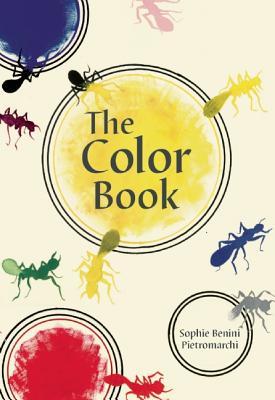
Hmmm… don’t colours in a box seem like birds shut up in a cage? The poor creatures don’t know where to go, they know nothing outside their cage. So let’s free them, and see where they go”. Beautiful analogies like this one are part of The Colour Book, a new children’s book by Sophie Benini Pietromarchi. Published by Tara Books¸ The Colour Book is an imaginative foray that invites its readers to step into the world of colours.

An artist and teacher, Benini Pietromarchi’s latest creation lets “colour speak for itself”. The Colour Book is a sequel to The Book Book, another Tara publication where the artist delved into the art of bookmaking and encouraged kids to become authors. “The seed for this book was in my previous book, The Book Book,” said Benini Pietromarchi, over email. “It’s a chapter called ‘Falling in love with colours’. While I was writing it I realised the subject had lots of potential for further development. So when I had the joy that Gita Wolf [Tara Books co-founder and publisher] asked me for a new book that could be done after The Book Book, it became The Colour Book.”

In the book, the artist first takes a walk down memory lane looking for colour associations by remembering her own land of childhood colours. She describes eating half a large tomato that was deep red in colour and when she sprinkles white salt over it, the salt turns transparent. The artist then goes on to liken this magical process to how you can make colour transparent by adding water to it. Benini Pietromarchi grew up in Paris and went on to study graphic design and literature in Italy. “One of my strongest influences is 1920s and ’30s Paris, where my grandfather was very active in the artistic community,” revealed Benini Pietromarchi, who now lives in Rome.“He wrote surrealist poems and was a jazz musician. On my Italian side there is Tuscany, with its beauty and its light. I’ve always lived between these two cultures without truly belonging to either, my home is in the in-between.”

The book is meant for children above the age of eight, a time when budding artists begin to take painting more seriously. However, the book will be a collectible for pretty much any artist. Lavish and endearing, The Colour Book is one of the most interesting books to have been published in 2013. The writing is evocative and the collagestyle layout makes it a fun read. From understanding the basics of colours to mixing them and maintaining a colour book, the ultimate guide to hues and tints.

In one of the chapters, the author asks the readers to become a colour explorer. “You need to be a sort of collector butterfly (as opposed to a butterfly collector),” said Benini Pietromarchi. “That is, you need to have both freedom and curiosity, and to look, look and look some more. You need to collect photos, words and objects and organise them according to your own very personal system.”

Putting together The Colour Book wasn’t an easy task though. “I started with an ambitious research on the literature of colour, and I read Goethe, Wittgenstein, Brusatin and so on and also the writings of Klee, Matisse, Kandinsky, Bacon, and so on the subject of colour,” recalled Benini Pietromarchi. “The scientific approach fascinated me but it did not work for the type of book I had in mind. So I started again, and I thought of colour as a stain, as a rebellion against the neatness, the cleanliness that mothers demand of their children. Colour as discovery, as individual awakening and as surprise.”

Children are curious and it’s that curiosity that Benini Pietromarchi feeds in her book. “Children like to poke at things to see how they behave, they like to play with food, to see how a punctured egg yolk spreads out on a plate,” she pointed out. “Those are the first experiments with textures and colours, the first instances of making magic potions. So I had the intuition that to make magic potions is similar to creating a colour. In a magic potion we confer magical powers to the elements that compose them and the result is a one-of-akind potion with a specific property. That’s what a colour is, it’s a mixture of different forces that yields its own property. So that was the begining of this long journey on colours.”

Apart from the novel concept, what sets the book apart is that it encourages children to think outside the pencil lines. There’s a red-and-white striped zebra, a blue Chihuahua and an orange rhino in the book. This becomes more relevant when kids are often rapped on their knuckles by art teachers for painting different colours on to a tree or a dog. “The book starts from the premise that colours in their colour boxes are like caged birds that must be freed,” said Benini Pietromarchi. “I insist on saying that I cannot ‘explain’ colours, they are for every person to subjectively discover through their own colour dance. It’s essential to learn to see and observe the colours around us, so as to be able to create them anew, to recreate the atmosphere they convey to us.”

When not writing books, Benini Pietromarchi conducts children’s workshops. “I don’t have a favourite colour, what excites me the most are colour combinations. I feel as if I lived inside a colour book. In fact my studio’s walls are covered from floor to ceiling with colour combinations. They’re of an ongoing exploration, it’s a necessary game where I match colours I need to gaze at eventually will end up in a book of colours, but for now it is as if I was working in a giant nest of little colours combinations.”

The Colour BookTara Books, R700.

By Bijal Vachharajani 

Vikas Khanna: Young Chefs

http://www.timeoutmumbai.net/kids/featuresfeatures/vikas-khanna-young-chefs

DK, R499

As children of the ’80s, some of us grew up making, what was back then, a particularly decadent dessert. Store-bought Marie biscuits would be dunked into a pool of melted Dairy Milk chocolate. The chocolate-covered biscuits would be stacked on top of each other and then left to set in the fridge. The result was a rudimentary frozen chocolatebiscuit cake that had the best of both worlds – biscuits and chocolate. Children today are surrounded by more sophisticated desserts ranging from macarons to tiramisus; and gananches to tortes of all sorts. Many urban kids know their gnocchi from linguini and can pronounce quesadilla and bruschetta (it’s kay-sa-dia and brusque-ta). They watch MasterChef Australia and, going by what the show’s junior version displayed, some children can easily put our cooking skills to test.

Feeding that frenzy of junior masterchefs-in-the-making comes chef Vikas Khanna’s book, Young Chefs. Khanna is the author of Khanna Sutra, a collection of his Valentine’s Day menus, and has hosted MasterChef Indiaand been awarded a Michelin star for his upscale New York restaurant, Junoon. In the introduction to Young Chefs, Khanna writes, “I grew up learning to cook as my grandmother’s little kitchen helper. I ran to her kitchen at every opportunity I got, fascinated with all the smells and action in the kitchen: rolling, baking, chopping, stirring, and whisking”. He goes on to talk fondly about memories in the kitchen and then expounds on “healthy eating, balanced diet and fresh ingredients”.

Khanna’s kids’ cookbook is a lavishly produced one, with tasteful photographs and black-and-white illustrations. The beginning of the book has some handy tips about kitchen hygiene and an illustrated guide to different foods such as proteins, fats and sugars. Khanna goes on to explain the metric and also the imperial measures he’s used in the book, even though most Indian kitchens don’t use ounce and pound measurements. The Cooking Tools guide would make any home cook envious given the gorgeous display of utensils. The chef also gives a pictorial guide to cooking methods such as boiling, simmering, and deep-frying.

The cookbook is divided into Breakfast, Lunchbox, Main meals, Sweet treats and Drinks. The range of recipes includes Indian and international ones, each with a step-by-step pictorial guide. Some recipes are simple, like boiled egg, fruity cereal, and tomato & couscous salad. Others are more complex, such as basic bread, bbq chicken and chicken tikka masala. What we liked about the book though was the fun and simpler recipes such as carrot butter and beetroot raita which find resonance with Khanna’s outlook of healthy and fresh ingredients. We can also see kids enjoying experimenting in the kitchen with some of these recipes.

We were dismayed to find that most recipes required cooking on the stove (though there’s a sign to show adult supervision required. The book’s for a slightly older audience, aged 11 and above.) Further, some of them called for ingredients that are either not easily available in supermarkets such as crème fraiche or readymade shortcut pastry. Going by the photos, in which kids from different nationalities are doing most of the cooking, it’s evident that the book is meant for an international audience.

Keeping these thoughts aside, we decided to give two recipes a whirl, one from breakfast and the other, of course, from dessert. Khanna’s Eggy Bread is basically French toast, and he explains that it’s “popular around the world… eaten in Portugal at Christmas and in Spain and Brazil at Easter”. We whisked four large free-range eggs in a mixing bowl along with milk and cinnamon. And then soaked the white bread for about 30 minutes. Then we fried the bread on both sides until golden and the result was a crisp yet spongy French toast. The recipe suggested accompaniments such as blueberries and maple syrup. Given the price of those at gourmet stores, we ditched that and chose the second suggestion of butter and jam. A perfect Sunday morning breakfast.

Next up, we wanted to try a dessert that didn’t require an oven. We picked the creamy pista ice cream – a sinful combination of condensed milk, pistachios and cream boiled together. Our end result looked like Hulk’s back – greener and gloopier than the photo in the book. We popped the ice cream in the freezer and suddenly found ourselves back to our 12-year-old self when our mother would put her hand-churned strawberry ice cream into the freezer. We had to restrain ourselves from opening the freezer again and again to see if the ice cream had set. But the patience paid off, the pista ice cream was creamy and tasted of summer and childhood. We couldn’t have asked for more.

By Bijal Vachharajani on January 03 2014

DVD Review: Epic

http://www.timeoutdelhi.net/film/dvd-reviews/dvd-review-epic

It’s a green, green world in Epic, one of the latest animated offerings from the creators of movies such as Ice Age. Teenager Mary Katherine, who goes by MK, is exasperated with her dad, an eccentric scientist who is convinced that the forest is teeming with tiny denizens. Of course he’s right and these miniature soldiers are called Leafmen, who ride humming birds and have one task in life – to protect the verdant forest from the Boggans, whose sole purpose is to cause decay on the forest. To the Leafmen, all humans are slow and stupid beings called stompers.

MK gets stuck in the middle of this tussle, when the forest queen Tara entrusts her with the all-important flower bud that will ultimately reveal the next heir of the jungle. In a manner that’s reminiscent of Alice in Wonderland and Honey, I Shrunk the Kids, MK is reduced to the size of the Leafmen. MK finds herself on a quest with Ronin, the rugged, taciturn chief of the Leafmen; Mub and Grub, the snail and slug who are thrown in for comic relief; and the handsome, rebellious Nod.

Epic presses all the right buttons – spectacular animation, a not-so-subtle message about conservation, and of course, dollops of romance and humour. A beautiful movie – with colourful flowers and gnarly trees dotting stunning landscapes– we can see that the 3D version must have been enthralling to watch on the big screen. Yet, there’s something missing in the movie. We already know that good will triumph over evil, and that means there’s just not enough drama to pull the film together.

We loved the DVD’s special features, but they are just five to ten minutes long. In Birds, Bugs and Slugs: Forest Explorer, children can learn about the animal world through the movie’s characters. For instance, Nim the caterpillar becomes a tool to explain that the insect has a ferocious appetite and can eat up to three times its body weight. In Rot Rocks, we take a look at the forest from its darker side and see the point of view of decay and rot. A back story about the making of Epic was sorely missed.

Excel Home Entertainment, R599.

By Bijal Vachharajani on October 25 2013 

The bone ultimatum

http://www.timeoutbengaluru.net/books/features/bone-ultimatum

Bijal Vachharajani spoke to the author of The Bone Season


17199504

In May 2013, The New York Times profiled a slew of 20-somethings who are on the brink of success or already successful. Rubbing shoulders with Chris Hughes, co-founder of Facebook, and Alexander Wang, creative director of Balenciaga fashion house; was Samantha Shannon, a 21-year-old Oxford student. Shannon is the author of a seven-part literary fantasy series, The Bone Season, the first of which has just been published. The reason Shannon makes the list is that Bloomsbury, the British publishers of JK Rowling’s Harry Potter series, have given “Shannon a six-figure advance for the first three books, an unprecedented show of support for such an untested first-time author”.

The Bone Season revolves around Paige Mahoney, a 19-year-old who lives a double life in London because she’s clairvoyant. While her father thinks she works in an oxygen bar, she’s actually part of a syndicate that is full of people with psychic abilities, which is a crime under the Scion rule in London. Mahoney is a dream-walker, which means her spirit can go hurtling into the aether. Her life changes when she’s arrested and finds herself in an abandoned version of Oxford city where the Rephaim – cruel, infallible beings – dwell. Shades of Suzanne Collins’ The Hunger Games and George Orwell’s Ninteen Eighty-Four emerge, as Mahoney discovers the truth behind the Rephaim regime.

The story isn’t very original, but what brings it to life is Shannon’s imagination – her inventiveness when it comes to the Rephaim-infested Oxford and the colourful details she weaves into her narrative. There’s also the good looking and mysterious Warden Arcturus, who happens to be Mahoney’s master. But the story falters towards the end. However, going by the vein of popular books today, The Bone Season is right on mark – dark, check; good-looking protagonists, check; magic and sci-fi, check. In an email interview with Time Out, Shannon talks about how her debut novel is “penny farthing futurism”.

Tell us about The Bone Season.
I started writing The Bone Season when I was 19 years old, shortly after completing an internship at David Godwin Associates, a literary agency in Seven Dials, a small district in London. While I was there, I had a vivid image of a girl having the same day at work as me, but she happened to be clairvoyant – and The Bone Season was born. I sent the finished book to the same agency in April 2012 and it was bought by Bloomsbury a month later.

You’re a student at Oxford and have placed your university into a disturbing dystopian world. Tell us about it.
The novel begins in 2059, 200 years after the day that triggered its events, but 1859 still shapes the world of Scion. The way I handle this in the book is through anachronism. You’ll see gramophones, Victorian clothes and herbal remedies in the same space as oxygen bars, data pads and advanced painkillers. I’ve tried to find a word that fits what I’m doing with the novel in this respect. One of the guys at Bloomsbury suggested “penny farthing futurism”, which I love. The idea of clairvoyant powers just came to me while I was working at Seven Dials.

On your blog, you mention that music is inherent to your writing process. How did you mix it into The Bone Season?
I’m a big fan of old music, from the Victorian era onwards. I’d love to own an antique gramophone. The Bone Season is set in 2059, but shaped by events occurring in 1859. I try to bridge the two timelines through anachronism, and weaving in some tunes from the 18th, 19th and 20th centuries helped me create an “old world” atmosphere.

Your story comes on the heels of a slew of books set in dystopian worlds. Yet, there’s a vein of disturbing reality to it – politics, inclusiveness. How difficult was it to write two worlds?
It was surprisingly easy. Just as Paige operates on two levels – spirit world and physical world – I operate on “book level” and “reality level”. When I walk around London I see both my London and Paige’s. The two worlds overlap and blur together in my mind.

A seven-part series – how daunting is this, especially when everyone’s drawing parallels to Rowling?
It’s been overwhelming, to say the least. I’m a young, unknown author and there’s a lot of anticipation to live up to. Having said that, it’s been great to have so much early interest in The Bone Season.

I’m a huge fan of Harry Potter and devoured the books with every new release. I was born in 1991, so I’m very much part of the “Harry Potter generation” – those whose childhoods just wouldn’t have been the same without it. JK Rowling is a luminous storyteller. I love her sense of humour and the intricate wizarding world she built around Hogwarts.

I think all writers aspire to be like her, to capture readers like she does, but I didn’t think about Harry Potter when I wrote The Bone Season. The comparison just came from our similar deals: seven fantasy books with Bloomsbury.

The Bone Season, Bloomsbury, R499.

By Bijal Vachharajani on September 27 2013

Book nook

http://www.timeoutbengaluru.net/search%3Fkeyword%3Dmortality-doctrine-eye-minds
Mortality Doctrine: The Eye of Minds
Dashner, Random House, Rs866. Ages 14+. 

James Dashner is best known for his Maze Runner series – the postapocalyptic books are set in a labyrinth inhabited by a group of boys. Every night, the maze door is shut and the boys temporarily safe inside a space called the Glade. Outside the Glade, all kind of perils lurk. Dashner’s latest book series is not set in a maze but is reminiscent of his earlier books.The Eye of Minds is the first book in The Mortality Doctrine series, set in a futuristic high-tech world of gaming. Michael is one such gamer whose life revolves around the VirtNet, a hyperreality game which is played by encasing yourself inside a coffin and letting wires snake beneath your skin. Things change when the government enlists Michael to help them nab Kaine, a rogue gamer who’s hacking into players’ virtual lives and destroying their real ones. Young adults addicted to their Xboxes and PlayStations will love this futuristic world where gaming takes on a largerthan- life avatar. Yet, there are subtle plots at play here as real and fictional worlds blur together, throwing up questions about this addictive space, hacking, and the use of technology against the backdrop of cyber terrorism.  

The Screaming Staircase:Lockwood & Co
Jonathan Stroud, Random House, Rs550. Ages 12+.

Over the last few years, London has been plagued by some serious monsters when it comes to literary fiction. From dementors looming over the city in JK Rowling’s Harry Potter series to zombies taking over the country in Charlie Higson’s The Enemy, it’s all been done. This time around, author Jonathan Stroud unleashes a world where Britain’s haunted by ghosts whose touch can kill a person Only some children have the ability to vanquish these spirits.

Lucy Carlyle is one such investigator who joins Lockwood & Co, London’s most nondescript ghost hunting agency, run by teenager Anthony Lockwood along with the nonchalant and sarcastic George. They go ghost-hunting with all sorts of equipment from iron filings to tea bags. The agency’s reputation is up in shambles after they botch up an assignment. They have a chance to redeem themselves, but it involves spending a night in a haunted house.

Stroud is the author of The Bartimaeus Trilogy. His new series is chilling and funny at the same time. The ghosts portrayed in the book are macabre and frighteningly real.Yet, it’s a compelling read, with endearing characters

Munch kin

Bijal Vachharajani leafs through the pages of a new handmade book


51gOKYnYFLL._SY344_BO1,204,203,200_

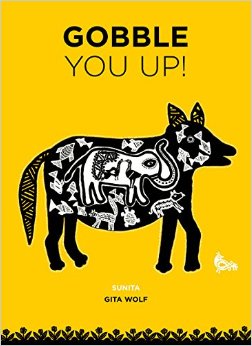
What is a wily but lazy jackal supposed to do when he’s hungry? According to a Rajasthani folk tale, he gobbles up a crane. And then he goes on to make a meal out of a slowpoke tortoise, a cheeky squirrel and pretty much most of the forest. They all end up inside his tummy. This humorous oral trickster folk tale, which subtly throws in themes of greediness and the perils of being idle, is now rendered lavishly in Tara Books’ latest offering, Gobble You Up! Adapted by Tara Books’ founder Gita Wolf in rhyme, the handmade book has been illustrated by Sunita, a Rajasthani Meena tribe artist. The book uses an art form called mandana, which is traditionally painted by women on the walls and floors of their village homes. “We make a paste of khadiya (chalk) with lime, and paint with our fingers using a cloth,” said Sunita, over the phone from Sawai Madhopur, where she lives with her husband Prabhat and two children.

Sunita’s style is fluid and each page is filled with striking illustrations. Since the mandana art form has nature as a recurring theme, Gobble You Up! also has bold yet intricate nature drawings. The richest image is that of the swollen jackal, his tummy full of a forestworth of animals. Sunita and her husband first met the people at Tara Books when the publishing house was creating Nurturing Walls, an art book based on wall paintings by Meena women. “We invited Sunita for a workshop on women’s everyday art in Chennai in February 2011,” said Wolf, over email from Chennai. “We were inspired by her art, and began to discuss a project. The theme of pregnant animals (one inside the other) as well as animals and their young is a common theme in Meena art, and helped to guide the direction of the project.”

Turning Sunita’s art into a book wasn’t easy. “The first challenge was to build a visual narrative sequence from a tradition which works predominantly with static images,” said Wolf. “The second was to retain the original feel of the wall art on a different (and smaller!) surface.” For that, Sunita squeezed diluted white acrylic paint fingers on brown paper. The book is also printed on the same kraft paper, since it “mirrors the mud walls of a traditional village setting,” said Wolf. To define the details of the animals, book designer Rathna Ramanathan split the images into two colours – the jackal is rendered in black and the creatures he swallows are in white. It’s all in the details – a modern Gotham typeface was used to complement the contemporary quality of the art work and the book was hand silkscreen printed in two colours and then hand-bound. For Sunita, this is the first time she’s stepped out of Rajasthan to work on an international publication. Sunita grew up in Ramsinghpura and learnt mandana from her maternal grandmother and cousin sister. “The women in our village would practice mandana especially during festivals like Diwali,” said Sunita. “I was fascinated by it and started learning from them.” Sunita and her family are excited about her book. “We get happy when we buy new clothes, and this is a book,” said Sunita. While this is an art book, Gobble You Up! is meant for children. “When you are working with art forms which are normally not used for children’s books, the balance has to be struck between retaining the essence of the form and communicating the story to children,” said Wolf. “We worked intensively with Sunita so that the essence of the story, and the sequence of images is easy for the child reader to comprehend.”

Gobble You Up! Tara Books, Rs850. Ages 3+.

By Bijal Vachharajani