Five books that make history fun for children

http://www.dailyo.in/arts/indian-history-mughals-mauryan-age-ashoka-chola-razia-sultan-ajanta-caves-books/story/1/5596.html

Textbooks apart, there are different ways of bringing the country’s past alive for young readers.

Decades ago, my school days were tortured by numbers. Whether it was complex equations in Maths or the dates in History and Civics, the figures just refused to stay put in my head. Apart from key dates in India’s history, it was almost impossible for me to remember in what year did a particularly bloody battle happen or when did some dynasty ruled what part of India.

Further, history is a reflection of cultural and political values of a particular time. Over the last few years, there has been a lot of opposition and public debate about the rewriting of text books with nationalist themes in them.

Textbooks apart, there are different ways of bringing history alive for young readers, and one is the substantial number of children’s books – both fiction and non-fiction – that are available today.

A Children’s History of India, by Subhadra Sen Gupta

a-childrens-history_081115033425.jpg

Written at the back of this 445-page book is a relevant message – “History is not just about kings, battles and dates, it is also about how ordinary people lived… it is the story of our past”. Now, if only someone had told me this when I was a child. A Children’s History of India starts from the time there was a land called Jambudvipa, the land of the rose apple. The author describes the landscape beautifully. She writes: “With soaring snow-capped mountain ranges of the Himalayas in the north and the tumultuous waters of the Indian Ocean in the south…” Sen Gupta’s lucid prose brings the past to the present, as she takes the readers on a journey from Harappa to the rise of Vijayanagar to the Mughal period and the fight for Independence to growing up in a free India. The book is full of snippets, such as the first railway line was laid between Bombay and Thane in 1853 CE (see, how much easier it is to remember dates like this one?) and how trains initially created panic among people who had “never seen anything like it before”. What really is interesting is the way Sen Gupta connects the reader to present day India, by recommending walkabouts to old buildings and museums in the country, offering trivia from the internet and suggesting classroom activities such as creating a Mughal manuscript.

Queen of Ice, by Devika Rangachari

queen-of-ice_081115033516.jpg

Once in a while comes a book with a kickass female protagonist, and that’s Devika Rangachari’s Queen of Ice. This is the story of Didda, the princess of Lohara who is beautiful, intelligent and lame, but destined for greatness. Loathed by her father, Didda is married off to King Kshemagupta, the ruler of Kashmira, who prefers jackal hunts to attending to the grievances of his subjects. That’s when Didda realises it’s time to take matters, well the reigns, in her hands.

Didda was part of Rangachari’s doctoral research on women in early medieval north India. In her historical note, the author writes, “Although she was a masterful ruler who ensured an unprecedented era of peace and prosperity in Kashmir, her rule and contributions have been invisibilised or trivialised in accounts of this period.” Kashmir in the 10th century comes alive in this story that’s a clever mix of fact and fiction and Didda gets her fitting place in history.

The Puffin History of India Vol 2, by Roshen Dalal

dalal_081115033741.jpg

While most children’s books focus on pre-Independence India, Roshen Dalal’s The Puffin History of India Vol 2 looks at the events that shaped the country post August 15, 1947. The book starts from Republic Day and goes on to offer a timeline of important events that took place until the turn of the millennium. The Partition, the first year post Independence, writing the Constitution, are all in the book. Dalal writes about 26 January, 1950 – “Celebrations in Delhi began the previous night with a two-km-long torchlight procession.” The author also talks about some of the policies that shaped India. There are whole chapters on foreign policy. Kids can learn about different prime ministers and governments, and also the Emergency, making it a comprehensive roundup of India’s contemporary history.

A Chola Adventure, by Anu Kumar and other series

chola_081115034301.jpg

There are some really interesting series of history books out there by different publishers. There’s Puffin’s Girls of India series, with titles such as A Harappan Adventure, by Sunila Gupte and A Mauryan Adventure, by Subhadra Sen Gupta. Anu Kumar’s A Chola Adventureis based in 990 CE in Tanjore and tells the story of 12-year-old Raji who one day decides to help a Chinese sailor. The Mysteries Series, by Red Turtle includes Kumar’s How Did the Harappans Say Hello? And 16 Other Mysteries of History. Kumar sets out to answer questions such as “Who drew on the walls of the Ajanta caves?” and “Will the real Vikramaditya please stand up?” A seriously fun series is History-Mystery, by Duckbill.

These, the publishers assure us, are mysteries that one will never find in history books. In Ashoka and the Muddled Messages, the Mauryan emperor is hopping mad because someone’s messing around with the messages he wants inscribed on pillars; and in Razia and the Pesky Presents, Razia Sultan, the ruler of Dilli has her own set of problems as someone is insisting on giving her girly gifts and challenging her right to rule as a woman. Based on real historical characters, author Natasha Sharma gives the books a fun twist, while ensuring the kids learn a few valuable lessons along the way.

Amazing India: A State by State Guide, by Anita and Amit Vachharajani

amazing-india_081115034937.jpg

This one’s not strictly a history book, but for the amount of information it packs along with the quality of illustrations, it belongs in this list. Anita Vachharajani takes readers on a state-by-state trip of the country, acquainting them with the rich cultural and geographical diversity of India, while Amit Vachharajani’s quirky illustrations enliven up the book. Each state comes with its own map, fact file and an introduction which includes a short history. For instance, in Orissa, young readers can find out about the battle of Kalinga, who rebuilt the Jagannatha temple, and the dynasties that have ruled the state. What sets this book apart is that the Vachharajanis have written about defining social and environment moments such as the Chipko movement and also the Roerich Pact to protect world monuments during wars. Although the book’s brimming with information and illustrations, it is easy on the eye and a fun, quick read.

Five Indian children’s books on tiger everyone must read

http://www.dailyo.in/arts/world-tiger-day-books-children-national-animal-india-poachers-wildlife-environment/story/1/5300.html

On World Tiger Day, it’s time to show your stripes for India’s national animal.

GROWING PANGS  |  4-minute read |   29-07-2015

It’s time to show your stripes for India’s national animal on World Tiger Day. We give you a round-up of five books about this magnificent animal that should be part of your children’s bookshelves.

1. Ambushed by Nayanika Mahtani:

9780143333609.201503_072915102718.jpg

The ten-year-old Tara is a gadget geek, she even thinks her Papa’s birthday cake should be shaped like his BlackBerry phone. Which is why when her banker-turned-photographer father decides to take her to Ranibagh, a tiger reserve in the Himalayan foothills for the summer, she’s horrified. After all, nothing ever happens there, does it? But then Tara lands splat in the middle of an adventure – who would have thought that the forest was not only home to the beautiful tiger, but also to an international gang of ruthless poachers? Satya, a tribal boy, enlists Tara’s help to literally save the skin of a tigress and her cubs.Ambushed is a fast-paced read that puts the spotlight firmly on conservation. Nayanika Mahtani’s debut novel is peppered with trivia, such as tigers are hard to spot and that some hundred years ago, there were over one lakh tigers in the world. While doing so, she also touches upon themes of social inequalities and the politics of conservation and poaching.

2. Ranthambore Adventures by Deepak Dalal:

deepakdalal_072915102733.jpg

For any child who has visited Ranthambore Tiger Reserve, Deepak Dalal’s Ranthambore Adventures is sure to transport them straight back into the Rajasthan forest. Aditya is planning to join his friend Vikram in Ranthambore, when he stumbles upon the diary of a tiger poacher. Aditya is grabbed by the poachers and his friend Aarti follows their trail, all the way to Ranthambore. At the same time, readers are invited into the world of Genghis, a magnificent tiger and his family. An action-packed adventure, Deepak Dalal’s story is an informative read about tigers and their home, the forest. It’s also a story of friendship and courage, harking back to timeless books such as Enid Blyton’s Famous Five series. Although Ranthambore Adventures was first published in 1998, its message about tiger and forest conservation remains as evocative as ever.

3. The Tigers of Taboo Valley by Ranjit Lal:

27isbs_tiger_2292203_072915102752.jpg

One of the best explanation of a poacher comes from Raat-ki-Rani, a tigress who lives in Sher-Kila National Park. She explains to her cubs that “A poacher is one of those two-legged hairless cowards who will kill you if he can. He might use any revolting method he can think of – poison, traps or guns”. Tragically, the brave tigress dies at the hands of poacher Khoon-Pyaasa, leaving an unwilling boss tiger Rana Shaan-Bahadur to take care of his four cubs, Hasti, Masti, Phasti and Zafraan. But like many forest, this one too is brimming with gossiping animals, a vulture squad called Diclo-Fenac, a photographer from the National Geographic, and an underground group of porcupine terrorists who have it in for tigers. Ranjit Lal offers a hilarious wild rumpus, where readers learn about the fascinating animals, while sparking concern for the forests and its denizens.

4. Tiger by the Tail by Venita Coelho:

full-cover-tiger-by-_072915102803.jpg

Venita Coelho’s book comes with a tagline, “Save the Animals, Save the World” – which happens to be the motto of the Animal Intelligence Agency (AIA). The back of the book explains that the AIA is “a multi-species non-governmental agency. Specially trained animal and human agents work undercover to save animals and save the world. Some of them have the licence to kill”. One of the agents with a licence to kill is Agent No 002 aka Bagha, a member of the Panthera tigris species. The tiger is 250kgs of sheer intelligence and muscle. He’s really what one could call a cool cat. Bagha and Rana, a boy who can communicate with animals because he can JungleSpeak, embark on a mission to investigate the disappearance of tigers from wildlife reserves across South Asia. Tiger by the Tail is a wonderful read, interspersed with pages of trivia and facts about tigers.

5. Tiger on a Tree by Anushka Ravishankar:

61qmujrca0l._sx377_b_072915102813.jpg

Published in 1997, Tiger on a Tree is one of the most iconic books about the big cat. Resplendent in orange and black, the picture book has been illustrated by Pulak Biswas. Anushka Ravishankar tells the story of a scaredy-cat tiger who gets stuck on a tree. As the villagers “Get him! Net Him! Tie Him Tight!” they need to decide what to do with this tiger. Written in verse form, Ravishankar talks about the man-animal conflict, courage, and kindness, in a simple yet beautiful way. Biswas’ illustrations carry forward the tale, bringing the forests, the river and the village alive with his brush.

Why I feel Harry Potter made the world a better place

http://www.dailyo.in/arts/harry-potter-jk-rowling-18-years-snape-ron-hermione-warner-bros-bloomsbury-dumbledore-hagrid/story/1/4557.html

It’s been 18 years since the first book took the world by the storm, and the magic hasn’t tarnished still.

At the turn of the millennium, it was definitely uncool to be caught reading a children’s books and that too one with bespectacled wizards riding strange beasts on the cover. I ignored the relentless jibes from my friends (yes, you all know who you are) and lost myself in the wizarding world of Harry Potter and the Prisoner of Azkaban. I reread the books, watched first days, first shows of the movies, did marathon viewings with friends and spent pots of money on merchandise. Potter and his motley crew saw me through good times and bad.

In happier times, I curled up with a mug of masala chai, wishing it was butterbeer, and laughed and cried with the stories. Even now a figurine of Professor Snape stares at me from the top of my desk, threatening me with detention if I don’t finish this article.

It’s been 18 years since the first book took the world by the storm, and the magic hasn’t tarnished still. I rummaged through my pensieve of memories to revisit why the boy who lived continues to beguile us Potterheads.

Harry Potter was a highly unusual boy in many ways, but: Although Harry Potter is a wizard and the Chosen One, young readers were quick to realise that he’s not that different from them – for starters, he’s got unruly hair that makes him look scruffy and the adults keep wanting him to tidy up, he’s an average student who keeps procrastinating over homework and he feels the same fear of a first Quidditch match or exams as any one of us would when faced with a daunting task. In fact, his best friend Ron Weasley was the sarcastic, funny one and we all know that Hermione Granger was truly the brightest witch of her time.

harry_potter_and_sni_062415013010.jpg

The biggest battle Potter fights is against prejudice: In July 2014, theJournal of Applied Social Psychology published a study titled, “The Greatest Magic of Harry Potter: Reducing Prejudice”, which revealed that children who read the books were less prejudiced and more open minded towards immigrants and homosexuals. Earlier this month, another message behind the stories spilled into real life when the Harry Potter Alliance, a non-profit initiative led by fans of the books, won a four-year campaign with Warner Bros studio agreeing to make all Harry Potter-branded chocolate Fair Trade or UTZ certified by the end of this year. Clearly, the HPA took JK Rowling’s words to heart – “We do not need magic to change the world, we carry all the power we need inside ourselves already: We have the power to imagine better.”

550w_movies_harry_po_062415012723.jpg

The books inspired a generation to read: In the year 2000, three years after the first Potter book hit bookshelves, The New York Times Book Reviewannounced that it would print a “separate best-seller list for children’s books… The change is largely in response to the expected demand for the fourth in the Harry Potter series of children’s books, editors at the Book Review said”. JK Rowling’s best-selling series made room for a new brood of children’s books as more and more kids took to reading them. Alas, it also meant we had to suffer certain vampire-related books, but well, we can’t have it all.

j-k-rowling_062415013558.jpg

It’s all about team spirit: Let’s face it, without Hermione, Harry just wouldn’t have got the philosopher’s stone, entered the chamber of secrets, rescued the prisoner of Azkaban… You get the drift. And then there was Neville Longbottom who had to finish off the last horcrux, Dobby who rescued them all, at (sniff, spoiler alert) great personal peril and Ron, erm… who managed to make us all chuckle.

2003_harry_potter_an_062415012621.jpg

It’s all about the choices we make: When Dumbledore says, “It is our choices, Harry, that show what we truly are, far more than our abilities”, it’s reminiscent of how the world – wizarding and muggle – is not just black-and-white. We were all convinced that Snape had it in for Harry, only to be surprised by his goosebump-inducing story, which showed that he was protecting the boy. Tom Riddle was the perfect student but took on the mantle of the Dark Lord with his prejudices and his own fear of death. And Hagrid faced a lot of stigma for being half-giant but is one of the most gentle of the characters in the book series. Except, of course, for his love for Blast-Ended Skrewts, giant, carnivorous spiders and biting books.

dumbledore_062415013436.jpg

Technology and great outdoors, can kids have both?

http://www.dailyo.in/lifestyle/anshumani-ruddra-minecraft-hogwarts-finding-audrey-sophie-kinsella-parenting/story/1/4661.html

Author Richard Louv underlines the importance of adults helping children ‘detach from electronics long enough for their imaginations to kick in’.

Freedom is a bird taking to the skies

http://www.dailyo.in/variety/peta-caged-bird-cockatoos-parakeets-mynahs-sparrows-wildlife-protection-act/story/1/3793.html
bird-embed_051815092305

In recognising for our birds the fundamental right to ‘live with dignity’, the Delhi High Court has done a commendable job.

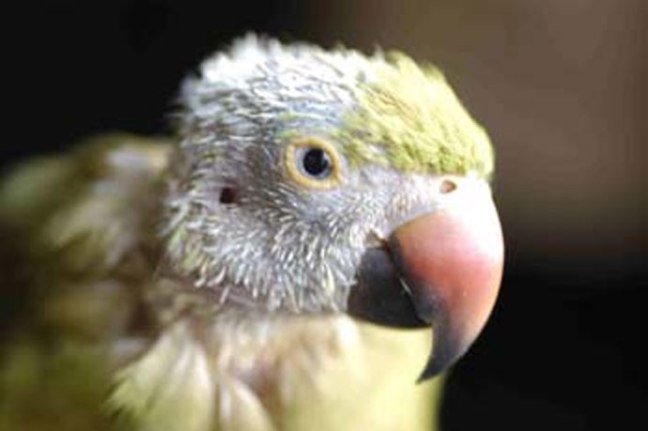
The rose-ringed parakeet sat dolefully on a window ledge. Like countless other birds raised in captivity, Shawnu couldn’t fly because his wing feathers had been clipped, condemning him to a life where he had to hop from one place to another. Which is why he sat on the wrong side of the window – inside a house, rather than outside perched on a tree or flying happily with his friends.

Rescued from a fortune teller by volunteers of the People for the Ethical Treatment of Animals (PETA) in Mumbai, the rose-ringed parakeet was tiny, almost as if his growth had been stunted from spending a lifetime in a dingy cage the size of an iPad Mini. When anyone came close to Shawnu, he would fluff up his feathers, roll his eyes in fear and make an angry, throaty sound. He constantly groomed himself, to the point that his fragile body was dappled with bald, grey patches. This obsessive, repetitive behaviour called zoochosis is often seen in animals in captivity.

Who could blame Shawnu for being so angry and frightened of human beings? Although trade in indigenous bird species is banned in India, thousands of parakeets, munias and other birds are snatched from their forest homes and smuggled in atrocious conditions to different parts of the country and the world, destined to live a miserable life in captivity. Earlier this month, alarming pictures of yellow-crested cockatoos squeezed into plastic water bottles and smuggled from Indonesia were published online. The photos are truly horrific. The birds look like lifeless feather dusters shoved inside water bottles, their eyes glazed by the trauma. When I worked with PETA India, I came across appalling instances of cruelty to birds – from hornbills being used as roadside entertainment to munias being hawked at traffic signals and chicks being dunked in lurid colours to be sold at Rs 10 apiece.

bird-embed_051815092305.jpg
 The Delhi HC gives ammunition to fight cruelty to birds. Photocredit: Alan Abraham/ PETA India

That is why the Delhi High Court’s observation on May 17 was a shot in the arm for the anti-trafficking movement. Justice Manmohan Singh said, “Birds have the fundamental right to ‘live with dignity’ and fly in the sky without being kept in cages or subjected to cruelty” and “running their trade was a violation of their rights”. It’s a fact that India has strong laws to protect wildlife. The Wildlife (Protection) Act, 1972 prohibits the trade in over 1,800 species of wild animals, plants and their derivatives, and so does the Prevention of Cruelty to Animals Act, 1960.

But ultimately, this violation of rights is down to our apathy and greed. Our desire for entrapping these winged beauties has led to centuries of torture and violence on birds. In his piece Animal Magnetism, evolutionary biologist David P Barash explores our obsession with watching animals and writes, “Animals in captivity might satisfy our desire to cross the existential barrier that separates us from other creatures”. He then goes on to point out, “But for sheer pleasure, there is little doubt that watching birds tops the list. Despite their dinosaur origins… birds are the most assiduously watched wild animals and for good reason: many of them are fantastically lovely, brightly coloured or gloriously iridescent”.

Indeed, there’s nothing more wonderful than watching a bird in the wild – whether it’s a pair of brown sparrows scratching in the dust, a serpent eagle perched majestically on a tree or an owl peeking out of her tree hole. And you don’t have to visit a forest to watch birds. On hot summer days like these, my mother leaves out a bowl of fresh water for birds on our window ledge, and parakeets, mynahs and sparrows swing by for a drink or two. I have spent many mornings standing in my balcony in Bangalore, watching kites soar gracefully above the cityscape.

In the introduction to his book Birds from My Window and the Antics They Get Up To, Ranjit Lal talks about urban bird life. He writes that he has been watching birds from his window and balcony for several years and finds it a “wonderful way of never having to get bored… Peacocks, bulbuls, babblers and sparrows are always at hand to distract him”. And then it’s not hard to understand, why the caged bird does not sing.

Learn to grow: Why children must read books on farmers

http://www.dailyo.in/arts/childrens-books-literature-farming-enid-blyton-roald-dahl-pg-wodehouse/story/1/3426.html

It’s important that these stories go beyond outdated nursery rhymes, especially for kids, who are naturally curious about where their food comes from.

How climate change is making us more angry and lose compassion

http://www.dailyo.in/politics/climate-change-hits-empathy-global-warming-greenhouse-effect-bad-weather-unseasonal-rainfall-nature-greenpeace/story/1/2989.html

As the mercury rises, it’s not hard to see how weather can impact our mood and our feelings, hardening us into just those people we’d hate to be.

Five spells every Indian could learn from Harry Potter

http://www.dailyo.in/art-and-culture/five-spells-every-indian-could-learn-from-harry-potter-jk-rowling-dumbledore-hermione-voldemort/story/1/1728.html

We’re all capable of change, and a bit of magic.

1. On the Right to Education: At the Hogwarts School of Witchcraft and Wizardry, magical ability is the only consideration when it comes to admission. And unlike some of our pre-primary schools where admission is based on tests, interviews and fees, Hogwarts has no such daunting admittance parameters. And while many Indian schools struggle with the Right to Education Act by questioning the need for inclusion, Hogwarts’ students come from all sorts of backgrounds. It doesn’t matter if you are “pure-blooded” like Draco Malfoy or Muggle-born like Colin Creevey or Hermione Granger, if you’re magical, then Hogwarts has a place for you. Like at Hogwarts, the RTE may not take away social divisions, but it helps weaken those polarities. Hogwarts, unlike its foreign counterparts such as Durmstrang Institute and Beauxbatons Academy of Magic, wins hands down because of its inclusiveness.

hermione_012915105503.jpg
Hermione Granger’s diverse background did not come in the way of her achievements.

2. On ignoring things that are magical: Arthur Weasley once said about muggles, “Bless them, they’ll go to any lengths to ignore magic, even if it’s staring them in the face…” Indian muggles may not have shrinking keys or biting kettles to contend with like the ones in the Potter books, but many of us are guilty of ignoring the magic of nature around us. After all, India’s lush forests, gurgling water bodies and teeming biodiversity are nothing short of magical. Yet, bless us, in this mad rush of what we now call economic security, we often forget that there can be no real, inclusive development without sustainability.

thestrals_012915104913.jpg
Thestrals are unique mystical creatures visible only to those who had had a close call with death.

3. On purity of birth: One can’t help but agree with Hagrid that Dumbledore is a great man, case in point, when he tells the minister of magic, “… you place too much importance, and you always have done, on the so-called purity of blood! You fail to recognise that it matters not what someone is born, but what they grow up to be!” Wise words for a country whose denizens glean everything about a person by simply asking their surname, their birth place and their caste.

hagrid_012915104922.jpg
Rubeus Hagrid was a half-giant and that didn’t stop Harry from befriending him.

4. On banning books: In Harry Potter and the Order of the Phoenix, the ministry of magic is desperately trying to squash the news that Voldemort is back. When Potter gives an interview to the tabloid “The Quibbler” on the subject, the horrid Dolores Umbridge bans students from reading the magazine. Hermione excitedly points out that, “If she could have done one thing to make absolutely sure that every single person in this school will read your interview, it was banning it”. And just like at Hogwarts where everyone ends up reading “The Quibbler”, we have seen hard copies and e-books of Wendy Doniger and Perumal Murugan’s books being bought, distributed and talked about.

umbridge_012915104932.jpg
Dolores Umbridge’s plan of banning “The Quibbler” backfired big time!

5. On being equal: As more and more of us ensconce ourselves into the ivory towers of gated communities and our own liminal air-conditioned bubbles, we turn up our noses at poverty, abuse our privileges, distance ourselves from the farmers who grow our food and end up doing more damage to our fellow countrymen and the environment. We then complain that the system is messed up, crime is on the rise, our food security is threatened and blah and blah and blah. Take a page from Dumbledore’s book – “Indifference and neglect often do much more damage than outright dislike….We wizards have mistreated and abused our fellows for too long, and we are now reaping our reward”, and then replace wizards with muggles.

dumble_012915104941.jpg
No wonder Albus Dumbledore was one of the wisest wizards of all time.

Joy of reading children’s books and discovering treats

http://www.dailyo.in/art-and-culture/joy-of-reading-childrens-books-and-discovering-treats/story/1/661.html
2781707

Winter picnics at Lodhi Garden were an important part of growing up in Delhi. A basket of food would be packed in the boot of our pista green Fiat along with a thermos of piping hot chai for the grown-ups and a large bottle of nimbu paani for us. As casseroles of aloo and mooli parathas were laid out on the chatai, my sister and I would curl up with our favourite Enid Blyton books and secretly crave scones and ginger beers instead.

After all, picnics and tea were a lavish affair for Julian, Dick, Anne, George and Timothy the dog, the Famous Five. And really, if the Famous Five were to be believed, picnics were made better with eggs and sardine sandwiches, great slices of cherry cake, and ginger beer. And tea time meant enormous cakes, new bread with great slabs of butter, and hot scones with honey and homemade jam.

But what in the world was a scone? This was a question that plagued Enid Blyton readers in India for years. When you have lavish descriptions like this one in Five on Finniston Farm – “‘Hot scones,’ said George, lifting the lid off a dish. ‘I never thought I’d like hot scones on a summer’s day, but these look heavenly. Running with butter! Just how I like them!’” – how could you not crave one? A friend thought a scone was like a golden cupcake without frosting. Another was convinced they were the cream puffs we got in local bakeries. The reality, when tea shops started serving them here (somewhere between a cake and a bread), was different from our collective imagination. And really, where was the clotted cream? Hmph.

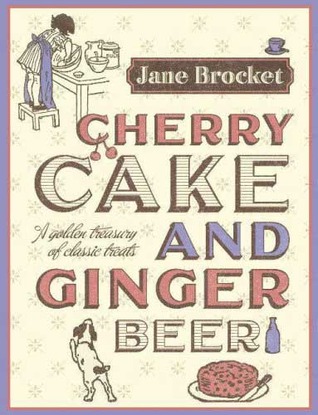
Having grown up on a steady diet of British books, my food memories were sumptuously stitched together by treats that were alien, yet familiar. Recently, a friend and I came across Jane Brocket’s Cherry Cake and Ginger Beer: A Golden Treasury of Classic Treats. The book, we were delighted to discover, offered recipes from children’s books along with an introduction of the story they originated from. The chapters have original illustrations as well as recipes for tuck-box treats, goodies whipped up by storybook Cooks and midnight feasts. There’s seed cake from Swallowdale by Arthur Ransome, pickled lime from Louisa May Alcott’s Little Women and Jean Webster’sDaddy Long-Legs (don’t get too excited, it’s lime brined and stored), and even calf’s-foot jelly from Eleanor H Porter’s Pollyanna.

Brocket tosses together breakfast recipes of creamy porridge and bacon with hash browns. Having grown up in a vegetarian household, I had no clue what bacon rashers were back then, and imagined them to be some cousin of the tomato, since they were all being fried together. It was only when I read EB White’s Charlotte’s Web, did I discover, to my utmost horror, the source of the mouth-watering bacon that all the adventurers loved. Brocket also has recipes for Elevenses, what she describes as “a quintessentially British ritual” loved by Winnie-the-Pooh and Hobbits. There’s Paddington Bear’s favourite marmalade buns, which go well with hot cocoa; and fresh and gooey macaroons from Blyton’s Five Find-Outer series which were adored by Fatty.

Tea-time was sacred in children’s books. How many of us brewed pretend tea for our dolls, teddies and even parents, complete with mini cups and saucers? And before toast became the new global food trend, Mr Tumnus, the faun from CS Lewis’ Chronicles of Narnia – The Lion, the Witch and the Wardrobe, had a toasty tea with “a nice brown egg, lightly boiled… sardines on toast, then buttered toast and then toast with honey”. Since tea-time is really about cakes, there’s Mrs Banks’ bribery and corruption cocoanut cakes from Mary Poppins Comes Back, Milly-Molly-Mandy Has Friends’ muffins which can be toasted on forks over a crackling fire, and treacly, sticky ginger cake, a speciality of Aunty Fanny in Famous Five (“It was dark brown and sticky to eat. The children finished it all up and said it was the nicest thing they had ever tasted”.) Treacle, as I only recently found out, was just liquid molasses.

Brocket suggests an alluring recipe for hunger in which all you need is an outdoor space like a beach, garden or even a secret island. The method is simple – add adults and children to that fresh air along with outdoor equipment “according to season” and allow “to blend for several hours”. Feed the kids and adults well and leave them “to read good books”.

Lesbian love for the troubled teenage soul

http://www.dailyo.in/art-and-culture/lesbian-love-for-the-troubled-teenage-soul/story/1/630.html?page=profile&user=166&type=moderated&start=1

With Duckbill’s “Talking of Muskaan”, Indian young adult books step firmly out of the closet.

On the surface, Muskaan, the protagonist of Himanjali Sankar’s Talking of Muskaan, is a regular 15-year-old. The green-eyed teenager is a great swimmer and class topper. She has loads of friends and lives in a beautiful house with a garden and a tree house. Prateek, the resident stud, has a crush on her. But gradually, the reader discovers, Muskaan is different – she doesn’t want to be forced to do “what girls do” and is ragged mercilessly for this, even being dubbed “macho musko” by her own friends. When Muskaan kisses her best friend Aaliya on the lips, life, as the teenagers know it, isn’t quite the same again. Things go downhill and as is revealed at the beginning of the book, the troubled teenager, in an act of desperation, tries to commit suicide.

Published by Duckbill, Talking of Muskaan is a sensitive and brave portrayal of being a teenager in today’s confused times. It deals with sexual orientation, identity, urban angst and growing up surrounded by hyper-consumerism. But most importantly with this story, Indian YA (young adult) books have firmly stepped out of the closet, by taking on a subject that’s usually-taboo-for-the-young-ones.

Muskaan and her friends are growing up in a homogenous world, grappling with banal and ginormous issues that young readers will be familiar with – the dizzying feeling that comes with that first crush, the vacuum that’s left behind with your best friend’s silence, the horrid realisation that you don’t have enough money to buy an expensive birthday gift for a classmate, the nasty bullying in the school bus. Being a teenager is tough, and being lesbian, is even more so. Teens who are dismissed callously, bullied relentlessly and treated cruelly because they are attracted to people of the same-sex can have a tough time at school.

When Muskaan confesses to bestie Aaliya that she likes girls, she finds herself alienated. Subhojoy, who is from a different socio-economic background and is often marginalised for it, is the only one who understands. At one point, he look at Muskaan and thinks, “She talks about the world as if she is a bystander, not like she belongs to it. I also do that. Perhaps that is what makes us friends”.

talking_of_muskaan-c_111114040440.jpg
Talking of Muskaan, Duckbill Books, Rs 225

When you are 15, perception is everything and Muskaan is defined by her classmates’ opinion. Her sexual orientation eclipses everything else, almost as if she as an individual doesn’t matter. Even her story unfurls from the viewpoint of three classmates – her one time best friend Aaliya, her ally Subhojoy, and Prateek – who tell us Muskaan’s story. Prateek, for one, is full of vitriol – “Muskaan is not only homo, she’s also rude. Maybe homos are like that only”. His classmates mirror his thoughts, they speak of homosexuality in hushed tones, speculating in the school corridors, in whispers laced with ridicule and contempt. Aaliya wonders at the immaturity of her friends, while being unable to accept her own callousness towards Muskaan at the same time. She thinks, “They’d been skirting around the issue like dainty Victorian ladies, not using the word homosexual but delicately hinting at it. Which century are we living in?”

India has its share of adult LGBT writing and Talking of Muskaan now puts YA books on that literary map. Duckbill previously published Facebook Phantom, by 17-year-old Suzanne Sangi. The book was a paranormal romance, but it introduced a gay character who later on becomes straight. For Sangi, it was a way of exploring alternative sexuality and the confusion that comes with having crushes on a person of the same-sex. In contrast, Muskaan is very definitive about not being attracted to boys.

Since only a handful of Indian YA books have LGBT themes or characters, teenagers usually turn to international books to read about this topic. The internet is buzzing with listicles of the best LGBT books for younger readers. For instance, John Green and David Levithan’s Will Grayson, Will Graysontells the story of two American boys with the same name, one straight and gay. Both authors paint the gay and straight characters deftly – they are funny, dark, confused, and quirky. Essentially, they are normal adolescents, whatever orientation they maybe. Levithan’s Two Boys Kissing is poignantly different – a group of dead gay men who succumbed to AIDS narrate the story of two boys and their attempt to create a world record for the longest 32-hour kiss. It lays bare the complexities of parental approval, peer pressure and the relief that comes when friends and families extend unconditional support.