Why Rowling’s Halloween treat for Harry Potter fans is special

http://www.dailyo.in/art-and-culture/rowlings-special-halloween-treat/story/1/528.html?page=profile&user=166&type=moderated&start=2

The author releases an essay on the horrid Dolores Umbridge, a Ministry of Magic official who joined as the Defence Against the Dark Arts teacher in Harry Potter and the Order of Phoenix

Halloween is a special day for Potterheads – it’s the one evening they get to dress up as their favourite Harry Potter character without facing ridicule from Muggles, non-wizarding folks. But apart from that, October 31 also happens to be the anniversary of the fateful day that his parents Lily and James Potter were killed by Lord Voldemort and Harry became the boy who lived, lightening-shaped scar and all.

Thirty three years after this wizarding world-changing event, author JK Rowling offers further insight into the magical world that she created. Pottermore, the website that retells the series in an interactive manner, is also a space where the British writer shares history and trivia about her characters and moments from the books. This Halloween, it is fitting that she’s chosen to sketch out Dolores Jane Umbridge, the horrid Senior Under-secretary to the Minister of Magic who joined as the Defence Against the Dark Arts teacher inHarry Potter and the Order of Phoenix. Umbridge was a squat woman with a penchant for wearing fluffy pink cardigans, collecting ornamental plates with pictures of cats in them, and handing out punishments faster than Snape would ever have been able to deduct points from Gryffindor.

Umbridge, Rowling reveals, had a Muggle mother and a brother who is possibly a squib, a wizard-born person who has no magical traits. Umbridge grows up to be one of the most vociferous supporter of penalising Muggle-born wizards, claiming that “they have “stolen” their wands and magic”.

It seems to be the fate of half-bloods to try and distance themselves from their Muggle lineage. Voldemort, who had a Muggle father, also hated Muggles and other half-bloods. Both Voldemort and Umbridge spread their reign of terror in their unique ways, while pretending to be pure-blooded. Professor Severus Snape, who had a Muggle father and fell in love with the Muggle-born Lily Potter (nay Evans), ended up following the pure-blood supremacist faction of Death Eaters, before (spoiler alert) he switched sides.

At the other end of the spectrum, the Muggle-born Hermione Granger was pretty much known as the “brightest witch of her age”, and Lily Potter was portrayed as “a singularly gifted witch”. It’s not surprising then that Rowling’s careful characterisation evokes questions about prejudices and empathy for readers at an early age. Earlier this year, “The greatest magic of Harry Potter: Reducing prejudice” a study that was published in the Journal of Applied Social Psychology, showed that children who have read the books were more likely to be emphatic towards minorities and immigrants. We doubt that Umbridge would have approved.

On Pottermore, there’s a footnote from Rowling, where she explains how she plotted the character of Umbridge, borrowing physical traits from a “teacher or instructor” who had a “pronounced taste for twee accessories”. Rowling adds that this person’s lemon plastic hair bow was what she remembered when she perched “the fly-like ornament” on Umbridge’s head. A quick refresher for Muggles – when Potter goes for his Defense Against the Dark Arts class, his instant dislike for Umbridge is reinforced as he sees a black velvet bow on top of her head and he “was again reminded forcibly of a large fly perched unwisely on top of an ever larger toad”. Rowling assures us that the resemblance stops at the physical level and she grossly exaggerated her “taste for the sickly sweet and girlish in dress” to create this character.

Umbridge is also reminiscent of a former colleague of Rowling’s who had filled her office wall space with pictures of “fluffy kittens” while actually being “the most bigoted, spiteful champion of the death penalty”. Rowling writes, “I have noticed more than once in life that a taste for the ineffably twee can go hand-in-hand with a distinctly uncharitable outlook on the world”. In her famous 2008 Harvard Commencement speech, Rowling talked about the power of human empathy, and how those who “choose not to empathise enable real monsters. For without ever committing an act of outright evil ourselves, we collude with it, through our own apathy”. Thoughts she continues to echo on her website.

There’s plenty more to discover on Pottermore – such as why Potter was able to see the Thestrals, magical bat-winged horses that draw the Hogwarts carriages and are invisible to “all who have never been truly touched by death”; the wizards who have been Ministers of Magic since 1707; and the history of the wizarding prison Azkaban.

As usual, it is a joy to read Rowling when she’s writing about her world of wizards and witches. Her snippets reveals the meticulous research that went into the books – whether it was the origin of Umbridge’s name or the political context behind a wretched prison like Azkaban. It also reminds us that not only did Rowling write a bestselling series that inspired a generation of children to return to reading, but also that her stories laid bare complexities of inequality, racism and tolerance, issues that cut across both the wizarding and the Muggle world.

Visit www.pottermore.com. Muggles need to register.
How young adult fiction is helping children battle depression

http://www.dailyo.in/life/depression-dementor-for-children/story/1/238.html?page=category&nid=13&start=2

For a child, coping with a depressed adult is as difficult a task as taking on a dementor.

LIFE

GROWING PANGS  |   5-minute read |   26-09-2014

BIJAL VACHHARAJANI

@bijal_v

In JK Rowling’s Harry Potter series, the idea of depression manifested in the form of dementors, foul creatures that suck on happy memories, draining out all good feelings, spreading despair wherever they go. In an interview withOprah Winfrey, the British author talked about her personal experience with depression which prompted her to create these monsters, “It’s so difficult to describe [depression] to someone who’s never been there, because it’s not sadness. I know sadness. Sadness is to cry and to feel. But it’s that cold absence of feeling – that really hollowed-out feeling. That’s what Dementors are.”

Depression was on everyone’s mind, chiefly with the tragic death of American actor Robin Willaims on August 11, who suffered from the mental illness. For children, depression is a hard concept to understand.

Yet, Google “childhood + depression + India” and a number of studies pop up, along with a bunch of news features. Plus, adult depression is pretty much on the rise, yet another established Google-able fact. For a child, coping with a depressed adult is as difficult a task as taking on a dementor.

Books are one way that children can begin to understand and possibly cope with mental illness. In Rowling’s books, Potter manages to conjure up the Patronus charm, a defensive charm against dementors. On her website, Pottermore.com, Rowling offers a wonderful explanation, “… that a human confronted with inhuman evil, such as the Dementor, must draw upon resources he or she may never have needed, and the Patronus is the awakened secret self that lies dormant until needed, but which must now be brought to light…” Basically, making young readers realise that the ability to battle the monsters of depression lies within them.

 Another book, Jay Asher’s Thirteen Reasons Why released in 2007, and it told the disturbing story of a teenager who comes home to find a box full of audio tapes from him. The tapes have been recorded by Hannah Baker, his classmate, who he also had a crush on, but she committed suicide two weeks earlier.

As Clay Jensen listens to the tape, Hannah recounts 13 reasons why she decided to end her life and one of them is, possibly, him. It’s a chilling story about bullying, sexual violence, abuse and depression, with drastic consequences. A website, 13RWProject.com, stemmed from the book, where fans of the book could “share their thoughts and stories relating to the book”. Teens above the age of 13 have explained how the book changed their life, coming to terms with bullying, making them rethink how they interact with their peers and coming to terms with tragedy as well.

Closer home, books have run through a range of issues – from female foeticide to terrorism, social media woes to sexuality. For instance, Ela by Sampurna Chattarji tells the story of a girl who leads a perfect life until she finds out that she is adopted. Ela has to deal with a gamut of emotions from anger, grief to depression. However, depression, or rather mental illness, hasn’t been the central theme of many children’s books in India. It could be a reflection of how little this grave issue is still understood by us, or it could simply be thought of as too grim a topic for children.

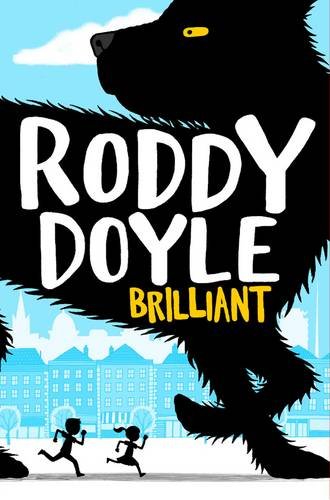
However, in his latest book, Brilliant, Roddy Doyle manages to explain the issue in a simple manner, with a deft touch of humour. In Brilliant, the “Black Dog of Depression” invades Dublin, he prowls in the night, the air above the city becomes darker and the people become gloomier. As the grownups sink deeper in depression, they mumble and slump, and they find themselves down in the dumps. The adults don’t realise what is happening, but the animals do and they also know that only the city’s kids can stop the black dog from spreading his poison.

So off they go, to retrieve Dublin’s funny bone from the black dog. Hordes of children, including the protagonists give chase, aided by a menagerie of talking animals who give sage advice when needed. The solution, the young reader realises, lies in something simple – the power of positivity and optimism. Whenever the kids feel tired, and think that they possibly cannot walk one more step, or start losing faith, an innocuous word gives them a glimmer of hope. Every time the kids say the word “brilliant” out loud, it fills them with courage and lights their way.

Doyle’s story has the children dashing all across Dublin, chasing the black dog. But it essentially deals with issues that are global – recession, the economic slump, its impact on people’s mental health and their ability to cope with it. We live in confusing times, and the kids (and even the animals) inBrilliant try to make sense of it in the best way possible.

Or as Professor Remus Lupin recommends in the Potter books, after an encounter with dementors, one should have a chocolate, at the very least.

The views and opinions expressed in this article are those of the authors and do not necessarily reflect the official policy or position of DailyO.in or the India Today Group. The writers are solely responsible for any claims arising out of the contents of this article.

Writer

Bijal VachharajaniBIJAL VACHHARAJANI @bijal_v

The writer was the former Time Out Bangalore editor and is currently consultant with Fairtrade India.