Middle class India gets a helping in Michael Pollan’s new food show Cooked

screen-shot-2016-03-22-at-10-19-10-am.png

http://www.dailyo.in/arts/netflix-cooked-micheal-pollan-food-health-middle-class-kitchen-india-culinary-culture-water-earth-fire-air-nestle/story/1/9660.html

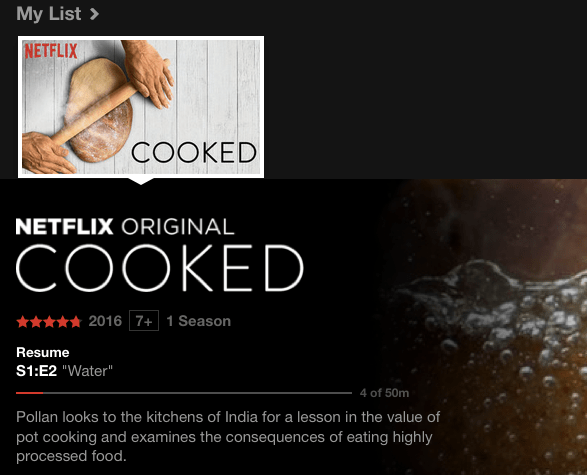
In the second episode of Cooked, food writer and activist Michael Pollan’s docu-series, we meet Mumbai resident Lynett Dias. We see Dias prepare kori rotti chicken in her kitchen from scratch. As Dias makes fresh coconut milk, she explains that she learnt the process from her mother. Another scene is set in a Bohri community kitchen, where chicken nihari is being cooked as part of a subsidised meal, which will be distributed to houses in tiffins.

In sharp contrast, a family orders in from KFC after a long day at work; a regular three to four times a week affair for them. They are sheepishly conscious of the health problems the greasy burgers come with, but admit that it’s easier to order in when pressed for time. “Cultures that once held tight to their ways of eating are finding it difficult to spend time in the kitchen,” points out Pollan. “How did we get to this point, and what have we lost in the process?” “Water”, the second episode in the series sets out to answer this question.  

While Netflix is yet to live up to its potential in India, one of the few documentary films that is available for viewing is Cooked, in which filmmaker Alex Gibney teams up with Pollan to bring his 2013 book to the screen. Like the book, the Netflix documentary series is divided into four parts, basically the elements of cooking – Fire, Water, Air, and Earth.

“Water” explores pot cooking in different communities in India and the gradual transition from traditional home food to processed, instant food. Cooked doesn’t always stick to the stereotypes, instead it offers a slice of middle class India. Shots of housing colonies, streetscapes, and interviews with different communities come together to map the changing landscape of home cooking.

cooked-embed_032216090700.jpg
Cooked, food writer and activist Michael Pollan’s docu-series on Netflix.

Meanwhile, Pollan is in his kitchen with the USA-based chef Samin Nosrat, cooking up pork braised with chiles for three and a half hours, while talking about the myriad flavours that come together in pot cooking.

Nosrat remininsces about the “grandma” style of cooking that puts together humble ingredients with skill and time. “Time,” said Pollan. “is the missing ingredient in our recipes and our lives. Most of us are moving too fast for slow cooking.”

In his book, Cooked, Pollan talks about, what he calls a curious paradox. “How is it that at the precise historical moment when Americans were abandoning the kitchen, handing over the preparation of most of our meals to the food industry, we began spending so much of our time thinking about food and watching other people cook it on television?” he asked.

The paradox is reflective of a section of urban India as well – we constantly Instagram our latest (or half-eaten) meals, review restaurants on apps, and gush about reality cooking shows, but spend lesser time in the kitchen. And it is hard to spend a lot of time by a stove after a long day at work.

Food industry market researcher Harry Balzer puts it succinctly that eating food and preparing it are not the same, because making food is work. He makes a pertinent point – when you eat food without spending time in getting it, you eat more of it. Example: French Fries or potato crisps. He suggests that you eat anything you want – pizza, apple pie, the works – but you make all of it. It makes sense that you would end up getting the best quality raw ingredients and eat better.

Cooked points to India’s rising fast food ecosystem, where food preparation is outsourced. An affluent middle class is eating out more and more because of rising and disposable incomes and the availability of fine dining options. Urban lifestyles, slick advertising, and social media chatter are influencing and moulding aspirations and choices about food, its economics, and its consumption.

At the same time, our relationship with food is more distant. We don’t know how our food is grown or cooked. Instead of eating locally and seasonally, the aesthetics of food plating and the quest for a wider palate has started to dominate our choices. Invariably, we end up incorporating unsustainable practices in our daily diets.

Yet, it’s not that hard to get fresh home-cooked food in India. Cooked refers to the dabbawallas as a “clever system for getting home cooked food at work”. In the documentary, a maushi fries up paneer, rolls out rotis and packs four dabbas for Yari Road. The ubiquitous dabbawalla picks up the tiffin carriers and cycles away. Of course, dabbawallas are unique to Mumbai and the system does not cover the entire country. Rather, urban centres are seeing a surge of apps that deliver restaurant food or pre-packaged meals and salads to your doorstep at the tap of a few buttons.

In many ways, “Water” is limited in its social and cultural depiction of India’s vast landscape. The narrative is mostly uni-dimensional, the complexities of food production, rituals, habits, and economics don’t always come through. Pollan talks about the history of food processing, feminism and cooking – a point he had been previously criticised about – but the episode doesn’t delve into the politics of food in the Indian context. It also doesn’t look into social dynamics, where a lot of the home cooking is done by a cook or a maharaj.

Instead, it concentrates on our gradual dependence on the food industry and its impact. Sunita Narain, the director general of the Centre for Science and Environment, explains on Cooked that urban India consumes some 10 per cent processed food in its daily diet, while rural India consumes five per cent. It’s not a small number given the size of the country. Most processed food is layered with salt, sugar, and fat, making it unhealthy and addictive.

The narrative moves to Nestlé India’s Research and Development Centre in Manesar, where chefs (some have worked at Michelin Star restaurants) and scientists are trying to crack the recipe for a Chicken Tikka Maggi noodles.

A study conducted by a German market researcher GfK revealed that people in India spend over 13 hours a week cooking, compared to the international average of less than six-and-a-half hours. But Nestlé is well aware that over the next two decades, Indians will have lesser time to cook food, and their lab work is preparing to be the food of the future.

With an increasingly fragmented audience and media that focuses on instant gratification, Cooked, despite its limitations, is a form of critical and reflective storytelling that questions our engagement, not only with food, but also media content. Pollan wraps up the episode by calling for a food renaissance and reminding viewers that the “industry doesn’t feed us. Nature feeds us. And that’s something that’s available to all of us.”

One of the most poignant takeaways from the episode comes from Nosrat. As she peels garlic, she describes these seemingly mundane tasks as mindful. “As a culture, we have just gotten so far away from these little tasks, it seems like it’s getting in the way of life,” she said. “But, actually, this is life.”
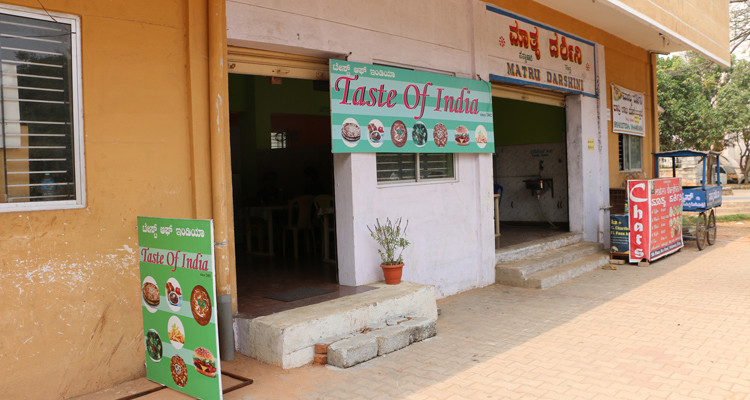
Taste of India in Yelahanka doubles up as an Art Gallery

tasteofindia-feat-750x400.jpg

https://lbb.in/bangalore/taste-of-india-restaurant-yelahanka/
Ten-second takeaway

Eat

Palak Paneer, Stuffed Paratha, and Kaali Dal

Drink

Sweet Lassi and Aam Panna

Winning for

Fresh, good food {reminiscent of Himachal and Delhi dhaba food}, reasonable prices, and art

What we ate

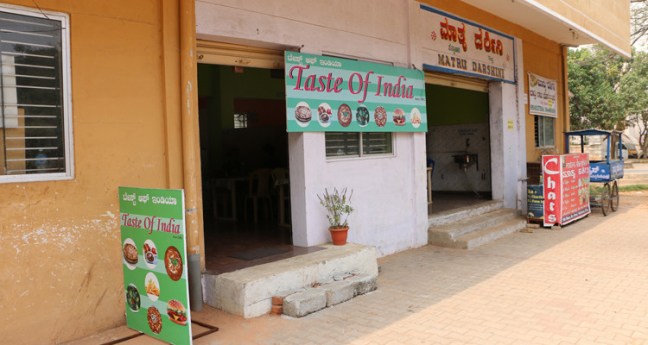
Recently, a British friend of ours came over for lunch and was a tad dismayed at the prospect of eating at the non-descript eatery Taste of India. With trepidation, she started to explain her gluten and lactose allergies to Amod Uncle, the proprietor and chef of the restaurant. He nodded solemnly and prepared a Besan Chilla {with a side of rajam}, solving her problem.

The food shines at Taste of India. Uncle, as he’s popularly known, shops locally and seasonally, preparing a range of North Indian dishes. The Palak Paneer and Adrak Gajar are always fresh, and go well with the right-off-the-tava flaky, Lachha Parathas. The Kaali Dal {with desi ghee} is just like what you’d get in a dhaba, as are the stuffed parathas, with an extra dose of butter. While there’s paav bhaji on the menu, go for the chaat instead – the sweet-and-spicy Dahi Puri is perfect for the summer. #LBBTip: If you find yourself hard-pressed to make a choice, ask Uncle to make you a plate with small portions.

What we drank

And to wash it all down, we recommend the sweet lassi or the seasonal favourite aam panna.

The DL on the ambience

tasteofindia-f

Taste of India is housed in the same complex as the Yelahanka bus depot and is basically a room with an open kitchen and simple seating. Lunch times and weekend breakfasts see a bevy of Srishti School of Art, Design, and Technology students and faculty descending on Taste of India. Most open the fridge and help themselves to fresh lime juice or cold coffee.

Art attack

On most days, there’s an art show on display – in fact, their Facebook page introduces itself as an art gallery and Indian restaurant. Recently, it was a collection of 20 storefront photographs of  Taste of Indias from acoss the globe {you will pretty much find one in every country} and before that was The King and Prime Minister, where photos of Shah Rukh Khan hawking all sorts of products dotted the walls.

So, we’re thinking

Taste of India’s appeal is its food and its proprietor. Uncle is popular with Srishti students and faculty, so much so that he’s also the subject of a documentary project. It’s a restaurant that you can return to pretty much all the time.

Where: BMTC Bus Depot Complex, Yelahanka New Town

When: 9am-6pm

Contact: +91 9823039230

Price: INR 500 for two

Find them on Facebook here.

Pic credit: Nihaal Faizal


Bengaluru is waking up to homemade low-cal granola

http://indianexpress.com/article/lifestyle/food-wine/bengalurus-waking-up-to-home-made-low-cal-granola/

Making healthy, tasty granola is easier than you think. Ingredients can be easily swapped, and delicious quirks such as coffee or bits of chocolate make it more interesting.

Maegan

 In his book ‘Food Rules: An Eater’s Manual’, Michael Pollan says: “Don’t eat breakfast cereals that change the colour of the milk.” He goes on to explain, “This should go without saying. Such cereals are highly processed and full of refined carbohydrates as well as chemical additives.” The first Indian city that seems to have heeded his advice is Bengaluru. The city might love its ragi mudde and chow chow bhaat, but it is also a step ahead of the rest of the country as far as home-made breakfast cereals are concerned.


Ecologist Shivani Shah made her first batch of granola this month. Shah says, “I realised that the days I don’t make a slightly elaborate good Indian breakfast, or when I am travelling, I would end up with a make-do breakfast, and that compromise was making me quite unhappy.” Now, when Shah travels, she plans to pack breakfast in a jar.

According to the India Breakfast Cereal Market Outlook, 2021, the Indian breakfast cereal market has grown at a compound rate of 22.07 per cent over the last five years. Whether it is cold cereals such as corn flakes, chocolate or wheat flakes and muesli, or the hot oatmeal and wheat-bran variety, these foods seem to have become a convenient and permanent fixture at the breakfast table. Yet, the average box of supermarket cereal is often highly processed, enhanced with corn syrup and reinforced with synthetic vitamins.

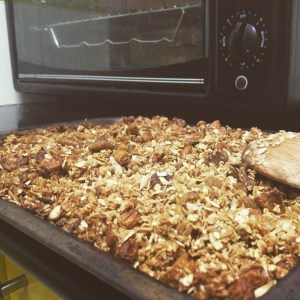
Making granola isn’t a tedious task — toss the ingredients together and roast them in an oven, or on a stove. “An average breakfast cereal in its simplest form contains cooked and toasted grains, a sweetening agent such as sugar or honey, plus a flavour,” says Dr Chinthu Udayarajan, a senior food scientist at Synthite in Kolenchery, Kerala. “Flavour could be out of a bottle, or bits of fruits such as raisins, dried banana or strawberry, or even a pinch of cinnamon powde.” Shah pretty much follows that basic recipe — she roasts rolled oats, mixed nuts and seeds on the stove and adds coffee powder and coffee, along with dates and raisins for a bit of sweetness. The result is a delicious, toasty mix of nuts, fruit, seeds and oats.

The versatility of the granola makes it an appealing breakfast option, or even a nutritious mid-day snack. When journalist Neha Margosa couldn’t find the right mix of granola in stores, she decided to make her own. “I started making my own granola in mid-2015 when I did not have an oven and wanted to experiment with cooking,” says Margosa. “I discovered that granola could be easily made on the stove top.”

Ingredients can be easily swapped, and delicious quirks such as coffee or bits of chocolate make it more interesting. Margosa, for instance, adds toasted slices of coconut and pistachios, and little coffee decoction to her homemade granola. Maegan Dobson-Sippy has been making her own granola for the last six months. “I adapted a BBC Good Food recipe slightly to take into account what ingredients I can easily get,” says Dobson-Sippy, a freelance writer. “For example, I substitute maple syrup for date syrup, and vegetable oil for coconut oil.”

The flip side of home-made granola is that it doesn’t last as long as the one out of a box. “Making cereal at home means we have control on what goes in — that is, fewer and natural ingredients,” said Udayarajan. “If we don’t use antioxidants, the shelf life of the cereal could be reduced by half.”

However, all three granola makers agree that their home-made version is far more cost-effective and healthier than the ones available in the market. “Oats, chocolate and nuts are much cheaper when bought in bulk,” says Margosa. Shah agrees with Margosa. “Yes, it is cost-effective eventually, given that it is full of nutritious ingredients and even literally comparable to the cost of a simple dosa breakfast at mid-range Sagars (chain of restaurants) in the city.”

Home-made granola recipe
(Adapted from BBC Good Food)

Ingredients
2 tbsp coconut oil
125ml date syrup
2 tbsp honey
1 tsp vanilla extract
300g rolled oats
50g sunflower seeds
4 tbsp sesame seeds
50g pumpkin seeds
100g flaked almonds
100g raisins
50g coconut flakes

Method
* Preheat oven to 150 degrees C.
* On the stove, toast coconut on a skillet lightly.
* In a large bowl, mix coconut oil, date syrup, honey and vanilla extract. Add the remaining ingredients, except the dry fruit and coconut. Toss to mix well.
* On two baking sheets, spread the granola mixture evenly. Bake for 15 minutes. Now, add the coconut and dry fruit and bake for another 10-15 minutes.
* Remove from oven and immediately transfer to a flat tray or plate to cool.
* The granola can be stored in an airtight container for a month. Eat with cold milk or yogurt and sliced fruit.

9 Green Gifts For The Festive Season

http://www.natgeotraveller.in/web-exclusive/web-exclusive-month/9-green-gifts-for-the-festive-season/

Spread the holiday spirit by cheering on artisanal, social, and eco-friendly enterprises.

    • TEXT: BIJAL VACHHARAJANI
POSTED  ON: OCTOBER 21, 2015 12:00 AM

These single-origin chocolates are handcrafted in Karnataka. Photo courtesy Earth Loaf

click me

Artisanal Chocolates

What’s sweeter than gifting chocolates for Diwali, Eid or Christmas? Making sure that those treats are organic and handmade. Mason & Co. sources their organic cacao beans from a family-run smallholding in Tamil Nadu. Try their 75 per cent Zesty Orange or 70 per cent Sea Salt Dark Chocolate that they make at their factory in Auroville. A far bigger temptation is their eight-bar dark chocolate collection gift pack.

Earth Loaf’s organic chocolates are handcrafted in small batches from cacao beans from a single estate in Karnataka, and their gorgeous wrappers are silk-screened by hand in Mysore. Try their 72 per cent Raw Dark Chocolate bar and the Gondhoraj & Apricot one.
Available at www.placeoforigin.in.

Handcrafted Pottery

Curators of Clay pottery is perfect for those with a sweet tooth. Photo courtesy Curators of Clay

Curators of Clay pottery is perfect for those with a sweet tooth. Photo courtesy Curators of Clay

click me

Bhairavi Naik and Rohit Kulkarni’s ceramic studio, Curators of Clay, will make you want to trade your space-saving, stacking Tupperware for their bespoke pottery. Their tableware and home decor accessories are handcrafted in small batches by the two potters in Bhugaon, Pune. Tea drinkers will be delighted by their gorgeous range of teapots, creamers, tumblers, and mugs. For those who have a sweet tooth, Curators of Clay pottery is perfect for baking; they even have custard jugs! They also have handcrafted porcelain tea lights for the festival season.
To order or customise a gift, drop in at their Pune store, visit their Facebook page or write to bhairavi@curatorsofclay.com and rohit@curatorsofclay.com.

Fairtrade And Organic Tea Hamper

Look for the Fairtrade and Organic Mark on a tea carton.

Look for the Fairtrade and Organic Mark on a tea carton.

click me

If you’re planning on assembling a food hamper, choose a tea carton with the Fairtrade and Organic Mark. The Fairtrade Mark means that apart from meeting social and environmental standards, an additional premium is paid to the producers for the purchase you make. Oothu green and black teas come directly from the Nilgiris, while Monteviot and Makaibari Tea have a dazzling range from Darjeeling. Pukka Tea’s Vanilla Chai, Supreme Matcha Green, Clean Green, and Cool Mint Green are perfect for detox after a festive binge. Best of all, you can feel zen knowing that the money will be democratically spent by farmer and producer committees on community projects such as education, eco centres, and smokeless chulhas.
Available on Amazon and Makaibari.

Single-Origin Honey

Over the last few years, Under the Mango Tree has become known for its fair-trade sourcing practices, in which they procure honey directly from beekeepers. Their fabulous Bees for Poverty Reduction programme enables farmers to generate additional income through honey, with the bees boosting yield through cross-pollination – a sweet deal for both bees and farmers. UTMT has a range of single-origin honeys – Eucalyptus Honey is perfect to soothe sore throats after a night of inhaling firecracker fumes, while their Sweet Clover Honey is a delicious addition to sweets.
Available at most grocery stores and on www.bigbasket.com

Handmade Books

It's hard to part with these gorgeous children's books. Photo courtesy Tara Books

It’s hard to part with these gorgeous children’s books. Photo courtesy Tara Books

click me

We’ll be honest: it’s hard to actually give away Tara Books’ stunning children’s books to kids. The Chennai-based independent publisher of picture books for adults and children has an eclectic list of titles created by writers, tribal artists and designers. To Market, To Market! by Anushka Ravishankar and Emanuele Scanziani charmingly portrays an Indian market, and is perfect for curious toddlers. Adults will love The Nightlife of Trees, an award-winning handmade book by Gond artists Bhajju Shyam, Durga Bai, and Ram Singh Urveti. The arresting visuals are a tribute to the magnificence of trees, and draw from the art and folklore of the Gond tribe. Don’t forget to check out their stationery section for the one-of-a-kind Flukebooks, perfect for jotting down organic recipes.

A funky Flukebook is great for jotting down organic recipes. Photo courtesy Tara Books

A funky Flukebook is great for jotting down organic recipes. Photo courtesy Tara Books

click me

Bengaluru-based Little Latitude has a range of books and toys which are not only beautiful but also environment-friendly. For instance, Vinay Diddee, who started Little Latitude, makes toys with rubber wood that is not treated with harmful chemicals.
Available at www.tarabooks.com. Find the store list for Little Latitude here.

Organic Cotton

Organic cotton is not only good for your skin but also for the soil, and farmers. With the use of integrated pest management measures, the soil retains its fertility, and farmers practise inter-cropping, which ensures their food security. Good Earth’s Gumdrops kids collection is eco-friendly and adorable. There are elephant soft toys, sleeping sets for infants, and quilts to choose from.

No Nasties clothing uses organic and Fairtrade cotton. Photo courtesy No Nasties

No Nasties clothing uses organic and Fairtrade cotton. Photo courtesy No Nasties

click me

Grown-ups can head to No Nasties to buy colour-block pocket tees made with organic and Fairtrade cotton. Each purchase comes in organic cotton bags and recycled cardboard tags made by a women’s self-help group near Pondicherry. While you’re at it, slip in a little Doug accessory as part of your gift. No Nasties’ Once Upon A Doug project supports women cotton farmers who make these adorable clouds with a silver lining, from scraps of recycled cotton during the lean season.

Once Upon A Doug supports women cotton farmers. Photo courtesy Once Upon A Doug

Once Upon A Doug supports women cotton farmers. Photo courtesy Once Upon A Doug

click me

If you’re looking for something more ethnic, check out Ethicus and Tula, two fabulous seed-to-stitch enterprises that are revolutionising the cotton supply chain.
Available at all Good Earth Stores. Shop at www.nonasties.in,www.onceuponadoug.com, www.jaypore.com, and www.tula.org.in.

Natural And Seasonal Cosmetics

It’s tough finding cosmetics that are made completely with natural ingredients. SoulTree is certified by BDIH Germany. The brand pays fair price to farmers, ensures that plants are not picked clean of flowers or fruits, and that harmful chemicals are not used in their products. They have a wide range of beauty products, but check out their Traveller Essential Miniature Kit which has 30ml bottles of moisturiser, shower gel, and shampoo. Their lipsticks use organic ghee as a base.
Available at www.soultree.in.

Coffee Subscription

Fuel that caffeine addiction with a coffee subscription to Blue Tokai. The hand-picked, single-origin coffee is roasted and then ground as per your specifications and delivered to your doorstep. Whether you like the full-bodied, low acid Monsoon Malabar coffee or the dark, oaky Vienna roast, there’s plenty to choose from. If you are not sure of which blend to gift, choose the Mixed Bag.
Available at www.bluetokaicoffee.com.

Gentle Detergents And Cleaners

Most homes get a thorough cleaning before Diwali, so eco-friendly soaps and detergents make an offbeat but handy gift. Common Oxen products use safe or natural ingredients, and are also a great gift to yourself. Their detergent Swish Wash is free of synthetic fragrances, phosphates, and carcinogenic chemicals. It is made of botanical oil soap, washing soda, baking soda, borax, rock salt, and lime and orange essential oils, and leaves your laundry smelling of the sun. Common Oxen also has kitchen dishwashing soaps, bathroom cleaners, and body soaps.
Available at www.commenoxen.in.

When Bijal Vachharajani is not reading Harry Potter, she can be found pottering about in the jungles of India. In her spare time, she works so she can fund the trips and those expensive Potter books. She did this by working as the Editor at Time Out Bengaluru. She writes about education for sustainable development and sustainable livelihood.

PhotoStop: ‘Organic’ reach at Fair Trade Alliance Kerala’s Seed Fest 2015

http://www.thealternative.in/lifestyle/organic-reach-at-fair-trade-alliance-keralas-seed-fest-2015/

The 5th Fair Trade Alliance Kerala Seed Fest saw organic farmers from Kerala showcase their produce and share how beneficial organic farming can be.

In 2011, farmers of the Fair Trade Alliance Kerala came together to host the very first Seed Fest. Four years on, it has become a space for farmers from the region to promote biodiversity, food security and gender justice by sharing knowledge, exchanging seeds and displaying their produce. The Seed Fest is an initiative of the Fair Trade Alliance Kerala, an organisation co-founded by Tomy Mathews which brings together farmers and enable them to trade on Fairtrade terms of minimum support pricing and the benefit of a Fairtrade Premium.

Here’s a pictorial tour of the FTAK Seed Fest 2015:

1. A farmer from the Mananthavady taluk in the Wayanad district of Kerala grows 26 kinds of chillies, welcome news at a time when the FAO estimates that since the “beginning of this century, about 75 per cent of the genetic diversity of agricultural crops has been lost.”

Fair Trade Alliance Kerala's Seed Fest 1_Chillies1

2. We eat more homogenously today and according to the FAO, “just nine crops (wheat, rice, maize, barley, sorghum/millet, potato, sweet potato/yam, sugar cane and soybean) account for over 75 percent of the plant kingdom’s contribution to human dietary energy”. Yet, farmers at the Seed Fest had different species of brinjal – from purple to yellow in colour.

Fair Trade Alliance Kerala's Seed Fest 2_Brinjal1

3. There were crimson coloured chillies and plum-coloured beans on display.

Fair Trade Alliance Kerala's Seed Fest

4. We were fascinated by the variety of bhindi there.

Fair Trade Alliance Kerala's Seed Fest 4_bhindi5

5. Shobhana (extreme right) is the secretary of the Thavinjal Panchayath from Mananthavady as well. The woman farmer’s stall had a banner up which read, “Gender Justice”. When we asked her what it means to her, she said that her being at the Seed Fest said it all.

Fair Trade Alliance Kerala's Seed Fest 5_Shobha

6. Shobhana showed us some gorgeous greens beautifully wrapped in plantains. She smiled and told us, “Who needs plastic, right?”

Fair Trade Alliance Kerala's Seed Fest 6_pack2

7. Sunni (centre), another organic and Fairtrade farmer told us that since the time (ten years ago) he switched to organic farming, he finds that his personal health has improved.

Fair Trade Alliance Kerala's Seed Fest 7_sunni1

8. His produce was staggering with different kinds of gourds, yams, tapioca, chillies, and grams.

Fair Trade Alliance Kerala's Seed Fest 8_sunnis produce

9. We went home with a variety of seeds for our balcony gardens and with an appreciation of the farmers who grow our food.

Fair Trade Alliance Kerala's Seed Fest 9_diversity

Joy of reading children’s books and discovering treats

http://www.dailyo.in/art-and-culture/joy-of-reading-childrens-books-and-discovering-treats/story/1/661.html
2781707

Winter picnics at Lodhi Garden were an important part of growing up in Delhi. A basket of food would be packed in the boot of our pista green Fiat along with a thermos of piping hot chai for the grown-ups and a large bottle of nimbu paani for us. As casseroles of aloo and mooli parathas were laid out on the chatai, my sister and I would curl up with our favourite Enid Blyton books and secretly crave scones and ginger beers instead.

After all, picnics and tea were a lavish affair for Julian, Dick, Anne, George and Timothy the dog, the Famous Five. And really, if the Famous Five were to be believed, picnics were made better with eggs and sardine sandwiches, great slices of cherry cake, and ginger beer. And tea time meant enormous cakes, new bread with great slabs of butter, and hot scones with honey and homemade jam.

But what in the world was a scone? This was a question that plagued Enid Blyton readers in India for years. When you have lavish descriptions like this one in Five on Finniston Farm – “‘Hot scones,’ said George, lifting the lid off a dish. ‘I never thought I’d like hot scones on a summer’s day, but these look heavenly. Running with butter! Just how I like them!’” – how could you not crave one? A friend thought a scone was like a golden cupcake without frosting. Another was convinced they were the cream puffs we got in local bakeries. The reality, when tea shops started serving them here (somewhere between a cake and a bread), was different from our collective imagination. And really, where was the clotted cream? Hmph.

Having grown up on a steady diet of British books, my food memories were sumptuously stitched together by treats that were alien, yet familiar. Recently, a friend and I came across Jane Brocket’s Cherry Cake and Ginger Beer: A Golden Treasury of Classic Treats. The book, we were delighted to discover, offered recipes from children’s books along with an introduction of the story they originated from. The chapters have original illustrations as well as recipes for tuck-box treats, goodies whipped up by storybook Cooks and midnight feasts. There’s seed cake from Swallowdale by Arthur Ransome, pickled lime from Louisa May Alcott’s Little Women and Jean Webster’sDaddy Long-Legs (don’t get too excited, it’s lime brined and stored), and even calf’s-foot jelly from Eleanor H Porter’s Pollyanna.

Brocket tosses together breakfast recipes of creamy porridge and bacon with hash browns. Having grown up in a vegetarian household, I had no clue what bacon rashers were back then, and imagined them to be some cousin of the tomato, since they were all being fried together. It was only when I read EB White’s Charlotte’s Web, did I discover, to my utmost horror, the source of the mouth-watering bacon that all the adventurers loved. Brocket also has recipes for Elevenses, what she describes as “a quintessentially British ritual” loved by Winnie-the-Pooh and Hobbits. There’s Paddington Bear’s favourite marmalade buns, which go well with hot cocoa; and fresh and gooey macaroons from Blyton’s Five Find-Outer series which were adored by Fatty.

Tea-time was sacred in children’s books. How many of us brewed pretend tea for our dolls, teddies and even parents, complete with mini cups and saucers? And before toast became the new global food trend, Mr Tumnus, the faun from CS Lewis’ Chronicles of Narnia – The Lion, the Witch and the Wardrobe, had a toasty tea with “a nice brown egg, lightly boiled… sardines on toast, then buttered toast and then toast with honey”. Since tea-time is really about cakes, there’s Mrs Banks’ bribery and corruption cocoanut cakes from Mary Poppins Comes Back, Milly-Molly-Mandy Has Friends’ muffins which can be toasted on forks over a crackling fire, and treacly, sticky ginger cake, a speciality of Aunty Fanny in Famous Five (“It was dark brown and sticky to eat. The children finished it all up and said it was the nicest thing they had ever tasted”.) Treacle, as I only recently found out, was just liquid molasses.

Brocket suggests an alluring recipe for hunger in which all you need is an outdoor space like a beach, garden or even a secret island. The method is simple – add adults and children to that fresh air along with outdoor equipment “according to season” and allow “to blend for several hours”. Feed the kids and adults well and leave them “to read good books”.

Pure & Special – Gourmet Indian Vegetarian Cuisine

http://www.timeoutbengaluru.net/books/featuresreviews/pure-special-%E2%80%93-gourmet-indian-vegetarian-cuisine

(Courtesy: Pure & Special)

Being part of a family of Gujaratis who lived in Delhi for years meant that we soon ditched the sugar in our sabzis to embrace pindi chole, rajma and khasta roti with gusto. Even after we moved away from Delhi to Mumbai, my mother would soak sabut urad dal a day before guests were to arrive. That’s because her dal makhni was always a favourite with family members and guests. The black gram slow cooked with cream, tomatoes and chillis had a special taste for all of us. It has now become a family ritual, given that our family is all scattered, every time we unite, my mother makes it a point to make some house favourites – kheer, puranpoli, and of course dal makhni.

I confess that most of my dal cooking is limited to boiling lentils (and if I am feeling a little more energetic, I throw in a clove of garlic) and give it a quick vaghaar or tempering. And dal makhni honestly takes a lot of effort and the amount of cream that is poured in is quite heart-stopping. But when I got Vidhu Mittal’s book Pure & Special – Gourmet Indian Vegetarian Cuisine, I came across the recipe for black velvet lentil/makhmali dal makhni and I knew it was time to make my own, well actually Mittal’s version of the dal.

What really lured me into cooking this dal was the easy-to-follow explanation that the author offered, along with step-by-step photographs and little tips, such as “The secret to this dish is patience. As described in this recipe, these lentils need to be simmered for a long time to achieve their signature velvet texture” and that using “unrefined mustard oil brings out the flavour of the black gram”. That’s pretty much the vein of the entire cookbook – simple steps to make interesting Indian food.

Mittal has been conducting cooking classes in Bangalore for over 15 years now and had authored a bestselling book called Pure & Simple: Homemade Indian Vegetarian Cuisine. In her new book, she introduces novices to Indian cooking to spices such as haldi and khus khus, as well as vegetables, nuts, fruits, and lentils. It serves as a good primer – ever tried to shop for dal and tried to distinguish tur from chana? The back of the book also offers basic instructions for boiling raw bananas, potatoes, lotus stems and making different gravies. She then gets down to the business of recipes and there’s a whole range – Drinks, Soups & Salads which includes the refreshing-sounding piquant pear/raseeli nashpati, where pears are stewed with cinnamon and water and then blended and a lotus stem pasta salad; Snacks & Appetisers in which she again works with regional foods such as shingara (water chestnuts) and shows you how to jazz up the humble dalia.

In Main Courses, there’s different sorts of gravy and dry vegetables, some with paneer and methi and others are more exotic such as the Zesty Zucchini Lentil where she mixes up the vegetable with moong dal. Mittal’s Rice & Breads section is equally interesting where she offers recipes for rumali roti and jackfruit rice. And what’s an Indian cook book without recipes for chutneys, which can be found in the Accompaniments section. The Desserts section is lean but comes with an interesting twist, such as saffron kheer with makhanas and a fluffy cheesecake that doesn’t need fancy cheese to make it.

Cookbook perused, it was time to try the dal makhani. It was a lengthy, but not a laborious process. The pre-soaked black gram dal was first boiled in a pressure cooker along with ghee, salt, cinnamon, bay leaves, black cardamom, hing and ginger. Once boiled, I discarded the whole spices and let the dal simmer before adding yoghurt and cream. Half an hour later, my kitchen was fragrant with the smell of cinnamon, bay leaves and cream mingling with the ghee-laced dal. Another half-an-hour later, I added sautéed tomato puree and then a last vaghaar of ginger and chilli powder. The result was a luscious dal that was sheer velvet and laden with spices. Patience was indeed the main ingredient in this dal.

The dal went perfectly with the layered crispy bread/lachchedaar tandoori paratha, a recommendation from Mittal again. The paratha dough was a mixture of wheat flour, baking powder and milk and needed to be proved for an hour before shaping it into balls, rolling it out into a small disc and then pleating it to a cylinder shape. The pleated cylinder was then twisted to form a circle and rolled again, causing several layers to form. Here, the photographs really helped understand the rolling process. Mittal recommends using the inside of a pressure cooker to replicate a tandoor. It didn’t work very well for us, but we used the tava method to roast the parathas. The hot crispy, flaky paratha and the dal makhani left us happy and, when I told my mother, she beamed with approval.

Vidhu Mittal Roli Books, 1,295

By Bijal Vachharajani on July 04 2014

First Agro farm visit

http://www.timeoutdelhi.net/restaurants-caf%C3%A9s/features/first-agro

Walking through the 45-acre First Agro Farm is like eating your way through a fresh, crunchy salad. Naveen MV and Nameet M, who co-founded this zero pesticide commercial grower company with KN Prasad in 2010, encouraged us to pluck vegetables and crunch them – we took in the sweet aroma of sage, picked a glistening leaf of purple basil and admired its heady taste and sampled wild rocket. The heart of the salad bowl were the heir­loom tomatoes – vines were laden with the world’s smallest pea cherry tomato, the larger cherry one, the grape-shaped one, a teardrop one, a snow-white and a purple version.

We were 110 kilometers outside Bangalore, in Cauvery Valley, speaking to the promoters of First Agro, which grows zero pesticide produce complying with the FAO/WHO’s Codex Alimentarius food safety standards. Naveen, who is the CEO, said, “What is important in this business is to have a deep understanding of entomology [the scientific study of insects] and Olericulture [the science of vegetable growing] so that you know how to use natural methods and bio-solutions to manage pests.” Nameet is the chief production head, who learnt all about growing vegetables and keeping pests at bay with natural methods from horticultural growers in Canada, where he was a commercial pilot. COO Prasad has managed family farms in Karnataka for over a decade.

Nameet worked on an integrated pest and disease management system where he uses a “combination of neem oil, beneficial insects, beneficial microbes, garlic-chili spray, pheromone insect traps and companion plants”. “We are able to manage about 90 per cent of the common pest issues in agriculture,” he said. The farm also uses the drip-irrigated method to provide water to their fields.

Being commercial growers, the three brothers have expand­ed their business to the retail and hospitality sectors. First Agro supplies to restaurants such as The Glass House and Caperberry and hotels such as The Ritz-Carlton, The Oberoi and JW Marriott. In retail, their produce is available with BigBasket.com, HyperCity and FoodHall, among others.

Their biggest challenge has been to get Bangaloreans to think about food safety. “When we do promotional campaigns in malls, people tell us that they had no clue about these issues,” said Naveen. “We tell them how food is grown using pesticide or what GMOs are. Slowly, awareness is seeping in.”

By Bijal Vachharajani on June 06 

photo: Pradeep KS

Sancho’s

When we first heard the news that Delhi-based Mexican chain Sancho’s was coming to namma city, it was still February. We had to wait for the restaurant to open in April to get our dose of the spicy Mexican and Tex-Mex fare. Nestled in the food court of UB City, Sancho’s has an al fresco dining area and an air-conditioned seating place.

We invited our house guest from Connecticut, who had recently vacationed in Mexico, to join us for the meal. We started with a melon berry mint slush, an icy blend of cantaloupe, strawberry crush and mint leaves. Our friend said: “Given a choice, I would marry this drink.”

We also ordered chips with mango salsa, guacamole and fish taquitos. Those small beer-battered fish tortillas never arrived and so we ultimately cancelled them closer to dessert time. The chips were the crunchy corn ones and went well with the chopped avocado guacamole. The mango salsa tasted like a slightly spicy aamras.

Our veg enchiladas were corn semi-fried tortillas stuffed and soaked with salsa ranchero and topped with shredded lettuce, melted cheese, onions, Mexican rice and refried beans. We wished the enchiladas had been spicier and made with wheat instead of the cornflour that gave it a grainy texture.

Our companion’s prawns burrito came stuffed with beans, Mexican rice, guacamole and pico de gallo salsa. She pronounced them authentic enough and nodded approvingly at the right balance in the dish. Since our companion wasn’t keen on dairy products, we skipped the flan and tres leche cake for an air buñuelos for dessert. These Mexican fritters are supposedly as light as air. Our rosette-shaped fried buñuelos came dusted with cinnamon sugar and accompanied by a bowl of dark chocolate sauce. We gleefully abandoned table manners to break the crisp fritters into bite-sized pieces, and covering ourselves in cinnamon sugar.

Although the food wasn’t as fiery as we thought Mexican food should be, our companion was quite thrilled at having found a slice of Mexico in Bangalore.  204, UB City, 1, Vittal Mallya Road (4167-4151). Daily 11.30am-11.30pm. All major cards.

By Bijal Vachharajani on May 09 2014 7.52am

The Big Book of Treats

http://www.timeoutmumbai.net/books/reviews/book-review-big-book-treats

Book Review: The Big Book of Treats

The lavishly-produced dessert book is splashed with mouth-watering photos of Dhingra’s goodies

A few years ago, a close friend’s birthday was fast approaching and as usual, we were stumped for gifting ideas. Finally we zoned on to the fact that the friend was a shopaholic. That’s when I called Pooja Dhingra, the founder and owner of Le 15 pâtisserie in Mumbai. After a careful discussion with Dhingra, we settled on a dozen shopping themed cupcakes. Two days later, I went to pick up the cupcakes and was delighted by the frosted pink delicacies that came with a quirky but tasteful icing in the shape of a bag, a stiletto and clothes. My friend of course was delighted and almost refused to eat the cupcakes. When she did eat them, we realised that unlike most cupcakes these weren’t dry and the frosting wasn’t overpoweringly sweet.

So, I was understandably excited when I got Dhingra’s baking book The Big Book of Treats. The lavishly-produced dessert book is splashed with mouth-watering photos of Dhingra’s goodies including peanut butter brownie cups, Nutella squares, white chocolate and rose sponge cake and of course her delicately-flavoured macarons which she’s best known for. The book starts with a Baking 101 guide which takes readers through commonly used ingredients, essential equipment and techniques and tips. Some of them are really useful, like the distinction between baking soda and powder and the handy conversion table.

The rest of the book is divided into Cookies, Bars, Brownies; Cakes, Tea Time goodies, Tarts, Cupcakes, Frostings, Truffles, Desserts and Macarons. Dhingra offers a range of recipes from basic ones such as chocolate chip cookies and vanilla cupcakes to the fancier ones like chai cupcakes and green chilly truffles. Each recipe comes with a little note where Dhingra talks about her work at Le 15, her team, shares personal anecdotes and sometimes recommends variations as well. For instance, in the eggless passion fruit truffles recipe, Dhingra suggests that if you can’t find passion fruit, which isn’t easily available in the Indian market, you can substitute it with any fruit purée such as mango, strawberry, or apple.

We decided to give Dhingra’s recipes a whirl in our oven. We started with the dark chocolate fudge bar, which tastes like a brownie-like fudge. We first melted dark chocolate with butter, following Dhingra’s Baking 101 tips. While that mixture cooled, we whisked together free-range eggs, castor sugar and vanilla. The chocolate mixture was folded in and our kitchen was as fragrant as a real-life bakery with the cocoa, butter and vanilla doing its magic. Flour, baking soda and almonds were added. The recipe called for white chocolate chips, but we decided to experiment and tossed in some butterscotch chips instead. Dhingra recommends roasting the almonds before adding them to the batter, a tip that made sense as it improves the flavour immensely. Twenty minutes later, the batter had doubled in size and the butterscotch was smelling heavenly.

We impatiently waited for the loaf to cool before cutting it into mini bars. We found the recipe easy to follow, and the conversion chart ensured that it was an effortless switch between grams and cups while measuring the ingredients. The bars were not too sweet, they were crispy on the outside and gooey but chewy inside, a perfect snack for that 4pm craving. The almonds added a subtle crunch while the butterscotch chips melted in our mouths. And best of all, it took us less than an hour to get this dish together, and that’s including baking time. Next, we plan to try the mango tart, and then we hope to roll up our sleeve and dedicate a few hours to mastering the macaron.

Pooja Dhingra Penguin, R699

By Bijal Vachharajani