Why did the leopard cross the road?

screen-shot-2016-12-23-at-12-46-17-pm.png

https://www.natureinfocus.in/page/why-did-the-leopard-cross-the-road

Here’s a riddle.

Why did the leopard cross the road?

Because she was hungry, and she saw a zebra crossing.

Actually, that’s not true. Unlike us, leopards don’t understand that you need to look first left, then right, then left again, before crossing the road. They don’t know the rules behind the zebra crossing stripes on the road either (honestly, who can blame them, motorists also don’t seem to know that they shouldn’t stand on the zebra crossing; pedestrians have the right of way there). All these rules are made by humans, and it is silly of us to pave a road in the middle of a forest, and then expect leopards or elephants or other animals to know road crossing rules.

Nor do animals get boundaries. Your house or apartment block must have a wall and a gate to mark its perimeter. You know that you can’t just jump into another person’s house (unless you know them) because one, it’s not polite, and two, it’s not safe, and hello, it’s trespassing. But these are man-made boundaries. We don’t ask for permission from forest animals before mowing their trees down to build houses, grow crops, or mine for minerals. According to the World Wildlife Fund’s Living Planet Report 2016, the Global Forest Resources Assessment reports that since 1990, on a gross basis, we have lost a total of 239 million hectares of natural forest!

This means that there is lesser forest cover for animals to call their home, and it’s not that surprising when you hear news of a leopard coming into a school on a Sunday. After all, we can’t expect them to know these man-made boundary walls.

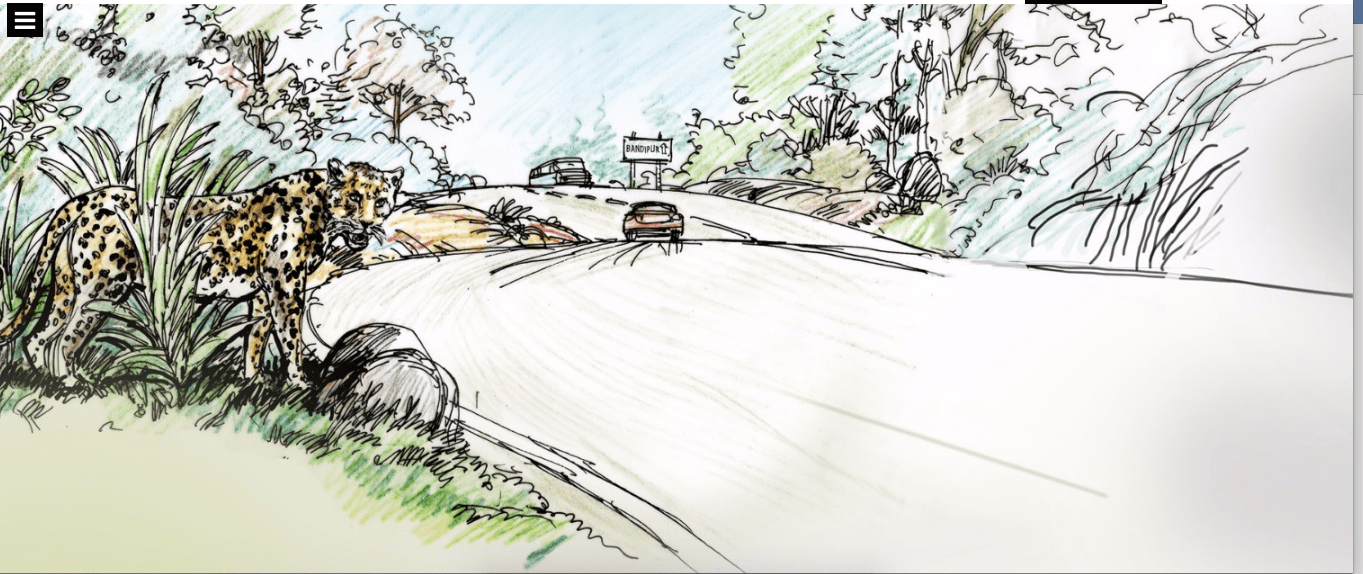
Further, our roads are becoming a point for human-animal conflict. Roadkill — that is wildlife killed on the road by motor accidents — has become a major threat to conservation. A study conducted by Panthera showed that 23 leopards were killed in Karnataka between July 2009 and June 2014 because of road accidents.

In a research paper titled Roadkill Animals on National Highways of Karnataka, by Selvan et. al, the authors conducted a survey to understand how many animals were killed on National Highways NH212 and NH67, which pass through Bandipur Tiger Reserve in Karnataka in 2007. They found that 423 animals of 29 species were killed between January and June. Isn’t that awful?

According to the Wildlife Conservation Foundation (WCF), at least three large animals are killed in accidents on these highways. And these include tigers, elephants, leopards, deer, sloth bears, snakes and birds. The good news is that in 2010, the group, with the help of the Wildlife Trust of India and the High Court, was able to ban night traffic in Bandipur. A good thing because 65 per cent of wildlife roadkills until that time were being documented at night.

This is, of course, only Karnataka. But there are so many instances of leopards and other animals becoming victims of accidents — either road or rail — across the country. What can be done about this? Plenty. For instance, not allowing roads or rail networks to be built inside forests or corridors, which animals use to pass from one jungle to another. Many forest departments now have installed neon boards and speed breakers to slow those hurtling vehicles going at top speed in the night. Or like the WCF managed to do — restricting vehicular traffic at night.

The good folks at the Nature Conservation Foundation – India have come up with a fabulous strategy in Tamil Nadu. They have installed seven canopy bridges in the rainforests of the Valparai region — aerial bridges (high up above the ground) that connect tree canopies that were otherwise too far apart across the roads. And it’s already showing results — lion-tailed macaques can cross the road without having to look left, right, and left again, and they don’t have to get down from their trees and dodge passing traffic.

What else do you think can be done? We’d love to hear from you with your ideas. Write to us at comments@natureinfocus.in

Leopard in Gurugram: How The Media Made A Mess Of A Tragedy

reporting-on-leopard-attack.jpg

https://www.newslaundry.com/2016/12/05/leopard-in-gurugram-how-the-media-made-a-mess-of-a-tragedy
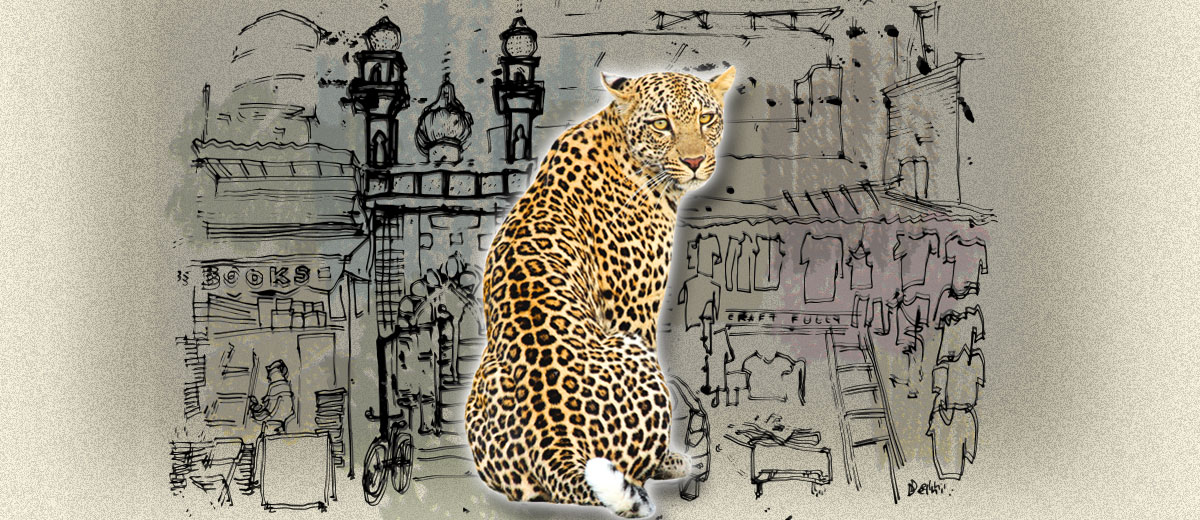
Did you know leopards actually prefer to stay away from human settlements rather than prey on them? The recent killing of a leopard in Gurugram shows how damaging sensationalist reporting on the wildlife can be.

On November 25, horrific photographs and videos of a leopard in Mandawar village in Gurugram made headlines across India. Many, including The Times of India, showed a particularly disturbing image of the villagers dragging the leopard by its tail, its head bludgeoned to bloody pulp. Some blurred out the head. Others, such asIndia Today, chose to carry a video of people posing for photos with the dead leopard, and a disclaimer of “disturbing content, viewer’s discretion advised”.

There’s something almost obscene about the show of human triumph in those photographs and an unspoken reiteration of the idea that wildlife and humanity must have a relationship of animosity. Leopards, incidentally, are solitary animals and humans are actually not their traditional prey. So despite the fact that we call them “predators”, as far as we humans are concerned, leopards are not actually bloodthirsty. This is probably why many local legends in different parts of the country see leopards and tigers as protectors rather than predators. Yet, look at the press reports, the story of progress is one of clashes like this one, between man and animal – it’s a war, and humans won this battle.

Sensationalising human-animal conflict in the media serves no purpose, except to make matters worse. If we’re being shown these images for higher ratings or more views and shares, it is a poor excuse. The Ministry of Environment and Forests’ Guidelines for Human-Leopard Conflict Management 2011 edition clearly state, “Media should contribute to diffusing the tense situation surrounding conflict with objective reporting aimed at highlighting the measures to mitigate conflict. Reporting mainly aggressive encounters with leopards can erode local people’s tolerance and worsen the situation by forcing the Forest Department to unnecessarily trap the wild animal due to public pressure.”

Many headlines played a blame game – “Gurgaon villagers beat leopard to death: How the forest department failed to save the animal’s life”, “Leopard enters Gurugram village, attacks 8, beaten to death”. The Hindustan Times headline read, “Leopard killed: As villagers discuss tales of courage, fear of police action looms large” and then went on to say in the body copy, “In the two days since the incident, the event has been embellished with ‘snippets of valour’.” So was encountering the leopard really an act of courage or was it “embellished”? Your guess is as good as mine.

As writers, our lexicon is everything. Bandying about phrases like “leopard on loose” or “beastly attacks” alter perceptions, often dubbing the animal as dangerous and fearsome. “The media has to stop imagining that the mere sighting of a leopard is like a terrorist in the neighbourhood,” said wildlife conservationist Prerna Bindra, who is also a former member of the National Board for Wildlife. “It does not represent conflict, in all probability the cat was living in peace for years, before it was unfortunately spotted. The cat lived in peace, home sapiens couldn’t. What’s appalling is not just beating the creature to death, but posing-in-glee for pictures as though it were some kind of trophy.”

The Indian Express was one of the few outlets to offer restrained reporting, including this story by Jay Mazoomdaar, titled “Spotted a leopard? Back off, stay calm, let it slip away”. Mazoomdaar elaborated that “leopards traditionally live close to people and just because one is sighted does not mean the animal means harm.” As did The Wire, taking an in-depth look at policy decisions when it comes to human-wildlife conflict. “Leopards tend to live near people,” wrote Neha Sinha for the The Wire. “In modern times, on the other hand, they have vanished from more than 60 per cent of their historic range worldwide. Thus, of all man-animal conflicts, leopards have borne the worst brunt, and the story is no different in India.”

This is not the first instance of man-animal conflict that has been reported in the media. It will also not be the last, in fact climate change will possibly exacerbate it. As will policies such as the Ministry of Environment, Forests and Climate Change declaring certain wildlife species as vermin if they are “damaging human life or property”, and translocating leopards (which stresses them further) or projects that mow down forests to make way for roads and highways.

As India moves rapidly towards an economic growth that is bolstered by unchecked development paradigms that shrink forests, it also unravels the fragile bond that humans and wildlife share. What was once a relatively peaceful existence is now marred with violent conflict. In a story, Learning to live with leopards, ecologist Vidya Athreya who has done substantial research on the subject, said “…we are finding that we can share our space with leopards when we know how they behave and we understand how we should behave. In rural India, wildlife is a fact of life; by learning to live with it, we can minimise trouble.”

Efforts are being made to inculcate better understanding in the media. In 2015, the Wildlife Conservation Society India held collaborative workshops with the media on reporting human-wildlife interactions accurately and responsibly. There are numerous documents and publications available online about standard operating procedures as well as guidelines. That can propel nuanced journalism which takes into account multiple perspectives, facts, and relies on wildlife experts and scientists to report on incidents such as this.

Unfortunately, there’s an ingrained sense of fear towards the creatures of the wild that gets exploited in sensational reporting of the kind we saw in the Gurugram leopard case. But this fear mongering doesn’t actually help us come to an understanding of how we’re going to share space with wildlife. And as we bludgeon our way to progress, we’re going to have to figure out a better way to achieve an equilibrium.

Watch, absorb and act upon Leonardo DiCaprio’s dire warnings on climate change in ‘Before the Flood’

44638-jkyuyaniei-1478116706.jpg

http://thereel.scroll.in/820593/watch-absorb-and-act-upon-leonardo-dicaprios-dire-warnings-on-climate-change-in-before-the-flood

The Hollywood star uses his fame to ask tough questions about global warming, fracking, and alternative energy sources.

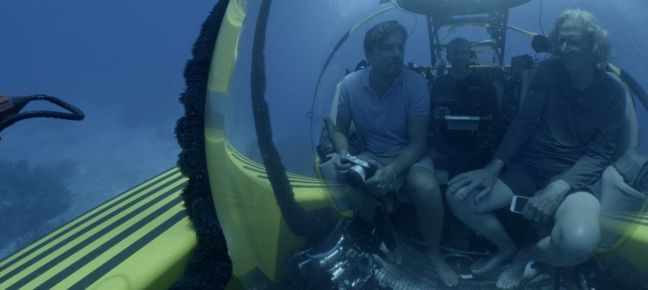
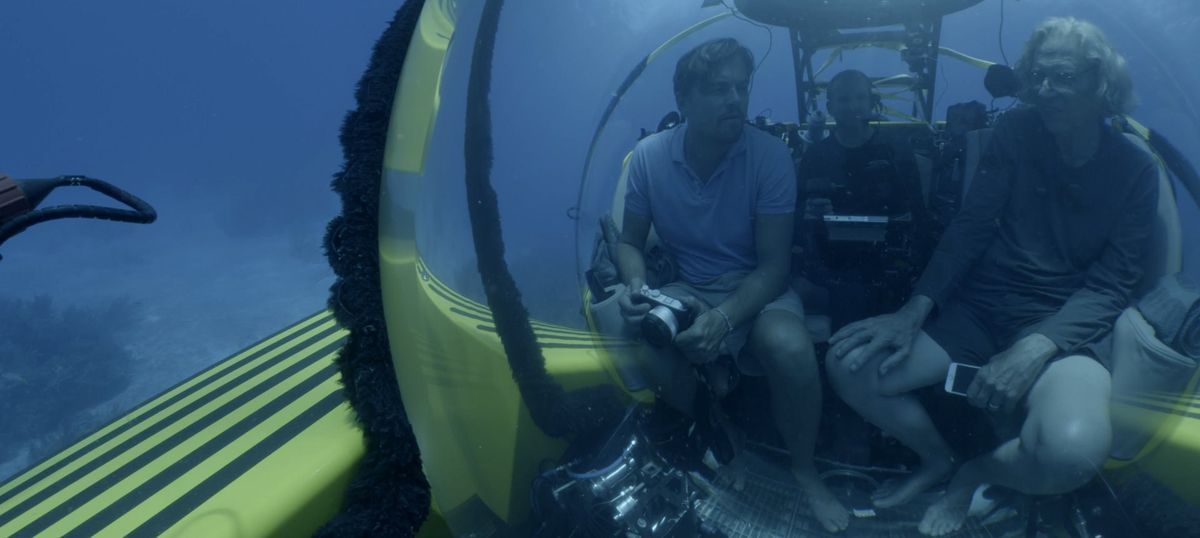
There’s a point in the richly informative documentary Before the Floodwhen actor Leonardo DiCaprio is in conversation with Sunita Narain, the director general of Centre for Science and Environment. He explains that while he doesn’t see the North American lifestyle changing any time soon, he hopes to see renewables such as solar and wind becoming cheaper and solving the problem of fossil-dependent consumption. DiCaprio breaks off when Narain starts to shake her head vigorously and listens as she talks about how both India and China are investing more in solar power than the USA and urges them to take up leadership on renewable energy.

This is the vein in which Before the Flood is presented. The Hollywood star, as the United Nations Messenger of Peace on Climate Change, is on a mission to see “how far we have gone, how much damage we’ve done and if there’s anything we can do to stop it”. DiCaprio asks some hard questions at times and at others, steps back and lets the experts do the talking. The 95-minute documentary, directed by Fisher Stevens, was premiered on the National Geographic channel on October 30 and was released online simultaneously.

In many ways, Before the Flood feels like a follow-up to Al Gore’s An Inconvenient Truth – it runs with the science, but backs it with real-life examples, making the facts less abstract and more tangible. The film feels a lot more real as it examines the impact of climate change on the ground rather than poring over models or newspaper articles. Show, rather than tell, is what makes Before the Flood different.

DiCaprio deploys his stardom to make people listen to many uncomfortable truths. “As an actor, I pretend for a living,” he says during a speech at a UN Assembly. “I play fictitious characters often solving fictitious problems. I believe that mankind has looked at climate change in the same way.” Like he does in his films, DiCaprio heads off to locations across the world (all offset by a voluntary carbon tax) to explore a subject that he humbly explains “the more I know, the more I realise how much I don’t know”.

The actor’s quest takes him to Alberta in Canada, Greenland, Baffin Island in the Arctic, India, China, Pulau, Kiribati and the Sumatra islands – all places that have been affected by fossil fuel extraction and climate change. He uses his celebrity pull to interview Barack Obama and meet the Pope. He also talks to corporate bosses, policy makers, scientists and environment activists.

“If we have to fight climate change, we have to start by acknowledging most of our economy is based on fossil fuels,” says Michael Brune, executive director of the environmental organisation Sierra Club. Brune goes on to explain how the world is employing extreme methods to remove these resources, including fracking, offshore drilling for oil, and tar sands. “There is not thing such as clean fossil fuels,” Brune adds. Proof of Brine’s statements emerges in footage of the devastation wreaked by crude oil extraction in Alberta. What were once boreal forests are now barren potholes of oil.

At Baffin Island in Canada, DiCaprio listens as Arctic guide Jake Awa guide tells him that the solid blue ice is melting faster than ever before, like ice cream. In Kangerlussuaq in Greenland, climatologist Jason E Box warns that climate change projections are actually conservative, and that the effects will be far worse than imagined.

DiCaprio then jets off to Asia and the Pacific. He looks at alarming pollution levels in China, the impact of unprecedented rainfall on farming in India, the future of island nations such as Palau and Kiribati, and the devastation caused by the palm oil industry in Sumatra. Back home, DiCaprio heads to Miami in Florida, a state susceptible to flooding as the sea water level rises. Mayor Philip Levine says that the City of Miami Beach is investing 400 million dollars on a project to put in electrical pumps to drain out the water and to raise road levels. This adaptation measure will only last for 50 years. This from a state that in 2011 stopped the Florida Department of Environmental Protection from using the words “climate change” and “global warming”.

American public opinion on climate change has been adversely influenced by the nexus between policy makers and fossil fuel industries and climate change deniers, many of whom are in the media. Levine puts it succinctly, “The ocean is not Republican. It’s not Democrat. All it knows is how to rise.”

The film also questions reckless fossil fuel-addicted consumption while touching on climate refugees and livelihood and food security. Some solutions emerge out of the thicket of warnings: the filmmakers advocate the enforcement of the 2015 Paris Agreement – a deal in which world leaders agreed to limiting global warming to well below 2°C – substantial investment in renewal energy, and carbon tax.

The overall impact is undeniably powerful. Before the Flood invokes a sense of urgency when it comes to protecting the earth’s biodiversity. There is room for wonder too at nature’s riches. At Baffin Island, DiCaprio looks on in awe at a group of narwhals. Enric Sala, National Geographicexplorer-in-residence, says, “I don’t want to be in a planet without these animals.” Moments like these demand that Before the Flood be watched, absorbed, and acted upon.

Corrections and clarifications: The article has been edited to reflect the fact that the City of Miami Beach is the entity investing $400M on a project to put in electrical pumps.

Why you should go back to the book of ‘Fantastic Beasts & Where to Find Them’ before the movie

vqcozywsjl-1479197790.jpg

http://scroll.in/article/821587/why-you-should-go-back-to-the-book-of-fantastic-beasts-where-to-find-them-before-the-movie
Read it if only to be able to identify all the strange creatures in the film.

When it comes to Potterhead Muggles, there are few things more exciting than being able to sample Butterbeer, organise Harry Potter book nights, and eagerly wait for a new film from the wizarding world of Harry Potter, even if it’s set in a time when the boy-who-lived was not even born.

While we all wait to see the adventures of Newt Scamander, Order of Merlin Second Class, on the big screen, some of us have to comfort ourselves by revisiting his seminal book, Fantastic Beasts & Where to Find Them. Which is not to be confused with the book that is the screenplay of the movie.

In 2001, the fifty-second edition of this masterpiece was released simultaneously in the wizard and Muggle worlds. As Albus Dumbledore, the erstwhile headmaster of Hogwarts School of Witchcraft and Wizardry, writes in his foreword, “No wizarding household is complete without a copy of Fantastic Beasts…

The textbook that taught Hermione Granger – perhaps even Harry Potter and Ron Weasely learnt a thing or two from it – has been written by JK Rowling and published in aid of Comic Relief UK, along with the library copy of Quidditch Through the Ages.

From the introduction, we know that the book is the result of many years of travel and research by Magizoologist Newton (“Newt”) Artemis Fido Scamander, some of which we can hope to see in the David Yates film. Scamander sounds a bit like Gerald Durrell when he describes his childhood – a “seven-year-old wizard who spent hours in his bedroom dismembering Horklumps” (a creature that resembles a fleshy mushroom and is covered in black bristles).

Born in 1897, Scamander found his interest in fabulous beasts being encouraged by his mother who bred fancy Hippogriffs. He then went on to join the Department for the Regulation and Control of Magical Creatures at the Ministry of Magic, and is remembered for the creation of the Werewolf Register in 1947 and later, the Ban on Experimental Breeding in 1965.

Most Potterheads across the world are probably brushing up on their knowledge of fantastic beasts right now – so that they can sit in the movie hall and scream, like insufferable know-it-alls, the names of species: “That’s a Chizpurfle” (small parasites with large fangs) or “Ooh, look a Grindylow” (a horned water demon), if these creatures make their appearance in the film. But what makes the Muggle copy immensely readable is not the fact that it’s an encyclopaedia of beasts, though Care of Magical Creatures Professors Hagrid, Kettleburn, and Grubbly-Plank would consider that meritorious enough.

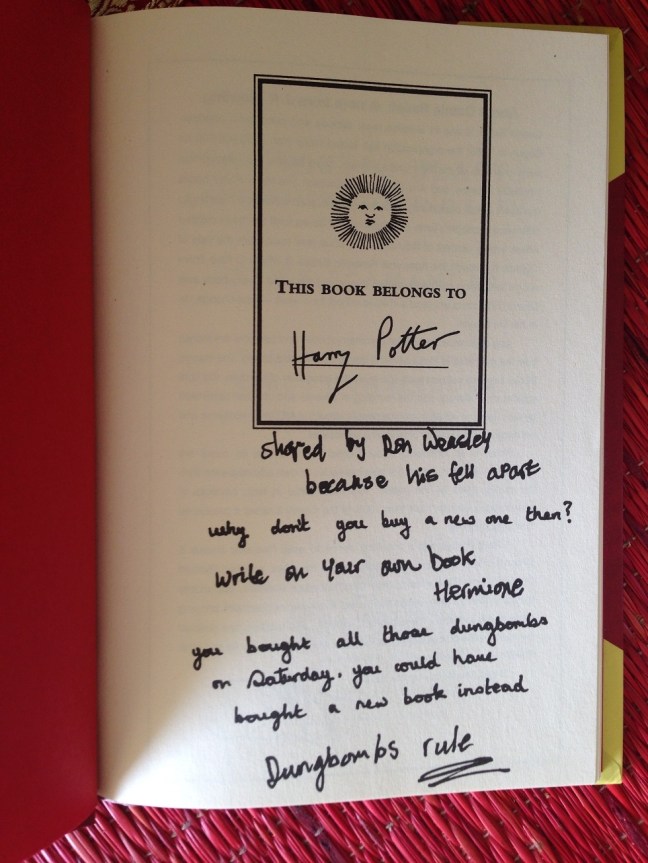
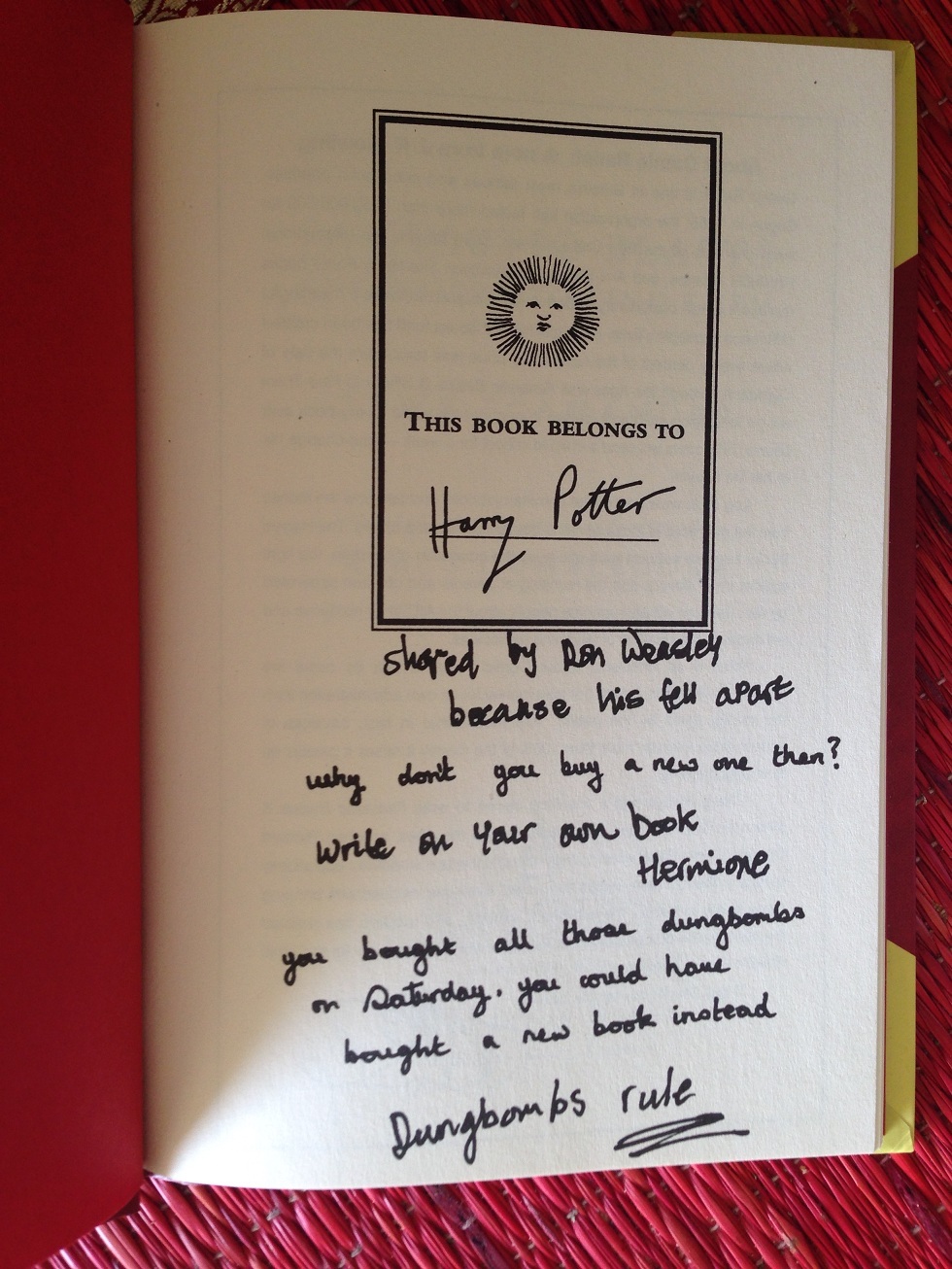
No, it’s because Fantastic Beasts is a duplicate of Harry Potter’s personal textbook and comes with “informative notes” in the margins. The book is shared by Ron, because “his fell apart” and Hermione chimes in from time to time. So while Scamander takes great pain in describing “what is a beast” in academic terms, the students explain it succinctly – “big hairy thing with too many legs”.

When the Magizoologist embarks on the chapter “A Brief History of Muggle Awareness of Fantastic Beasts”, someone, presumably Ron, circles the word “brief” and annotates it with “you liar”. The clever design is reminiscent of our school textbooks, full of scribbles that had little to do with what the teacher was droning on about in class.

In this slim edition, too, Rowling manages to slip in a message, this time about wildlife protection and conservation. Scamander writes about the importance of Magizoology and the need for the community and individuals to protect and conceal these magical beasts. The answer, he explains, is “to ensure that future generations of witches and wizards enjoy their strange beauty and powers as we have been privileged to do”. Even then, Dumbledore does attempt to reassure Muggle purchasers “that the amusing creatures described hereafter are fictional and cannot hurt you”. Weasley is rolling his eyes somewhere in the wizard world.


Of Mosquitoes’ Toes and Wampfish Roes

dhal_nenfcq.jpg

http://www.arre.co.in/culture/of-mosquitoes-toes-and-wampfish-roes-roald-dahl-willy-wonka/
Roald Dahl’s birth centenary is a reminder that treats were an essential part of the beloved children’s author’s life – “never too many, never too few, and always perfectly timed.”

A few weeks ago, my family and I were dismayed at the prospect of the Parle Biscuit Factory in Vile Parle shutting shop. When we first moved to Mumbai in the late ’80s, we lived in an apartment block that faced the landmark plant. On most days, we’d abandon our game of Monopoly or our attempts at mugging up Shakespeare to sniff out what was being cooked up at the factory. “It’s Kismi Toffee bars they’re making today,” my mother would say, as a sweet caramel aroma wafted across the railway tracks. Another day, a nutty scent would linger in the air, and we’d agree that a fresh batch of Parle-G biscuits was being baked. Living there was almost like being inside a Roald Dahl book.

So I knew exactly what Charlie would feel like when he’d pass Mr Willy Wonka’s giant chocolate factory on his way to school. “And every day, as he came near to it, he would lift his small pointed nose high in the air and sniff the wonderful sweet smell of melting chocolate. Sometimes, he would stand motionless outside the gates for several minutes on end, taking deep swallowing breaths as though he were trying to eat the smell itself,” wrote Roald Dahl in Charlie and the Chocolate Factory in 1964.

Dahl effortlessly captured the luscious aromas and subsequent yearning for melting chocolate, and pinned it down in a book that would go on to become our strongest confectionary-related literary memory. Dahl went so far as to write, “If I were a headmaster I would get rid of the history teacher and get a chocolate teacher instead.” Not surprising coming from a schoolboy who signed up to test chocolate inventions for Cadbury.

On most days, I find myself baking or reading children’s books (so that I can write about them), and in Dahl’s writing, both my enduring interests dovetail. Every time I melt a block of dark chocolate, I think about The Chocolate Room, with its verdant meadows and chocolate river. I hear Mr Wonka say, “The waterfall is most important! It mixes the chocolate! It churns it up! It pounds it and beats it! It makes it light and frothy! No other factory in the world mixes its chocolate by waterfall.”

Like most children growing up during the ’80s, I discovered Dahl’s splendiferous stories only as a teenager. I was growing up on a steady diet of Indrajaal, Archie comics, and Enid Blyton. Dahl came to my neighbourhood library much later, and when I picked up his books as a gangly adolescent, people would look at me all biffsquiggled and wonder why I had never read him before. Once I started though, it was like being on a scrumdiddlyumptious rollercoaster ride for this human bean.

The recipe sounded swatchschollop (as revolting as the title promised): It’s a mix of butter, milk, and yogurt. But the result is surprisingly comforting.
I’m not sure whether it’s the fantastical stories that he spun, of a Big Friendly Giant who caught dreams for children or the horribly hairy Mr Twit with a food-speckled beard. Maybe it was the wondrous words that he conjured up: Over 500 of them from whizpopping to sogmire to mispise, that deliciously roll off the tongue. Or perhaps it was the worlds he dreamt up, where lickable wallpaper, rivers of chocolate, and a peach that’s actually an edible ship are as commonplace as a beanbag in a start-up office. Dahl’s stories are the zozimus (a dream ingredient, for the uninitiated) that childhood should be made up of.

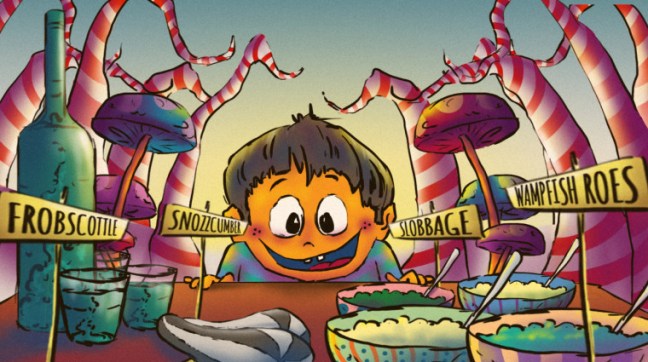
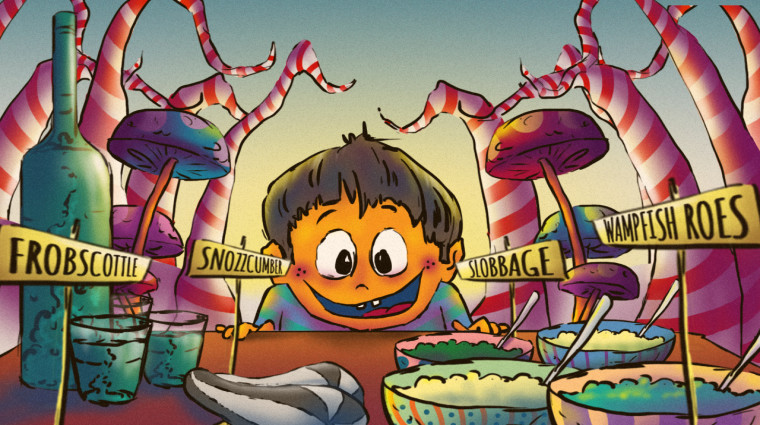
And then there is the food itself – the glorious, scrumdiddlyumptious food. Before molecular gastronomy became something of a trend, Dahl’s stories were already a whizpopping culinary delight. They are replete with familiar foods and mysterious ones, those that had no explanations in the human bean world. But it doesn’t matter, because our imagination fills in the gaps. We were a generation anyway accustomed to reading about scones, ginger pop, and humbugs, without the faintest idea of what they actually looked or tasted like. So it wasn’t hard to imagine what Frobscottle – that fizzy green drink where bubbles sink down rather than rise up – felt like. Even now, tinda and karela distinctly remind me of the ghastly snozzcumber, a knobbly vegetable with black-and-white stripes. All of these were brought alive by Quentin Blake’s illustrations.

Invention was key to these stories. Who else could dream up the concoctions in George’s Marvellous Medicine, full of ingredients such as Golden Gloss Hair Shampoo that was sure to wash Grandma’s tummy nice and clean, and toothpaste to brighten up her horrid brown teeth? It’s remarkable how Dahl knew just what children loved to do: My nephew can spend hours concocting all sorts of potions with coffee beans and water. He looks high and low for bits and bobs to add to it, relishing the results that look more and more vile. Rules, when it comes to invention, must go straight out of the window.

Like this particular ditty from James and the Giant Peach:

I often eat boiled slobbages. They’re grand when served beside
Minced doodlebugs and curried slugs. And have you ever tried
Mosquitoes’ toes and wampfish roes
Most delicately fried?
(The only trouble is they disagree with my inside.)

I don’t know what a doodlebug is, but just the thought of a boiled slobbage is enough to make me want to unwrap a piece of dark chocolate and try to forget about it. Or wickedly threaten my nephew with that when I meet him next. But then perhaps, Dahl was just prophetic, with insects being proposed as staple, resilient food thanks to climate change.

Just as Dahl’s stories were cautionary about the excesses of food, they tackled the grave idea of hunger. As Mr Fantastic Fox’s family go hungry, Dahl describes the anguish the fox parents go through. When the cubs cry from hunger, he writes, “‘How long will it be till we get something to eat?’ their mother didn’t answer them. Nor did their father. There was no answer to give.” Later, Mr Fox says, “Do you know anyone in the whole world who wouldn’t swipe a few chickens if his children were starving to death?”

In The Chocolate Factory, Charlie’s family is so poor that “the only meals they could afford were bread and margarine for breakfast, boiled potatoes and cabbage for lunch, and cabbage soup for supper. Sundays were a bit better. They all looked forward to Sundays because then, although they had exactly the same, everyone was allowed a second helping.” The same book is a lesson in food security: On one hand Dahl writes about poverty and malnourishment, while starkly contrasting it with the “haves” who revel in gluttony, but ultimately are acquainted with the pitfalls of greed. Obesity, in most of his books, was not a trait he loved.

Yet, what’s unmistakable is that so many of the stories are about the joys of food, sharing it, and eating it. And some of the recipes are not even that difficult to pull off. In Roald Dahl’s Revolting Recipes, “an interpretation of some of the scrumptious and wonderfully disgusting dishes” from his books, you will find recipes for Mosquitoes’ Toes and Wampfish Roes made with cod fillets and Lickable Wallpapers made with fruit and gelatine. In the introduction, his wife Felicity Dahl writes, “Treats were an essential part of Roald’s life – never too many, never too few, and always perfectly timed.”

Parsing the recipe book, I couldn’t help but wonder about Butterscotch, which makes the Oompa-Loompas whoop up with joy. The recipe sounded swatchschollop (as revolting as the title promised): It’s a mix of butter, milk, and yogurt. But the result is surprisingly comforting. It didn’t make me tiddly, but it was “tasting as wonderfully of crodscollop”. I replaced the corn syrup in the recipe with golden syrup, and the skim milk with normal milk, and used a blender to mix it all up (the Oompa-Loompas would be scornful of the skim milk, I’m sure).

Next on my agenda is the Lickable Wallpapers recipe. In an America’s Test Kitchen podcast, Felicity Dahl talks about how children would come out of a screening of Charlie and the Chocolate Factory, begging their parents to buy some Lickable Wallpaper. Whenever my nephew watches the movie, I know I can be ready with some.
#Culture
When Bijal Vachharajani is not reading Harry Potter, she can be found traipsing around the jungles of India. In her spare time, she works as a communications consultant and writes about education for sustainable development and food security so she can fund those trips and expensive Potter books.

BOOK OF THE WEEK: HARRY POTTER AND THE CURSED CHILD

hp.png

http://elle.in/culture/elle-book-club/book-of-the-week-harry-potter-and-the-cursed-child/
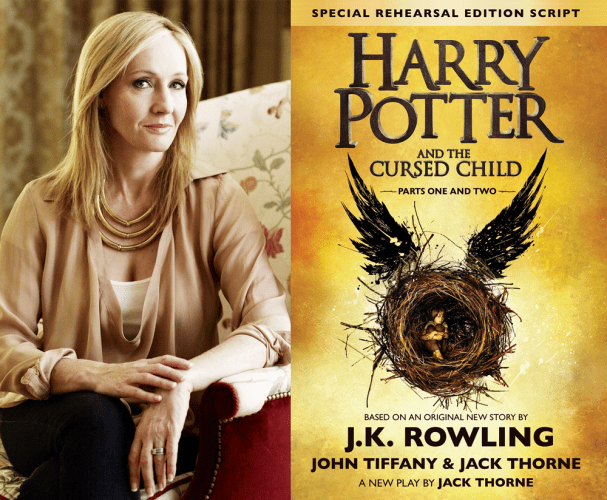
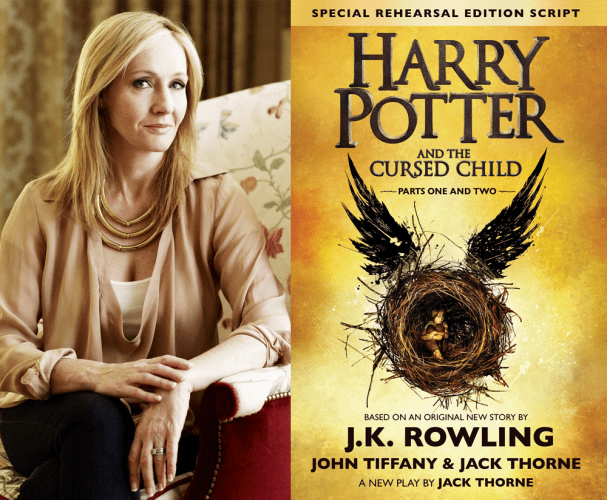
CliffsNotes: “After all this time”, there’s a story from the Harry Potter universe. That’s not counting the many Pottermore missives and Twitter posts from JK Rowling over the last nine years. Harry Potter And The Cursed Child: Parts One And Two is written by JK Rowling, John Tiffany, and Jack Thorne. The fat book is a Special Rehearsal Edition of the script of the play that premiered in London on July 30.

Cursed Child opens at the close – taking off from where the last book of the series, Harry Potter and the Deathly Hallows, ended – at King’s Cross, with Potter seeing off his children on to the Hogwarts Express.

So far, we had been lulled into believing that 19 years on, everything is alright, because The Chosen One’s scar hasn’t prickled for a while. But then this isn’t exactly Harry’s story. The wand passes on to Albus Severus Potter, Harry and Ginny Weasley’s middle son, who is buckling under the burden of his heavyweight names and surname. Things get worse when he gets sorted into Slytherin at Hogwarts. Not only that, he ends up befriending Scorpius Malfoy, that’s right, the son of Draco Malfoy. Throw in a “twenty-something determined-woman” called Delphi who convinces them to go time travelling for a seemingly noble cause and that’s Cursed Child sans-spoilers for you. But the two young wizards discover that time travelling comes with serious repercussions, as they stumble through one horrifying alternative reality after another.

Get a taste: The Cursed Child is ultimately a script for the stage, and at times it leaves you cold or at least wanting for more, such as knowing what the characters are thinking or feeling. Instead you have narratives such as “An OVER-ATTENTIVE WIZARDS begins to circle them” or “ALBUS hesitates a moment, and then his face strengthens”. Okay then. Of course, the good thing is that for many children and adults, this will be a lovely way to read a play script and understand its subtleties. And going by the reviews, it seems like the play is quite spectacular, and that is the whole purpose of this story.

Of course, The Cursed Child will take place pride beside our first edition Potter books, and that’s because it has its moments. Moments of nostalgia, humour, and poignancy. And magic. For Potterheads, it’s one more chance to hop aboard the Hogwarts Express, revisit some of their favourite characters, and silently cheer as Albus and Scorpius take us back into the magical world of witches and wizards. This is a story to be cherished, because it reveals Harry’s vulnerability as a parent and reminds us once again, the power of love and friendship. Like in this scene where Harry talks to Professor Dumbledore’s portrait, who is barely paint and memory.

“DUMBLEDORE: A difficult thing. I imagine, to watch your child in pain.

HARRY looks up at DUMBLEDORE, and then down at ALBUS.

HARRY: I’ve never asked how you felt about me naming him after you, have I?

DUMBLEDORE: Candidly, Harry, it seemed a great weight to place upon the poor boy.

HARRY: I need your help. I need your advice. Bane says Albus is in danger. How do I protect my son, Dumbledore?

DUMBLEDORE: You ask me, of all people, how to protect a boy in terrible danger? We cannot protect the young from harm. Pain must and will come.

HARRY: So I’m supposed to stand and watch?

DUMBLEDORE: No. you’re supposed to teach him how to meet life.

HARRY: How? He won’t listen.

DUMBLEDORE: Perhaps he’s waiting for you to see him clearly.”

Professor Dumbledore, still able to turn a phrase, and how.

Author 101: You don’t need a Rememberall to recollect that The Cursed Child is not written by Rowling alone. There are two more writers involved, director John Tiffany and playwright Jack Thorne. Tiffany directed Once, for which he won awards on both Broadway and the West End. Thorne writes across theatre, film, TV, and radio.

Fun Fact: This one’s the exact opposite of a fun fact. In one of the alternate realities that pop up on Albus and Scorpius’ time travelling sojourns, Ron Weasley ends up marrying Padma Patil, and for some inexplicable reason, they choose to name their son, Panju. What we can conclude is that with an unfortunate name like that, it is Panju who must be the Cursed Child. Seriously, Albus Severus Potter may be named after two headmasters of Hogwarts and is the son of The Boy Who Lived, but at least he’s not named Panju.

Similar reads: The Harry Potter (seven books) series by JK Rowling and The Hogwarts Library Set: Fantastic Beasts And Where To Find Them: From The World Of Harry Potter,

Quidditch Through The Ages: From The World Of Harry Potter, and The Tales Of Beedle The Bard by JK Rowling.

10 Children’s Writers From Bangalore We Absolutely Love

childrensauthor.jpg

https://lbb.in/bangalore/kids-writers-bangalore/

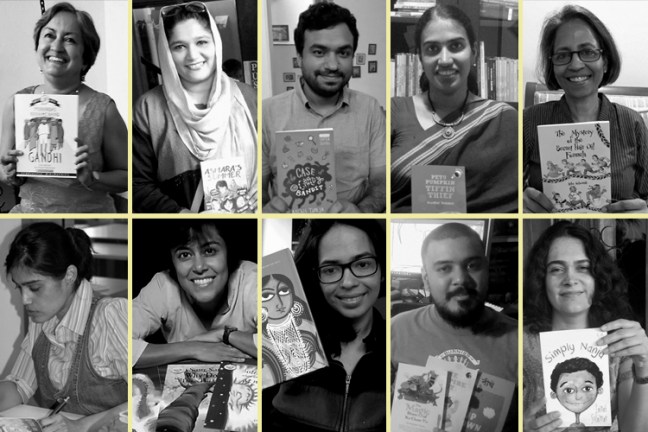
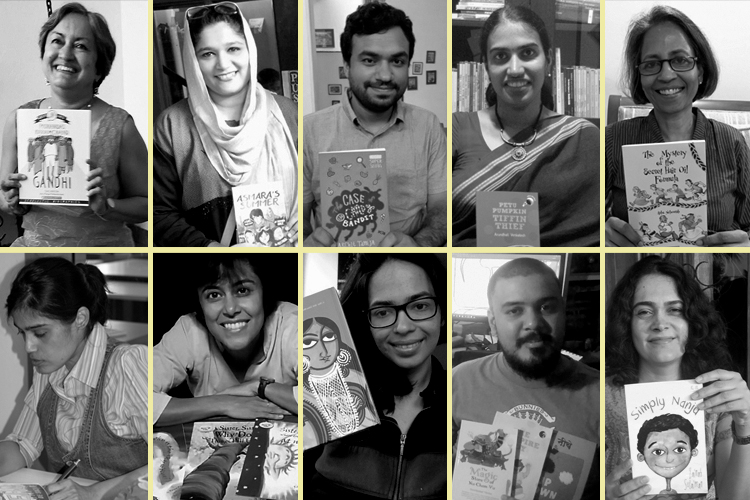
From the balmy weather to the abundant bookshops — there’s much to inspire authors in the city we call home. With some of India’s finest children’s writers living right here, you’ll find places and people you recognise on every page. Meet some of Bangalore’s writers who dream up the loveliest stories for children.

 Aditi De

AditiDe

Usually found: Gazing over her computer and out of wide windows which overlook her neighbour’s Singapore Cherry Tree.

It’s hard not to be impressed by an author who has written about some of India’s most iconic figures in her work — including Gandhi in a recent graphic novel, and Nehru as part of the Puffin Lives series. De has a special knack of making her writing both accessible and relevant for children. Reading her life of Gandhi is particularly special because of the attention she pays to his {often neglected} childhood years.

Bibliography: A Twist in the Tale: More Indian Folktales, Jawaharlal Nehru: The Jewel of India, The Secret of the Rainbow Phoenix, and Mohandas Karamchand Gandhi.

Reading recommendation: The Mozart Question by Michael Morpurgo

Andaleeb Wajid

AndaleebWajid

Usually found: Writing at her desk, especially when she has time to herself.

Food and slice of life stories come together in Andaleeb Wajid’s books. The Young Adult author has recently written Asmara’s Summer about the very posh Asmara, who much to her horror, finds herself spending a month at her grandparent’s on Tannery Road. If you’ve read Wajid’s books — YA or adult — you will find that Bangalore is a key protagonist in her stories. “All my books feature Bangalore for the simple reason that while I may have travelled to many places around the world, I’ve only lived here,” she said. “This is home and it is predominantly evident in all my books.”

Bibliography: Asmara’s Summer, When She Went Away, The Tamanna Trilogy series, and Kite Strings.

Reading recommendation: The Fablehaven series by Brandon Mull.

Archit Taneja

ArchitTaneja

Usually found: Writing while enduring the long commute from Indiranagar to Whitefield.

For Archit Taneja, who began his writing journey at a workshop organised by Duckbill Books in Chennai, it had to be children’s books because he, “enjoys telling goofy stories that most adults frown upon.” His debut novel for middle readers, The Case of The Candy Bandit, certainly adds a goofy charm to the typical detective story, and the sleuths from the book are ready to take up a new case in the second installment, which will be published soon.

Bibliography: Superlative Supersleuths: The Case of the Candy Bandit.

Reading recommendation: The Selected Works of T.S Spivet

Arundhati Venkatesh

ArundhatiVenkatesh

Usually found: Madly trying to make a break through the madness to the relative calm of her desk.

Food is certainly a recurring theme in her books for both younger and middle readers — with characters like Junior Kumbhakarna and Petu Pumpkin, who just love to eat. Her latest release, Koobandhee – The Adventures of Bala and the Book-barfing Monster hit shelves just this month and tackles another theme that’s close to her heart … books! With some sibling rivalry and feminism thrown in for good measure. While she nurtures dreams of writing in the hills à la Ruskin Bond, she can’t imagine doing what she does in any other city than Bangalore.

Bibliography: Junior Kumbhakarna; Petu Pumpkin: Tiffin Thief, Petu Pumpkin: Tooth Troubles, Bookasura – The Adventures of Bala and the Book-eating Monster, and Koobandhee – The Adventures of Bala and the Book-barfing Monster

Reading recommendation: Coraline by Neil Gaiman {if excitement is what you’re after}. Saffy’s Angel by Hilary McKay {which will leave you feeling good} and Vanamala and the Cephalopod by Shalini Srinivasan {takes you into a fantastic world that’s not too far from Bangalore}.

Asha Nehemiah

AshaNehemiah

Usually found: Writing at her home, where many of the windows look out to trees full of birds.

You can’t help but giggle at a title like The Boy whose Nose was Rose and Other Rollicking Stories. But then that’s the magic of Asha Nehemiah’s writing, it’s warm, humorous, little wonder that children love her stories. “I started writing children’s books because it brings together, in the most fun way possible, all the things that are closest to my heart — writing, stories, fantasy, humour, mystery and children!” said Nehemiah.

Bibliography: The Mystery of the Silk Umbrella, Trouble with Magic, The Mystery of the Secret Hair Oil Formula, Zigzag and Other Stories, Meddling Mooli series; The Boy whose Nose was Rose and other rollicking stories, six CBT books — Granny’s Sari, The Runaway Wheel, The Rajah’s Moustache, Wedding Clothes, Mrs Woolly’s Funny Sweaters and Surprise Gifts. 

Reading recommendation: Bear Snores On by Karma Wilson, The Why-Why Girl by Mahasweta Devi, Book Uncle and Me by Uma Krishnaswami.

Jane De Suza

JaneD

Usually found: Sitting at her antique desk contemplating the view out to the sky above her terrace.

A love of detective fiction and a good old mystery guides Jane De Suza’s writing for children, which is characterized by her laid back humour and sense of irreverence. Despairing of the “abominably serious world” kids live in today, she writes, “to get them giggling again” and to show them that, “there’s an equally fun world for the quirky ones, the ones who don’t fit in.”

Even though her Superzero books are set in a fictitious superhero town, don’t be surprised to find elements that you recognise — as everything from her neighbourhood bakery to the slang she hears kids using on the city streets finds its way into her work.

BibliographySuperZero, SuperZero and the Grumpy Ghosts, The Party in the Sky, The Big Little Want.

Reading recommendation: From Call of the Wild by Jack London to The Black Stallion by Walter Farley and Marley and Me by John Grogan, to everything by James Herriot, Ranjit Lal and Gerald Durrell.

Roopa Pai

RoopaPai

Usually found: Writing in front of her desktop in her room, and when not writing, goes out to enjoy her city.

Although Pai said she started writing children’s books rather late in life, she has contributed stories to magazines, newspapers, workbooks, and textbooks. Pai has gone on to write the brilliant Taranauts series and the extremely popular The Gita For Children, making her one of the most beloved contemporary children’s books writers.

Bibliography: The Taranauts series, The Gita For Children, What if the Earth Stopped Spinning, the Sister, Sister science series, UNICEF’s Children For Change series — Mechanic Mumtaz and Kalyug Sita, Starring Taka-Dimi: My Space, My Body and Frobby and Friends: My Home.

Reading recommendation: Survival Tips For Lunatics by Pakistani writer Shandana Minhas.

Samhita Arni

SamhitaArni

Usually found: Writing in her study, looking out at trees, with a small chair and an extra cushion for her cat, who keeps her company when she writes.

Samhita Arni started writing children’s books at the age of eight! That was The The Mahabharata – A Child’s View which has since then been published in seven languages and sold over 50,000 copies across the world. The award-winning author has written children’s and adult books including the graphic novel Sita’s Ramayana. “The writing community and events in Bangalore is low-key and down to earth, so much less pressure for me, as a writer and fewer expectations to live up to — which translates into more freedom for me as a writer,” said Arni.

Bibliography: The Mahabharata – A Child’s View and Sita’s Ramayana.

Reading Recommendation: Sorcery and Cecilia or The Enchanted Chocolate Pot by Patricia Wrede and Caroline Stevermer.

Vinayak Varma

VinayakVarma

Usually found: Writing in his study or rocking chair, late at night or late afternoon, when it’s silent.

Illustrator Vinayak Varma stumbled into writing children’s books purely by accident. Varma wasn’t able to get a sound-mixing internship in 2002, as part of his digital filmmaking course at the Srishti School of Art, Design and Technology. He ended up ‘begging’ his way into Tulika Books as an intern. During his stint there, Varma proposed an idea about a child learning about weight and gravity by playing seesaw with animals of varying sizes. The result was the lovely picture book Up Down. Since then Varma has illustrated many children’s books, written articles and comics for Tinkle and Amar Chitra Katha, edited the science magazine Brainwave and written and illustrated Jadav and the Tree-Place for StoryWeaver.

Bibliography: Jadav and the Tree-Place and ­Up Down.

Reading recommendation: All of Asterix and Tintin, which are full of grand adventure, history, humour and excellent visual storytelling. They were easily the most memorable books from my childhood.

Zainab Sulaiman

ZainabS

Usually found: Parked up outside Airlines Hotel, sipping filter coffee and trying to write.

A self-proclaimed ‘old, hard-core Bangalorean’ Zainab Suleiman’s debut novel Simply Nanju was inspired by her time working with differently-abled children at a local school. It’s a gentle, moving read, with characters you really believe in — and whose voices stay with you. You can expect to see lots of Bangalore inspiration in this {and future!} books, keeping in mind that Sulaiman is a loyal city resident who has spent her whole life here.

Bibliography: Simply Nanju

Reading recommendation: Trash! by Anushka Ravishankar, Swamy & Friends by RK Narayan, Little Women by Louisa May Alcott and Calvin and Hobbes. Plus, anything written by Roald Dahl.

 

Tell me a story of the wonderful witch

thinkstockphotos-jpg.jpg

http://indianexpress.com/article/lifestyle/books/tell-me-a-story-of-the-wonderful-witch-2889815/

Do you worry about the stereotypes in your child’s books, from the good wife to the fair princess? Here’s how to free fairy tales from prejudice.

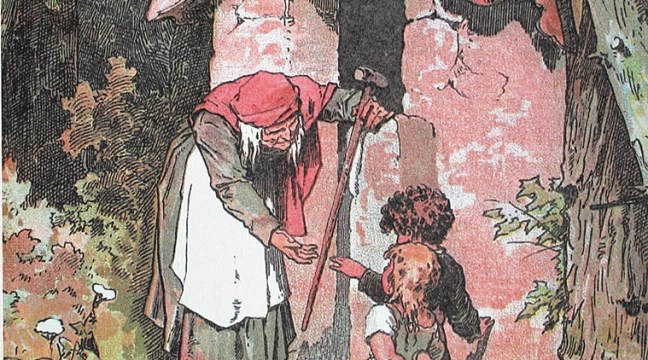
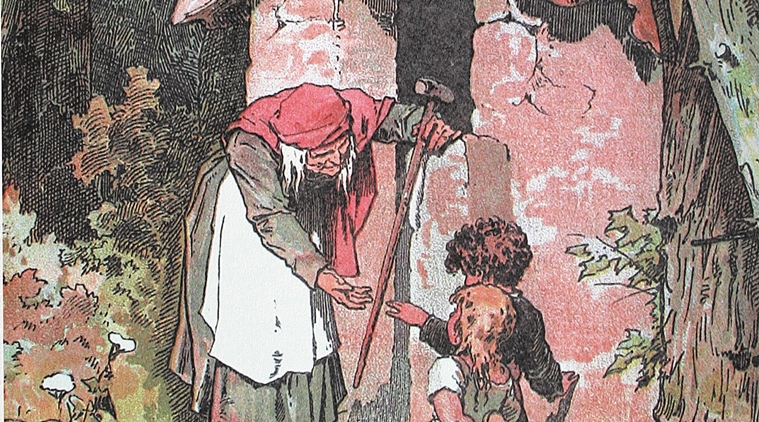
Who doesn’t know Cinderella’s horrible step family? The stepmother and ugly stepsisters were “with fair faces, but evil and dark hearts” and they made sure that “times soon grew very bad for the poor stepchild.” You may have also read about the good wife, who is always slaving away at the stove, while pundits dole out sage advice and peasants toil and serve. Many stories come with a bevy of people engaged in servitude, either helpful or malicious, stupid or cunning, always at the service of the privileged.

images

While some of these stories are charming, others entertaining, as a child reading them, it’s hard not to believe that all step-parents cackle and are horrid, that girls must do the dishes and wait to be rescued, while boys must do the rescuing. It’s also easy to assume that pundits are wise and peasants are thick-headed.
“These stories reflect the times and cultures in which they are set,” said Radhika Menon, managing editor of Tulika Books. “They are timeless concepts — the good vs evil, the wise vs foolish, the strong vs weak. And overriding all this are notions of beauty and gender, which continue even today.” Menon points out that, often, writers and illustrators unconsciously reinforce the stereotypes even while the stories or illustrations try to break free of them. “It requires skill and understanding to change or subvert stereotypes in children’s books,” she added. “The challenge for editors is to identify such writers and illustrators and for parents and teachers to find such books!”

Narratives have the power of influencing children’s attitudes, behaviour, and perceptions. For one, new research from the Brigham Young University, US, suggests that the Disney “princess” culture can “influence preschoolers to be more susceptible to potentially damaging stereotypes”. The study, which involved 198 preschoolers, revealed that “more interaction with the princesses predicted more female gender-stereotypical behaviour a year later” — this affected their confidence to do well in maths and science. The girls didn’t like getting dirty, and were “less likely to try and experiment”.

But then, if some stories can reinforce biases, others shatter them. Which is why we have films such as the fabulous Shrek series (okay, some of them, at least), a delightful parody on stereotypical fairy-tale characters, as well as children’s books with protagonists who refuse to be pigeonholed. In Oliver Jeffers’s The Heart and the Bottle (HarperCollins), there is a girl “whose head was filled with all the curiosities of the world”, and a brave toddler outwits a slew of monsters in Maurice Sendak’s Mommy! (Scholastic). “The Greatest Magic of Harry Potter: Reducing Prejudice”, a study published in the Journal of Applied Social Psychology, showed that children who read Rowling’s books were less prejudiced and more open-minded.

Closer home, writers are cutting through stereotypes and superstition to write books that are reflective of our times. Ranjit Lal writes about female infanticide in Faces in the Water (Puffin). Mathangi Subramanian’s Dear Mrs. Naidu (Young Zubaan) has spunky female protagonists who take their schooling future in their own hands. In Nandini Bajpai’s Starcursed (Red Turtle), reason trumps astrology, while girls play some excellent football in Swati Sengupta’s Half the Field is Mine (Scholastic). Himanjali Sankar’s Talking of Muskaan (Duckbill) has an LGBT theme, and Zainab Sulaiman’s Simply Nanju (Duckbill) is set in a school of differently-abled children.

Yet, log onto a bookseller’s website or visit an average bookstore, and you will see fairy tales, mythological and gendered books topping the popularity lists. The appeal of these stories is undeniable. Many of them are better packaged and marketed. Spend a few minutes in the aisles of an airport bookstore, and you will observe that many parents are clueless about most Indian authors.

Additionally, the power of popular culture is impossible to ignore. Little wonder then, that children covet Disney princess-themed birthday parties, Chota Bheem backpacks and lunchboxes. Chota Bheem maybe everywhere, it doesn’t take away from the fact that the series has strong gender biases and borders on tokenism. For instance, the fair-skinned Chutki may play with her friends and embark on adventures, but she’s the one burdened with household chores.
But then, books and media are not the only sources of prejudice. “I feel stereotypes and labels are bound to creep in to our children’s lives and books are not the only influence,” said Aashti Mudnani, who owns Lightroom Bookstore in Bangalore. “[I] am mostly speaking from personal experience with my own children and feel that reading books to a child often involves questions and discussions and it is important to engage in these.”

But then, books and media are not the only sources of prejudice. “I feel stereotypes and labels are bound to creep in to our children’s lives and books are not the only influence,” said Aashti Mudnani, who owns Lightroom Bookstore in Bangalore. “[I] am mostly speaking from personal experience with my own children and feel that reading books to a child often involves questions and discussions and it is important to engage in these.”

At Lightroom, Mudnani and her team handpicks the books, creating a veritable Narnia for children. Here, you won’t find Cinderella or Jack and the Beanstalk, but you will stumble upon a modern retelling such as The Princess and the Giant (Nosy Crow) by Caryl Hart and Sarah Warburton, where the princess helps the angry giant who won’t stop stomping about. You will also find Girls to the Rescue (Tulika) by Sowmya Rajendran, where six fairytale leading ladies stray from the hackneyed path. “Princesses are a mega bore,” writes Rajendran, in the epilogue. “The ones in the stories I grew up reading anyway. They are in the situation where they can do whatever they want but they never do anything.” Her stories are fairytale emancipation at their best.

Writer Subramanian believes that modelling is important when it comes to tackling biases. “Children are always watching,” said Subramanian, who has been a public school teacher in the USA. “If you are kind to domestic help, if you make friends with diverse families, and if you question injustice, they’ll notice. They’ll read that book about an unintelligent servant and think, ‘But the akka in my house isn’t like that. Why is this akka like this?’ Nothing is more important than giving kids the opportunity to be around diverse peers and adults.”

So if your children prefer reading Cinderella, don’t hit the panic button. Mudnani says one shouldn’t necessarily shy away from reading Cinderella and Snow White. “Instead talk with children on certain parts of the story or characters that may not necessarily be true to life, the wicked stepmother, as an example,” she said. Menon agrees, “A story does not in itself necessarily reinforce unpleasant stereotypes, it depends on the way in which it is told and the way in which it is understood.” Parents, teachers, writers and illustrators need to step up to the task.

Both Menon and Subramanian recommend giving children choices to read from, acquainting them with a range of writing, and discussing the stories. “Kids can handle a lot more than we think,” said Subramanian. “They see stereotypes all the time. Books are a lens to interpret these stereotypes. It’s important to be there when kids are deciphering topics that might be uncomfortable to process. Let them experience it, but make them feel comfortable enough to be able to discuss these difficulties with you. Let them talk.”

Bijal writes about education and food security. She has co-founded BAM! Books on Instagram to talk about children’s books that break new ground

Reading urban dystopia

24bm_lead_pg4_law_2906980g.jpg

http://www.thehindu.com/news/cities/mumbai/entertainment/reading-urban-dystopia-with-lawrence-liang/article8767905.ece

Explore city architecture as seen in comics and graphic novels with lawyer and writer Lawrence Liang


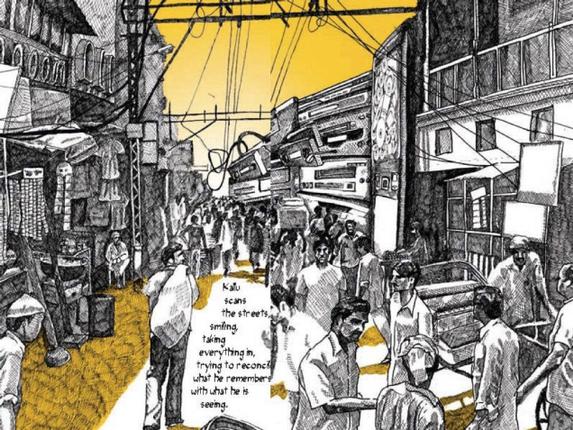
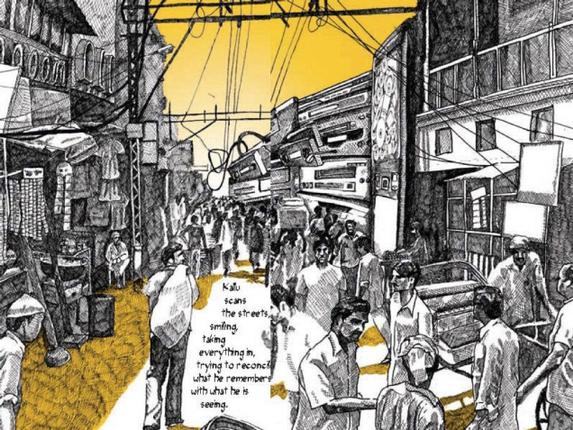
One of the most iconic images that even non-comic aficionados are familiar with, is that of Batman perched on a gargoyle, looking down at Gotham City. “It’s a bird’s eye… a god’s eye view of the city,” says lawyer and writer Lawrence Liang. “But it’s also how a city planner would look at the city.” It’s a very different perspective than the one in The Walking Man by Jirō Taniguchi, pointed out Liang, in which the Manga comic’s protagonist takes a walk around his city. “He takes the time to look around,” he adds. “You experience temporality through that. It’s a contrasting view from the one Batman has of Gotham City – there’s a distinction in seeing a city from the top and walking it.” These are just some of the discussions that participants can look forward to at “Comics and the Urban Imagination”, a four-day course that explores the representation of cities in comics and graphic novels.

Liang will be in Mumbai to teach the course as part of ‘Scaffolds, Layouts and Palimpsests’ at the School of Environment and Architecture (SEA). Participants will be introduced to a slew of international and Indian comics via the tropes of architecture, dystopia and labyrinths. Apart from offering an understanding of comics and graphic novels, the course aims to explore the role of the image and the imagination in shaping urban form. The course, according to SEA website, will examine the intersection of comics and the imagination of the city, in terms of representation and how architectural concepts may offer a new way of understanding the formal properties of comics.

Although Liang is best known for his work at the Alternative Law Forum in Bengaluru, of which he is the co-founder, he is also a film and media scholar. “I have been reading comics seriously for quite some time now,” he says. “I have always had an interest in visual culture.” According to Liang, when it comes to the visual archives of the city, both photography and cinema have been extensively mined for their ability to capture an experience. “As archives of the city, they are both intentional and unintentional,” he says. “If you look at cinema, you are often shooting on location. You capture more than what you intend to – the ambience and the archive of the city at a particular time.” Further, today’s selfie-happy culture, people are constantly taking photographs. “Rather than seeing better, there is a visual blindness,” he adds.

Which is one of the reasons that Liang is drawn to comics – while a photograph is taken, a drawing is made, creating a representation of the urban space. “What you leave or include becomes more acute in a drawing,” he says.

While landscapes are intrinsic to comic books, cityscapes are predominant in many of the narratives. No matter what their origin, superheroes have made mega cities – real and fiction – their homes and the base to fight crimes from. Phantom may feel left out, but urban landscapes are pretty much inherent to the aesthetics of comic books now. The form also gives the space to create allegorical cities, and to reinterpret the future of the cities, in all their utopian and dystopian possibilities. “The history of the city is essential to the narrative imagination of a comic,” explians Liang. “Like Batman and Gotham City. It creates a perceptual archive.”

Liang adds that there has always been a strong linkage between architecture and comics. Graphic novels and comics give free reign to the architectural imagination, making urban centres the protagonist of the narrative at times. Chris Ware’s Building Stories is one such book about the people who live in a three-level building in Chicago. It comes as a box containing 14 little books, some made from cloth, some paper. “Chris Ware slows down the action,” says Liang. “Very little happens, but there are so many images. It slows you down, to take in the minute and intricate detailing. In Building Stories, the protagonist is the building.” Then there’s Les Cités Obscures by Belgian comics’ artist François Schuiten and writer Benoît Peeters. Schuiten studied architecture and his education serves as a firm foundation for the surreal, metaphysical landscapes he conjures up here.

Liang points out the different approaches that comic book artists and writers can take while reinterpreting the city within their panels. For instance, in the Tintin books, he explains the landscape is elaborately researched. “The designs of the beams and the chairs, [Hergé] used archival material, a historical approach,” he elaborates. Science-fiction comics use the future approach, the narratives reflecting the anxieties and hopes of a city as a shared living experience.

As urbanscapes take over our literary, cinematic, and every day imagination, the phenomenon is also symptomatic to our idea of progress and development – vertical, shiny, and sleek like the cities in the pages of these graphic novels. In sharp contrast is the idea of wilderness, rural landscapes, and other unfamiliar spaces. This is an idea cleverly encompassed in The Gigantic Beard That Was Evil by Stephen Collins. The monochromatic graphic novel tells the story of Dave, who lives in an island called Here, where everything is perfect. Liang says that in Here, the city is imagined as a seamless space – a perfect realisation of modern planning. In contrast is the mayhem of There, a place of supposed chaos and fear. “It’s a space full of incredible anxiety and fear,” says Liang. “The contrast plays out interestingly, when aspects of There start emerging Here.” The Gigantic Beard may be fiction, but it the neurotic fear and anxiety it depicts, is familiar and eerily real.

Taste of India in Yelahanka doubles up as an Art Gallery

tasteofindia-feat-750x400.jpg

https://lbb.in/bangalore/taste-of-india-restaurant-yelahanka/
Ten-second takeaway

Eat

Palak Paneer, Stuffed Paratha, and Kaali Dal

Drink

Sweet Lassi and Aam Panna

Winning for

Fresh, good food {reminiscent of Himachal and Delhi dhaba food}, reasonable prices, and art

What we ate

Recently, a British friend of ours came over for lunch and was a tad dismayed at the prospect of eating at the non-descript eatery Taste of India. With trepidation, she started to explain her gluten and lactose allergies to Amod Uncle, the proprietor and chef of the restaurant. He nodded solemnly and prepared a Besan Chilla {with a side of rajam}, solving her problem.

The food shines at Taste of India. Uncle, as he’s popularly known, shops locally and seasonally, preparing a range of North Indian dishes. The Palak Paneer and Adrak Gajar are always fresh, and go well with the right-off-the-tava flaky, Lachha Parathas. The Kaali Dal {with desi ghee} is just like what you’d get in a dhaba, as are the stuffed parathas, with an extra dose of butter. While there’s paav bhaji on the menu, go for the chaat instead – the sweet-and-spicy Dahi Puri is perfect for the summer. #LBBTip: If you find yourself hard-pressed to make a choice, ask Uncle to make you a plate with small portions.

What we drank

And to wash it all down, we recommend the sweet lassi or the seasonal favourite aam panna.

The DL on the ambience

tasteofindia-f

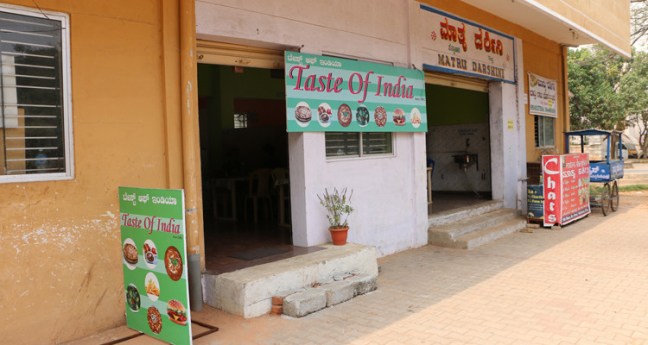
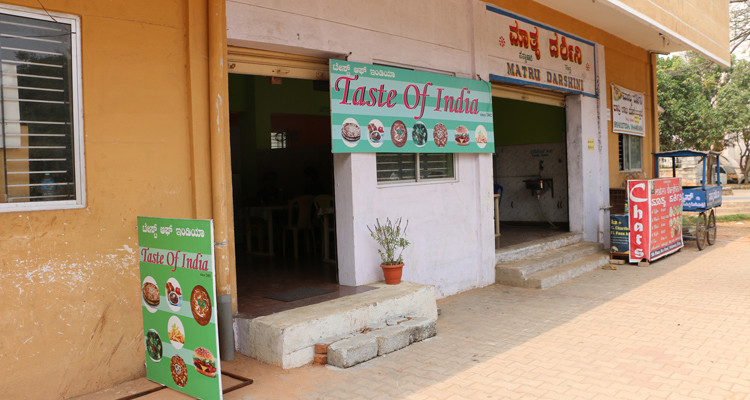
Taste of India is housed in the same complex as the Yelahanka bus depot and is basically a room with an open kitchen and simple seating. Lunch times and weekend breakfasts see a bevy of Srishti School of Art, Design, and Technology students and faculty descending on Taste of India. Most open the fridge and help themselves to fresh lime juice or cold coffee.

Art attack

On most days, there’s an art show on display – in fact, their Facebook page introduces itself as an art gallery and Indian restaurant. Recently, it was a collection of 20 storefront photographs of  Taste of Indias from acoss the globe {you will pretty much find one in every country} and before that was The King and Prime Minister, where photos of Shah Rukh Khan hawking all sorts of products dotted the walls.

So, we’re thinking

Taste of India’s appeal is its food and its proprietor. Uncle is popular with Srishti students and faculty, so much so that he’s also the subject of a documentary project. It’s a restaurant that you can return to pretty much all the time.

Where: BMTC Bus Depot Complex, Yelahanka New Town

When: 9am-6pm

Contact: +91 9823039230

Price: INR 500 for two

Find them on Facebook here.

Pic credit: Nihaal Faizal