Harry Potter, you’ve come a long way!

http://www.mid-day.com/articles/harry-potter-youve-come-a-long-way/15771185
By Bijal Vachharajani |Posted 3 hours

Thirteen years ago, on November 16, British author JK Rowling’s star creation, the bespectacled boy wizard Harry Potter made his big-screen debut in Harry Potter and the Philosopher’s Stone. We look at the book versus film debate on one of the world’s most successful literary series

Three years ago, a friend popped by to borrow, I can’t recall exactly what, but let’s assume it was sugar.

She opened the unlocked door and was aghast to see me sitting on my couch and bawling away. Since we were studying in far, far off Costa Rica, she was concerned that something had happened back home.

The said friend enveloped me in a comforting hug and asked haltingly what had happened. “Dobby died!” I wailed, clutching her hand. Puzzled friend responded, “Dobby who?” I pointed at the TV screen where Harry Potter and the Deathly Hallows — Part 1 was being broadcast and Dobby the free elf had bravely rescued Potter and his friends and succumbed to a
knife injury.

Friend, of course, thinks I am nuts, but that’s muggles (non-wizarding people) for you. For Potter heads, the Harry Potter films may be far from perfect renditions of our beloved books, but they are now a wonderful way to revisit our favourite stories. It was thirteen years ago that Harry Potter and the Philosopher’s Stone hit the silver screen and although the eight-film series got 12 Academy Award nominations, it didn’t end up winning any of the Oscars.

But do Potter heads care? No. Are all the films flawless? No. Could we have expected more faithful toeing the book line? Yes. But do we complain now? No.

That’s because for Potter fans, the films are a portkey that transport us back into the magical world that JK Rowling created, where we can leave behind our muggle one. There’s something comforting yet thrilling about the films — the certainty that Neville Longbottom (played by Matthew Lewis) will grow up to be the more good looking of that particular Hogwarts batch, that we will nod sagely when Dumbledore says “It does not do to dwell on dreams, and forget to live” in The Philosopher’s Stone.

Also, that we still feel that Harry Potter and the Half-Blood Prince could have ended with a better face-off between Snape and Potter (while shaking our head exasperatedly, because seriously what on earth was Ginny doing tying up Harry’s shoe laces in that movie).

We know what will happen next in the movies, we can rattle off the dialogues, and yet, we will watch them, again and again.

Bijal Vachharajani is a self-confessed Potter head who spends her salary from Fairtrade India on collectibles, of which she has a sizeable collection now.
– See more at: http://www.mid-day.com/articles/harry-potter-youve-come-a-long-way/15771185#sthash.x3H5tZGg.dpuf

Why Rowling’s Halloween treat for Harry Potter fans is special

http://www.dailyo.in/art-and-culture/rowlings-special-halloween-treat/story/1/528.html?page=profile&user=166&type=moderated&start=2

The author releases an essay on the horrid Dolores Umbridge, a Ministry of Magic official who joined as the Defence Against the Dark Arts teacher in Harry Potter and the Order of Phoenix

Halloween is a special day for Potterheads – it’s the one evening they get to dress up as their favourite Harry Potter character without facing ridicule from Muggles, non-wizarding folks. But apart from that, October 31 also happens to be the anniversary of the fateful day that his parents Lily and James Potter were killed by Lord Voldemort and Harry became the boy who lived, lightening-shaped scar and all.

Thirty three years after this wizarding world-changing event, author JK Rowling offers further insight into the magical world that she created. Pottermore, the website that retells the series in an interactive manner, is also a space where the British writer shares history and trivia about her characters and moments from the books. This Halloween, it is fitting that she’s chosen to sketch out Dolores Jane Umbridge, the horrid Senior Under-secretary to the Minister of Magic who joined as the Defence Against the Dark Arts teacher inHarry Potter and the Order of Phoenix. Umbridge was a squat woman with a penchant for wearing fluffy pink cardigans, collecting ornamental plates with pictures of cats in them, and handing out punishments faster than Snape would ever have been able to deduct points from Gryffindor.

Umbridge, Rowling reveals, had a Muggle mother and a brother who is possibly a squib, a wizard-born person who has no magical traits. Umbridge grows up to be one of the most vociferous supporter of penalising Muggle-born wizards, claiming that “they have “stolen” their wands and magic”.

It seems to be the fate of half-bloods to try and distance themselves from their Muggle lineage. Voldemort, who had a Muggle father, also hated Muggles and other half-bloods. Both Voldemort and Umbridge spread their reign of terror in their unique ways, while pretending to be pure-blooded. Professor Severus Snape, who had a Muggle father and fell in love with the Muggle-born Lily Potter (nay Evans), ended up following the pure-blood supremacist faction of Death Eaters, before (spoiler alert) he switched sides.

At the other end of the spectrum, the Muggle-born Hermione Granger was pretty much known as the “brightest witch of her age”, and Lily Potter was portrayed as “a singularly gifted witch”. It’s not surprising then that Rowling’s careful characterisation evokes questions about prejudices and empathy for readers at an early age. Earlier this year, “The greatest magic of Harry Potter: Reducing prejudice” a study that was published in the Journal of Applied Social Psychology, showed that children who have read the books were more likely to be emphatic towards minorities and immigrants. We doubt that Umbridge would have approved.

On Pottermore, there’s a footnote from Rowling, where she explains how she plotted the character of Umbridge, borrowing physical traits from a “teacher or instructor” who had a “pronounced taste for twee accessories”. Rowling adds that this person’s lemon plastic hair bow was what she remembered when she perched “the fly-like ornament” on Umbridge’s head. A quick refresher for Muggles – when Potter goes for his Defense Against the Dark Arts class, his instant dislike for Umbridge is reinforced as he sees a black velvet bow on top of her head and he “was again reminded forcibly of a large fly perched unwisely on top of an ever larger toad”. Rowling assures us that the resemblance stops at the physical level and she grossly exaggerated her “taste for the sickly sweet and girlish in dress” to create this character.

Umbridge is also reminiscent of a former colleague of Rowling’s who had filled her office wall space with pictures of “fluffy kittens” while actually being “the most bigoted, spiteful champion of the death penalty”. Rowling writes, “I have noticed more than once in life that a taste for the ineffably twee can go hand-in-hand with a distinctly uncharitable outlook on the world”. In her famous 2008 Harvard Commencement speech, Rowling talked about the power of human empathy, and how those who “choose not to empathise enable real monsters. For without ever committing an act of outright evil ourselves, we collude with it, through our own apathy”. Thoughts she continues to echo on her website.

There’s plenty more to discover on Pottermore – such as why Potter was able to see the Thestrals, magical bat-winged horses that draw the Hogwarts carriages and are invisible to “all who have never been truly touched by death”; the wizards who have been Ministers of Magic since 1707; and the history of the wizarding prison Azkaban.

As usual, it is a joy to read Rowling when she’s writing about her world of wizards and witches. Her snippets reveals the meticulous research that went into the books – whether it was the origin of Umbridge’s name or the political context behind a wretched prison like Azkaban. It also reminds us that not only did Rowling write a bestselling series that inspired a generation of children to return to reading, but also that her stories laid bare complexities of inequality, racism and tolerance, issues that cut across both the wizarding and the Muggle world.

Visit www.pottermore.com. Muggles need to register.

How young adult fiction is helping children battle depression

http://www.dailyo.in/life/depression-dementor-for-children/story/1/238.html?page=category&nid=13&start=2

For a child, coping with a depressed adult is as difficult a task as taking on a dementor.

LIFE

GROWING PANGS  |   5-minute read |   26-09-2014

BIJAL VACHHARAJANI

@bijal_v

In JK Rowling’s Harry Potter series, the idea of depression manifested in the form of dementors, foul creatures that suck on happy memories, draining out all good feelings, spreading despair wherever they go. In an interview withOprah Winfrey, the British author talked about her personal experience with depression which prompted her to create these monsters, “It’s so difficult to describe [depression] to someone who’s never been there, because it’s not sadness. I know sadness. Sadness is to cry and to feel. But it’s that cold absence of feeling – that really hollowed-out feeling. That’s what Dementors are.”

Depression was on everyone’s mind, chiefly with the tragic death of American actor Robin Willaims on August 11, who suffered from the mental illness. For children, depression is a hard concept to understand.

Yet, Google “childhood + depression + India” and a number of studies pop up, along with a bunch of news features. Plus, adult depression is pretty much on the rise, yet another established Google-able fact. For a child, coping with a depressed adult is as difficult a task as taking on a dementor.

Books are one way that children can begin to understand and possibly cope with mental illness. In Rowling’s books, Potter manages to conjure up the Patronus charm, a defensive charm against dementors. On her website, Pottermore.com, Rowling offers a wonderful explanation, “… that a human confronted with inhuman evil, such as the Dementor, must draw upon resources he or she may never have needed, and the Patronus is the awakened secret self that lies dormant until needed, but which must now be brought to light…” Basically, making young readers realise that the ability to battle the monsters of depression lies within them.

 Another book, Jay Asher’s Thirteen Reasons Why released in 2007, and it told the disturbing story of a teenager who comes home to find a box full of audio tapes from him. The tapes have been recorded by Hannah Baker, his classmate, who he also had a crush on, but she committed suicide two weeks earlier.

As Clay Jensen listens to the tape, Hannah recounts 13 reasons why she decided to end her life and one of them is, possibly, him. It’s a chilling story about bullying, sexual violence, abuse and depression, with drastic consequences. A website, 13RWProject.com, stemmed from the book, where fans of the book could “share their thoughts and stories relating to the book”. Teens above the age of 13 have explained how the book changed their life, coming to terms with bullying, making them rethink how they interact with their peers and coming to terms with tragedy as well.

Closer home, books have run through a range of issues – from female foeticide to terrorism, social media woes to sexuality. For instance, Ela by Sampurna Chattarji tells the story of a girl who leads a perfect life until she finds out that she is adopted. Ela has to deal with a gamut of emotions from anger, grief to depression. However, depression, or rather mental illness, hasn’t been the central theme of many children’s books in India. It could be a reflection of how little this grave issue is still understood by us, or it could simply be thought of as too grim a topic for children.

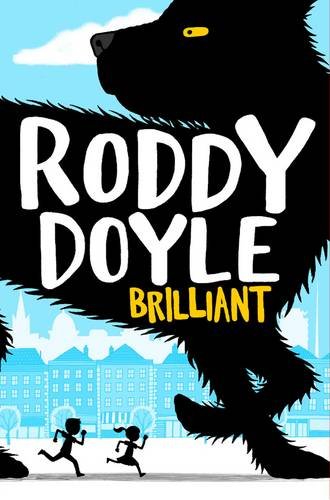
However, in his latest book, Brilliant, Roddy Doyle manages to explain the issue in a simple manner, with a deft touch of humour. In Brilliant, the “Black Dog of Depression” invades Dublin, he prowls in the night, the air above the city becomes darker and the people become gloomier. As the grownups sink deeper in depression, they mumble and slump, and they find themselves down in the dumps. The adults don’t realise what is happening, but the animals do and they also know that only the city’s kids can stop the black dog from spreading his poison.

So off they go, to retrieve Dublin’s funny bone from the black dog. Hordes of children, including the protagonists give chase, aided by a menagerie of talking animals who give sage advice when needed. The solution, the young reader realises, lies in something simple – the power of positivity and optimism. Whenever the kids feel tired, and think that they possibly cannot walk one more step, or start losing faith, an innocuous word gives them a glimmer of hope. Every time the kids say the word “brilliant” out loud, it fills them with courage and lights their way.

Doyle’s story has the children dashing all across Dublin, chasing the black dog. But it essentially deals with issues that are global – recession, the economic slump, its impact on people’s mental health and their ability to cope with it. We live in confusing times, and the kids (and even the animals) inBrilliant try to make sense of it in the best way possible.

Or as Professor Remus Lupin recommends in the Potter books, after an encounter with dementors, one should have a chocolate, at the very least.

The views and opinions expressed in this article are those of the authors and do not necessarily reflect the official policy or position of DailyO.in or the India Today Group. The writers are solely responsible for any claims arising out of the contents of this article.

Writer

Bijal VachharajaniBIJAL VACHHARAJANI @bijal_v

The writer was the former Time Out Bangalore editor and is currently consultant with Fairtrade India.

Of Wizards, Witches and Nephews

Guest post: Of Wizards, Witches and Nephews

Guest post: Of Wizards, Witches and Nephews

By Bijal Vachharajani

Reyansh, my seven-year-old nephew — seven years, nine month old nephew, to be precise — wrangled the phone away from his mother (my sister) while she and I were talking a few days ago. Phone in hand, he raced into his room and huddled in a corner window. Then, he whispered into the phone. “Masi,” said Reyansh. “Are you a witch?”

I paused for a moment and answered, “If I was, you know I couldn’t tell you.”

“I knew it,” answered the nephew softly but triumphantly.

There’s context to this cryptic conversation and for that, I need to rewind to 2006 when Reyansh was born.

I was the fifth person to hold him in my arms, right after his doting parents and excited grandparents. Reyansh was all clenched up – his face tomato red and screwed up, crying with the shock of tumbling into a strange world; his tiny hands curled into tight fists and his skin, fresh and dimpled. It was an immediate, fierce kind of love. One that took the shape of singing lullabies (“In the jungle, the mighty jungle, the lion sleeps tonight) to a baby who was anything but asleep even though it was the middle of the night. I’ve changed diapers with a brave face and without faltering (too much). And I’ve buried him under tons of stories.

When he turned one year old, I got him a big picture book from the Strand Book Stall sale in Mumbai. The nephew was delighted by it. When he opened the book, the dog inside barked and flapped his paper ears. The yellow cat bobbed her head and mewed, and the Jersey cow swished her tail while mooing softly. We spent hours poring over the book. Reyansh was fascinated by the images, running his fingers across the colours, tracing the shapes, giggling and cooing with the joy of discovery.

Many books followed – Maurice Sendak, Julia Donaldson, Tulika’s Thumb books, Tara’s book on cats – and I knew that the family had another bookworm in its fold, when every night his mother would have to tuck him into bed with a kiss and a story.

And then, before I knew it, he was off to Dubai, 1,953 km away from Mumbai. Somehow, reading to him on Skype wasn’t quite the same. From seeing him every day, marvelling at his daily accomplishments (Look! He can hold a spoon in his hand! Oh no, he’s going to hit himself in the head with it) and hearing about his play schools daily feats (he made a tea pot with clay! Oh sorry, I meant a bear, of course it’s a bear), our time together was hastily-squeezed into summer holidays, Facetime calls and iMessage. We didn’t have conversations, we stayed in touch and I wistfully remembered the time Reyansh has asked me if I could give him some tips on becoming an adventurer. (For some reason, he thought I was like Dora the Explorer. Not that I’m complaining.)

Then, he turned seven and he met a wizard named Harry Potter.

tumblr_lo7e8hfNnT1qjln0ao1_500

Let’s fiddle with the time turner once again and tiptoe back to 2001, for my story. For muggles (non-wizarding people), this was five years after Harry Potter and the Philosopher’s Stone had changed the world. The news of the Boy Who Lived began reached us here in India as well and without expecting much from it, I picked up Harry Potter and the Prisoner of Azkaban. Rowling’s story was like a portkey —  I felt like I had been “jerked behind the navel as though an invisible hook and line had dragged” me, “spinning uncontrollably” into a whirling force of words with which Rowling had conjured Hogwarts and Harry’s adventures. Of course, I was teased mercilessly – it wasn’t cool to be reading children’s books in the early 2000s — and I shamelessly fibbed by saying that this was mandatory reading in our creative writing class.

The Harry Potter stories became my Room of Requirement. I retreated to them when real-life dementors surrounded me. Open one of the books and like the room that would always be equipped with “the seekers needs”, I’d find solace in words and wizardly deeds. I read them and re-read them and read them again. Simply put, I’d fallen in love with that world. Mischief managed.

Years later, the Potterhead in me refuses to be snuffed out. My fandom isn’t a horcrux that can be killed off with a basilisk fang. Or maybe it is a horcrux, but of another kind of magic that binds together Rowling’s imagination and my soul… (must stop that train of thought, shuts pensieve cupboard firmly). The nephew, being the sensitive sort, realised Masi’s Potter fixation wasn’t a frivolous matter. The fact that I have an altar to Harry Potter might make some roll their eyes, but Reyansh quickly understood that my Hagrid figurine was not a toy. The only question he had was why I loved the books so much and I told him that some day, soon, he and I would talk about it.

Some Day is here.

Reyansh has taken the same portkey and hurtled into the wondrous world of wizards and witches. He calls and chats with me incessantly to discuss the story and his favourite characters. “It’s Harry, of course, ahem”. He rattles off details from the plot, reminds me of nuggets that I had forgotten. He sends me pictures of his Harry Potter Lego mini figurines, arguing about the merits and demerits of each one. (They’re very cool. I confess I have harboured thoughts of stealing some of them.) He agrees with me that the Hagrid one is pretty awesome, as is the character in the books. He was shocked when I told him that I liked Snape too. Then, with a wise, knowing expression, he said, “You’re kidding, of course.” He can’t wait for me to come to Dubai so that he can sit down with me and talk about the books and the stories within them. Neither can I.

The other day my sister texted me, “Reyansh believes you are a witch and that he is muggle-born. He also believes that he will get his Hogwarts acceptance letter when he turns 11.” That remains my Patronus moment.

Reyansh, Potter and I are now BFFs. Wait, the nephew will not approve of that word. Well, we are now as cool as Harry, Ron and Hermione. Or somewhere in that vicinity at least. All thanks to the world that has been conjured by Rowling with her words and us, with our imaginations.

Bijal Vachharajani is a writer and editor based in Bangalore. At wand point, she will admit she loves Prisoners of Azkabanthe most. She knows that gloomy weather means that dementors are around and immediately reaches out for chocolate.

Paper capers and Harry Potter

http://thegrowlery2014.wordpress.com/2014/07/25/guest-post-paper-capers-and-harry-potter-by-bijal-vachharajani/
Earlier this month, the website Pottermore had a short story by JK Rowling that provided an update of what’s happening with the Harry Potter characters. Bijal, a Potter expert and a connoisseur of kids’ fiction, kindly wrote this little piece about the short story. Enjoy.

***

Rita Skeeter, from the Harry Potter films. (Courtesy: Facebook)

Rita Skeeter, from the Harry Potter films. (Courtesy: Facebook)

Pottermore, the website dedicated to JK Rowling’s Harry Potter series, had a scoop recently.

Seventeen years after Harry Potter defeated Voldemort (and seven years after the last book), there’s news from the wizarding world. Rita Skeeter is reporting live from Patagonia with her acerbic Quick-Quotes Quill, and as usual, it’s dipped in gossip and hearsay. Which means PotterHeads know that they should take all that spews from the pen of the Daily Prophet’s gossip columnist with a huge dollop of salt.

For all the muggles out there, JK Rowling has penned an update on the Dumbledore Army, as they reunite at the Quidditch World Cup Final, an event as big as the FIFA World Cup (if not bigger, then at least more magical).

In 2010, JK Rowling had apparently texted Daniel Radcliffe that she won’t be writing more Potter books. Two years later, she launched Pottermore, a website that retells the story with some wonderful digital interaction and where she offers tantalising bits of history and trivia about the characters to Potterheads. This new column, however, seems to hint at larger offerings from the wizarding world and we are not sure if that means that Rowling is yet to be properly done with that magical creation of hers. For Potterheads, anything Rowling deigns to share about The Boy Who Lived is like finding treasure, so here’s what the author’s given us, through Rita Skeeter’s quill.

Harry Potter aka the Chosen One is almost 34 years old and is the father of two boys, named James Sirius and Albus Severus. He introduces his sons to Bulgarian seeker Victor Krum.

At the risk of sounding like the gossip columnist, we can’t help but wonder why his youngest daughter, Lily Luna, did not accompany her father and brothers. After all most wizard kids grow up on a diet of Quidditch. Could our hero be — gasp! — one of those dads who thinks sports are only for boys?

But coming back to the boys that are Potter’s responsibility, there’s news about Teddy Lupin, son of Remus Lupin and Nymphadora Tonks. He is, we are told, a “wild boy”, but then what else would you expect from a child who is half-were wolf and half-Tonks?

Potter is still married to his best friend’s sister Ginny Weasley. Skeeter also reports that Potter has a nasty cut over his right cheekbone and to her, it looks as if Potter is “desperate to hide” the origins of his injury or there may be trouble in their marriage. As an auror, one imagines Potter would have battle scars, but clearly for Skeeter, it’s much more fun to imagine him as the victim of domestic abuse.

In an older interview, Rowling had revealed that both Harry and Ron Weasley join the Ministry of Magic and become Aurors. Skeeter tells us that two years after becoming an auror, Ron quit and joined his brother George, helping him manage the joke emporium, Weasleys’ Wizard Wheezes. Skeeter speculates aplenty about Ron’s departure from the Ministry job, but we who have read Skeeter over the years know all about the embellishments at which her Quick-Quotes Quill excels.

Hermione Granger remains married to Ron (Rowling once said she regretted that decision and should have paired her with Harry), has bushy hair and is now the Deputy Head of the Department of Magical Law Enforcement. Skeeter dubs her a femme fatale¸ having earlier alleged (baselessly) in Goblet of Fire that Hermione had been toying with Harry’s affections and later Krum’s as well.

The rest of Dumbledore Army have been busy too. The final movie had hinted at a romance between Neville Longbottom and Luna Lovegood, but Rowling dismissed that idea. In her future-forward short story, Neville is now teaching Herbology, a subject he excelled at The Hogwarts School of Witchcraft and Wizardry. Skeeter reports that Neville and his wife Hannah are partial to Odgen’s Old Firewhisky. This could just be Neville drowning his sorrows because the actor playing him in the last movie (Matthew Lewis) is way hotter than Daniel Radcliffe but doesn’t get to be the star (though he did have that swashbuckling moment when he offs Nagini). Luna, on the other hand, is married to a famous wizard, has twins and continues to favour eccentric clothing.

Even in a decidedly short short story, Rowling’s writing of the wizarding world is assured and richly imaginative, tantalising the reader with the possibility of more action (and more stories). Since she finished the Harry Potter series, Rowling has written three novels for grownups. They’ve done well, with her fan base ensuring the books become bestsellers. However, if there’s one thing you can deduce from the new short story, it is that Rowling misses the world of wizardry that she’d conjured for us all.

At the end of Deathly Hallows, Rowling did fast forward 19 years, where you pretty much found out most of the things that Skeeter’s written about in column, minus the gossipy bits. (And since that epilogue took place two years after this column, may we point out to Skeeter that there seemed to be no chinks in any of the three protagonists relationship then?) Many fans had mixed feelings about the epilogue. After all no one really wants their childhood literary heroes to grow up. They need to stay untarnished in our collective imagination. The magic was in growing up with the children, as they became gangly teenagers while taking on fantastical challenges that made Hogwarts so covetable. As muggle children turned 11, we suspect that many of them stared out of their windows, waiting for a tawny owl to deliver a Hogwarts acceptance letter to them as well.

It’s obvious that Rowling misses the characters that have become so dear to so many of us, and so do we. But do we really want to see Dumbledore’s Army all grown up, battling everyday troubles such as an unhappy marriage or thinning hair rather than trying to befriend hippogriffs or fighting noxious dementors?

Still, Rowling signs off promisingly – turns out there’s a second book by Rita Skeeter, Dumbledore’s Army: The Dark Side of the Demob in the offing. And it’s slated to release on July 31, Rowling and Harry’s birthday. Potterheads like me will be sitting and waiting at midnight, much like Harry would on the eve of his birthday, expectantly.

Bijal Vachharajani is a self-confessed Potterhead and at wand point would admit that she loves Prisoners of Azkaban the most. She knows that gloomy weather means that dementors are around and immediately reaches out for chocolate.

Spell check

http://www.timeoutmumbai.net/kids/features/spell-check

Young Potterheads keep the magic alive with fan fiction

Harry Potter, Fan Fiction, JK Rowling, Mugglenet, Shipping, Fictionalley

(Yes, those are all my figurines)

“Yes, He-Who-Must-Not-Be-Named is gone for good. His body was found last night, in a Muggle graveyard. Though this is good news, two valiant warriors also perished in the fight. Ginny Weasley, 16, was found near a burnt tombstone…it is believed Harry Potter was killed in the fire that burnt the tombstone.” This isn’t the ending you remember from the last installment of the JK Rowling bestseller series Harry Potter and the Deathly Hallows. It’s actually an excerpt from elphaba731’s The Last Battle on Fictionalley.org, a site set up by Potter’s American fans.

Whether they’re crazy about the Harry Potter books that pit the teenage wizard against dark wizard Lord Voldemort. or Stephenie Meyer’s Twilightseries about a teenager falling in love with a vampire, fans across the world have dedicated many gigabytes of websites to writing their own version of their favourite books, TV series and films. Since 1997, when the first Potter book released, the seven-book series has gripped the imagination of children (and not a few adults) across the globe. The series has spawned eight movies, a theme park in Orlando, and Harry Potter tours in Britain but Potter maniacs, it seems, can’t get enough of “the boy who lived.” And even after the last cinematic adaptation of the series has hit the theaters, young super fans are busy rewriting some of the scenes on fan sites.

On Fictionalley.blogspot.in, stories are divided into four categories or “houses” as the site refers to them – The Dark Arts for drama, mystery and angst; Schnoogle for novel-length stories; Astronomy Tower for romance; and Riddikulus for humour. Another site, Harrypotterfanfiction.com boasts of over 70,000 fan stories and podcasts while on Fanfiction.net, there are several twisted plots where Potter joins hands with his arch enemy Voldemort.

Before the Potter series finished in 2007, readers used sites like these to predict how Rowling would end the tale. Some people also posted documents they claimed were leaked copies of Rowling’s draft. The editors of Mugglenet.com, a fan site founded in the US by Emerson Spartz (who claims he was 12 and bored when he started the site), published a book,What Will Happen in Harry Potter 7: Who Lives, Who Dies, Who Falls in Love and How Will the Adventure Finally End?

Another common strategy of fan fiction is “shipping”, where fans especially plot the romantic relationships of characters. For instance, disgruntled fans who aren’t happy with Rowling’s pairing of Potter and Ginny Weasley can write their own chapters in which the teenage wizard could fall in love with his best friend Hermione Granger or his earlier crush Cho Chang. These internet stories often take a darker, sexual slant, which is why sites such asMugglenet.com have stringent rules and don’t accept submissions that are explicit. Further, copyright rules are complicated and most sites include disclaimers to ensure no legal action is taken.

Mumbai’s Zuni Chopra, 10, writes fan fiction but doesn’t post it online. She’s written Hallory Powers, where Harry Potter teams up with Darrell Rivers from the Malory Towers by British author Enid Blyton for a superhero story. “Something that excites me is that a story can be told in many different ways,” said Chopra, who has written The Land of Dreams, a book of poems and short stories that was published in 2011. “For examples, Dementors [the soul-sucking guards of Azkaban prison] could enter Hogwarts or Darrell and Alicia could become best friends. I like to use these characters and tell new stories.” For eight-year-old Aarnav Chaturvedi, the Potter books have sparked an interest in writing. He doesn’t write fan fiction but wrote The Friendly Dragon, a short story which was published on the Words and More blog.

Ultimately, fan fiction is a way to revisit the wizarding world “I’m sure everybody will want to read the books and watch the movies over and over again,” said Chopra.

By Bijal Vachharajani on July 07 2011 6.30pm
Photos by Parikshit Rao