Fantastic Beasts shows muggles there’s no magic in a world without the wild

screen-shot-2016-11-28-at-5-39-48-pm.png

http://www.dailyo.in/arts/fantastic-beasts-and-where-to-find-them/story/1/14153.html

Newt Artemis Fido Scamander reminds us that without animals, Earth isn’t a place called home.

Newton (“Newt”) Artemis Fido Scamander went down in wizarding history for many of his achievements, including writing the seminal Hogwarts textbook Fantastic Beasts and Where to Find Them and bringing about the ban on experimental breeding. But after the biopic on him, I think Scamander will, perhaps, be best remembered in the muggle and No-Maj world for his wildlife conservation beliefs.

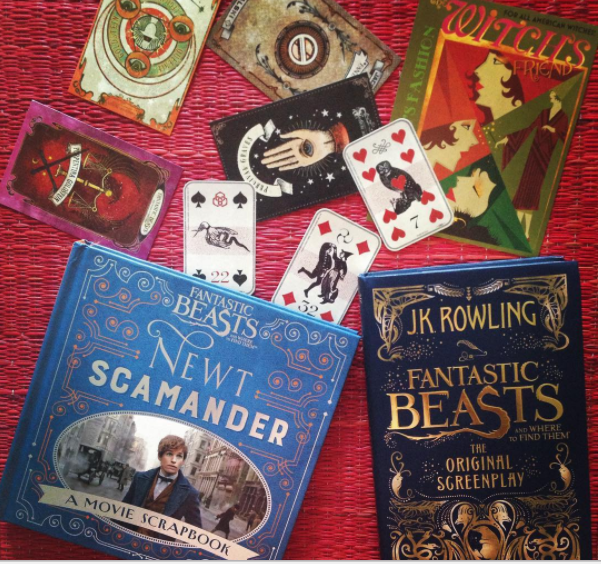
In the movie Fantastic Beasts and Where to Find Them, magizoologist Scamander (played by Eddie Redmayne) comes to New York in 1926 with a suitcase full of magical creatures. Things begin to unravel when some of these fantastic creatures escape into the city, plus there’s an inexplicable force wreaking havoc at the same time. Fantastic Beasts is a charming film, full of wondrous bits. It’s set in the familiar world of magic, but with a new narrative that also makes a strong case for conservation.

A suitcase packed with wild things

In the eponymous book that JK Rowling published as a Hogwarts School of Witchcraft and Wizardry textbook in aid of Comic Relief UK in 2001, we first learned about Scamander who, at the age of seven, “spent hours in his bedroom dismembering Horklumps” and then went on to travel across dark jungles, marshy bogs, and bright desserts to learn more about the “curious habits of beasts”. I couldn’t help but imagine Scamander as a cross between David Attenborough and Gerald Durrell. More so, when we got to examine the contents of his suitcase in the movie.The suitcase (spoiler alert) is a world unto itself for magical creatures, and it’s reminiscent of the many animal rescue and rehabilitation centres around the world. Such as the Wild Animal Rescue and Rehabilitation Centre on the outskirts of Pune, managed by The Indian Herpetological Society (IHS) that offers specialised care for injured and orphaned animals, and helps rehabilitate wild animals back into their natural homes. Or Wildlife SOS’s Agra Bear Rescue Facility, a centre for rescued sloth bears. Like Frank – the thunderbird, many of these animals have been trafficked or chained up and some will be returned to their homes in the wild.

Unpacking speciesism in the Anthropocene

In his book, Scamander questions the wizarding world’s earlier attempts at designating non-human magical creatures as “beasts”, as compared to “beings”. “Being”, he says, is a creature worthy of legal rights and a voice in the governance of the magical world. A stark contrast to the idea of speciesism, an idea that humans have greater moral rights than animals.

These are concepts we should reflect upon – as the planet hurtles towards a warmer period that is hastening the loss of biodiversity, as the green light is given for forests (home to the muggle fantastic animals) to be cleared for “development” projects, and as we enter the Age of Extinction for many species. The destruction is apparent, as are its consequences. The year 2016 is set to be the warmest in temperature records since 1880; climate change may be the reason behind the extinction of the small mammal Bramble Cay melomys in the Great Barrier Reef; and in India, we are already looking at horrific pollution levels and unprecedented weather patterns.

In a paper titled “The New Noah’s Ark”, research scientist Ernie Small pointed out that “Most of the world’s species at risk of extinction are neither particularly attractive nor obviously useful, and consequently lack conservation support. In contrast, the public, politicians, scientists, the media and conservation organisations are extremely sympathetic to a select number of well-known and admired species, variously called flagship, charismatic, iconic, emblematic, marquee and poster species.” Another thing that we can take away from Fantastic Beasts.

A friend pointed out that she loved that not all that animals in the movie were cute or even attractive. “Because it sort of drove the point home that you don’t preserve animals just because they’re photogenic,” she said. Whether it’s the enormous erumpent, the luminescent ashwinder, or the fragile bowtruckle, they are all as important for Scamander, like the tree frog, the grey hornbill, and the royal Bengal tiger are for wildlife conservationists.

A case for conservation in the muggle world

In fact, as Scamander writes, “Imperfect understanding is often more dangerous than ignorance”, and that’s often what determines our interactions with nature. Superstitions about unlucky owls, myths of the potency of the rhino’s horn or the fallacy of speciesism has led to owls being injured by stones, birds being imprisoned in tiny cages, and rhinos being poached to near-extinction. When it comes to his fantastic creatures, Scamander says that he hopes to, “rescue, nurture and protect them”, and gently attempt to educate his fellow wizards about them. And let us hope, some Muggles along the way.

Which is what Fantastic Beasts really manages to do – remind us that without these animals, the world would be a much drearier place to live in. Scamander writes that magizoology matters because it ensures that “future generation of witches and wizards enjoy their [fantastic beings] strange beauty and powers as we have been privileged to do”.

Kind of like what Attenborough once said, “It seems to me that the natural world is the greatest source of excitement; the greatest source of visual beauty; the greatest source of intellectual interest. It is the greatest source of so much in life that makes life worth living.”

Our planet would be a poorer place without house sparrows taking a dust bath, a funnel web spider spinning her web with a funnel at its centre, or a mother elephant protecting her calf by gently pushing him behind her trunk. Without them, Earth isn’t a place called home.

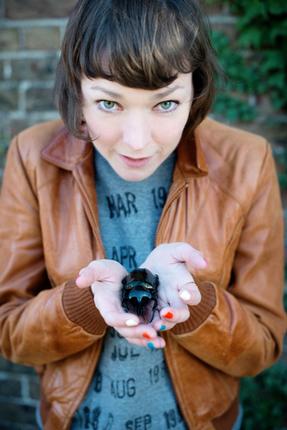
 

A most unusual friendship

mg.jpg

Maya G. Leonard’s fictional tale of a boy and the world of beetles is written with humour, warmth and respect

http://www.thehindu.com/news/cities/mumbai/entertainment/a-most-unusual-friendship/article9022609.ece

bb

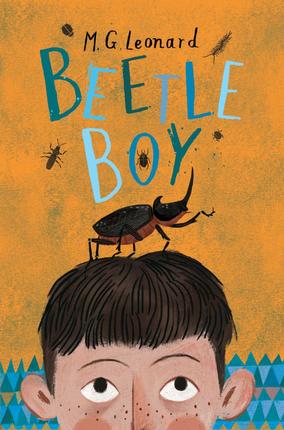
What happens when you’re terrified of insects? You write a book about them, of course. Or at least that’s what Maya G. Leonard did, and the result is the brilliant Beetle Boy (Scholastic), the first of a three-book series.

“I was writing a different story, about a villain who I imagined living in a place filled with insects, which I recognise now is a terrible cliché,” says Leonard, who lives in Brighton and works as a digital producer with the National Theatre in London. “Insects are often used to suggest a negative otherness,” she adds.

Fascinating insects

As Leonard began researching insects, she found herself fascinated by them. “I Googled different types of insects, to describe them accurately, and I was genuinely shocked when I learned about beetles and how adaptable, important and beautiful they are,” she says, in an email interview. “I don’t know if it was my own fear of insects, lack of education in the natural world or plain ignorance that meant I’d grown to adulthood without realising how wonderful these creatures are, but I was interested in that ignorance. I’m very ordinary, and I thought, if I didn’t know how essential beetles are to our ecosystem, then there is a good chance that most people don’t know. I decided to do something about my ignorance, something positive, and tell a story where the insects are the good guys.”

About a boy

The book, Beetle Boy, is the story of Darkus Cuttle, a 13-year-old boy whose father suddenly disappears from his workplace, the Natural History Museum. The mystery deepens when Baxter, a clever rhinoceros beetle befriends Darkus. So many questions: how does Baxter understand Darkus, are these mysterious events connected with the evil Lucretia Cutter who has built an empire of insect jewellery, and can Darkus count on his new friends, Virginia and Bertolt?

Of course, Beetle Boy is a triumph in that it underscores the value of unlikely friendships and makes for a thrilling read. “Children’s hearts and eyes are open to the wonder of the world and they are slow to judge,” says Leonard. “The story had to be about children discovering the wonderful world of beetles because adult’s opinions are often already formed and resistant to change. At the heart of this story is the powerful relationship between a boy and a beetle, and the friendships he makes in the face of adversity. It is those friendships that give him the courage to be heroic and find his father.”

But what also makes it an unusual story is the manner in which Leonard conjures up a sense of wonder about arthropods. You can’t help but marvel at her descriptions of the stag beetles with their “monstrous antler-like mandibles” or frog-legged beetles with their cherry-red exoskeleton that shimmers as it moves, or wonder at dung beetles and Hercules beetles. There’s awe, humour, warmth, and respect in Leonard’s portrayal of beetles. Suddenly, you want to be out there, peering at every blade of grass, observing these beautiful, wondrous creatures.

“I did all of the research for Beetle Boy by myself, over four years,” says Leonard. “I read everything I could, watched every video, looked at a billion images and filled my head with beetles. I care greatly that I do justice to the beetles, and in writing about entomologists, I wanted to show the importance of the science and the work they do.” When Leonard got a publishing deal with Chicken House, she decided to get an entomologist to look at the story. “I wouldn’t have let it be published without a scientist approving of the content,” she says. “That’s how I met Dr. Sarah Beynon, who is a specialist in dung beetles and runs The Bug Farm in Pembrokeshire. She was amazing, and edited the book for factual accuracy, pointing out my rookie errors. For example, I’d referred to a beetle’s exoskeleton as a shell, which I corrected.”

Cast of characters

Leonard also throws in a handful of unforgettable characters: human and insects, one of the most compelling being Lucretia Cutter. “I love a good villainess, because they shock or frighten a reader by violently bucking the gender stereotypes of women as fragile, maternal or compliant,” says the writer. “For me, a great villainess has to have intense desires, a searing intellect and an intriguing glamour or mesmerising repulsiveness.

I knew before I started writing Beetle Boy that my power-hungry scientist and super-villain would be a woman. I named her ‘Lucretia’ after the infamous Lucrezia Borgia who has inspired many villainous incarnations and ‘Cutter’ for the tailoring job it describes, as well as the literal meaning of the word. There is nothing soft about Lucretia Cutter, she’s all malicious intent and sharp edges. I can’t say much more about her without ruining the story, but she will horrify you.

Respecting nature

A recurrent theme in Beetle Boy is respect for nature: there’s sinister genetics engineering at play, and at the same time, you realise how unique the insects are, without being tampered with. “When I was researching for Beetle Boy I discovered that humans have already genetically engineered insects, fruit flies and mosquitoes,” says Leonard.

“The debate around the possible dangers of meddling with genetics and the impact on the ecosystem interested me,” she says.

“I wondered what might happen if you genetically engineered the most adaptable creature on the planet, which is of course the beetle. As far as I know, there has been no genetic engineering of beetles, which left me free to imagine. I love the Frankenstein story and am drawn to questions of this nature, because there is no right or wrong, just responsibility and consequence.”

The second book in the trilogy, Beetle Queen, is slated to be published in April 2017, with Leonard promising that the “adventure gets darker, funnier, and travels further than Beetle Boy”.

If we were beetles, our antennae would be quivering with anticipation.

Three things you must know about the author

Favourite beetle

“My favourite beetle changes every week because with over 3,50,000 known species to choose from, it’s impossible to pick one. I find the tiger beetle very funny. A tiger beetle runs so fast it can’t see, so sprints in short zig-zag bursts and has giant bulbous eyes to orientate it when it stops.”

Writing stories

“I’ve always been drawn towards performed stories, and have worked with a rich variety of artists in my professional life from The Royal Ballet to Shakespeare’s Globe. I struggled with words and grammar when I was at school, which was why dance was the initial area of the arts that interested me, but as I’ve grown and become more practised with language my desire to write my stories down has increased, and I don’t mind admitting I’m proud of Beetle Boy.”

Once-upon-a-time fear of insects

“My fear of insects is important because I have come to realise that fear stems from a lack of understanding. It was an interesting challenge to use positive language to describe the insects because my brain initially gave me words with negative associations. In striving to think of the beetles positively, describing them as friendly and wonderful, I have somehow reprogrammed my own brain.

“A spider can still startle me, but I keep a pair of rainbow stag beetles at home now, and I love them. Perhaps if this book had existed when I was young, I wouldn’t have spent 20 years frightened of mini-beasts. The imagination is a powerful thing.”

Bijal Vachharajani writes about education for sustainable development, conservation, and food security. She’s the former editor of Time Out Bengaluru

From Landour with Love

http://www.thehindu.com/news/cities/mumbai/entertainment/from-landour-with-love/article8099859.ece?ref=tpnews
RUSTY & MAGIC MOUNTAIN

Sitting in a city, surrounded by buildings, enveloped in smog, Ruskin Bond’s books are like a breath of much-needed crisp, fresh mountain air. Bond’s writing takes readers into a world that for many of us is reserved for “vacation time”.

His words take us on a journey through the winding roads of the mountains, where tigers and leopards lurk in deep forests, fallen pine cones and dried leaves crunch beneath footsteps, spooky caretakers and ghosts haunt forgotten houses, and children make imaginary friends.

Even now, bookstores and e-stores are filled with titles from Bond, charming readers. A year and a half ago, when I spoke to the writer about the sheer number of his books that are out there, he said, “When I go to the bank, as I did on Saturday, and I find my bank balance has become alarmingly low, I rush back and immediately get to work at my desk.”

Inimitable humour

His inimitable sense of humour aside, Bond is a compulsive writer. “Even if it wasn’t my profession, I would still write for myself,” he said. “I am fond of writing; I enjoy it, whether I am writing an essay, a story, or a poem.”

Now, almost a decade later, Bond is back with one of his most beloved characters in Rusty and the Magic Mountain . In his ‘By Way of an Introduction’, the author writes, “But I’ll never write another,” said Rusy, “after so much bother.”

And here he is, at his desk near the door… telling a new tale. In this instalment, the Anglo-Indian boy’s “adventure wind” was calling to him. And he sets off to explore Witch Mountain with his friend, little Popat Lal, and wrestler, Pitamber, who is always eating whatever food he can lay his hands on. It’s an odd bunch, Bond’s books offer a deeper understanding of human nature.

Some characters he writes with wit and cleverness, others, he paints with a brush of benevolent malevolence, and some, with compassion. Whether it’s the eccentric Uncle Ken, the food-loving Aunt Mabel, or the shy Mr Oliver, his characters are quirky and colourful.

In Rusty and the Magic Mountain , the three friends find themselves on a fantastical quest: there’s a mysterious one-eyed caretaker who never removes his hat, a cat who has a penchant for blood, a community of dwarves whose forefathers worked in silver mines without sunshine and fresh air, and an evil Rani and the gorgeous Reema. Bond tosses together the supernatural with adventure to put together a hilarious tale that Rusty’s old and new fans will love.

Wayside stations

Bond’s stories evoke a strong sense of place — whether it’s a tea stall tucked away in a dusty corner or a sylvan forest in the valley of a mountain. For instance, he describes a pond in Friends in Wild Places: Birds, Beasts and Other Companions , “To the inhabitants of the pond, the pond was the world; and to the inhabitants of the world, maintained Grandfather, the world was but a muddy pond.”

In another story, he writes about his fascination with small wayside stations. “…these little stations are, for me, outposts of romance, lonely symbols of the pioneering spirit that led men to lay tracks into the remote corners of the earth.” How hard is it then to imagine a muddy pond that’s home to croaking frogs, deserted railway stations, or quaint hill stations? Not very. But mostly, Bond’s stories evoke awe, concern and respect for all things wild and wonderful; whether it’s a blue periwinkle that Rusty plucks from a bush or a leopard crouching in a railway tunnel in Friends in Wild Places .

Lavishly illustrated

This book, lavishly illustrated by Shubhadarshini Singh, brings together stories, some old and others new, about his real and imaginary friendship with animals, birds, and trees.

Bond reminisces about the urban wildlife of Delhi, a tree that gives him a basket of walnuts every year, and a baby spotted-owlet who lived under his bed.

For Bond, his relationship with animals and plants is deep.

As he put it, “After all, animals only kill for food, don’t they? And we humans kill for land property, greed, envy, jealousy — these are our motives for killing. Animals need space, that’s all they want really. Let them have their forest and wilderness.” And maybe, that’s what resonates in his book, reverence and love (and some humour) for humanity and the environment. And that’s why we keep returning to his stories.

Bijal Vachharajani writes about education for sustainable development, conservation, and food security. She’s the former editor of Time Out Bengaluru .

When I find that my bank balance has become alarmingly low, I rush back and immediately get to work at my desk

Ruskin Bond

Bond tosses together the supernatural and adventure to put together a hilarious tale

Review: Career of Evil

http://indiatoday.intoday.in/story/jk-rowling-career-of-evil-third-cormoran-strike-novel-robert-galbraith/1/523394.html

Review: JK Rowling’s Career of Evil keeps the reader guessing

Career of Evil, Rowling’s third Cormoran Strike novel, is an emotionally taut read.

Detective Cormoran Strike and his secretary-turned-partner Robin Ellacott are back for the third time with a case that’s equally bloody and emotional in parts. This time around, the investigative pair is embroiled in a mystery that is pretty personal–someone sends a woman’s severed leg to Robin accompanied by lyrics from a song by the American rock band, Blue Oyster Cult. It’s a chilling message for Strike, given his disability–he was injured and lost a leg in Afghanistan. It’s also clear that someone has a bone to pick with Strike and won’t stop at just a leg. Rather, as you find out from the killer’s perspective, his next target is Robin. What follows is a trip down memory lane for Strike, as he pursues four possible suspects, each with a sinister and bloodthirsty history. In an interview with NPR, JK Rowling, who writes this series under the pseudonym Robert Galbraith, said that she read Ted Bundy’s accounts to understand a killer’s perspective and also trawled through forums frequented by men who discuss women in terms of murder and sexual violence.

The suspects are twisted as they come with a long history of violence–Terence ‘Digger’ Malley, a gangster who is known for his body-cutting skills; sociopath Donald Laing who is a British veteran and blames Strike for all his misfortune and problems; Noel Brockbank who has a history of paedophilia and is not quite right in the head; and Jeff Whittaker, a junkie musician who was married to Strike’s mother and tried and acquitted for her murder. They all have one thing in common–they hate Strike. To complicate matters, after their last two cases–The Cuckoo’s Calling and The Silkworm–Strike is kind of famous and he is no longer able to go out and pursue persons of interests as he once could. And with the infamous publicity about the severed leg, Strike and Robin are losing cases and with that money as well. At the same time, Robin is grappling with a tense engagement – her fiance Matthew has always been vocal about his dislike for Strike but now their relationship has taken a turn for the worse. She’s also worried about her position at work – at times Strike calls her a business partner, at others he does everything to shield her from the nastier parts of the business.

For Robin, horrific memories of sexual violence resurface–you find out that she had been raped at a university. Your heart goes out to Robin and Strike, who for a change, shows his vulnerable side, especially with his bias towards his stepfather. You also get a bit closer to understanding the person behind the hulking, impassive facade. On top of all this is Robin’s impending wedding–dresses, flowers and seating arrangements add to the chaos, while both Robin and Strike are trying hard to ignore their feeling for each other. In her acknowledgements, Rowling writes, “I can’t remember ever enjoying writing a novel more than Career of Evil. This is odd, not only on account of the grisly subject matter…” And it shows. The author takes her time building the emotional tension in Career of Evil. At the same time, she lets the tension unwind slowly, following the suspects at an easy pace all across the country, while allowing personal emotions to bubble up to the forefront. Rowling runs through a gamut of bloody and violent crimes–sexual violence, serial killings, drug abuse, and paedophilia, it’s all in there. Yet she takes her time in telling the stories. And because of that, Career of Evil tends to flag a bit. Although it has a compelling and dark storyline, the narrative takes time to pick up, and you tend to lose interest in the middle.

Suspense

That said, the suspense builds up, and you’re hard-pressed to choose between the suspects. Strike is gunning for Whittaker with obvious reasons, but the others seem equally menacing and they all seem to have had an opportunity. And that’s where the author keeps the reader guessing, making it an immense emotionally taut read. PS: A request for the writer; can we please get Strike to mop up his curry with naan, instead of naan bread next time?

The reviewer is a Bengaluru-based writer.

11 Books That Will Get Children To Explore The Wild

http://www.natgeotraveller.in/web-exclusive/web-exclusive-month/11-books-that-will-get-children-to-explore-the-wild/

World Habitat Day Special: Let a book lead you into swamps, seas and more

TEXT & PHOTOGRAPHS: BIJAL VACHHARAJANI

POSTED  ON: OCTOBER 5, 2015 12:00 AM

Hitch a ride on the back of a glorious book about wildlife.

click me

Children’s books can work like portkeys to nature. Turn the pages and you can be whooshed into a dense green jungle full of mysterious tigers and merry bears, transported to a bleak desert landscape, or plunged deep into the ocean, swimming with sea turtles and dodging jellyfish. On World Habitat Day, we pick 11 books that will enchant young readers and introduce them to habitats where the wild things are.

Sundarbans with Tiger Boy

In Mitali Perkins’ Tiger Boy, Neel’s parents and teachers want him to study hard for a scholarship that will take him from the Sundarbans to Kolkata. But Neel loves his home – he can splash like a river dolphin in the freshwater pond, climb tall palm trees, and forage for wild guavas. Besides, he has a bigger problem than geometry and algebra to worry about: there’s a tiger cub missing from the reserve. With the help of his sister Rupa, a spunky girl who has been forced to drop out of school, Neel decides to find the cub and save it from being trafficked by the evil Gupta. After all, who knows the island better than him?

Tiger Boy takes children into the swampy forests of the Sundarbans. Perkins paints a vivid picture of what it’s like to live in a place threatened by climate change: islands bolstered against rising sea levels by sandbags and furious cyclones tearing away mangroves. Yet, Tiger Boy is a story of hope; it’s about the splendour of the mangrove forests and islands, the magnificence of the tiger and its vulnerability, and human resilience in the face of adversity.

Also see:The Honey Hunter by Karthika Nair and Joëlle Jolivet is a sumptuously illustrated book that brings alive the richness of the Sundarbans. Nair’s story takes children through the mangrove forest, while Jolivet’s candy-coloured illustrations bring to life the honeybees, tigers, and trees of the Sundarbans.

Africa with The Akimbo Series

“Imagine living in a place where the sun rises each morning over blue mountains and great plains with grass that grows taller than a man.” This is where Akimbo lives, on the edge of a large game reserve in Africa. Readers will be enchanted by young Akimbo and his home. British author Alexander McCall Smith is best known for The No. 1 Ladies’ Detective Agency series, but he has a delightful repertoire of children’s books as well, which includes the Akimbo series.

Set in the heart of Africa, Akimbo lives alongside zebras that graze in the plains and lions, leopards, and baboons in the hills and forest. Man-animal conflict, poaching, conservation, and endangered animals are all part of the narrative. In Akimbo And The Elephants, his father who works on the reserve points out an animal and cautions him, “Don’t make a noise. Just look over there.” If only everybody on a safari would listen to Akimbo’s father, we would have so many more quiet and pleasant trips into the forest.

Also see: You’ve watched the movie Duma, now read the book it is based on.How It Was With Dooms is the story of Xan Hopcraft who grew up with a cheetah at his home in Nairobi. There are some lovely photos by his mother Carol Hopcraft in the book as well.

The Western Ghats with The Adventures of Philautus Frog

If you thought frogs lived only in ponds, then Kartik Shanker’s book will make you think again. Shanker’s protagonist is Philautus or Thavalai, a tree frog who has never ever come down from his Big Tree home. One day, Thavalai decides to hop off to look for the big blue sea. He has many adventures, including getting directions from a snake who could have easily swallowed him whole.

Maya Ramaswamy’s illustrations recreate the dark, deep shola forest, the surrounding hills and grasslands, and their many denizens. A hornbill sits placidly in one corner of the page, while a balloon frog puffs up in purple glory on another. Venomous snakes slither across the book and a dragonfly flits over the words. The book is packed with nuggets of information, such as that grasslands are hot in the day and cold at night, but the shola is always cool. Readers also learn that Thavalai often gets teased because Philautus frogs bypass the tadpole stage and froglets hop straight out of eggs.

Also see: Children can Walk the Grasslands With Takuri, a pygmy hog who is the protagonist of this book by Nima Manjrekar and Nandita Hazarika. Part of the same series is Aparajita Datta and Nima Manjrekar’s Walk The Rainforest With Niwupah, where a hornbill takes readers on a tour of his rainforest. Both books have been illustrated by Ramaswamy.

Hingol National Park with Survival Tips For Lunatics

Shandana Minhas’ Survival Tips For Lunatics is a rollicking tale that throws together a motley bunch of characters. There’s a squabbling pair of siblings, a Protoliterodragon who cannot stand bad poetry, and an angry black bear “with a dislike of the species that had put him on the endangered list”. The story is set in Hingol National Park in south-west Pakistan which is home to Chandrakup, the largest mud volcano in South Asia.

Changez, 12, and his brother Taimur aka Timmy, 9, go camping with their parents. Next morning, Changez wakes up to realise that the parents left them behind by mistake. Help is at hand in the form of a talking sparrow and other animals. The unlikely group end up across the Pakistan-Afghanistan border where they find that the human world holds more dangers than the forest. Survival Tips For Lunatics also explores the multifarious wonderful and fraught relationships that humans and animals share, and while doing so, holds up a mirror to our flawed ideas of civilization. But Minhas’ touch is always light, keeping the reader chuckling and turning the page.

Also see: Jungu The Baiga Princess by Vithal Rajan is set in the jungles of Madhya Pradesh and spotlights conservation and tribal rights. It’s a story about the Baiga tribe and their commitment to protecting their forest.

Around the World with The Snail And The Whale

What happens when a snail has an itchy foot and wants to see the world? He hitches a ride on the tail of a humpback whale for the journey of a lifetime. Illustrated by Axel Scheffler, Julia Donaldson’s picture book is a real treat. Young readers will join the snail and the whale to see “towering icebergs and far-off lands” where penguins frolic in the water. Then they go on to “fiery mountains and golden sands” to say hello to monkeys and turtles. While Donaldson doesn’t dwell on any particular habitat, the book makes for a fun guessing game about possible locations. For instance, where in the world are caves beneath waves where sharks with hideous toothy grins lurk?  Or which place is sunny and blue and has thunderstorms?

Also see: In The One And Only Ivan, Katherine Applegate talks about the tyranny of captivity and the yearning for the wild. The story is narrated by Ivan, a silverback gorilla who lives in a glass cage in a performing mall. Ivan introduces himself in the most heartbreaking manner by saying, “I used to be a wild gorilla, and I still look the part.” Ivan chooses to not remember his real home, where his father had a bouncy belly that was the perfect trampoline for his sister Tag and him. It’s the only way he can cope with living in a cage. Based on a real life story, Ivan is both beautiful and moving – a poignant reminder of the absence of home.

We need to pass our love for nature to children

http://www.dailyo.in/lifestyle/wildlife-environment-world-wildlife-week-enid-blyton-winnie-the-pooh-rachel-carson/story/1/6549.html

World Wildlife Week starts on October 2, celebrate it by taking a walk in the park or having a picnic.

The tabby kitten was a quivering mass of fur and bones when my mother scooped her up from the roadside and brought her home. My sister, with her zoophobia, promptly locked herself inside the kitchen, making cooing noises from a safe distance. I was all of seven, and fascinated by the kitten’s round eyes and persistent mews. From the time I can remember, wayward kittens, injured rose-ringed parakeets, and heat-stressed munias found a foster home with my mother. Spiders weren’t whacked to death, instead they were gently carried out to the plants on our balcony. Lizards were pronounced cute, much to our collective horror. All cats as a rule were called Jinglu and Minglu, other animals got various names until they were well enough to go back into the big bad world of Delhi.

Years later, I picked up a copy of The Sense of Wonder by conservationist and author Rachel Carson and read this wonderful line – “If a child is to keep alive his inborn sense of wonder, he needs the companionship of at least one adult who can share it, rediscovering with him the joy, excitement, and mystery of the world we live in.”

Those words made perfect sense to me. Growing up, one of my most treasured memories is of my mother reminiscing about her childhood. My mother’s family lived on the outskirts of Bhuj in Gujarat, close to a forested area. She told us about a brown owl who would knock on their front door thrice – tap, tap, tap. He (perhaps she?) would uncannily mimic the knock that was the agreed signal for my grandfather to announce that he was home. My mother would open the door ready to greet her father, only to have the tiny owl quickly dash into the house or retreat to his favourite perch on the tree outside, staring at them solemnly with his big eyes.

There were stories of a cobra cooling off in their bathroom, and another of a fighting pair of snakes who borrowed the living room as an arena. On such occasions, a local snake catcher caught the snakes and released them back in the wild.

My mother inherited this compassionate streak from her father. Their brown-and-white cow would only go to bed after my grandfather had petted and talked to her. When my grandfather was transferred to Mumbai, the most heartbreaking part of the move was leaving their cow behind. My mother still remembers the cow mooing sadly, while the siblings sulked, unable to understand why the cow couldn’t accompany them to the city. Surely people in Mumbai drank milk.

Fascinated, I took to reading about these animals in books. I was enchanted by Enid Blyton, with her stories about children taking long walks in the moors, climbing sturdy oak trees in the woods, and meeting animals in the wild. Richard Louv, in his book, Last Child in the Woods, writes that “environmental educators and activists repeatedly mention nature books as important childhood influences”. Indeed, stories such as AA Milne’s Winnie-the-Pooh or Gerald Durrell’sMy Family and Other Animals, have inspired generations of wildlife lovers. I yearned to have owls knocking on the door at our Defence Colony house, and comforted myself with fiction badgers, elephants, and Pooh bears instead.

My father, while evading my constant demands for a dog, took us to city gardens on weekends, while holidays were spent in forests and hill stations. We climbed trees, picnicked at Lodhi Gardens, and were constantly gifted books about animals. All these fuelled my sense of wonder for nature. It didn’t matter that we didn’t always know the name of the brightly-coloured birds, majestic raptors, or creepy crawlies we saw. It was enough to be able to observe them.

World Wildlife Week starts on October 2, and there’s no better way to celebrate it than by passing on your love for nature to children. Take them for a nature ramble or a hike, let them observe and learn about animals and their habitat, and share a story or two about wildlife. As Carson reminds us, “A child’s world is fresh and new and beautiful, full of wonder and excitement.” It’s up to us, the grown-ups, to keep it that way.

PS: No owls have come calling to my house, although I have helped rescue a few. Even now when I meet a tiny brown owl, such as the spotted owlet, in the wild, I wonder if it’s the same species as the one that used to knock on my mother’s door.

Dead as a Dodo

http://www.mid-day.com/articles/book-review-dead-as-a-dodo/16424177
Book review: Dead as a Dodo

When it comes to being extinct, the first name that leaps to one’s mind is the Mauritian flightless dodo. After all, the dodo bird went extinct in the late 1600s and even has a famous morbid phrase dubbed after it. But in Venita Coelho’s Dead as a Dodo, the extinct bird gets a new lease of life. After Coelho’s first book, Tiger by the Tail, Agent No 11.5 Rana makes a comeback, along with Agent No 002, Bagha the brave tiger; and Agent No 13, Kela, the mischievous and always-in-trouble grey langur. Rana has a special gift — he can use ‘JungleSpeak’ to communicate to animals, and for this skill, he’s part of the Animal Intelligence Agency.

Dead as a Dodo

This time around, the three protagonists are on Mission: Dead as a Dodo. While on the heels of a missing hangul deer, the trio stumble upon an extinction operation, where a shadowy villain is hell bent on stealing the last specimens of highly endangered species. Now, this villain has managed to lay his hands on an actual live dodo aka the Raphus cucullatus. Their adventure takes Rana, Bagha and Kela from Delhi to Mauritius to North America, in a quest to save the most endangered of species.

Coelho spins a real tale about conservation and international wildlife trafficking, while managing to keep the reader chuckling and guessing right until the very end. Her characters are spunky and the narrative is a lovely way of introducing children to different aspects of natural history.

William Hartston wrote in his book, The Things that Nobody Knows: 501 Mysteries of Life, the Universe and Everything, about the coelacanth, a fish that was believed to be extinct for 65 million years ago, but was caught in 1938, by fishermen off the coast of South Africa. Unfortunately, Hartston adds that the chances of the dodo being alive are only three in a million. As the earth enters into its sixth extension phase — a recent report revealed that “vertebrates were vanishing at a rate 114 times faster than normal” — Dead as a Dodo takes on a special significance. As Coelho points out in her book, it’s in our hands to ensure that today’s endangered species, like the hangul deer, don’t go the way of the dodo.

Dead as a Dodo, Venita Coelho, Hachette India, Rs 350. Available at leading bookstores and e-stores

– See more at: http://www.mid-day.com/articles/book-review-dead-as-a-dodo/16424177#sthash.5xz1cHN9.dpuf

Technology and great outdoors, can kids have both?

http://www.dailyo.in/lifestyle/anshumani-ruddra-minecraft-hogwarts-finding-audrey-sophie-kinsella-parenting/story/1/4661.html

Author Richard Louv underlines the importance of adults helping children ‘detach from electronics long enough for their imaginations to kick in’.

Tiger Talk

http://natureconservation.blogspot.in/2007/05/lmno.html

Found an old old old story of mine online.

Copyright Protected
Date with Tiger:
================

Animals rank high in Bijal Vachharajani’s scheme of things whether as Special Projects Co-ordinator at PETA India or at her stint at Sanctuary Asia. She shares her experiences at the Ranthambore Tiger Reserve with ROUGE .

I was only vaguely aware of my surroundings—tourists were whispering urgently, bickering amiably about who gets the better photograph. But for me, time had stopped. After all, there she was, resplendent in her burnished gold and black striped coat, languidly lapping water from a gushing stream. Her cub, an adolescent tiger, ran around her, amused by the uncalled attention from the excited gawkers. It was my first glimpse of the magnificent Panthera Tigris.

A tip from another canter (that this area was frequented by a tigress with her cubs) had sent our vehicle heading towards this particular stream. The driver shut off the canter’s engine, leaving behind a tense silence. We squinted and strained our eyes, trying to see something through the green and yellow foliage in front of us. Whether it was the rickety boat ride in Periyar Tiger Reserve, where all we spotted was a lone drongo bird, or the unsuccessful quest at Sariska Tiger Reserve, my misadventures with spotting a tiger had left me with the morose feeling that the tigers were eluding me. Immensely adaptable animals, tigers can be found in a wide range of habitats from the arid Ranthambhore to the marshy Sunderbans and the evergreen forests of the Western Ghats. Solitary in nature, tigers are the largest of the cat family and are very territorial. Tigresses, like the one we were waiting to catch sight of, are extremely protective of their cubs.

Suddenly, the driver pointed out, exclaiming, “There she is, I can see her ear!” False alarm. Ready to call it a day, the driver restarted the canter. That was when the tigress suddenly moved from her camouflaged resting place. My date with the tiger was complete.

Most people ask — what’s the big deal about a tiger? As I learnt from Bittu Sahgal, the Editor of Sanctuary Asia, the tiger is a keystone species, the symbol of a thriving forest. He recites this mantra, “To save the tiger, you have to save its home — the forest.” And considering the fact that more than 300 rivers originate from the 28 tiger reserves of India, if you save the forest, you end up saving our water resources. The larger implication? That our subsistence on planet Earth is inextricably connected to the tiger’s survival. The tiger is caught in the throes of a rollercoaster ride to survive. Studies show that tigers only occupy a measly seven per cent of their historic range today, that’s 40 per cent less than a decade ago. Mindless destruction of forests has put India’s wildlife in peril. Worse, poaching for trophies and their body parts, for use in traditional Chinese medicine, only pushed the numbers further down. In 2004, the nation was shocked with news that poachers had wiped out Sariska’s tigers like an epidemic. Suddenly, alarming reports were making headlines in newspapers and magazines. Tiger numbers were dwindling across India and conservationists pegged the number to a meagre 1, 500 to 2, 000. Surely an abysmal report card for our national animal.

I remember chatting with Jaimini Pathak, the writer and director of the heartwarming children’s play Once Upon A Tigerwhich delved on the topic of tiger conservation. When I asked him what ails the tiger in India, Jaimini responded simply, “Human greed.” I rest my case!

Conservationists across India are fighting the battle. We too can help, by sensitively treading upon the Earth’s resources. Save water, paper, and electricity. Invest in corporates who work towards sustainable development. I hope the Earth doesn’t have to witness a time when the tiger draws dangerously close to getting tagged with the phrase “as dead as a dodo”.

Joy of reading children’s books and discovering treats

http://www.dailyo.in/art-and-culture/joy-of-reading-childrens-books-and-discovering-treats/story/1/661.html
2781707

Winter picnics at Lodhi Garden were an important part of growing up in Delhi. A basket of food would be packed in the boot of our pista green Fiat along with a thermos of piping hot chai for the grown-ups and a large bottle of nimbu paani for us. As casseroles of aloo and mooli parathas were laid out on the chatai, my sister and I would curl up with our favourite Enid Blyton books and secretly crave scones and ginger beers instead.

After all, picnics and tea were a lavish affair for Julian, Dick, Anne, George and Timothy the dog, the Famous Five. And really, if the Famous Five were to be believed, picnics were made better with eggs and sardine sandwiches, great slices of cherry cake, and ginger beer. And tea time meant enormous cakes, new bread with great slabs of butter, and hot scones with honey and homemade jam.

But what in the world was a scone? This was a question that plagued Enid Blyton readers in India for years. When you have lavish descriptions like this one in Five on Finniston Farm – “‘Hot scones,’ said George, lifting the lid off a dish. ‘I never thought I’d like hot scones on a summer’s day, but these look heavenly. Running with butter! Just how I like them!’” – how could you not crave one? A friend thought a scone was like a golden cupcake without frosting. Another was convinced they were the cream puffs we got in local bakeries. The reality, when tea shops started serving them here (somewhere between a cake and a bread), was different from our collective imagination. And really, where was the clotted cream? Hmph.

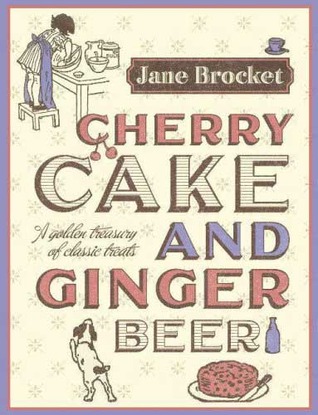
Having grown up on a steady diet of British books, my food memories were sumptuously stitched together by treats that were alien, yet familiar. Recently, a friend and I came across Jane Brocket’s Cherry Cake and Ginger Beer: A Golden Treasury of Classic Treats. The book, we were delighted to discover, offered recipes from children’s books along with an introduction of the story they originated from. The chapters have original illustrations as well as recipes for tuck-box treats, goodies whipped up by storybook Cooks and midnight feasts. There’s seed cake from Swallowdale by Arthur Ransome, pickled lime from Louisa May Alcott’s Little Women and Jean Webster’sDaddy Long-Legs (don’t get too excited, it’s lime brined and stored), and even calf’s-foot jelly from Eleanor H Porter’s Pollyanna.

Brocket tosses together breakfast recipes of creamy porridge and bacon with hash browns. Having grown up in a vegetarian household, I had no clue what bacon rashers were back then, and imagined them to be some cousin of the tomato, since they were all being fried together. It was only when I read EB White’s Charlotte’s Web, did I discover, to my utmost horror, the source of the mouth-watering bacon that all the adventurers loved. Brocket also has recipes for Elevenses, what she describes as “a quintessentially British ritual” loved by Winnie-the-Pooh and Hobbits. There’s Paddington Bear’s favourite marmalade buns, which go well with hot cocoa; and fresh and gooey macaroons from Blyton’s Five Find-Outer series which were adored by Fatty.

Tea-time was sacred in children’s books. How many of us brewed pretend tea for our dolls, teddies and even parents, complete with mini cups and saucers? And before toast became the new global food trend, Mr Tumnus, the faun from CS Lewis’ Chronicles of Narnia – The Lion, the Witch and the Wardrobe, had a toasty tea with “a nice brown egg, lightly boiled… sardines on toast, then buttered toast and then toast with honey”. Since tea-time is really about cakes, there’s Mrs Banks’ bribery and corruption cocoanut cakes from Mary Poppins Comes Back, Milly-Molly-Mandy Has Friends’ muffins which can be toasted on forks over a crackling fire, and treacly, sticky ginger cake, a speciality of Aunty Fanny in Famous Five (“It was dark brown and sticky to eat. The children finished it all up and said it was the nicest thing they had ever tasted”.) Treacle, as I only recently found out, was just liquid molasses.

Brocket suggests an alluring recipe for hunger in which all you need is an outdoor space like a beach, garden or even a secret island. The method is simple – add adults and children to that fresh air along with outdoor equipment “according to season” and allow “to blend for several hours”. Feed the kids and adults well and leave them “to read good books”.