Pure & Special – Gourmet Indian Vegetarian Cuisine

http://www.timeoutbengaluru.net/books/featuresreviews/pure-special-%E2%80%93-gourmet-indian-vegetarian-cuisine

(Courtesy: Pure & Special)

Being part of a family of Gujaratis who lived in Delhi for years meant that we soon ditched the sugar in our sabzis to embrace pindi chole, rajma and khasta roti with gusto. Even after we moved away from Delhi to Mumbai, my mother would soak sabut urad dal a day before guests were to arrive. That’s because her dal makhni was always a favourite with family members and guests. The black gram slow cooked with cream, tomatoes and chillis had a special taste for all of us. It has now become a family ritual, given that our family is all scattered, every time we unite, my mother makes it a point to make some house favourites – kheer, puranpoli, and of course dal makhni.

I confess that most of my dal cooking is limited to boiling lentils (and if I am feeling a little more energetic, I throw in a clove of garlic) and give it a quick vaghaar or tempering. And dal makhni honestly takes a lot of effort and the amount of cream that is poured in is quite heart-stopping. But when I got Vidhu Mittal’s book Pure & Special – Gourmet Indian Vegetarian Cuisine, I came across the recipe for black velvet lentil/makhmali dal makhni and I knew it was time to make my own, well actually Mittal’s version of the dal.

What really lured me into cooking this dal was the easy-to-follow explanation that the author offered, along with step-by-step photographs and little tips, such as “The secret to this dish is patience. As described in this recipe, these lentils need to be simmered for a long time to achieve their signature velvet texture” and that using “unrefined mustard oil brings out the flavour of the black gram”. That’s pretty much the vein of the entire cookbook – simple steps to make interesting Indian food.

Mittal has been conducting cooking classes in Bangalore for over 15 years now and had authored a bestselling book called Pure & Simple: Homemade Indian Vegetarian Cuisine. In her new book, she introduces novices to Indian cooking to spices such as haldi and khus khus, as well as vegetables, nuts, fruits, and lentils. It serves as a good primer – ever tried to shop for dal and tried to distinguish tur from chana? The back of the book also offers basic instructions for boiling raw bananas, potatoes, lotus stems and making different gravies. She then gets down to the business of recipes and there’s a whole range – Drinks, Soups & Salads which includes the refreshing-sounding piquant pear/raseeli nashpati, where pears are stewed with cinnamon and water and then blended and a lotus stem pasta salad; Snacks & Appetisers in which she again works with regional foods such as shingara (water chestnuts) and shows you how to jazz up the humble dalia.

In Main Courses, there’s different sorts of gravy and dry vegetables, some with paneer and methi and others are more exotic such as the Zesty Zucchini Lentil where she mixes up the vegetable with moong dal. Mittal’s Rice & Breads section is equally interesting where she offers recipes for rumali roti and jackfruit rice. And what’s an Indian cook book without recipes for chutneys, which can be found in the Accompaniments section. The Desserts section is lean but comes with an interesting twist, such as saffron kheer with makhanas and a fluffy cheesecake that doesn’t need fancy cheese to make it.

Cookbook perused, it was time to try the dal makhani. It was a lengthy, but not a laborious process. The pre-soaked black gram dal was first boiled in a pressure cooker along with ghee, salt, cinnamon, bay leaves, black cardamom, hing and ginger. Once boiled, I discarded the whole spices and let the dal simmer before adding yoghurt and cream. Half an hour later, my kitchen was fragrant with the smell of cinnamon, bay leaves and cream mingling with the ghee-laced dal. Another half-an-hour later, I added sautéed tomato puree and then a last vaghaar of ginger and chilli powder. The result was a luscious dal that was sheer velvet and laden with spices. Patience was indeed the main ingredient in this dal.

The dal went perfectly with the layered crispy bread/lachchedaar tandoori paratha, a recommendation from Mittal again. The paratha dough was a mixture of wheat flour, baking powder and milk and needed to be proved for an hour before shaping it into balls, rolling it out into a small disc and then pleating it to a cylinder shape. The pleated cylinder was then twisted to form a circle and rolled again, causing several layers to form. Here, the photographs really helped understand the rolling process. Mittal recommends using the inside of a pressure cooker to replicate a tandoor. It didn’t work very well for us, but we used the tava method to roast the parathas. The hot crispy, flaky paratha and the dal makhani left us happy and, when I told my mother, she beamed with approval.

Vidhu Mittal Roli Books, 1,295

By Bijal Vachharajani on July 04 2014

Tree’s company

http://www.timeoutbengaluru.net/books/features/interview-pradip-krishen
Time Out talks to Pradip Krishen about his new book on the jungle trees of Central India

For all the people who live in and depend upon forests” is the dedication in Pradip Krishen’s latest book, Jungle Trees of Central India – A Field Guide for Tree Spotters. The coffee-table book is a lavish tribute to them and to the forests of Central India. Hailing from Delhi, Krishen was a filmmaker and then dedicated himself to studying trees. In 2006, he published Trees of Delhi, which sold a landmark 20,000 copies.

His new book takes him back to his roots in Central India. He writes fondly, reverentially and knowledgeably about his muse. “I like trees. Especially wild ones,” the author writes in the preface. “I feel a deep empathy in their company. I touch them and delight in their tints and perfumes. There’s nothing else I’d prefer to have in my field of vision, except, perhaps, other trees or plants. But getting to know them, to the extent I am capable, lies at the core of my relationship with trees… getting to know them is like a rich weave of stories with more than its share of mystery.”

Krishen combines beautiful prose with scientific and cultural knowledge to acquaint readers with the geography of Central India, the different types of forest it has, forestry in colonial and independent India and of course the trees – from the intoxicating mahua to the girchi tree with its yellow oblong fruits. Readers will learn about the handsome baranga tree with its white flowers, and the palash or flame of the forest and how it thrives on poorly drained soil where other trees would falter. There are lovely nuggets of information. For instance, the girchi fruit is “pounded and dropped into dammed streams as a means to stun and possibly poison fish”. In an email interview with Time Out, Krishen spoke about his fascination with trees and tree-spotting.

How did your fascination with the world of trees begin? Was it challenging not having a science background?
It began when I was building a small cottage at the edge of the jungle in Pachmarhi (in southern Madhya Pradesh), and my architect friend and I would go walking in the forest every day, sometimes for several hours. We had a forester neighbour who started pointing out trees and teaching us names and it just became something we became more and more fascinated with.

The science wasn’t challenging because we were not really interested or even trying to understand the science at the time. We were what you might call “tree-spotters”, like bird-watchers. It’s when we tried to go a little deeper into identifying and differentiating trees that the arcane language of botany started to pose a challenge. But then one learns to read a glossary of terms and puzzle it all out. That too became part of the fun, like an elaborate detective game!

After a book on Delhi trees, what made you decide to focus on the monsoon forest trees of Central India?
Central India is where the whole adventure started out for me. So it was joyful going back to where I had started, to have fun with wild trees. But it was also very liberating, in a sense, to get away from all the messy exotics in a city and to concentrate instead on natural forests, native trees, and to learn to puzzle out relationships between ecology and soils and where trees grow.

Tell us about this book, and the kind of research and time that went into it.
I call the book “a field guide for treespotters” and at one level it’s just that. It’s aimed at people who may have no acquaintance at all with trees or botany in any form. It aims at switching them on, getting them to enjoy this “game” of spotting trees in the wild, becoming tree detectives. It can be great fun and takes one’s enjoyment of wild places to another level. At the same time, I needed to be as sure as I could that I was writing a book that could stand up to scientific scrutiny. And because modern botanists in our country tend to write so poorly, I wanted my book to fill this gaping hole in the way plant books are written and photographed in India today.

I don’t know how to tell you what kind of research went into the book. There’s not a lot written about the area. Some 19th-century books of forestry, Capt Forsyth’s account of his journey, some really tawdry compilations of herbarium specimens from the BSI [Botanical Survey of India]. I probably learnt most from just footslogging in the wilderness and though that sounds really hard, the truth is it made for some of the most enjoyable times of my life. I spent about three and a half years travelling nearly every month for 10-15 days, clocking 3,500 to 4,000km in an area the size of France. Doesn’t that say it all?

Field guides can become quite academic, but you manage to bridge the gap between academics and enthusiasts. Please tell us about that.
I guess it helps that I’m not an academic forester or a trained botanist. That would have probably cramped my style and turned me into an automaton who wrote like all his peers. But the fact that I came from left field, that I started out by doing this for fun, wanting to share this with other people – that’s probably what sets the style and tone of my book.

There’s a strong vein of conservation that runs through your book. Do you feel that books like this play a vital role in making people think about trees and their larger environment?
I don’t know about “vital” and I’m really not at all sure what kind of an impact a book like this has. Obviously it seeks and probably makes some new recruits to tree-spotting and sensitises people to what’s beautiful and enjoyable in wild places. I am trying – subtly, I hope – to influence the way people think about and regard what’s left of our wilderness but I have no illusions at all about the extent to which we, as a nation or a culture, are becoming nature-conscious or conservationminded. It’s not a rosy picture at all.

Tell us a little bit about yourself.
I started working in Jodhpur nearly nine years ago when I was invited by the Trust [Mehrangarh Museum Trust], which runs Mehrangarh Fort to green a large rocky tract adjacent to the magnificent fort. It was a wonderful opportunity to “rewild” a fairly large area of 70 hectares in the middle of a bustling city and I said yes immediately, without quite weighing the difficulties of eradicating invasive trees that were already well established. Besides, it was a tract of hard, volcanic rock, so it wasn’t at all easy. But we’ve managed to create a park of plants native to rocky parts of the Thar desert and, though it’s taken us all this while, we’re beginning to see wonderful results. It’s slow out there in the desert. Our growing season is only about six or seven weeks long. So it’s a real slog that requires immense patience. But I’ve had terrific support from the Trust and it’s been a truly wonderful journey.

Once I finished the book, which had kept me preoccupied for the last five years or so, I began to look around for an opportunity to do some more rewilding. I’ve always loved the western Himalaya, and by a series of happy accidents I got in touch with an NGO called Chirag that operates in Kumaon around Mukteshwar. We talked about it, and it seemed just right that we should begin right away, so we’ve roped in a Van Panchayat in the area, because the aim ultimately is to hand over the project to a Van Panchayat in three or four years. The idea, basically, is to create a wildflower trail at about 6,000 ft up in the mountains. Why a trail? Because then we don’t take land away from pasture or anything else. And all we need to do is to plant up a fairly narrow strip on either side of an existing pagdandi [path]!

We’ve only just begun. I’ve gone in with Vijay Dhasmana, who’s as mad as I am about wild plants, and we’re still getting to know and collect an exciting flora that’s as different as can be from the Marwar desert. Let’s see how it goes!

Jungle Trees of Central India – A Field Guide for Tree-Spotters, Penguin,R1499.

By Bijal Vachharajani on June 20 2014

Trunk call

http://www.timeoutbengaluru.net/bangalore-beat/features/trunk-call

Time Out reads Discover Avenue Trees: A Pocket Guide, which prompts us to go on a tree walk

The months of February and March were pleasant ones for Time Out staffers. When we went to get a cup of coffee, we would pass by Ulsoor Lake. Our walk was made colourful by a line of trees ablaze with pink flowers. As we ambled along the broken pavement, coffee in hand, soft blossoms would rain upon us, and carpet our path with a sheen of fragile pink. It was only when reading Discover Avenue Trees: A Pocket Guide by Karthikeyan S that we figured that these beautiful trees are the pink poui, or Tabebuia rosea – which provide ample shade when in bloom and are native to Mexico, Venezuela and Ecuador.

We met another pink tree at Cubbon Park – the Java cassia – when Karthikeyan was telling us about his book. The cassia, he told us, is from Java and Sumatra and blooms in April and May. Another nugget to be found in his book Discover Avenue Trees is a handy pocket guide which is a great starting point for anyone who is interested in urban flora. Fifty flowering trees find mention in the book, from the purple jacaranda to the golden-yellow Indian laburnum and the cannonball tree which though native to South America is sacred in India, as the flower is likened to a Shiva linga. Each double spread is dedicated to a tree, and describes its leaves, its seed pods and whether the tree is home to birds, butterflies and/or bats. “I want people to appreciate trees in the flowering and non-flowering season,” said Karthikeyan. “You have to have patience to follow a tree, understand its leaves, its seeds, its flowers. I hope this book is a starting point for that.”

Karthikeyan, who is the chief naturalist at Jungle Lodges and Resorts, said this book wasn’t something he had planned. He has previously authored The Fauna of Bangalore: The Vertebrates and Butterflies of Bangalore – A Checklist, which was published by WWF-India. “I had simply put together some information on flowering trees and posted in on our e-group Bngbirds,” recalled the author. “When new subscribers joined, I reposted the information on request. This was in 2008 or 2009. I then put up the information about some 25 species on my blog [wildwanderer.com] as a downloadable pdf. My friend Anush Shetty helped me with that.” But enthusiasts pointed out that it was cumbersome carrying about printouts, and this year Karthikeyan collaborated with EcoEdu to publish the book.

Bangalore has always been known for its flowering avenue trees, many of which were planted by the British. “When the city was planned, the trees were planted in such a way that Bangalore was never bereft of colours,” said Karthikeyan. “But the city grew in an unexpected way, trees were cut. Earlier trees were planted thoughtfully, where you’d know the tree, its shape etc.” Karthikeyan illustrated his point with an example of the gulmohur tree, which is a weak tree. Ideally, it shouldn’t be planted on main roads, but with its flame-red flowers, it’s a perfect garden tree.

As we walked around Cubbon Park, Karthikeyan stopped to pick up a core of the mahogany seeds. The seeds were brown and looked like flat wings. The seeds were neatly arranged around the woody core. Karthikeyan took a seed and flung it in the air, where it whirled like the blades of a helicopter. “That’s seed dispersal,” he smiled, pointing out that it’s fun for children and helps explain the principles of aerodynamics. “And people say trees don’t move. Then what is this?” We spent the next few minutes tossing and watching the seeds twirl around the park. Our tree discovery journey had begun.

Discover Avenue Trees: A Pocket Guide, EcoEdu, `149. Visit ecoedu.in/product/avenuetrees/ to order.

By Bijal Vachharajani on June 20 201

Book review: Wave

http://www.timeoutdelhi.net/books/reviews/book-review-wave-memoir-life-after-tsunami

“‘Oh my God, the sea’s coming in.’ That’s what she said. I looked behind me. It didn’t seem that remarkable. Or alarming. It was only the white curl of a big wave,” thought Sonali Deraniyagala while on holiday in Yala, a national park on the southeastern coast of Sri Lanka on December 26, 2004. Deraniyagala, an economist who studied in Cambridge and Oxford, was with her husband Steve, her two boys Vikram (8) and Malli (5) and her parents. The wave that Deraniyagala was talking about was 30-feet high in Yala, it moved through land at 25 miles an hour, charged inland for over two miles, claiming and wrecking lives, before it returned into the ocean.

The author survived, but lost her entire family in the tsunami of 2004, when an earthquake under the sea near Indonesia triggered a tidal wave.

Most people remember being riveted in horror to their television sets as news of the tsunami sent reverberations across the world. Until then most of us, including Deraniyagala, hadn’t even heard of this tidal wave phenomena. As the author grapples with her unimaginable loss, she writes about her grief, in a raw manner that’s gut-wrenching to read. The memoir is devoid of statistics, you don’t find out how many people died, instead you realise who were some of the people who perished in the tsunami.

After the tsunami, instead of returning to her London home. Friends and family rally around her but she collapses – endlessly tracing back events, evoking memories and only resurfacing with a strong wish to die as well. She is numb with grief, alternating between fits of fury and suicidal thoughts, which she acts upon by slashing herself with a butter knife, burning cigarette butts into her skin and stashing sleeping pills. Her days get obliterated into a vodka and Ambien pill haze, she even hounds the Dutch family that moves into her parents’ house in Colombo. “I am in the unthinkable situation that people cannot bear to contemplate,” she writes at one time poignantly.

At another point, she realises that she is now frightened of Sun­days as that was the day “the wave came to us”. Guilt surfaces. At other times, a feeling of doom, as she writes, “When I had them, they were my pride, and now that I’ve lost them, I am full of shame. I was doomed all along”. Deraniyagala visits Yala again and again, scouring among the debris for fragments of the belongings of her family.

Her father-in-law accompanies her on the first trip – “He’d stood in that wind and spoken a few words into the air to Steve and the boys. That’s when something fluttered by his foot”. It turns out to be the back cover of a research report that Steve had co-written. These are moments that makeWave so compelling on the whole.

As Deraniyagala writes about the horrific event, it’s as if her thoughts are spilling onto the pages in short, almost staccato sentences, recalling the mind-numbing sorrow and the void in her life. Her words begin to uncoil slowly as she returns to London, after three years and eight months. She loses herself, and in some way reclaims herself, in those warm, happy memories of their life there: “I clasped a sea­shell in my fist… one of those cowrie shells I found in the house before it was rented. On its shiny surface still, Malli’s fingertips”. She finds her husband’s eyelash, marks from coloured pens on the kitchen table, the place where Steve and the boys would feed spiders in the garden, cling­ing to a familiarity that slowly begins to soothe her.

Wave is a haunting, difficult read about the nightmare of the tsunami and the wreckage it left behind. But it’s also a personal memoir about the beauty of relationships and their fragility. You can’t help but read it until the end, with short bursts of painful breaths, admiring the excruciating exquisiteness of her words. Wave will linger in your mind long after you’ve put it back on the bookshelf.

Sonali Deraniyagala Hachette, R399

By Bijal Vachharajani on June 06 2014

The Big Book of Treats

http://www.timeoutmumbai.net/books/reviews/book-review-big-book-treats

Book Review: The Big Book of Treats

The lavishly-produced dessert book is splashed with mouth-watering photos of Dhingra’s goodies

A few years ago, a close friend’s birthday was fast approaching and as usual, we were stumped for gifting ideas. Finally we zoned on to the fact that the friend was a shopaholic. That’s when I called Pooja Dhingra, the founder and owner of Le 15 pâtisserie in Mumbai. After a careful discussion with Dhingra, we settled on a dozen shopping themed cupcakes. Two days later, I went to pick up the cupcakes and was delighted by the frosted pink delicacies that came with a quirky but tasteful icing in the shape of a bag, a stiletto and clothes. My friend of course was delighted and almost refused to eat the cupcakes. When she did eat them, we realised that unlike most cupcakes these weren’t dry and the frosting wasn’t overpoweringly sweet.

So, I was understandably excited when I got Dhingra’s baking book The Big Book of Treats. The lavishly-produced dessert book is splashed with mouth-watering photos of Dhingra’s goodies including peanut butter brownie cups, Nutella squares, white chocolate and rose sponge cake and of course her delicately-flavoured macarons which she’s best known for. The book starts with a Baking 101 guide which takes readers through commonly used ingredients, essential equipment and techniques and tips. Some of them are really useful, like the distinction between baking soda and powder and the handy conversion table.

The rest of the book is divided into Cookies, Bars, Brownies; Cakes, Tea Time goodies, Tarts, Cupcakes, Frostings, Truffles, Desserts and Macarons. Dhingra offers a range of recipes from basic ones such as chocolate chip cookies and vanilla cupcakes to the fancier ones like chai cupcakes and green chilly truffles. Each recipe comes with a little note where Dhingra talks about her work at Le 15, her team, shares personal anecdotes and sometimes recommends variations as well. For instance, in the eggless passion fruit truffles recipe, Dhingra suggests that if you can’t find passion fruit, which isn’t easily available in the Indian market, you can substitute it with any fruit purée such as mango, strawberry, or apple.

We decided to give Dhingra’s recipes a whirl in our oven. We started with the dark chocolate fudge bar, which tastes like a brownie-like fudge. We first melted dark chocolate with butter, following Dhingra’s Baking 101 tips. While that mixture cooled, we whisked together free-range eggs, castor sugar and vanilla. The chocolate mixture was folded in and our kitchen was as fragrant as a real-life bakery with the cocoa, butter and vanilla doing its magic. Flour, baking soda and almonds were added. The recipe called for white chocolate chips, but we decided to experiment and tossed in some butterscotch chips instead. Dhingra recommends roasting the almonds before adding them to the batter, a tip that made sense as it improves the flavour immensely. Twenty minutes later, the batter had doubled in size and the butterscotch was smelling heavenly.

We impatiently waited for the loaf to cool before cutting it into mini bars. We found the recipe easy to follow, and the conversion chart ensured that it was an effortless switch between grams and cups while measuring the ingredients. The bars were not too sweet, they were crispy on the outside and gooey but chewy inside, a perfect snack for that 4pm craving. The almonds added a subtle crunch while the butterscotch chips melted in our mouths. And best of all, it took us less than an hour to get this dish together, and that’s including baking time. Next, we plan to try the mango tart, and then we hope to roll up our sleeve and dedicate a few hours to mastering the macaron.

Pooja Dhingra Penguin, R699

By Bijal Vachharajani 

Good feeds

http://www.timeoutbengaluru.net/bangalore-beat/features/good-feeds

Time Out rounds up old and new Indian literary fiction that are themed around cooking and eating

For all those who grew up yearning for scones and slabs of homemade fruit cake thanks to British author Enid Blyton, or wished that the Elven Lembas bread from The Lord of the Rings was real, we thought it’s about time you sampled flavours closer home. Indian literary fiction is steeped in food metaphors. Stories are built on the culinary efforts that go on in kitchens across the country and amateur and professional gourmets often are the star characters in narratives. Time Out picks some of its favourite food moments that are sure to leave you hungry for more.

The Case of the Love Commandos

Tarquin HallRandom House, R499.

India’s Most Private Detective Vish Puri is back in this latest instalment from Tarquin Hall and this time he is eating his way through Lucknow. For those unfamiliar with this private eye, Puri is one of the country’s most famous detectives. He works out of Delhi and in the past has cracked The Case of the Deadly Butter ChickenThe Case of the Missing Servant and The Case of the Man Who Died Laughing. The stories are rife with quirky and adorable characters, from Puri’s wife Rumpi to his Mummy-ji who is always interfering in cases when really she should “stick to what she is best at: making gulab jamuns and all”. Yet the books go beyond being classic mysteries, offering a slice of India while delving into social-political issues, corruption, Dalit rights, betting and more. When Puri’s mind is not occupied with the mysteries he has to solve, actually even when it is buzzing with these puzzles, he is thinking about food – from the kathi rolls that he has delivered to his Khan Market office to the offerings at the Gymkhana Club. InThe Case of the Deadly Butter Chicken, Puri finds himself torn between keeping a politician waiting or finishing a plate of sev puri with extra chutney and chilli. In Love Commandos, Puri wolfs down galauti kebabs, mutton biryani, sultani daal and kulfi topped with rose-scented falooda, all while following important clues. The book ends with a lovely collection of Lucknowi recipes. We promise that you can’t read the series without wanting to reach for a plate of  samosas or jalebis.

Eating Women, Telling Tales: Stories about Food

Bulbul SharmaZubaan, R295

Bhanurai Jog has passed away and it comes down to Badibua to prepare his favourite dishes for the death anniversary feast. A cluster of women gather in the kitchen, eight knives deftly chopping big round aubergines, slicing pumpkins, and sorting greens. As the kitchen bustles with activity, one woman points out, “This year the coriander and mint we grew is really good. You can smell the fragrance even before you begin to grind it.” The food memories invoke nostalgia, from which abound stories as the women begin to draw on their experiences and their past. The tales centre on food: a mother trying to win back the affections of her son who now lives abroad with ghee-drenched aloo parathas and jaggery sweets filled with coconut; another woman gearing up to welcome her husband’s family home with  different curries and chana paishe, a Bengali sweet made out of fresh paneer; a bride who finds herself chained to the kitchen after she displays her culinary skills. Melancholic, humorous, macabre and poignant, Bulbul Sharma manages to toss together dramatic stories within a story.

The Girl from Nongrim Hills

Ankush SaikiaPenguin, R299

Donbok, popularly known as “Bok”, a guitarist with a Shillong-based wedding band, gets entangled in a vicious plot when his brother loses `50 lakh on an arms purchase trip to Nagaland and finds himself in bad company. Bok not only has to save his brother’s life, he must avoid getting lured by a beautiful, mysterious woman whose intentions seem to be misleading from the outset.

Shillong and its unpredictable weather, its idyllic settings mixed with a tinge of nostalgia, the hustle-bustle of the Polo Bazaar and the clubs, all these elements intertwine to create a gripping atmosphere. As significant as the locations are to the novel, equally important are the little eateries, teashops and jadoh stalls, which often act as a foil to the narrative plot. Bok and his fugitive brother Kitdor meet over steaming plates of Khasi specialty rice and fatty pork cooked with chicken blood at a jadoh stall. After discussing Kitdor’s future, the brothers decide to eat. “They dug into rice cooked with chicken blood and fiery fermented fish chutney. His brother sitting beside him, the kettle boiling on the coals, the patter of rain on the tin roof… it was almost peaceful.”

Other instances of food playing a part in the book include Bok’s dinner table conversations with his parents while eating his mother’s rice, pork with black sesame paste, fried potatoes and boiled vegetables; ordering in egg chow and chilli chicken at The Paradise hotel just before he plans to barge into an adjoining room and steal a bag of money at gunpoint; and The Lhasa restaurant where, to calm himself after being shot at, Bok gobbles up pork momos with a watery chilli chutney and knocks back a stiff peg of Royal Stag whisky.

Gone with the Vindaloo

Vikram NairHachette, R350

This is a humorous tale about the goodness of food that travels back and forth in time as well as between continents. A successful restaurateur by profession, Nair has a palpable love of food combined with a no-holds-barred flair for storytelling. He ensures the committed attention of his readers throughout the book.The story opens in the bustling city of Varanasi during the pre-Independence era. We are introduced to three close friends, Kalaam, Mateen and Arth Purabiya, whose lives are about to change during British rule. As a result, Kalaam, the expert Muslim weaver who possesses the inherent skill of making “brocade”, the most enchanting fabric of Varanasi, is quickly cast off because of the divide and rule policy employed by the British. He is also blissfully unaware that his true calling lies not in threads but amidst pots and pans, spices and herbs. Fortune strikes early as he stumbles upon a group of English burra sahibs on a camping tour and ends up cooking chicken curry and rice for them. Thence begins his culinary expedition – from working as a cook at the Palmers’ residence to perfecting the nuanced vindaloo.

Every dish he cooks is loved and praised by all, but it’s the vindaloo that wins him admiration and fame. His signature style of cooking the dish uses a secret added mixture of tamarind pulp with chilli flakes, sugar and garlic to round off the tart flavours of the synthetic vinegar. Another story runs parallel, about the Mahadev household. An Imperial Civil Service (ICS) member by profession, Mahadev is a classic authoritarian family patriarch. He aspires to rub shoulders with the British and dreams of his son carrying forth his legacy. Pakwaan, who works in his kitchen, yearns to replicate his grandfather’s magical vindaloo, the recipe of which comes to him in a dream and is about to take him places. But cooking is a personal skill; it is instinctive and not merely about following instructions. From descriptions of flatulence to frank gestures of sexuality that border on the coarse, the author leaves no stone unturned to cook a flavoursome story – much like the vindaloo. Readers will leave with a satisfied burp. Arunima Mazumdar.

More than just Biryani

Andaleeb WajidAmaryllis, R399

After reading this book, we wondered for days how lauz would feel on our tongues. Lauz is a sugary sweet made of reduced milk turned into khoya along with powdered sugar, which is thickened and made into a dough and rolled out into different shapes. The enigmatic sweet is described in Andaleeb Wajid’s book as “sugary sunshine” that melts on your tongue and “little crumbly sugar-coated bits that dissolve slowly and make you light up from inside”. More than just Biryani is full of such evocative, beautiful descriptions of food that transpires through three generations. The story begins when Sonia Kapoor, a journalist with a food magazine, befriends a young girl called Zubi in Hong Kong after watching a food video done by her. The reticent Zubi gradually opens up to Kapoor and helps her put together a narrative spanning three generations, including Zubi’s mother Tahera and then grandmother Ruqaiyya.

While Ruqaiyya struggles with cooking in the Vellore of the ’50s as a young bride, and slowly realises that desserts such as lauz, badam ki jaali and firni are her forte, her daughter Tahera is known throughout the extended family for her culinary acumen, for her shammi kababs, biryani, khatta sherva, kali mirch ki phaal, kheema samosas and more. When Tahera’s husband dies in a freak accident, life takes a turn for the worse. She goes into a shell and loses interest in cooking. As her wounds heal, her cooking comes back to life. Zubi, who lives in Hong Kong with her husband and child, also finds her own identity and strong connection with her family by recreating her mother and grandmother’s cooking through a video format online. Recipes are woven into the narrative beautifully, rather than conventionally presented, and help move the plot ahead effectively.

The Obliterary Journal vol 2: Non-veg

Blaft, R795.

“Meet your meat” used to be a popular People for the Ethical Treatment of Animals slogan where the animal rights group would reveal to people the cruelty inherent in the meat industry. It could very well fit Blaft’s latest publication, the second volume of their graphic novel The Obliterary Journal.Edited by Rakesh Khanna and Rashmi Ruth Devadasan, the graphic novel brings together works by some of India’s most interesting artists, writers and activists, who look at the social, cultural, ethical and political dimensions of non-vegetarian food in India.

The book starts in a tongue-in-cheek manner with Durrrrk Mister Grinder Serial No 30277XM03’s comic, where a Legpiece has to make its way across a desert (lots of puns here), battling Space Idlies, to deliver, against all odds, this very book to an indie bookstore. Then Aneesh KR traces the history of emu farming, a venture that started with a lot of promise in India and went bust when there were few takers for the bird’s meat. A veggie UK Krishnamurthi talks about how “people eat for pleasure… everything is cultural”. There’s plenty of food for thought in this book, including Appupen’s eclectic renderings of the hunt for what we call “food” in modern times, “How to Make a Bitch Give Up Beef” by Dalit activist/writer Meena Kandaswamy with illustrator Samita Chatterjee, and Sathyanarain Muralidharan and Mihir Ranganathan’s refreshing and quixotic take on the food chain. We will leave you with just this taster to whet your appetite for The Obliterary Journal, but there’s plenty more to explore in the book.

Three Dog Night

Gouri DangeHarperCollins, R250.

Viva is on the wrong side of 60, but that doesn’t mean she is ready to retire. A widow who lives alone in Mumbai, Viva begins to de-clutter her life, like giving away her gorgeous black coffee/milk-coffee combo Kanjeevaram  silk sari to her much younger friend, Moni. Her son and his family live in Pune, and she dotes on her grandson, whom she bonds with over giant glasses of sitaphal milkshake and potato-mince patties. Her daughter is busy saving the world until some mysterious Nepal connection pops up to complicate matters.

Gouri Dange puts together a warm, fuzzy story about relationships, Mumbai and food, and of course animals, all with a healthy dose of wry humour.Three Dog Night is a beautiful read, made even more interesting by the recipes embedded in the narrative. For instance, when Viva gifts her Coffee Crystal sari to Moni, we also get her recipe of the alcohol-laced eponymous caffeine drink. Coffee, demerara sugar and brandy come together in what “wires you up for a range of post-dinner activities, from the routine to the sublime”. When Viva goes out for dinner at the “new off-Colaba Causeway place where the chef-owner combines strange and wondrous things”, she promptly offers a recipe for Fillet of Vietnamese Basa with Dalimbi Usal, the dish that she orders at the restaurant. Not unlike our mothers who eat at restaurants only to size up the ingredients and rattle off a makeshift recipe which tastes exactly like the restaurant speciality.

The Anger of Aubergines – Stories of Women and Food

Bulbul SharmaKali, R150.

In this wonderful collection of short stories, Sharma pays tribute to several of her grand-aunts, who were brave, fearless women and knew their way around the kitchen as well the tricky business of dealing with men. Each story is themed around food – food used as a means for passion, as a way to seek revenge and as a handy tool for power. While the title story deals with a couple who hate the sight of each other except when the husband turns up once a week to eat aubergines cooked by the wife, freshly plucked from the garden patch, “Food to Die For” is the story of an old lady who whips up the most elaborate feast for the brahmin priest who will perform the last rites of her dead husband. “A Taste for Humble Pie” sees an orphan girl who is otherwise neglected being fought over by relatives because of her pakora-making skills, “Feasting with a Vengeance” follows the story of newlyweds whose families want to outdo each other in the wedding feast stakes. Every short story is accompanied by a lovely recipe at the end according to the theme of the narrative.

Book of Rachel

Esther DavidPenguin IndiaViking, R699.

Rachel, who belongs to the Bene Israel community of Danda, Alibaug, lives alone in a house by the sea. Her husband has passed away and her children have moved to Israel. Looking after the village synagogue and creating traditional recipes from Bene Israel Jewish cuisine is her sole focus in life now. With the dwindling Bene Israel community in her neighbourhood, Rachel being one of its last surviving members, she opens and cleans the synagogue every day in the hope that it will once again be a scene of happy, communal gatherings. Rachel also spends her time painstakingly recreating ancient Bene Israel Jewish recipes of dishes such as kippur chi puri or poha cooked with coconut, fried fish, chik cha halwa, a sweet dish made of wheat extract and coconut milk, and mince cutlets. The making of every recipe in this novel also traces its origins and history in the Bene Israel context.

Fasting, Feasting

Anita DesaiRandom House, R299.

The novel opens with an important discussion – are fritters enough or must sweets go, too? A package is being sent by parents to their son in the US, and instructions are given to the cook that yes, sweets must be part of it. Anita Desai’s iconic novel is a bittersweet read, delving into the life of an Indian family and their patriarchal attitudes that inform the way their children grow up. Desai writes evocatively in her characteristic style, painting the book vividly with food and how it weaves the complexities of the family that forms her central characters.

Life & Food in Bengal

Chitrita BanerjiPenguin, R195.

Banerji’s seminal book on the eating habits of West Bengal and of Bangladesh, influenced by history and geography, spins a sweet little fictionalised account of a girl called Chobbi who takes us through the vast repertoire of Bengali cuisine and the cultural mores associated with it through her life and her joint family. The recipe section is divided according to seasons, such as basanta (spring), grishma (summer), barsha (monsoon), sharat (early autumn), and hemanta (late autumn), and sheet (winter). Apart from several classic Indian Bengali recipes, you will also find a smattering of those from Bangladesh, such as dimer halua or egg halwa, kamala koi, or fish cooked with orange pulp, and beef or lamb handi kebab.

The Mistress of Spices

Chitra Banerjee DivakaruniBlack Swan, R499.

Thanks to reruns on television, most people are familiar with Aishwarya Rai-Bachchan’s character Tilo, the stunning, mystical woman who runs a magical Indian spice shop in the US. The movie is based on Divakaruni’s book which coaxes open the healing powers and the flavour of spices. There’s plenty of poetry and sensuality in this book, but it’s also over-the-top mystical. Here’s an excerpt: “But the spices are my love. I know their origins, and what their colors signify, and their smells. I can call each by the true-name it was given at the first, when earth split like skin and offered it up to the sky. Their heat runs in my blood. From amchur to zafran, they bow to my command. At a whisper they yield up to me their hidden properties, their magic powers”.

A New World

Amit ChaudhuriPicador, R395.

Jayojit, a professor of economics, returns from the US to visit his elderly parents in Kolkata with his son Bonny for the first time since his divorce. The book follows the lives of these four characters with the slightly crumbling edifice of Calcutta as the backdrop. Though no real plot changes or turning points happen throughout the book, the protagonists’s descriptions of his mother’s simple cooking and her offerings of hot luchis served with slivers of pumpkin cooked with nigella seeds and green chillies to feed her grandson, or the description of the lifeless mach (fish) which has been brought from the market to be cooked into a watery gravy, are evocative.

Smell

Radhika JhaPenguin, R299.

After her father is killed in a riot in Nairobi, Leela is packed off to her aunt and uncle’s house in Paris. Leela has a rare quality. She possesses an extraordinary sense of smell. This heightened attribute overwhelms her perception of everything from sex to food. Radhika Jha writes, “When the wind blew hard, as it did very often that spring, the smell of fresh baguette would fight its way into the Madras épicerie to do battle with the prickly smell of pickles and masalas”.

The Vendor of Sweets

RK NarayanIndian Thought, R120.

Jagan is a vendor of sweets who lives in RK Narayan’s delightful Malgudi. A staunch Gandhian, Jagan’s fragile and unidimensional world becomes confounded when his son returns from the US and questions many of his hypocritical beliefs. While this isn’t exactly a book steeped in food, the sweets and the religious practices of shunning beef are some of the pivotal  elements of The Vendor of Sweets.

By Amrita Bose, Bijal Vachharajani on April 11 2014

To bee or not to bee

http://www.timeoutbengaluru.net/kids/features/interview-karthika-na%C3%AFr-jo%C3%ABlle-jolivet

Interview: Karthika Naïr & Joëlle Jolivet

Young Zubaan’s latest book is a stunning blend of prose and art
18yt_book_1_jpg_1759613e

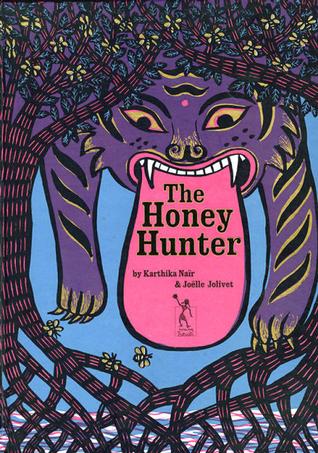
It’s a day like any other in the picture book, The Honey Hunter, as the story unfolds in a neighbourhood not far from where the reader is. There’s a discussion of some importance on at a dinner table, about honey. A child wants more honey, but the last of the summer honey is over and the bees don’t make any during winter. That leads to another story, one about a land of 18 tides, where three rivers meet, and gazillions of honeybees gather golden honey. Thus begins a beautiful story within a story written by poet Karthika Naïr and illustrated by French artist Joëlle Jolivet.

Naïr, a poet and a dance curator based out of Paris, weaves a lyrical tale that is riveting and thought-provoking. The story was earlier written as part of the script of DESH, a dance-drama produced and performed by UK choreographer Akram Khan. It subtly shows how climate change is impacting the mangrove forests and islands of the Bay of Bengal, wreaking havoc with nightmarish cyclones and unruly tides. Shonu lives on one such island with his family and finds himself constantly displaced in the wake of the changing weather. Food is hard to come by and Shonu craves honey. He sets off in search of honey, even ready to raid the beehives. However, Bonbibi, the guardian deity of the Sundarbans, has a pact with the demon king, aka the defender of the forest, aka He-Whose-Name-Must-Not-Be-Taken, that she cannot save anyone who harms the forest. What follows is a fascinating narrative of hunger, greed, the environment, kindness and indigenous beliefs.

The book is not only a delight to read but also to hold and savour for readers of any age. A big-sized book, roughly the size of a table mat, The Honey Hunter is probably one of the most gorgeous tomes to have been published this year. Jolivet, who has studied graphic art and advertising at the School of Applied Arts in Paris, usually works with lithography. Her illustrations are phantasmagorical – from the intricate renderings of the characters and the Sundarbans forest, to the pop of colours like gold and neon pink. Each page is a beautiful painting, delicate with detail, yet boldly rendered. Over email from France, Naïr and Jolivet told Time Out about their collaboration and the kind of research that went into this picture book.

Tell us how The Honey Hunter came about?
Karthika Naïr The Honey Hunter exists primarily because Anita Roy – senior commissioning editor of Zubaan Books – read the first pages of the story (then written as part of the script of DESH, Akram Khan’s dance production) at a dining table in south Delhi, and decided it had to be made into an illustrated children’s book. I was in India on a short trip after an intensive phase of workshops with Akram and about a dozen actors in London, where we had been testing out different rough drafts of tableaux forDESH, and we had decided that one of the tableaux to develop from the various openings I had written was “The Boy, the Bees and Bonbibi” (the working title of what has become The Honey Hunter). Well, Anita dropped in at my friend’s place, read the story I was working on, and asked me to complete it. By the time Anita came to watch the DESH premiere six months later, we were in the thick of the “Great Hunt for the Illustrator”. But that’s just the beginning: it took another two years for the story to become this book.The book uses indigenous art with some really pop colours.

Tell us about the illustration process.
KN This one is really Joëlle’s territory, though I must add that she did about six months of research to make sure she got all the details right – the topography, the costumes, the physiognomy, the iconography of Bonbibi and Dakkhin Rai. This was not easy because there are few formal photos: we see them mostly through street theatre and temple shrines, or local festivals – and that is one of the many reasons it has been so synergising to work with Joëlle! Her attention to detail – both in the text and the real “environment” – was so impressive, even as she adapted it into her visual language and the signature style I adored the very first time I had bumped into one of her wild animals.

Joëlle Jolivet When I work on a new project, in a new cultural background, I’m always curious about popular art, graphics, designs, anything that can feed my inspiration. My usual media is linocut, but for this book I quickly realised that it would not be the right tool. I needed something more spontaneous, more moving. So I decided to use ink and brushes, with black lines and a few strong colours. Blue-green for water and forest, yellow for bees and honey, and pink, because for me, India is shiny pink (Indian pink, of course). As the project evolved, I softly twisted these colours, to get something less obvious. Yellow turned to ochre and pink to neon pink. And Karthika showed me patuas and patachitra, which have something in common with comics. Their narrative streak helped me conceive some of the trickiest pages in the book. To get shiny and deep tones, the book was printed in solid colours. I worked on tracing paper, with black ink, one sheet per colour.

How difficult was it to adapt a script into a children’s book?
KN To be honest, I didn’t think of a young audience at all. Initially, I wrote it as part of the script of a dance piece and that defined the process considerably. Akram and I had discussed the sequence in detail, and how he wanted to stage it – without words, with animation and abhinaya – even before he knew what the story would be. My primary audience was Akram, and Yeast Culture [the animator], who needed to picture a full-fledged world from the text, a world they could transmute it into their respective languages (animation/movement). And even after the story went into “children’s book” mode, I didn’t have to change that approach.

My publishers – Sophie Giraud of Editions Hélium in France and Anita Roy of Zubaan Books – were both quite amazing. They never asked me to “make it more child-friendly” or to change the ending, which is not exactly in the happily-ever-after mode. We did have a lot of discussions about the two-person/dialogue format because it was unusual for children’s fiction in France: there was some initial hesitation about breaking away from an accepted pattern but Sophie was really committed to retaining the spirit of the story (also in publishing, so much text in an illustrated book – that was another instance of going against the norm), and all she asked me to do was add an introduction, so that a child, on reading it, would have a context, a sense of being moored. As you can see I have done that, but without specifying location or time, because I really wanted it to be a tale that could begin anywhere, in any urban household, in any part of the world.

The Honey Hunter narrates a story that delivers many messages without being didactic. How difficult is it to write something like this?
KN I think the intermeshing of myth and quotidian modernity, of proximity and the distant sources of things we take for granted (like honey) in our urban drive for immediate, unthinking consumption is just a reflection of our lives today, anywhere in the world but perhaps more so in an Asian context where millennia-old beliefs drive our lives as much as the new flashy trappings.

What kind of research went into the book?
JJ I met Karthika totally by chance. I received her text by email, in English, and forgot all about it for quite some time, until she called me. Ashamed, I finally read the text and was completely enchanted. I called her back and that’s how Karthika and I met and decided to do the book together. Our respective publishers joined forces and decided to bring it out together in France and in India. During the following months we met often, and I showed her my sketches. Karthika helped me a lot to understand that culture. I did a lot of research on the Internet, never having been to either Bangladesh or West Bengal. I also looked at a lot of regional iconography of Bonbibi and Dakkhin Rai. My imagination is also fuelled considerably by actual, existing details.

KN I did about five months of research before our R&D trip to Bangladesh in November 2010, and then the core creative team was in Bangladesh for about ten days. We travelled from Dhaka to Jessore, Gopalgunj and Khulna, to towns and rivers, and visited the docks and Drik, listening to Shahidul Alam’s [Bangladeshi photographer and human rights activist] accounts of the Dhaka Blockade, and met migrant workers from Bihar and child labourers who were building mammoth ships. We spoke with activists and otter-fishermen, textile conservators (Bangladesh had the largest repository of natural dyes in the world – an industry that was ruined by colonial British import policy, but committed people like Dr Ruby Ghuznavi have made it their life’s work to revive it, to sustain the practice), NGOs, singers and dancers and filmmakers. People were incredibly generous in sharing their experiences.

And then, of course, Joëlle did a huge chunk of research for the visuals. We would have joint sessions whenever we could, where she would show me everything she had found, and I’d add as much as I could to that, or suggest possible sources. She would show me the drafts of the pages, and they were such complete, exquisite worlds in themselves, I was often just dumbstruck at how brilliantly she had morphed the images in my head into something so much more phantasmagorical and vibrant.

The Honey Hunter, Young Zubaan, R395.


By Bijal Vachharajani on April 25 2014

TRIPPING OVER TREE TOPS

http://natgeotraveller.in/magazine/get-going/Costa-Rica.html
Costa Rica’s canopy tours offer a lofty perspective on a bustling rainforest
By Bijal Vachharajani

I was stuck. Worse, I was dangling in mid-air, some 50 meters above terra firma, strapped to a horizontal traverse cable, looking quite like a langur. But unlike a monkey who can gracefully make her way from one tree to another, I was stranded in the middle of a zip line in Monteverde, a cloud forest in Costa Rica. Turns out I had braked too early. I craned my neck and spotted my friends gleefully pointing their cameras at me, recording this moment of indignity for digital eternity. Helplessly, I squinted down at the emerald tree tops I swung above. At long last, a grinning guide zoomed up and pedalled me back to the next stop.

Thankfully, the canopy tour got easier from there. Securely strapped in our harnesses, mind buzzing with the crisp instructions of our group leader, we felt like coal miners—kitted out in ropes, gloves, and a hard hat. Zip lining, once you get the hang of it, is a lovely way to see a pristine forest. You whoosh through the jungle, soaring above the trees and undulating hillocks, squealing like an excited puppy, and finally braking to a stop so that you don’t hit a stout tree trunk.

Canopy tours in Monteverde include long suspended bridges scattered through the cloud forest, which give you the chance to walk through leisurely and soak in the panoramic view. As we tottered through the bridges, keeling from one side to the other, we peered through our binoculars looking for the resplendent quetzal bird. The thick tree cover was the perfect hiding place for Monteverde’s brightly coloured denizen. We didn’t spot the quetzal, but instead met agile humming birds, dazzling butterflies, a placid sloth, a pair of chattering capuchin monkeys, and heard the eerie-sounding howler monkey.

After we finished the longest zip line, which our instructor called the “daddy of all tomatoes” (I don’t know why, or maybe I muddled up some Spanish here), it was time to tackle the 1-km-long Superman zip line. I was hooked on to a cable, face down. And with a push I went, flying like a bird, a plane, a superhero? I was worried that my spectacles would fall off (littering the pristine forest), so I didn’t strike the classic Superman pose. Now I know what it is to have a bird’s-eye-view of the land. It’s an intense experience: The greens look more vivid, the trees more stolid, and the wind seems louder.

The canopy tour finished with the Tarzan swing, where one jumps off a platform and swings on a piece of rope. Hard-core adventure sport enthusiasts may scoff at it, but for a wobbly-kneed first-timer this was as good as bungee jumping. I walked my longest walk ever, down a suspended bridge, heart thumping. I tried to say something to the instructor, but ended up croaking like a toucan. Safely hooked up, I jumped at the count of “tres”. It was a silent jump. My friends waiting below, did all the shouting for me. As I swung, I let out a yell that would have made Tarzan proud. And then the adventure was over, a tad too soon.

The Cuckoo’s Calling

http://www.timeoutbengaluru.net/books/reviews/cuckoo%E2%80%99s-calling

Our copy of The Cuckoo’s Calling came with a carefully-stuck on round label, announcing that the book’s author is “JK Rowling writing as Robert Galbraith”. This little fact is now quite well-known, thanks to an anonymous tweet and some smart and meticulous reportage by London’s Sunday Times. But this nugget is purely incidental to the book, except that now that the identity of the author is known, The Cuckoo’s Calling is a bestselling book.

Rowling/Galbraith’s book is a fairly enjoyable read when it comes to the genre of crime novels. The story’s protagonist is the magnificently etched out Cormoran Strike, a war veteran turned private investigator. A massive hairy man, Strike resembles a grizzly bear, but his sharp memory and keen intellect are what make him intriguing. When the book starts, we find out that he is veering on the edge of bankruptcy and has once again broken up with his gorgeous but impetous girlfriend. He ends up living on a camp bed in his tiny office.

Yet little fazes Strike, including be-kittened death threats from a disgruntled former client (invoking the ghost of Dolores Umbridge for some). The perfect foil to Strike is Robin Ellacott, a temp secretary who ends up liking this strange detective work a lot.

Three months after Lula Landry, a beautiful but troubled model falls from the balcony of her posh Mayfair House, her brother approaches Strike to investigate the death. The police have dubbed it as a suicide but the brother John Bristow isn’t quite convinced. What follows is a journey into the seemingly lustrous world of modelling where designer labels and contracts are ominous objects of desire. Then, there’s Landry’s dysfunctional adopted family – a dead brother, an ailing mother, a charming but suspicious uncle. Strike, with Robin at hand, has to sift through multiple suspects including Landy’s famous boyfriend and an elusive girlfriend, but then he is a resourceful sort of bloke.

The Cuckoo’s Calling is Rowling’s second adult novel, after the much anticipated The Casual Vacancy. But it manages to engage the reader, mainly because of the meticulous detail that has gone into painting the characters. For instance, Bristow has “rabbity teeth and blotchy skin”, while Landry is “dark, luminous, fine-boned and fierce”. Physical appearances apart, most of the characters are complex enough to keep the page turning. Yet, there’s a pitfall – sometimes the story becomes too detailed and ponderous. Rowling/Galbraith isn’t always charitable, especially when it comes to writing about the bourgeoisie or members of the richer class.

The story visits the murky realms of drugs, alcoholism and racism, touching the subjects lightly. But what makes the book immensely readable is the chemistry between Strike and Robin, and the reader gets the sense that there’s more to come in future books. Rowling/ Galbraith has said there’s another book in the pipeline. We can’t wait.

Robert Galbraith Hachette India, R599

By Bijal Vachharajani on September 27 2013

Cooked: A Natural History of Transformation

http://www.timeoutmumbai.net/restaurants-caf%C3%A9s/featuresfeatures/cooked-natural-history-transformation

Pollan dons an apron and heads into his home kitchen to understand the fundamentals of cooking

Michael-Pollan-Cooked

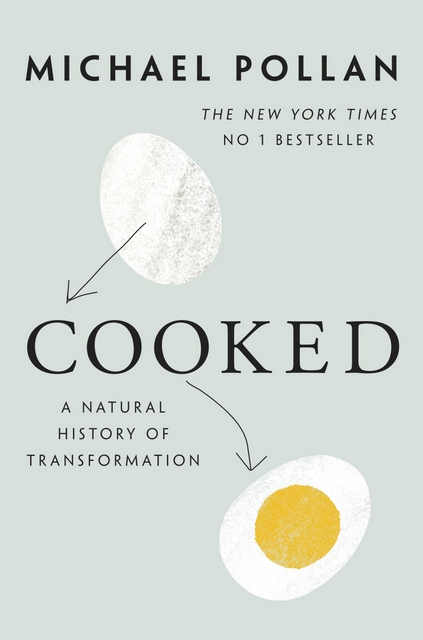
Fifty years ago, my mother, then a teenager, lived in a joint family in a flat in Bandra East in Mumbai. For her family, making nankhatai was something of a bonding ritual. My mother and her two sisters would prepare the dough for this soft biscuit. My grandmother would keep an eagle-eyed watch as they measured out plain flour, crushed sugar, mixed the ghee and finally crumbled in cardamom seeds. The pliant, fragrant dough would be worked into plump white balls and the sisters would hop onto a train to visit their local bakery in Andheri, five stations away. There, they would stand in line with other home bakers, waiting to place their miniature moons on beaten aluminium trays that would be hefted by the bakers into the bakery’s massive oven. My mother still remembers the taste of fresh nankhatai – fragile white balls with crisp, golden edges that dissolved into your mouth. My mother’s memories of nankhatai was on the edges of my mind as I read Michael Pollan’s latest book, Cooked: A Natural History of Transformation. A food activist and professor at the UC Berkeley Graduate School of Journalism in California, Pollan has previously investigated the intimate relationship that humans share with their food sources, through books such as The Omnivore’s Dilemma: A Natural History of Four Meals and The Botany of Desire: A Plant’s-Eye View of the World. This time, among other things that Pollan writes about cooking as a “much more sociable activity” than it is today. “Even today,” writes Pollan in Cooked, “in many Mediterranean villages, you find communal ovens, where people bring their proofed loaves, roasts, and braises, and pass the time in conversation while waiting for their dishes to come out of the oven.” For my mother and her sisters too, the nankhatai ritual was also a time to discuss mundane occurrences, share intimate stories, and bond.

How food is woven into a community’s social fabric is just one of the many ingredients in the elaborate recipe that is Cooked. For this new book, Pollan dons an apron and heads into his home kitchen to understand the fundamentals of cooking. His culinary journey looks at four basic elements – Fire, to understand which he goes back to the oldstyle barbecuing of meat slowly over fire; Water, which takes Pollan on a quest to make the perfect stew/braise; Air, which is understood through the workings of baking bread; and, Earth, for which the author experiments scientifically by brewing beer.

Through his experiments in the kitchen, Pollan puts together a compelling argument about cooking as an art, a survival skill and as “an essential, defining human activity”. He questions the futility of the processed foods that are now standard fare in our refrigerators and cupboards. Those cans and plastic boxes encroach upon our memories of food and its cultural vitality. He wonders why we spend less and less time in the kitchen and takes journeys to understand where his food comes from and how it is cooked. Pollan goes beyond the supermarket aisles and into the farmyards and some master kitchens. He also get us to chuckle at some of his trials, which include chopping pork until his arms grow rubbery. From the humble yeast to innocuous plant matter and the whole hog, Pollan gives the reader a taste of what it is like to get back into the kitchen and cook. Recipes from his culinary escapades are available in the concluding section.

Pollan’s book, though very North American, comes at a poignant time for India. He writes, “How’s it that at the precise historical moment when Americans were abandoning the kitchen, handing over the preparation of most of our meals to the food industry, we began spending so much of our time thinking about food and watching other people cook it on television?” This line could uncomfortably reverberate in many urban Indian households. Our supermarkets are packed with processed foods – from ready-to-eat dals to prepared ginger-garlic pastes and assembly-line bread to instant noodles. Of course, their popularity is fuelled by their easy accessibility as compared to more responsibly grown and healthier produce. Since they are mass-produced, it is cheaper to buy biscuits, than to prepare them at home. Not to mention the effort that goes into, say, baking a nankhatai. While we load our trolleys with precisely these foods in an attempt to cut our time in the kitchen, we spend more time watching TV shows such as Masterchef Australia, debating restaurant food reviews and Instagramming photos of meals. There seems to be time to do all of that, yet when it comes to cooking our meals, as Pollan points out, “fresh is a hassle” and “time is the missing ingredient in our recipes – and in our lives”. At the end of Cooked, Pollan manages to pique the reader’s interest in the intrinsic value and joy of making food in your home kitchen. While, I doubt that most readers will start baking bread or brewing beer after reading Pollan, I for one, am going to my oven to bake a batch of fresh nankhatai.

Michael Pollan Penguin,

By Bijal Vachharajani on September 27 2013