Why did the leopard cross the road?

screen-shot-2016-12-23-at-12-46-17-pm.png

https://www.natureinfocus.in/page/why-did-the-leopard-cross-the-road

Here’s a riddle.

Why did the leopard cross the road?

Because she was hungry, and she saw a zebra crossing.

Actually, that’s not true. Unlike us, leopards don’t understand that you need to look first left, then right, then left again, before crossing the road. They don’t know the rules behind the zebra crossing stripes on the road either (honestly, who can blame them, motorists also don’t seem to know that they shouldn’t stand on the zebra crossing; pedestrians have the right of way there). All these rules are made by humans, and it is silly of us to pave a road in the middle of a forest, and then expect leopards or elephants or other animals to know road crossing rules.

Nor do animals get boundaries. Your house or apartment block must have a wall and a gate to mark its perimeter. You know that you can’t just jump into another person’s house (unless you know them) because one, it’s not polite, and two, it’s not safe, and hello, it’s trespassing. But these are man-made boundaries. We don’t ask for permission from forest animals before mowing their trees down to build houses, grow crops, or mine for minerals. According to the World Wildlife Fund’s Living Planet Report 2016, the Global Forest Resources Assessment reports that since 1990, on a gross basis, we have lost a total of 239 million hectares of natural forest!

This means that there is lesser forest cover for animals to call their home, and it’s not that surprising when you hear news of a leopard coming into a school on a Sunday. After all, we can’t expect them to know these man-made boundary walls.

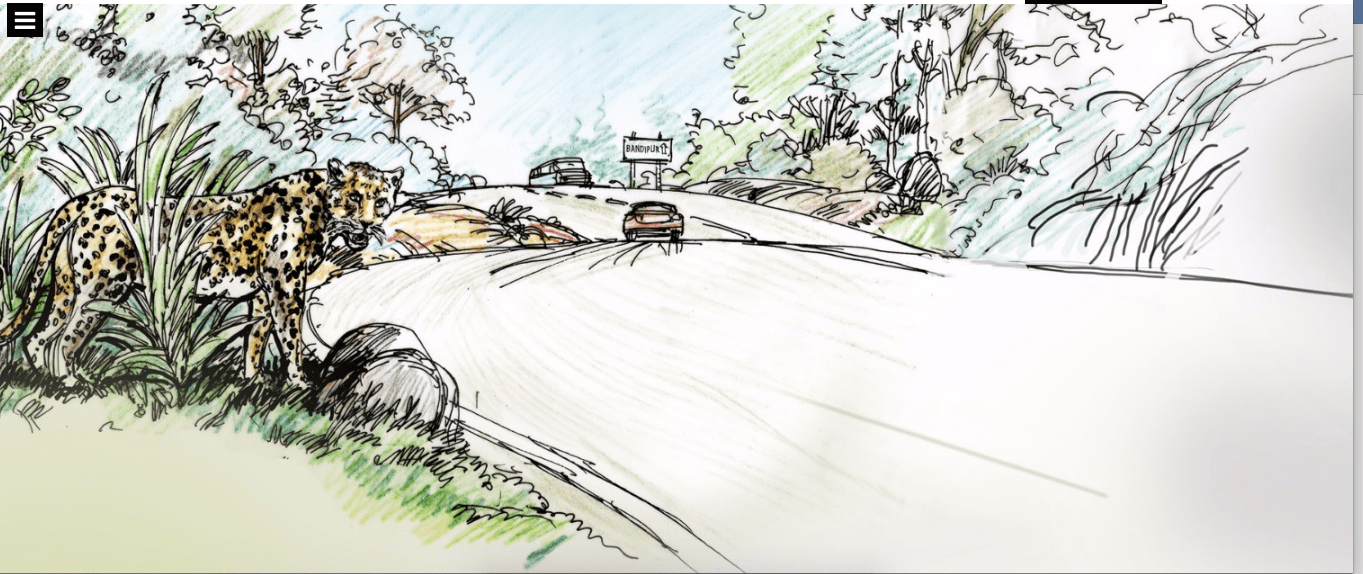
Further, our roads are becoming a point for human-animal conflict. Roadkill — that is wildlife killed on the road by motor accidents — has become a major threat to conservation. A study conducted by Panthera showed that 23 leopards were killed in Karnataka between July 2009 and June 2014 because of road accidents.

In a research paper titled Roadkill Animals on National Highways of Karnataka, by Selvan et. al, the authors conducted a survey to understand how many animals were killed on National Highways NH212 and NH67, which pass through Bandipur Tiger Reserve in Karnataka in 2007. They found that 423 animals of 29 species were killed between January and June. Isn’t that awful?

According to the Wildlife Conservation Foundation (WCF), at least three large animals are killed in accidents on these highways. And these include tigers, elephants, leopards, deer, sloth bears, snakes and birds. The good news is that in 2010, the group, with the help of the Wildlife Trust of India and the High Court, was able to ban night traffic in Bandipur. A good thing because 65 per cent of wildlife roadkills until that time were being documented at night.

This is, of course, only Karnataka. But there are so many instances of leopards and other animals becoming victims of accidents — either road or rail — across the country. What can be done about this? Plenty. For instance, not allowing roads or rail networks to be built inside forests or corridors, which animals use to pass from one jungle to another. Many forest departments now have installed neon boards and speed breakers to slow those hurtling vehicles going at top speed in the night. Or like the WCF managed to do — restricting vehicular traffic at night.

The good folks at the Nature Conservation Foundation – India have come up with a fabulous strategy in Tamil Nadu. They have installed seven canopy bridges in the rainforests of the Valparai region — aerial bridges (high up above the ground) that connect tree canopies that were otherwise too far apart across the roads. And it’s already showing results — lion-tailed macaques can cross the road without having to look left, right, and left again, and they don’t have to get down from their trees and dodge passing traffic.

What else do you think can be done? We’d love to hear from you with your ideas. Write to us at comments@natureinfocus.in

Leopard in Gurugram: How The Media Made A Mess Of A Tragedy

reporting-on-leopard-attack.jpg

https://www.newslaundry.com/2016/12/05/leopard-in-gurugram-how-the-media-made-a-mess-of-a-tragedy
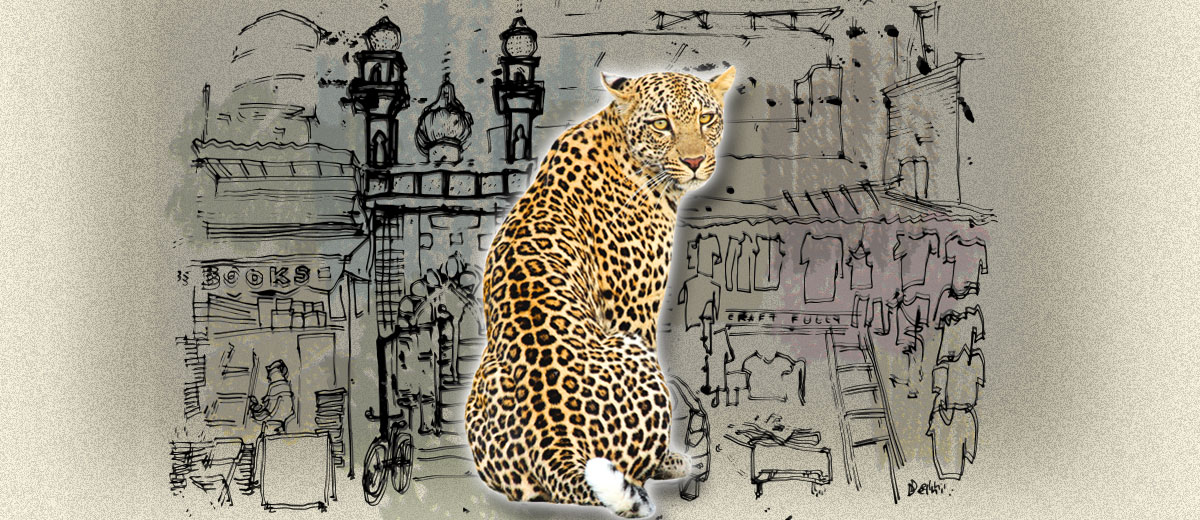
Did you know leopards actually prefer to stay away from human settlements rather than prey on them? The recent killing of a leopard in Gurugram shows how damaging sensationalist reporting on the wildlife can be.

On November 25, horrific photographs and videos of a leopard in Mandawar village in Gurugram made headlines across India. Many, including The Times of India, showed a particularly disturbing image of the villagers dragging the leopard by its tail, its head bludgeoned to bloody pulp. Some blurred out the head. Others, such asIndia Today, chose to carry a video of people posing for photos with the dead leopard, and a disclaimer of “disturbing content, viewer’s discretion advised”.

There’s something almost obscene about the show of human triumph in those photographs and an unspoken reiteration of the idea that wildlife and humanity must have a relationship of animosity. Leopards, incidentally, are solitary animals and humans are actually not their traditional prey. So despite the fact that we call them “predators”, as far as we humans are concerned, leopards are not actually bloodthirsty. This is probably why many local legends in different parts of the country see leopards and tigers as protectors rather than predators. Yet, look at the press reports, the story of progress is one of clashes like this one, between man and animal – it’s a war, and humans won this battle.

Sensationalising human-animal conflict in the media serves no purpose, except to make matters worse. If we’re being shown these images for higher ratings or more views and shares, it is a poor excuse. The Ministry of Environment and Forests’ Guidelines for Human-Leopard Conflict Management 2011 edition clearly state, “Media should contribute to diffusing the tense situation surrounding conflict with objective reporting aimed at highlighting the measures to mitigate conflict. Reporting mainly aggressive encounters with leopards can erode local people’s tolerance and worsen the situation by forcing the Forest Department to unnecessarily trap the wild animal due to public pressure.”

Many headlines played a blame game – “Gurgaon villagers beat leopard to death: How the forest department failed to save the animal’s life”, “Leopard enters Gurugram village, attacks 8, beaten to death”. The Hindustan Times headline read, “Leopard killed: As villagers discuss tales of courage, fear of police action looms large” and then went on to say in the body copy, “In the two days since the incident, the event has been embellished with ‘snippets of valour’.” So was encountering the leopard really an act of courage or was it “embellished”? Your guess is as good as mine.

As writers, our lexicon is everything. Bandying about phrases like “leopard on loose” or “beastly attacks” alter perceptions, often dubbing the animal as dangerous and fearsome. “The media has to stop imagining that the mere sighting of a leopard is like a terrorist in the neighbourhood,” said wildlife conservationist Prerna Bindra, who is also a former member of the National Board for Wildlife. “It does not represent conflict, in all probability the cat was living in peace for years, before it was unfortunately spotted. The cat lived in peace, home sapiens couldn’t. What’s appalling is not just beating the creature to death, but posing-in-glee for pictures as though it were some kind of trophy.”

The Indian Express was one of the few outlets to offer restrained reporting, including this story by Jay Mazoomdaar, titled “Spotted a leopard? Back off, stay calm, let it slip away”. Mazoomdaar elaborated that “leopards traditionally live close to people and just because one is sighted does not mean the animal means harm.” As did The Wire, taking an in-depth look at policy decisions when it comes to human-wildlife conflict. “Leopards tend to live near people,” wrote Neha Sinha for the The Wire. “In modern times, on the other hand, they have vanished from more than 60 per cent of their historic range worldwide. Thus, of all man-animal conflicts, leopards have borne the worst brunt, and the story is no different in India.”

This is not the first instance of man-animal conflict that has been reported in the media. It will also not be the last, in fact climate change will possibly exacerbate it. As will policies such as the Ministry of Environment, Forests and Climate Change declaring certain wildlife species as vermin if they are “damaging human life or property”, and translocating leopards (which stresses them further) or projects that mow down forests to make way for roads and highways.

As India moves rapidly towards an economic growth that is bolstered by unchecked development paradigms that shrink forests, it also unravels the fragile bond that humans and wildlife share. What was once a relatively peaceful existence is now marred with violent conflict. In a story, Learning to live with leopards, ecologist Vidya Athreya who has done substantial research on the subject, said “…we are finding that we can share our space with leopards when we know how they behave and we understand how we should behave. In rural India, wildlife is a fact of life; by learning to live with it, we can minimise trouble.”

Efforts are being made to inculcate better understanding in the media. In 2015, the Wildlife Conservation Society India held collaborative workshops with the media on reporting human-wildlife interactions accurately and responsibly. There are numerous documents and publications available online about standard operating procedures as well as guidelines. That can propel nuanced journalism which takes into account multiple perspectives, facts, and relies on wildlife experts and scientists to report on incidents such as this.

Unfortunately, there’s an ingrained sense of fear towards the creatures of the wild that gets exploited in sensational reporting of the kind we saw in the Gurugram leopard case. But this fear mongering doesn’t actually help us come to an understanding of how we’re going to share space with wildlife. And as we bludgeon our way to progress, we’re going to have to figure out a better way to achieve an equilibrium.

Fantastic Beasts shows muggles there’s no magic in a world without the wild

screen-shot-2016-11-28-at-5-39-48-pm.png

http://www.dailyo.in/arts/fantastic-beasts-and-where-to-find-them/story/1/14153.html

Newt Artemis Fido Scamander reminds us that without animals, Earth isn’t a place called home.

Newton (“Newt”) Artemis Fido Scamander went down in wizarding history for many of his achievements, including writing the seminal Hogwarts textbook Fantastic Beasts and Where to Find Them and bringing about the ban on experimental breeding. But after the biopic on him, I think Scamander will, perhaps, be best remembered in the muggle and No-Maj world for his wildlife conservation beliefs.

In the movie Fantastic Beasts and Where to Find Them, magizoologist Scamander (played by Eddie Redmayne) comes to New York in 1926 with a suitcase full of magical creatures. Things begin to unravel when some of these fantastic creatures escape into the city, plus there’s an inexplicable force wreaking havoc at the same time. Fantastic Beasts is a charming film, full of wondrous bits. It’s set in the familiar world of magic, but with a new narrative that also makes a strong case for conservation.

A suitcase packed with wild things

In the eponymous book that JK Rowling published as a Hogwarts School of Witchcraft and Wizardry textbook in aid of Comic Relief UK in 2001, we first learned about Scamander who, at the age of seven, “spent hours in his bedroom dismembering Horklumps” and then went on to travel across dark jungles, marshy bogs, and bright desserts to learn more about the “curious habits of beasts”. I couldn’t help but imagine Scamander as a cross between David Attenborough and Gerald Durrell. More so, when we got to examine the contents of his suitcase in the movie.The suitcase (spoiler alert) is a world unto itself for magical creatures, and it’s reminiscent of the many animal rescue and rehabilitation centres around the world. Such as the Wild Animal Rescue and Rehabilitation Centre on the outskirts of Pune, managed by The Indian Herpetological Society (IHS) that offers specialised care for injured and orphaned animals, and helps rehabilitate wild animals back into their natural homes. Or Wildlife SOS’s Agra Bear Rescue Facility, a centre for rescued sloth bears. Like Frank – the thunderbird, many of these animals have been trafficked or chained up and some will be returned to their homes in the wild.

Unpacking speciesism in the Anthropocene

In his book, Scamander questions the wizarding world’s earlier attempts at designating non-human magical creatures as “beasts”, as compared to “beings”. “Being”, he says, is a creature worthy of legal rights and a voice in the governance of the magical world. A stark contrast to the idea of speciesism, an idea that humans have greater moral rights than animals.

These are concepts we should reflect upon – as the planet hurtles towards a warmer period that is hastening the loss of biodiversity, as the green light is given for forests (home to the muggle fantastic animals) to be cleared for “development” projects, and as we enter the Age of Extinction for many species. The destruction is apparent, as are its consequences. The year 2016 is set to be the warmest in temperature records since 1880; climate change may be the reason behind the extinction of the small mammal Bramble Cay melomys in the Great Barrier Reef; and in India, we are already looking at horrific pollution levels and unprecedented weather patterns.

In a paper titled “The New Noah’s Ark”, research scientist Ernie Small pointed out that “Most of the world’s species at risk of extinction are neither particularly attractive nor obviously useful, and consequently lack conservation support. In contrast, the public, politicians, scientists, the media and conservation organisations are extremely sympathetic to a select number of well-known and admired species, variously called flagship, charismatic, iconic, emblematic, marquee and poster species.” Another thing that we can take away from Fantastic Beasts.

A friend pointed out that she loved that not all that animals in the movie were cute or even attractive. “Because it sort of drove the point home that you don’t preserve animals just because they’re photogenic,” she said. Whether it’s the enormous erumpent, the luminescent ashwinder, or the fragile bowtruckle, they are all as important for Scamander, like the tree frog, the grey hornbill, and the royal Bengal tiger are for wildlife conservationists.

A case for conservation in the muggle world

In fact, as Scamander writes, “Imperfect understanding is often more dangerous than ignorance”, and that’s often what determines our interactions with nature. Superstitions about unlucky owls, myths of the potency of the rhino’s horn or the fallacy of speciesism has led to owls being injured by stones, birds being imprisoned in tiny cages, and rhinos being poached to near-extinction. When it comes to his fantastic creatures, Scamander says that he hopes to, “rescue, nurture and protect them”, and gently attempt to educate his fellow wizards about them. And let us hope, some Muggles along the way.

Which is what Fantastic Beasts really manages to do – remind us that without these animals, the world would be a much drearier place to live in. Scamander writes that magizoology matters because it ensures that “future generation of witches and wizards enjoy their [fantastic beings] strange beauty and powers as we have been privileged to do”.

Kind of like what Attenborough once said, “It seems to me that the natural world is the greatest source of excitement; the greatest source of visual beauty; the greatest source of intellectual interest. It is the greatest source of so much in life that makes life worth living.”

Our planet would be a poorer place without house sparrows taking a dust bath, a funnel web spider spinning her web with a funnel at its centre, or a mother elephant protecting her calf by gently pushing him behind her trunk. Without them, Earth isn’t a place called home.


Watch, absorb and act upon Leonardo DiCaprio’s dire warnings on climate change in ‘Before the Flood’

44638-jkyuyaniei-1478116706.jpg

http://thereel.scroll.in/820593/watch-absorb-and-act-upon-leonardo-dicaprios-dire-warnings-on-climate-change-in-before-the-flood

The Hollywood star uses his fame to ask tough questions about global warming, fracking, and alternative energy sources.

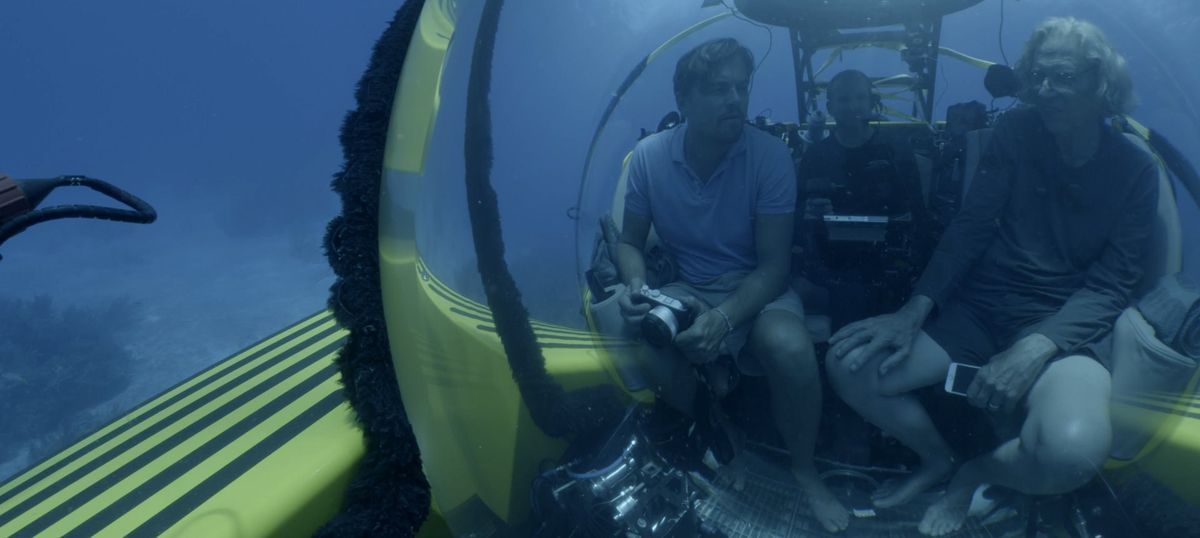
There’s a point in the richly informative documentary Before the Floodwhen actor Leonardo DiCaprio is in conversation with Sunita Narain, the director general of Centre for Science and Environment. He explains that while he doesn’t see the North American lifestyle changing any time soon, he hopes to see renewables such as solar and wind becoming cheaper and solving the problem of fossil-dependent consumption. DiCaprio breaks off when Narain starts to shake her head vigorously and listens as she talks about how both India and China are investing more in solar power than the USA and urges them to take up leadership on renewable energy.

This is the vein in which Before the Flood is presented. The Hollywood star, as the United Nations Messenger of Peace on Climate Change, is on a mission to see “how far we have gone, how much damage we’ve done and if there’s anything we can do to stop it”. DiCaprio asks some hard questions at times and at others, steps back and lets the experts do the talking. The 95-minute documentary, directed by Fisher Stevens, was premiered on the National Geographic channel on October 30 and was released online simultaneously.

In many ways, Before the Flood feels like a follow-up to Al Gore’s An Inconvenient Truth – it runs with the science, but backs it with real-life examples, making the facts less abstract and more tangible. The film feels a lot more real as it examines the impact of climate change on the ground rather than poring over models or newspaper articles. Show, rather than tell, is what makes Before the Flood different.

DiCaprio deploys his stardom to make people listen to many uncomfortable truths. “As an actor, I pretend for a living,” he says during a speech at a UN Assembly. “I play fictitious characters often solving fictitious problems. I believe that mankind has looked at climate change in the same way.” Like he does in his films, DiCaprio heads off to locations across the world (all offset by a voluntary carbon tax) to explore a subject that he humbly explains “the more I know, the more I realise how much I don’t know”.

The actor’s quest takes him to Alberta in Canada, Greenland, Baffin Island in the Arctic, India, China, Pulau, Kiribati and the Sumatra islands – all places that have been affected by fossil fuel extraction and climate change. He uses his celebrity pull to interview Barack Obama and meet the Pope. He also talks to corporate bosses, policy makers, scientists and environment activists.

“If we have to fight climate change, we have to start by acknowledging most of our economy is based on fossil fuels,” says Michael Brune, executive director of the environmental organisation Sierra Club. Brune goes on to explain how the world is employing extreme methods to remove these resources, including fracking, offshore drilling for oil, and tar sands. “There is not thing such as clean fossil fuels,” Brune adds. Proof of Brine’s statements emerges in footage of the devastation wreaked by crude oil extraction in Alberta. What were once boreal forests are now barren potholes of oil.

At Baffin Island in Canada, DiCaprio listens as Arctic guide Jake Awa guide tells him that the solid blue ice is melting faster than ever before, like ice cream. In Kangerlussuaq in Greenland, climatologist Jason E Box warns that climate change projections are actually conservative, and that the effects will be far worse than imagined.

DiCaprio then jets off to Asia and the Pacific. He looks at alarming pollution levels in China, the impact of unprecedented rainfall on farming in India, the future of island nations such as Palau and Kiribati, and the devastation caused by the palm oil industry in Sumatra. Back home, DiCaprio heads to Miami in Florida, a state susceptible to flooding as the sea water level rises. Mayor Philip Levine says that the City of Miami Beach is investing 400 million dollars on a project to put in electrical pumps to drain out the water and to raise road levels. This adaptation measure will only last for 50 years. This from a state that in 2011 stopped the Florida Department of Environmental Protection from using the words “climate change” and “global warming”.

American public opinion on climate change has been adversely influenced by the nexus between policy makers and fossil fuel industries and climate change deniers, many of whom are in the media. Levine puts it succinctly, “The ocean is not Republican. It’s not Democrat. All it knows is how to rise.”

The film also questions reckless fossil fuel-addicted consumption while touching on climate refugees and livelihood and food security. Some solutions emerge out of the thicket of warnings: the filmmakers advocate the enforcement of the 2015 Paris Agreement – a deal in which world leaders agreed to limiting global warming to well below 2°C – substantial investment in renewal energy, and carbon tax.

The overall impact is undeniably powerful. Before the Flood invokes a sense of urgency when it comes to protecting the earth’s biodiversity. There is room for wonder too at nature’s riches. At Baffin Island, DiCaprio looks on in awe at a group of narwhals. Enric Sala, National Geographicexplorer-in-residence, says, “I don’t want to be in a planet without these animals.” Moments like these demand that Before the Flood be watched, absorbed, and acted upon.

Corrections and clarifications: The article has been edited to reflect the fact that the City of Miami Beach is the entity investing $400M on a project to put in electrical pumps.

Food on the go

img_3269.jpg

http://www.thehindu.com/news/cities/mumbai/Food-on-the-go/article16087522.ece?ref=tpnews
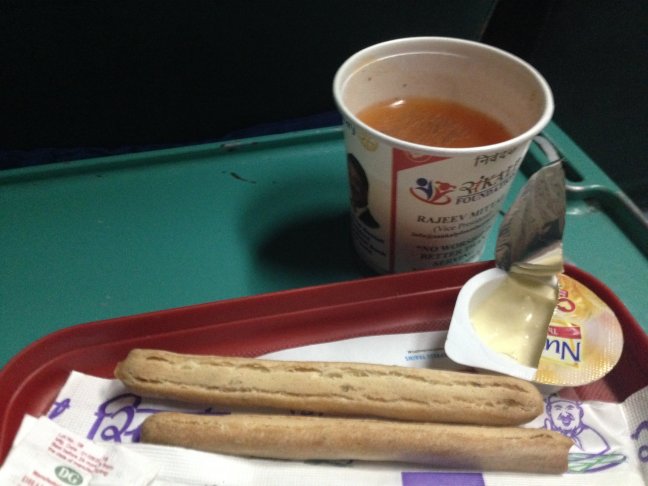
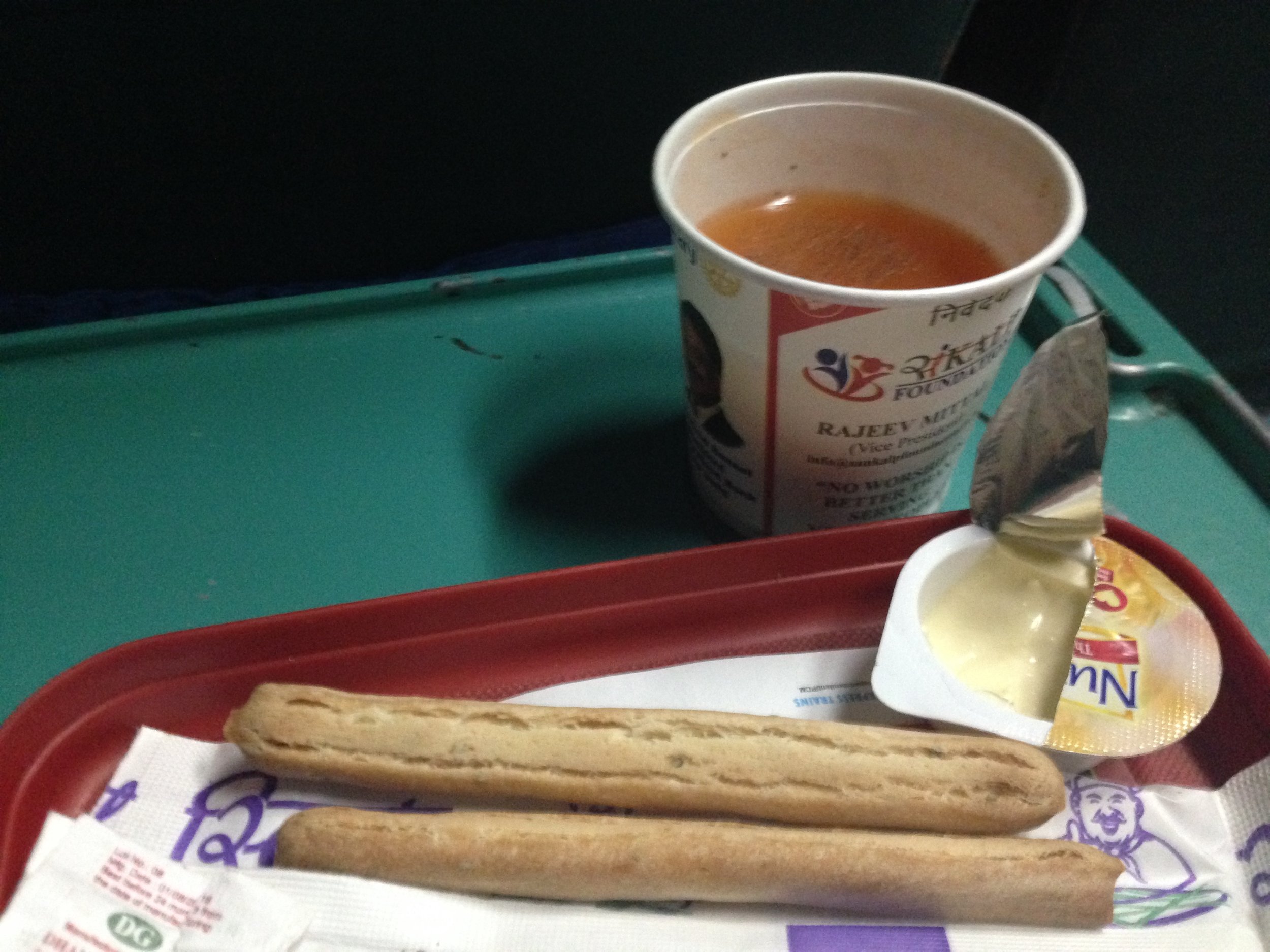
Over the last few weeks I have been on a whirlwind series of travel for work and vacation — and I have taken all sorts of transport — flight, rail, bus, car, hikes, the works. For me, food and travel are inherently connected, like so many of us. And so, I found myself abandoning my Kindle to observe just how the nature of food we eat as we travel has changed.

A toddler ambled across our coach’s corridor, his beaming face crumpling when he saw his brother tucking into a packet of Kurkure. “Kudkude,” he yelled, his hand outstretched, trying to grab at that packet. His brother sulked as he was forced to share his precious stash, while the toddler settled into someone’s lap, happily nibbling at his Kudkude. He couldn’t say “Delhi” — his uncle was trying to get him to say that, but he could say “Kurkure”. Priorities!

On another train journey, a pair of tweens switched on their MacBook, attached a dongle, and promptly ordered themselves Domino’s Pizza, after a fairly intense discussion about the toppings. The pizza, it seemed, was scheduled to reach home about the same time that we would all get home. Not to mention, it would be washed down by the accompanying bottles of cola. At the hotel we stayed in Binsar in Uttarakhand, a mother proudly told the wait staff that her son just loves Uncle Chipps, and no meal is complete without it. On another flight, the cup-o-noodles were what most families were ordering for their children.

Our cities and villages are now dotted with little kiosks, where traditional local food such as podi idlis or banana chips are shoved aside by shiny packages of processed foods of all sorts. Our trekking guide at Binsar in Uttarakhand kept stopping to pick up remnants of such packaging that were littering his beloved forests, even though there were dustbins inside the sanctuary. Our walk in beautiful Andretta in Himachal Pradesh was strewn with packets of Uncle Chipps, Lays, and Kurkure, wrapped around plants and trees. All of this only underscores the many studies and research floating about — that Indians, including children, are taking to packaged and hyper-processed food with gusto. This, at great cost to our collective well being, including our children’s health.

Many of us un-millennials (is that a word?) have fond food travel memories. Our family summer vacations would almost always commence with us lugging Milton flasks filled with ice and water onto the train. As the train trundled on, mum would produce crisp aloo nu shaak, potatoes cooked in their jackets Gujarati style, along with methi theplas, a dab of mango pickle, and of course dahi. In intervals, sev mambra would be produced, carefully stored in ziplock bags ordered from the USA aunt, as well as sliced fruits, and godpapdi. Yet now that we’ve grown up and have our own families, we don’t always do that.

Of course, as I grew older, I would often be embarrassed by this stash of food we carried along with us — whether it was to Baroda or to Cape Town. It’s only now that I have come to appreciate the hard work that my mum put in, in the form of hours in the kitchen, to ensure that we would be well-fed through the trip.

But then let’s face it — all of this eating well takes effort and the burden almost always falls on the women of the household, unfairly so. I cook almost every day, but even the thought of producing that quantum of food is daunting for me. And it’s getting harder to trust street food — you don’t know what oil or water it was cooked in, cut fruits and vegetables are a strict no-no, and it is often deep fried starchy food such as samosas, kachoris, or vada paos.

It’s not surprising that hard-pressed for time and with fewer healthier choices on sale, we are choosing to pick up ready-to-eats, convenience foods, outsourcing our food decisions to corporates. The difference is evident in the way we travel. We can’t even be bothered to carry our own water bottles, preferring to buy plastic mineral water bottles instead. Who wants to lug about a steel water bottle when you can use and throw a plastic one. Never mind the environmental impact.

Yet does it have to be all packaged, salty, additive-laden food that we need to pack into our travel schedule? Many of these food labels read like a sci-fi movie, undecipherable, straight out of a lab, rather than a farm. Now when I travel, I pack myself a sandwich or get my cook to make me a stack of theplas. Add some fruits and you’re sorted for the journey. A friend carries homemade granola with her, another carries packets of puliyogare to mix into rice. On a trip to Madhya Pradesh, we looked at the unappetising train fare (no it wasn’t the Shatabdi) and cheered up when a friend produced luchis and aloo sabji for dinner from her bags. Really, who needed chips?

Growing up with 400

3081800469_f59af01364_m.jpg

http://www.thehindu.com/todays-paper/tp-national/tp-mumbai/growing-up-with-400/article9186570.ece

That’s it then; scientists have confirmed that the carbon dioxide level in the Earth’s atmosphere has crossed 400 parts per million. And the way it looks, it’s probably the point of no return. According to the Scientific American, the last time the world saw carbon dioxide levels above 400ppm was some 3.6 million years ago, a period that was known as the middle Pliocene.

So how do we understand the crossing of this threshold exactly?

Imagine the planet is a car. All of us — you, your friends and family, colleagues, and strangers — have been driving about for a while. Some, more than others, have heated up the car by driving it recklessly (pumping fossil fuels and greenhouse gases deliriously into the atmosphere). The temperature is soaring, and it’s getting hotter inside the car. It doesn’t matter that we know, like climatologist Dr. James Hansen has said, that 350ppm is the optimum amount of CO2 in the atmosphere. But now that we’ve crossed over to the dark side of CO2, we realise that turning the ignition off isn’t going to change anything. We’ve got to keep driving in that hot car full of seven billion people.

What’s growing up in a world with 400ppm of CO2 going to be like? It’s not going to be pretty.

Already, 2016 is slated to be the hottest year on record. We have all, in some form or the other, been witness to the impacts of climate change. Unpredictable weather has wreaked havoc in different parts of the country and the world, threatening livelihood and food security. Droughts, famines, air and water-borne diseases are proliferating.

Worse, when it comes to climate change, children are the most vulnerable. The UNICEF report ‘ Unless We Act Now: The Impact of Climate Change on Children’ puts it succinctly: “There may be no greater, growing threat facing the world’s children — and their children — than climate change.”

Another UNICEF report, ‘ Children and Climate Change: Children’s Vulnerability to Climate Change and Disaster Impacts in East Asia and the Pacific’, explains further: “The types of climate risks confronting children are diverse, ranging from direct physical impacts, such as cyclones, storm surges and extreme temperatures, to impacts on their education, psychological stress and nutritional challenges.” The report mentions that soaring temperatures are linked to “increased rates of malnutrition, cholera, diarrhoeal disease and vector-borne diseases like dengue and malaria”.

“For me, growing up in a warmer world means that each month is likely to be warmer than the next, and the weather is going to be extremely uncertain (erratic monsoons, increase in typhoons),” says Payal Parekh, the programme director of climate group 350.org. “When these storms hit, children have the least resources and abilities to survive them, especially children in the poor villages along the coast; they suffer when there is drought in the form of malnutrition and we know that often means girls are the first to get less to eat,” adds Parekh. The organisation 350.org is named after the optimum amount of CO2 level in the atmosphere.

The good news, of course, is that on Gandhi Jayanti, India ratified the Paris agreement, right on the heels of the USA and China. India became the 62nd country to ratify the agreement, which looks to keep global temperature increase between 1.5 to 2°C. These may seem like small degrees of temperature change, but the repercussions are far-reaching. A World Bank Report, Turn Down the Heat: Why a 4 °C Warmer World Must be Avoided, warns that a “4°C world is so different from the current one that it comes with high uncertainty and new risks that threaten our ability to anticipate and plan for future adaptation needs”. This includes higher malnutrition rates, unprecedented heat waves, and loss of biodiversity.

As Anthony Lake, UNICEF’s executive director writes in the foreword to the Unless We Act Now report, “No human responsibility runs deeper than the charge of every generation to care for the generation that follows it. For current and future generations of children, and for us all, the stakes could not be higher.”

Farm-fresh for your table

25bm_farmer_s-m_g0_3022606f.jpg

http://www.thehindu.com/news/cities/mumbai/farmfresh-for-your-table/article9146189.ece

Bijal Vachharajani spends a Sunday morning shopping at theFarmer’s Market and is mighty pleased with the expedition’s results.

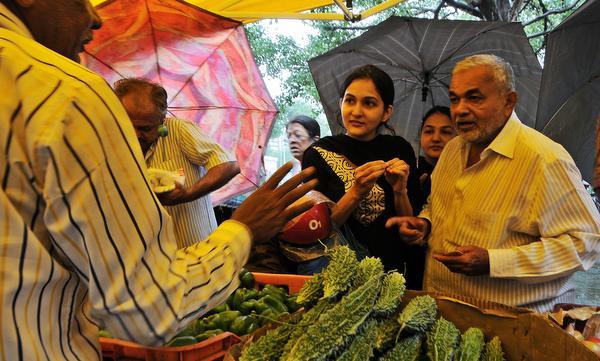
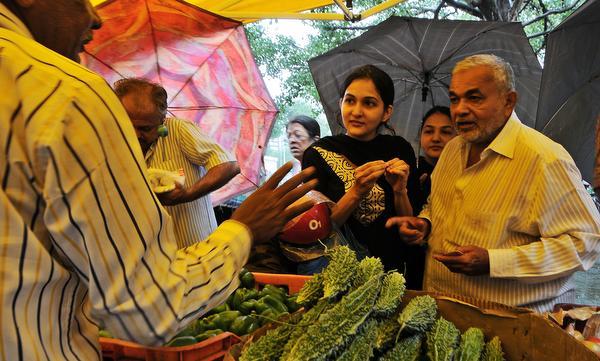
The promise of fresh vegetables and fruits is one of the few things that I will wake up early on a Sunday morning for. Even as I grumbled to my friend who had suggested the morning expedition, I found myself heading to Nariman Point two Sundays ago for the Sant Shiromani Shri Savta Mali Athavda Bazar, Vidhan Bhavan’s farmer-direct market. The weekly market that has been set up across the State by the Maharashtra State Agriculture Produce Marketing Board.

Of course, I was armed with cloth bags and plenty of change. Since mid-August this year, every week, the lot between the Vidhan Bhavan and Inox theatre is transformed into a bustling bazaar of more than 30 stalls with farmers selling a staggering range of local and seasonal produce.

We joined the throng of people shopping for their weekly veggies, and marveled at the glistening tomatoes, fat sitaphals, fresh cluster beans, and pumpkins the size of Ravana’s head, that jostled for space with mounds of lettuce, stacks of asparagus, and luscious-looking purple cabbage.

Apart from the usual suspects, there was some wonderful indigenous produce. We found some early green mogri (as the Gujaratis call it), which I had last eaten in Delhi. Winter vegetables, these radish pods are spicy: the purple ones add a nice bite to raitas while the green ones are cooked into a vegetable, usually with brinjals. Though, these are just as delicious when eaten alone.

The market also sold fresh kidney beans in their pods, khatta sorrel leaves, and colocasia leaves for patras and stir-fries. We also found wild chikoos and guavas that when sliced open revealed a soft pink flesh. Flowers such as marigolds and asters were also available.

I went back to the Sahyadri Farmers Producer Co. Ltd. stall multiple times for their glorious pesticide-free black raisins, plump and sweet. My friends kept texting me that they also wanted a packet, and so I would return to the stall to buy yet another kilo, while sampling more of the raisins. The same stall promises chemical-free bananas as well, and are considering home delivery in the future. Another farmer who stocked garlic showed us how to plant the pod to grow it.

The haul from the market was a reassuring one, given that just the other day, my friends and I were bemoaning the lack of good produce available in our bazaars. The prices at the Sant Shiromani Shri Savta Mali Athavda Bazar are more than reasonable, and for those tired of the usual apples and bananas, there’s much diversity in the produce available. This is a definitely affirmative step by the government in enabling fair trade, by cutting out the middle men, and letting people buy directly from the farmers.

Don’t forget to carry your own cloth bag though.

The Farmer’s Market is held every Sunday in the parking lot of the Vidhan Bhavan, Nariman Point, from 8 a.m. to 12 p.m.

The market enables fair trade by cutting out middle men and letting people buy directly from farmers

What’s your sustainability quotient?

img_9281.jpg

http://www.thehindu.com/news/cities/mumbai/whats-your-sustainability-quotient/article8613855.ece

Last week, an adorable cat meme popped up on my social media timeline. Yes, just one of many adorable memes, gifs, videos that inhabit the Internet. In this one, a mommy cat was cleaning her face with meticulous care, and in the background, her kitten was trying hard to copy her actions, albeit a little clumsily. The meme went on to impart the gyaan that children learn from their parent’s actions. Didn’t really need a copycat to remind us that children — especially babies and toddlers — learn by copying adult behaviour.

But now is a good time to consider our actions as grown-ups, and for some, privileged grown-ups. India is going through a mega water crisis, which as journalist P. Sainath reminds us, is a drought that is not just the product of the failure of monsoon. Our landfills are smoke-belching, bloated trash monsters. According to India Together , the country is chucking out some 36.5 million tonnes of municipal solid waste every year. Temperatures are soaring while the air quality is plummeting, we may as well log onto eBay and start buying bottles of fresh air, along with the cartloads of stuff we are constantly ordering. All swathed in layers of unnecessary plastic and thermocol. We have also earned the dubious distinction of being number 12 in the top 20 countries to dump heaps of plastic into the ocean, according to a study published in the journal Science.

Let’s leave aside what sort of a planet the kids are going to inherit. Instead, think about how our unsustainable (or sustainable) traits can easily pass on to children, along with beaky noses, eye colour and chin clefts. At “The contribution of early childhood education to a sustainable society,” a UNESCO workshop held in 2008, there was “a strong consensus that educating for sustainability should begin very early in life. It is in the early childhood period that children develop their basic values, attitudes, skills, behaviours and habits, which may be long lasting.” The report further elaborated that at a younger age, children pick up “cultural messages about wealth and inequality” and that’s the time to foster values that support sustainable development “e.g. wise use of resources, cultural diversity, gender equality and democracy.”

Take for instance, water. It’s easy enough to get the society secretary to order water tankers when your building is facing water cuts. We pay so little for water that it’s equally convenient to forget that our reckless water consumption in cities adversely impacts people in remote regions and those living around us. When disasters such as droughts occur, children are the most vulnerable to the crisis.

Here’s a quick water audit. When you travel on holidays or even around the city, do you carry refillable bottles of water, or just buy packaged water? Studies have shown that packaged water is often adulterated or misbranded, and there are valid environmental concerns about the procurement of the water. The bottle is just one more bit of plastic to end up in a landfill and the ocean. It’s suddenly a less gargantuan task to carry a bottle of water from home.

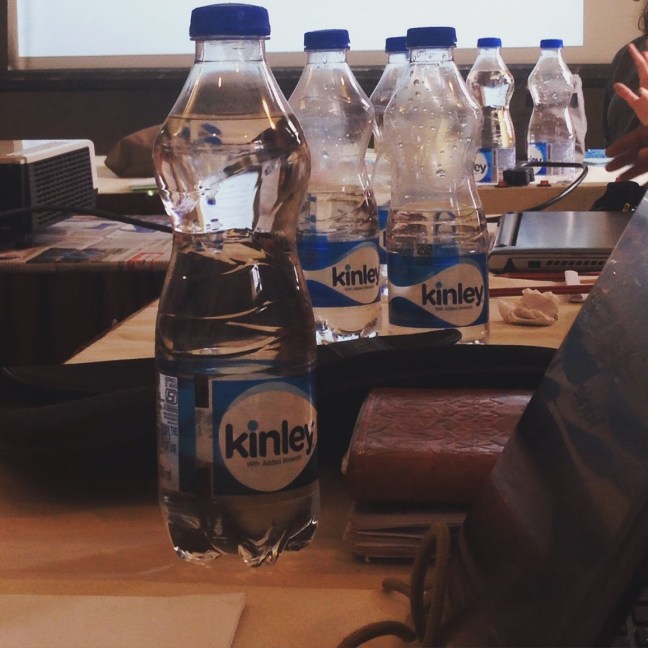
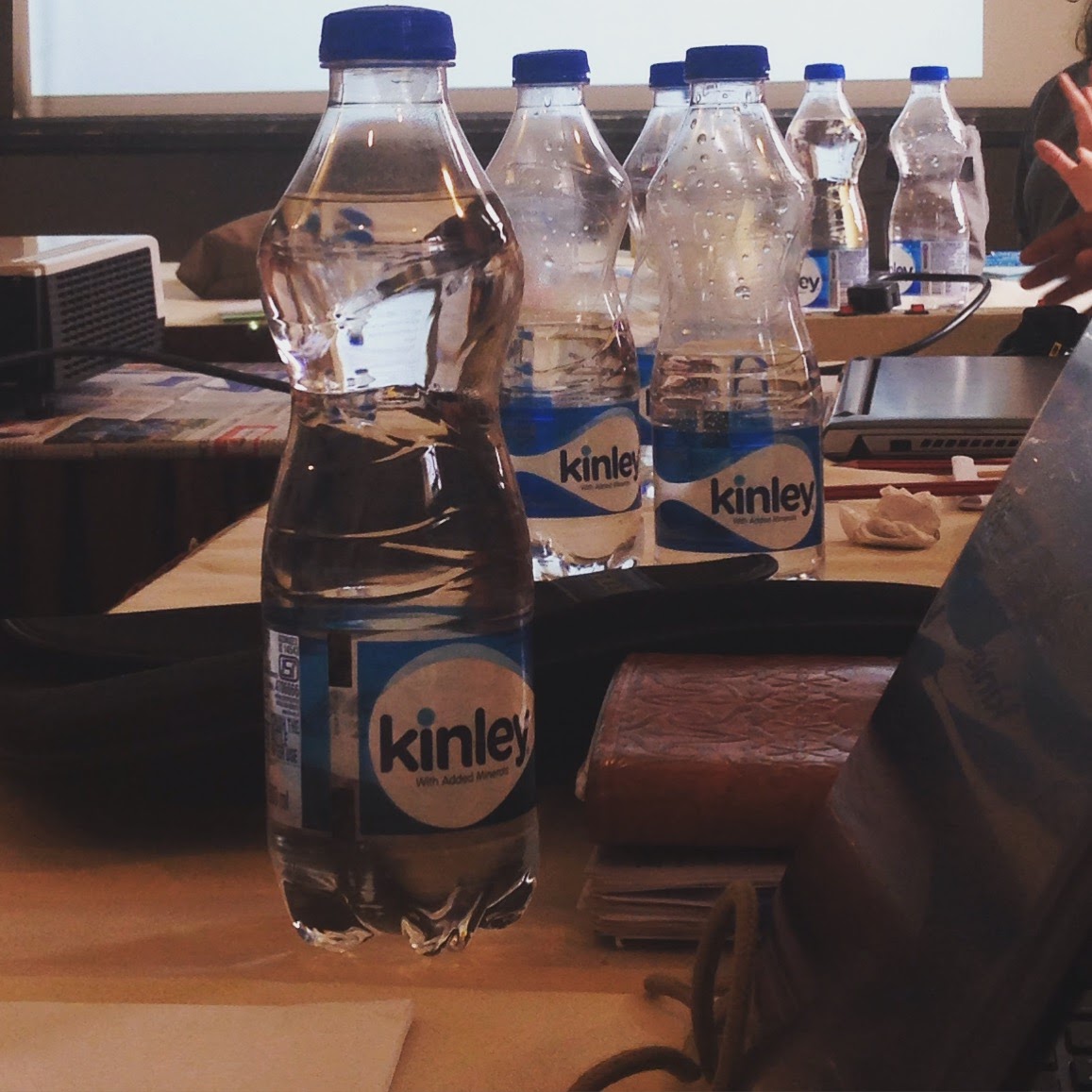
The last time I was at a meeting, I was horrified by the number of bottled water that cluttered the conference table, along with laptops, pens, and fresh notepads, that would also be chucked after a doodle, a note or two. We could take a cue from the Nephelai — Greek nymphs who poured water from pitchers to make it rain — and pour ourselves a glass of water from a jug kept on the table.

Perhaps someone in the house leaves the water running in the bathroom or kitchen and then you lecture the kids about saving water? In Sophie Kinsella’s young adult book Finding Audrey , she makes a clever point about the use of technology. While the parents yell at their son for being addicted to a video game, they can’t do without their phones. No surprise then if lectures fall on deaf ears.

Of course, it’s not easy. Sometimes there is no option but to buy bottled water. Never mind that access to clean drinking water is a right, and should not be a commodity. At other times, you’re compelled to; like in theatres that don’t allow you to carry water bottles inside the cinema hall. How do you wash down the over-priced popcorn during the interval? You buy packaged water or a glass of flavoured sugar water. Maybe float yet another petition, this time to the theatres to allow water bottles in, instead of forcing us to buy packaged water?

So then how do we, as grown-ups, step out of our cosseted liminal world clasping our children’s hands? Talk to children about wasteful practices. You will be astounded at how much they already know. Could we perhaps buy less packaged water? Reuse leftover food — wasting food equals wasting water. Car pool instead of taking a massive SUV to drop just one child to school. Hit pause on the endless obsolesce of gadgets and buying shiny new ones, even if the old phone/ tablet/ indoor entertainment gadget is working perfectly fine?

At the same time, instead of playing football on a virtual field, perhaps step out to a park, if you can find one that is. Start a balcony garden? Even our matchbox houses can sustain a window sill one. Grow easy plants such as tomato and herbs that are hard for even the brownest of thumbs and greyest of smogs to kill off. The other day, someone called me and asked, “What is vermicomposting? My child has a project in class.” Possibly a good place to start is by reading up and becoming a “know-it-some” at least. Children have a natural affinity for the environment, but watching grown-ups being callous often transfers the indifferent behaviour onwards.

All this is intuitive and stuff of common sense. You don’t need to read an article to tell you this. But to use a cliché, let’s lead by example. Because even if children’s heads are eclipsed by a screen or they are breathlessly running from one class to another, they are picking up cues from adults. It’s not just Big Brother who is watching us all the time.

The author writes about education for sustainable development, conservation, and food security. She’s the former editor of Time Out Bengaluru

Eating a revolution

food-rev54504_preview.jpg

British celebrity chef Jamie Oliver is hoping to bring about a change in the way they approach food and nutrition

Today, British celebrity chef Jamie Oliver’s campaign, Food Revolution, kicks off in 10 countries across the world. In what he calls a global day of celebration, Oliver is hoping to get people to think about the world health crisis by raising awareness, sparking discussions, and inspiring people to bring about a change in the way they approach food and nutrition.

The campaign focuses on children and the need for a robust and fun food education system. On his website, Oliver points out that “millions of kids are eating too much of the wrong food, while millions more don’t get enough of the good stuff to let them grow and thrive. We need to unite as one strong, single voice to force governments and businesses to create a healthier, happier world for the future.” In India, chef Kunal Kapur and actor Jacqueline Fernandez will be cooking live on Facebook from Pali Village Café in Bandra.

In an email interview, the chef talks about food education, his online presence, and how Indian foods have influenced his palate. Edited excerpts:

Tell us the idea behind Food Revolution. What is new this year?

The Food Revolution is my attempt to create a worldwide campaign to discuss, debate and adopt a healthier way of eating. The statistics, especially concerning children, are startling and this makes me scared about global health. 159 million children are too undernourished to grow properly, whereas 41 million children under the age of five are overweight.

I have been campaigning for healthier food and better education about nutrition for 15 years now. One of the first TV shows I created in 2010 was called Food Revolution. It was centered on reforming school lunches in US schools and also trying to create a conversation about healthy food and nutrition in America.

This year the Food Revolution is taking place on a huge scale with 10 countries involved in the campaign, in an attempt to spread the conversation to a global audience. It kick-starts on May 20 with live-streaming on my Facebook page. I cook healthy meals, provide advice and of course have lots of fun. The live-streaming makes this an interactive medium where people from different countries can be a part of the Food Revolution. And the best thing is that I have some of the best chefs and best known personalities coming on board, teaching people watching them in their countries just how easy and inexpensive it is to make nutritious food. The campaign will then continue in Australia, India, Germany, Netherlands, Brazil, USA, Kenya, Tanzania, Canada and Nigeria.

This is the first time you are officially doing something in India for the Food Revolution. What can we expect?

Being British, I can safely say that Indian food has influenced my palette. The British love Indian food precisely for the reasons it is famous for. It’s wholesome, fresh and delicious. My blog is filled with Indian recipes! Therefore, I really feel a connection to India and I am so glad the Food Revolution has spread to India.

I want people to be better educated about food. In a country like India, which has the world’s youngest population and where starvation and obesity exist simultaneously, it is important that people are made aware about how our diet impacts our daily life. In India, the government is trying to reduce the number of malnourished children by launching initiatives like Infant and Young Child Feelings Counselling Centres in certain states. At the same time, it is beginning to tackle the obesity crisis by raising awareness of the negative impact that poor dietary and lifestyle choices can have on health, with programmes like the National Programme for Prevention and Control of Cancer Diabetes, Cardiovascular Diseases and Stroke. However, still more can be done. I’m also looking forward to one of India’s top chefs, Kunal Kapur, cooking with actress Jacqueline Fernandez to show the audience just how fun and easy cooking can be.

Food Revolution is a massive online campaign. Tell us about running the campaign through social media.

The live-streaming feature makes the entire event interactive and inclusive to a global audience, through a virtual medium. But even prior to this event we have constantly used the support of social media to get our message of healthy eating out there. We have started a petition to include practical cooking for school children and people all around the world have signed it and most importantly shared the petition for others to sign. The world is now at our fingertips and social media helps in uniting everyone especially for important causes like global health. With our Food Revolution Day website anyone will be able to access information regarding the campaign and we hope the #FoodRevolutionDay trends worldwide to spread the importance of eating healthy around the world.

At a time when people are increasingly obsessed with food, we are also increasingly spending less time making our food. It’s a trend we are seeing in urban India as well. How does one start to bring change then?

The Food Revolution is an initiative wherein we use our buying power as consumers to take a stand against unhealthy practices. As consumers we have the power to make a lot of change in the food industry.

Many people believe that healthy food is more expensive than junk fast food. We help clarify these myths. That is why it is important to start this discussion so people can debate, ask questions and become more aware.

We especially encourage parents and schools to adopt healthier eating habits so it can impact their children’s lives for the better. Small steps like cooking with your children, reading up current issues about the food industry can come a long way in educating your child about nutrition.

By adopting a healthy lifestyle you are allowing future generations to access, consume and understand food better than we ever could.

That is why a campaign like Food Revolution is important as it encourages better food education.

One of the campaigns you actively advocate is involving kids in food appreciation. Tell us about the importance of food education for children.

Like I said our children are our future, and with India’s having the world’s youngest population. the youth are fundamental to India’s growth as a nation.

To better educate them about food means to better education future generations to come. It is essentially to adopt a healthy eating lifestyle early and at the same time ensure that the kids are excited and eager to learn more about food.

The Kitchen Garden is a program I started that teaches school children how to plant a seed and eventually cook a meal with the ingredients they have grown. Whether you are a teacher or a parent inspire your children to love food.

Becoming a good food advocate is especially critical as a climate adaption method. How far do you think campaigns such as Food Revolution Day help people think about how their food is grown?

Campaigns such as Food Revolution Day are based on accessing and using fresh, local produce. That is why campaigns such as Kitchen Garden help children to learn and think about how their food is grown and what they are putting into their body.

One of the most important campaigns I have worked on is the Ministry of Food Campaign. It aims to keep cooking skills alive as it has been proven that cooking from scratch has many healthy benefits to your eating habits. Through a national network of food advisers and cooking teachers we help make the public make better choices about food and nutrition.

Being a food advocate means imparting your knowledge and allowing people a chance at a better food education, which is what the Food Revolution campaign aims to do.

As a chef, how do you ensure a transparent supply chain for the food you cook with?

Sales of organic and more responsibly produced food are on the rise, and like anything, if we demand more, more will become widely available. I find it impossible to be 100 per cent organic, but I do trade up whenever I can. When we trade up to organic meat, it will be more expensive, but really this change is to instigate the habit of eating less meat, and choosing the best when you do. It’s all about quality over quantity. When you buy organic meat you are also ensuring the animal has led a good life before this and that’s what it is important to me. We have to be ethical and compassionate in our food industry. At the same time if they have lived longer you are eating a healthier bird! You are reducing the fertilisers and chemicals you are ingesting. I also love growing my own food. Therefore I adopt these principles as far as I can.

Do we expect to see more of Jamie Oliver in India?

I hope now that we have introduced the Food Revolution Day in India it will never stop. We will ensure that the fight for healthy eating continues and hopefully India will continue the campaign. I do also of course have my restaurant Jamie’s Italian in Delhi so a piece of me is already there!

Chef Kunal Kapur and Jacqueline Fernandez will be cooking live on Facebook today at 3.30pm.

For more details, see jamies foodrevolution.org

How to bake with dark, guilt-free, sustainable chocolate

lead-image-759.jpg

Locally sourced chocolate is great for your desserts and the environment — Mason’s & Co and Earth Loaf are two brands that make artisanal chocolate in India.

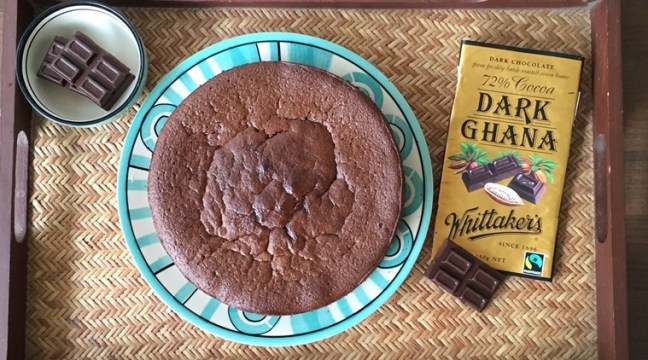
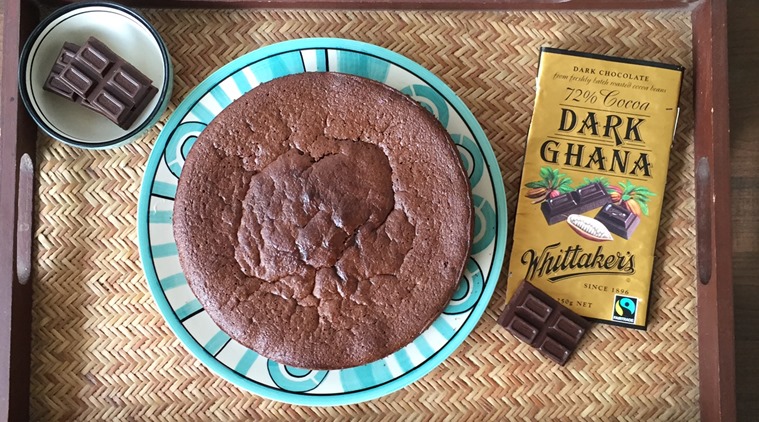
Good quality dark chocolate is a thing of beauty: It smells luscious, tastes of the earth, and is the perfect way to recover from dementor-like moments. So when my friend Maegan Dobson Sippy rang me to share this happy news: “I have got a bar of Whittaker’s Chocolate. Let’s bake with it!”, I agreed in a blink. Given that this was the 72% Ghanaian dark chocolate sourced from Kuapo Kokoo, the first Fairtrade-certified smallholder farmer organisation in West Africa, we knew that we wanted to bake something where the chocolate would be the star. Sippy called up her father in the UK, and being the terrific baker that he is, he recommended a Claudia Roden recipe from her book The Food of Spain.

While we were baking the cake, Maegan’s kitchen smelt like we had been dunked into a cup of the darkest, richest hot chocolate. Without getting scalded that is. In her book, Bread, Wine, Chocolate: The Slow Loss of Foods We Love, Simran Sethi writes, that “In the United States, a bar has to contain at least 10 per cent cocoa mass to be called chocolate”. The author explains that a “standard chocolate bar is typically made up of cocoa mass, sweetener and an emulsifier to improve its texture and consistency. The cocoa percentage listed on a bar indicates the portion of ingredients that come from the bean: cocoa solids and cocoa butter.”

Read the label of your favourite chocolate, look at its composition – is cocoa mass the main ingredient or is it jostling for space with emulsifiers, sugars, milk fats, and artificial flavours? Little wonder that good chocolate elevates your cakes and cookies, and your mood, to the next level.

For most of my chocolate recipes, I am happy to use the cooking chocolate that’s locally available. But I have also used Mason & Co.’s artisanal chocolates from Pondicherry in baking and am quite happy with the result. Likewise, I find that Earth Loaf’s cocao nibs add a pleasing crunch to cookies and granola. And they’re both locally sourced, artisanal chocolate companies.

Chocolate is becoming more precious. According to the Earth Security Group, Ghana and Côte d’Ivoire provide 60% of the world’s cocoa. As temperatures soar because of climate change, farmers are finding it harder to grow cacao in conditions that are too hot and arid. The Guardian reported that with little livelihood security, cacao farmers in Africa, for instance, are switching to other crops. And while we continue to love our chocolate bars, at the same time it is projected that the demand will soon be more than supply. We will reach peak chocolate in just four years.

The author visited Joy VT's cocoa farm near Kelakam in Kannur as part of Fair Trade Alliance Kerala. Pictured is a cocoa pod. You know a cocoa pod is mature when it turns yellow. The pods are harvested and split open and this is where your chocolate comes from. (Photo: Bijal Vachharajani)

The author visited Joy VT’s cocoa farm near Kelakam in Kannur as part of Fair Trade Alliance Kerala. Pictured is a cocoa pod. You know a cocoa pod is mature when it turns yellow. The pods are harvested and split open and this is where your chocolate comes from.

Some of the cacao producers of Kuapo Kokoo have adopted agroforestry systems to preserve soil fertility, instead of practising monoculture, the way most cacao beans are grown in Ghana. Of course, this is one climate adaptation method. But there’s so much more to do.

As Sethi writes, “I don’t eat expensive chocolate to be fancy or waste money; I eat it because I want to support the chocolate makers and farmers dedicated to sustaining diverse and delicious chocolate. I eat it because the best versions of this are like nothing else. And I eat it because I don’t want my joy to come at the expense of someone else’s misery.”

As a consumer, if you’re buying chocolate, try and buy one that is special, made with fairly sourced ingredients that are grown in a way that’s ecologically and economically viable, and with a sustainable story behind it. And then savour it.

Ingredients
(Adapted from Claudia Roden’s The Food of Spain)

150g- Dark, good quality chocolate, we used Whittaker’s Ghana Fairtrade chocolate
2 tbsp- Water
150g- Unsalted butter, cut into pieces
4- Large eggs, separated
100g- Caster sugar
100g- Ground almonds
1 tsp- Baking powder
4 tbsp- Rum, we used Old Monk

Method
*Preheat the oven to 160 C/ 320F.

*Heat water in a pot and place another pan on top of it, without the bottom touching the water. Melt the chocolate with the water. Add butter.

*Once the butter melts and you have a lovely shiny mixture, remove from heat. You can also do this in a microwave.

*In a bowl, beat the egg yolks with sugar. Add ground almonds, baking powder, and rum and whisk until well-mixed. Add the chocolate mixture and beat until it becomes a smooth batter.

*Using an electric whisk, beat the egg whites until stiff and fold gently into the chocolate batter. Bake for 35 minutes.


– See more at: http://indianexpress.com/article/lifestyle/food-wine/how-to-bake-with-dark-guilt-free-sustainable-chocolate-2800748/#sthash.yOYJIh1y.dpuf