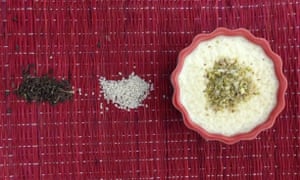


Stop the ‘Kissa Quinoa, Couscous aur Kale ka’, and switch to rajgira or millet instead

img_9816.jpg

The growing demand for quinoa in India and across the world is gravely affecting communities in South America and Mexico. But there are some signs of hope yet.
The first time I came across quinoa was five years ago, when a Bolivian friend cooked it for us in Costa Rica. Until then, I had only read about quinoa on international food websites. As I inspected the traditional Andes super crop, I noticed how the quinoa looked like translucent flat beads, each grain fluffy and distinct. It reminded me of the broken wheat khichdi we eat at home, and my friend Stephanie Weiss and I began exchanging notes on prep methods. I ended the conversation by saying that I couldn’t wait to tell my friends back home that I had tried this heritage grain.

Little did I know that by the time I returned from studying climate change, like the rest of the world, quinoa would have caught the fancy of hipsters in India. Quinoa burgers, quinoa salads, quinoa what have yous’ were everywhere. People were spending as much as a week’s fruits and vegetables budget in buying quinoa. Not only that, we were scattering Mexican chia seeds over our morning oatmeal and buying tossed kale concoctions from salad bars. All food flown from different parts of the world, piling precious carbon miles onto our plates. In fact, reading restaurant menus was like watching a star-studded film – Kissa Kinoa, Kous Kous aur Kale ka.

According to Stephanie, now an environmental researcher and consultant in Bolivia, as the demand for quinoa spiralled across the world, it led to a change in consumption habits in the places of production, mainly Bolivia and Peru. “It became more profitable to sell quinoa, rather than eat it,” she said. “This has an adverse impact on nutrition and tradition. According to the Bolivian government, only 15 per cent of the quinoa produced in Bolivia is consumed within its borders currently.”

Our eating habits and culinary fads are having a colossal impact on communities in South America. “The craze for quinoa has had a direct impact on the price increase for local markets in recent years. It’s also led to degradation of the fields with declining fertility, increased pests and diseases, lack of respect for natural cycles soil,” says Arafat Espinoza Ortiz, an agronomist in Peru.

Food miles and sustainability aside, our “let’s eat what’s trending” consumption phase has even led to quinoa and chia seeds being grown in India. Often, these are market-driven decisions, sometimes pragmatic or ecological ones. An organic farmer from Amravati, in Maharashtra, shared that they are all disillusioned with cotton and are looking at growing foods that the market wants. “We don’t want to grow cotton,” Rahul Bole said. “Tell us what to grow next, something like baby corn, something that the market likes. The Mumbai market, especially.” Bole’s community is contemplating growing kale or marketing their free-range eggs.

Look at grocery stores and hypermarkets a little carefully the next time: All of them have begun stocking alternatives including bajra idlis mixes, ragi biscuits, and packets of little fox millet. The quinoa trend has fuelled a resurgence in India’s ancient cereal crops – millets. A more sustainable option, millets aren’t thirsty crops like paddy. Rather they are hardy, healthy and versatile when it comes to cooking them.

Also look at menus with a more discerning eye. Restaurants are making local, seasonal, and indigenous fare an integral part of their menu. Gondhoraj lemon, Gobindobhog rice, and moringa leaves prominently feature in the Bangalore-based Toast and Tonic’s menu. Millets of Mewar, in Udaipur, makes Nutella-drenched millet pancakes, aloo tikki and kebabs, while Smoke House Deli has a fabulous health menu with millet risotto and spinach and millet soup. Food companies are also bringing their organic A game to shelves. Bengaluru-based brand Vaathsalya sells ragi popcorn and chocolate ragi malt, while OrgTree makes millet cookies with foxtail and kodo.

Accept food logic. As Somji, an organic and Fairtrade cotton farmer with Chetna Organic in Telangana, put it, “All you city people love to eat rice. We don’t eat that. For us, it’s jowar and makki. We eat the food of our ancestors – millets.” Once you start looking up ingenious foods, you realise how much a part of our diets they are, hipster trends not withstanding. Until now they weren’t cool enough, rather they were something just made in our home kitchens. Gujaratis, for instance, make crisp, delicious puris out of rajgira atta, which is made from the seeds of amaranth. Moringa leaves may have now caught the fancy of international chefs, but we have been cooking them with dal in the south for ages. And then there’s ragi and jowar rotis, hearty and healthy rotis that deserve to be eaten more.

It’s a paradox in many ways – at one end there are concerns about sustainability, food miles and the impact on smallholder farmers; but at the other end of the spectrum, it has created a market for traditional produce. Producers are expanding to newer international markets, compelling them to adopt more ecological, fair trade practices. And chefs and cooks are experimenting with traditional produce, tossing in diversity into our diets. Stephanie dug up a quote from Delgado F and Delgado M, Vivir y comer bien en los Andes Bolivianos: “The importance of quinoa in strengthening food security and sovereignty lies in the traditional uses and customs, recipes and culinary techniques adapted to this grain and inherited by generations”. Which is pretty much what we could do with indigenous foods in India as well – celebrate them by cooking with them – for the farmers, the climate, and for us.
 

– See more at: http://indianexpress.com/article/lifestyle/food-wine/stop-quinoa-couscous-kale-switch-to-rajgira-or-millet-instead-2780605-foodie/#sthash.VY64hvUs.dpuf

Gaming apps for Earth Day

photo-2.png

http://www.thehindu.com/news/cities/mumbai/entertainment/gaming-apps-for-earth-day/article8497301.ece
photo 4

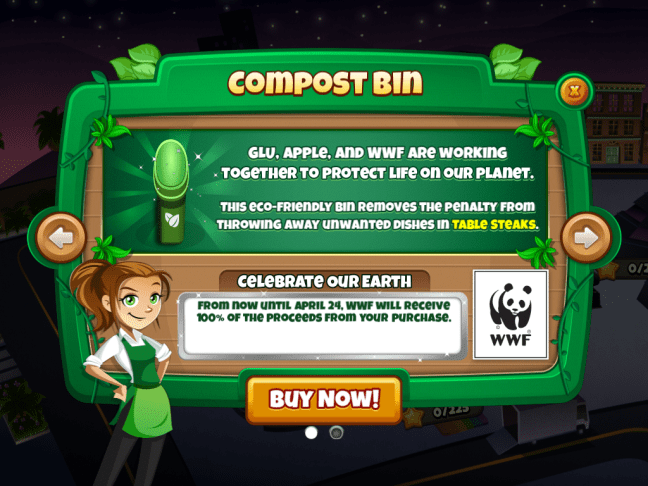
Angry Birds is back, and the birds are angrier than ever. Their wrath, this time around, is being put to good use for the planet. It’s Earth Day on April 22, and for ten days, Apple has an entire section on the App Store called Apps for Earth. It will be a shot in the arm for the environment movement in the form of 27 apps, where children and adults can safeguard wildlife, conserve forests, support sustainable food, preserve oceans, protect fresh water, and combat climate change.

But back to the irate avians: in Angry Birds 2, there are messages about protecting our oceans where players have to stop those annoying piggies from overfishing. Another gaming app, Cooking Dash, offers a menu with sustainable ingredients, a change from its usual steak-and-fries combination, while there are energy-generating turbines in Jurassic World: The Game. And SimCity BuildIt has three new features on forest, energy, and water. Even Candy Crush Soda Saga has joined the fray with a live in-game event called Bamboo Hill. Basically, as they put it, “have fun helping the planet.”

It’s a savvy fundraising drive: proceeds from in-app purchases will go to World Wide Fund for Nature (WWF). Considering that many children are growing up surrounded by screens, it is a smart idea to get them to think about conservation while playing games. Of course, how many games will translate into real action, if any, remains to be seen. That said, after the ten days are up, these apps will most probably return to business as usual. It would be interesting to see how many of these companies will continue to incorporate green messages beyond the token Earth Day promotion.

However, there are plenty of other green games online. PBS Kids has a website called Meet the Greens, where children can watch animated videos and calculate their carbon footprint based on their travel, food, consumption, and waste behaviour. There are games where young players can think about upcycling clothes, efficient lighting, learn trivia and get quizzed on green know-how.

If your children love The Magic School Bus series, then head to their microsite on Scholastic’s webpage for match the animal to its habitat puzzles, science experiments, and trivia. Then there’s British Council’s LearnEnglishKids website, which has an environment section packed with songs about Lisa the Lemur, flashcards, games, and stories.

For older children, there’s Don’t Flood the Fidgits!, which I must confess isn’t as easy as it looks. Players can choose to build flood-safe cities on an island, river, or peninsula, where you work with a budget and a population goal. As you build one city, it gets flooded and you realise you need to add trees, storm walls, and drainage for better cities. The simulation game gets young adults to explore environmental design, understanding engineering, green housing, and ecological landscapes. If they love cooking and gardening, get them to play 3rd World Farmer, an online simulation game about farming in developing countries. Players need to farm sustainably in the midst of droughts, market fluctuations and diseases. Hint: permaculture comes to the rescue.

After all, children are going to spend time online, it’s not a bad idea to nudge them towards gaming that encourages to think about conservation, try their hand at eco-design challenges, and have fun while doing it.

Bijal Vachharajani writes about education for sustainable development, conservation, and food security. She’s the former editor of Time Out Bengaluru.


Middle class India gets a helping in Michael Pollan’s new food show Cooked

screen-shot-2016-03-22-at-10-19-10-am.png

http://www.dailyo.in/arts/netflix-cooked-micheal-pollan-food-health-middle-class-kitchen-india-culinary-culture-water-earth-fire-air-nestle/story/1/9660.html

In the second episode of Cooked, food writer and activist Michael Pollan’s docu-series, we meet Mumbai resident Lynett Dias. We see Dias prepare kori rotti chicken in her kitchen from scratch. As Dias makes fresh coconut milk, she explains that she learnt the process from her mother. Another scene is set in a Bohri community kitchen, where chicken nihari is being cooked as part of a subsidised meal, which will be distributed to houses in tiffins.

In sharp contrast, a family orders in from KFC after a long day at work; a regular three to four times a week affair for them. They are sheepishly conscious of the health problems the greasy burgers come with, but admit that it’s easier to order in when pressed for time. “Cultures that once held tight to their ways of eating are finding it difficult to spend time in the kitchen,” points out Pollan. “How did we get to this point, and what have we lost in the process?” “Water”, the second episode in the series sets out to answer this question.  

While Netflix is yet to live up to its potential in India, one of the few documentary films that is available for viewing is Cooked, in which filmmaker Alex Gibney teams up with Pollan to bring his 2013 book to the screen. Like the book, the Netflix documentary series is divided into four parts, basically the elements of cooking – Fire, Water, Air, and Earth.

“Water” explores pot cooking in different communities in India and the gradual transition from traditional home food to processed, instant food. Cooked doesn’t always stick to the stereotypes, instead it offers a slice of middle class India. Shots of housing colonies, streetscapes, and interviews with different communities come together to map the changing landscape of home cooking.

cooked-embed_032216090700.jpg
Cooked, food writer and activist Michael Pollan’s docu-series on Netflix.

Meanwhile, Pollan is in his kitchen with the USA-based chef Samin Nosrat, cooking up pork braised with chiles for three and a half hours, while talking about the myriad flavours that come together in pot cooking.

Nosrat remininsces about the “grandma” style of cooking that puts together humble ingredients with skill and time. “Time,” said Pollan. “is the missing ingredient in our recipes and our lives. Most of us are moving too fast for slow cooking.”

In his book, Cooked, Pollan talks about, what he calls a curious paradox. “How is it that at the precise historical moment when Americans were abandoning the kitchen, handing over the preparation of most of our meals to the food industry, we began spending so much of our time thinking about food and watching other people cook it on television?” he asked.

The paradox is reflective of a section of urban India as well – we constantly Instagram our latest (or half-eaten) meals, review restaurants on apps, and gush about reality cooking shows, but spend lesser time in the kitchen. And it is hard to spend a lot of time by a stove after a long day at work.

Food industry market researcher Harry Balzer puts it succinctly that eating food and preparing it are not the same, because making food is work. He makes a pertinent point – when you eat food without spending time in getting it, you eat more of it. Example: French Fries or potato crisps. He suggests that you eat anything you want – pizza, apple pie, the works – but you make all of it. It makes sense that you would end up getting the best quality raw ingredients and eat better.

Cooked points to India’s rising fast food ecosystem, where food preparation is outsourced. An affluent middle class is eating out more and more because of rising and disposable incomes and the availability of fine dining options. Urban lifestyles, slick advertising, and social media chatter are influencing and moulding aspirations and choices about food, its economics, and its consumption.

At the same time, our relationship with food is more distant. We don’t know how our food is grown or cooked. Instead of eating locally and seasonally, the aesthetics of food plating and the quest for a wider palate has started to dominate our choices. Invariably, we end up incorporating unsustainable practices in our daily diets.

Yet, it’s not that hard to get fresh home-cooked food in India. Cooked refers to the dabbawallas as a “clever system for getting home cooked food at work”. In the documentary, a maushi fries up paneer, rolls out rotis and packs four dabbas for Yari Road. The ubiquitous dabbawalla picks up the tiffin carriers and cycles away. Of course, dabbawallas are unique to Mumbai and the system does not cover the entire country. Rather, urban centres are seeing a surge of apps that deliver restaurant food or pre-packaged meals and salads to your doorstep at the tap of a few buttons.

In many ways, “Water” is limited in its social and cultural depiction of India’s vast landscape. The narrative is mostly uni-dimensional, the complexities of food production, rituals, habits, and economics don’t always come through. Pollan talks about the history of food processing, feminism and cooking – a point he had been previously criticised about – but the episode doesn’t delve into the politics of food in the Indian context. It also doesn’t look into social dynamics, where a lot of the home cooking is done by a cook or a maharaj.

Instead, it concentrates on our gradual dependence on the food industry and its impact. Sunita Narain, the director general of the Centre for Science and Environment, explains on Cooked that urban India consumes some 10 per cent processed food in its daily diet, while rural India consumes five per cent. It’s not a small number given the size of the country. Most processed food is layered with salt, sugar, and fat, making it unhealthy and addictive.

The narrative moves to Nestlé India’s Research and Development Centre in Manesar, where chefs (some have worked at Michelin Star restaurants) and scientists are trying to crack the recipe for a Chicken Tikka Maggi noodles.

A study conducted by a German market researcher GfK revealed that people in India spend over 13 hours a week cooking, compared to the international average of less than six-and-a-half hours. But Nestlé is well aware that over the next two decades, Indians will have lesser time to cook food, and their lab work is preparing to be the food of the future.

With an increasingly fragmented audience and media that focuses on instant gratification, Cooked, despite its limitations, is a form of critical and reflective storytelling that questions our engagement, not only with food, but also media content. Pollan wraps up the episode by calling for a food renaissance and reminding viewers that the “industry doesn’t feed us. Nature feeds us. And that’s something that’s available to all of us.”

One of the most poignant takeaways from the episode comes from Nosrat. As she peels garlic, she describes these seemingly mundane tasks as mindful. “As a culture, we have just gotten so far away from these little tasks, it seems like it’s getting in the way of life,” she said. “But, actually, this is life.”

The Guardian: Meet India’s female ‘seed guardians’ pioneering organic farming

img_1016.jpg

http://www.theguardian.com/global-development-professionals-network/2016/feb/18/meet-indias-female-seed-guardians-pioneering-organic-farming
The ‘seed guardians’ of Odisha are pioneering new ways of sharing and storing seeds to reap a more sustainable future

Maa Lankeshwari Seed Bank

Bring up the topic of seeds and Nabita Goud sits up a little straighter and begins to talk animatedly.

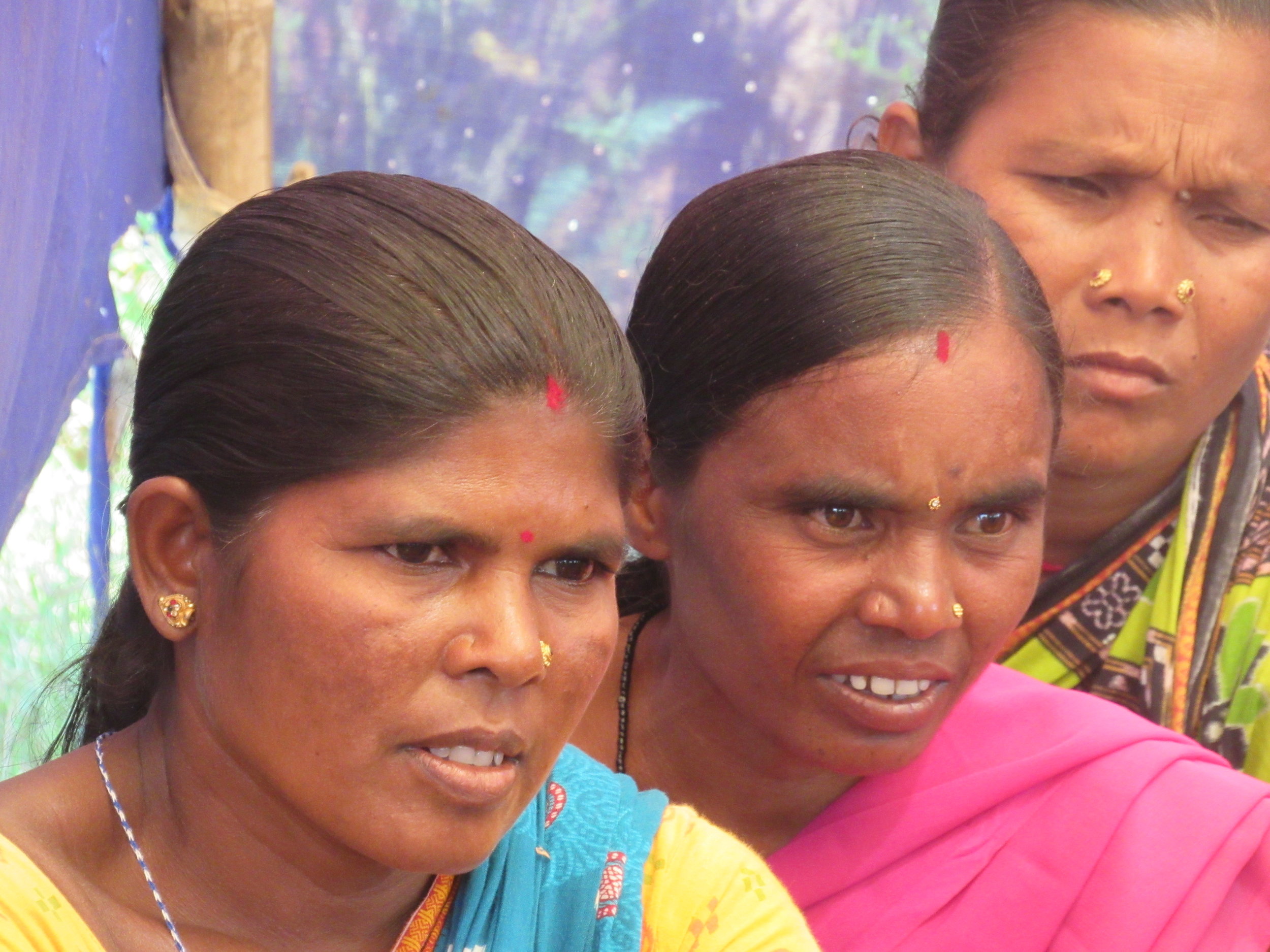
Nabita is a smallholder and a “seed guardian” at the Maa Lankeshwari seedbank of Bhimdanga village in Odisha, eastern India. The seedbank is a small room lined with rows of neatly-labelled earthen pots and stoppered glass bottles, all of them filled with varieties of millets, ladies finger (okra), pumpkin, and red gram seeds (lentil), along with cotton.

Nabita puts her hand into a pot and scoops out a fistful of paddy seeds which are a dull brown, the colour of the soil. “This is kalajira rice,” said Nabita, who is an organic and Fairtrade-certified farmer. “It’s a scented, local variety and gives us a high-yield. We are now conserving it.”

Seeds are at the heart of agriculture, but they are also a significant cost for farmers. Organic seeds are hard to come by in a market flooded with genetically modified and hybrid cotton seeds. More than 90% of cotton in India is genetically modified and input costs for Bt Cotton are high. Hybrid cotton seeds cannot be replanted post-harvest, which in turn forces farmers to add to their financial burden by buying new seeds from the market.

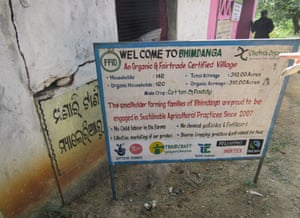
A sign in Kalahandi, Odisha

Nabita is one of 18 seed guardians who are part of Chetna Organic’s seed conservation project. Over the last two years, six seedbanks have been established in five villages in Odisha with 72 men and women conserving 50 varieties of fibre and food crops seeds. This is a much needed shot in the arm for these districts which are plagued with hunger, poverty and insecurity.

“The programme aims to promote women-managed and controlled seed enterprises,” said Arun Ambatipudi, one of the founders of Chetna Organic. Chetna was established 10 years ago to enhance sustainable livelihood options for smallholder families that are dependent on rain-fed agriculture. According to IndiaSpend, 56% of India is dependent on rain-fed agriculture, and farmers are often pushed into an endless cycle of debt because of unpredictable weather, high input costs, poor soil and pest management, and market fluctuations.

Traditionally, Odisha is not a cotton growing state but over the last two decades, small and marginal farmers have started growing the cash crop. Conserving organic cotton seeds that are suited to the soil and as a climate adaptation measure is a priority for smallholders. Over the last five years, Chetna has been conducting small-scale trials with farmers like Nabita to evaluate the suitability of indigenous cotton varieties such as Suraj and Anjali.

Kalajira rice makes for a sumptuous, aromatic rice pudding.

Driving through Odisha, it’s easy to spot the organic from the non-organic farms. The landscape is dotted with stretches of waist-length cotton. In sharp contrast are the organic farms that look like Ceres has run riot, planted with cotton, red gram, and food crops.

“We practice organic agriculture,” said Nabita, who farms on three acres of land. “There are challenges. The traditional variety of cotton has a lower yield than the hybrid one, but we know it’s good for the soil and the environment. And organic is better for health.” Bhimdanga’s residents take pride in being completely organic. Visitors to the village are greeted with a board that says, “Welcome to Bhimdanga, an Organic and Fairtrade-certified Village”. ”

In a volatile cotton market, the mixed cropping practice that Bhimdanga’s farmers follow ensures individual food security, even if their cotton crop fails. Farmers grow cotton alongside food crops such as pumpkin, ridge gourd, lentils, and millets. Some are for their own consumption, and the rest is sold in the market. Ramprasad Sana, an entomologist and the technical head at Chetna Organic, said that the seedbanks have given 600 families food security.

Chetna enables farmers to set up sustainable and multipliable open-source systems to share and store seeds, using traditional knowledge along with new concepts and technology. The enterprise operates like a bank, only with less bureaucracy. A farmer can “withdraw” a kilo of seed and has to repay the loan with one-and-a-half to two kilos of seed after harvest. With the establishment of seedbanks, organic farmers no longer need to buy seeds from the market. This year, 1,594 kilos of seeds were distributed to 603 farmers.

Empowering women farmers to manage their own seed enterprises enables them to become decision-makers in the community. This is significant, given that according to the 2011 census, 68.5% of women work in agriculture. Traditionally, women have been the custodians of seeds and Chetna hopes to revive the practice.

Last year, Nabita and her neighbours participated in a seed festival in the neighbouring village of Mading where they met other farmers and showcased their indigenous varieties of seeds. “Everyone loved our kalajira rice there,” said Nabita with a smile. The short-grained kalajira is one of the key scented rices of India (pdf) and gives a high yield in a short timespan. When cooked, the rice has a heady fragrance, earning it the market name of “white baby Basmati”.

Rice is a staple agriculture product but in most of India, farmers cultivate high-yield paddy for a homogenous market. The Food and Agriculture Organisation (FAO) estimates that at least 75% of the genetic diversity of agricultural crops had been lost by the beginning of this century.

Kalajira rice and indigenous cotton varieties are being conserved by seedbanks like Maa Lankeshwari at a time when indigenous species of food and fibre are rapidly disappearing from farms and plates. With women like Nabita taking back control of their seeds, soil and food security, the smallholders of Bhimdanga are becoming part of a thriving, sustainable community that is conserving India’s indigenous seed heritage and protecting its food sovereignty.

On Shock Waves: Managing the Impacts of Climate Change on Poverty.

http://www.boomlive.in/forget-gm-seeds-go-organic-and-india-will-have-a-better-chance-at-weathering-climate-change/

Forget GM Seeds, Go Organic, And India Will Have A Better Chance At Weathering Climate Change

02 Dec 2015

Last month, while the Indian social media was going berserk over the many Khans of Bollywood, a World Bank report about climate change and poverty was published. It contained warnings about a horrible future that is right around the corner, but few paid attention to the concerns outlined in Shock Waves: Managing the Impacts of Climate Change on Poverty.

According to Shock Waves, by 2030, over 100 million people would have been forced into extreme poverty because of climate change. That’s just 15 years away.

The report offers two scenarios for the future of poverty by 2030 – optimistic prosperity, and pessimistic poverty. In the event of prosperity as a result of high-impact climate change, India would see two million people being brought into poverty. If things go the pessimistic poverty way, Shock Waves estimates as many as 50 million joining the impoverished in India.

The year 2030 is a deadline date. India has pledged to reduce emissions intensity by 33 per cent of the 2005 levels by 2030. We’ve also committed to generating 40 per cent power from non-fossil fuel sources. As goals go, it’s a good one. Like many life goals, however, attaining this one seems unlikely without some serious policy changes.

At the 2015 Paris Climate Conference (COP 21) talks this year, India has just announced the global solar alliance between countries and big industries. It aims to get affordable power to off-the-grid, remote and rural areas. That ambitious plan will be critically important, given that the International Energy Agency’s World Economic Outlook 2015 estimates that by 2040, India’s coal consumption will be second only to China. Our demand for oil is also set to rise.

Shock Waves’s insistence upon good, climate-informed development is particularly timely under the circumstances. This week, world leaders are meeting for COP 21, to try and negotiate an agreement to limit global temperature rise. The threat that rising temperatures poses are undeniable today, particularly in the way it affects food security in poorer regions such as Sub-Saharan Africa and South Asia, adding stress to an already fragile ecosystem.

Unpredictable weather and agriculture in India

Fifty six per cent of India’s agriculture is rain-fed. This year has been seared with news of extreme weather conditions and an erratic monsoon that wreaked havoc on crops across the country. In Punjab’s Malwa region, whiteflies destroyed 60 per cent of the Bt cotton crop, causing a loss of approximately Rs. 4,200 crore. Delayed monsoon and prolonged hot summers have already impacted cotton and food crops across the country. In November, a survey conducted by farmer activist group Swaraj Abhiyan showed the severity of drought and famine in the Bundelkhand region of Uttar Pradesh.

Over the last 17 years, three lakh farmers have committed suicide in India. This is a statistic that should punch each one of us in the gut. Their deaths are not just testaments to the severity that farmers encounter today, but also an ominous portent of times to come. In simple terms, poor yields, escalating input costs and fluctuating market prices push farmers into an endless cycle of debt. Some are pushed to commit suicide, and some leave agriculture to become labourers.


Climate-informed development

In developing countries, the poorest households already spend 40 to 60 per cent of their income on food and beverages. Organisations such as the Fair Trade Alliance Kerala are encouraging farmers to follow mixed agriculture practice, which acts as a safety net – if cash crops fail due to an erratic monsoon, farmers are at least food secure in these climate-challenged times.

“Each farming family that has for decades now been growing cash crops for the distant markets is committed to being net staple food suppliers,” said Tomy Mathew, the co-founder of the FTAK, a democratically-governed small-holder farmer organisation. “In terms of calorie value, the food that they produce will be more than the requirements of the family,” he added. The FTAK focus is on climate mitigation through fair terms of trade, biodiversity, food security, and gender justice.

These principals will be the foundation for climate justice for the poor, who are not the biggest contributors to climate change but are the ones who bear its brunt.

Shock Waves: Focus on India

In the section, “Bad Seed: Climate Change, Agriculture, and Food Security”, the authors of Shock Waves points out that by 2080, “the average yield declines estimated from all climate models could be as severe as 23 percent for South Asia”. This means there is no time to waste. It’s essential we develop climate-smart, smallholder farmer communities that will enable farmers to survive the new challenges and keep all of us food secure.

For instance, Shock Waves highlights the need to “develop higher yielding and more climate-resistant crop varieties and livestock breeds, adapted to developing country contexts and climate conditions”. It cites the example of Scuba or Swarna-Sub1, a “climate-ready rice” which is being field-tested in Odisha. Reports claim that the flood-resistant rice is not genetically-modified, but is a hybrid of two rice varieties.

One of the ways that some hope to tackle the problems of yield and climate change are GM seeds. In India, we’re seeing the debate heat up over genetically modified cotton, mustard and even mosquitos. The social and ecological impacts of these seeds will require a closer and objective look. What needs to be kept in mind is the larger picture. There may be immediate gains to GM seeds. For instance, over 90 per cent of cotton in India is genetically modified Bt Cotton, which is resistant to certain pests and has an initial high-yield. However, it has a high input cost. The seeds are expensive (approximately three to eight times the price of conventional seeds) and require specific pesticides that over time strip the soil of its richness. Once harvested, hybrid cotton seeds cannot be replanted. In the long run, this is more damaging than helpful.

Farmers need to be put in control of their seeds, rather than corporate entities. Take for example Chetna Organic, a group in Odisha that is working to enhance sustainable livelihood options for small-holder farmer families. It empowers women to manage and control local seed enterprises. The programme is in its third year, but already women farmers are conserving local and indigenous food and fibre seeds that are also high yielding.

According to the United Nations, India is home to one third of the world’s extreme poor population. It’s a figure that’s set to rise, until we and our government make a conscious choice towards equitable development that is climate-informed and inclusive. It’s good that there are speeches and conversations at the Paris Climate Conference, but Shock Waves is a reminder that development that is rapid, inclusive and climate-informed is the need of the hour.

9 Green Gifts For The Festive Season

http://www.natgeotraveller.in/web-exclusive/web-exclusive-month/9-green-gifts-for-the-festive-season/

Spread the holiday spirit by cheering on artisanal, social, and eco-friendly enterprises.

    • TEXT: BIJAL VACHHARAJANI
POSTED  ON: OCTOBER 21, 2015 12:00 AM

These single-origin chocolates are handcrafted in Karnataka. Photo courtesy Earth Loaf

click me

Artisanal Chocolates

What’s sweeter than gifting chocolates for Diwali, Eid or Christmas? Making sure that those treats are organic and handmade. Mason & Co. sources their organic cacao beans from a family-run smallholding in Tamil Nadu. Try their 75 per cent Zesty Orange or 70 per cent Sea Salt Dark Chocolate that they make at their factory in Auroville. A far bigger temptation is their eight-bar dark chocolate collection gift pack.

Earth Loaf’s organic chocolates are handcrafted in small batches from cacao beans from a single estate in Karnataka, and their gorgeous wrappers are silk-screened by hand in Mysore. Try their 72 per cent Raw Dark Chocolate bar and the Gondhoraj & Apricot one.
Available at www.placeoforigin.in.

Handcrafted Pottery

Curators of Clay pottery is perfect for those with a sweet tooth. Photo courtesy Curators of Clay

Curators of Clay pottery is perfect for those with a sweet tooth. Photo courtesy Curators of Clay

click me

Bhairavi Naik and Rohit Kulkarni’s ceramic studio, Curators of Clay, will make you want to trade your space-saving, stacking Tupperware for their bespoke pottery. Their tableware and home decor accessories are handcrafted in small batches by the two potters in Bhugaon, Pune. Tea drinkers will be delighted by their gorgeous range of teapots, creamers, tumblers, and mugs. For those who have a sweet tooth, Curators of Clay pottery is perfect for baking; they even have custard jugs! They also have handcrafted porcelain tea lights for the festival season.
To order or customise a gift, drop in at their Pune store, visit their Facebook page or write to bhairavi@curatorsofclay.com and rohit@curatorsofclay.com.

Fairtrade And Organic Tea Hamper

Look for the Fairtrade and Organic Mark on a tea carton.

Look for the Fairtrade and Organic Mark on a tea carton.

click me

If you’re planning on assembling a food hamper, choose a tea carton with the Fairtrade and Organic Mark. The Fairtrade Mark means that apart from meeting social and environmental standards, an additional premium is paid to the producers for the purchase you make. Oothu green and black teas come directly from the Nilgiris, while Monteviot and Makaibari Tea have a dazzling range from Darjeeling. Pukka Tea’s Vanilla Chai, Supreme Matcha Green, Clean Green, and Cool Mint Green are perfect for detox after a festive binge. Best of all, you can feel zen knowing that the money will be democratically spent by farmer and producer committees on community projects such as education, eco centres, and smokeless chulhas.
Available on Amazon and Makaibari.

Single-Origin Honey

Over the last few years, Under the Mango Tree has become known for its fair-trade sourcing practices, in which they procure honey directly from beekeepers. Their fabulous Bees for Poverty Reduction programme enables farmers to generate additional income through honey, with the bees boosting yield through cross-pollination – a sweet deal for both bees and farmers. UTMT has a range of single-origin honeys – Eucalyptus Honey is perfect to soothe sore throats after a night of inhaling firecracker fumes, while their Sweet Clover Honey is a delicious addition to sweets.
Available at most grocery stores and on www.bigbasket.com

Handmade Books

It's hard to part with these gorgeous children's books. Photo courtesy Tara Books

It’s hard to part with these gorgeous children’s books. Photo courtesy Tara Books

click me

We’ll be honest: it’s hard to actually give away Tara Books’ stunning children’s books to kids. The Chennai-based independent publisher of picture books for adults and children has an eclectic list of titles created by writers, tribal artists and designers. To Market, To Market! by Anushka Ravishankar and Emanuele Scanziani charmingly portrays an Indian market, and is perfect for curious toddlers. Adults will love The Nightlife of Trees, an award-winning handmade book by Gond artists Bhajju Shyam, Durga Bai, and Ram Singh Urveti. The arresting visuals are a tribute to the magnificence of trees, and draw from the art and folklore of the Gond tribe. Don’t forget to check out their stationery section for the one-of-a-kind Flukebooks, perfect for jotting down organic recipes.

A funky Flukebook is great for jotting down organic recipes. Photo courtesy Tara Books

A funky Flukebook is great for jotting down organic recipes. Photo courtesy Tara Books

click me

Bengaluru-based Little Latitude has a range of books and toys which are not only beautiful but also environment-friendly. For instance, Vinay Diddee, who started Little Latitude, makes toys with rubber wood that is not treated with harmful chemicals.
Available at www.tarabooks.com. Find the store list for Little Latitude here.

Organic Cotton

Organic cotton is not only good for your skin but also for the soil, and farmers. With the use of integrated pest management measures, the soil retains its fertility, and farmers practise inter-cropping, which ensures their food security. Good Earth’s Gumdrops kids collection is eco-friendly and adorable. There are elephant soft toys, sleeping sets for infants, and quilts to choose from.

No Nasties clothing uses organic and Fairtrade cotton. Photo courtesy No Nasties

No Nasties clothing uses organic and Fairtrade cotton. Photo courtesy No Nasties

click me

Grown-ups can head to No Nasties to buy colour-block pocket tees made with organic and Fairtrade cotton. Each purchase comes in organic cotton bags and recycled cardboard tags made by a women’s self-help group near Pondicherry. While you’re at it, slip in a little Doug accessory as part of your gift. No Nasties’ Once Upon A Doug project supports women cotton farmers who make these adorable clouds with a silver lining, from scraps of recycled cotton during the lean season.

Once Upon A Doug supports women cotton farmers. Photo courtesy Once Upon A Doug

Once Upon A Doug supports women cotton farmers. Photo courtesy Once Upon A Doug

click me

If you’re looking for something more ethnic, check out Ethicus and Tula, two fabulous seed-to-stitch enterprises that are revolutionising the cotton supply chain.
Available at all Good Earth Stores. Shop at www.nonasties.in,www.onceuponadoug.com, www.jaypore.com, and www.tula.org.in.

Natural And Seasonal Cosmetics

It’s tough finding cosmetics that are made completely with natural ingredients. SoulTree is certified by BDIH Germany. The brand pays fair price to farmers, ensures that plants are not picked clean of flowers or fruits, and that harmful chemicals are not used in their products. They have a wide range of beauty products, but check out their Traveller Essential Miniature Kit which has 30ml bottles of moisturiser, shower gel, and shampoo. Their lipsticks use organic ghee as a base.
Available at www.soultree.in.

Coffee Subscription

Fuel that caffeine addiction with a coffee subscription to Blue Tokai. The hand-picked, single-origin coffee is roasted and then ground as per your specifications and delivered to your doorstep. Whether you like the full-bodied, low acid Monsoon Malabar coffee or the dark, oaky Vienna roast, there’s plenty to choose from. If you are not sure of which blend to gift, choose the Mixed Bag.
Available at www.bluetokaicoffee.com.

Gentle Detergents And Cleaners

Most homes get a thorough cleaning before Diwali, so eco-friendly soaps and detergents make an offbeat but handy gift. Common Oxen products use safe or natural ingredients, and are also a great gift to yourself. Their detergent Swish Wash is free of synthetic fragrances, phosphates, and carcinogenic chemicals. It is made of botanical oil soap, washing soda, baking soda, borax, rock salt, and lime and orange essential oils, and leaves your laundry smelling of the sun. Common Oxen also has kitchen dishwashing soaps, bathroom cleaners, and body soaps.
Available at www.commenoxen.in.

When Bijal Vachharajani is not reading Harry Potter, she can be found pottering about in the jungles of India. In her spare time, she works so she can fund the trips and those expensive Potter books. She did this by working as the Editor at Time Out Bengaluru. She writes about education for sustainable development and sustainable livelihood.

Five Indian children’s books on tiger everyone must read

http://www.dailyo.in/arts/world-tiger-day-books-children-national-animal-india-poachers-wildlife-environment/story/1/5300.html

On World Tiger Day, it’s time to show your stripes for India’s national animal.

GROWING PANGS  |  4-minute read |   29-07-2015

It’s time to show your stripes for India’s national animal on World Tiger Day. We give you a round-up of five books about this magnificent animal that should be part of your children’s bookshelves.

1. Ambushed by Nayanika Mahtani:

9780143333609.201503_072915102718.jpg

The ten-year-old Tara is a gadget geek, she even thinks her Papa’s birthday cake should be shaped like his BlackBerry phone. Which is why when her banker-turned-photographer father decides to take her to Ranibagh, a tiger reserve in the Himalayan foothills for the summer, she’s horrified. After all, nothing ever happens there, does it? But then Tara lands splat in the middle of an adventure – who would have thought that the forest was not only home to the beautiful tiger, but also to an international gang of ruthless poachers? Satya, a tribal boy, enlists Tara’s help to literally save the skin of a tigress and her cubs.Ambushed is a fast-paced read that puts the spotlight firmly on conservation. Nayanika Mahtani’s debut novel is peppered with trivia, such as tigers are hard to spot and that some hundred years ago, there were over one lakh tigers in the world. While doing so, she also touches upon themes of social inequalities and the politics of conservation and poaching.

2. Ranthambore Adventures by Deepak Dalal:

deepakdalal_072915102733.jpg

For any child who has visited Ranthambore Tiger Reserve, Deepak Dalal’s Ranthambore Adventures is sure to transport them straight back into the Rajasthan forest. Aditya is planning to join his friend Vikram in Ranthambore, when he stumbles upon the diary of a tiger poacher. Aditya is grabbed by the poachers and his friend Aarti follows their trail, all the way to Ranthambore. At the same time, readers are invited into the world of Genghis, a magnificent tiger and his family. An action-packed adventure, Deepak Dalal’s story is an informative read about tigers and their home, the forest. It’s also a story of friendship and courage, harking back to timeless books such as Enid Blyton’s Famous Five series. Although Ranthambore Adventures was first published in 1998, its message about tiger and forest conservation remains as evocative as ever.

3. The Tigers of Taboo Valley by Ranjit Lal:

27isbs_tiger_2292203_072915102752.jpg

One of the best explanation of a poacher comes from Raat-ki-Rani, a tigress who lives in Sher-Kila National Park. She explains to her cubs that “A poacher is one of those two-legged hairless cowards who will kill you if he can. He might use any revolting method he can think of – poison, traps or guns”. Tragically, the brave tigress dies at the hands of poacher Khoon-Pyaasa, leaving an unwilling boss tiger Rana Shaan-Bahadur to take care of his four cubs, Hasti, Masti, Phasti and Zafraan. But like many forest, this one too is brimming with gossiping animals, a vulture squad called Diclo-Fenac, a photographer from the National Geographic, and an underground group of porcupine terrorists who have it in for tigers. Ranjit Lal offers a hilarious wild rumpus, where readers learn about the fascinating animals, while sparking concern for the forests and its denizens.

4. Tiger by the Tail by Venita Coelho:

full-cover-tiger-by-_072915102803.jpg

Venita Coelho’s book comes with a tagline, “Save the Animals, Save the World” – which happens to be the motto of the Animal Intelligence Agency (AIA). The back of the book explains that the AIA is “a multi-species non-governmental agency. Specially trained animal and human agents work undercover to save animals and save the world. Some of them have the licence to kill”. One of the agents with a licence to kill is Agent No 002 aka Bagha, a member of the Panthera tigris species. The tiger is 250kgs of sheer intelligence and muscle. He’s really what one could call a cool cat. Bagha and Rana, a boy who can communicate with animals because he can JungleSpeak, embark on a mission to investigate the disappearance of tigers from wildlife reserves across South Asia. Tiger by the Tail is a wonderful read, interspersed with pages of trivia and facts about tigers.

5. Tiger on a Tree by Anushka Ravishankar:

61qmujrca0l._sx377_b_072915102813.jpg

Published in 1997, Tiger on a Tree is one of the most iconic books about the big cat. Resplendent in orange and black, the picture book has been illustrated by Pulak Biswas. Anushka Ravishankar tells the story of a scaredy-cat tiger who gets stuck on a tree. As the villagers “Get him! Net Him! Tie Him Tight!” they need to decide what to do with this tiger. Written in verse form, Ravishankar talks about the man-animal conflict, courage, and kindness, in a simple yet beautiful way. Biswas’ illustrations carry forward the tale, bringing the forests, the river and the village alive with his brush.

Technology and great outdoors, can kids have both?

http://www.dailyo.in/lifestyle/anshumani-ruddra-minecraft-hogwarts-finding-audrey-sophie-kinsella-parenting/story/1/4661.html

Author Richard Louv underlines the importance of adults helping children ‘detach from electronics long enough for their imaginations to kick in’.

Review: Dear Mrs. Naidu

http://goodbooks.in/node/7068
By : Bijal Vachharajani  / 2015

Dear-Mrs-Naidu-lo-res.jpg
The first thing that strikes you about Mathangi Subramanian’s book, Dear Mrs. Naidu, is its cover. Rendered in black-and-white by Shruti Shyam, the cover shows vignettes from the book: a woman filling water in a pot, a teacher writing on a blackboard, a boy sipping tea. The protagonist stands out in colour – brown-skinned, neatly oiled hair – sitting on a chatai and writing letters to freedom fighter Sarojini Naidu.

As a classroom assignment, Sarojini starts pouring her heart out to her namesake, in the form of letters. We begin to discover that Sarojini is all of twelve, and from what the government calls the “economically weaker background”. Life for the Bangalore-based tweenager is not easy – whether it’s her best friend Amir moving up in life and shifting to a private school, or living in an informal settlement, or studying in a government school with crumbling walls. She’s further dejected when her mother, under the Right to Education Act, tries to get her admission in the same private school that Amir goes to, only to be rejected and asked for a bribe.

Taking inspiration and help from the people around her – her new friend Deepti who lives at a construction site, a human rights lawyer called Vimala Madam and of course Mrs Naidu herself – Sarojini decides to take matters into her own hands and change things. Rather than get admission in the private school, Sarojini is determined to make her government school better. The odds are stacked against her. There’s the apathetic headmaster who couldn’t care less; the mothers who are neck deep in house work; and even a councillor, who wears a nightie and takes better care of her nails than her constituency (fabulous character that one).

Mathangi Subramanian takes us to the bleaker side of urban life, where toddlers play precariously in construction sites, hoardings are recycled to become roofs for houses and into the hallways of decrepit government schools. These are settings that we are all familiar with, but often choose to turn our eyes away from. There’s a clear demarcation of the haves and the have-nots, and Sarojini is painfully aware of it. But even against this gloomy backdrop, Subramanian’s narrative offers hope and optimism with her characters’ actions and thoughts.

The story challenges the classic Indian fatalistic streak, instead compelling Sarojini and her friends to understand that their actions, however small or big, could lead to social change. It’s refreshing to have a female protagonist like Sarojini, who doesn’t need to be bitten by a mutant spider or be dunked into radioactive waste to be an everyday sort of hero.

As a teacher and policy analyst, the author has done extensive work with children in India and the USA, and it shows in the book. Her characters, especially the children, are very real. They are feisty, witty, and extremely clever. They sometimes hurt each other unwittingly, but then are also resilient kids. The adults are viewed from a child’s lens, making some of them appear stubborn, and others like Vimala Madam as an evil genius.

There’s a short history lesson tucked into the pages of Dear Mrs. Naidu, about Sarojini Naidu and her life. And a crash course on the RTE Act and child rights. There’s plenty of food for thought in here, but mostly Dear Mrs. Naidu works because it’s an endearing story about a girl who wants to change her world and won’t let small things like the government come in her way. For that, the twelve-year-old Sarojini deserves to go down in literary history.

Tiger Talk

http://natureconservation.blogspot.in/2007/05/lmno.html

Found an old old old story of mine online.

Copyright Protected
Date with Tiger:
================

Animals rank high in Bijal Vachharajani’s scheme of things whether as Special Projects Co-ordinator at PETA India or at her stint at Sanctuary Asia. She shares her experiences at the Ranthambore Tiger Reserve with ROUGE .

I was only vaguely aware of my surroundings—tourists were whispering urgently, bickering amiably about who gets the better photograph. But for me, time had stopped. After all, there she was, resplendent in her burnished gold and black striped coat, languidly lapping water from a gushing stream. Her cub, an adolescent tiger, ran around her, amused by the uncalled attention from the excited gawkers. It was my first glimpse of the magnificent Panthera Tigris.

A tip from another canter (that this area was frequented by a tigress with her cubs) had sent our vehicle heading towards this particular stream. The driver shut off the canter’s engine, leaving behind a tense silence. We squinted and strained our eyes, trying to see something through the green and yellow foliage in front of us. Whether it was the rickety boat ride in Periyar Tiger Reserve, where all we spotted was a lone drongo bird, or the unsuccessful quest at Sariska Tiger Reserve, my misadventures with spotting a tiger had left me with the morose feeling that the tigers were eluding me. Immensely adaptable animals, tigers can be found in a wide range of habitats from the arid Ranthambhore to the marshy Sunderbans and the evergreen forests of the Western Ghats. Solitary in nature, tigers are the largest of the cat family and are very territorial. Tigresses, like the one we were waiting to catch sight of, are extremely protective of their cubs.

Suddenly, the driver pointed out, exclaiming, “There she is, I can see her ear!” False alarm. Ready to call it a day, the driver restarted the canter. That was when the tigress suddenly moved from her camouflaged resting place. My date with the tiger was complete.

Most people ask — what’s the big deal about a tiger? As I learnt from Bittu Sahgal, the Editor of Sanctuary Asia, the tiger is a keystone species, the symbol of a thriving forest. He recites this mantra, “To save the tiger, you have to save its home — the forest.” And considering the fact that more than 300 rivers originate from the 28 tiger reserves of India, if you save the forest, you end up saving our water resources. The larger implication? That our subsistence on planet Earth is inextricably connected to the tiger’s survival. The tiger is caught in the throes of a rollercoaster ride to survive. Studies show that tigers only occupy a measly seven per cent of their historic range today, that’s 40 per cent less than a decade ago. Mindless destruction of forests has put India’s wildlife in peril. Worse, poaching for trophies and their body parts, for use in traditional Chinese medicine, only pushed the numbers further down. In 2004, the nation was shocked with news that poachers had wiped out Sariska’s tigers like an epidemic. Suddenly, alarming reports were making headlines in newspapers and magazines. Tiger numbers were dwindling across India and conservationists pegged the number to a meagre 1, 500 to 2, 000. Surely an abysmal report card for our national animal.

I remember chatting with Jaimini Pathak, the writer and director of the heartwarming children’s play Once Upon A Tigerwhich delved on the topic of tiger conservation. When I asked him what ails the tiger in India, Jaimini responded simply, “Human greed.” I rest my case!

Conservationists across India are fighting the battle. We too can help, by sensitively treading upon the Earth’s resources. Save water, paper, and electricity. Invest in corporates who work towards sustainable development. I hope the Earth doesn’t have to witness a time when the tiger draws dangerously close to getting tagged with the phrase “as dead as a dodo”.