How climate change is making us more angry and lose compassion

http://www.dailyo.in/politics/climate-change-hits-empathy-global-warming-greenhouse-effect-bad-weather-unseasonal-rainfall-nature-greenpeace/story/1/2989.html

As the mercury rises, it’s not hard to see how weather can impact our mood and our feelings, hardening us into just those people we’d hate to be.

PhotoStop: ‘Organic’ reach at Fair Trade Alliance Kerala’s Seed Fest 2015

http://www.thealternative.in/lifestyle/organic-reach-at-fair-trade-alliance-keralas-seed-fest-2015/

The 5th Fair Trade Alliance Kerala Seed Fest saw organic farmers from Kerala showcase their produce and share how beneficial organic farming can be.

In 2011, farmers of the Fair Trade Alliance Kerala came together to host the very first Seed Fest. Four years on, it has become a space for farmers from the region to promote biodiversity, food security and gender justice by sharing knowledge, exchanging seeds and displaying their produce. The Seed Fest is an initiative of the Fair Trade Alliance Kerala, an organisation co-founded by Tomy Mathews which brings together farmers and enable them to trade on Fairtrade terms of minimum support pricing and the benefit of a Fairtrade Premium.

Here’s a pictorial tour of the FTAK Seed Fest 2015:

1. A farmer from the Mananthavady taluk in the Wayanad district of Kerala grows 26 kinds of chillies, welcome news at a time when the FAO estimates that since the “beginning of this century, about 75 per cent of the genetic diversity of agricultural crops has been lost.”

Fair Trade Alliance Kerala's Seed Fest 1_Chillies1

2. We eat more homogenously today and according to the FAO, “just nine crops (wheat, rice, maize, barley, sorghum/millet, potato, sweet potato/yam, sugar cane and soybean) account for over 75 percent of the plant kingdom’s contribution to human dietary energy”. Yet, farmers at the Seed Fest had different species of brinjal – from purple to yellow in colour.

Fair Trade Alliance Kerala's Seed Fest 2_Brinjal1

3. There were crimson coloured chillies and plum-coloured beans on display.

Fair Trade Alliance Kerala's Seed Fest

4. We were fascinated by the variety of bhindi there.

Fair Trade Alliance Kerala's Seed Fest 4_bhindi5

5. Shobhana (extreme right) is the secretary of the Thavinjal Panchayath from Mananthavady as well. The woman farmer’s stall had a banner up which read, “Gender Justice”. When we asked her what it means to her, she said that her being at the Seed Fest said it all.

Fair Trade Alliance Kerala's Seed Fest 5_Shobha

6. Shobhana showed us some gorgeous greens beautifully wrapped in plantains. She smiled and told us, “Who needs plastic, right?”

Fair Trade Alliance Kerala's Seed Fest 6_pack2

7. Sunni (centre), another organic and Fairtrade farmer told us that since the time (ten years ago) he switched to organic farming, he finds that his personal health has improved.

Fair Trade Alliance Kerala's Seed Fest 7_sunni1

8. His produce was staggering with different kinds of gourds, yams, tapioca, chillies, and grams.

Fair Trade Alliance Kerala's Seed Fest 8_sunnis produce

9. We went home with a variety of seeds for our balcony gardens and with an appreciation of the farmers who grow our food.

Fair Trade Alliance Kerala's Seed Fest 9_diversity

The Adikahani Series

http://goodbooks.in/node/6950

REVIEW

The Adikahani Series

By : Bijal Vachharajani  / 2015

The Fox and the Lump of Clay.jpg
With its Adikahani series, Pratham Books delves into the rich repertoire of oral stories that can be found in Odisha and attempts to navigate at least part of India’s diverse linguistic landscape by documenting them in the form of picture books for tribal children. In their concept note the publishers explain, “Unfortunately, many tribal languages do not have literature for children in book form or books for reading pleasure. As increasing numbers of tribal children go to school, it is now more necessary than ever to create a body of children’s literature in their languages.”

Children grow up speaking their mother tongue at home and then find themselves learning another language, such as English, in school. The transition isn’t often easy and sometimes in the quest for so-called modernity, mother tongues fade away from memory. Which is where theAdikahani series become an important educational tool – the picture books are bilingual in format. The ones that came to me were in English and Hindi, but other editions are available in Odia and Munda, Kui, Saura and Juanga (the languages used by four tribal communities in Odisha).

The ten books in the series have been written and illustrated by authors and illustrators who belong to four different tribes from Odisha. These books are the result of a series of workshops conducted by Pratham Books, IgnusERG (a group of professionals who work to develop education modules and curriculum for students of preschool and upper-primary levels) with the support of the Bernard van Leer Foundation (a funding body with an interest in mother-tongue education). The stories are primarily folktales, illustrated in the Saura wall mural style (the art form common to all four tribes). The illustrations are simple, and at times elaborate, like the graceful monkeys on top of trees, a grazing herd of chital or elephants dancing in a circle to the beat of a dhol.

Of the three books by the Munda Writers’ Group, What should Soma Grow? is a delightful little story about multi-cropping and how an old man ends up growing different kinds of crops – oats for himself, horse-gram for the squirrel, maize for the deer, peanuts for the parrot, sesame for the hog, and sweet potatoes for the jackal. It’s an insightful and timely story given the known benefits of multi-cropping for the soil and climate adaptation. In The Elephants who like to Dance, a boy finds that elephants love dancing to the beats of his dhol, and, in The Water Seed, a drought-ridden village becomes self-sufficient by digging its own water source inadvertently. The last story again has a strong message of environmental conservation as it talks about water being precious.

The Kui Writers’ Group has also written three books. The friendship between The Fox and the Lump of Clay is doomed from the start and ends tragically when the lump of clay dissolves in water while trying to help quench the fox’s thirst. The Rabbit’s Long Ears is reminiscent of Rudyard Kipling’s Just So Stories, where the young reader learns why rabbits have long ears and bob tails. The modern world creeps into Asila… Basila… Uthila… Jaucha, where villager Samu becomes friends with Sudhir who lives in a town. Both of them don’t speak the same language which leads to a misunderstanding but also a good turn of events. This is one of the lighter book in the series and is sure to appeal to young readers.

The two books by the Juanga Writers’ Group are The Clever Chicken and Doong Doong Dum Dum. The first one is about a chicken who uses its brains to avoid becoming the jackal’s next meal. The second is about a boy who hears a conflicting drumbeat, one tells him to “doong, doong”, which in the Juanga language means “go, go”, and the other urges him to “dum, dum”, which means “stay, stay”!

The Saura Writers’ Group has contributed two books to the series. The Catty Ratty Tale tells the story of a clowder of cats that invites a colony of rats for a feast hoping to make them the chief entrée. But the rats are clever and manage to escape in the nick of time. In The Jackal’s Loss, a hare helps his tortoise friends to escape from the clutches of the jackal.

Most of the tales have some sort of lessons embedded in them – friendship, greed, inclusiveness, cleverness. Since they are aimed at really young children, these are simple stories. Unlikely friendships are struck up in these tales, a hare and a tortoise, a jackal and a rabbit and a fox and a lump of clay. The concept of arch enemies is also introduced with the story of the cats and the rats. Music is another prominent theme that runs through the books. The dhol pops up in the stories, enticing a parade of elephants to dance to its beat in one story or confusing a child with its strange beat of “doong, doong-dum, dum” in another.

These stories are an attempt to archive some of the oral storytelling traditions of Odisha. It also means that children belonging to these particular tribes now have access to picture books that tell familiar stories in their own language and using images that are inherently part of their culture. And that in itself is a great start to introducing them to reading in their mother tongue and in a new language – and to the magical world of stories, of course.

What Indian CEOs Can Learn From This Tea Company About Having Women In The Boardroom

http://www.thebetterindia.com/16089/indian-ceos-can-learn-south-indian-worker-board-women-boardroom/

Paneerselvam, with her left leg poised gracefully behind the right, shoulders and arms bent gently, braced her body for the run. In her sunny yellow and cobalt blue sari, the 50-year-old looked more like a dancer, than an athlete. But that perception changed as she sprinted across the tea field, stopping to turn back and laugh. “I love running,” Paneerselvam says in Tamil.

Pannerselvam-the runner

She is not a marathon runner in training, but a tea plucker who has been working at The Bombay Burmah Trading Corporation Limited, a Fairtrade-certified tea estate for the last 25 years in south India. She is also a member of the Mudis Foundation Joint Body which democratically decides how to invest the Fairtrade Premium. Being a Fairtrade-certified tea estate ensures that a premium – an extra price over the market one – benefits the workers, who on average draw a daily wage of Rs 300.

The joint body is unique in another way – it has an equal representation of men and women workers who mutually decide how the premium should be invested. This is mandated by Fairtrade standards, which requires the committee to have an equal or proportionate representation of men and women.

BBTC Tea Factory, women

The committee has been striving to work towards gender equality long before India became one of the first developing nations to pass a law to make women representation on corporate boards mandatory. Corporate honchos can well take a few lessons from this joint body, given that reports reveal that India has one of the worst ratios of women directors to their male counterparts on company boards.

Using the Fairtrade Premium on the OOTHU tea, they grow, 2,100 families of tea pluckers chose to get Cello Casseroles to keep their lunches and dinners warm.

The committee’s meetings are meticulously recorded, and each member represents a division of the tea estate. Decisions are taken after the tea workers’ consultation and approval as well as in accord with the BBTC management. Lakshmi, who has worked for 18 years at the BBTC, said that the work force she represents meets at a tea shop in the evening. “We talk about the meetings, they give their responses – yes or no to a certain suggestion – and I bring it back to the board,” she explained. “It’s a two-way system.

Over the last 19 years, the premium has been used for short term to long term projects including education scholarships for college-going children of workers, a retirement fund, a computer centre for the community school, and smokeless chulhas and emergency lights for all households.

What’s evident is that this decision-making has taken big strides in making the women feel more confident and vocal about the divisions they represent, their rights and their future. While most of them, like Paneerselvam grew up in these same tea estates where their parents worked, they are much more ambitious about their children’s future. Most are arts and engineering graduates, while one of the workers, whose name curiously is Indira Gandhi – her daughter is a finance manager at an accounting firm.

BBTC tea estate, computer centre

BBTC tea estate, women empowerment

Of course long standing patriarchal conditioning cannot be easily abandoned and decisions such as buying insulated lunch boxes or smokeless chulhas seem to be mainly the purview of the women, while education scholarships and retirement funds discussions are agreed jointly by both men and women.

“It may seem like a small thing,” said Paneerselvam, holding up a pressure cooker funded by the premium. “But I can cook more than one item in this pressure cooker and that means I get time to do other things. Small things like this make a bigger impact.”

And of course, this means Paneerselvam has more time to pursue her passion – athletics. “My parents always encouraged me to take part in athletics,” she said. “Today my children also love running. But of course when we race, I usually win.”

Like this story? Or have something to share? Write to us: contact@thebetterindia.com, or connect with us on Facebook and Twitter (@thebetterindia)

About the Author: When Bijal Vachharajani is not reading Harry Potter, she can be found looking for tigers in the jungles of India. In her spare time, she works so she could fund the trips and those expensive Potter books. She did this by working as the Editor at Time Out Bengaluru. She is now a consultant with Fairtrade India.

– See more at: http://www.thebetterindia.com/16089/indian-ceos-can-learn-south-indian-worker-board-women-boardroom/#sthash.WxGj3wzT.dpuf

Mahua power to you

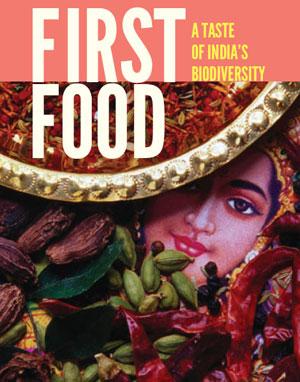
A new recipe book for food celebrates India’s biodiversity. Bijal Vachharajani leafs through its pages.

 http://www.timeoutbengaluru.net/around-town/features/mahua-power-you

0.07913000_1436338803_food

A quick rummage through the contents of our refrigerator reveals how much our eating habits have changed over the last decade. Emerald broccoli florets, butter yellow zucchinis and bitter rocket leaves lie next to pods of country peas, spinach leaves and strings of cluster beans. When pressed for time, it’s easy to rustle up pasta with bottled pesto. When cooking a more fancy dinner, Thai curry with jasmine rice, lasagna or tacos are often on the menu. Yet, while we are embracing world foods and making them an integral part of our larders, we are increasingly alienating the more indigenous foods that used to be part of our grandmothers’ lives.

Take for instance, makhana. For those unfamiliar with it, these cloud-like seeds look like an inflated, rustic version of popcorn. A member of the water-lily family, makhanas grow in the wetlands of Bihar and ponds of West Bengal. Also called foxnut, the thorny plant bears fruits that encase black seeds. The seeds are roasted and cracked open and then sold in the market. Easy to grow and digest, the makhana is also versatile. According to the book First Food: A Taste of India’s Biodiversity, it can be stuffed into a paratha, added to a raita to give it that extra crunch, tossed into a gravy and made into a creamy kheer.

Published by the Delhi-based Centre for Science and Environment, the cook book is a treasure trove of 100 regional vegetarian recipes that highlight forgotten, and often endangered, herbs, spices, fruits, leaves and vegetables from the country’s farms and forests. Some of them, such as bajra, papaya and ragi, are familiar names. Others are more unusual. There is palash sherbet, made from the dried flowers of the flame of the forest tree; chaulai laddoos, a sweet made from the amaranth grain; and mahua poda peetha, a pancake made out of the intoxicating mahua flower. There are also quirky recipes where jute leaves are made into saag and chutney from bhang seeds.

In the foreword, Sunita Narain, the director general of the CSE who gave editorial direction to the book, writes, “We cannot manufacture biodiversity. But we can choose to live with it. We can value it in the wild and in the farm. We can savour its taste and smell. This is joy of living. This is what we must not lose. Ever.” She further points out that each region of India is “diverse in its food habits. It has its own recipes; it cooks with different ingredients; it eats differently.”

First Food brings together writings that reflect nutrition, diversity and culture of indigenous foods from past issues of Down to Earth, an environmental magazine by the CSE. The 39 writers, a mix of scientists, academicians, activists and journalists, include Pushpesh Pant, the founder director of the Academy of Natural Nutrition in Uttarakhand; Madhu Bala, an economics professor from New Delhi; and Devinder Sharma, an agriculture and food policy analyst, apart from CSE staffers. “Everyone has a story on food,” said Vibha Varshney, who is credited with concept and research for the book. “Reporters often come back from different parts of the country with stories of local food. Similarly, nutrition experts tell us about healthy food. First Foodbrings together all this learning.”

Many of the ingredients mentioned in the book are regional. Sangri, pods of the khejri tree, is from Rajasthan; or selni, a wild fruit is common to central India. But First Food encourages readers to go beyond those recipes to rediscover other traditional, local food. “That is the basic idea behind the book,” agreed Varshney, who is also the science editor at Down to Earthand a botanist who has been writing about health and science for over 13 years. “We feel that unless this food becomes part of our lives, we’d end up losing it.”

First Food is divided into Breakfast and Snacks, Meals, Chutneys and Pickles, Beverages, Sweets, About the Plants and Traditions. The recipes are simple. When we tried the makhane ka raita, we found that the curd-based recipe tasted similar to dahi bhalla and was a refreshing accompaniment to our foxtail millet upma. And best of all? It took us less than five minutes to whip up. One minor quibble – while the book is lavishly produced with some beautiful photographs, we wish there were more images of the lesser-known ingredients.

First Food highlights food security, but it’s really a showcase of India’s vibrant biodiversity. “Through ages, people have depended on local biodiversity for food,” said Varshney.“But with the new agricultural practices which promote monocultures, this connection is now broken. We hope that with revived awareness, this link would be renewed. For one, it would give farmers additional livelihoods. This would give them an incentive to protect the environment.”

First Food, Rs950. To order, visit cseindia.org.

Think Local, Eat Local

http://www.timeoutbengaluru.net/around-town/features/think-local-eat-local
Coverstory

It’s easy to be a locavore in Bangalore (people who choose to eat locallyproduced food, rather than food that’s travelled miles to reach the table). Our city is teeming with locally-grown vegetables and fruits, for instance. Vegetable or meat shopping isn’t a chore for us – a walk through the tarkari market is like a social visit, where we bemoan the price of tomatoes with the vendor or trade recipes with fellow shoppers. It may not be organic produce, but we do end up supporting local farmers. Many of us have pretty balconies, gardens and window sills, where we can grow fresh herbs. Concerned individuals and collectives have kick started local initiatives to ensure that our food is less jet lagged. Our city chefs proudly doff their hats to local foods, using them in their gorgeous creations – from millets to lesser-known leafy vegetables; they have figured it all out. At a time when food miles and communities are taking precedence, Time Outhelps you think local, shop local and eat local.

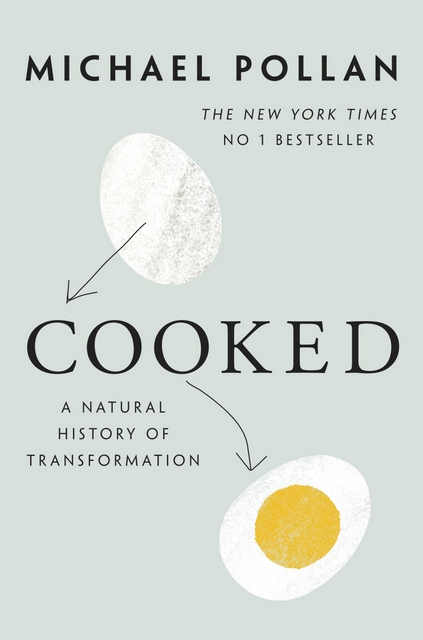
Cooked: A Natural History of Transformation

http://www.timeoutmumbai.net/restaurants-caf%C3%A9s/featuresfeatures/cooked-natural-history-transformation

Pollan dons an apron and heads into his home kitchen to understand the fundamentals of cooking

Michael-Pollan-Cooked

Fifty years ago, my mother, then a teenager, lived in a joint family in a flat in Bandra East in Mumbai. For her family, making nankhatai was something of a bonding ritual. My mother and her two sisters would prepare the dough for this soft biscuit. My grandmother would keep an eagle-eyed watch as they measured out plain flour, crushed sugar, mixed the ghee and finally crumbled in cardamom seeds. The pliant, fragrant dough would be worked into plump white balls and the sisters would hop onto a train to visit their local bakery in Andheri, five stations away. There, they would stand in line with other home bakers, waiting to place their miniature moons on beaten aluminium trays that would be hefted by the bakers into the bakery’s massive oven. My mother still remembers the taste of fresh nankhatai – fragile white balls with crisp, golden edges that dissolved into your mouth. My mother’s memories of nankhatai was on the edges of my mind as I read Michael Pollan’s latest book, Cooked: A Natural History of Transformation. A food activist and professor at the UC Berkeley Graduate School of Journalism in California, Pollan has previously investigated the intimate relationship that humans share with their food sources, through books such as The Omnivore’s Dilemma: A Natural History of Four Meals and The Botany of Desire: A Plant’s-Eye View of the World. This time, among other things that Pollan writes about cooking as a “much more sociable activity” than it is today. “Even today,” writes Pollan in Cooked, “in many Mediterranean villages, you find communal ovens, where people bring their proofed loaves, roasts, and braises, and pass the time in conversation while waiting for their dishes to come out of the oven.” For my mother and her sisters too, the nankhatai ritual was also a time to discuss mundane occurrences, share intimate stories, and bond.

How food is woven into a community’s social fabric is just one of the many ingredients in the elaborate recipe that is Cooked. For this new book, Pollan dons an apron and heads into his home kitchen to understand the fundamentals of cooking. His culinary journey looks at four basic elements – Fire, to understand which he goes back to the oldstyle barbecuing of meat slowly over fire; Water, which takes Pollan on a quest to make the perfect stew/braise; Air, which is understood through the workings of baking bread; and, Earth, for which the author experiments scientifically by brewing beer.

Through his experiments in the kitchen, Pollan puts together a compelling argument about cooking as an art, a survival skill and as “an essential, defining human activity”. He questions the futility of the processed foods that are now standard fare in our refrigerators and cupboards. Those cans and plastic boxes encroach upon our memories of food and its cultural vitality. He wonders why we spend less and less time in the kitchen and takes journeys to understand where his food comes from and how it is cooked. Pollan goes beyond the supermarket aisles and into the farmyards and some master kitchens. He also get us to chuckle at some of his trials, which include chopping pork until his arms grow rubbery. From the humble yeast to innocuous plant matter and the whole hog, Pollan gives the reader a taste of what it is like to get back into the kitchen and cook. Recipes from his culinary escapades are available in the concluding section.

Pollan’s book, though very North American, comes at a poignant time for India. He writes, “How’s it that at the precise historical moment when Americans were abandoning the kitchen, handing over the preparation of most of our meals to the food industry, we began spending so much of our time thinking about food and watching other people cook it on television?” This line could uncomfortably reverberate in many urban Indian households. Our supermarkets are packed with processed foods – from ready-to-eat dals to prepared ginger-garlic pastes and assembly-line bread to instant noodles. Of course, their popularity is fuelled by their easy accessibility as compared to more responsibly grown and healthier produce. Since they are mass-produced, it is cheaper to buy biscuits, than to prepare them at home. Not to mention the effort that goes into, say, baking a nankhatai. While we load our trolleys with precisely these foods in an attempt to cut our time in the kitchen, we spend more time watching TV shows such as Masterchef Australia, debating restaurant food reviews and Instagramming photos of meals. There seems to be time to do all of that, yet when it comes to cooking our meals, as Pollan points out, “fresh is a hassle” and “time is the missing ingredient in our recipes – and in our lives”. At the end of Cooked, Pollan manages to pique the reader’s interest in the intrinsic value and joy of making food in your home kitchen. While, I doubt that most readers will start baking bread or brewing beer after reading Pollan, I for one, am going to my oven to bake a batch of fresh nankhatai.

Michael Pollan Penguin,

By Bijal Vachharajani on September 27 2013

Green light

A new initiative puts Mumbai’s environmental services on the map

http://www.timeoutmumbai.net/mumbai-local/features/green-light


navdanya products, eco food guide, emc's map, green map of mumbai

Mumbai on Google Earth looks like a jagged slice of grey speckled with green; this is a city of few natural spots but plenty of environmental problems. Now all things green about the city – from gardens to environmental services to organic stores – can be seen at a glance on the Environmental Management Centre’s Green Map of Mumbai.

The idea, according to Prasad Modak, executive president of the eco-consulting group EMC, is to create “a social mapping platform to connect citizens, subject experts, researchers, service providers and social workers who aspire for a better environment in their neighbourhood.” Laxmikant Deshpande, who is leading the project, said that while a typical green map would only show the city’s wetlands and gardens, the EMC map serves as a visual directory to a host of environmental services and institutes. These include organisations that work on issues related to solid waste management, biodiversity and sustainable transport such as the Bombay Natural History Society and the National Solid Waste Association of India, as well as lifestyle services including ecotels like Orchid and Rodas and shops that sell eco-friendly and organic products such as Navdanya and Fabindia.

Currently, a PDF version of the map can be downloaded from the EMC’s website along with a resource guide. But Deshpande said that the map is very much a work in progress. More services need to be added. The next step is to put the map on an online platform, where users can network and learn about environmental solutions. This effort will be based on the Ekovoices application that was used for a pilot project the group worked on in Maharashtra. Ekovoices, said Modak, enabled citizens to report on environmental issues in their neighbourhood by pinpointing them on a map. They could then join a discussion group to air their grievances and also connect with subject experts for help.

Deshpande said they hoped to replicate that model in Mumbai, so communities could use the Green Map to solve neighbourhood environmental issues. “If someone has a solid waste management issue, he can visit the map and maybe find another user who is working on vermicomposting close by,” he said.

The EMC also has a carbon footprint calculator you can use to figure out your personal impact on the environment. If the results horrify you, go to the green map for solutions.

Visit www.http://ekonnect.net/emcs-green-map.htmlto download the EMCs Green Map

By Bijal Vachharajani on June 23 2011