
The Guardian: Meet India’s female ‘seed guardians’ pioneering organic farming

img_1016.jpg

http://www.theguardian.com/global-development-professionals-network/2016/feb/18/meet-indias-female-seed-guardians-pioneering-organic-farming
The ‘seed guardians’ of Odisha are pioneering new ways of sharing and storing seeds to reap a more sustainable future
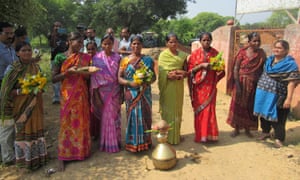
Maa Lankeshwari Seed Bank

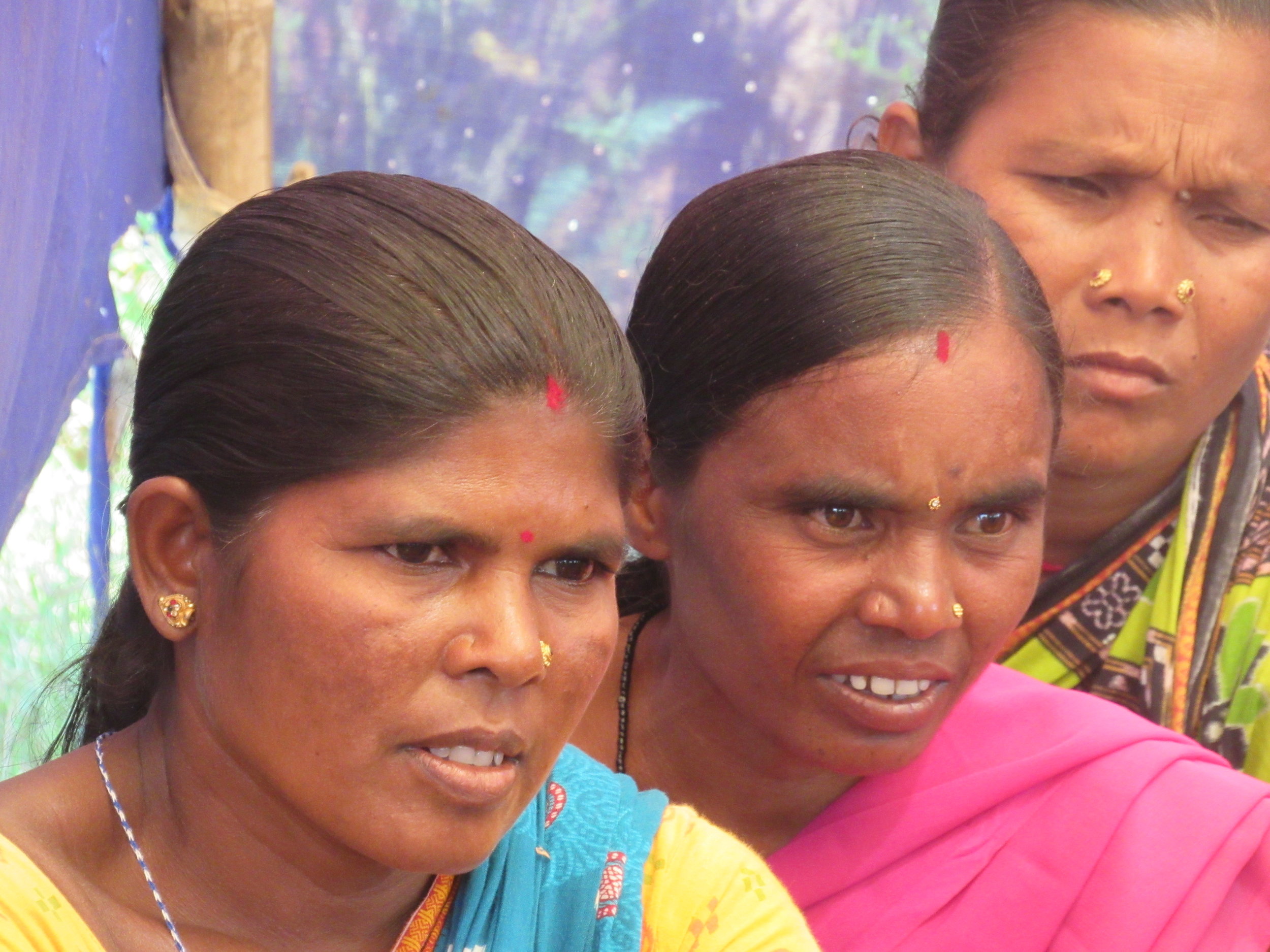
Bring up the topic of seeds and Nabita Goud sits up a little straighter and begins to talk animatedly.

Nabita is a smallholder and a “seed guardian” at the Maa Lankeshwari seedbank of Bhimdanga village in Odisha, eastern India. The seedbank is a small room lined with rows of neatly-labelled earthen pots and stoppered glass bottles, all of them filled with varieties of millets, ladies finger (okra), pumpkin, and red gram seeds (lentil), along with cotton.

Nabita puts her hand into a pot and scoops out a fistful of paddy seeds which are a dull brown, the colour of the soil. “This is kalajira rice,” said Nabita, who is an organic and Fairtrade-certified farmer. “It’s a scented, local variety and gives us a high-yield. We are now conserving it.”

Seeds are at the heart of agriculture, but they are also a significant cost for farmers. Organic seeds are hard to come by in a market flooded with genetically modified and hybrid cotton seeds. More than 90% of cotton in India is genetically modified and input costs for Bt Cotton are high. Hybrid cotton seeds cannot be replanted post-harvest, which in turn forces farmers to add to their financial burden by buying new seeds from the market.
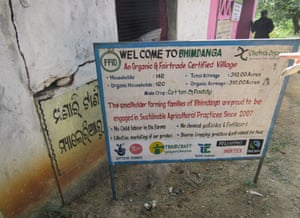
A sign in Kalahandi, Odisha

Nabita is one of 18 seed guardians who are part of Chetna Organic’s seed conservation project. Over the last two years, six seedbanks have been established in five villages in Odisha with 72 men and women conserving 50 varieties of fibre and food crops seeds. This is a much needed shot in the arm for these districts which are plagued with hunger, poverty and insecurity.

“The programme aims to promote women-managed and controlled seed enterprises,” said Arun Ambatipudi, one of the founders of Chetna Organic. Chetna was established 10 years ago to enhance sustainable livelihood options for smallholder families that are dependent on rain-fed agriculture. According to IndiaSpend, 56% of India is dependent on rain-fed agriculture, and farmers are often pushed into an endless cycle of debt because of unpredictable weather, high input costs, poor soil and pest management, and market fluctuations.

Traditionally, Odisha is not a cotton growing state but over the last two decades, small and marginal farmers have started growing the cash crop. Conserving organic cotton seeds that are suited to the soil and as a climate adaptation measure is a priority for smallholders. Over the last five years, Chetna has been conducting small-scale trials with farmers like Nabita to evaluate the suitability of indigenous cotton varieties such as Suraj and Anjali.
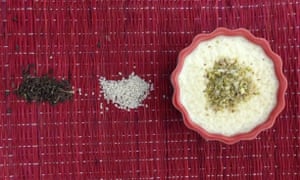
Kalajira rice makes for a sumptuous, aromatic rice pudding.

Driving through Odisha, it’s easy to spot the organic from the non-organic farms. The landscape is dotted with stretches of waist-length cotton. In sharp contrast are the organic farms that look like Ceres has run riot, planted with cotton, red gram, and food crops.

“We practice organic agriculture,” said Nabita, who farms on three acres of land. “There are challenges. The traditional variety of cotton has a lower yield than the hybrid one, but we know it’s good for the soil and the environment. And organic is better for health.” Bhimdanga’s residents take pride in being completely organic. Visitors to the village are greeted with a board that says, “Welcome to Bhimdanga, an Organic and Fairtrade-certified Village”. ”

In a volatile cotton market, the mixed cropping practice that Bhimdanga’s farmers follow ensures individual food security, even if their cotton crop fails. Farmers grow cotton alongside food crops such as pumpkin, ridge gourd, lentils, and millets. Some are for their own consumption, and the rest is sold in the market. Ramprasad Sana, an entomologist and the technical head at Chetna Organic, said that the seedbanks have given 600 families food security.

Chetna enables farmers to set up sustainable and multipliable open-source systems to share and store seeds, using traditional knowledge along with new concepts and technology. The enterprise operates like a bank, only with less bureaucracy. A farmer can “withdraw” a kilo of seed and has to repay the loan with one-and-a-half to two kilos of seed after harvest. With the establishment of seedbanks, organic farmers no longer need to buy seeds from the market. This year, 1,594 kilos of seeds were distributed to 603 farmers.

Empowering women farmers to manage their own seed enterprises enables them to become decision-makers in the community. This is significant, given that according to the 2011 census, 68.5% of women work in agriculture. Traditionally, women have been the custodians of seeds and Chetna hopes to revive the practice.

Last year, Nabita and her neighbours participated in a seed festival in the neighbouring village of Mading where they met other farmers and showcased their indigenous varieties of seeds. “Everyone loved our kalajira rice there,” said Nabita with a smile. The short-grained kalajira is one of the key scented rices of India (pdf) and gives a high yield in a short timespan. When cooked, the rice has a heady fragrance, earning it the market name of “white baby Basmati”.

Rice is a staple agriculture product but in most of India, farmers cultivate high-yield paddy for a homogenous market. The Food and Agriculture Organisation (FAO) estimates that at least 75% of the genetic diversity of agricultural crops had been lost by the beginning of this century.

Kalajira rice and indigenous cotton varieties are being conserved by seedbanks like Maa Lankeshwari at a time when indigenous species of food and fibre are rapidly disappearing from farms and plates. With women like Nabita taking back control of their seeds, soil and food security, the smallholders of Bhimdanga are becoming part of a thriving, sustainable community that is conserving India’s indigenous seed heritage and protecting its food sovereignty.

9 Green Gifts For The Festive Season

http://www.natgeotraveller.in/web-exclusive/web-exclusive-month/9-green-gifts-for-the-festive-season/

Spread the holiday spirit by cheering on artisanal, social, and eco-friendly enterprises.

    • TEXT: BIJAL VACHHARAJANI
POSTED  ON: OCTOBER 21, 2015 12:00 AM

These single-origin chocolates are handcrafted in Karnataka. Photo courtesy Earth Loaf

click me

Artisanal Chocolates

What’s sweeter than gifting chocolates for Diwali, Eid or Christmas? Making sure that those treats are organic and handmade. Mason & Co. sources their organic cacao beans from a family-run smallholding in Tamil Nadu. Try their 75 per cent Zesty Orange or 70 per cent Sea Salt Dark Chocolate that they make at their factory in Auroville. A far bigger temptation is their eight-bar dark chocolate collection gift pack.

Earth Loaf’s organic chocolates are handcrafted in small batches from cacao beans from a single estate in Karnataka, and their gorgeous wrappers are silk-screened by hand in Mysore. Try their 72 per cent Raw Dark Chocolate bar and the Gondhoraj & Apricot one.
Available at www.placeoforigin.in.

Handcrafted Pottery

Curators of Clay pottery is perfect for those with a sweet tooth. Photo courtesy Curators of Clay

Curators of Clay pottery is perfect for those with a sweet tooth. Photo courtesy Curators of Clay

click me

Bhairavi Naik and Rohit Kulkarni’s ceramic studio, Curators of Clay, will make you want to trade your space-saving, stacking Tupperware for their bespoke pottery. Their tableware and home decor accessories are handcrafted in small batches by the two potters in Bhugaon, Pune. Tea drinkers will be delighted by their gorgeous range of teapots, creamers, tumblers, and mugs. For those who have a sweet tooth, Curators of Clay pottery is perfect for baking; they even have custard jugs! They also have handcrafted porcelain tea lights for the festival season.
To order or customise a gift, drop in at their Pune store, visit their Facebook page or write to bhairavi@curatorsofclay.com and rohit@curatorsofclay.com.

Fairtrade And Organic Tea Hamper

Look for the Fairtrade and Organic Mark on a tea carton.

Look for the Fairtrade and Organic Mark on a tea carton.

click me

If you’re planning on assembling a food hamper, choose a tea carton with the Fairtrade and Organic Mark. The Fairtrade Mark means that apart from meeting social and environmental standards, an additional premium is paid to the producers for the purchase you make. Oothu green and black teas come directly from the Nilgiris, while Monteviot and Makaibari Tea have a dazzling range from Darjeeling. Pukka Tea’s Vanilla Chai, Supreme Matcha Green, Clean Green, and Cool Mint Green are perfect for detox after a festive binge. Best of all, you can feel zen knowing that the money will be democratically spent by farmer and producer committees on community projects such as education, eco centres, and smokeless chulhas.
Available on Amazon and Makaibari.

Single-Origin Honey

Over the last few years, Under the Mango Tree has become known for its fair-trade sourcing practices, in which they procure honey directly from beekeepers. Their fabulous Bees for Poverty Reduction programme enables farmers to generate additional income through honey, with the bees boosting yield through cross-pollination – a sweet deal for both bees and farmers. UTMT has a range of single-origin honeys – Eucalyptus Honey is perfect to soothe sore throats after a night of inhaling firecracker fumes, while their Sweet Clover Honey is a delicious addition to sweets.
Available at most grocery stores and on www.bigbasket.com

Handmade Books

It's hard to part with these gorgeous children's books. Photo courtesy Tara Books

It’s hard to part with these gorgeous children’s books. Photo courtesy Tara Books

click me

We’ll be honest: it’s hard to actually give away Tara Books’ stunning children’s books to kids. The Chennai-based independent publisher of picture books for adults and children has an eclectic list of titles created by writers, tribal artists and designers. To Market, To Market! by Anushka Ravishankar and Emanuele Scanziani charmingly portrays an Indian market, and is perfect for curious toddlers. Adults will love The Nightlife of Trees, an award-winning handmade book by Gond artists Bhajju Shyam, Durga Bai, and Ram Singh Urveti. The arresting visuals are a tribute to the magnificence of trees, and draw from the art and folklore of the Gond tribe. Don’t forget to check out their stationery section for the one-of-a-kind Flukebooks, perfect for jotting down organic recipes.

A funky Flukebook is great for jotting down organic recipes. Photo courtesy Tara Books

A funky Flukebook is great for jotting down organic recipes. Photo courtesy Tara Books

click me

Bengaluru-based Little Latitude has a range of books and toys which are not only beautiful but also environment-friendly. For instance, Vinay Diddee, who started Little Latitude, makes toys with rubber wood that is not treated with harmful chemicals.
Available at www.tarabooks.com. Find the store list for Little Latitude here.

Organic Cotton

Organic cotton is not only good for your skin but also for the soil, and farmers. With the use of integrated pest management measures, the soil retains its fertility, and farmers practise inter-cropping, which ensures their food security. Good Earth’s Gumdrops kids collection is eco-friendly and adorable. There are elephant soft toys, sleeping sets for infants, and quilts to choose from.

No Nasties clothing uses organic and Fairtrade cotton. Photo courtesy No Nasties

No Nasties clothing uses organic and Fairtrade cotton. Photo courtesy No Nasties

click me

Grown-ups can head to No Nasties to buy colour-block pocket tees made with organic and Fairtrade cotton. Each purchase comes in organic cotton bags and recycled cardboard tags made by a women’s self-help group near Pondicherry. While you’re at it, slip in a little Doug accessory as part of your gift. No Nasties’ Once Upon A Doug project supports women cotton farmers who make these adorable clouds with a silver lining, from scraps of recycled cotton during the lean season.

Once Upon A Doug supports women cotton farmers. Photo courtesy Once Upon A Doug

Once Upon A Doug supports women cotton farmers. Photo courtesy Once Upon A Doug

click me

If you’re looking for something more ethnic, check out Ethicus and Tula, two fabulous seed-to-stitch enterprises that are revolutionising the cotton supply chain.
Available at all Good Earth Stores. Shop at www.nonasties.in,www.onceuponadoug.com, www.jaypore.com, and www.tula.org.in.

Natural And Seasonal Cosmetics

It’s tough finding cosmetics that are made completely with natural ingredients. SoulTree is certified by BDIH Germany. The brand pays fair price to farmers, ensures that plants are not picked clean of flowers or fruits, and that harmful chemicals are not used in their products. They have a wide range of beauty products, but check out their Traveller Essential Miniature Kit which has 30ml bottles of moisturiser, shower gel, and shampoo. Their lipsticks use organic ghee as a base.
Available at www.soultree.in.

Coffee Subscription

Fuel that caffeine addiction with a coffee subscription to Blue Tokai. The hand-picked, single-origin coffee is roasted and then ground as per your specifications and delivered to your doorstep. Whether you like the full-bodied, low acid Monsoon Malabar coffee or the dark, oaky Vienna roast, there’s plenty to choose from. If you are not sure of which blend to gift, choose the Mixed Bag.
Available at www.bluetokaicoffee.com.

Gentle Detergents And Cleaners

Most homes get a thorough cleaning before Diwali, so eco-friendly soaps and detergents make an offbeat but handy gift. Common Oxen products use safe or natural ingredients, and are also a great gift to yourself. Their detergent Swish Wash is free of synthetic fragrances, phosphates, and carcinogenic chemicals. It is made of botanical oil soap, washing soda, baking soda, borax, rock salt, and lime and orange essential oils, and leaves your laundry smelling of the sun. Common Oxen also has kitchen dishwashing soaps, bathroom cleaners, and body soaps.
Available at www.commenoxen.in.

When Bijal Vachharajani is not reading Harry Potter, she can be found pottering about in the jungles of India. In her spare time, she works so she can fund the trips and those expensive Potter books. She did this by working as the Editor at Time Out Bengaluru. She writes about education for sustainable development and sustainable livelihood.