Adventures in tween land

51c6ntu6hdl-_sx324_bo1204203200_.jpg

http://www.thehindu.com/news/cities/mumbai/entertainment/adventures-in-tweenland/article8329824.ece

Tweenager Stoob has a plan: it’s to grow up and “be a celebrity when not inventing things and saving the world.” When I read that in the latest instalment of The Adventures of Stoob: Mismatch Mayhem , I couldn’t stop chuckling. After all, how many times had my friends’ children voiced the exact same plan of becoming adventurers, inventors, or superheroes (preferably all at the same time), opting for exciting career options over the ones their parents had chosen? Samit Basu’s book series is a running commentary on the everyday life of Subroto Bandhopadhyay, otherwise known as Stoob, where the protagonist is contemporary, very Indian, and very real.

Stoob and his friends Rehan and Ishani don’t have to embark on perilous quests to save a gem that will in turn save all of humankind nor do they have to battle a crowd of meat-chomping zombies. Instead, the series celebrates the ordinary and special moments that childhood is made of. In many ways, Stoob can be (and has been) compared to the Enid Blyton’s school books, Jeff Kinney’s Diary of a Wimpy Kid series, Sue Townsend’s Adrian Mole, or Lincoln Pierce’s Big Nate series. Yet, it manages to stand out on its own. Mainly because Basu creates characters and narratives that are entirely believable. So, Stoob and his friends worry about exams in Testing Times ; in A Difficult Stage , play rehearsals take precedence over everything else in life; and in the latest instalment Mismatch Mayhem , a classic love triangle threatens a deep friendship.

Sudeshna Shome Ghosh, the editorial director of Red Turtle, Rupa Books’ children imprint, said, “When Red Turtle started, we wanted to publish a funny, contemporary fiction series that would capture the voice and feelings of the modern Indian tween. Their thoughts and feelings, both profound and banal. There are lots like this in the West, but few Indian ones that work as a series.” And that’s what sets Stoob apart from his Western counterparts, the little details which make him real to the upper/middle class, urban reader. Basu writes convincingly, portraying the awkwardness of being a tween poised at the brink of adolescence. “Writing in different voices is a simple question of seeing the world through what you imagine are another person’s eyes: much like acting, I presume,” said Basu, over email. “So if you can get in character, it hopefully flows quite smoothly. And it’s easier to get in character as Stoob, which is mostly a matter of memory and identification, than it is to the protagonists of any of my previous books, who are mostly able to defy physics but not turn into sociopaths.”

This time around in Mismatch Mayhem , Stoob is “A Man Who Has Seen Life, Its Sorrows and Joys… A Man Whom James Bond and Alex Rider would have Known and Respected.” That’s because he’s dated a girl from another school who seems to prefer earrings over Calvin and Hobbes (like seriously). Things get complicated when best friend Rehan also likes the same girl. What follows is a rollicking adventure, pretty much laugh-out-loud all the way.

Basu said that he has many friends whose kids are the same age as Stoob and their stories were reminiscent of his childhood. “Not that much has changed, except the technology around the kids,” said Basu. To write the series, Basu spoke to many children, learning about their concerns, and hearing anecdotes from their schools.

Basu said, “My favourite reactions are when parents or children come and tell me their own school stories that Stoob reminded them of, because this also doubles up nicely as research. I’ve also been trying out a writing experiment, which is reading out first drafts of Stoob chapters to key readers as I write them. It’s something I would never do with books for adults, because adults would feel compelled to have thoughts: kids just listen and respond without overthinking it, which I enjoy hugely.”

What also makes the books fun are the illustrations by Sunaina Coelho. They have a life of their own, with the characters doing their own thing in the illustrations, almost like doodles in a school notebook. “I write the illustration requests out the way I write out comic scripts: a visual description, text captions. Really good artists are able to take that and then take wing, making illustrations richer and deeper than the text they start out from. They’re on their own trip very deliberately; the idea is to step into Stoob’s imagination and hopefully recreate the kind of effect that a Terry Pratchett footnote does, which also fits in nicely with the kind of hyperlinked thinking that kids do very naturally nowadays. There isn’t much of a process after that because I always just really like Sunaina’s work, so I send a list of illustration-base text, she sends the artwork, and I send a mail telling my editor how much I love them.”

Although irreverent in tone, the series manages to underscore contemporary markers and issues, such as the poor quality of children’s television programming, the stress of exams, the struggle to be perceived as cool and fashionable, and the constant presence of technology in their lives. All of this makes Stoob relevant to a contemporary, urban audience who will easily relate to him and his gang.

If humour was a pre-requisite super hero power, then Stoob would join the legion of fictional caped men, women and beasts. But since it’s not, he will have to settle for the title of one of the funniest and endearing school children in fictional history in children’s literature.
What’s in your tiffin?

9781406319934.jpg

http://www.thehindu.com/news/cities/mumbai/whats-in-your-tiffin/article8274278.ece?ref=tpnews
Recently, a friend texted about a piece of homemade fudge that had come back uneaten in the lunch box of her 13-year-old son. “I asked him why he didn’t eat it,” my friend Sudeshna Shome Ghosh wrote. “His response was, ‘How could I? I didn’t know what it was.’” My friend rolled her eyes (you can now do that thanks to an updated emoticon app), I LOL’d and that was the end of it.

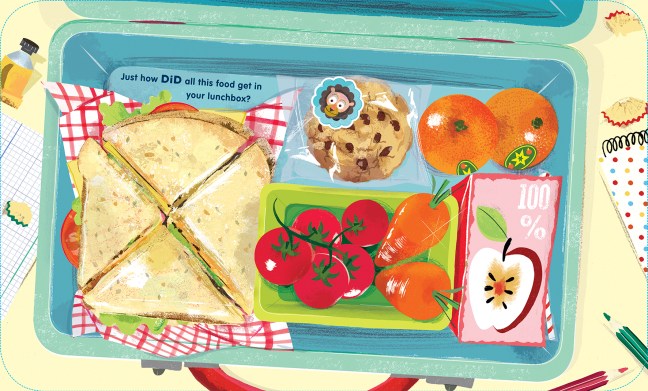
IMG_9038The conversation brought back dabba memories, of going to school and opening my stainless steel lunch box in the afternoon, hours after it was packed, wondering about its contents. With the mother being a fabulous cook, the dabba was usually crammed with theplas folded in half with a dibbi of mango pickle, jeera rice with caramelized onion and curd, or rotis that miraculously stayed soft so that they could be torn with two fingers and eaten with sabji . There was lunchbox envy, where I coveted my classmates’ tiffins because they brought food that wasn’t familiar to me. I yearned for cucumber sandwiches, after re-reading Enid Blyton books, even though the white bread would be curling up at the edges by afternoon. I even wanted the dabba that held cold, clammy Maggi noodles, something that I now wouldn’t touch with a barge pole. But at that time, it was as exciting as moringa leaves are now to chefs.
Now there are plenty of cookery books, blogs and Instagram accounts with innovative lunch box ideas, all just a Google search away. Blogger and nutritionist Nandita Iyer, better known as Saffron Trail online, has simple, healthy ideas, which include vegetable peanut noodles, pita pocket pizza sandwiches, and puliyogare or tamarind rice. Lulu Loves Bombay blogs about travel, her children, and food. Her sweet potato discs sound like a lovely addition to the dabba , as do her methi thepla and mango chunda. Sanjeeta KK’s blog, Lite Bite, has a Lunchbox Bites section with some handy tips and recipes such as for muthiyas and wholegrain chillas.

On Instagram, Lunch Box Dad, Beau Coffran’s mealtime hacks include rocket ships from bread and cheese, and Spider-Man lunches with berries; while bleary-eyed parents may not be keen to wake up and make food art, it’s a fun account to follow. Grace Hall’s Eats Amazing blog focuses on Bento-style lunches for her son and follows themes such as Halloween, rainbows, and gardens. Her #PackedLunchLove Project has creative boxes that, she promises, take just a few minutes to prepare and are a visual feast. A few years ago, graphic designer and illustrator David Laferriere’s innovative sandwich bag art went viral. He’s made over 1,800 sandwich bag drawings with monsters and kites.

And when in doubt, return to the library.

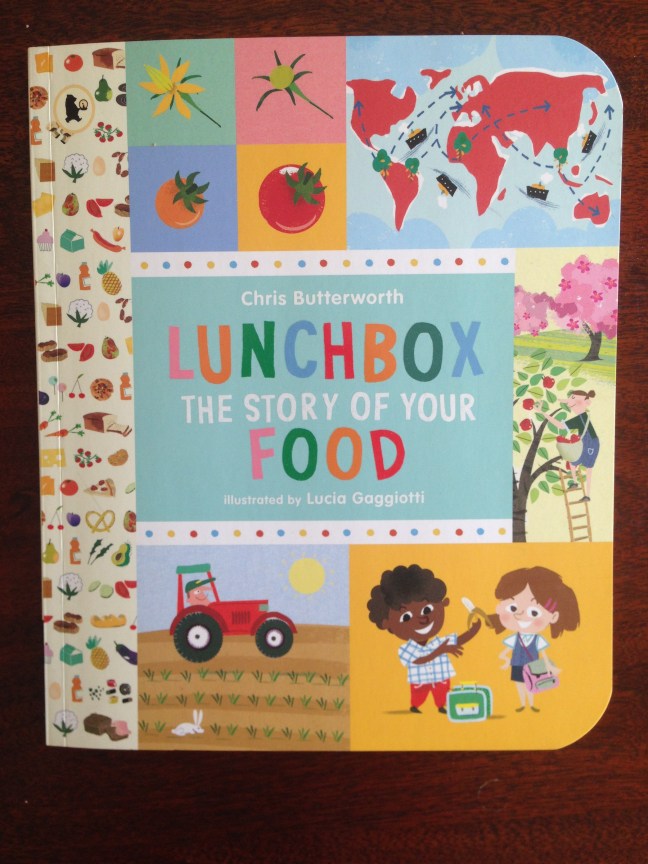
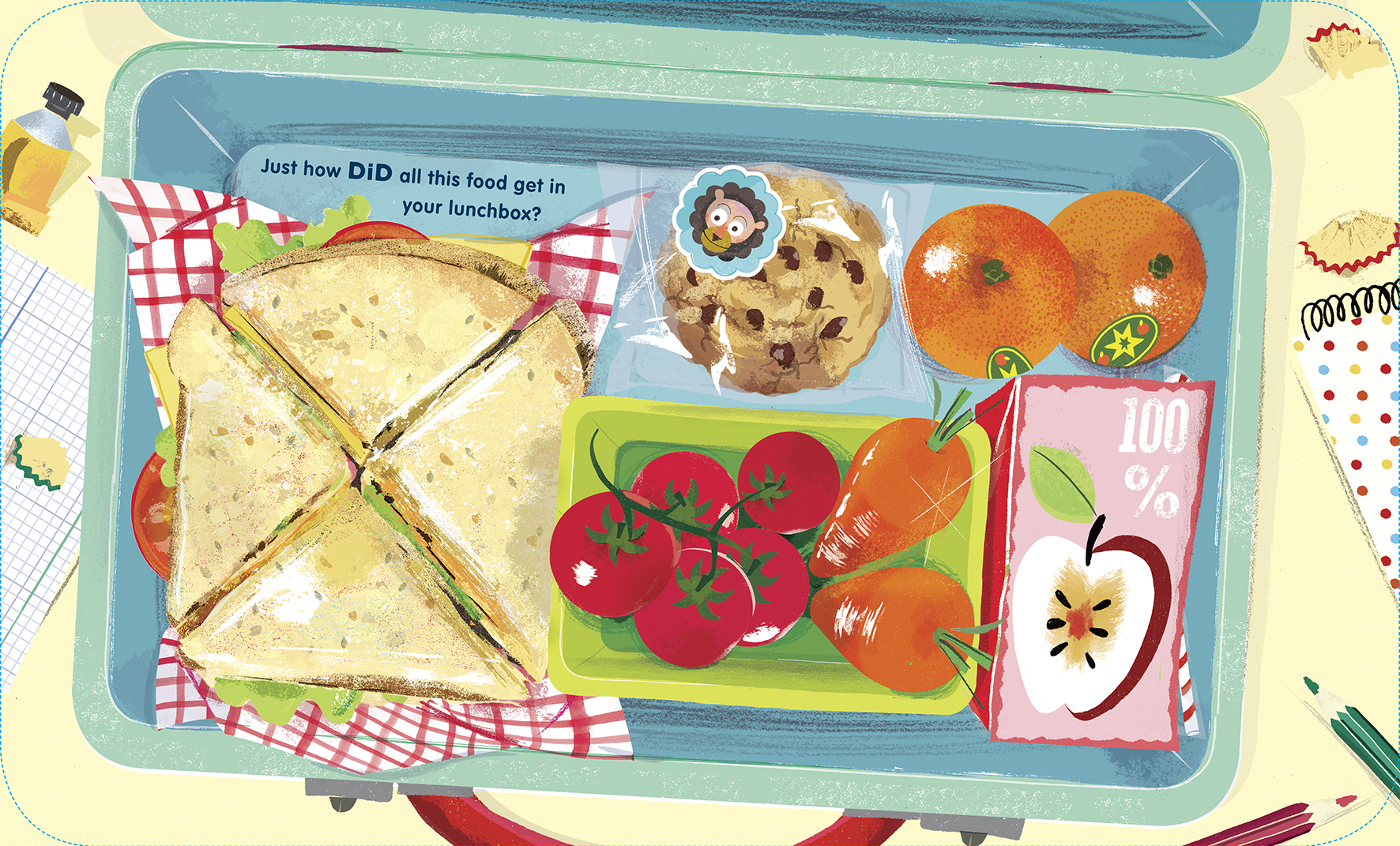
Apart from the usual cluster of recipe books, check out Karen Le Billon’s French Kids Eat Everything , a charming account of a family, with two picky-eater children, that moves from the USA to France and discovers how the French government and the school system strengthen food education. Then there’s Chris Butterworth’s Lunchbox: The Story of Your Food , illustrated by Lucia Gaggiotti. A picture book, it takes young readers on a journey from farm to fork, getting them to think: where did the food in my lunchbox come from? It’s a lovely way of engaging children with farmers who grow our food and get them curious about what they are eating.

Mommy Go Lightly, a.k.a. journalist and author Lalita Iyer, writes lovingly about dabbas on her blog, “Food is intuitive,” she writes about packing her son Re’s lunch box. “At least that’s how it should be. Try different things and figure out what works for your child. My tip is, make it visually exciting. Make it look good. All you need is colours.” Pretty much all my mommy and daddy friends gave me tips like that when I talked to them about the art of dabba packing: fruits and dry fruits in small Tupperware boxes to snack on in the bus; use leftovers innovatively.

Shinibali Mitra Saigal, who packs food for her nine-year-old daughter said, “Mine doesn’t like anything soggy, squidgy or leaky. My daughter claims that thanks to me, she had to eat pickled strawberries, which taste vile.” When I asked her what she meant, she added, “According to her, the pickle in an airtight container leaked and ran into the strawberry in a different compartment. So that makes it pickled strawberry and an excuse not to finish her lunch box.”

Ghosh wakes up ten minutes earlier in the morning to make extra sandwiches for her son’s friends. “According to my son, none of them want to share the fruits I pack,” she said, with a sigh. “But he’s telling me that, and well, he hates fruits. So…”

Looking back, we can appreciate that one person who woke up at the crack of dawn to toil away in the kitchen to prepare fresh lunchboxes for the family. I regret the dabbas that I brought back home uneaten, even the alu methi, which really doesn’t do itself any favours when cold. Okay, maybe not the alu methi.

The author writes about education for sustainable development, conservation, and food security. She’s the former editor of Time Out Bengaluru.


Out of line but in your mind

10bmdjc-pg4-kid_10_2730900g.jpg

http://www.thehindu.com/news/cities/mumbai/entertainment/out-of-line-but-in-your-mind/article8216855.ece

What does a Chuppertyhoover look like? We know it makes a good pet once it’s been fished out of a chamber pot, because Jerry Pinto says so in Monster Garden : A Draw-It-Yourself Picture Book . And that means it can look like whatever our idea of a good animal companion is. The Chuppertyhoover could have eyes like a dog, ears like a rabbit, a face like an elephant, a body like a giraffe, and legs like an alien. Or it could look like a chapati that’s just been hoovered off the carpet. Or it could be a hoov that’s gone chup and ’ert. Basically, no one’s been told what it looks like. Then, there’s another conundrum. The Chuppertyhoover only eats Asumptivet. And that too, only if it’s fresh. No stale Asumptivet for our Chuppertyhoover. But again, what does an Asumptivet look like?

The answer is not in Pinto’s latest book published by Duckbill. Rather, it’s in your child’s imagination. Because that’s what Monster Garden is about: being imaginative and creative to draw and colour your own picture book. Pinto’s prose frolics delightfully across the pages with the help of Priya Kuriyan’s illustrations. There’s a tree looking slightly nervous and the child has to draw a Scrumpeelious under it, while a Sharmistickle has to be drawn to hover in the air. Hairy feet poke out in an Asumptivets field, as Pinto offers a hilarious, but complicated way to get to an Asumptivet. And in all of that, the child creates his or her very own monsters, plucking them straight out of his or her fancy.

Pinto said he wanted Monster Garden to be free of preconceived adult notions about what children like to draw and paint. “Do they really like to paint ducks who wear shirts and caps but no trousers,” he asks. “Do they like to paint lady mice in frilly knickers? Wouldn’t they like to imagine what a Chuppertyhoover is? And how it looks when it eats a Floover? I thought I would, so that’s the book I gave them.” That’s why there aren’t any kinda-obvious ‘Join the Dots’ or ‘Copy and Colour this Picture’ pages in this whimsical and quirky book. “I was given a series of dot-to-dot books when I was a child, by a peculiar aunt who kept giving them to me when I was way into my teens,” said Pinto, via email. “But even as a child, I could see what the dots were joining up to make and I couldn’t see the point of joining them. And then I could never decide whether to use straight lines or curvy lines — and if the latter, then should they be convex or concave or just plain wriggly.”

Monster Garden is a mischievous book, sparkling with humour and ingenuity. Children are fascinated and spooked by monsters, most anyway lurk in their imagination. Monster Garden brings that to the forefront. Priced at Rs 150, the book will make for a super goody bag filler as well. There’s a pull-out colour poster where Kurian has created a fabulous gallery of monsters including the Bubbleganoosh and Pinkiporous.

But what makes Monster Garden an important addition to the library is its spunkiness — it is a clarion call to get children to think outside the colouring lines, rummage through their own thoughts and create what they want. For a change, no one is telling them what to draw and how to draw it. Pinto and Kurian offer hints and nudges, but that’s about it. And that is a rarity in a world that’s full of staid, run-of-the-mill colouring and activity books, which are extremely popular with parents, who want their children to “be constructive” in their play or reading time as well.

Pinto hopes that parents will encourage children to get this book and draw all over it. “I hope they won’t tell their kids that you must draw a better monster than that, come on beta, I know you have it in you, because what is a better monster?” said Pinto. “I hope they will buy two copies and save one for themselves and draw the monsters themselves because Pama-Muppy also have inner children, starving inner children who must be fed.” Given the popularity of colouring books for adults across the world, and the universal appeal of Monster Garden , this might actually happen. As a child, Pinto said that he had poor hand-eye coordination, mostly because his bad eyesight went undiagnosed until eighth standard. “So I would get failing grades at drawing in school because I did not stay within the lines,” said Pinto. “So this book was designed for all those kids out there who like their colours to break out of the lines, who find that their washes wash everything else out, who have no sense of proportion. It’s for genius kids and we know from Picasso that every child starts out as a grandmaster and then they grow up and lose all sense of great art. This is for those children who did not grow up but who are chronologically called adults too.”

The author writes about education for sustainable development, conservation, and food security. She’s the former editor of Time Out Bengaluru .

Harry Potter’s message of inclusion

hp-night.jpg

 
http://www.thehindu.com/news/cities/mumbai/entertainment/harry-potters-message-of-inclusion/article8161488.ece

On February 4, Potterheads will celebrate JK Rowling’s book series by hosting Harry Potter Book Night parties in different parts of the world. Once again, I will sit with my co-host to cut out paper dementors, draw owls on white balloons with a marker, and make fudge flies with chocolates. But more importantly, apart from being a celebration of these fabulous books and fudge, our February gatherings always remind me of a key Patronus message tucked inside the Harry Potter stories: of inclusion and empathy.

In 2014, a study titled The greatest magic of Harry Potter: Reducing prejudice showed the books go a long way in teaching young readers tolerance and compassion. Rowling’s seven-book series constantly shines a light on systems of social hierarchies, like class and caste: there are the privileged magical people, and then there are the others. Muggles are non-magical people and some refer to them as mud-bloods, a filthy word for Muggle-born wizards who have often been ridiculed, tortured, and even killed. Only Pureblood wizards are considered worthy of magic.

Discrimination and prejudice, privilege and merit, inequality and diversity, tolerance and inclusion are an inherent part of our social structure. Yet, we don’t always talk to our children about these issues, and if we do, it’s often framed as something that’s alien to our social fabric. Instances are not contexualised, instead they are viewed as external, far-away phenomena. Children have nascent opinions about what’s right and what’s wrong, and it’s something that has to be nurtured. Especially in our society, with all its complexities. As children grow older, these perceptions, values, beliefs, and attitudes are shaped and solidified by parents, educators, peer groups, and the media they consume (among other things). These become the frameworks within which they’ll go on to interpret people, events, and issues as adults.

Look around us — children’s literature, artefacts, and the visual media are dominated by Hindu mythology and narratives. In comparison, fewer books are published about other folk tales or oral histories of minority communities. Nor do we see that many games, apps or films on these traditions that are equally rich and intricate. In such a scenario, where representation is selective, how do you begin to understand diversity? Most school textbooks are ill-equipped to explain India’s caste system and how it continues to exist in latent and manifested forms. How do you then explain to a young adult what it means that Rohith Vemula, a Dalit scholar, felt forced to commit suicide because of the way society treated him in a city as big and supposedly modern as Hyderabad?

In his suicide letter, Rohith Vemula, wrote, “My birth is my fatal accident. I can never recover from my childhood loneliness. The unappreciated child from my past.” Those words are haunting, as is the rest of the letter. A friend of mine read the note and said that’s how his own childhood feels in hindsight, centred around his identity of being a Dalit. It was like the child didn’t matter, he said, because he grew up in an environment that constantly reinforced discrimination.

As children, we are rarely made aware of our own positions of privilege and as a result, we soak in prejudices — after all, how will we think of examining them if we’re not told prejudice exists or that it’s a topic of discussion? A subtle sneering at the children who play in public parks, or the ones who are “not like us, no” is all it takes sometimes. That difference is always palpable, embossed like an invisible line, whispered in school and college corridors, and even in staff rooms.

To not talk about this inequality, to ignore it, makes us equally culpable. It can only lead to a generation of citizens who would rather not question these complexities, the status quo, or their own source of privilege: caste and class. This further snowballs when it comes to the idea of merit, whether in college, the workplace, or in any other part of our lives.

If by reading a book, children can become more empathetic, then as adults, we can do so much more to encourage them. Maybe start by opening a dialogue. Answer questions. Listen to them with an open mind. Surround them with stories, books, films on inclusion and human rights. And lead by example.

Children are quick on the uptake. In the first Potter book, Draco Malfoy holds out a hand in friendship to Harry, “You’ll soon find out some wizarding families are much better than others, Potter. You don’t want to go making friends with the wrong sort. I can help you there.” Harry didn’t shake his hand.

Bijal Vachharajani writes about education for sustainable development, conservation, and food security. She’s the former editor of Time Out Bengaluru.